
La Speizia to Florence is about a 2 hour drive, but Pisa is on the way so we couldn’t resist stopping in at its leaning tower, along with about a million other tourists. The square was packed, the lineup to climb the tower about three hours long, and everything seemed very touristy. Perhaps it was a good warm-up for what awaited us in Florence. So we snapped a few photos of each of us holding up the tower, looked around and left.
Florence is one of the most beautiful cities I have ever visited. In the old town, art and architecture marvels at every corner. We started with a Medici walking tour, beginning at the Medici tombs at the San Lorenzo church. We made our way to the Duomo with its baptistry and bell tower, then went to the Uffezi gallery to look at the fake David statue before finishing at the Ponte Vecchio bridge.
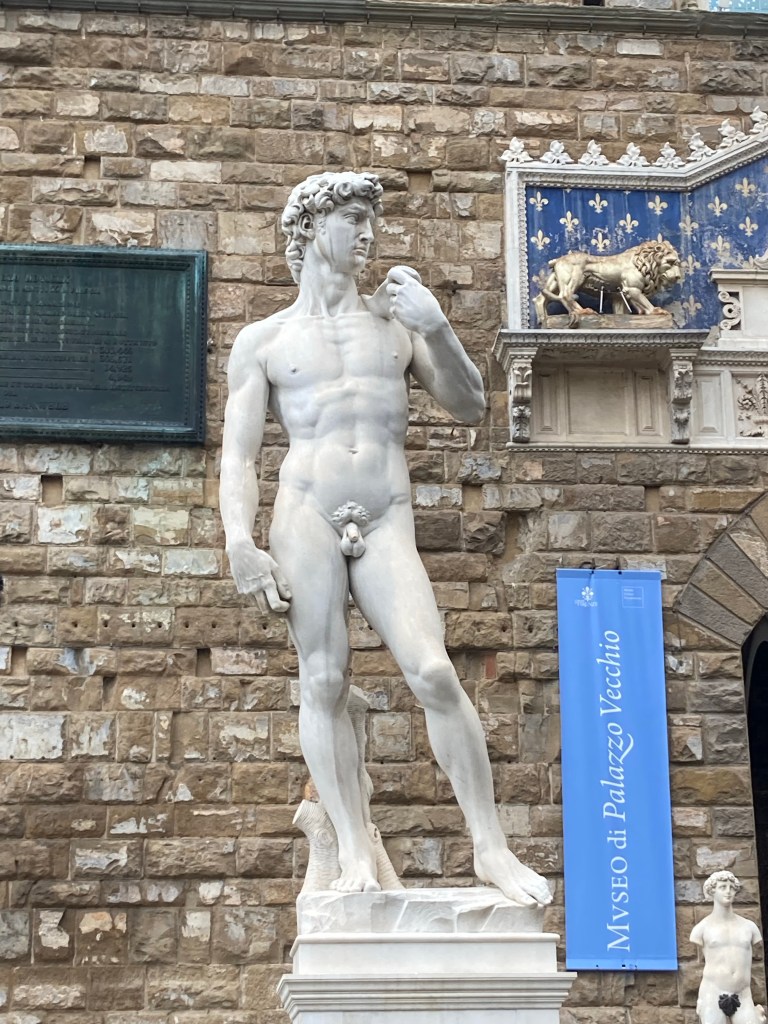
The real David statue is in the Academie, but tickets are hard to get so the city of Florence has kindly put a number of fake David statutes all around.
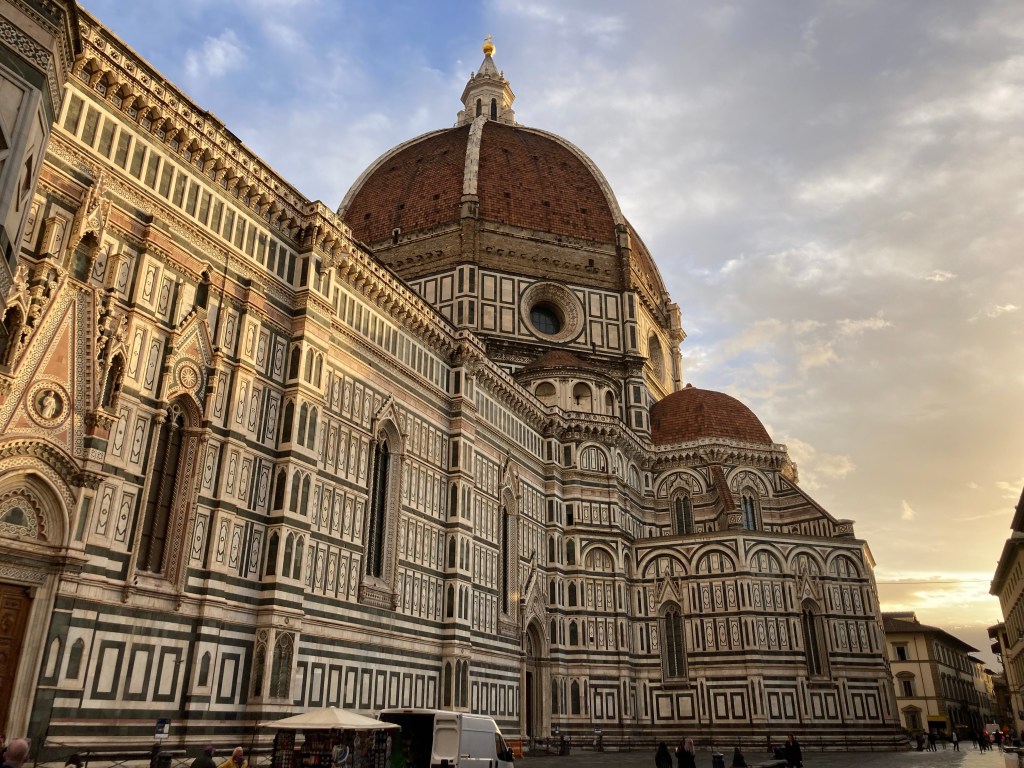
MaryAnn decided to hike up the 441 steps of the bell tower but I chose instead to sleep in. The next day, I did go to the Duomo early and managed to get some photos of it without a throng of tourists in front:
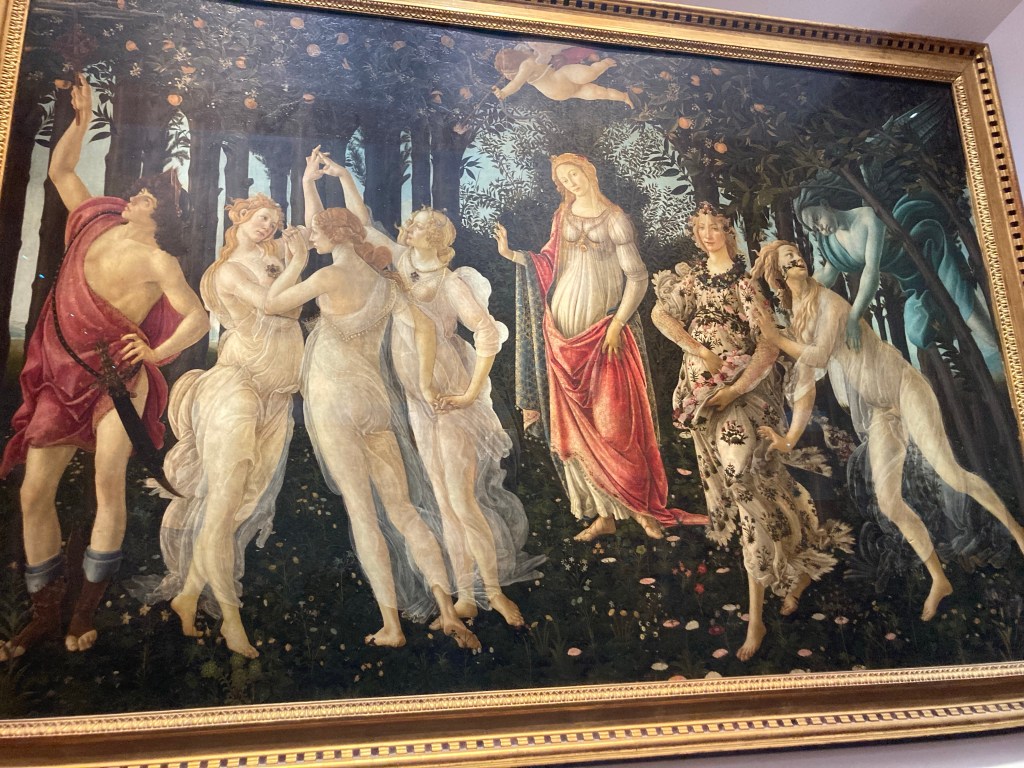
We did the usual tourist things. We braved the gold stalls on the Ponte Vecchio bridge without buying a thing, we visited the largest Medici, Palace, Pitti Palace, and it’s Boboli gardens where we got drenched in a downpour. I toured the Uffezi Art Gallery and admired The Birth of Venus masterpiece:
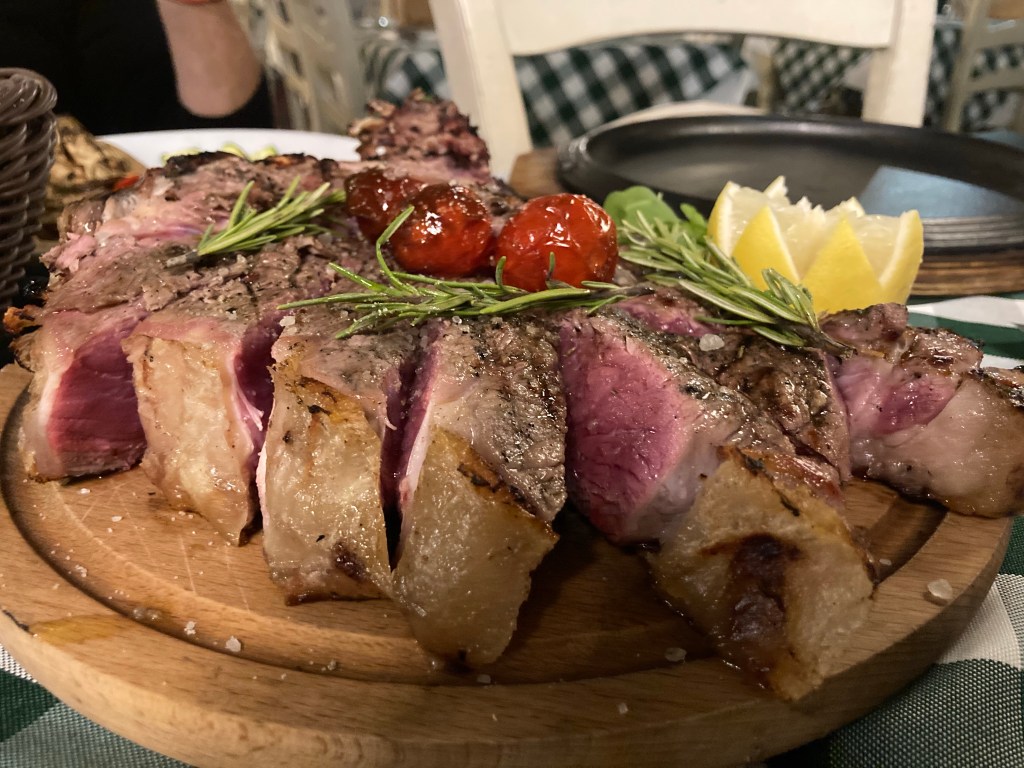
Of course we indulged in Florence’s foods: gelato and a T-bone steak at least 3 fingers high and cooked rare:
But for the constant rain and huge number of tourists, it was a short but sweet visit.
We drove on to Bologna, where the food fest continued with its specialties, Parmegiano Reggianno cheese, balsamic vinegar, Parma ham but no spaghetti Bolognese, which has no connection to Bologna. Rather Bolognese tagliatelle is its famous namesake, fettuccine like noodles with a meat and tomato sauce.
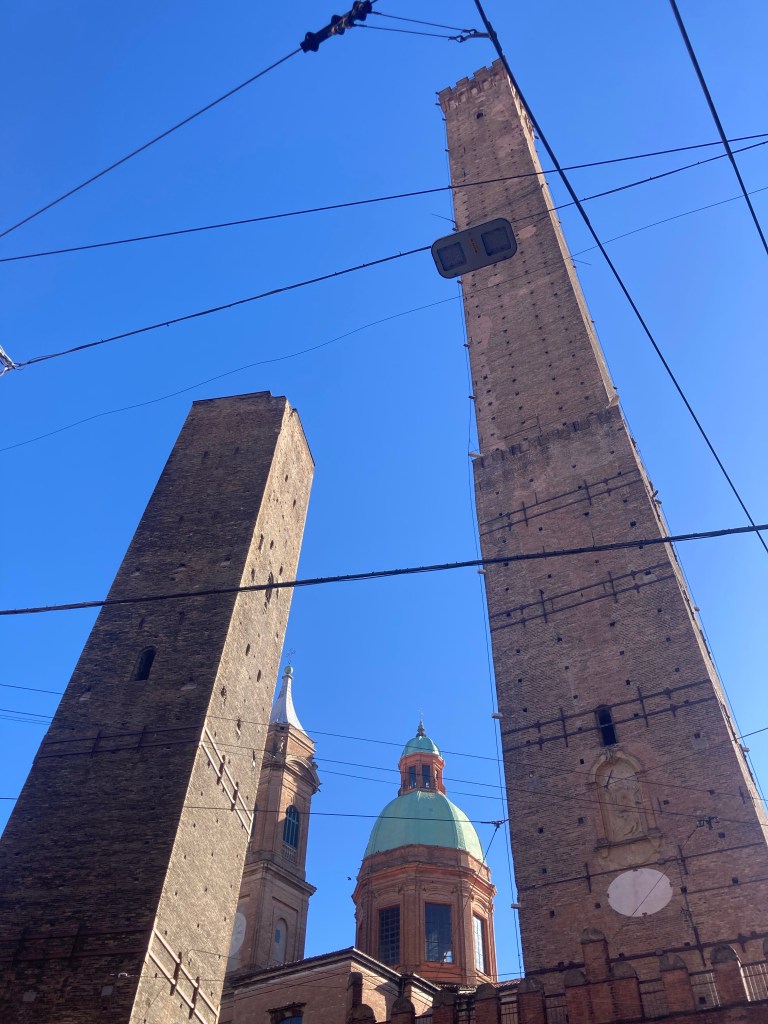
Bologna’s architectural treasures are its towers. Constructed as residences in the 12th and 13th centuries by wealthy families, they were a sort of building competition to see who could have the highest tower. At one time, over 100 towers dotted the cityscape but today only 22 remain, each with varying degrees of lean:
Bologna’s porticos are a UNESCO site. Begun in the medieval ages when a housing crisis threatened, the city offered a tax exemption to homeowners who built student housing above the sidewalks:
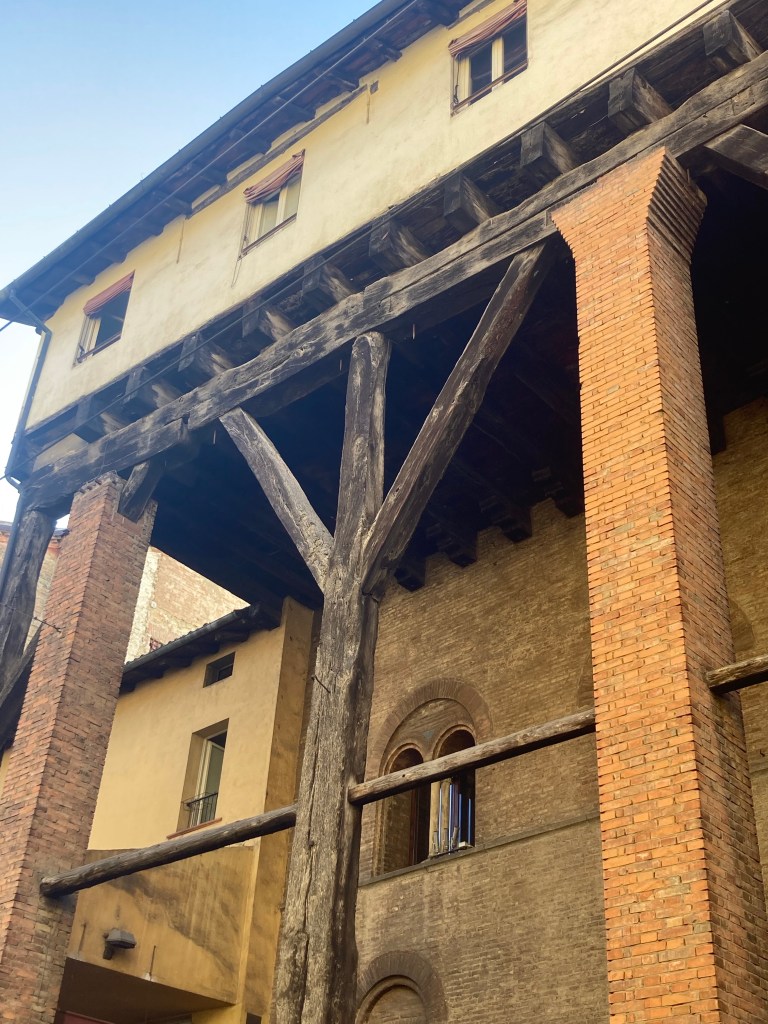
Today, their 50 kilometres plus offer a welcome shield from the rain:

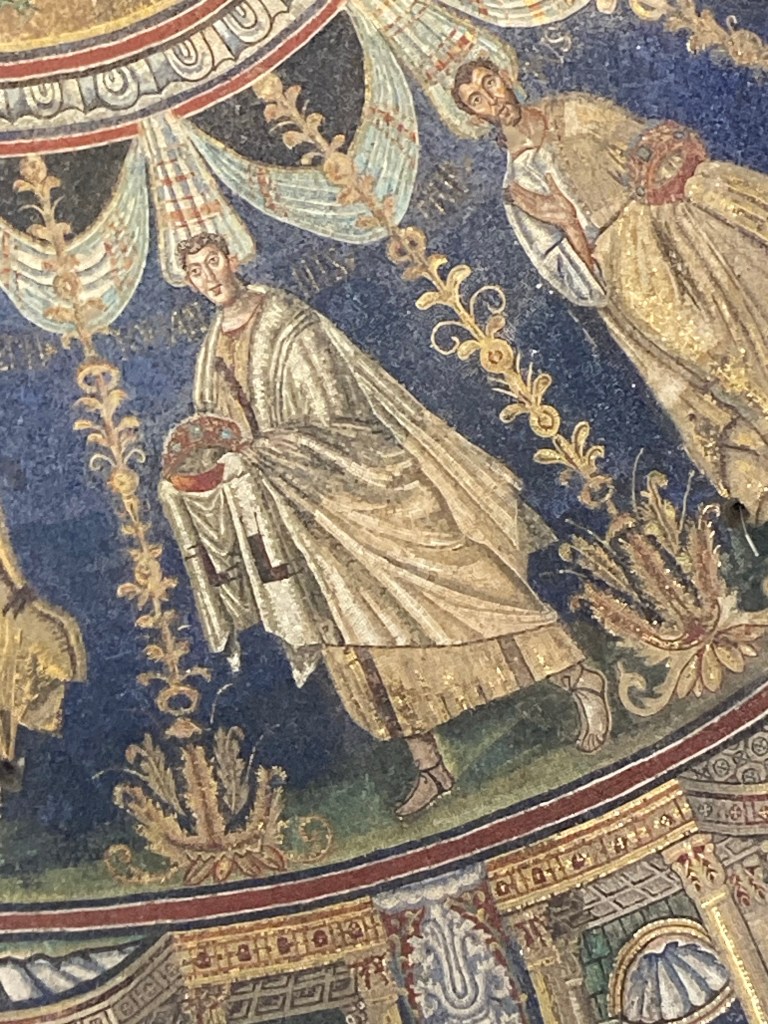
Our highlight was a trip to Ravenna, the capital of the Roman Empire in the 5th century and home to the Gothic kings before Byzantium recaptured the city. Its mosaics are spectacular;

The colours are vivid and the designs so intricate they portray movement:
Ravenna was a welcome relief from the crowds in Florence and Bologna and the rain finally let up as we walked from church to church in the city, admiring the mosaics. Ravenna was a wonderful surprise and a city not to be missed.
But now, we head hopefully to sunshine in Sicily.,..
 travelsnearlyeverywhere.com
I feel like i have been there, your writing is so vivid!!
LikeLike