
This trip to Malta makes up for one I didn’t make, in April, 2020, when the pandemic caused my flight to be cancelled and the border to close to non-residents. Instead of Malta, I ended up back home in Toronto. It was time to try again.
I arrived after a short flight from Sicily on a gloriously sunny and hot (27 degrees) for November day at 8:00am. Instead of taking a cab to my hotel, I paid €2 to hop on the public bus which 20 minutes later dropped me at the walls of the capital city, Valetta. From there, it was an easy 6 minute stroll down a pedestrian walkway to my hotel. What a delightful introduction to the country.
On a walking tour, I learned more about Malta’s history. Being in the middle of the Mediterranean (70 kilometres from Sicily, 200 kilometres from Libya and Africa), its been a popular stopping off point for most everybody: Phoenicians, Greeks, Romans, Arabs, etc. Malta’s most famous residents were the Order of St. John – the helping monks who founded St. John’s Ambulance- not the military branch the Knights of St. John or the Knights Templar. The monks were invited here by the King of Sicily and quickly settled.
The monks laid Valletta’s first stone in 1664 and it has the distinction of being the first planned city. Its streets are straight and its walls fortified against a potential Ottoman invasion which never came:
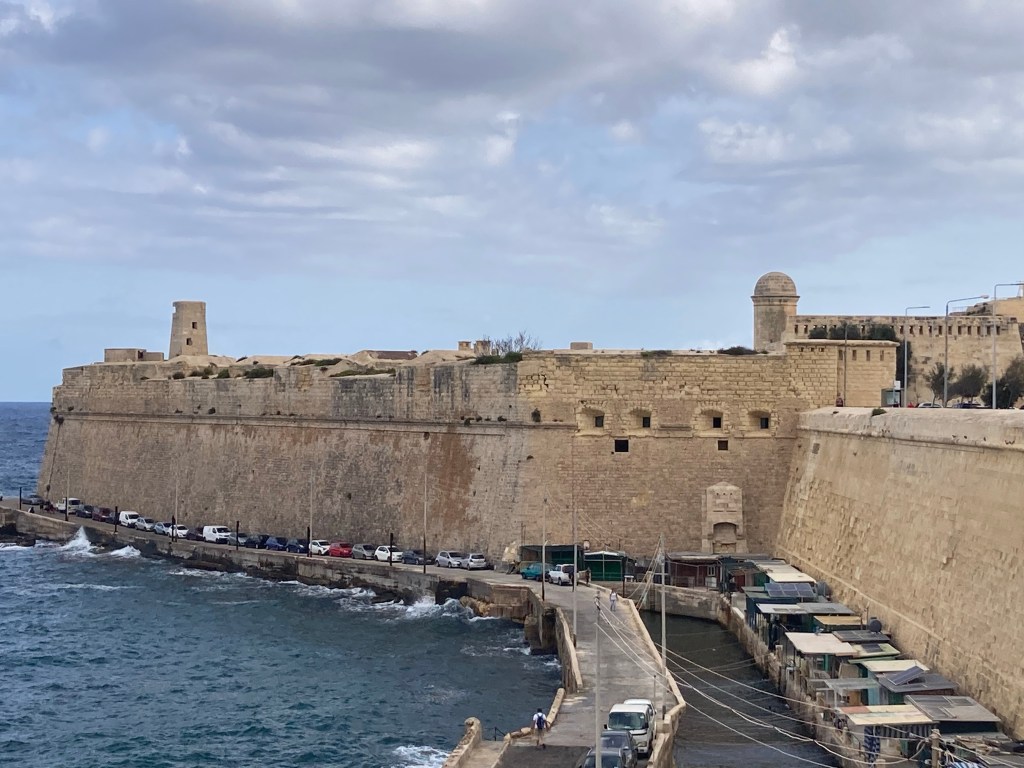
Instead, Napoleon showed up and claimed the islands as his own, but they devolved to the British upon his defeat in 1798 and thus remained until independence in 1964.
The British left their mark. English is one of two official languages; Maltese, a derivative of Arabic, is the other. A Mark’s & Spencer stood in the main square and empty British phone booths were everywhere;
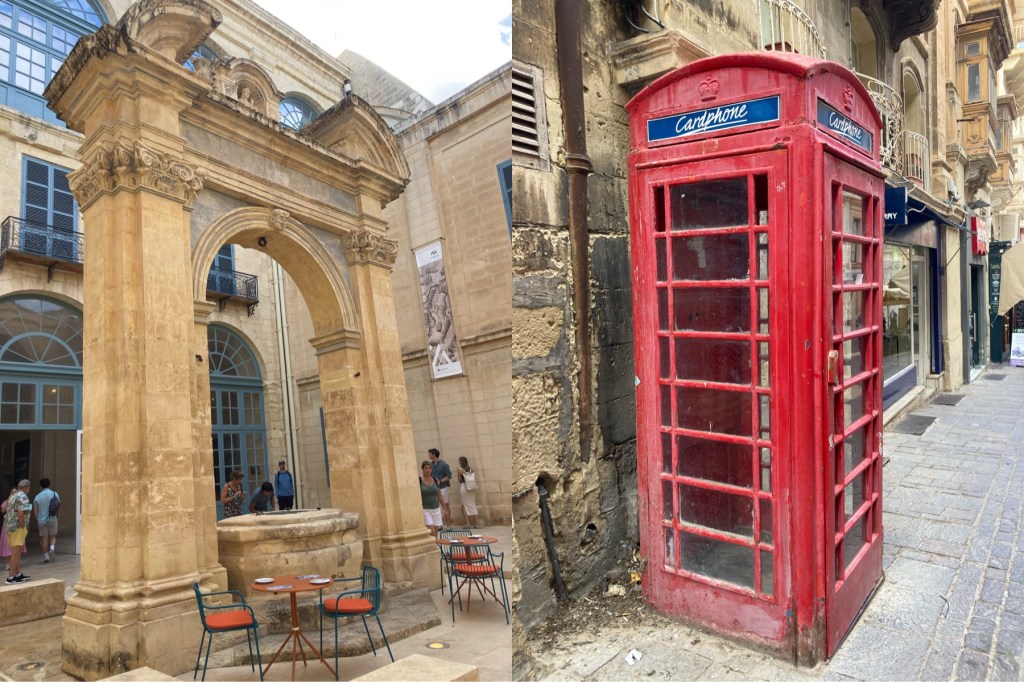
Being a British colony situated between North Africa and Italy during WW2 was not good. Malta was subject to intensive Axis bombings, over 5,000 tons, and much of Valetta was destroyed. The ruins of the old Royal Opera House stand as a memorial to the devastation:

Valetta is Europe’s smallest capital with only 5,000 inhabitants, although half a million live in its suburbs. The city was largely left untouched after the war, but it being named as an European City of Culture in 2012 sparked a renovation boom. Today, Valetta is a pretty, walkable city known for its ornate balconies:

Given its medieval origins by a Christian order, it’s not surprising the country is 96% Roman Catholic and 365 churches are on the islands:
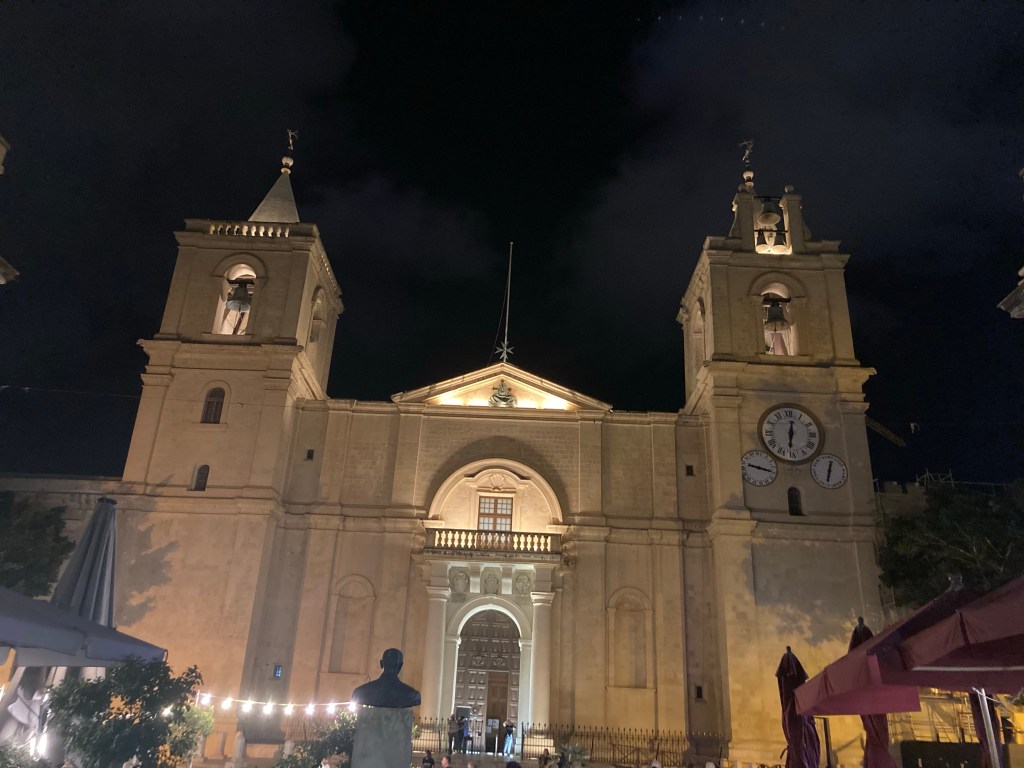
As I’d had my fill of churches in Italy, I passed on visiting any on Malta.
What I did visit were 2 Neolithic ( of 7 on the islands) temples. Constructed as early as 4100 BC, they claim to be the oldest freestanding temples, predating both Stonehenge and the Pyramids. Ggantija, on the island of Gozo, also has many tombs. Archeologists do not know who the inhabitants were or why they disappeared about 2500BC, but from the human remains and sculptures in the temples have deduced a lot of information, like they were farmers, wore skirts and beads as decoration, suffered from toothaches and arthritis etc.
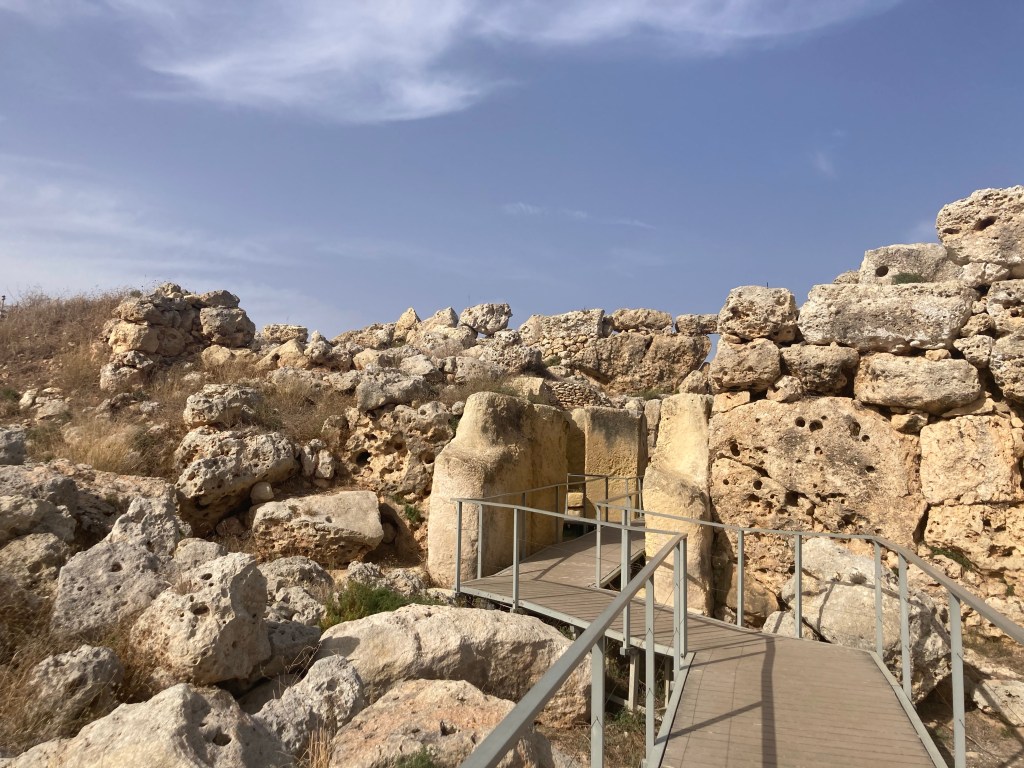
True it looks like just a pile of rocks but the rocks were quarried, chiselled and moved over 6,000 years ago.
And so ended a very pleasant 4 days on Malta.
 travelsnearlyeverywhere.com