I first visited Chile in 2006 with my son. We had focused on the south, visiting Punta Arenas at the very tip, Tierra del Fuego and sailing a Navimag ferry through the fiords.
It had been 18 years and a return visit was long overdue. I started in San Pedro de Atacama, the gateway to the northern desert with lots of hiking and trekking opportunities. I took a tour to the Uyuni salt flats, which I’ll describe on my post about Bolivia.
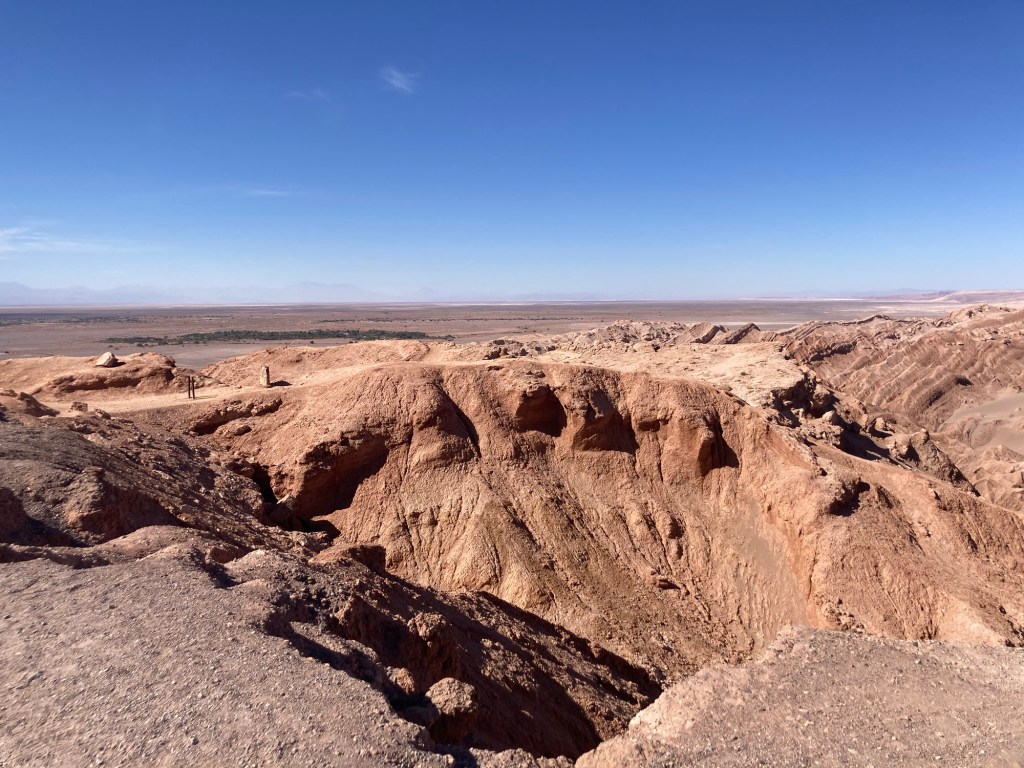
San Pedro does offer panoramic views of its otherworldly landscapes; it has acted as planets in the Star Wars movies:
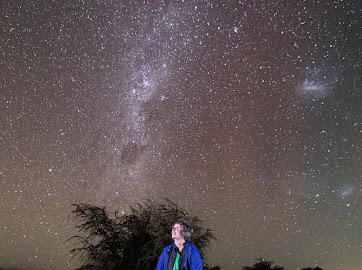
Due to its relatively high altitude and low population, stargazing abounds in San Pedro. I took an astronomy tour where our guide pointed out the southern sky, many constellations, and through a large telescope invited us to look at three nebulae. He is also an expert photographer who sat me down for a few poses with the night sky as a backdrop:
From San Pedro de Atacama I rejoined my friend Cathy and we went to Valparaiso. Once the most important port on the Western seaboard, its importance, and wealth, diminished once the Panama Canal opened.
Valparaiso is famous for its murals, of which there are hundreds. UNESCO put the city and its murals on its heritage list. Some are commissioned by the local government, like that representing summer decorating the side of this building::

Others are done by local artists, some of whom look have become very famous for their mural art:
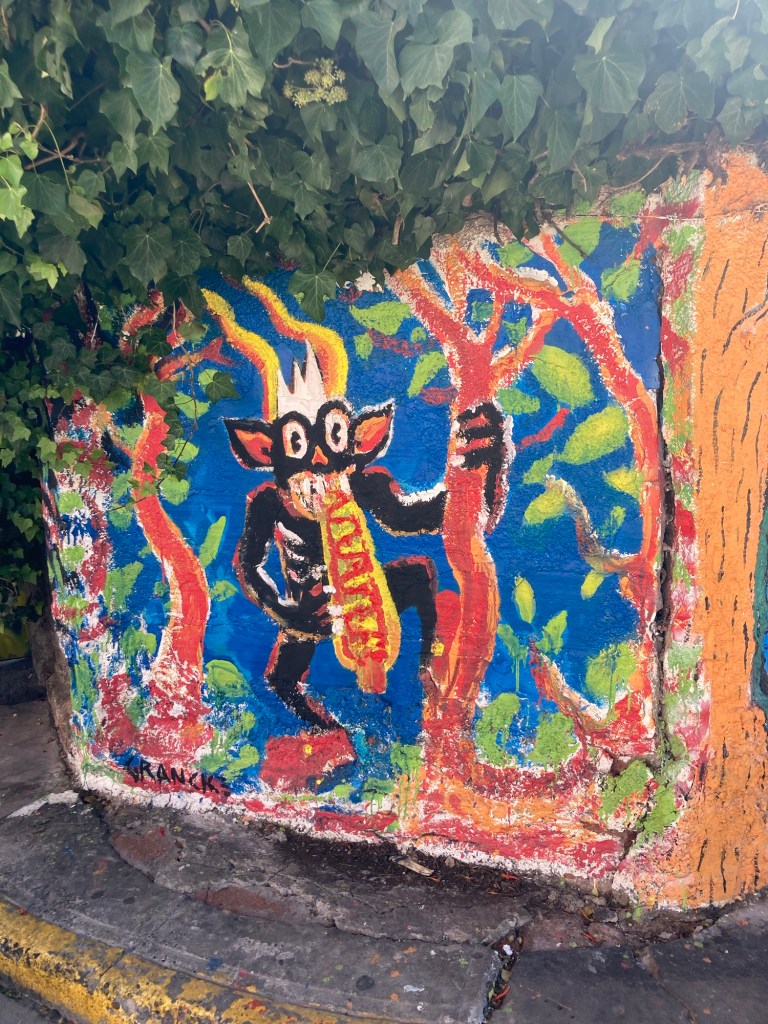
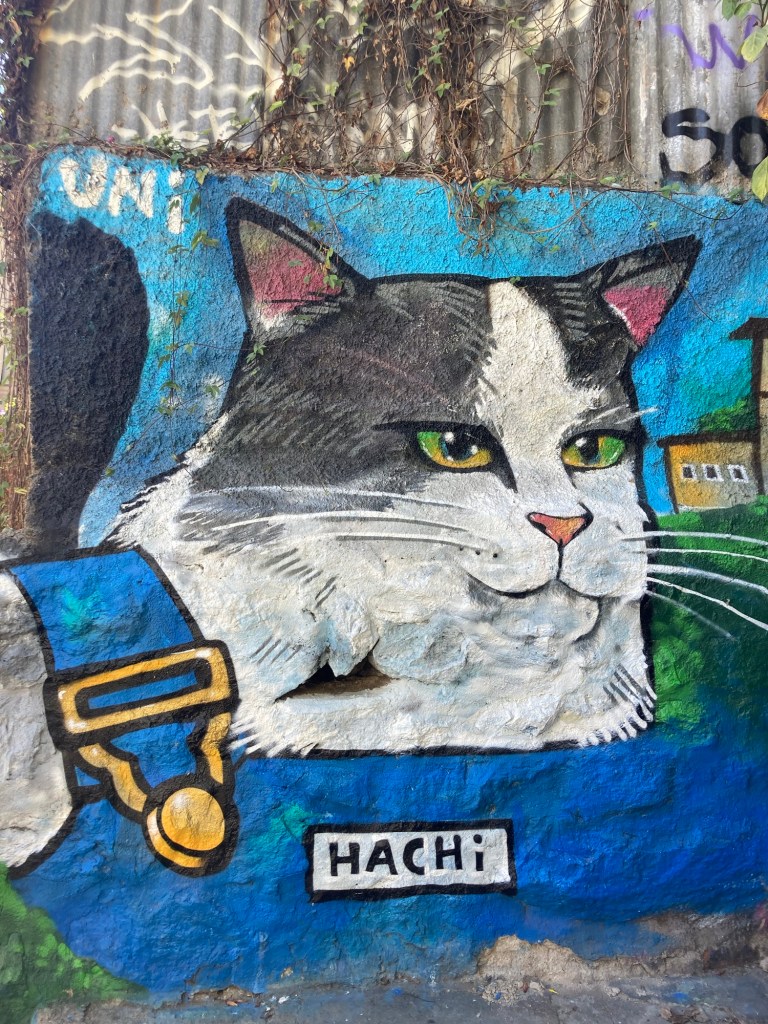
The murals run the gamut, from aliens, to indigenous representations to just for fun:
Valparaiso’s other claim to fame is its numerous funiculars. The city is built on 46 hills, so there’s lots of climbing up and down. Beginning in 1886, up to 30 funiculars were built to connect the businesses near the port with the residences high in the hills. They are being repaired and modernized, currently 7 are running:

Our time in Santiago was cut short by a cancelled flight from Rapa Nui, but we still managed to spend a day sightseeing. Our walking tour began in the Plaza de Armas, the center square of all former Spanish colonial towns. Founded in 1541 by the conquistador Pedro de Valdiva, its first 300 years were characterized by multitudes of wars with the local indigenous tribe, the Mapuche, earthquakes and fires. Chile declared independence from Spain in 1810 and after 8 years of war, was granted independence.
In 1805, the Presidential Palace was constructed although it was used as a mint until 1842 when the president moved in. It was here, on September 11, 1973, that the army, commanded by General Pinochet, surrounded the building, bombed it with Air Force jets and caused the death of the democratically elected, socialist president Salvador Allende.
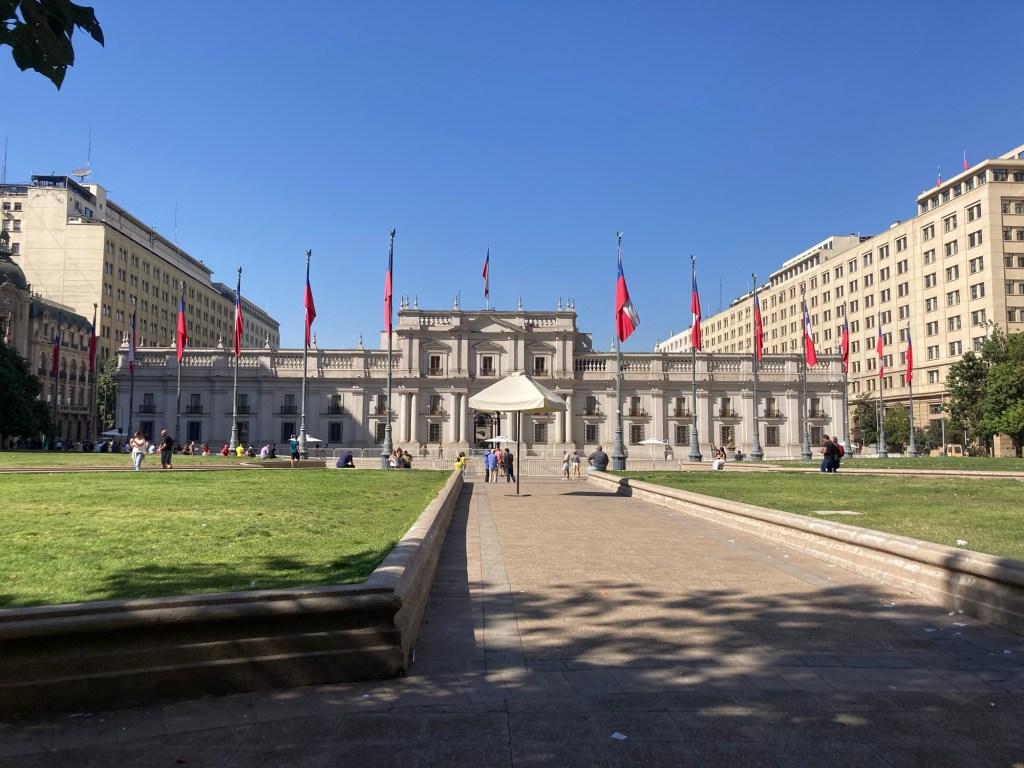
Thus began 17 years of cruel, dictatorial rule by Pinochet. The atrocities of his regime are documented in the informative, but sobering Museum of Memories and Human Rights:
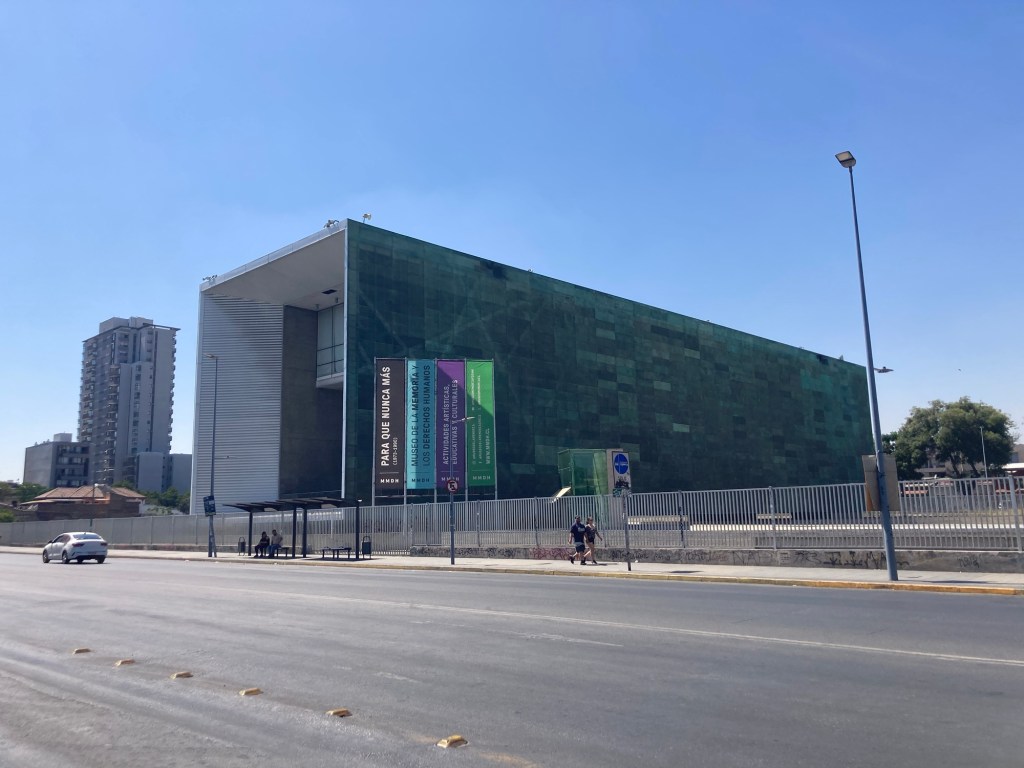
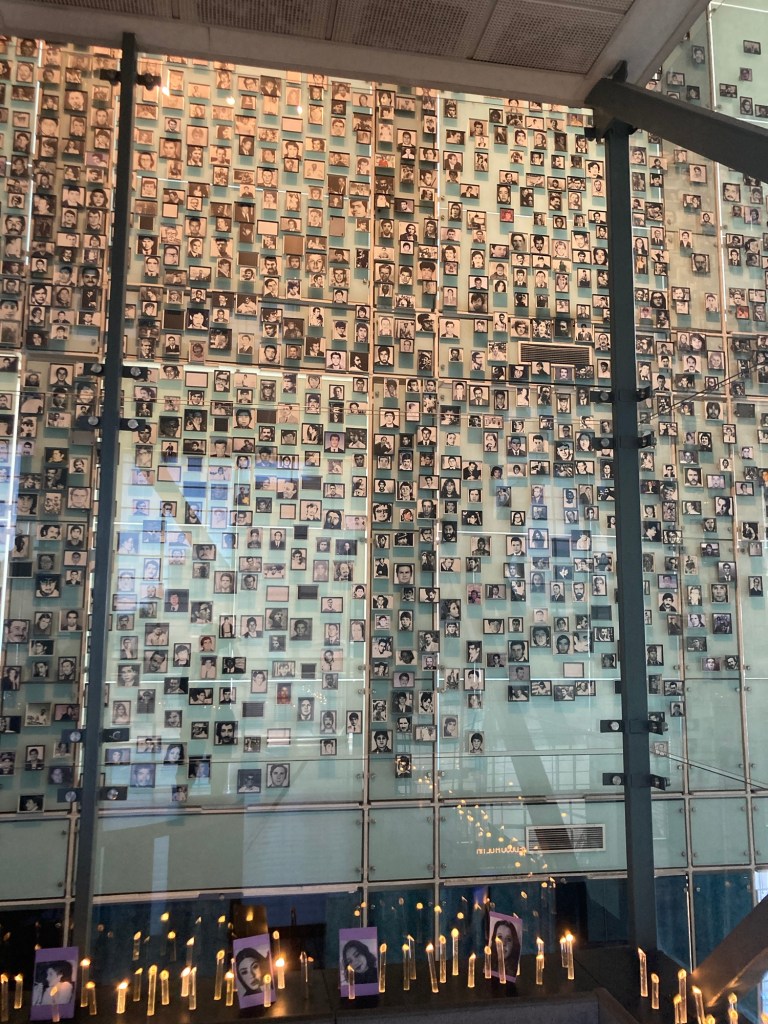
Ousted in 1989 by a referendum forced upon him by his own party and international pressure, Chile has since been ruled democratically and boomed economically, becoming the wealthiest country in South America.
Walking around the center of Santiago, we saw a multitude of buildings reminding me of its past- colonial gems, grandiose churches, ornate opera houses etc. but my favourite is Chile’s first stock exchange:
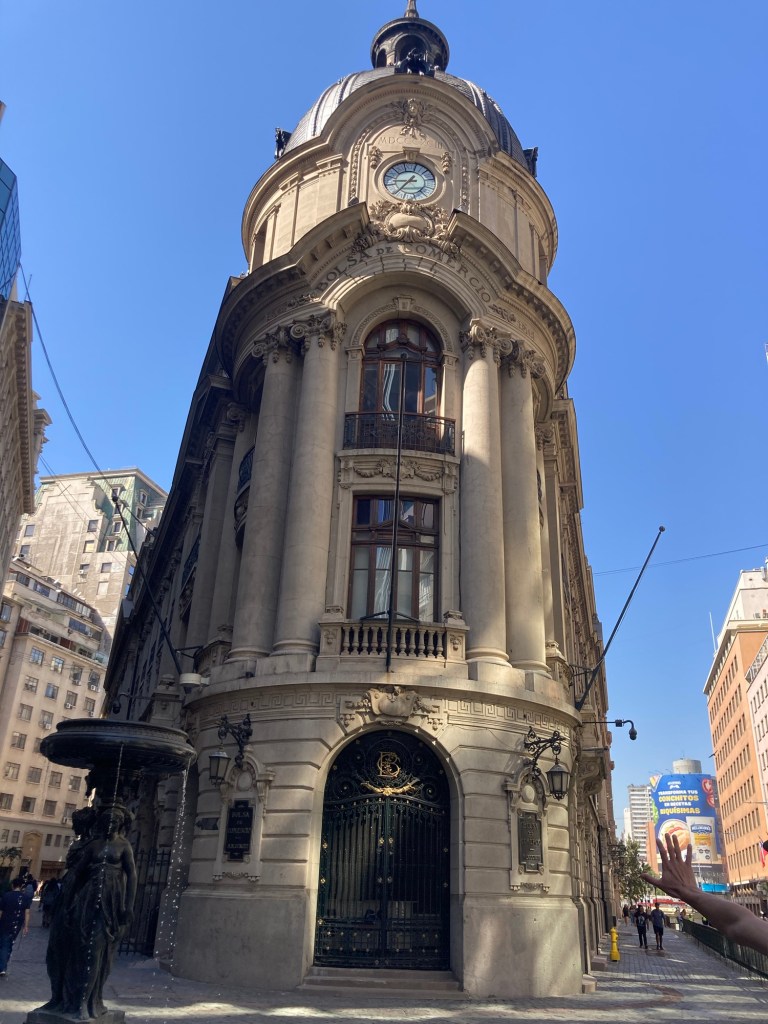
Built in a neo-classical style, its architecture resembles late 19th century New York. Not surprisingly, the area surrounding is known as little New York.
I’ll leave Chile with one piece of trivia learned on our walking tour. The name “Chile” has nothing to do with peppers or the temperature. Rather, it derives from an old Mapuche word meaning “ the ends of the earth”.
Next up: Bolivia
 travelsnearlyeverywhere.com