
My only previous visit to Scotland was 45 years ago when my brother and I and a friend of his spent a week in Glasgow with a day trip to Edinburgh. I recall being underwhelmed by Glasgow, unable to follow the Scottish accent and not loving the food. I figured a return trip was long overdue.
I began with a five day stay in Edinburgh, utilizing the services of a shared Airbnb because I couldn’t justify the ridiculously high hotel prices which seem to start at about $300 a night. A trip to the grocery store indicated the prices were double what they were back home and the cheapest glass of wine I had was $15.
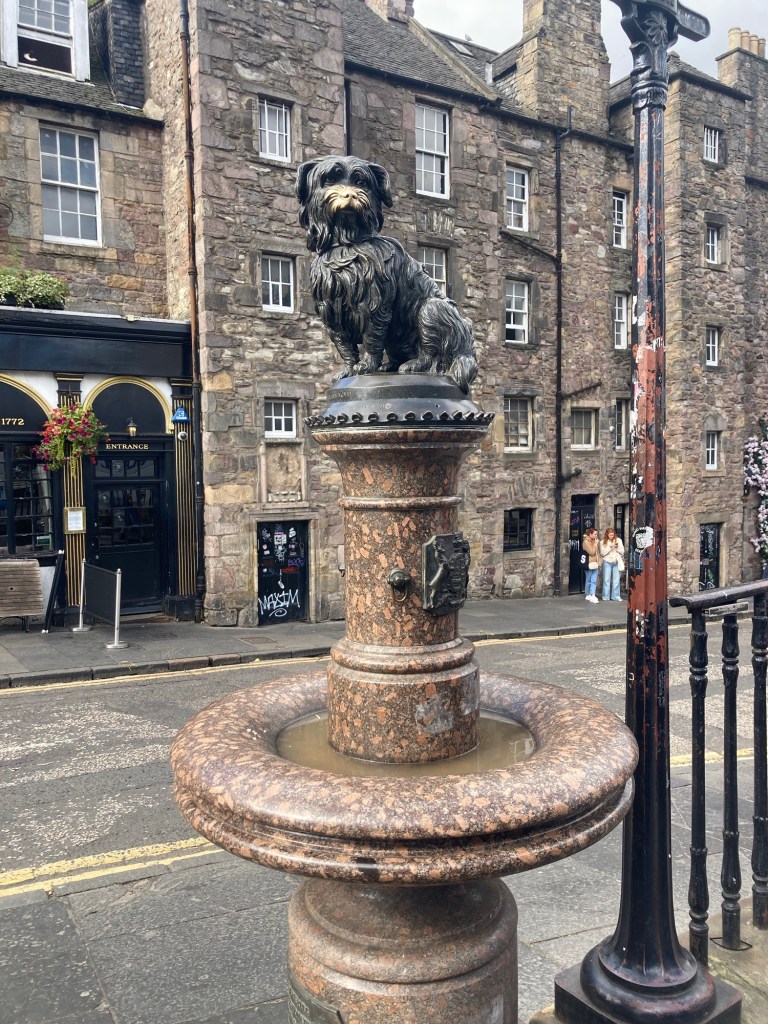
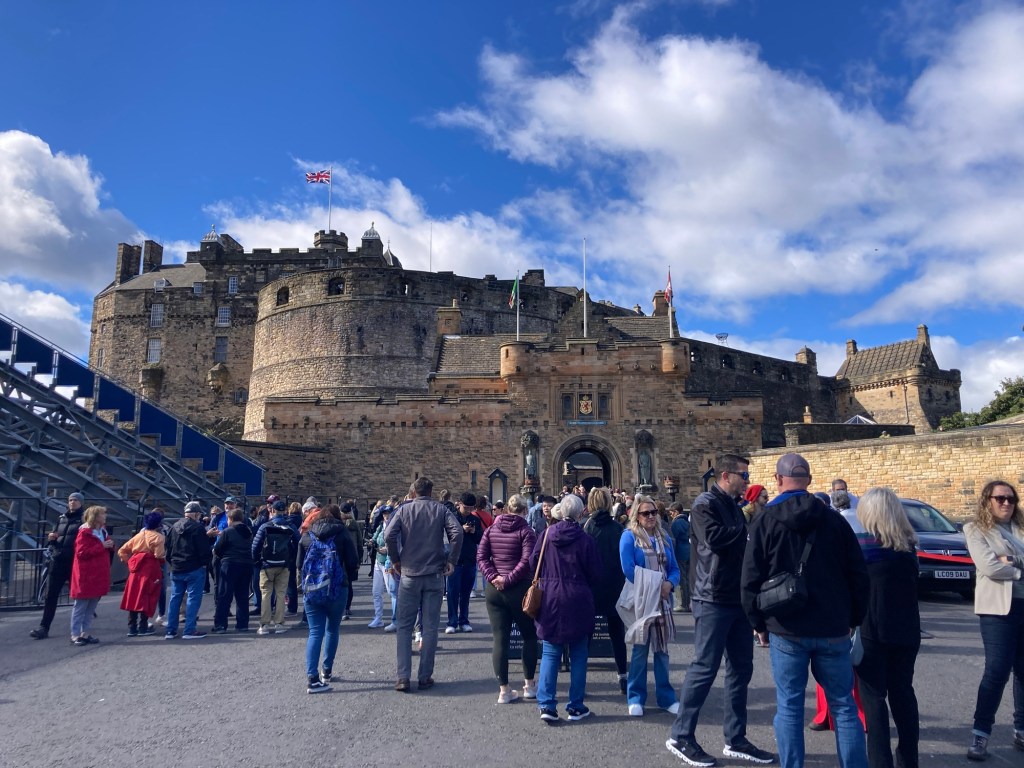
I started my sightseeing with a walking tour of the Old Town, taking in all the must see sites along the Royal mile, Edinburgh castle, Holyrood Palace, the alleyways known as closes and the Greyfriar cemetery, where I duly rub the nose of the statue of Greyfriar Bobby, the legendary dog who visited its deceased owner’s gravesite for 14 years.
I was unable to visit inside St. Giles Cathedral, best known where John Knox started the Presbyterian movement in Scotland, or the Writer’s Museum, dedicated to Robert Burns, Sir Walter Scott, and Robert Louis Stevenson due to the intrusive filming of a movie Frankenstein, which was blocking access to numerous sites.
The film crews only added to the large number of tourists in and around the Royal Mile. Queuing was a necessity to enter just about every attraction and, except for the free museums, were expensive. I passed on the £20 pounds required to enter the Holyrood Palace; the Royal family is rich enough already. Food and beverages in the old town were probably double the price everywhere else and generally not as good. I did indulge in excellent fish and chips at Bertie’s, a chippy shop run by Italians where a plate of fish and chips cost only $35.
On every tour I took, we learned the history of the Scots. In a nutshell, different Celtic tribes settled here about 7,000 years ago. The Romans tried, but failed, to conquer the land they called Caledonia. Out of the dark ages, Scotland emerged as a kingdom, until Edward I invaded in the 12th century and took it over. Rebellions by such luminaries as William Wallace and Robert Bruce restored the Scottish kingdom for a few centuries.
Following Elizabeth I death, James VI, a Stuart, of Scotland became James I of England, but after a few tumultuous decades, his descendant abdicated and William of Orange took over both the British and Scottish thrones. The countries officially unified in 1707, but supporters of a Stuart king, called Jacobites, rebelled a lot until the defeat of Bonnie Prince Charles in 1746. Scotland has been part of the United Kingdom since.
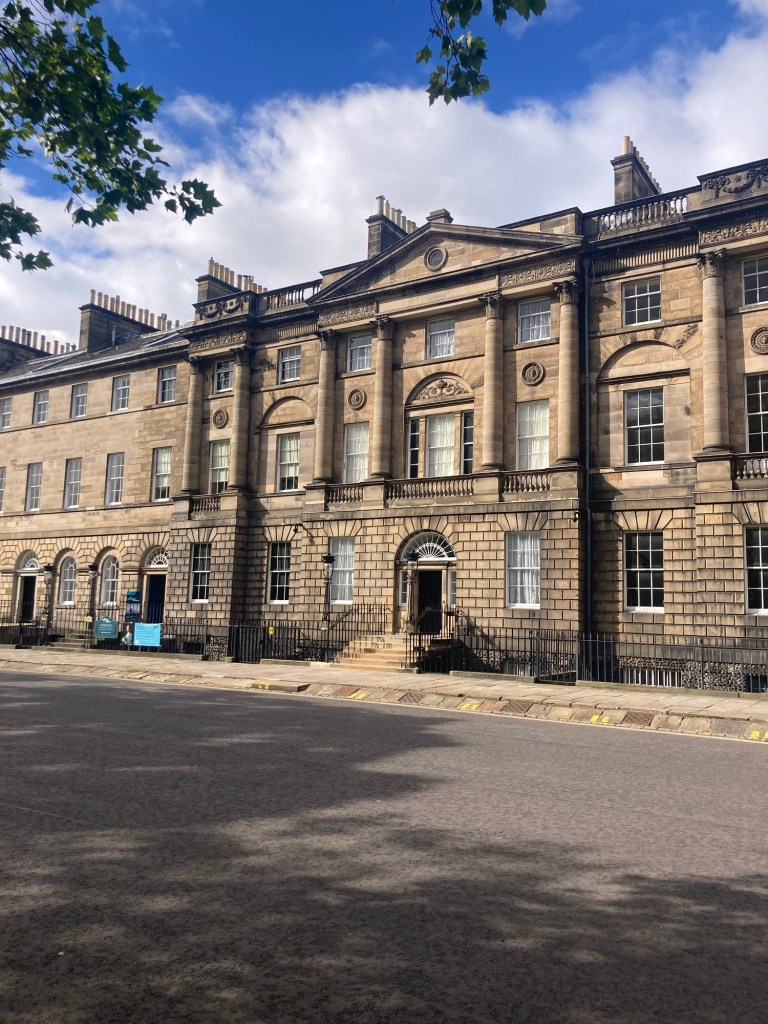
I took a walking tour of New Town, one of the first master planned communities. Begun in the mid 18th century, it was designed to lure the wealthy from the overcrowded Old Town at top of the hill and London, with its Georgian architecture, broad boulevards and private parks. It’s still retains many of those features today, along with the official resident of the Prime Minister of Scotland, which was not secured in anyway:
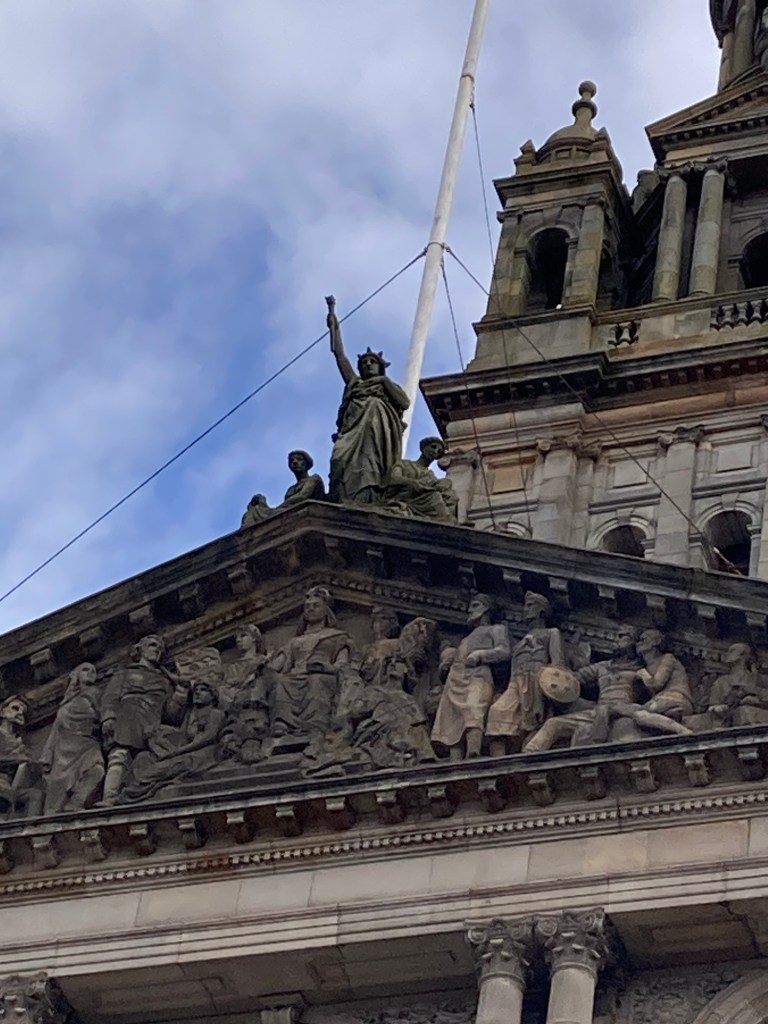
A quick 50 minute train ride took me to Glasgow, where my tour guide delighted in showing us the more comedic sights in Glasgow, like the City Hall. It’s adorned with carvings of Gallileo, Newton and the Statue of Liberty, none of which have any discernible connection to Glasgow;
Then there is Conehead, aka, The Duke of Wellington with a cone on his head. Started as a prank by a bunch of drunken college students 40 years ago, the city removed the cone every morning and it reappeared every night. After 20 years of this, the city gave up and embraced it, putting on cones relevant to the season;

Glasgow started a program of beautification, encouraging and later commissioning hundreds of murals to adorn its buildings’ walls:
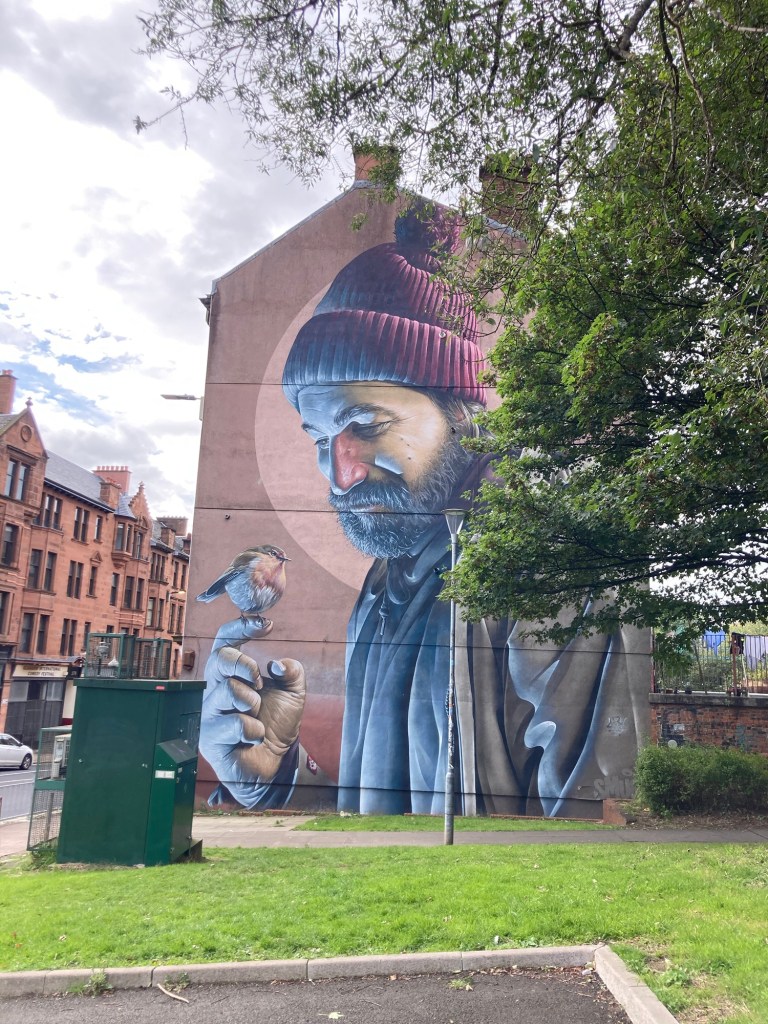
Glasgow was much less crowded than Edinburgh and, while it lacks the grandiose attractions of Edinburgh, certainly had enough to interest this tourist for a day.
Back in Edinburgh I got off the tourist track and walked along the Leith Water, a 13 mile path along the river Leith, ending in the Firth of Forth where the Royal Yacht Britannia is berthed. The walkway is a peaceful paradise in a busy city:
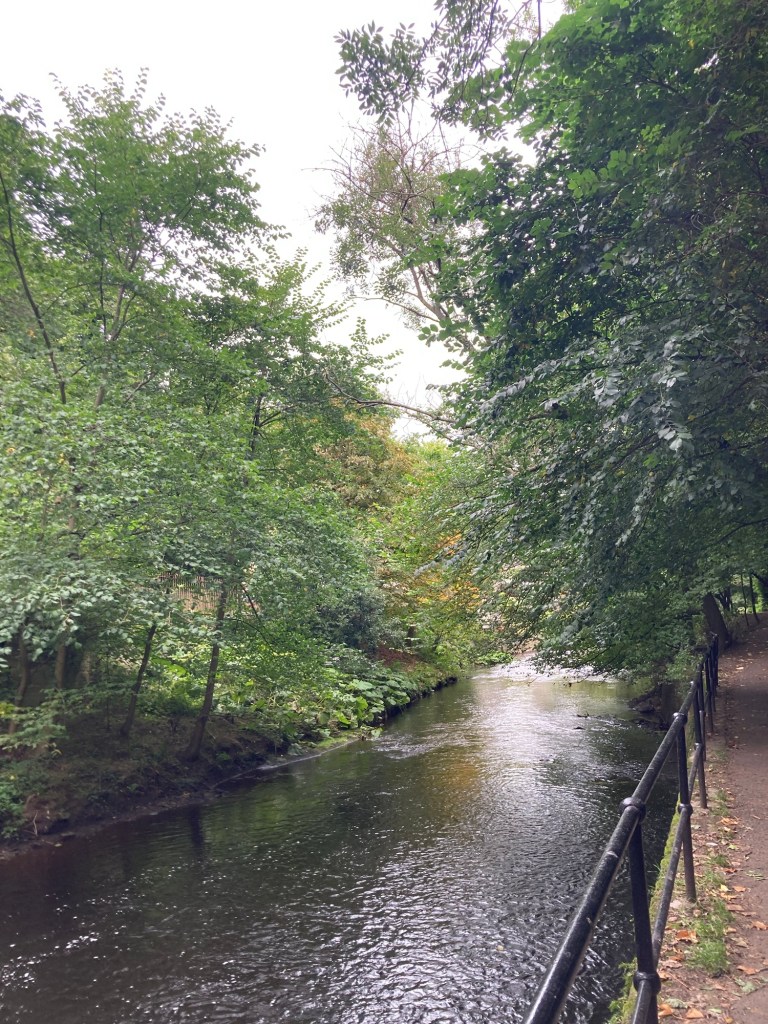
One of the highlights along the walk is Dean Village, a well-preserved medieval town:
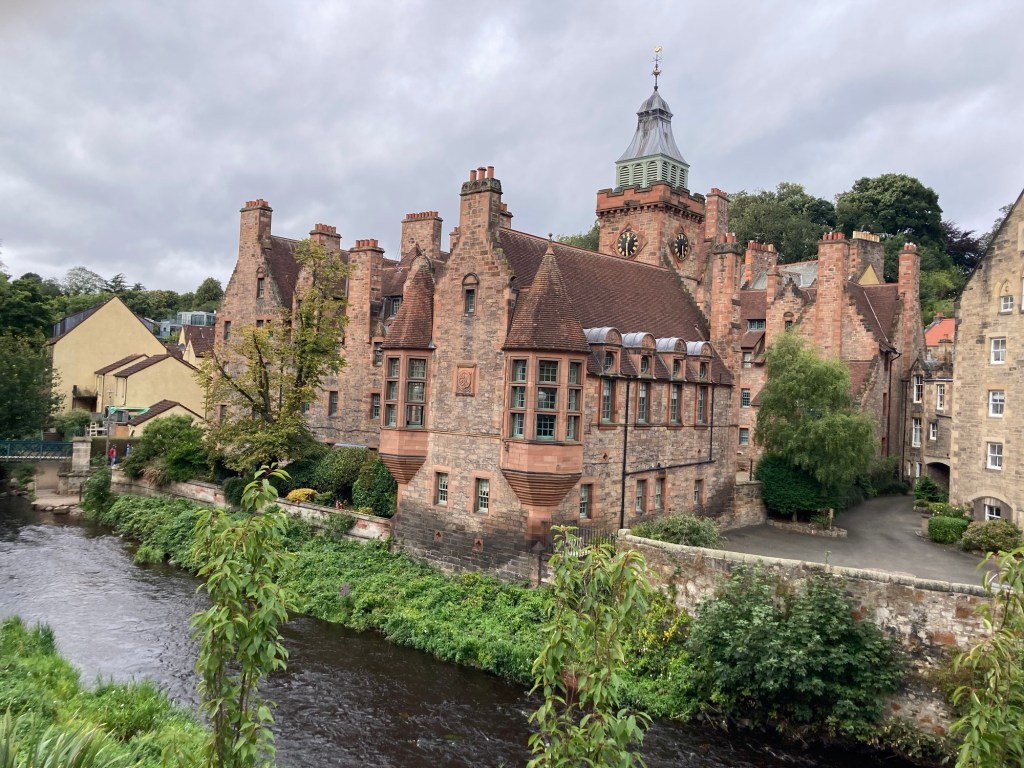
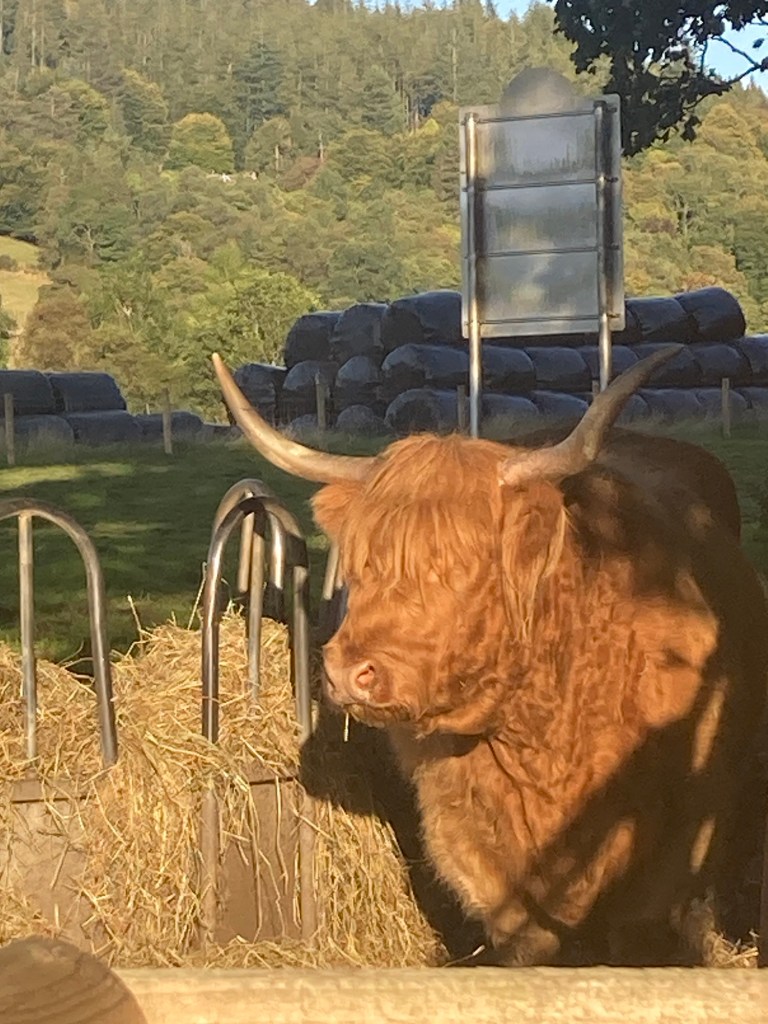
The next day, I started on my 3 day tour of the Scottish Highlands and the Isle of Skye with 22 other tourists aboard a bus called the Hairy Coo, named after the hairy cows brought over by the Vikings a millennium ago:
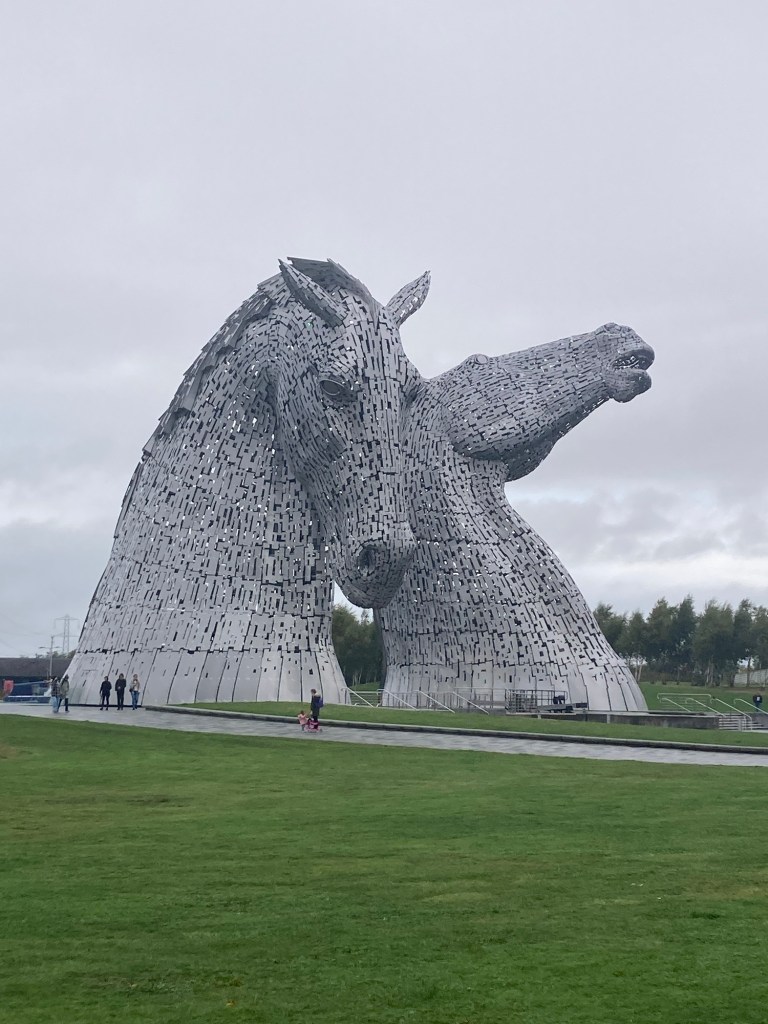
Our first stop was at one of Scotland’s newest attractions, a gigantic sculpture of two kelpies, mythical water creatures who eat sailors and take the shape of white horses;
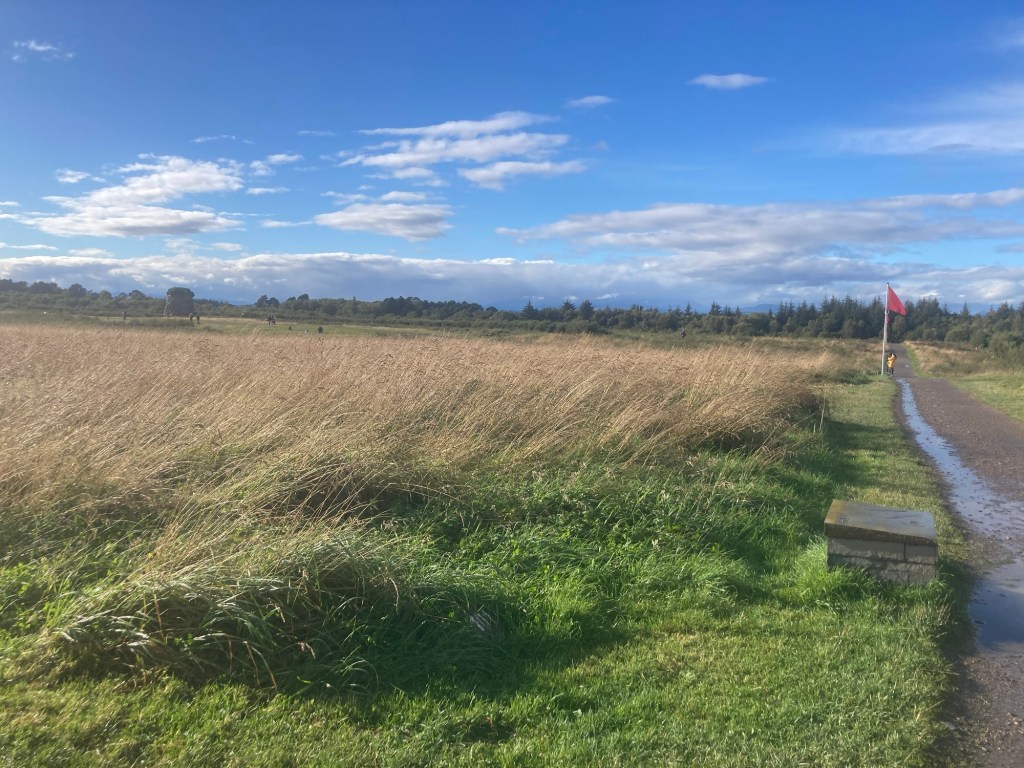
A few stops later, we arrived at Culloden, the site of the final battle on English soil where the Brits defeated Bonnie Prince Charles and quelled the Jacobite rebellion. As battlefield sites go, it was pretty standard; a large expanse of green fields with a few flags to mark different troops’ lines and various commemorative plaques:
Just to bring home how expensive this country is, this is my $212 per night room in Inverness:
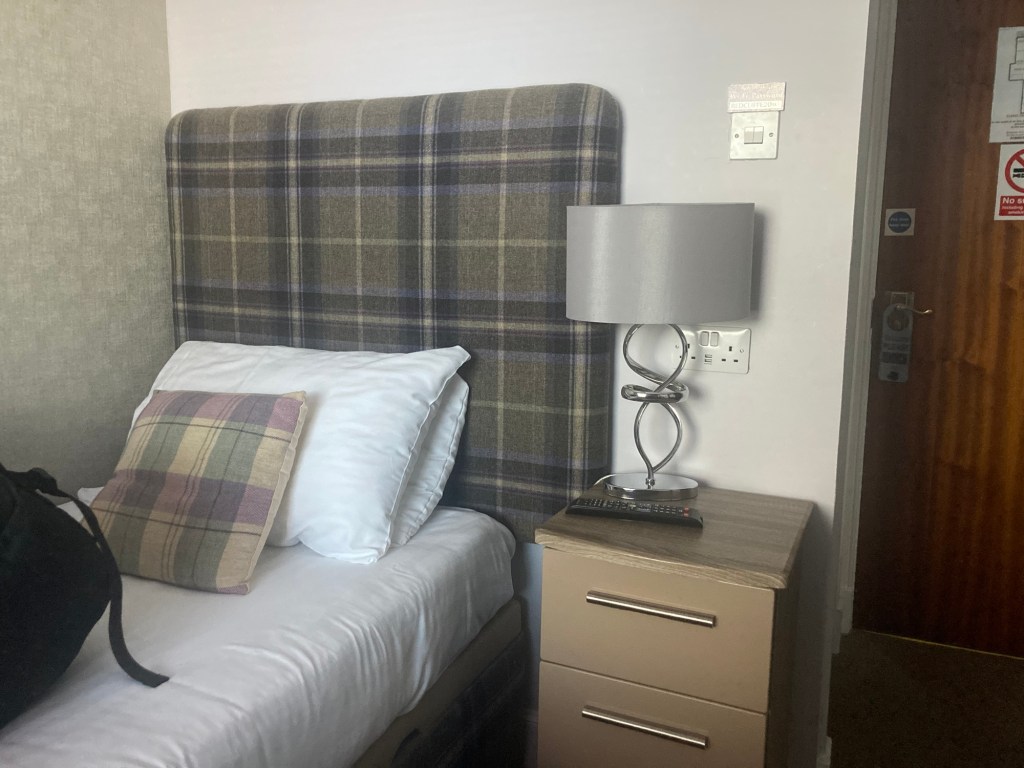
At least it had a private bathroom and the staff were kind.
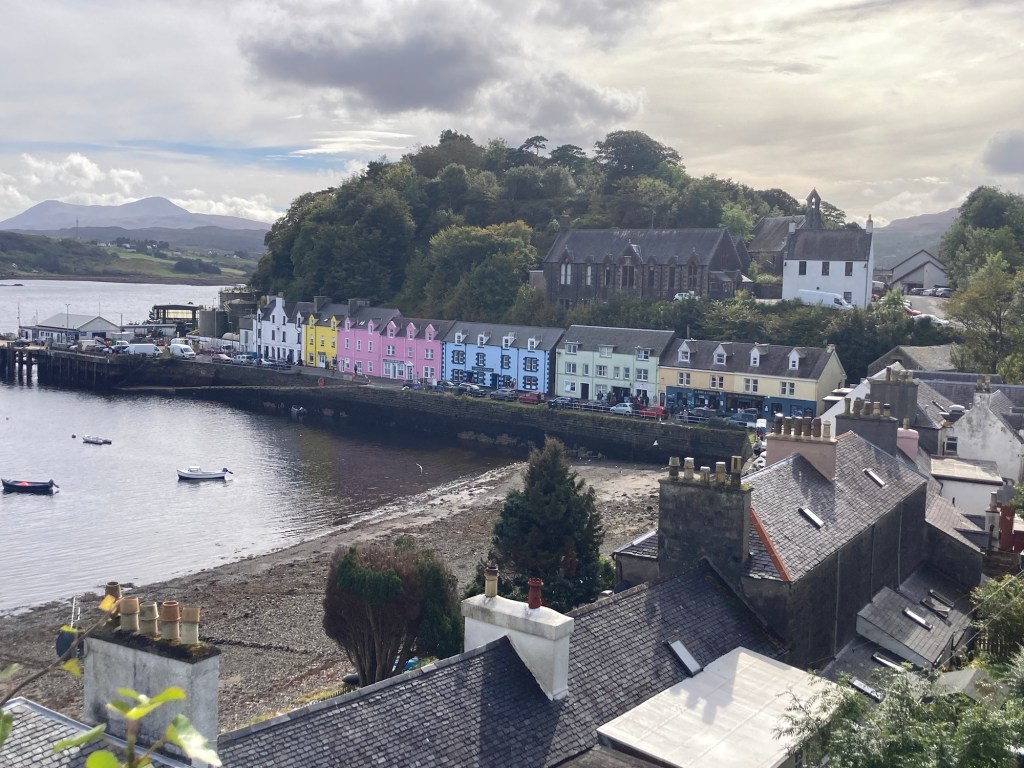
The next day saw us take the bridge over to the Isle of Skye, where the main attractions were the pretty town of Peartree:
And the stunning scenery, described as wild, rugged and untouched:
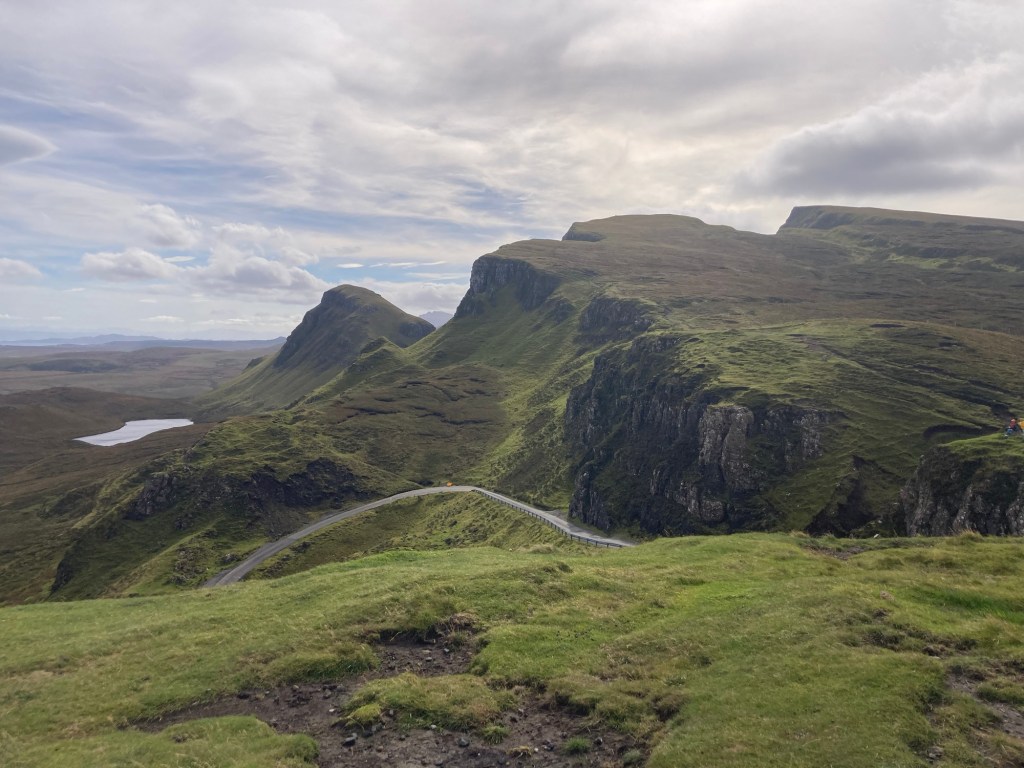
Yes, it was pretty. Not much more to say about it.
Our final day saw us cruising Loch Ness, looking intently for Nessie the Monster:
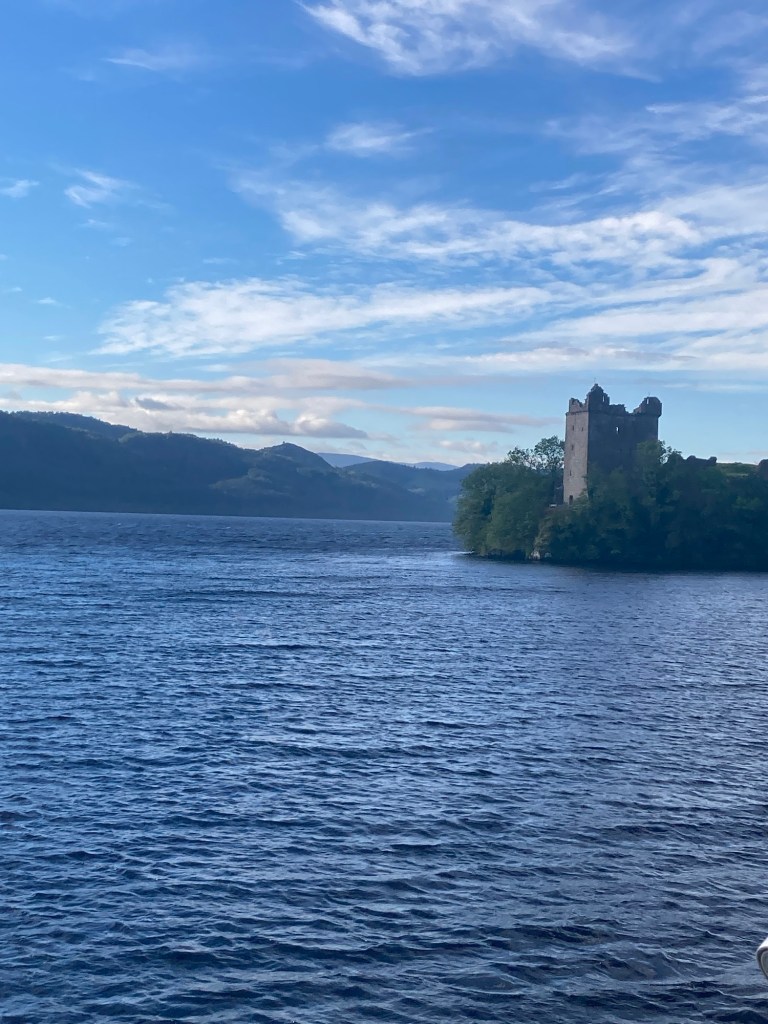
Needless to say, no monster was spotted or you’d have heard about it on the news, but we did sail by Uruquart Castle, a medieval fortress mostly destroyed during the Jacobite rebellions.
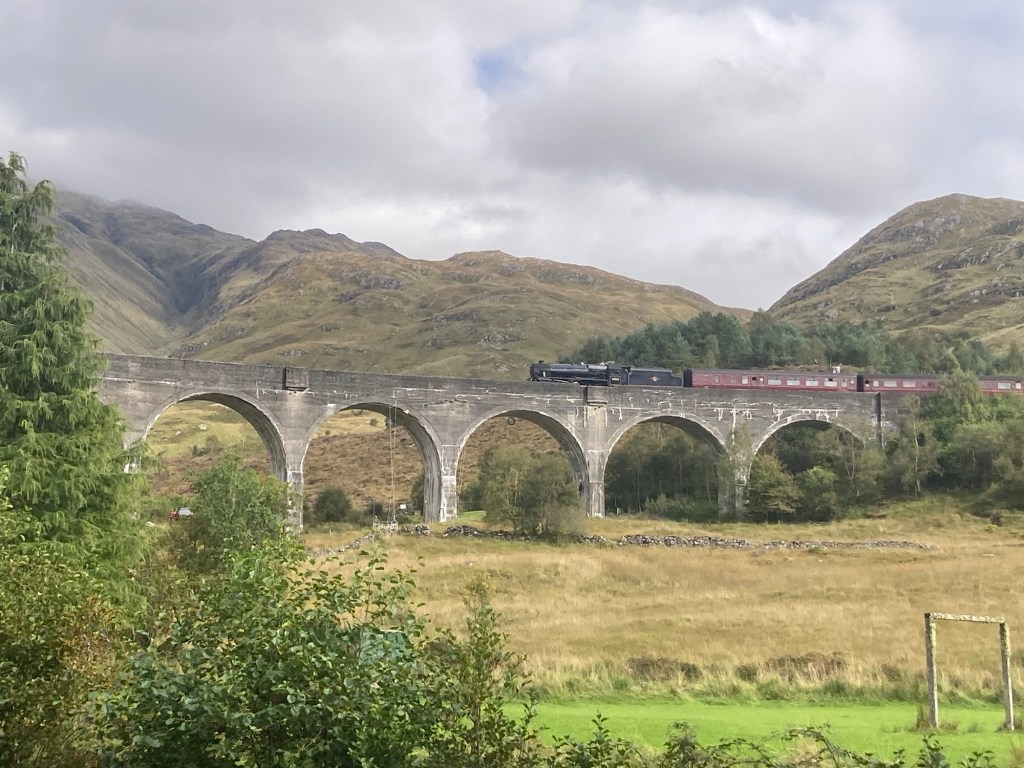
A trip to the highlands would not be complete without a stop at Glenfinnan Viaduct, constructed in 1892 but achieving fame in Harry Potter as the Hogwart’s Express steamed towards the school. Today, at 1:20 ( never early, often late) a tourist train rolled across to the delight of hundreds of tourists eagerly snapping photos and videos (myself included):
My tour, and time in Scotland, ended after 8 days. So were my preconceived notions borne out? It is surely very expensive and there are way too many tourists for my liking. But overhyped? No. It’s a fascinating country with lots to interest this history buff along with modern art, pop culture and innovative features. It was definitely worth my return visit.
Next stop: The UK by train
 travelsnearlyeverywhere.com
Sounds amazing! Dont need to go now, your descriptive text says it all! Enjoy London, pick pockets are rife! Looking forward to reading your trip there!
LikeLike
Sounds like you are having an amazing time . I was also surprised to see how Glasgow has modernized and beautified. The battle at Culloden was so iconic. I have been there and read so many books about the battle. You really did the whole country.
LikeLike
It’s a wonderful country with lots of interesting things to see and do. If only they could do something about the weather…..
LikeLike