
Those were the words uttered by US president Donald Trump as he criticized USA aid to this small African country in a speech to the Congress on March 6, 2025.
As I was in Lesotho at the time, I can say I had heard of it. I had arrived in the capital, Maseru, and was looking forward to a few relaxing days in nice, hot weather and learning a little bit about this not very often visited country.
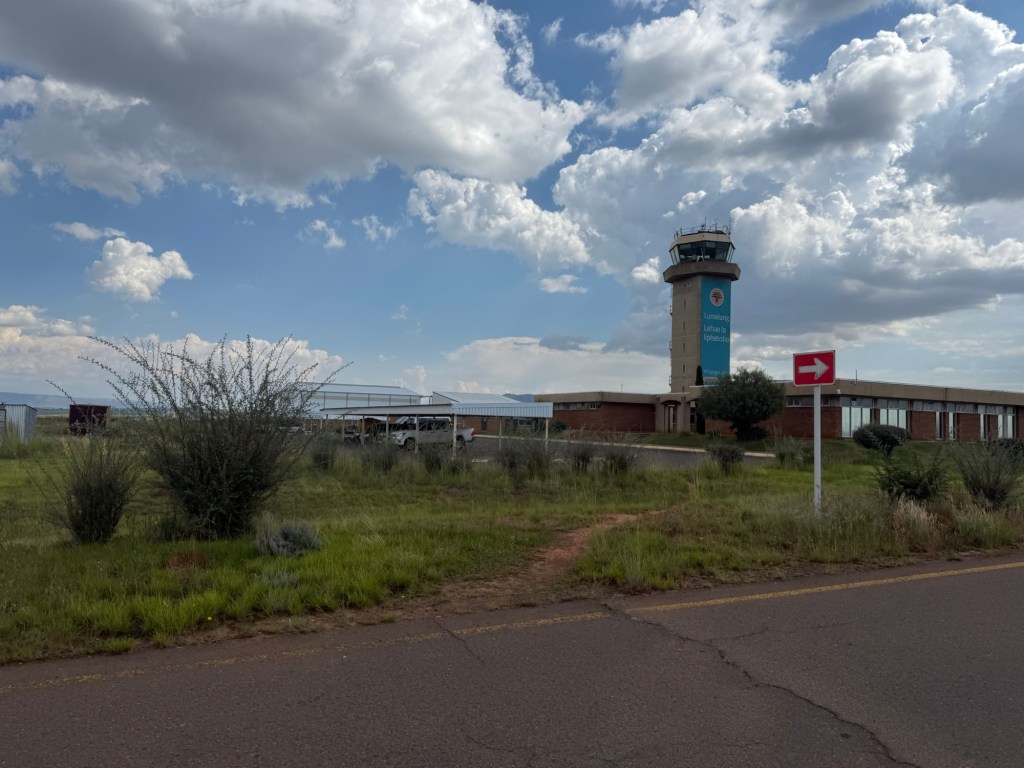
There’s only one international airport in the country, at its capital Maseru, and there’s usually only three Embraer flights a day coming from South Africa carrying 20 to 30 people each. The international airport has only one arrival and departure gate.
Going through immigration, I had to fill out paper forms, something I don’t think I have done in five years. But clearing immigration was quick, my bag arrived swiftly, and the single shuttle that would ferry passengers into town was waiting outside.
Mesero reminded me of any large African city, with people walking along roads lined with corrugated metal stalls selling all manner of goods and SIM card. Vendors were hawking corn, grapes, and bananas. Sheep and the occasional cattle herd crossed the road in front of us. But it was all very relaxed; the two traffic lights we encountered were not working, but everybody proceeded through in a very polite and orderly manner.

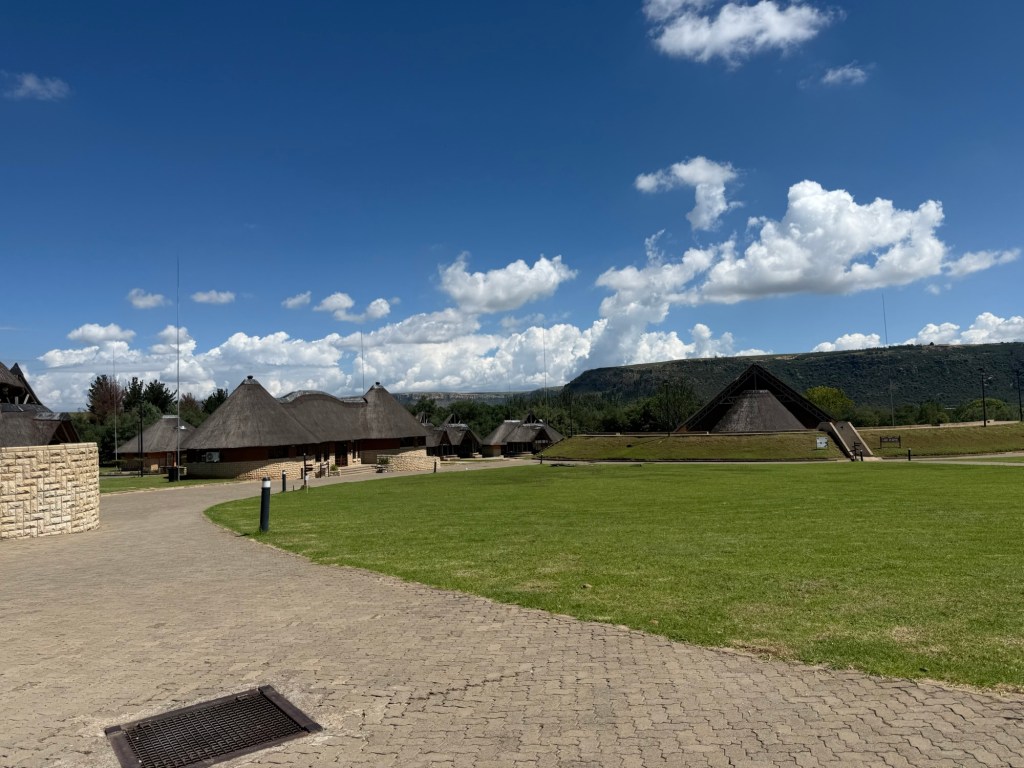
To learn more about the country, I visited the Thaba Bosiu cultural center, both a living museum and the site where the country’s greatest king settled.
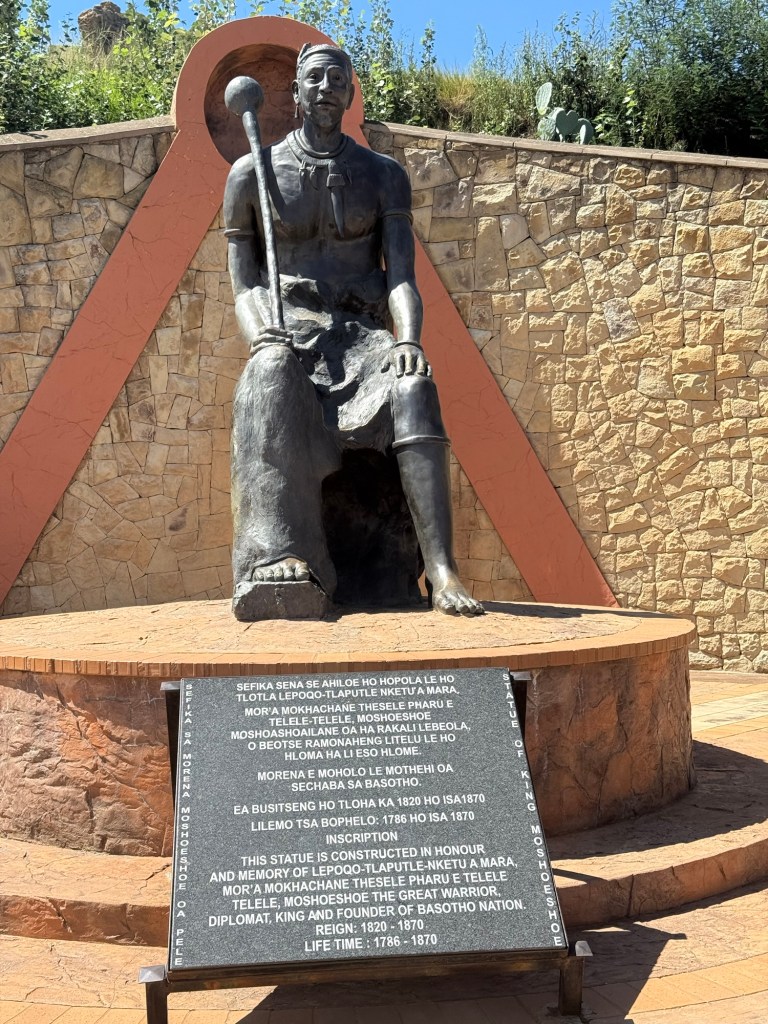
King Moshoeshoe is regarded as the first king. Born in the late 1780’s he gained notoriety for uniting the various Besotho tribes and, together, they repelled many of the Zulu tribes from Bosotho lands in the south of Africa. The Besotho then turned to harassing the Boer invaders who were trying to establish farms on traditional Besotho lands which, at the time, included much of the present day Cape in South Africa. To assist with their anti-Boer activities, King Moshoeshoe signed a treaty with the British in 1843 agreeing to combat the Boers.
More treaties with the British ensued, the upshot being that the Besotho gave up claims to much of their land, but became a British protectorate in 1868. King Moshoeshoe eventually settled on a plateau outside present day Mesero called Thaba Bosiu
. While nothing remains of the original city, its location has been repurposed as both a cultural center and where the country’s largest celebration of independence is held:
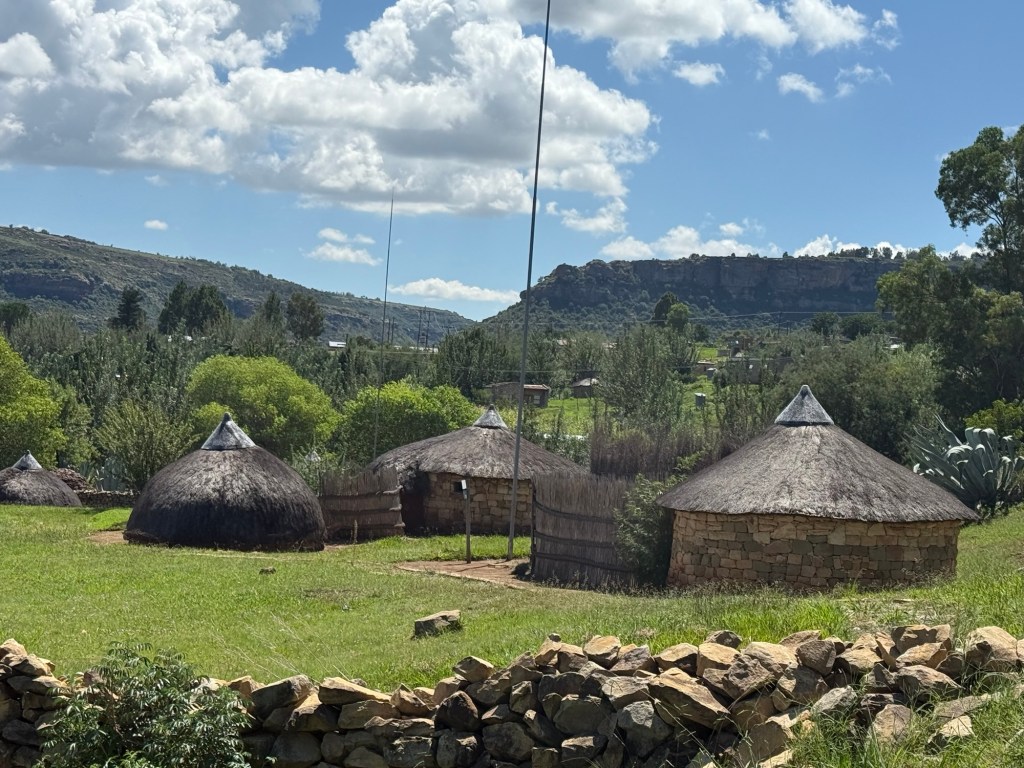
One of the features of Basotho society was polygamy. King Moshoeshoe had 140 wives, each having their own compound with a sleeping hut, a kitchen hut and a third one for the children. Polygamy was seen as necessary due to the high death rate of men during their numerous battles.
Lesotho gained independence from Britain in 1966 and has retained it status as a kingdom ever since. As it was never part of South Africa, it never endured the horrors of apartheid. Although notionally a constitutional monarchy, there were conflicts between the monarch, the government and the army since independence. During violent civil unrest and disputed elections in 1999, South Africa and Botswana defence forces were “invited in” and eventually restored peace, They withdrew a year later and peace, more or less, had endured since.
The majority of Lesotho’s 2 million inhabitants are subsistence farmers. Diamond mines provide good jobs, but are majority owned by foreigners with the Lesotho government maintaining only a 30% interest in all of the mines.
Another economic source are Lesotho rivers and giant hydroelectric dams, which provide both water and electricity to South Africa. I visited the Mohale dam, which is in the lowlands:
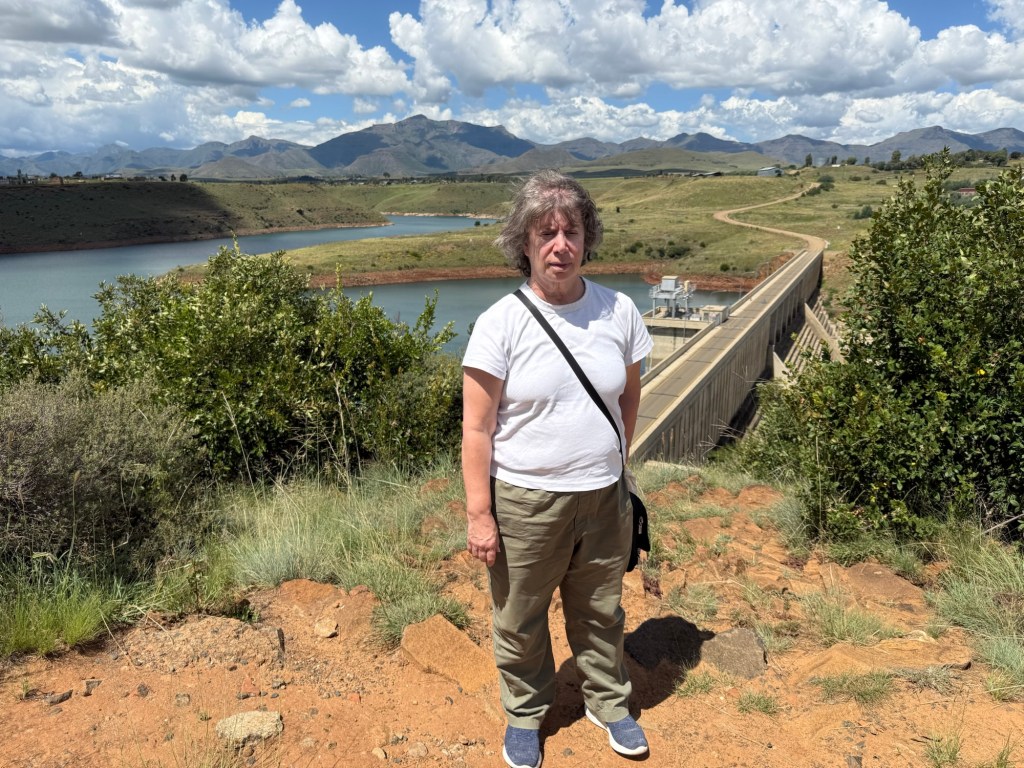
Lesotho is known as the Mountain Kingdom because its average altitude is 2000 metres or 7000 feet above sea level. A ski resort is in the mountains, but given my dislike of anything to do with snow, it was not on my list of things to see.
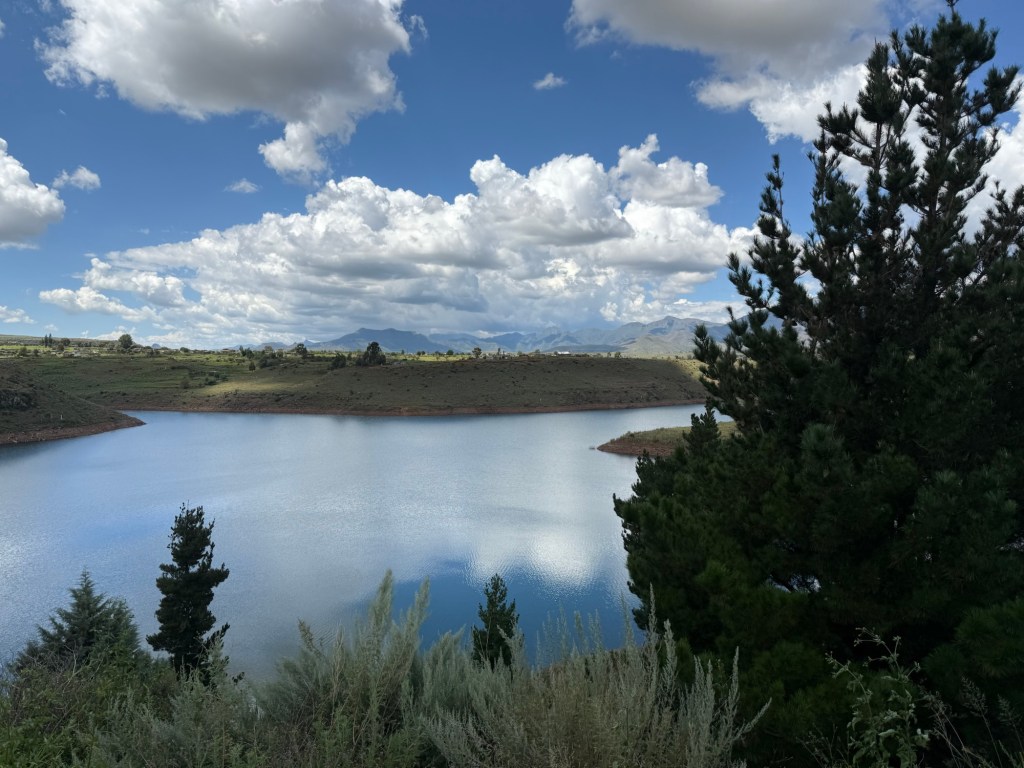
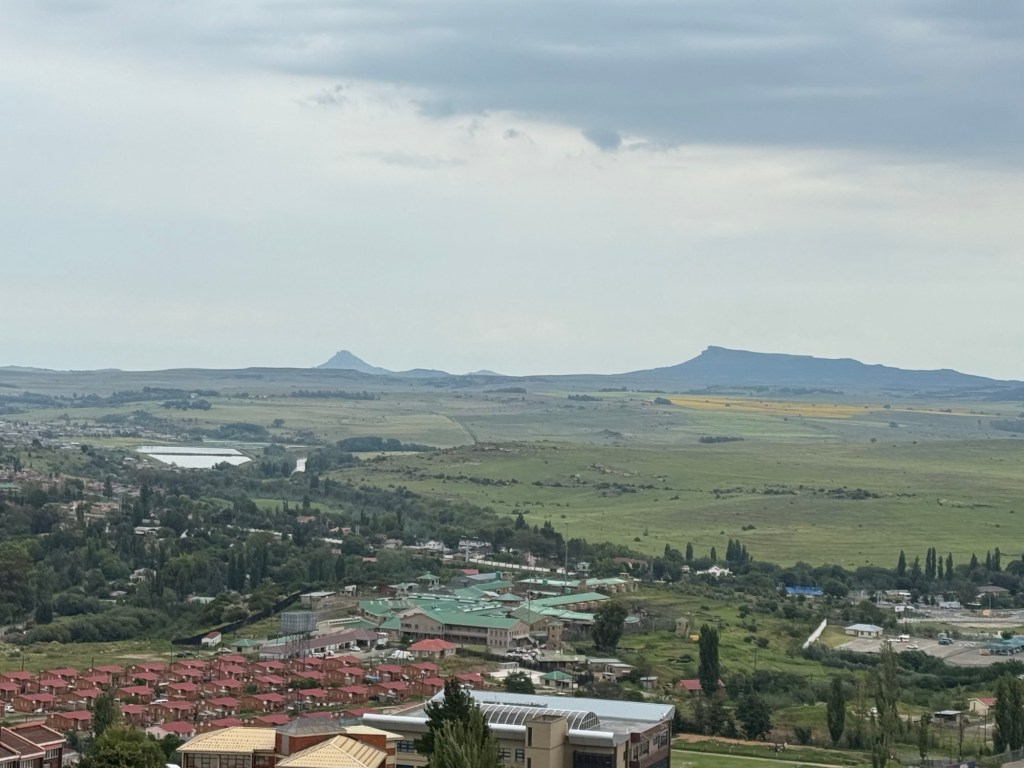
The few tourists who do come to Lesotho often come to hike in its stunning mountains, verdant forests and numerous waterfalls, but as I don’t really enjoy hiking, I was content to stay in the city. Even there, the greenery of the country was evident:
But it would be wrong to paint Lesotho as a garden paradise. It has one of the lowest life expectancy rates in the world, primarily due to the AIDS-HIV epidemic. As many as 25% of the population over 18 is infected, although that rate is going down, thanks in large part to extensive donations by the US government for education and medication. I do not know if Trump’s cuts to foreign aid will eliminate this source of funds but I’m sure he doesn’t care about a bunch of Africans in a country he doesn’t think most people have heard of.
I don’t want to end this blog on a down note, so I will relate my favourite memory of my time here. Like in France, it is considered rude to pass someone without an acknowledgment, a simple “hello, how are you”. Everywhere in Lesotho, this simple act of greeting people ( in elevators, in cabs, waiters in restaurants, guides) opened up conversations with so many people. As English is an official language, communication was easy. And talk I did, about people’s opinion of their country, of Trump, of the government ( corrupt), of business opportunities, best food to try ( trout from the rivers), etc. I know I’ve described lots of countries as having friendly people, but Lesotho was full of very friendly, kind people always eager to help or converse. It’s a shame nobody has ever heard of it, because it’s lovely.
Next: another under visited country in Africa.
 travelsnearlyeverywhere.com