
It’s hard to describe how I feel about Eswatini, where I spent four days in its capital, Mbabane, in March 2025.
It is, first of all, very easy travelling. I took a pleasant 4 1/2 hour shuttle bus from Johannesburg airport, cleared customs in a minute, and then arrived in Mbabane. The bus let me off literally a two minute walk from my hotel, the best in the country, a Hilton with somewhat unique architecture, but every convenience necessary.:
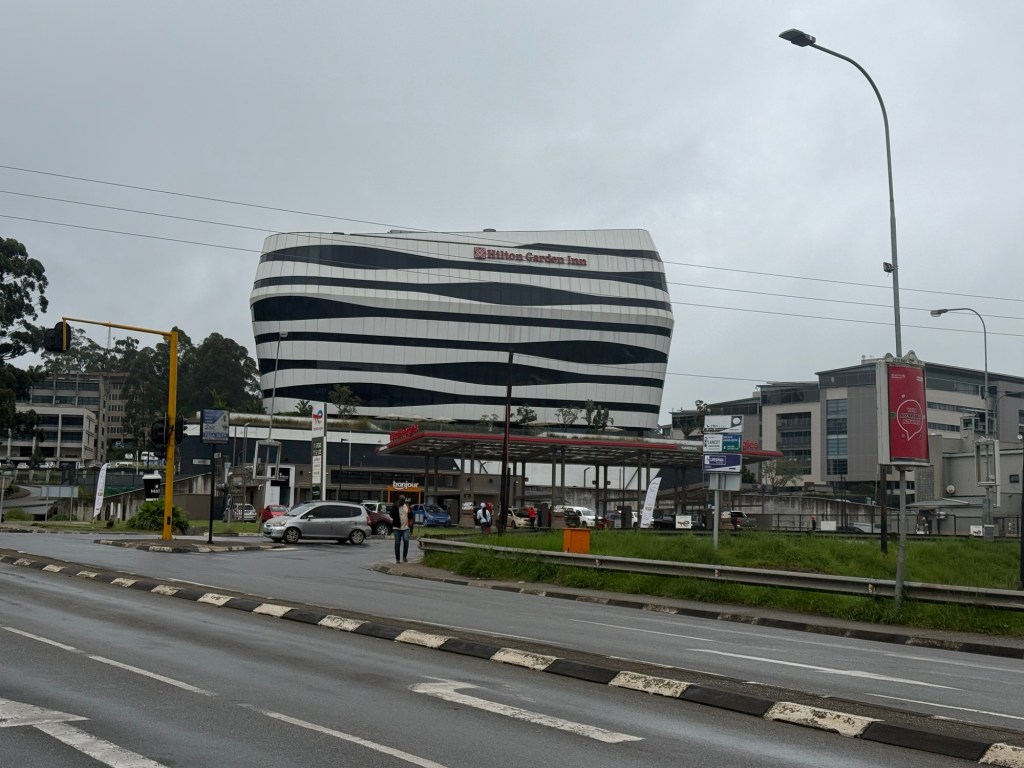
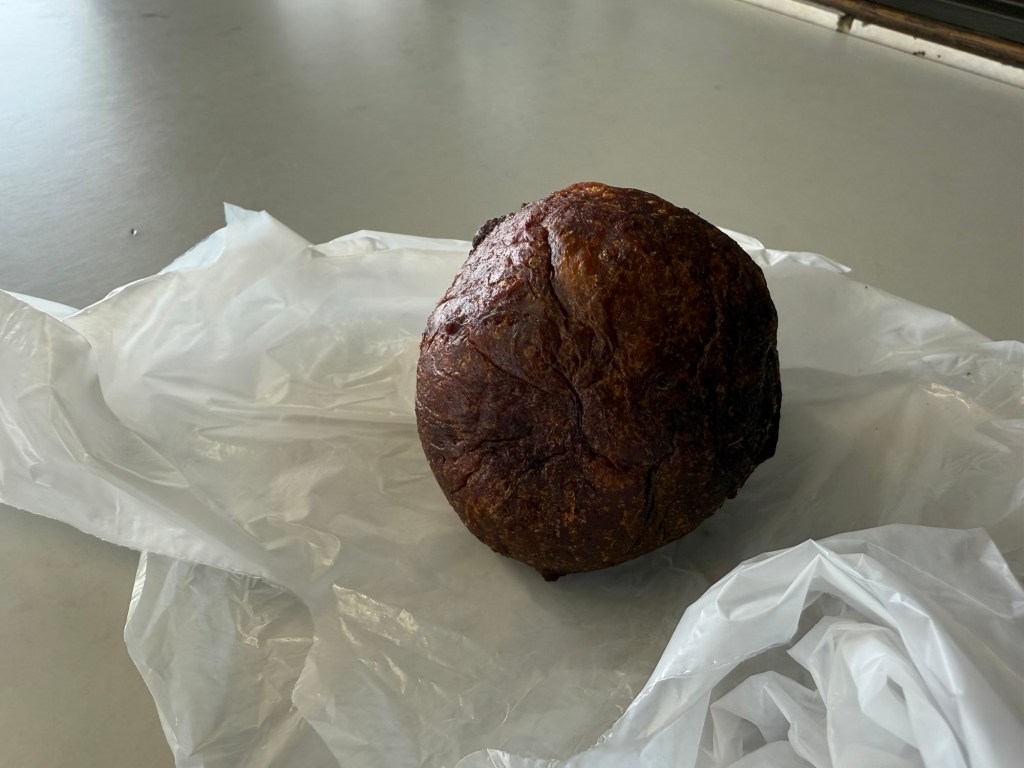
The street lights worked, Internet worked. Credit cards were accepted everywhere and the city felt safe. A Spar grocery store sold all the necessities, at a far cheaper price than back home. A dozen eggs were $2.00, grapes $1.99 a kilo and a bottle of South African wine was only $6.00. I was introduced to the delights of fat cake, a delicious concoction of flour, sugar and water and fried in oil, which. I later learned, had a huge number of calories and absolutely no nutritional value whatsoever:
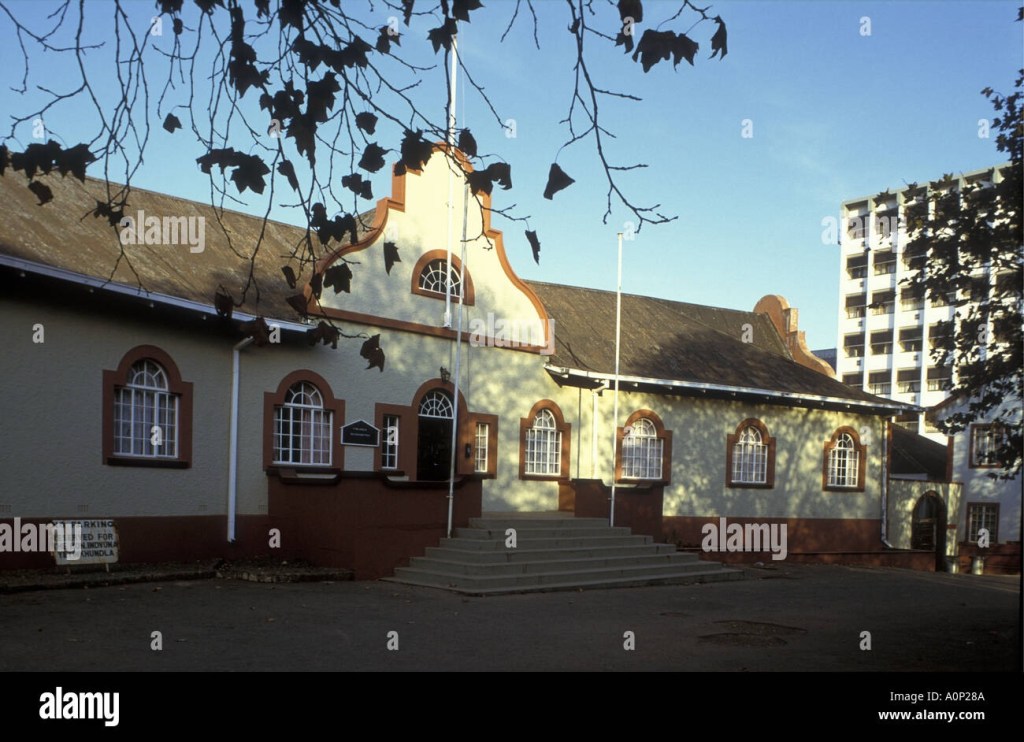
I did a walking tour of Mbabane and, quite frankly, there’s not a lot to see. There’s an old Dutch Cape building.:
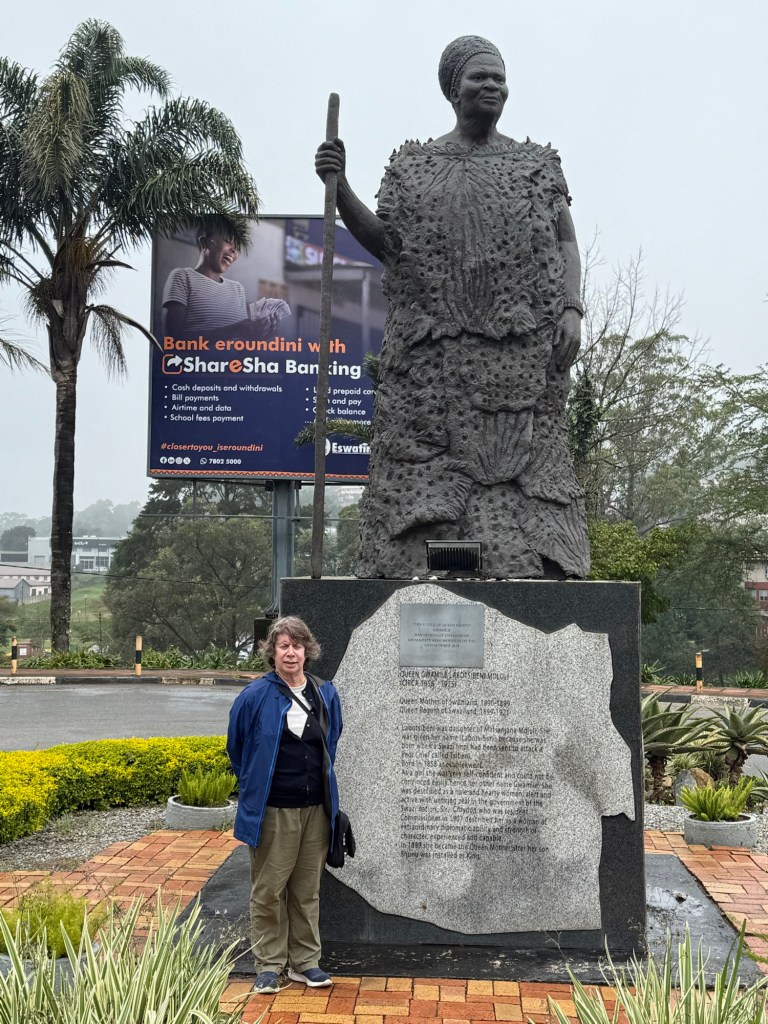
….and a statue its revered Queen Labotsibeni, the grandmother of the current King and, as Queen Regent, the person responsible for steering Eswatini through its turbulent colonial period:
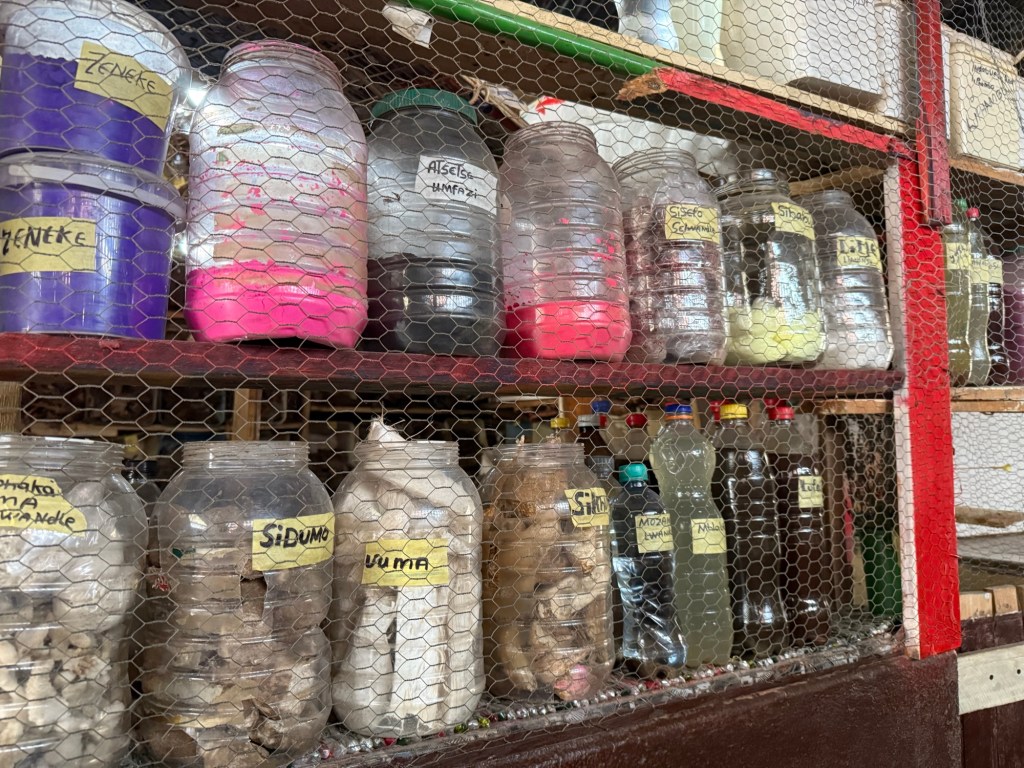
I ventured to the market, where various buildings housed crafts, fruits, and vegetables, and traditional medicine My guide said he used the Shaman medicine in the first instance, but if it didn’t work, he went to Western doctors:
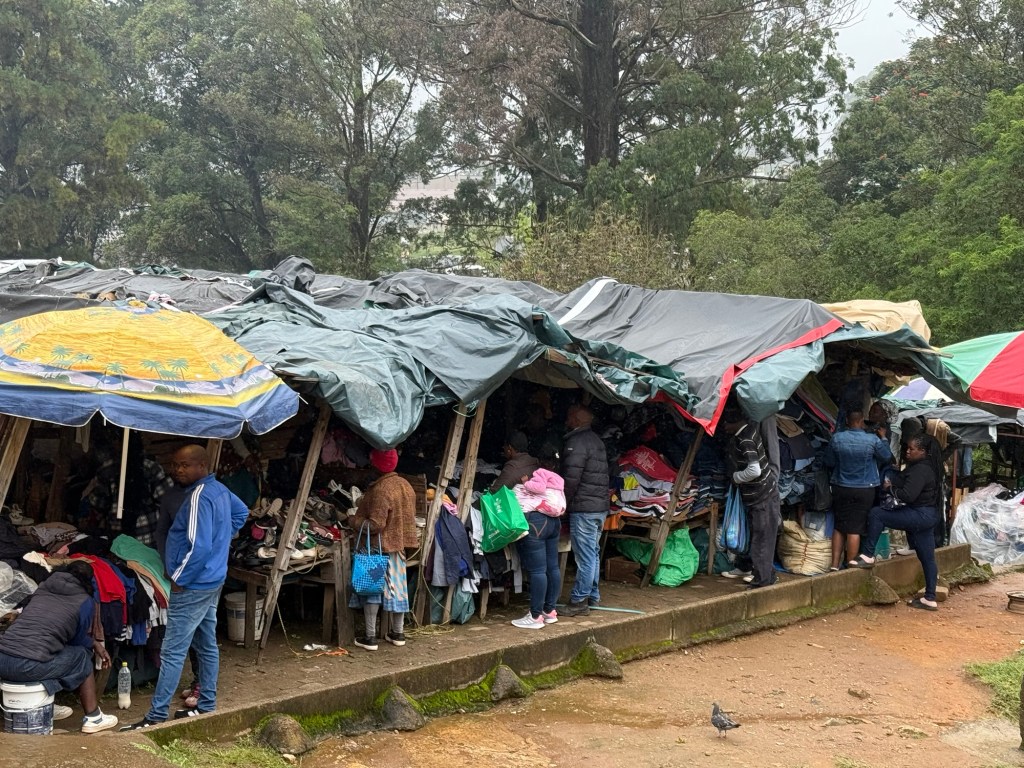
Sadly, there were makeshift stalls filled with “donated” western clothes which had made their way to the market for sale:
Beside this rather brief walk through the town, I found little to do. Safaris in the National Park, abutting Kruger, were an option but I’ve done my share of safaris. Hiking in the gentle mountains was another option but I’m not much of a hiker and it was raining non-stop. A cultural center showcases Swazi customs, lifestyles and ceremonies, a nearby candle factory makes fanciful candles and a glass factory turns recycled glass into different objects.
None of this was of much interest to me; I prefer to learn about the history, the politics and the economics of a country, and, in these respects, Eswatini is fascinating.
The country is inhabited by mostly Swazi tribes people, who at one time lived in much of southern Africa. Wars amongst tribes and colonialism reduced their land to a small area beside South Africa. Swaziland ( the king changed the name to Eswatini in 2018 to avoid confusion with Switzerland) was forced to give up huge swathes of land to South Africa, including Kruger, at the behest of the British in order to maintain a semblance of independence. It became a British protectorate in 1906 and received independence in 1968. Although there was no formal apartheid, there was clear delineation between the races, with the non-whites being restricted to areas across the river in Mbabane after nightfall.
The longest serving monarch, King Sobhuza served from 1921 to 1982. His son, the current King Maswsti 111, was crowned in 1986. Unlikely other former British colonies which, at least paid lip service to transitioning to democracy, Eswatini did not. The king rules as an absolute monarch. Although there has been a Parliament since 1967, political parties are outlawed and only persons approved by the king are permitted to run. Rumours of disappeared opposition persons and censorship abound.
While notionally a Christian country, the Christian church stands side by side with traditional Swazi beliefs, including polygamy. The current 56 year old king has 15 living wives and last year announced his engagement to another, the 21 year old daughter of South Africa’s former president Jacob Zuma in exchange for 100 cows and 1,000,000 Rand (about $78,000 CDN). His marriages have never occurred in a Christian church, with its ban on polygamy.
The king lives a lavish lifestyle and each of his wives is said to have an opulent palace, but glimpsing any of the palaces isn’t possible as they are well hidden and guarded. So sorry, no pictures.
Unofficial reports say the king and his livelihood command 20% of the country’s annual budget. In a poor country like Eswatini, this is crushing. The majority of the population are subsistence farmers, many toiling on farms owned by the state. HIV is rife and unemployment high. For many, the only hope of a better life is to move to South Africa.
The king’s succession plan does not automatically fall to his oldest son and no one is certain who will be the next king. My guide said this was not a bad thing; anti-government riots in 2021 stemming from allegations of police brutality, have not resolved festering anger towards the absolute monarch. Maybe, my guide hoped, the death of the king would lead to political reform.
So what are my final thoughts about Eswatini? Mostly sad. It’s a beautiful country with kind, friendly people but they’re living under an oppressive regime which is hampering political and economic progress. I didn’t get the sense the country is a powder keg, like Mozambique felt, but more like a populace resigned to their fate. Hopefully it will change peacefully but I’m not optimistic.
Next: Zimbabwe
 travelsnearlyeverywhere.com