
I had never been to Zimbabwe, but had seen it from across the bridge in Livingstone, Zambia in 2007. In those days, the consensus was Zimbabwe was not a good place to visit. Super -inflation was rampant and out-of -country buses and cars carried their own petrol since it was impossible to purchase any in the country.
Things have improved since then. The US dollar is the principal currency and inflation is under control. Everything a tourist needs is available. The main roads are paved, Internet works everywhere, credit cards are accepted, and English is an official language.
I arrived in March, 2025 and quite enjoyed my time in the country. Much of this was due to the hotel in Harare where I stayed. The Brontë Hotel is an old colonial hotel with decent, but not spectacular rooms. What set it apart are its gardens, with inviting swimming pools, beautiful flowers, and lovely sitting areas situated amongst the fauna;
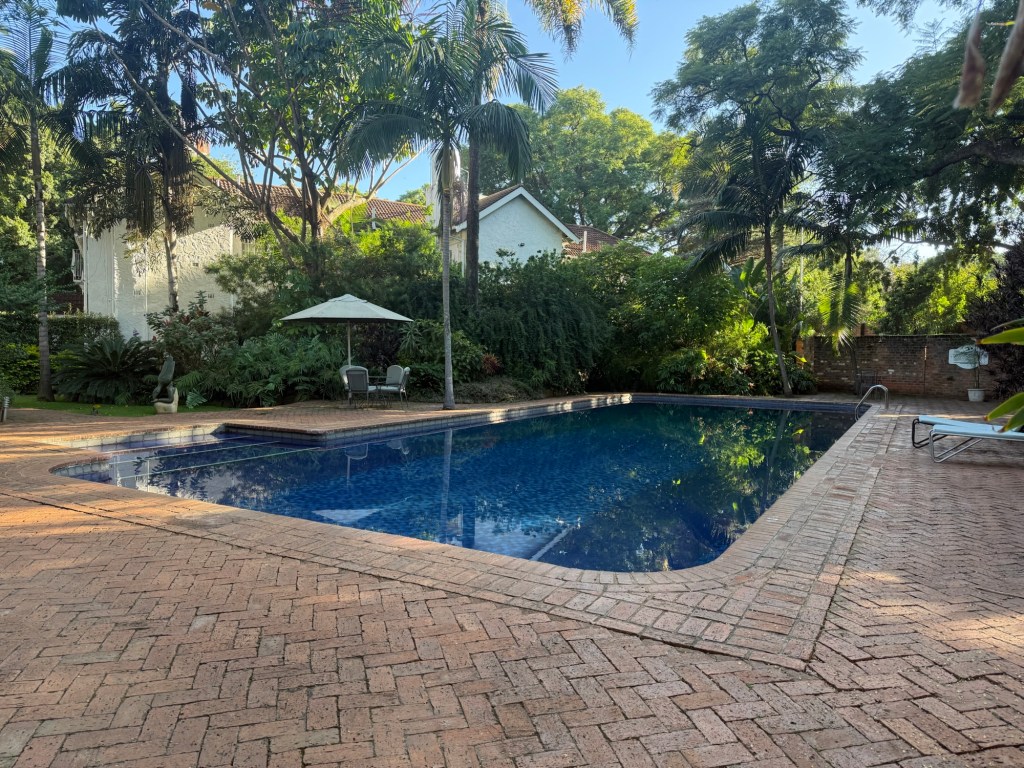
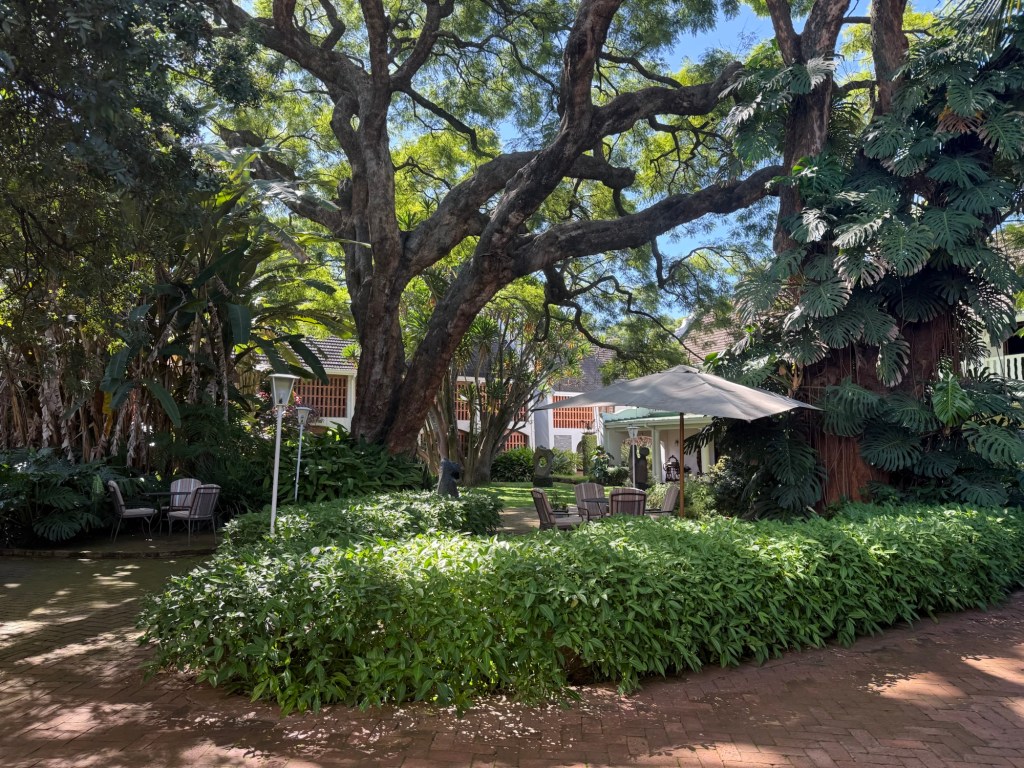
Scattered about the garden are numerous Shona sculptures, the Shona being the principal tribe who inhabits Zimbabwe:
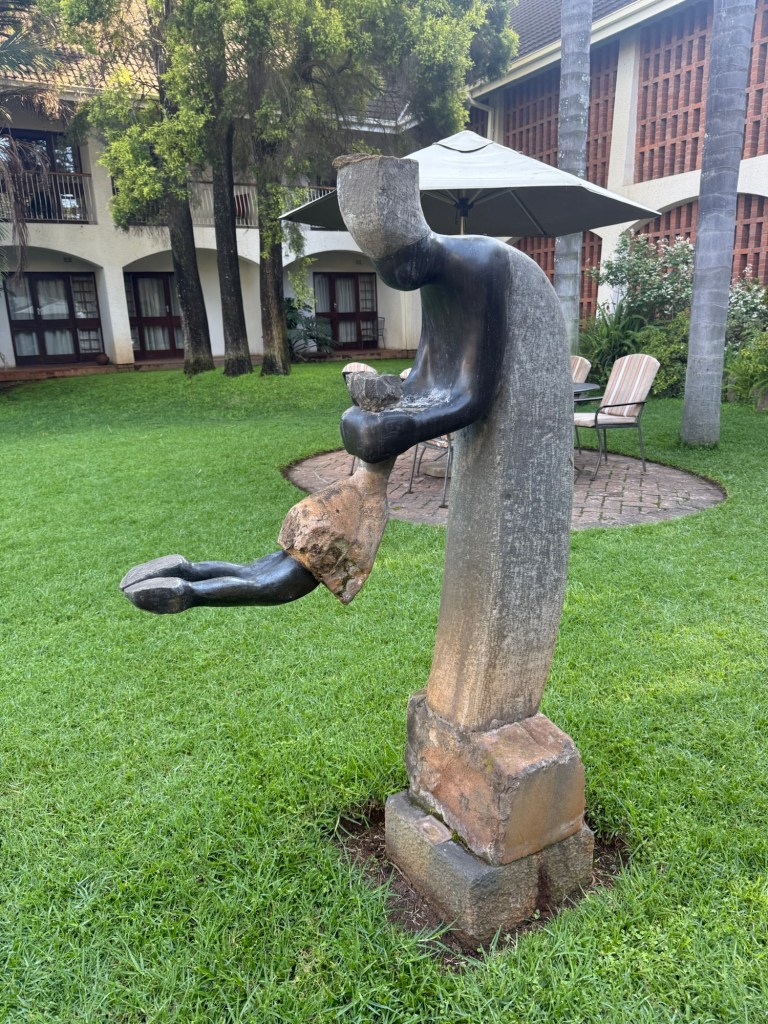
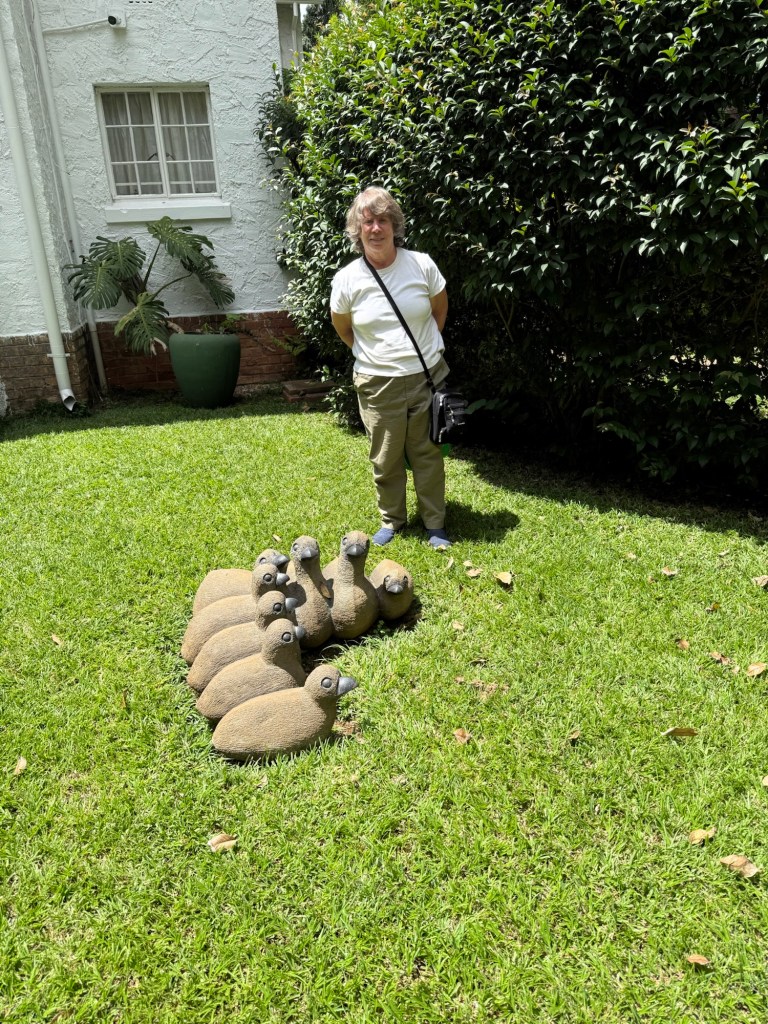
Interspersed amongst the sandstone sculptures were fanciful metal animals:
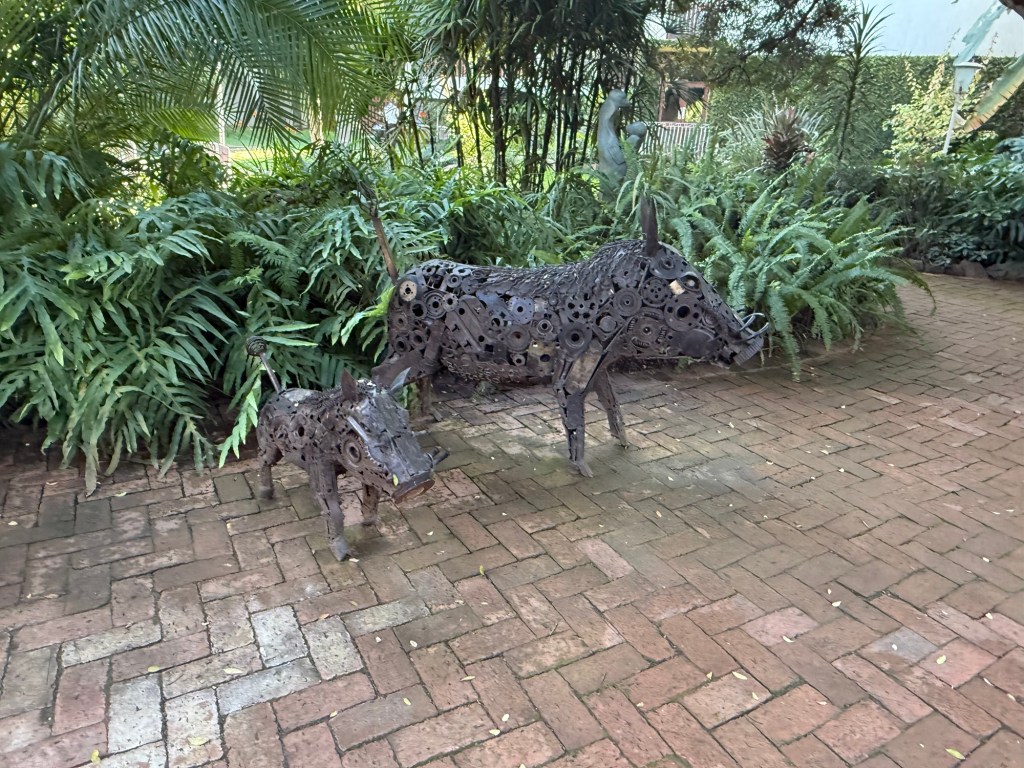
I confess to spending many hours just sitting in the gardens, relaxing, and drinking $US 3.00 glasses of South African wine.
I took a city tour of Harare, seeing much of the art deco style buildings favoured when the country was a British colony:
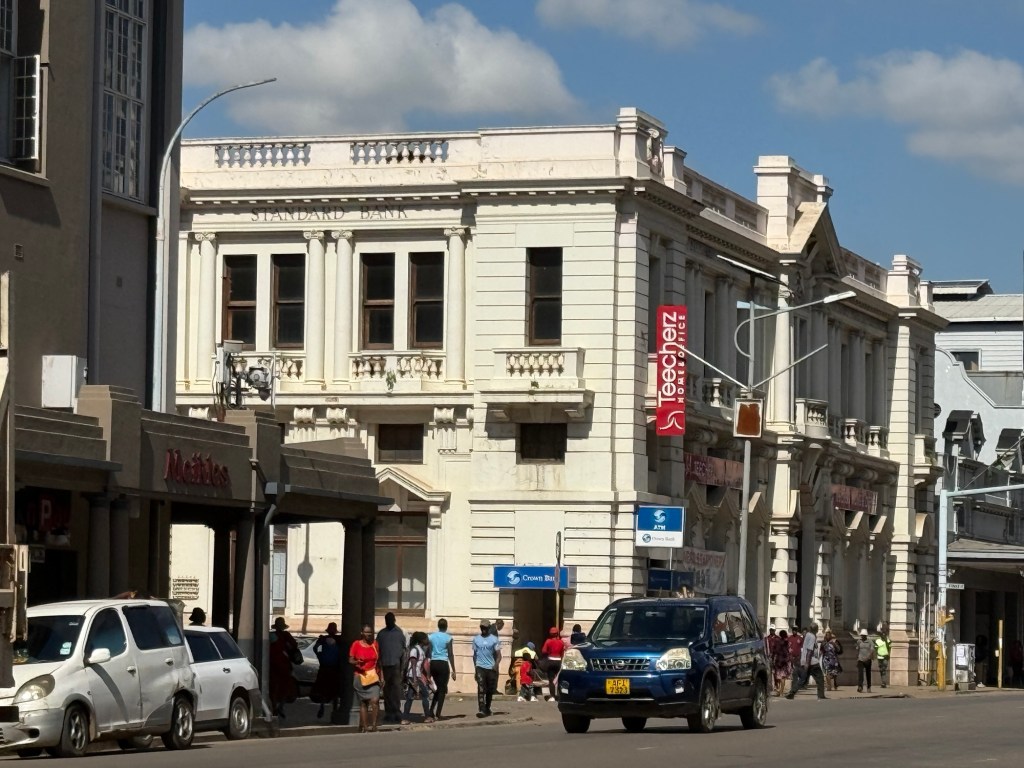
The new government seems to prefer western style, high-rise skyscrapers, including the one with a gigantic mural urging people to vote for the current president:
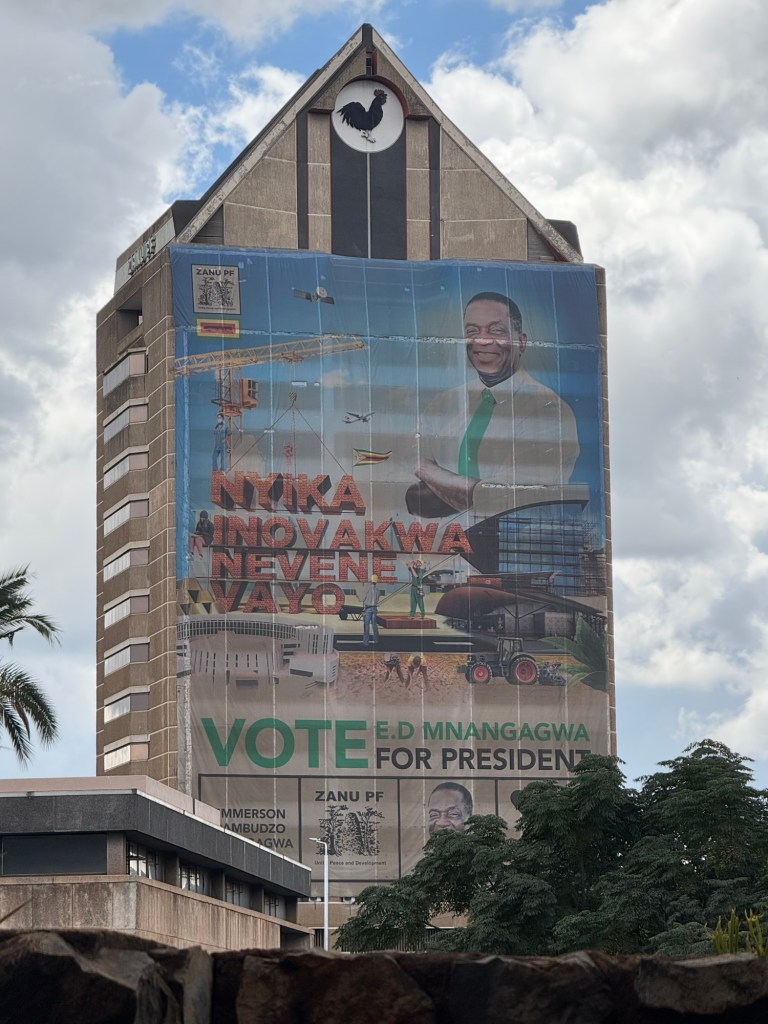
This should not be difficult in the 2028 elections as there are no opposition parties.
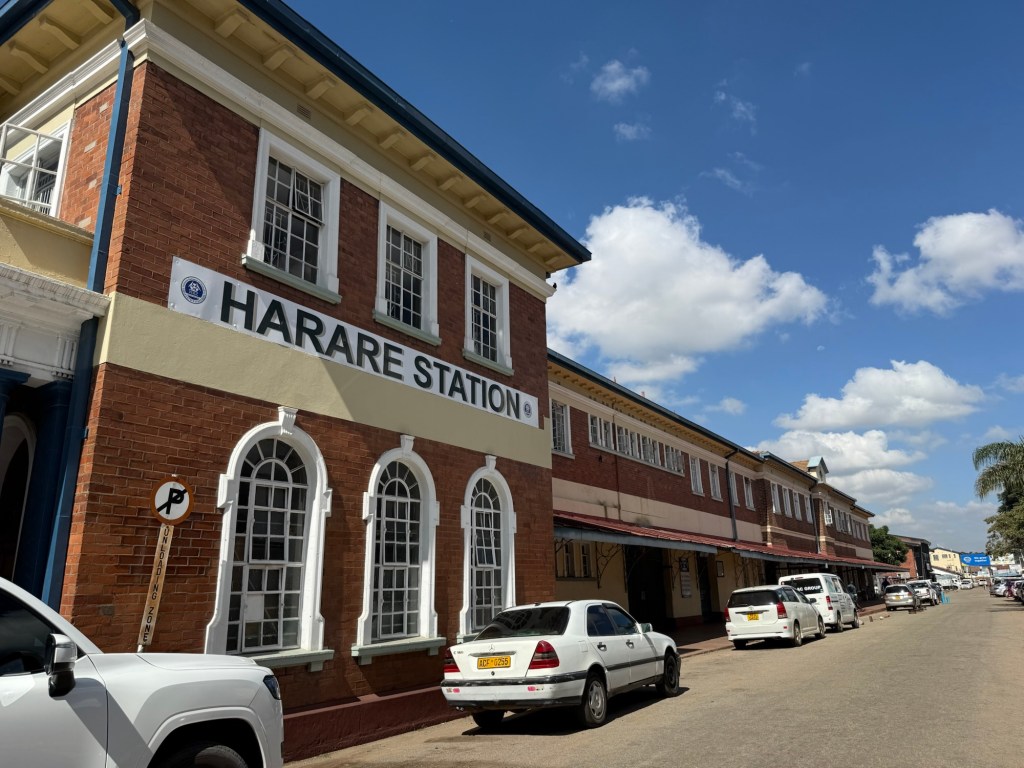
The old railroad station still stands proudly, but no passenger trains run and the terminal is locked:
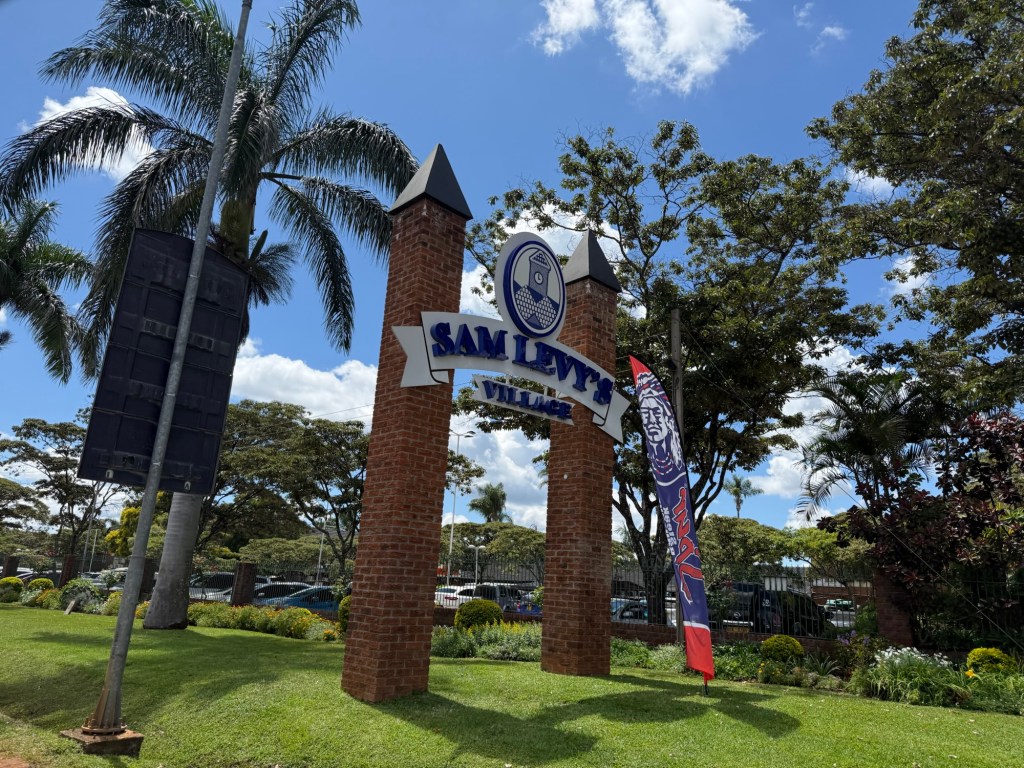
We drove around the different residential neighbourhoods in Harare. Though Zimbabwe never had formal apartheid or segregated living areas, certain areas were definitely favoured by one ethnicity or another. The Belvedere area is predominantly Indian, while the Greenwood and Hillside areas have large mansions inhabited mostly by whites or black politicians. In one of the upscale shopping plazas called Sam Levy, white patrons were sipping coffee and shopping for namebrand merchandise.
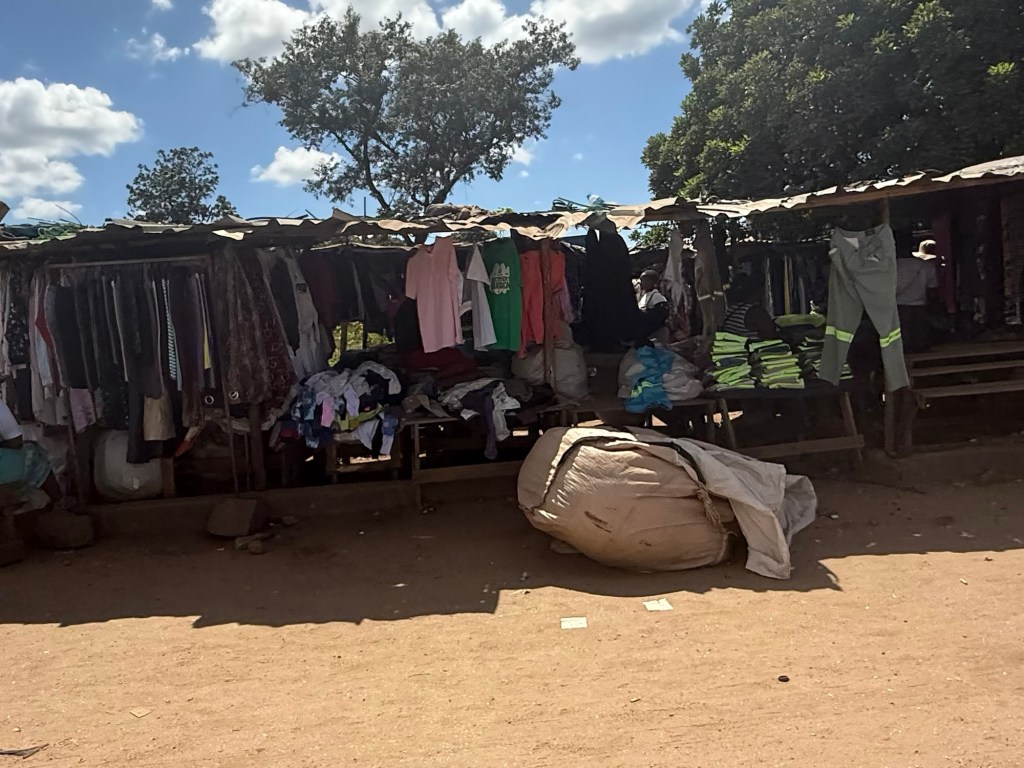
In the former black township of Mbare, houses were little more than shacks, the streets were dirt alleyways, outhouses prevailed, and the shops were mostly makeshift stalls:

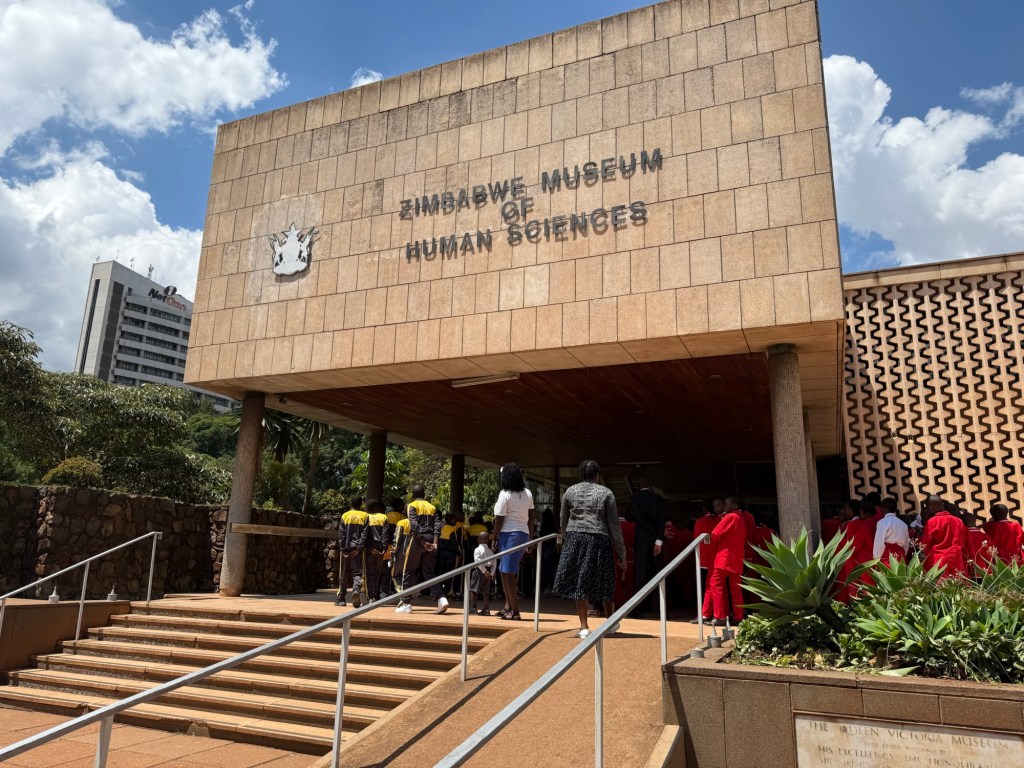
I visited the Museum of Human Sciences, but was a little disappointed. Its exhibits trace the natural evolution of Zimbabwe from dinosaurs to the Great Zimbabwe period, but there are large gaps, little information and it’s somewhat bare. I happened to visit on school photography day and ran into large classes of uniformed school children awaiting their class pictures. They were all friendly, anxious to practice their English with a native English speaker and give high-fives to the visitor.:
The highlight for me was a day trip to Great Zimbabwe, ruins of a great civilization four hours drive from the capital. When Cecil Rhodes first learned of the structure, he concluded it could only have been constructed by non-blacks, perhaps the Phoenicians, Arabs or Jews, since he was certain the blacks could never make anything so wonderful.
Of course, archeology has proven him wrong. It is believed Great Zimbabwe was constructed in about the 11th century by the Karenga tribe, predecessor to the current Shona. The Karenga tribe were a Bantu tribe who had migratedg south from Nigeria and Chad about 2000 years ago. By 1100, it was immensely wealthy from its gold mining operations and traded its gold and ivory with merchants from India, Arabia, and perhaps as far as China.
Great Zimbabwe today consists of two fabulous sets of ruins, the great enclosure and the hill complex. The photos below are of the great enclosure.
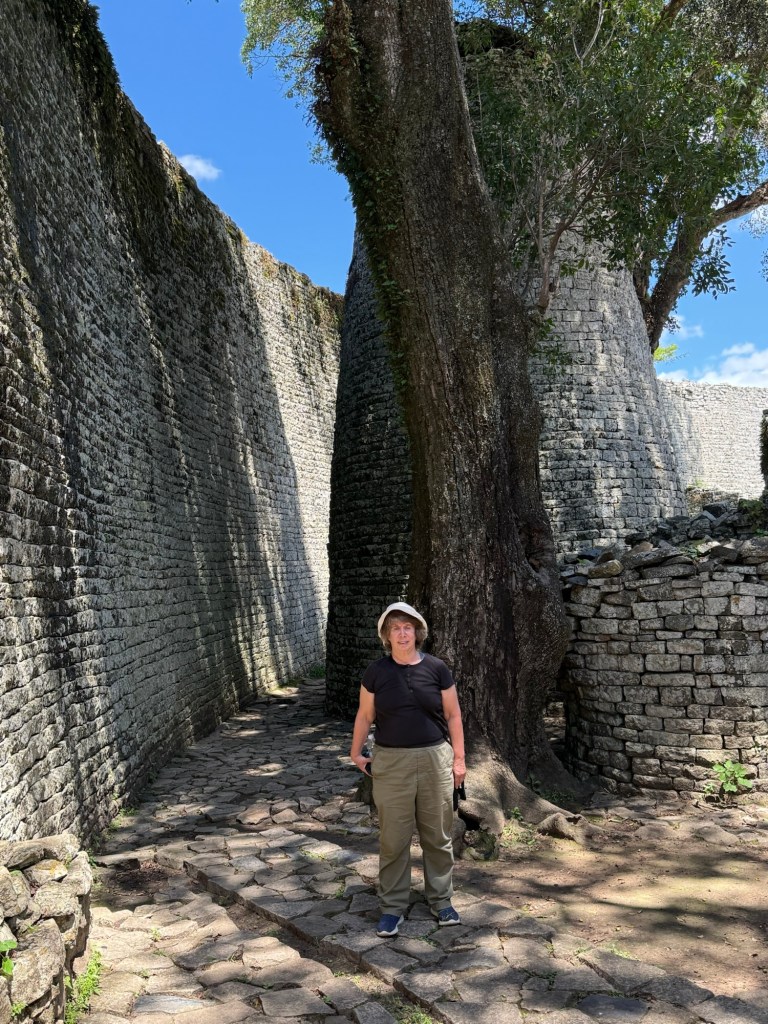
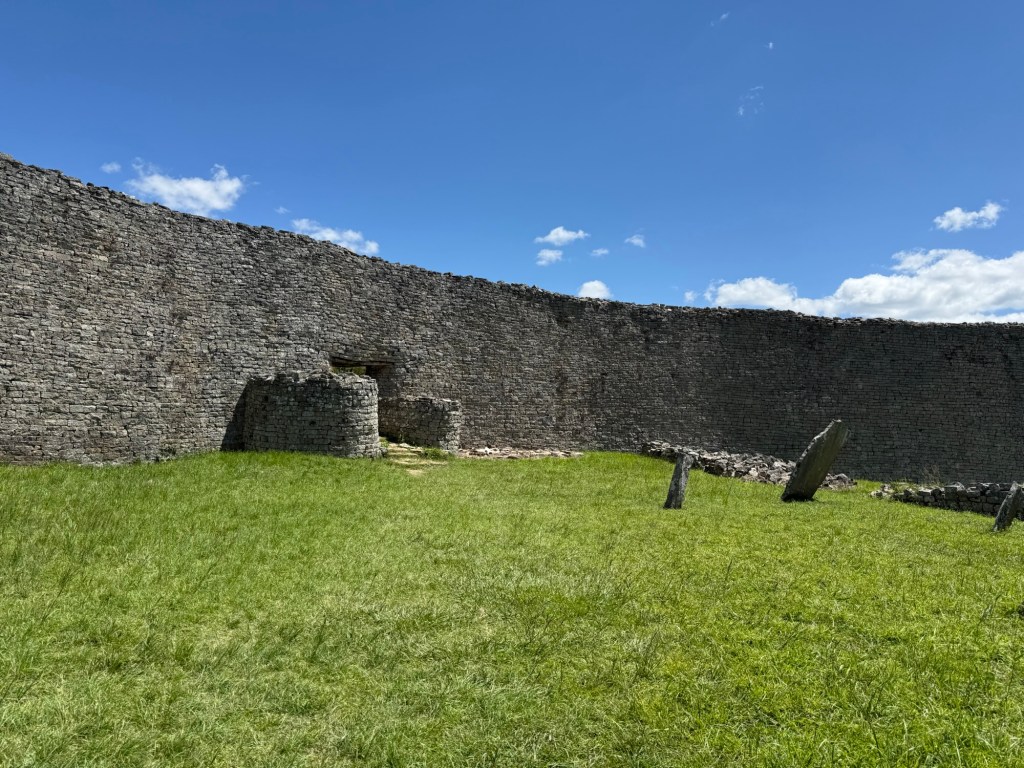
The walls are up to 13 m high and built without cement or motor. Amazingly, between the walls is a cooling breeze, a marvel of middle age air conditioning. It is believed that the enclosures were occupied by the King and his family, with mud huts housing up to 15,000 people in the surrounding area.
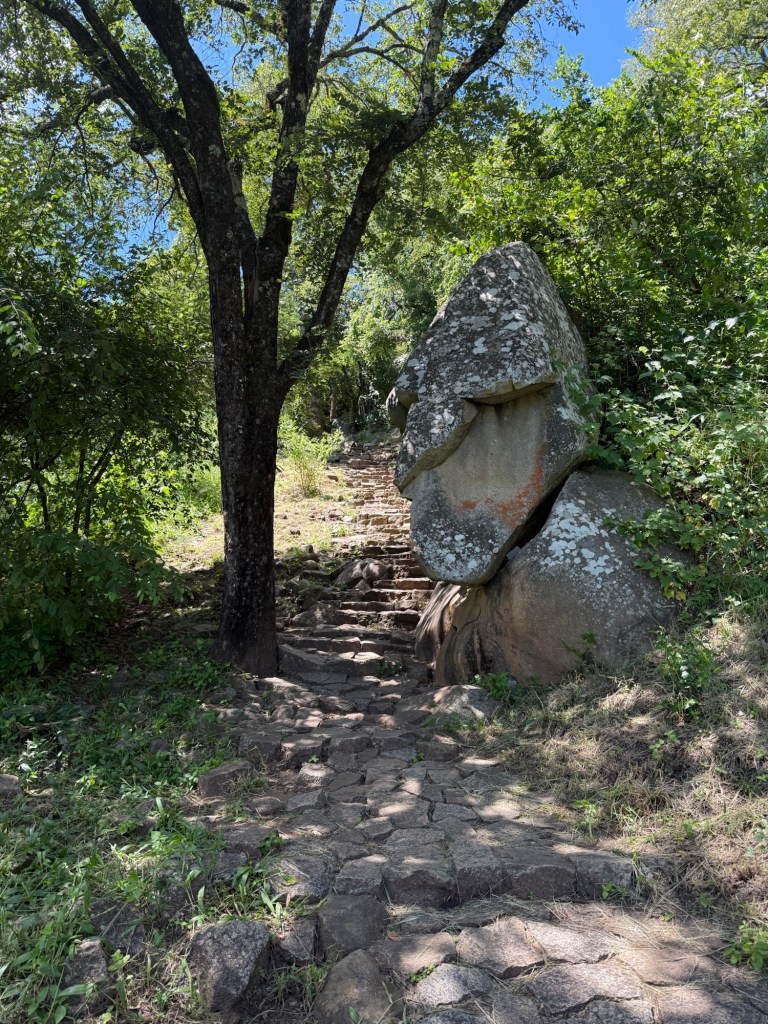
The hill complex is, as its name suggests, up a very steep hill. I climbed about 1/3 of the way before realizing that given my propensity for slipping and dislike of climbing, it was probably not a good idea for me to proceed any further up this somewhat precarious steps:
I had been in Africa for about three weeks and not seen any wildlife, so I was delighted when I met up with some playful, but shy monkeys in and around the site:

Zimbabwe offers many more activities beyond what I did. Victoria Falls are fabulous, but require a flight and I’d already seen them. Closer to Harare are game parks with the big five animals where safaris are offered. Again, I had done enough safaris that I didn’t feel the need to do anymore.
Harare is considered a reasonably safe city and I did walk a few times to grocery stores and restaurants without any problems. That’s not to say that Harare and Zimbabwe are without huge challenges. Every person I spoke to cited government corruption as a prevalent irritant and a barrier to economic prosperity. There’s high unemployment, huge numbers of HIV infection, and a general sense that unless there’s a drastic rethinking of the corruption in the government, nothing will improve.
So why did I enjoy Zimbabwe so much.? I’m sure a lot had to do with the loveliness of the gardens in my hotel. But there was also interesting things to see and do, especially learning about the society that constructed Great Zimbabwe. If there was one country on my current agenda, I would happily return to, it is Zimbabwe.
Next, Malawi
 travelsnearlyeverywhere.com