
I’d been to Malaysia 25 years ago, to a lovely beach resort, but my time in Kuala Lumpur was limited to a few minutes at the main train station. As was going to be in the area, I thought it would be good to spend a few days in Kuala Lumpur.
My bus tour began with a stop at the National Museum, originally a wooden structure with indigenous artifacts. The indigenous tribes were overrun by the Malays, from Indonesia and, as early as the 3rd and 4th centuries, by Chinese and Hindus. Unfortunately the museum building was bombed by the USA in WW2, with everything destroyed. The current concrete structure only houses artifacts post 1945, but a mural outside pays homage to the original peoples:
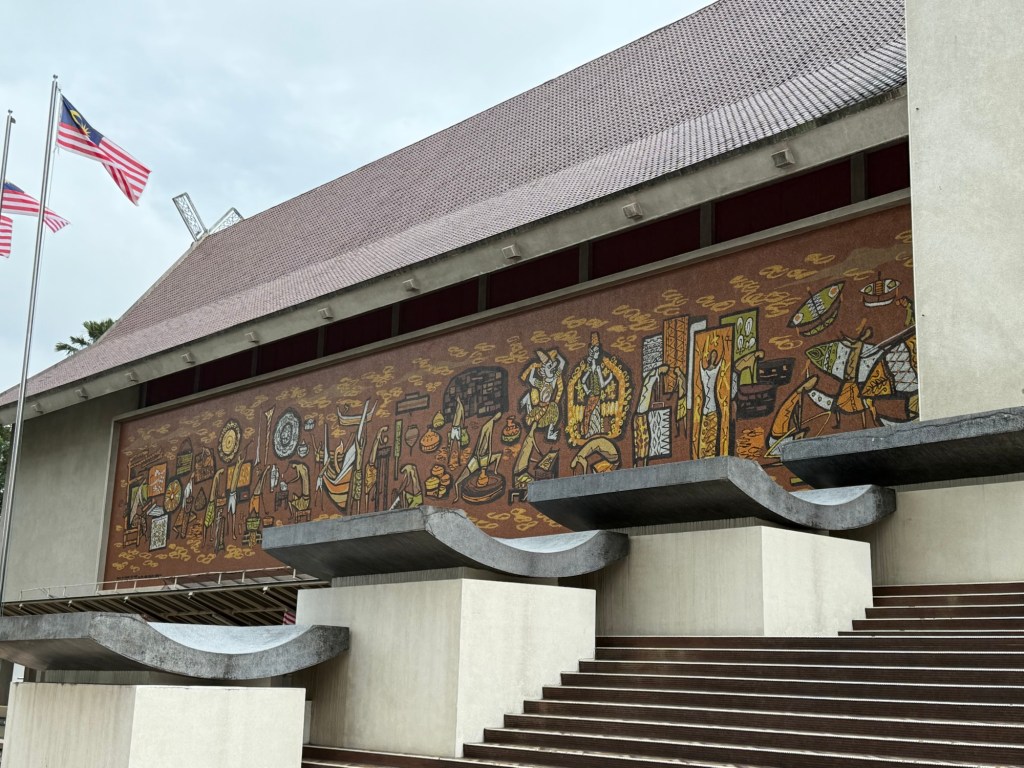
The tour guide gave a brief history of Malaysia. Both Hindu and Chinese empires governed areas of current Malaysia since the fourth century. In the 12th century, Islam arrived and became the dominant religion amongst the Malay.. The Dutch and Portuguese came in the 16th century, seeking spices, but it was the British in the 17th century who colonized it. They imported Chinese to construct railroads and Indians to work on the rubber plantations after they secreted rubber seedlings out of Brazil in the early 1900’s. Today, the Chinese make up about 22% of the population and Indians about 10%.
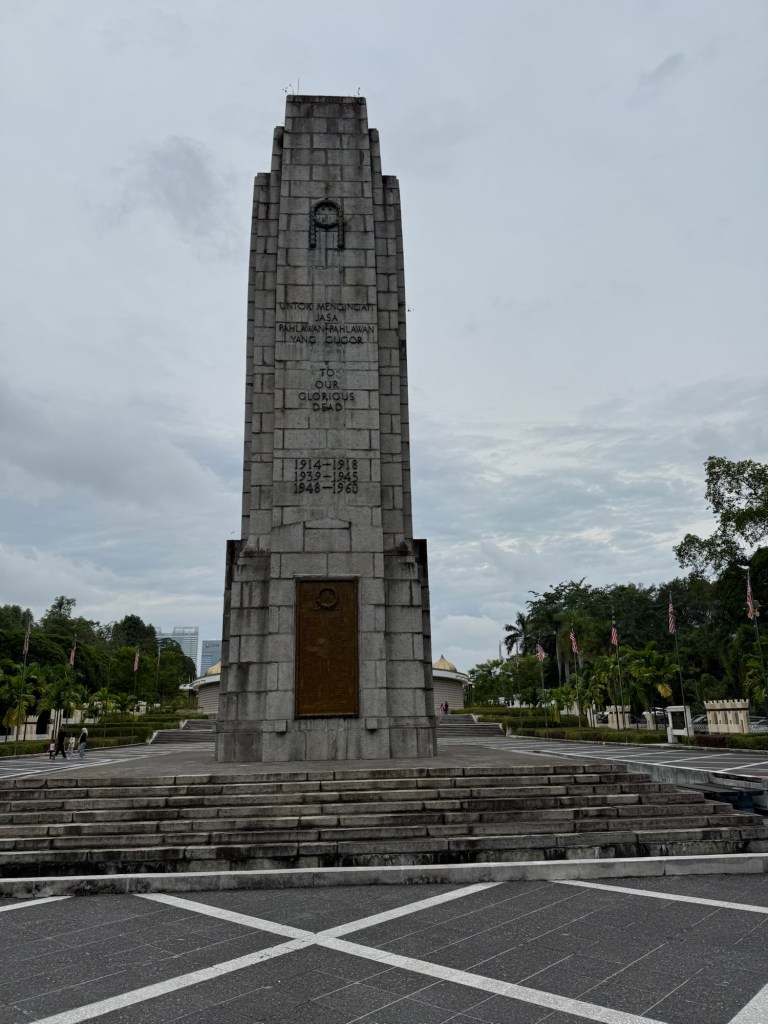
The second stop on the bus tour was at the National Monument, where respect is paid to the dead of World War I, when Malaysia fought with the British, World War II when Malaysia was occupied by the Japanese and a period called the Emergency, between 1948 and 1960 when a state of emergency was declared to combat the perceived communist threat:
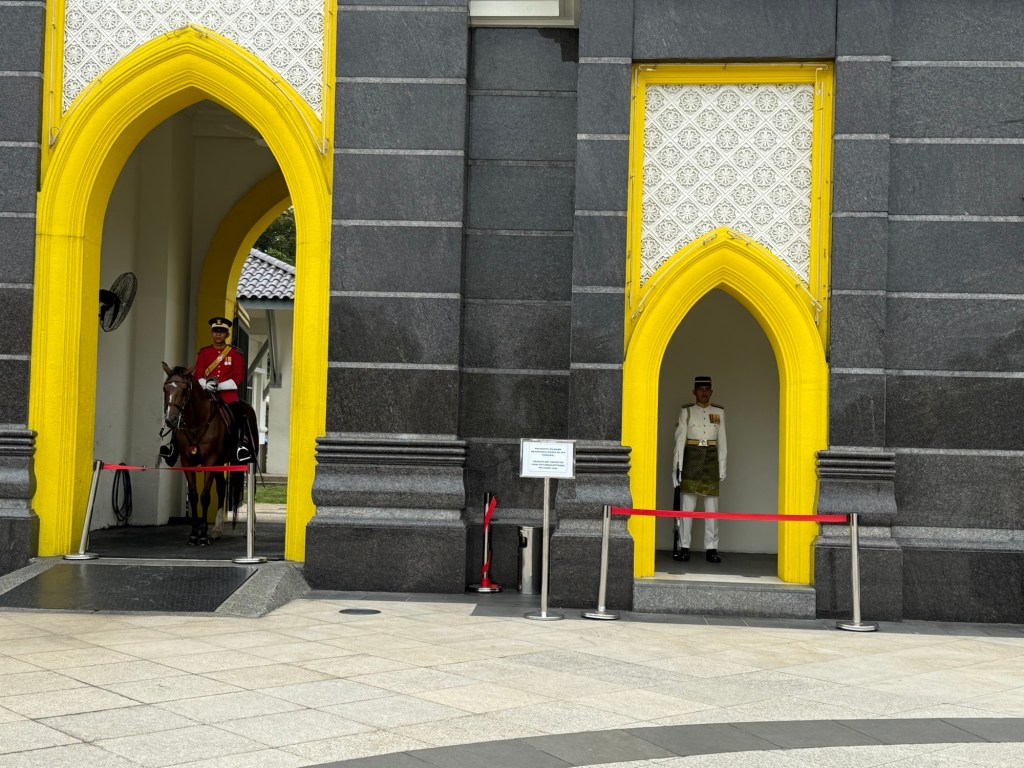
The third stop on the tour was at the Royal Palace, where sentries ensured tourists would not go beyond the gates. So below is a picture of the gate with the sentries. Malaysia has a king, who is elected to office every five years from one of the nine Sultanates in the country. A sultan may only serve as King once, unless he lives another 45 years, in which case he is allowed to serve again. Needless to say, I didn’t see the King or get a better view of the palace.
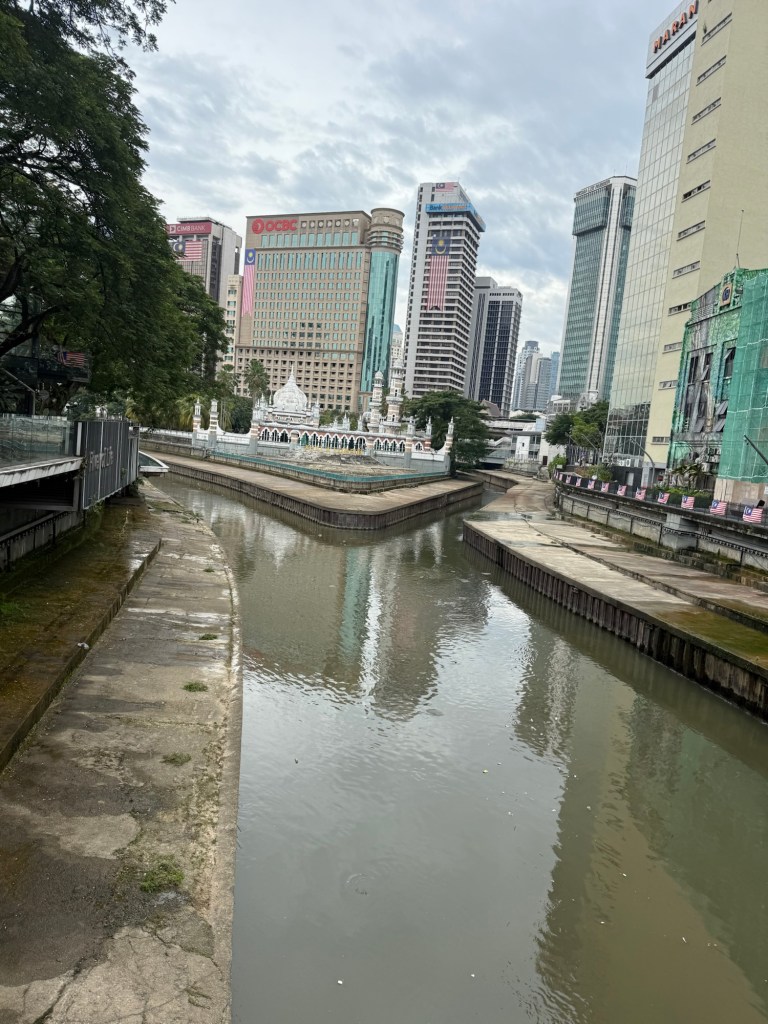
We stopped at the place where the Klang and Gombak Rivers meet. A few hundred years ago, two tin minors met at its confluence and founded the city of Kuala Lumpur, which means where the muddy rivers meet. Today, it’s quite polluted and low, fairly underwhelming.:
Our last stop was at the Petronas Towers, the iconic symbol of Kuala Lumpur. constructed in the 1990s, The president was anxious for it to be completed quickly. He appointed a Japanese firm to construct one tower and a South Korean firm the other. Not surprisingly, a race to the finish ensued with the South Koreans winning by approximately six hours, but the whole project finished two years ahead of schedule.
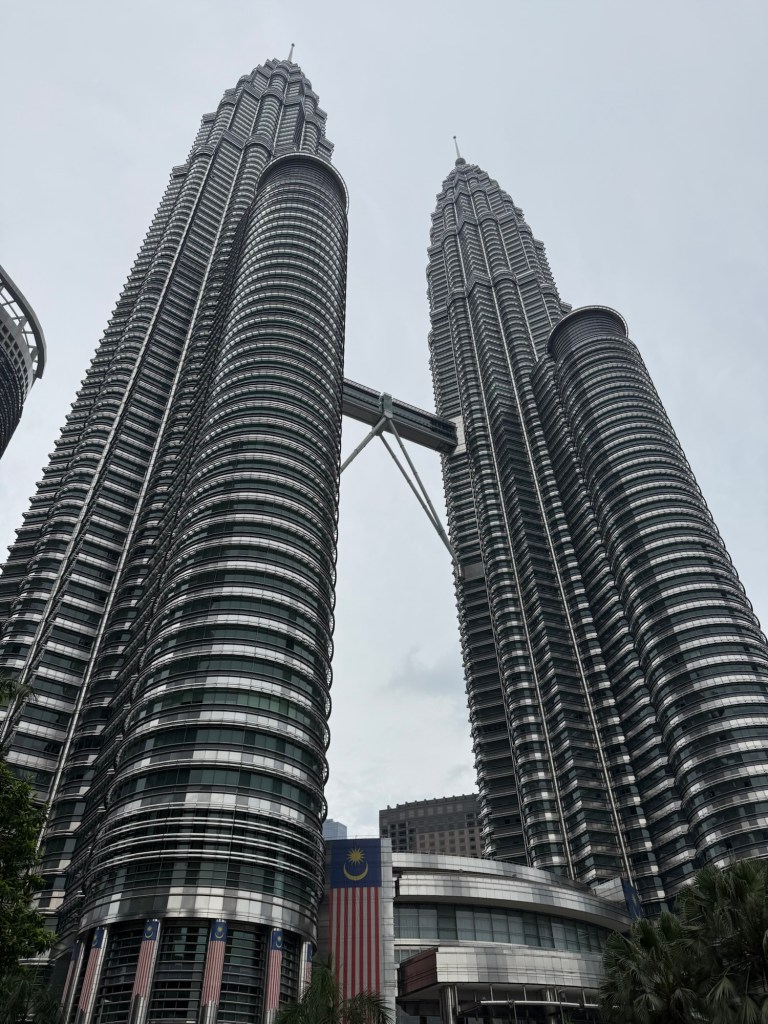
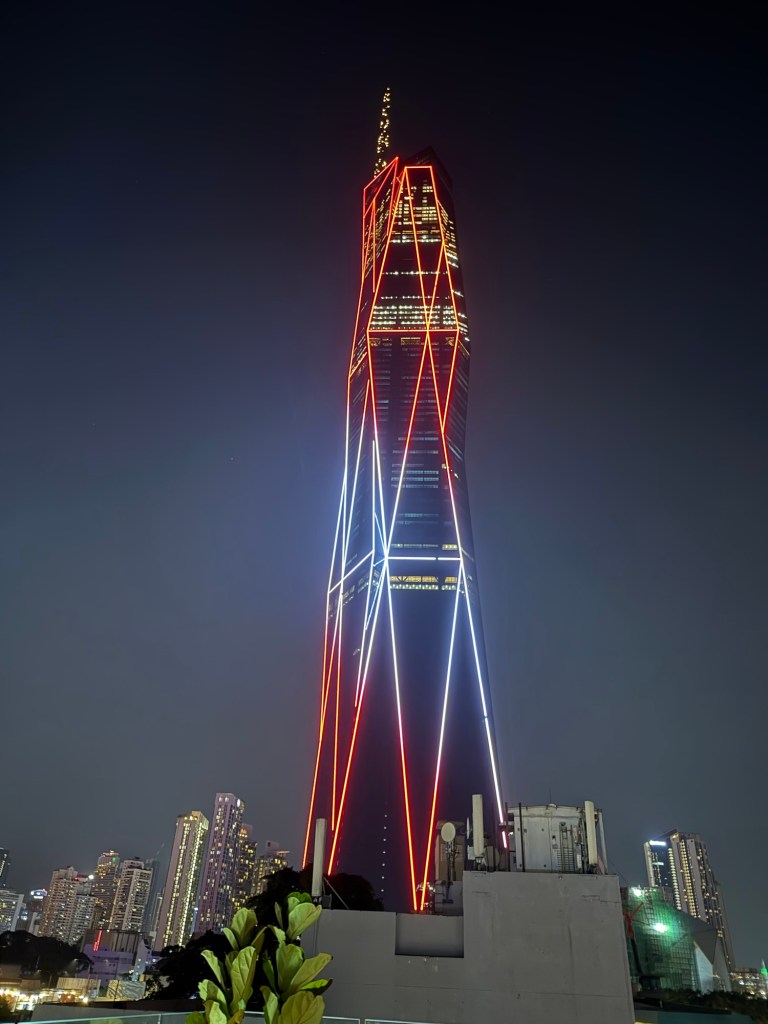
They are the highest twin towers in the world. Nearly finished construction is the Merdeka 118, which will be the second highest building in the world behind the Burj Khalifa in Dubai. Its shape symbolizes a pointed finger, the gesture used by the president on August 31, 1957 to declare independence from Britain. i had a great view of the building from my hotel’s Terrace:
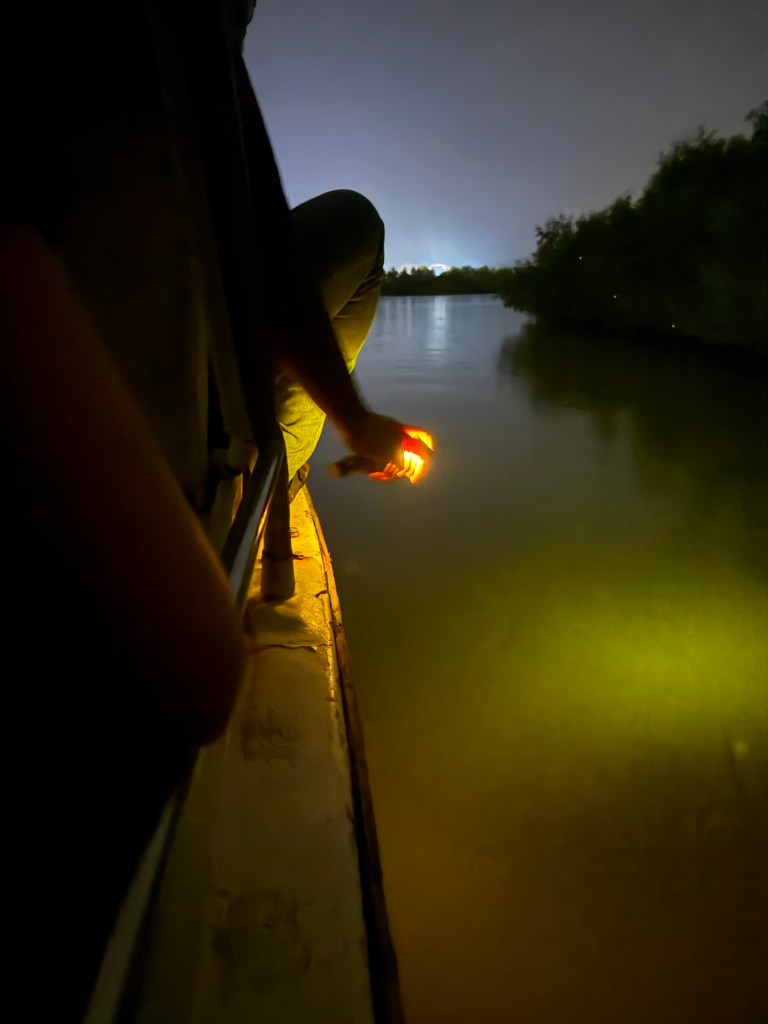
I took another tour to visit the fireflies on the nearby Selangor River. A boat drives close to the trees, where the fireflies flicker in the night sky, but they are impossible to photograph. The boat’s captain did catch one and it glowed brightly for a few seconds in his cupped hands:
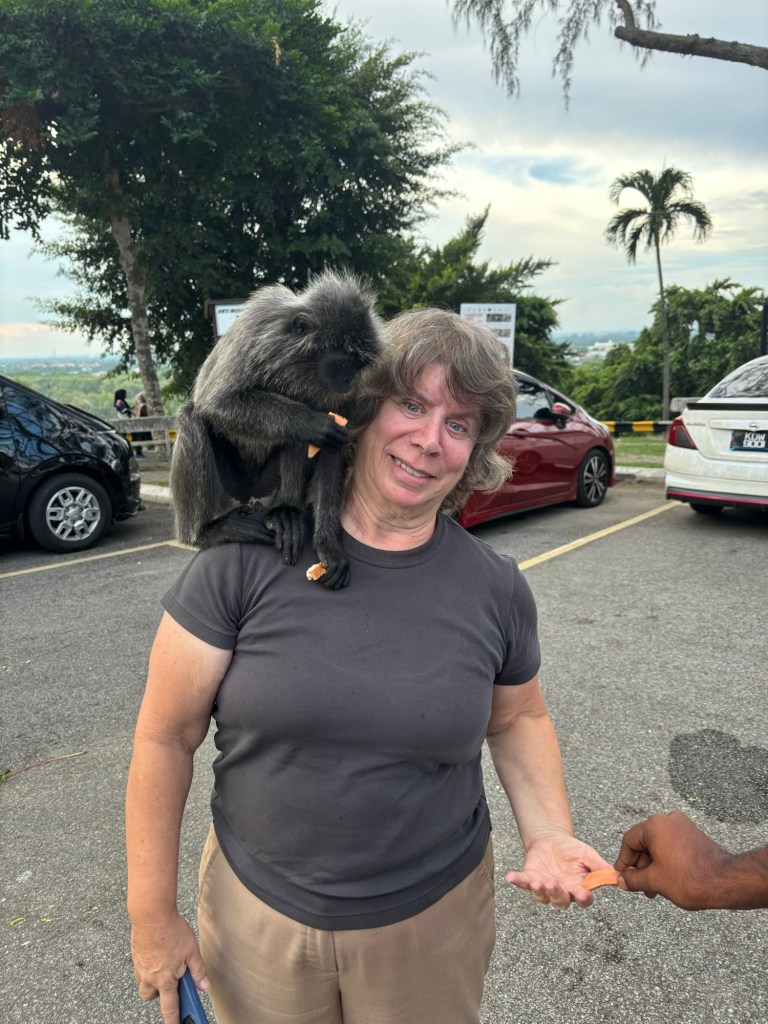
I also had a fun encounter with some silver leaf monkeys, so named for the distinctive feature on their crowns. They are very friendly, and if you hold a banana or a piece of sweet potato in your hand, high above your head, they will climb up and eat it while sitting on your shoulder.:
For me, the highlight of Malaysia is its food, a fusion of Malay, Chinese, Indian and Islamic, always fresh and delicious. My hotel was in Chinatown and I dined on stir fries and dumplings sitting on the plastic stools at the hawker centres:
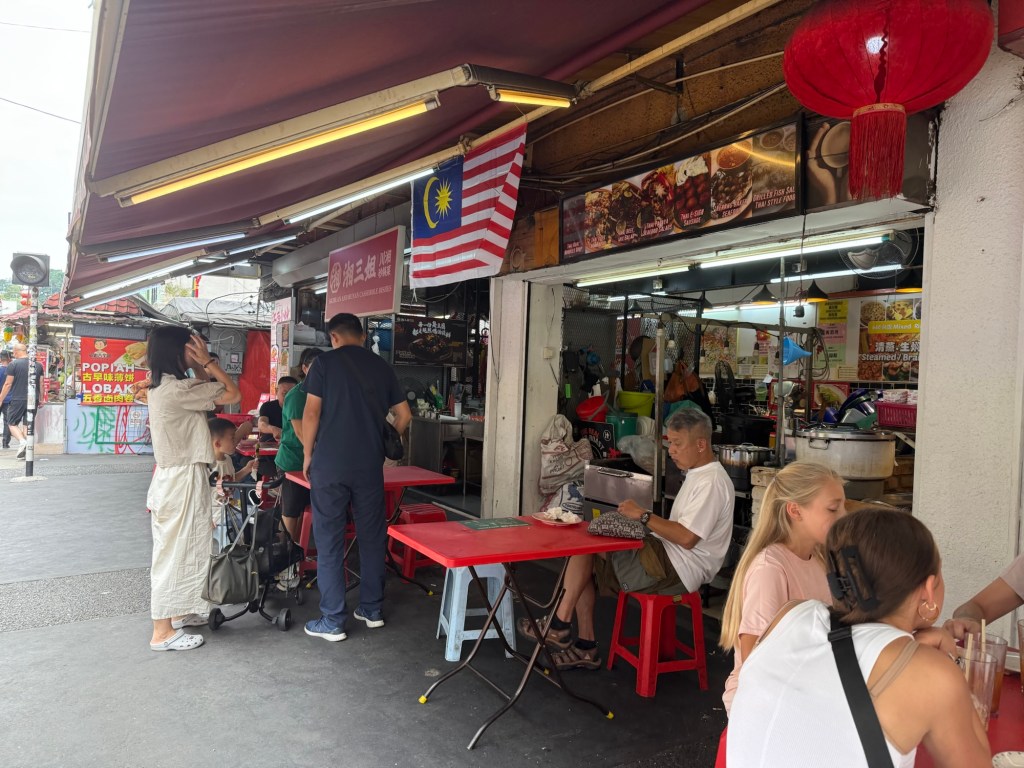
I took a foodie tour led by Kieran, where I sampled at least 15 different dishes. Keiran emailed me a list of everything we had tried:
Ralmbutan, Mini pineapple, longan, salak, Roti Canai, Mee Goreng Mamak, Limui Ais, Tarik, Chendal, Miguel Sup Baksu, Mi Ayum, Ayum Penyat, ikan Bakyer, Nasi Lemuk , Nasi Kerabu and some satays.
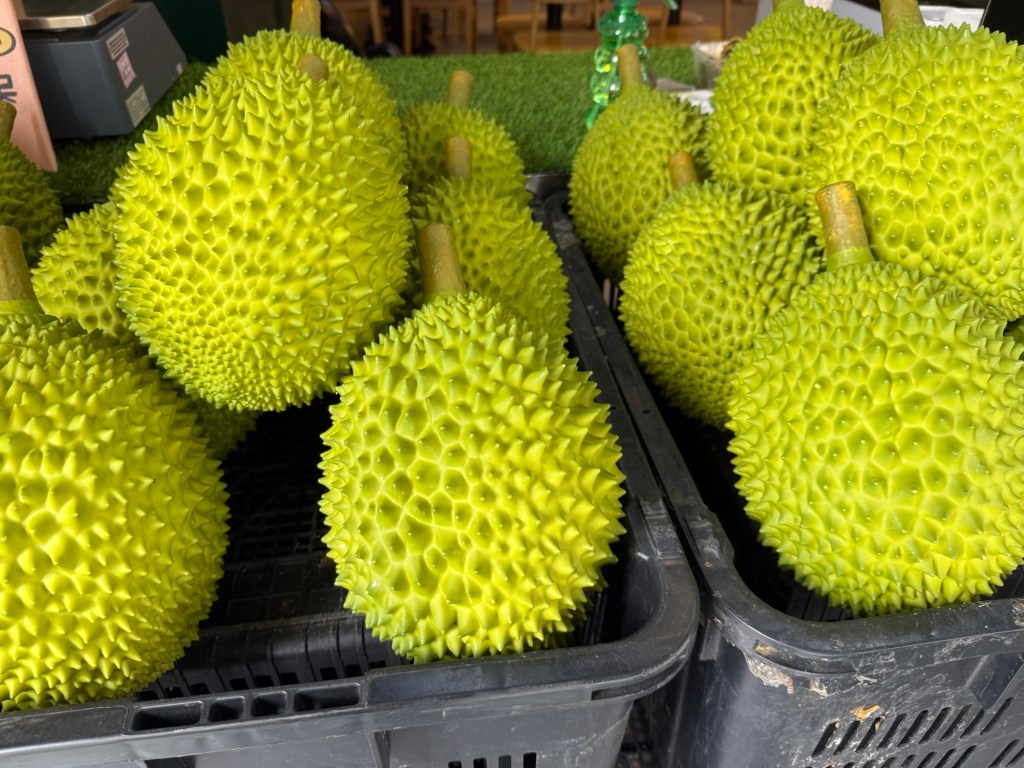
It was also the first time I sampled some Dorian, the stinky fruit which is banned in many places. However, the Malaysian version is less smelly and is considered a delicacy. Durian stalls abounded in the city, along with Dorian ice cream shops. I tried some fresh fruit, and found the taste a bit ho-hum, like very mild caramelized onions with garlic, but a jelly texture. I didn’t hate it, but I certainly wouldn’t spend a lot of money to buy it.
And so I passed three pleasant days in Kuala Lumpur, mostly eating my way through the visit and relaxing before the next part of my journey.
 travelsnearlyeverywhere.com
I’ve travelled somewhat extensively but nothing compared to you Naomi and not at all to Malaysia so have been fascinated to learn a bit about it through your posts. I think that the fact that a fruit has a human name, Dorian, would put me off it without your vivid description. Thanks for trying it for me/us!!!
Carol
LikeLike