
I am spending a few months in Merida, Mexico in an attempt to avoid the worst of the Canadian winter. While many attractions are in, and around, Merida, a friend, and I decided to fly to the West Coast of Mexico for a five day tour of Chihuahua and the Copper Canyon, with the highlight being a ride on the Chepe Express train.
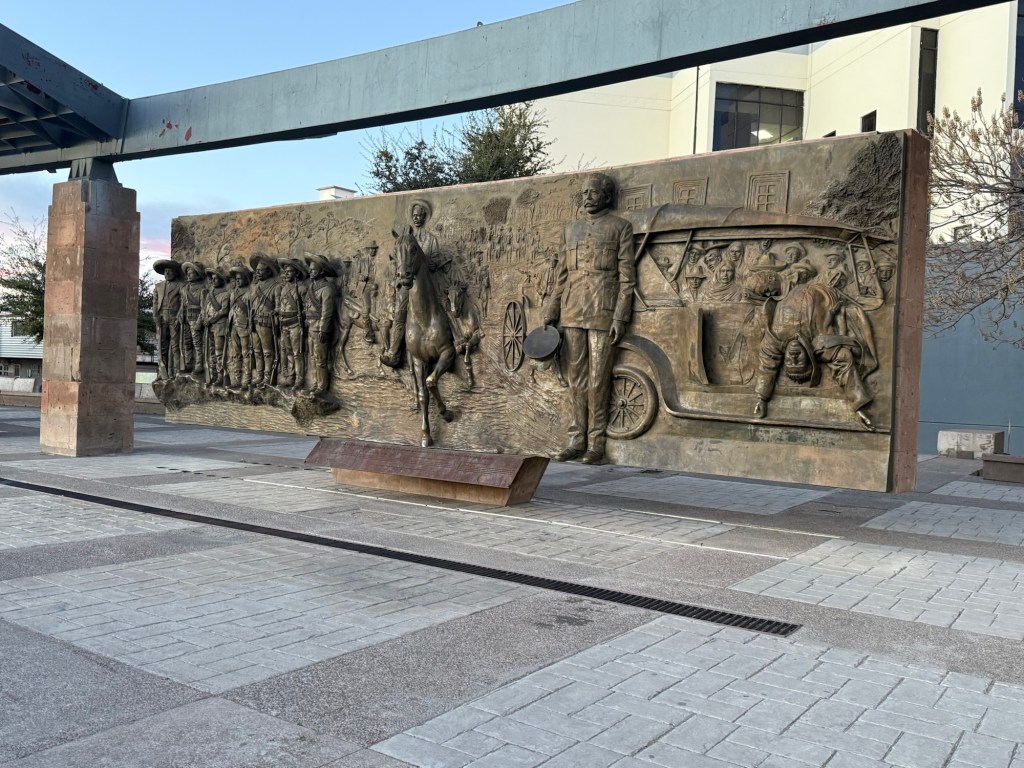
Our visit started in the capital city of Chihuahua, home to the famous Francisco Pancho Villa, an early 20th century revolutionary. Born into a peasant family, he developed a reputation as a modern day Robin Hood, trying to obtain justice for the dispossessed indigenous tribes who lived in the area. He was, at various times, a bandit, the governor of the state of Chihuahua, a potential candidate for the presidency of Mexico, the leader of an invasion into Columbus, USA, and a movie star who insisted upon acting in the title role of the movie made about him. Despite all these activities, he managed to have at least 25 wives. He was assassinated (by whom it is not clear) in 1923 and is revered in numerous monuments around Chihuahua, including three murals in the main square:
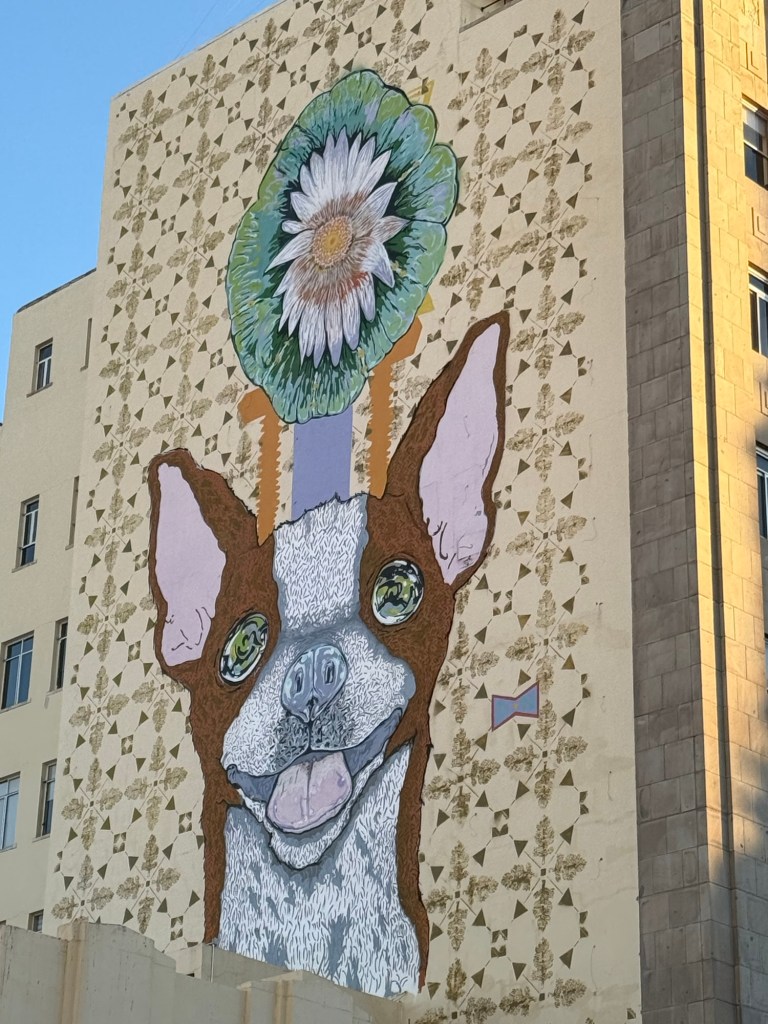
We had no luck seeing a live Chihuahua in the city of Chihuahua, but did satisfy ourselves with a mural of one:
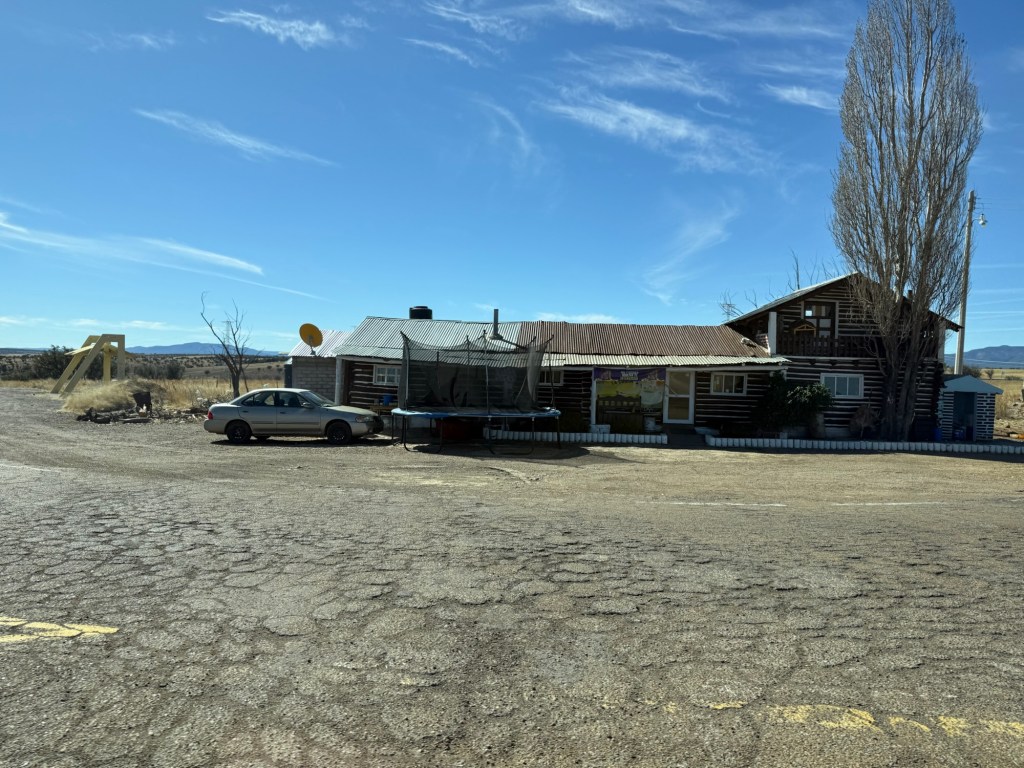
Our tour guide, Ivan, picked us up in Chihuahua to begin the long drive to the Copper Canyon. Our first stop was at a Mennonite museum. The Mennonites first came to Mexico in 1922 from Canada after the Canadian government threatened to require them to serve in the military and teach their children in English. They managed to purchase large tracts of land in Chihuahua and to this day, have some of the most successful produce farms and cattle ranches in the country, teaching the locals about irrigation, crop management, and trading.
Today, there are about 100,000 Mennonites, mostly in Chihuahua, but scattered throughout the country. The museum used to be a working Mennonite farm, but has evolved into a museum which highlights some of the traditional farming methods and implements used by the Mennonites in Mexico.
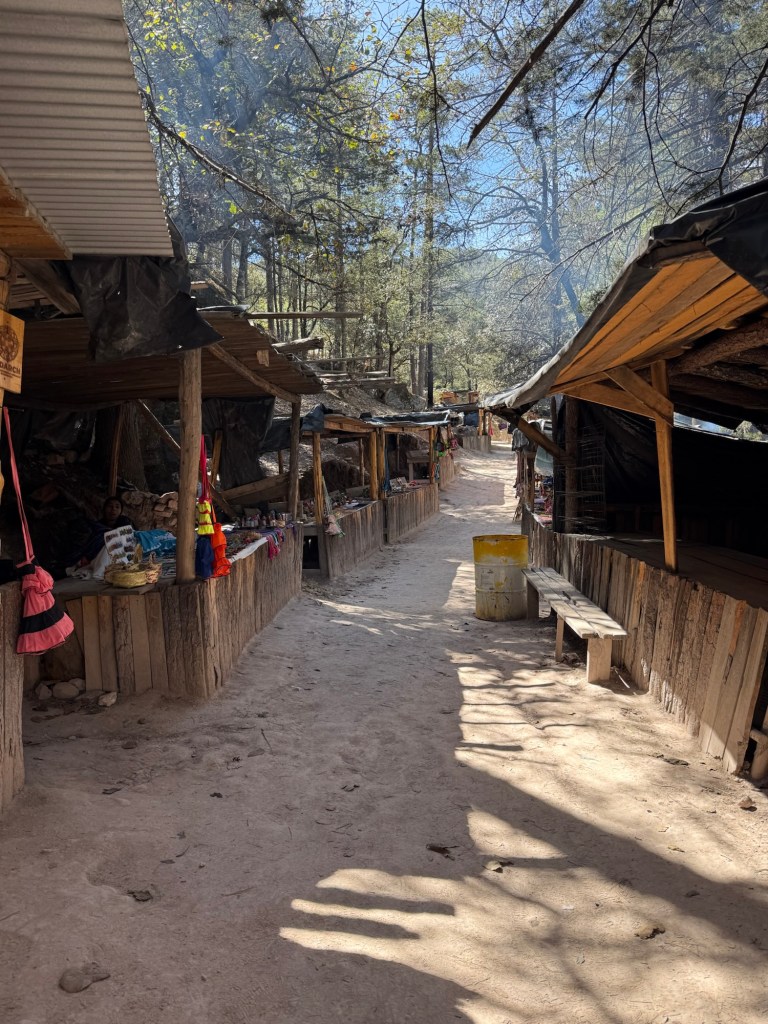
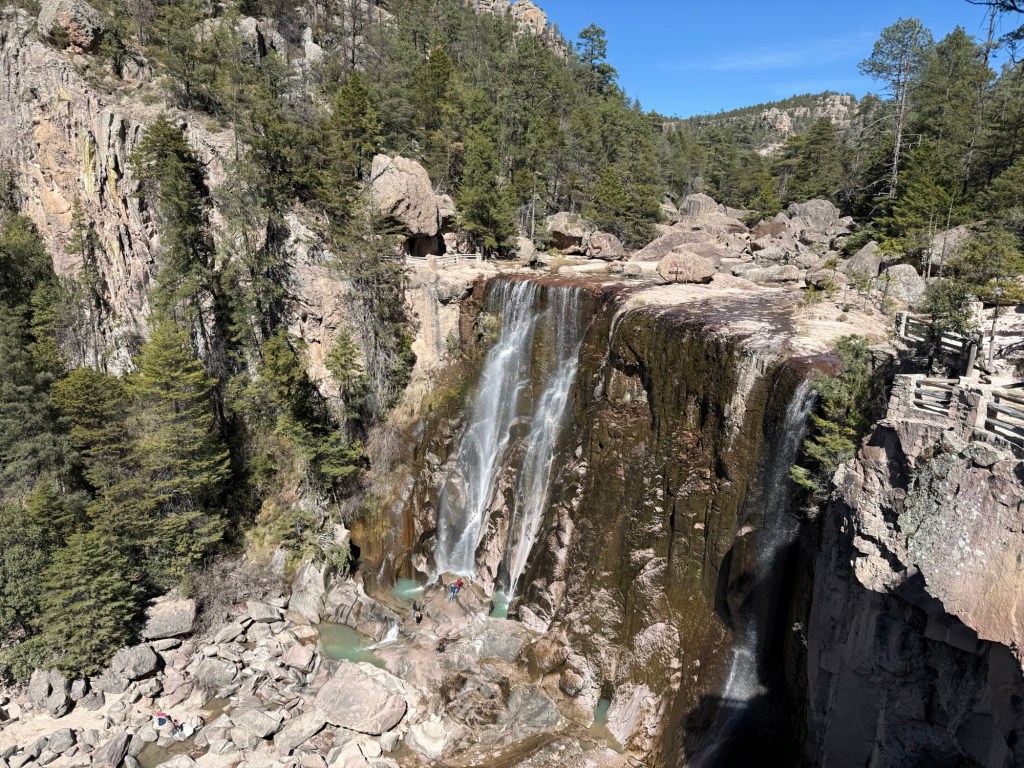
From the Mennonite Museum, we drove south through the Sierra Madre mountains towards a small Indian reservation, whose primary attraction is the pretty waterfall of Cascada de Cusarare. We walked the 500 m to the waterfall through a gauntlet of small stalls where the local indigenous tribal women were selling their handicrafts.
From there, we entered a small Indian reservation and drove to what the white settlers referred to as the valley of the Praying Monks. The Indians refer to it as the valley of the sacred penises:
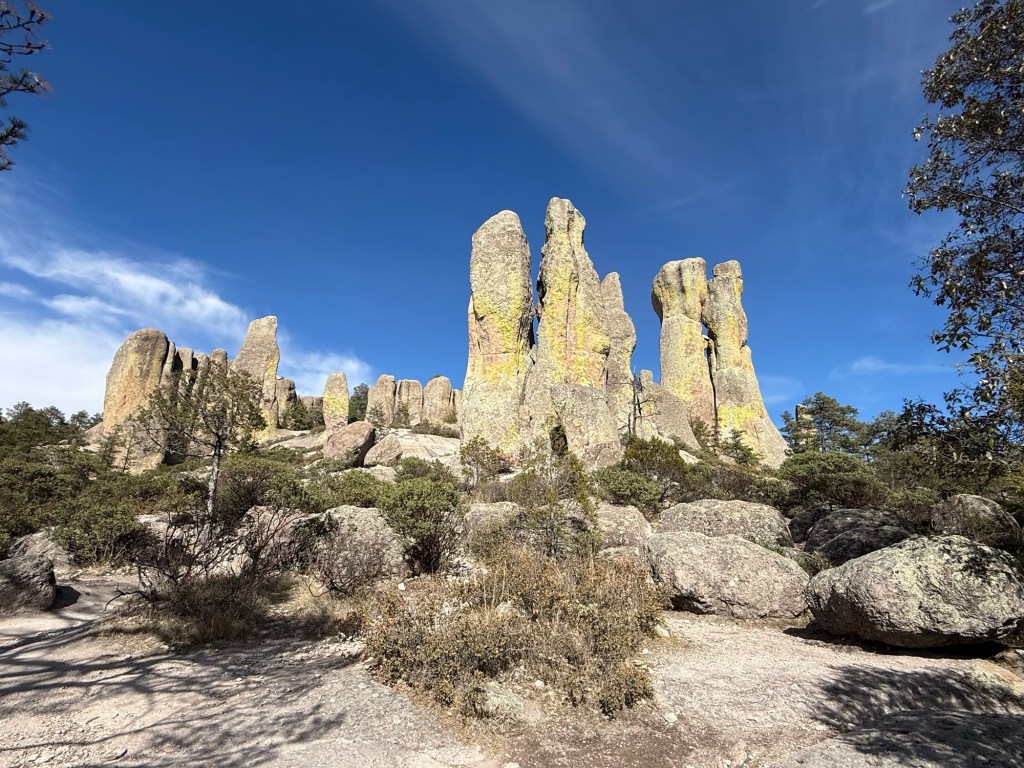
You can decide which description is more apt.
We arrived at our hotel for the evening, called the Mirador, one of many luxury hotels constructed by the Balderrama group in Mexico. The Mirador is renowned for its famous views of the Copper Canyon:
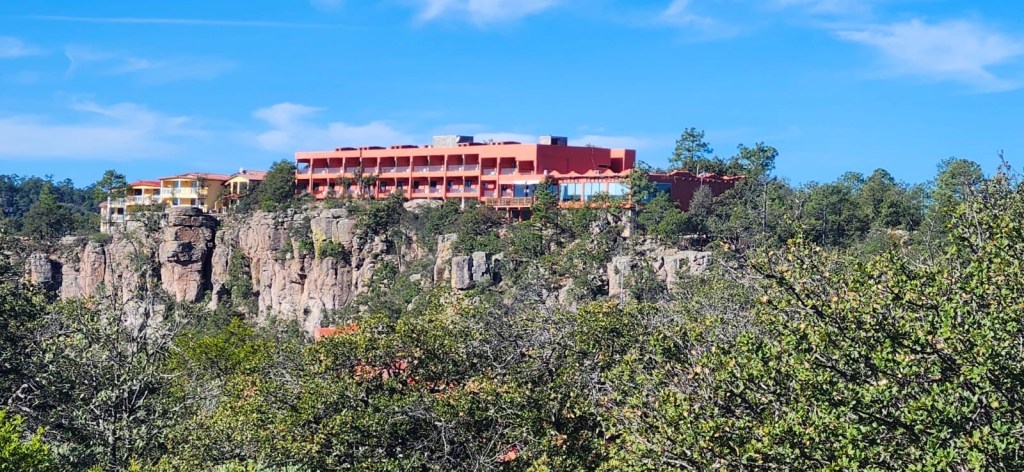
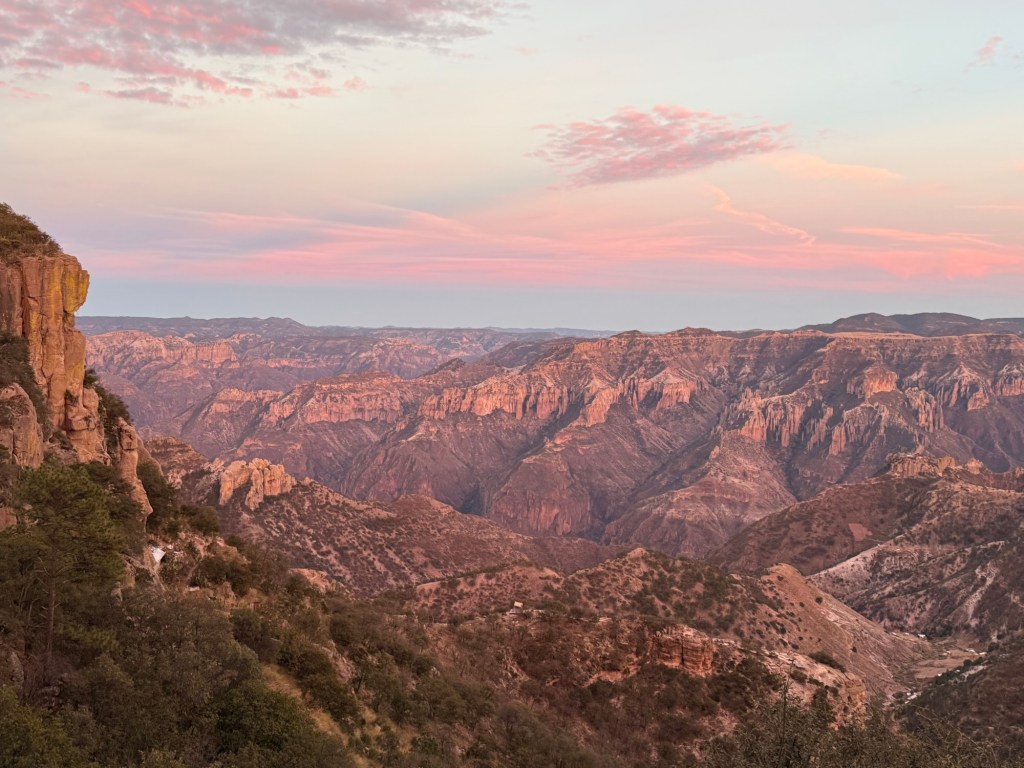
The government has constructed a nearby adventure park in the Copper Canyon, which offers cable car rides and zip lining across the canyon. As both my friend and I dislike heights and suffer from vertigo, we declined and satisfied ourselves with the beautiful views from the hotel.
The next day, we set off on a windy road through this Sierra Madres to our next stop, the Hotel Mision, another Balderrama hotel, this one in the town of Cerocahui. The hotel was a Spanish mission style retreat, complete with its own winery, and the only grapevines in the Sierra Madres. We had a very short tour of the town, including the catholic run school for girls next-door to the hotel, and, literally across the road from the hotel, a pretty, but well guarded little church.
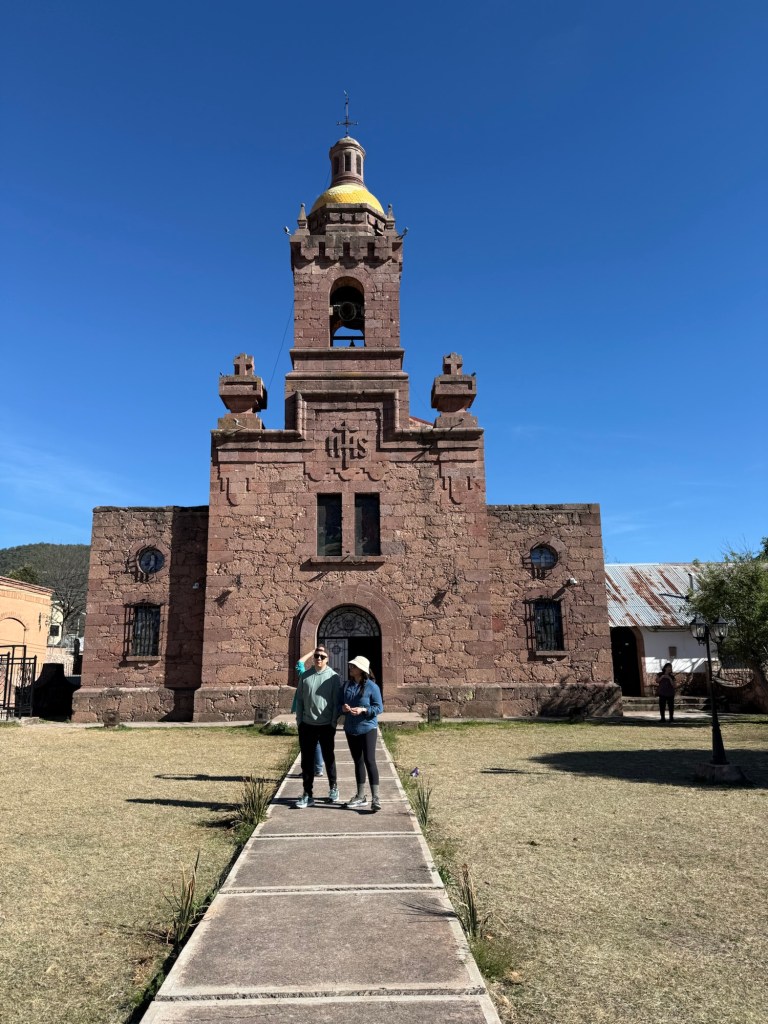
The reason for the heavy security in the church was explained by the guide who told us that in June, 2022, cartel members burst in and killed two priests and two bystanders. To this day, the murderers have not been caught. In the grounds are memorials to those killed. Across the street and beyond the fence was a Mexican military vehicle:
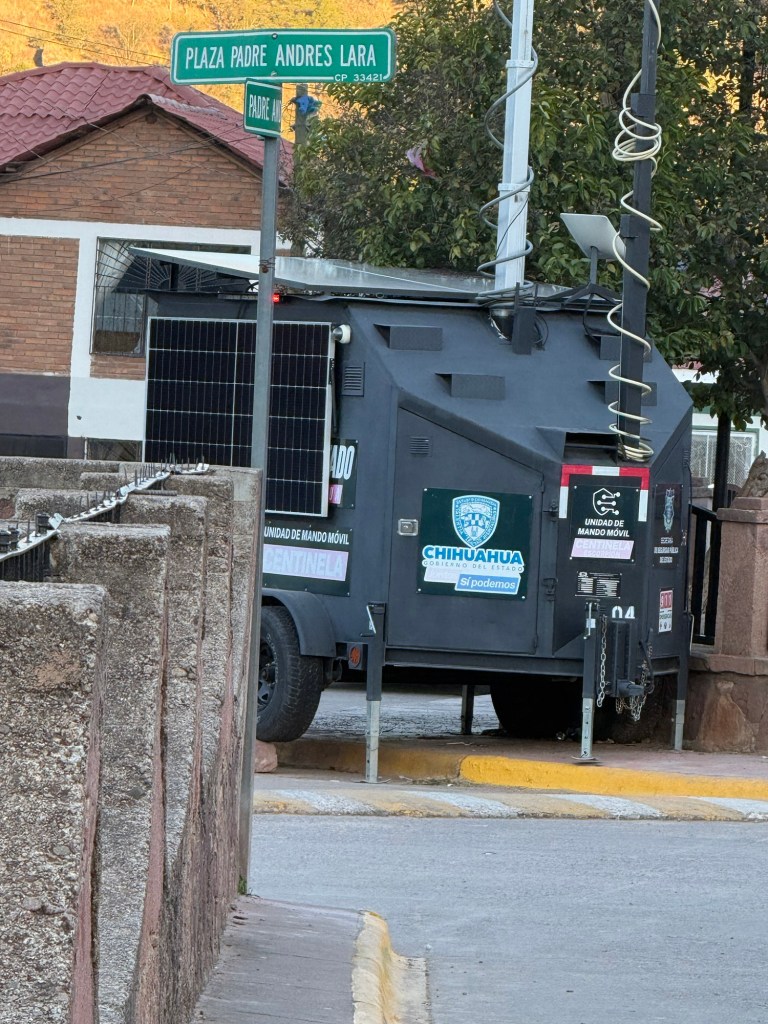
Today was February 21,2026. The Canadian government has had a long-standing advisory regarding travel to the Chihuahua province, putting it at a level four “do not travel“ with the exception being on the well-trodden tourist trail we were taking. The area had previously been very popular with foreign hikers, but in 2011, the cartels kidnapped a number of foreigners and killed them. The area has been the subject of travel advisories ever since.
Our guide from the previous day, Ivan, had been very optimistic about tourism returning to Chihuahua and thought that much of the stories about the cartel violence was overblown.
So, the next day, we were driven to the small train station at Bahuichivo to catch the Chepe Express train. The line was originally envisioned in the mid-19th century to run from Mexico’s Pacific Ocean all the way to Kansas City, USA. Politics, economics and the engineering difficulty of constructing a railroad in the canyons and mountains quickly thwarted this dream.
Construction on the railroad did begin at the turn of the 20th century and took over 60 years to complete, running from Chihuahua to Los Mochis. It encompasses 87 tunnels, 39 bridges and a 180° turn:
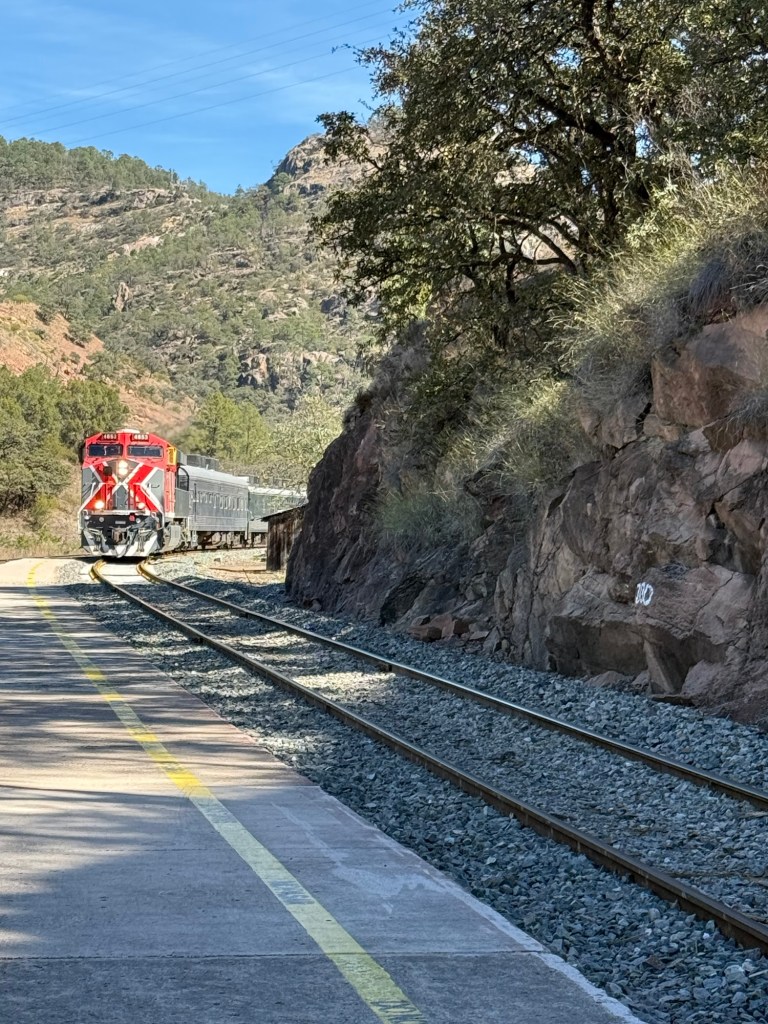
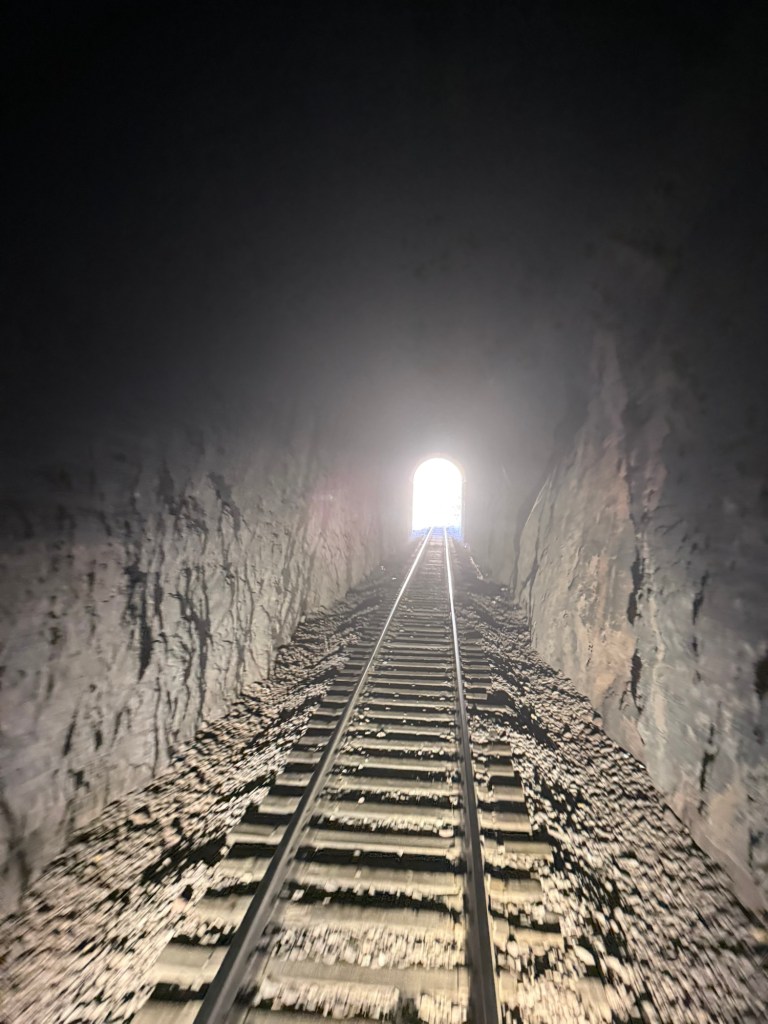
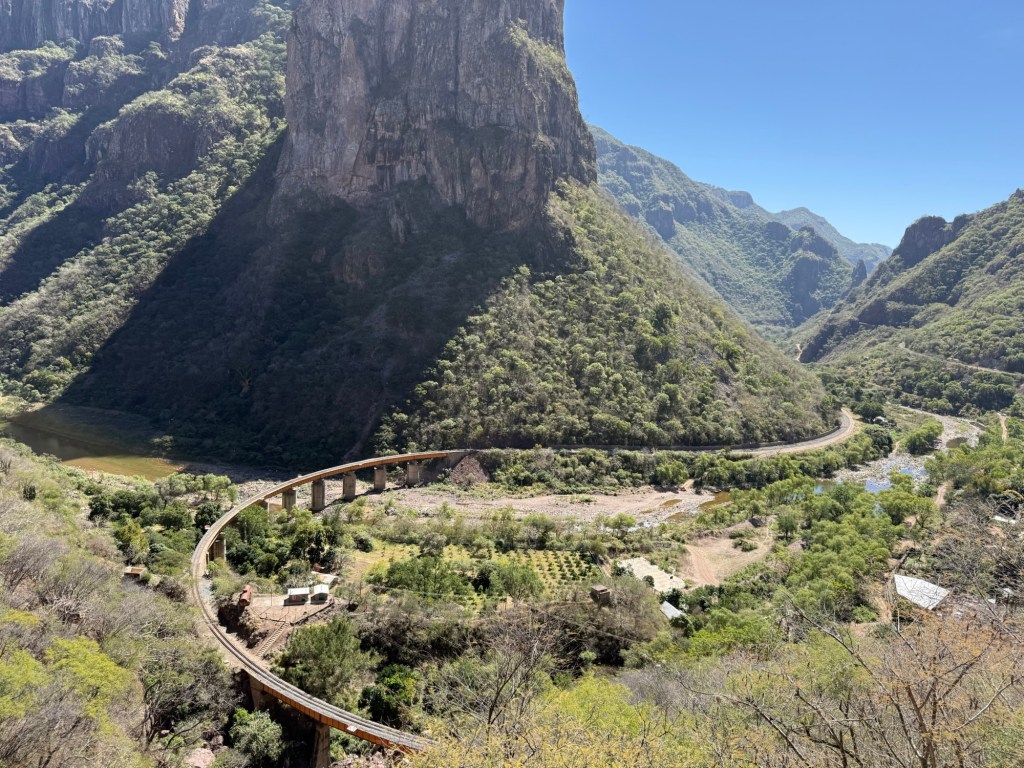
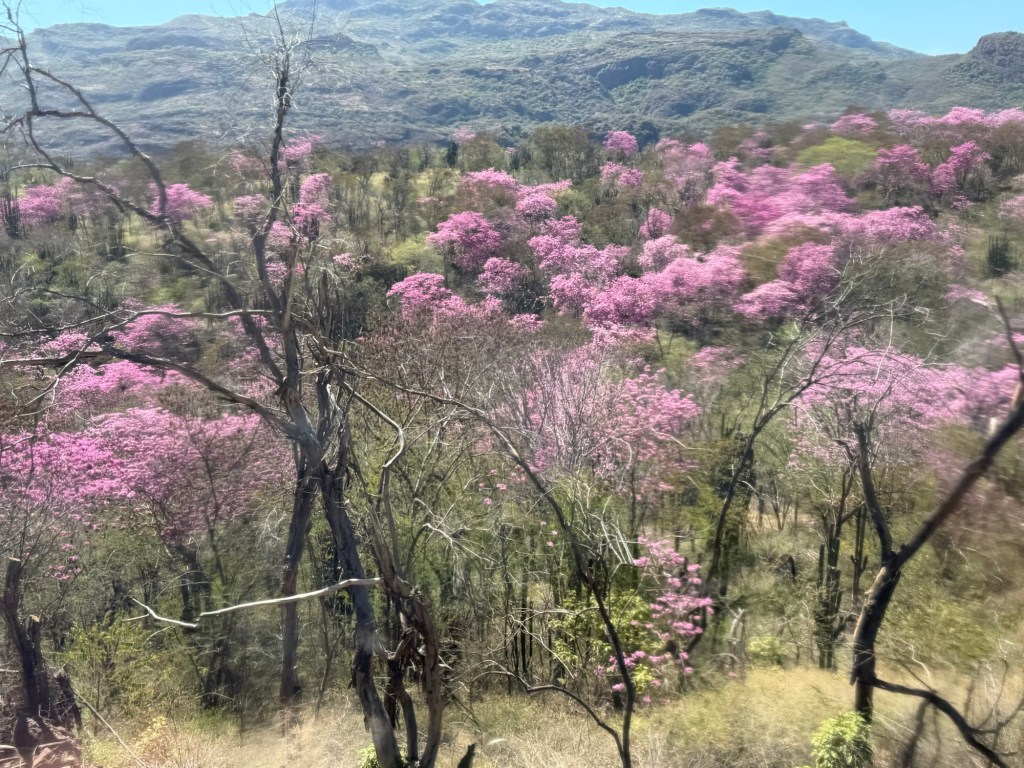
As we were enjoying the train ride, our phones started pinging, texts from friends and families asking if we were okay. Following the killing of a Cartel boss by the Mexican government in Puerta Vallarta, the cartel had responded with gunfire, blockading roads and burning vehicles. A “shelter in place” order was in effect for the region.
Although we were in cartel country, we were 1,000 kilometres north of Puerta Vallarta. While no signs of cartel activity was present, there was a tension in the air, even amongst the mostly Mexican tourists we met.
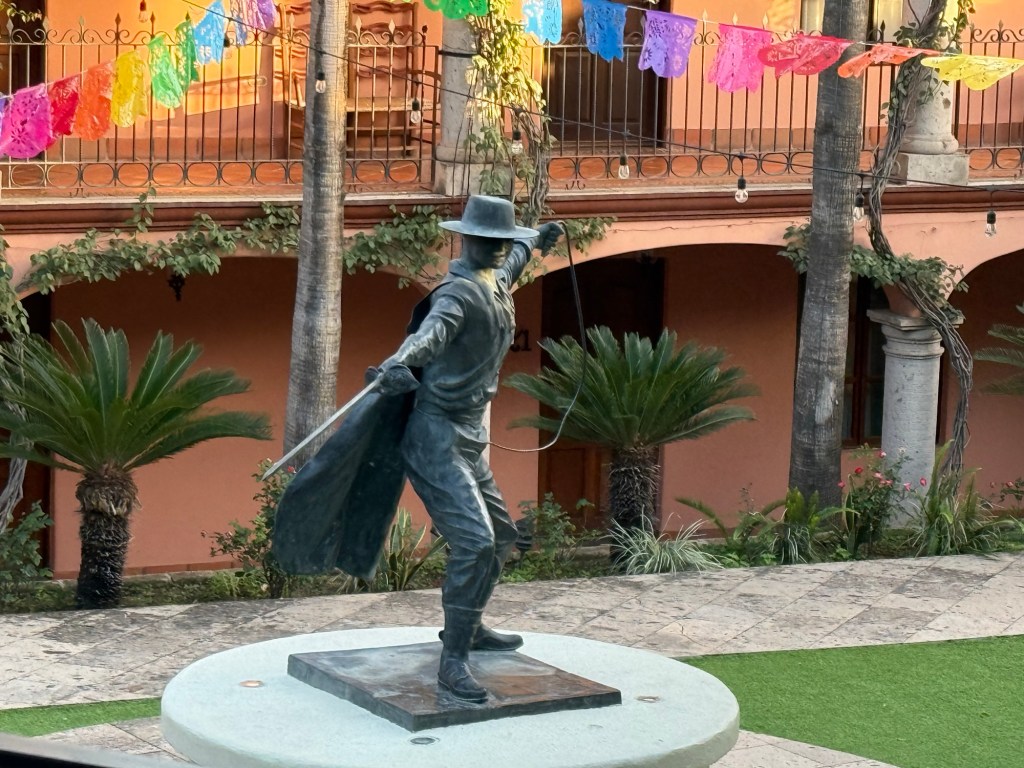
After a 4 hour train ride, we arrived at our final Balderama Hotel, the Posada Hidalgo in El Fuerte. It is famous for being the birthplace of Don Diego de la Vega, a wealthy merchant son who moved to California and was at the forefront of the revolution against the Spaniards and their treatment of the poor. It is said he often donned a mask and was the inspiration for the fictional Zorro. A statue of Zorro is in one of the courtyards at the hotel:
Our tour to the Copper Canyon thus ended. I loved the scenery of the Sierra Madres mountains, riding the Chepe Express and visiting a part of Mexico I knew nothing about. Learning about the history, going to the Indian lands and meeting a lot of Mexican tourists made the trip memorable.
I will be enjoying another five weeks in the heat and relative safety of Merida before returning home. If all goes well, I should be heading to France in May.
 travelsnearlyeverywhere.com