Malta

This trip to Malta makes up for one I didn’t make, in April, 2020, when the pandemic caused my flight to be cancelled and the border to close to non-residents. Instead of Malta, I ended up back home in Toronto. It was time to try again.

I arrived after a short flight from Sicily on a gloriously sunny and hot (27 degrees) for November day at 8:00am. Instead of taking a cab to my hotel, I paid €2 to hop on the public bus which 20 minutes later dropped me at the walls of the capital city, Valetta. From there, it was an easy 6 minute stroll down a pedestrian walkway to my hotel. What a delightful introduction to the country.

On a walking tour, I learned more about Malta’s history. Being in the middle of the Mediterranean (70 kilometres from Sicily, 200 kilometres from Libya and Africa), its been a popular stopping off point for most everybody: Phoenicians, Greeks, Romans, Arabs, etc. Malta’s most famous residents were the Order of St. John – the helping monks who founded St. John’s Ambulance- not the military branch the Knights of St. John or the Knights Templar. The monks were invited here by the King of Sicily and quickly settled.

The monks laid Valletta’s first stone in 1664 and it has the distinction of being the first planned city. Its streets are straight and its walls fortified against a potential Ottoman invasion which never came:
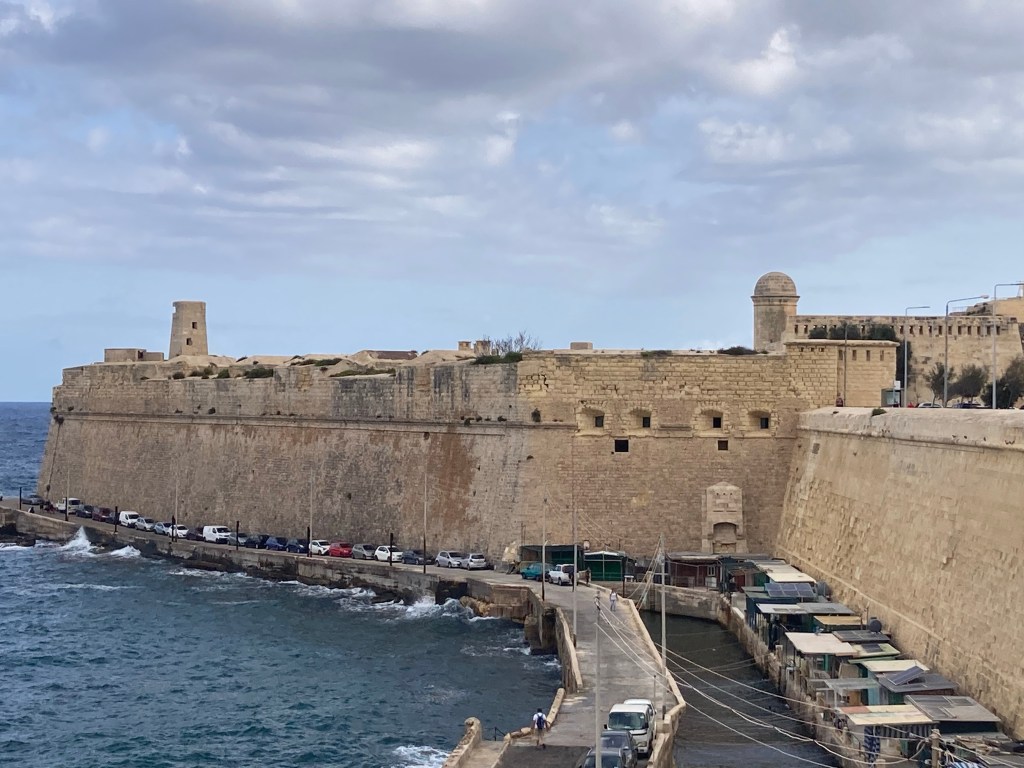
Instead, Napoleon showed up and claimed the islands as his own, but they devolved to the British upon his defeat in 1798 and thus remained until independence in 1964.

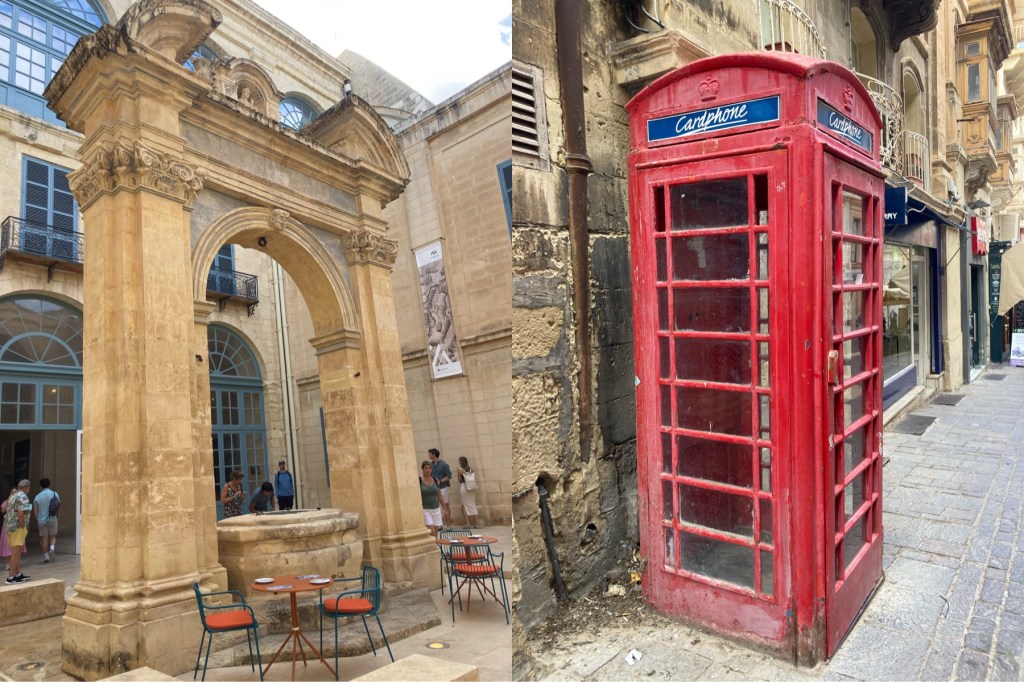
The British left their mark. English is one of two official languages; Maltese, a derivative of Arabic, is the other. A Mark’s & Spencer stood in the main square and empty British phone booths were everywhere;
Being a British colony situated between North Africa and Italy during WW2 was not good. Malta was subject to intensive Axis bombings, over 5,000 tons, and much of Valetta was destroyed. The ruins of the old Royal Opera House stand as a memorial to the devastation:

Valetta is Europe’s smallest capital with only 5,000 inhabitants, although half a million live in its suburbs. The city was largely left untouched after the war, but it being named as an European City of Culture in 2012 sparked a renovation boom. Today, Valetta is a pretty, walkable city known for its ornate balconies:

Given its medieval origins by a Christian order, it’s not surprising the country is 96% Roman Catholic and 365 churches are on the islands:
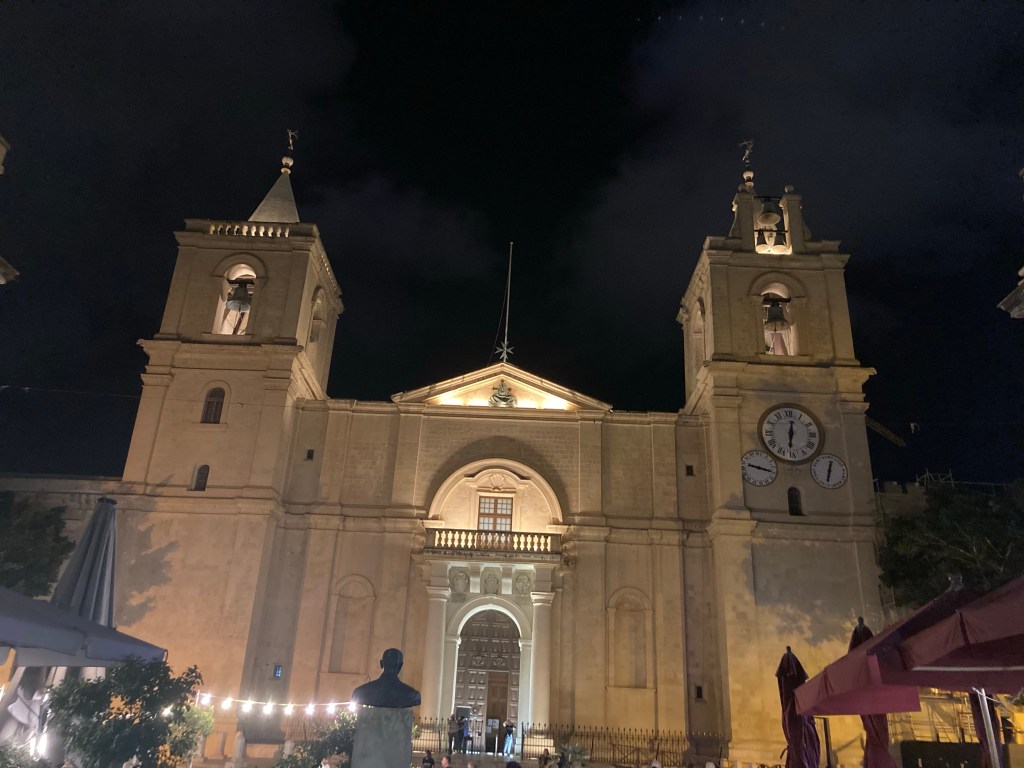
As I’d had my fill of churches in Italy, I passed on visiting any on Malta.

What I did visit were 2 Neolithic ( of 7 on the islands) temples. Constructed as early as 4100 BC, they claim to be the oldest freestanding temples, predating both Stonehenge and the Pyramids. Ggantija, on the island of Gozo, also has many tombs. Archeologists do not know who the inhabitants were or why they disappeared about 2500BC, but from the human remains and sculptures in the temples have deduced a lot of information, like they were farmers, wore skirts and beads as decoration, suffered from toothaches and arthritis etc.
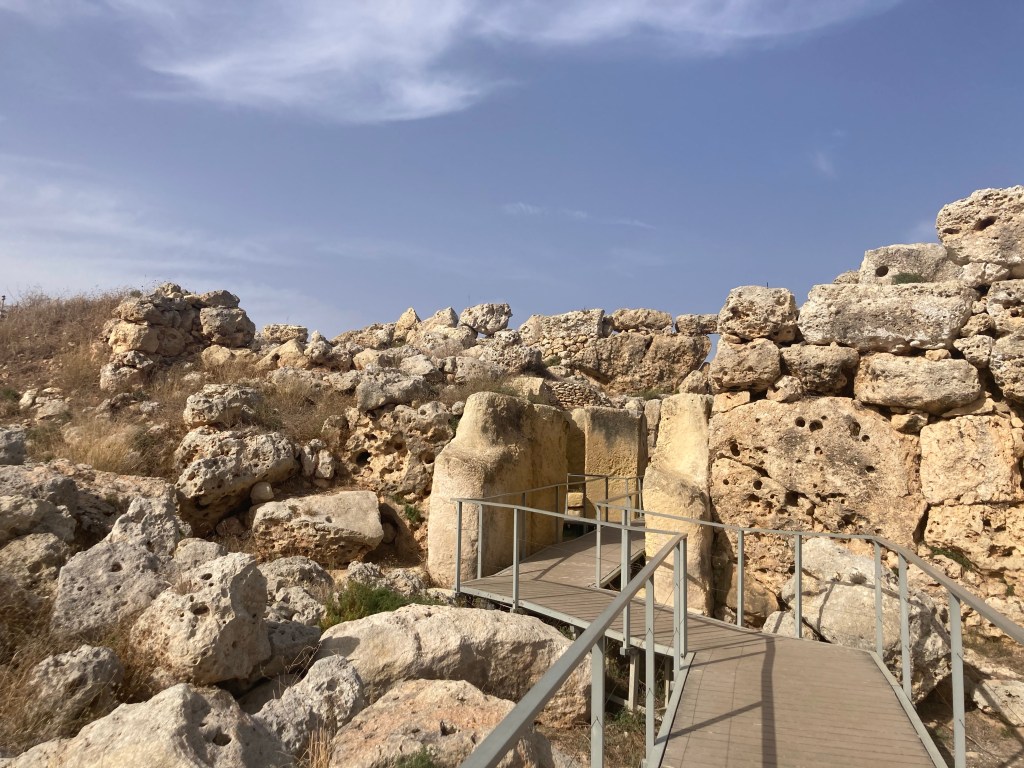
True it looks like just a pile of rocks but the rocks were quarried, chiselled and moved over 6,000 years ago.

And so ended a very pleasant 4 days on Malta.

A Week in Sicily

We arrived in Sicily in a most unique way, aboard a train ferry whisking us across the Straits of Messina that separate Sicily from the mainland. Unfortunately it was dark so the scenery was limited.

We awoke the next morning to clear, bright skies, a welcome change from the clouds and downpours which dogged us in the north. Feeling rejuvenated in the sun, we set off on a No Mafia walking tour through the center of Palermo. Led by Ermes, we learned about the rise of the Mafia in Sicily ( a weak government creates a power vacuum the Mafia exploits) and attempts to reduce its power. Ermes belonged to an organization which loosely translates to Good-bye Protection Money and it recruits shops which display its mantra:

We walked around Palermo, to the law courts, the police station, to memorials of judges, lawyers and police officers killed in the anti-mafia campaign.

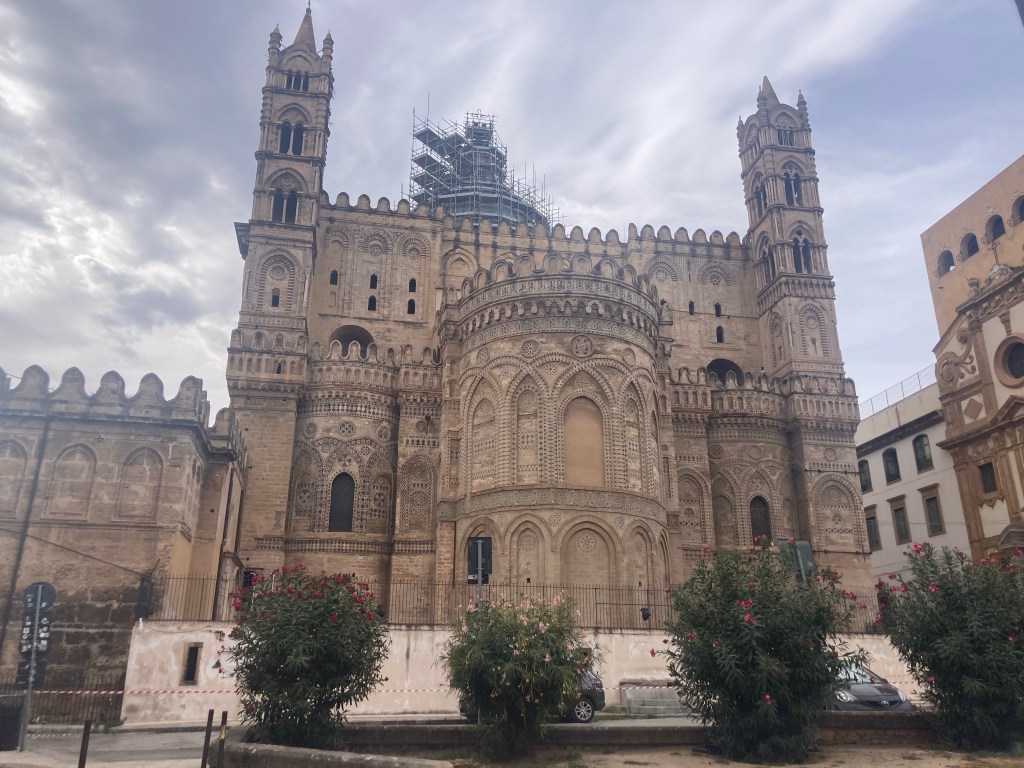
We then did some non-Mafia related sightseeing, enjoying the Norman architecture reflected in Palermo’s main buildings, including its imposing palace and the Duomo:

In the evening, we joined Annalise and a French couple for a street food tour. We started with traditional Sicilian treats like the deep fried rice ball- arancini- before progressing to the infamous spleen sandwich, offal in bread with ricotta cheese:

They look better than they taste- like dry liver. The story goes in medieval times, Jews were employed by the butchers and, in part payment, were given the unsellable pieces of the cow. Due to dietary laws, they couldn’t eat the spleen, etc. so they cooked it, put it between bread and sold the spleen sandwiches.

Of course, we finished with gelato, which Palermo contends it invented. I think the Florence populace would disagree.

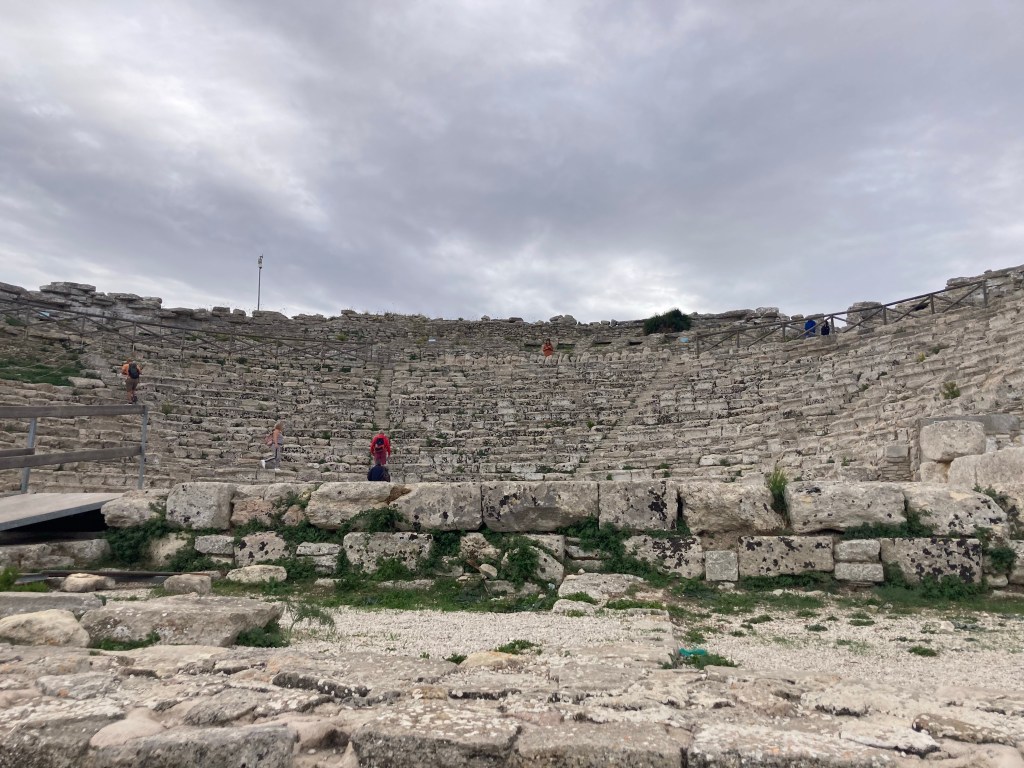
We picked up a rental car and drove to the Greek ruins of Segesta where a 6th century BC Temple and Ampitheatre greeted us:

The Temple is considered one of the best preserved and afforded us expansive views of the surrounding countryside:

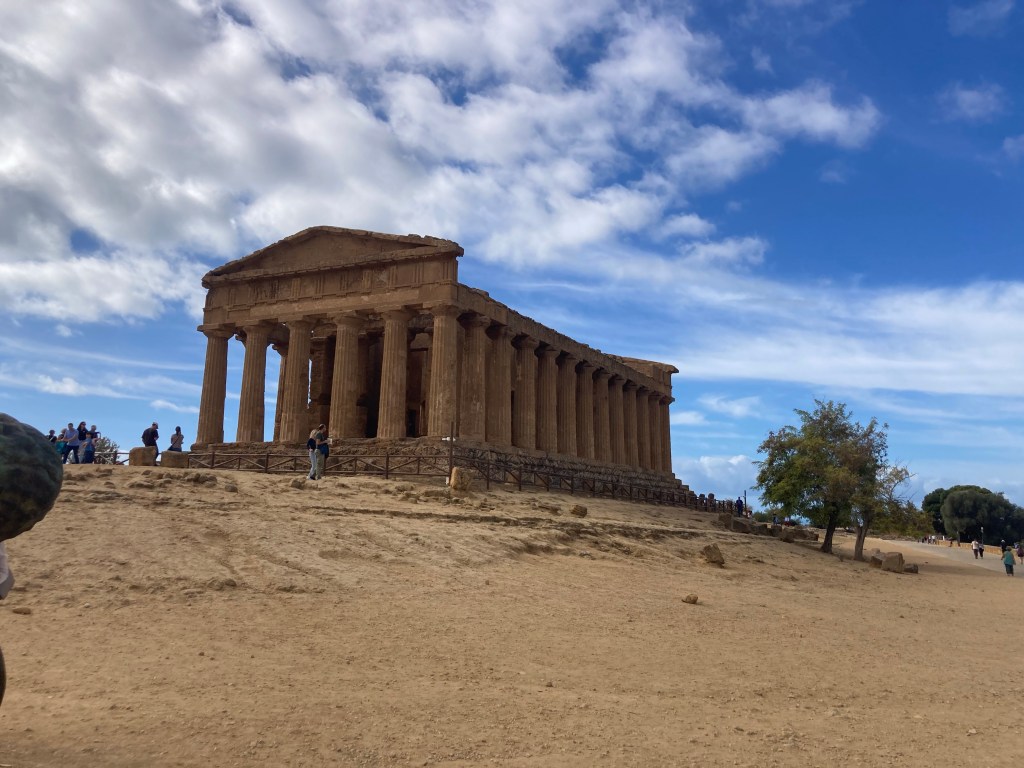
Continuing with the Greek theme, we drove to the city of Agrigento, a one time Greek colony with an extensive archaeological park. Stretching over 2 kilometres, the park contains the ruins of 7 temples, a few necropolises and other remnants from Ancient Greek and Roman occupation. Its Temple of Concord is remarkably intact for a 2500 year old building:

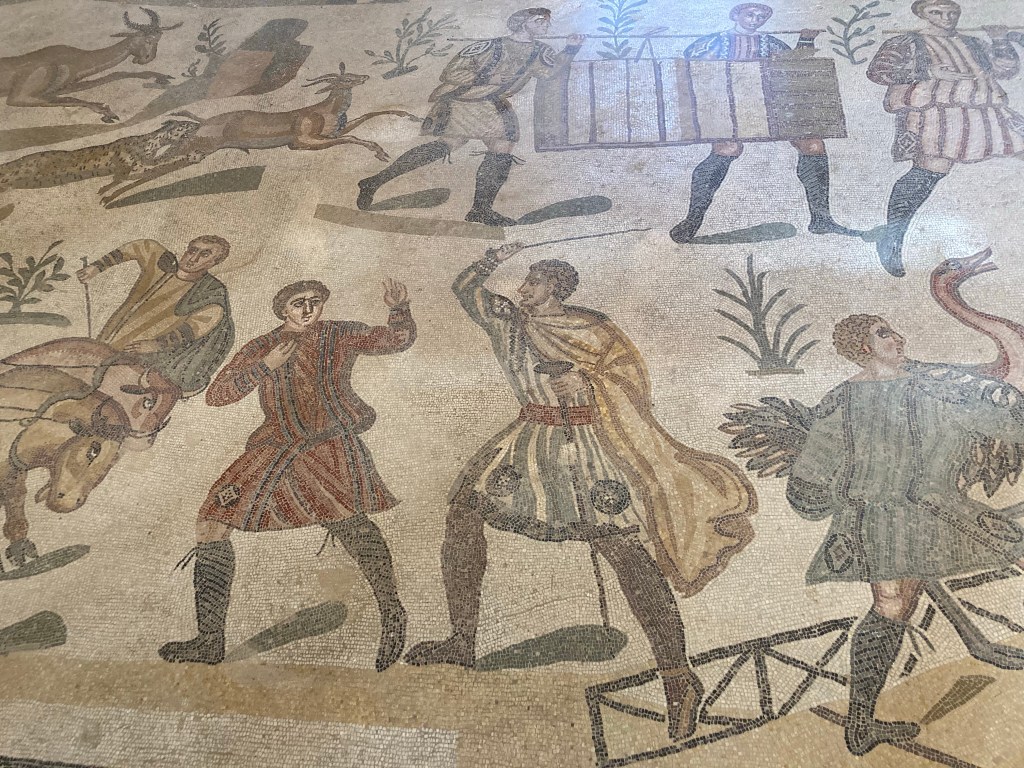
Much as I love Ancient Greek temples, one of my highlights in Sicily was the detour we took to the Villa Romana del Casales, the remains of a 2nd century AD Roman Villa with the most spectacular non- religious mosaics imaginable. It’s thought to be the country house of a wealthy Roman trader and all of its rooms are richly decorated with mosaics:

A 200 foot hallway’s mosaics depict the transport of exotic animals from Africa to Rome:

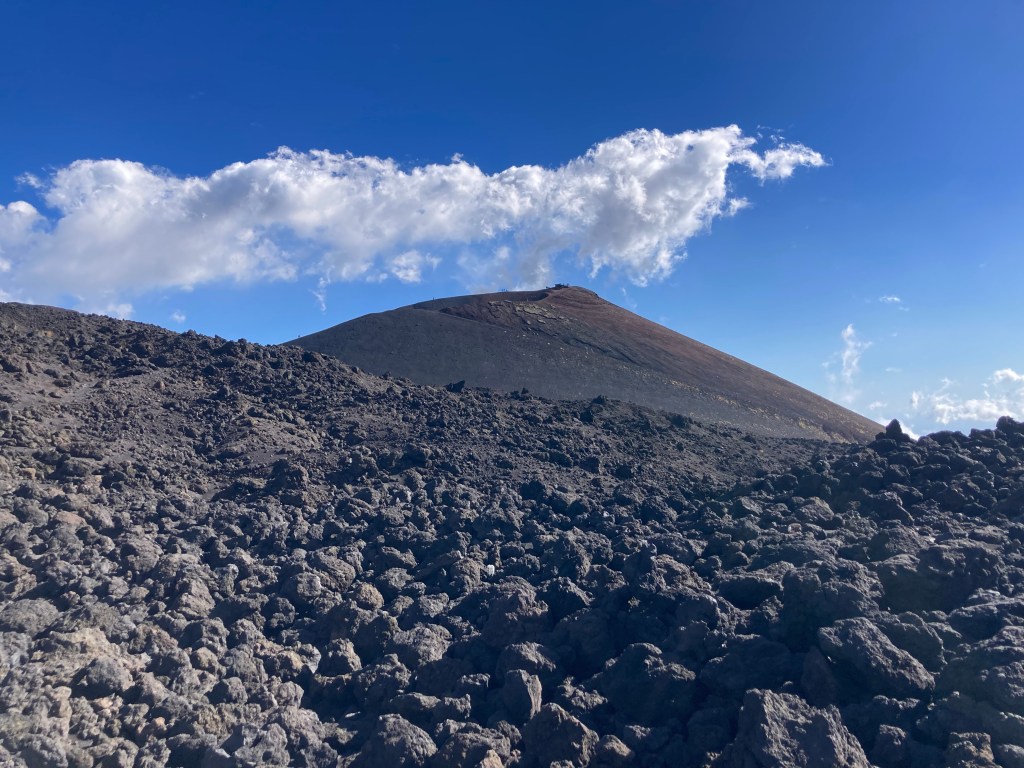
After a brief stint in Siracusa, another former Greek colony, we made our way to our final destination, Catania. We splurged for a tour of nearby Taormina and Mount Etna. Daria, our guide, enthusiastically explained how the volcano has dominated life in the region for centuries. Its super rich soil dictates what crops to grow, the constant lava flows create good building blocks and various saints are reputed to have miraculously stopped eruptions:

Climbing is possible to see one of its many craters, but on the day we went up, it was only 10 degrees and extremely windy. My companion climbed up, but I settled for a short trek to one of the lower craters.

We ended our time walking around old Catania, seeing a plethora of pretty Baroque churches and an ugly, unfinished one:

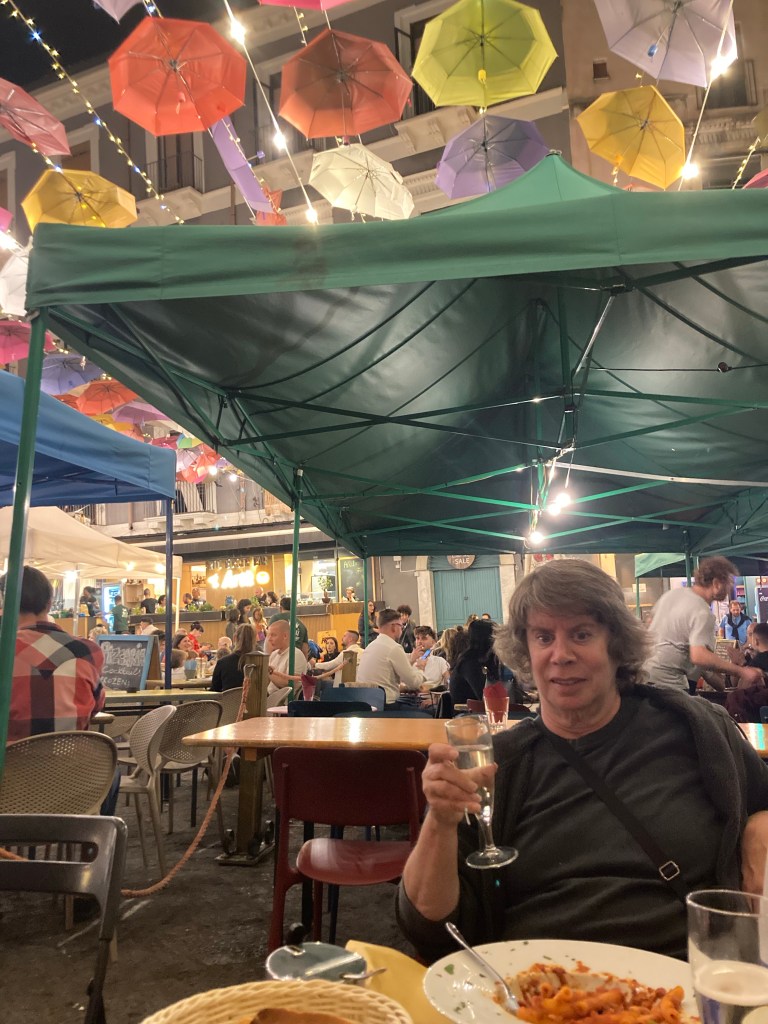
After a week, it was time to leave. One last dinner of a caprese salad and pasta and a glass of Prosecco:

Ciao Italy

Italy: Part 2

La Speizia to Florence is about a 2 hour drive, but Pisa is on the way so we couldn’t resist stopping in at its leaning tower, along with about a million other tourists. The square was packed, the lineup to climb the tower about three hours long, and everything seemed very touristy. Perhaps it was a good warm-up for what awaited us in Florence. So we snapped a few photos of each of us holding up the tower, looked around and left.

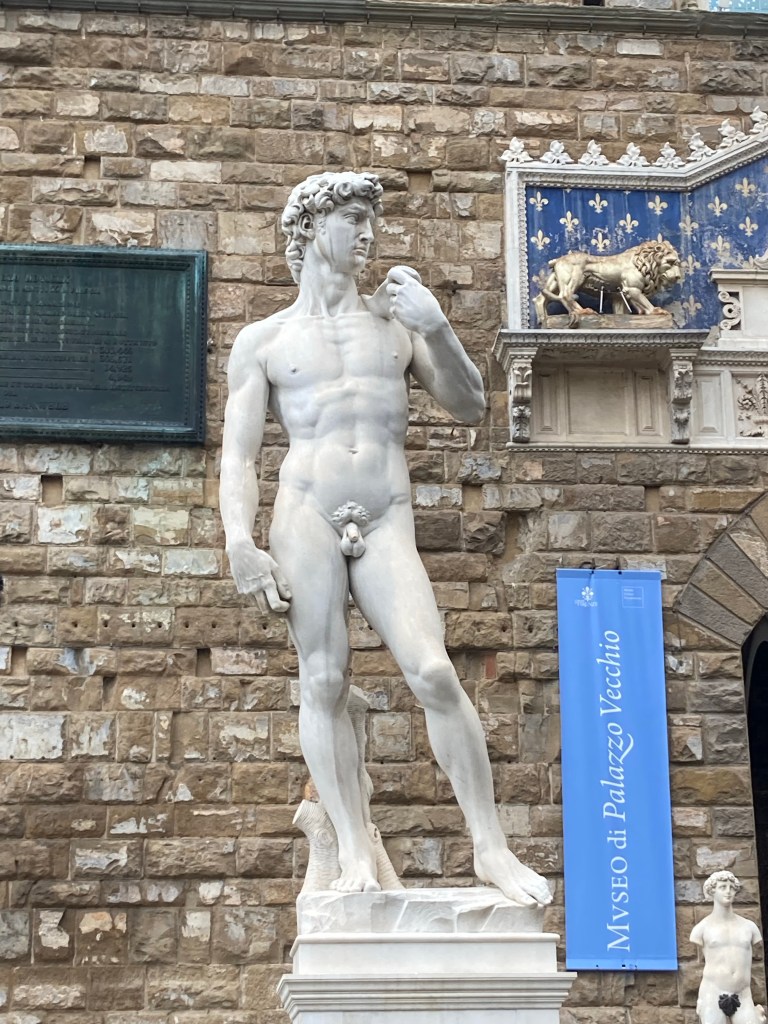
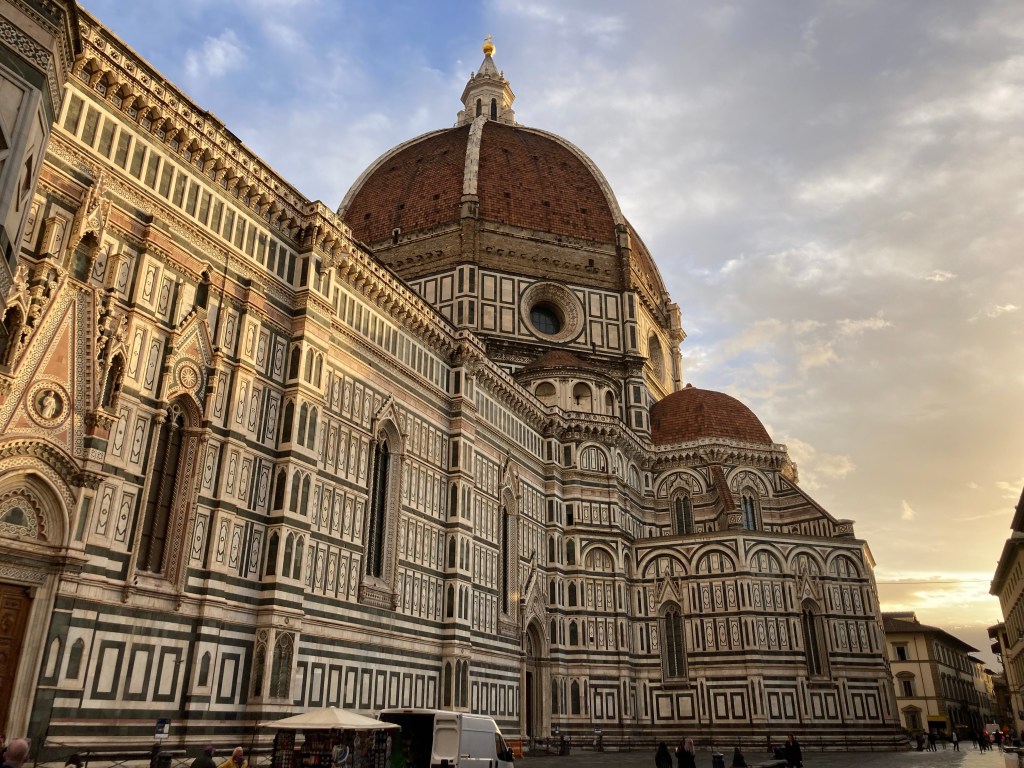
Florence is one of the most beautiful cities I have ever visited. In the old town, art and architecture marvels at every corner. We started with a Medici walking tour, beginning at the Medici tombs at the San Lorenzo church. We made our way to the Duomo with its baptistry and bell tower, then went to the Uffezi gallery to look at the fake David statue before finishing at the Ponte Vecchio bridge.

The real David statue is in the Academie, but tickets are hard to get so the city of Florence has kindly put a number of fake David statutes all around.

MaryAnn decided to hike up the 441 steps of the bell tower but I chose instead to sleep in. The next day, I did go to the Duomo early and managed to get some photos of it without a throng of tourists in front:

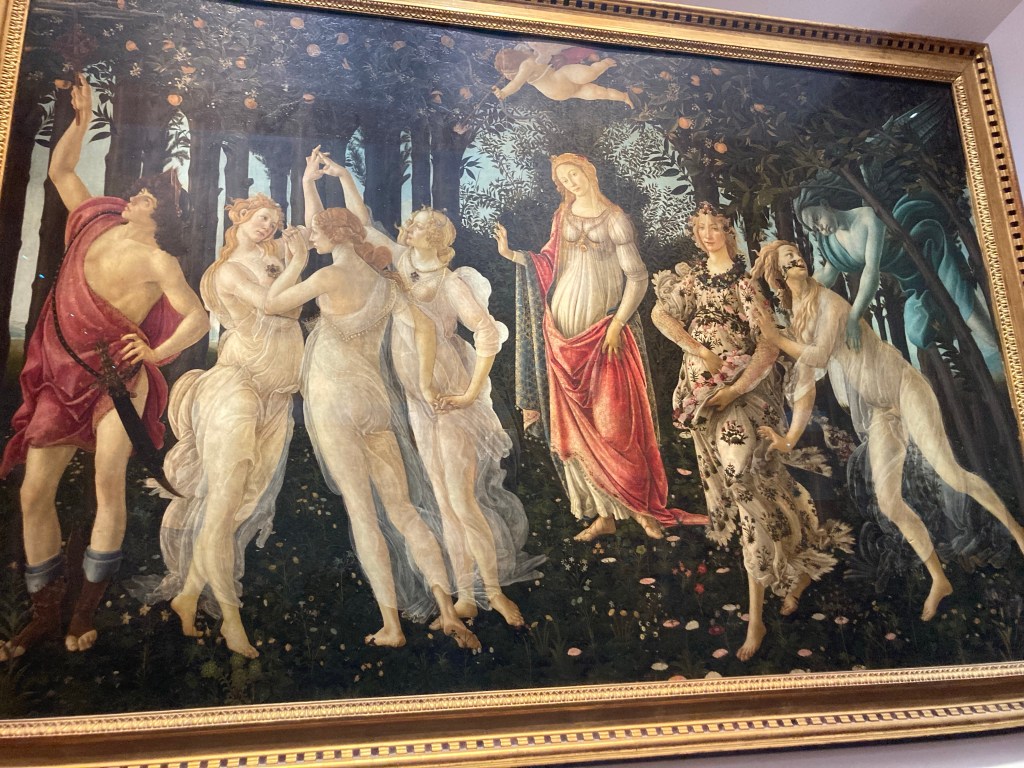
We did the usual tourist things. We braved the gold stalls on the Ponte Vecchio bridge without buying a thing, we visited the largest Medici, Palace, Pitti Palace, and it’s Boboli gardens where we got drenched in a downpour. I toured the Uffezi Art Gallery and admired The Birth of Venus masterpiece:

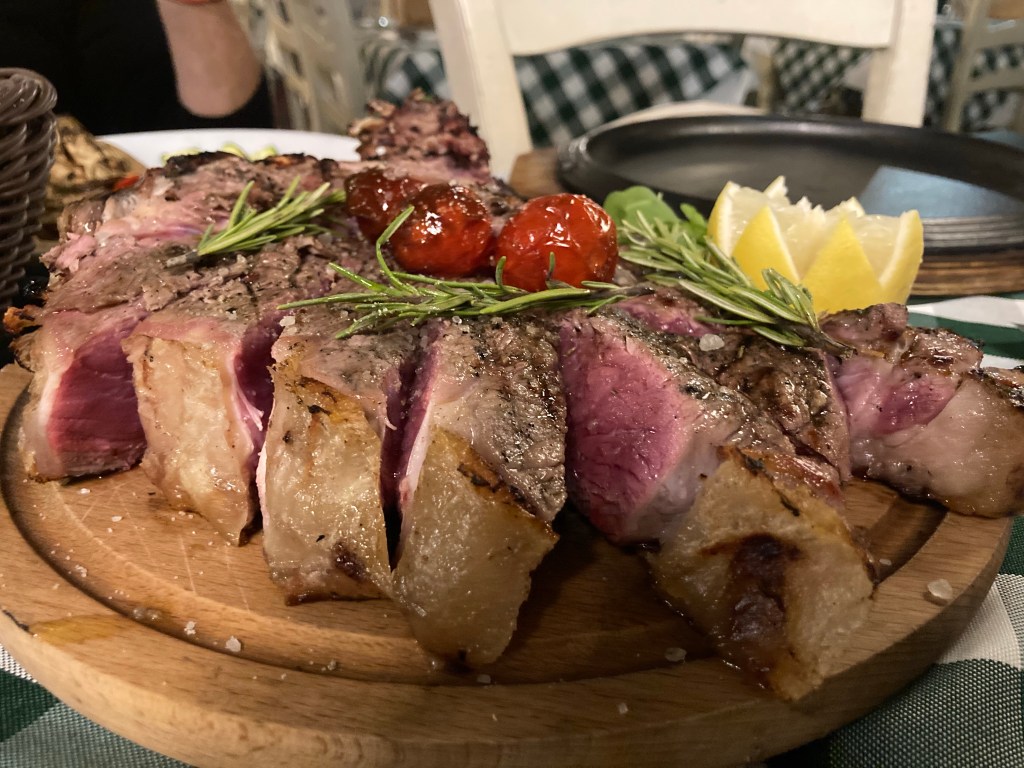
Of course we indulged in Florence’s foods: gelato and a T-bone steak at least 3 fingers high and cooked rare:

But for the constant rain and huge number of tourists, it was a short but sweet visit.

We drove on to Bologna, where the food fest continued with its specialties, Parmegiano Reggianno cheese, balsamic vinegar, Parma ham but no spaghetti Bolognese, which has no connection to Bologna. Rather Bolognese tagliatelle is its famous namesake, fettuccine like noodles with a meat and tomato sauce.

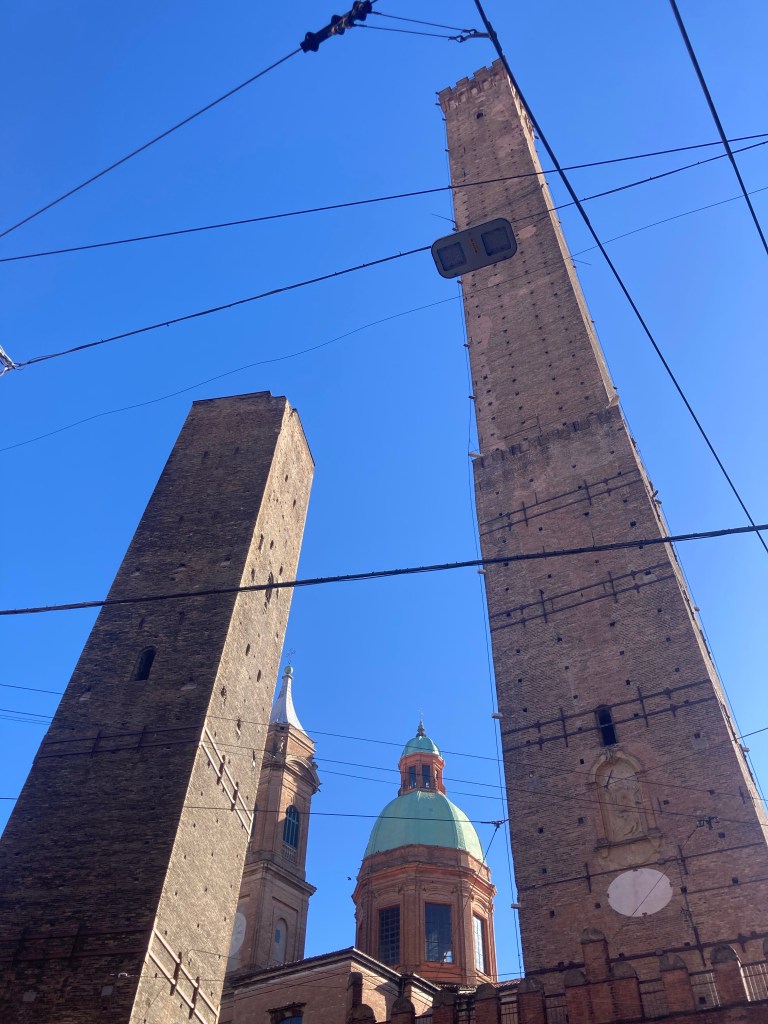
Bologna’s architectural treasures are its towers. Constructed as residences in the 12th and 13th centuries by wealthy families, they were a sort of building competition to see who could have the highest tower. At one time, over 100 towers dotted the cityscape but today only 22 remain, each with varying degrees of lean:

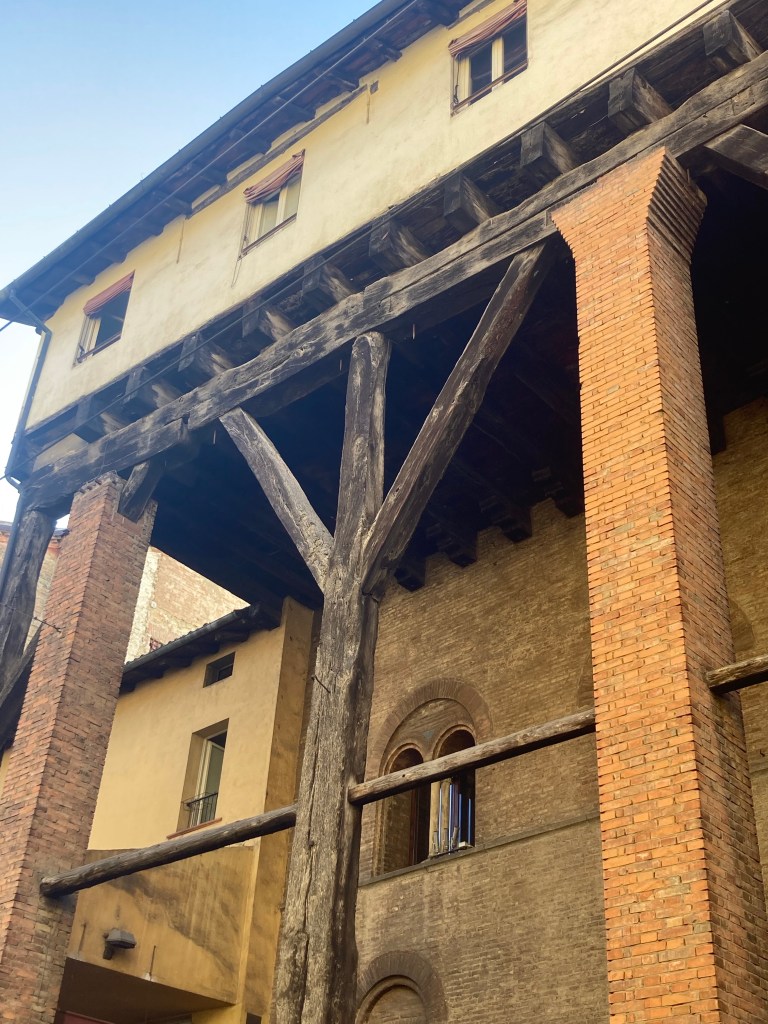
Bologna’s porticos are a UNESCO site. Begun in the medieval ages when a housing crisis threatened, the city offered a tax exemption to homeowners who built student housing above the sidewalks:

Today, their 50 kilometres plus offer a welcome shield from the rain:

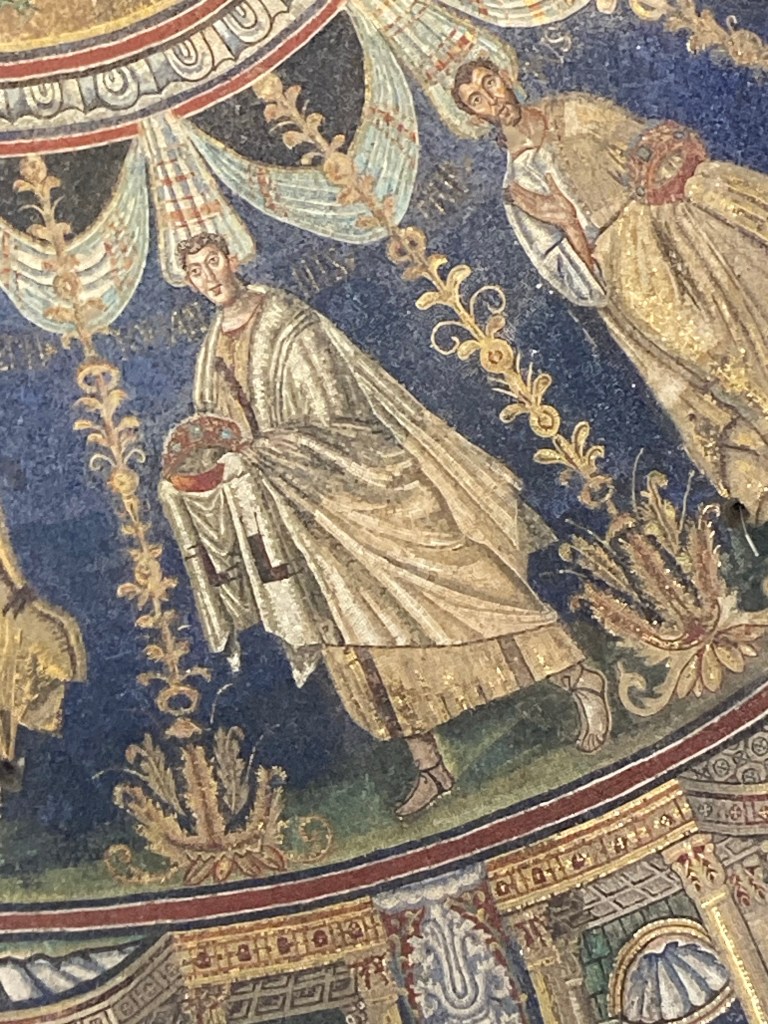
Our highlight was a trip to Ravenna, the capital of the Roman Empire in the 5th century and home to the Gothic kings before Byzantium recaptured the city. Its mosaics are spectacular;

The colours are vivid and the designs so intricate they portray movement:

Ravenna was a welcome relief from the crowds in Florence and Bologna and the rain finally let up as we walked from church to church in the city, admiring the mosaics. Ravenna was a wonderful surprise and a city not to be missed.

But now, we head hopefully to sunshine in Sicily.,..