
I’ve been to the UK countless times but mostly stay in London or the south. Realizing there were large swaths of the United Kingdom I had never visited, I decided to remedy this deficiency with a train journey through some of its iconic places.
I chose the stops mostly based on their proximity to famous Cathedrals or Castles, so my itinerary ended up being York, Lincoln, Warwick, Llandundo, Cardiff and Bath.
Using trains seemed to be the most practical means of transport and the British Rail site was easy enough to navigate to purchase a pass and reserve seats. Fortunately, of the 14 trains I took, only one ran an hour late and posed no problem. But what was annoying was my stupid decision to travel mostly on the weekends, thinking the trains would be less busy. How wrong I was. On the weekend, the football fans travel to their games, beers in hand at 9:00 am, drinking and singing football songs and crowding the trains. I spent a few uncomfortable rides squished in the door compartment listening to some awful singing.
In York, I started by walking the remains sections of the Roman Walls and visiting its massive Cathedral for eveningsong prayers. The Cathedral was originally on the site of a Roman Fort, where Constantine the Great was crowned emperor, then a Norman Church before getting its current form beginning in the 13th century. Nearby are the Shambles, a medieval street which was the inspiration for Daigon Alley in the Harry Potter series:
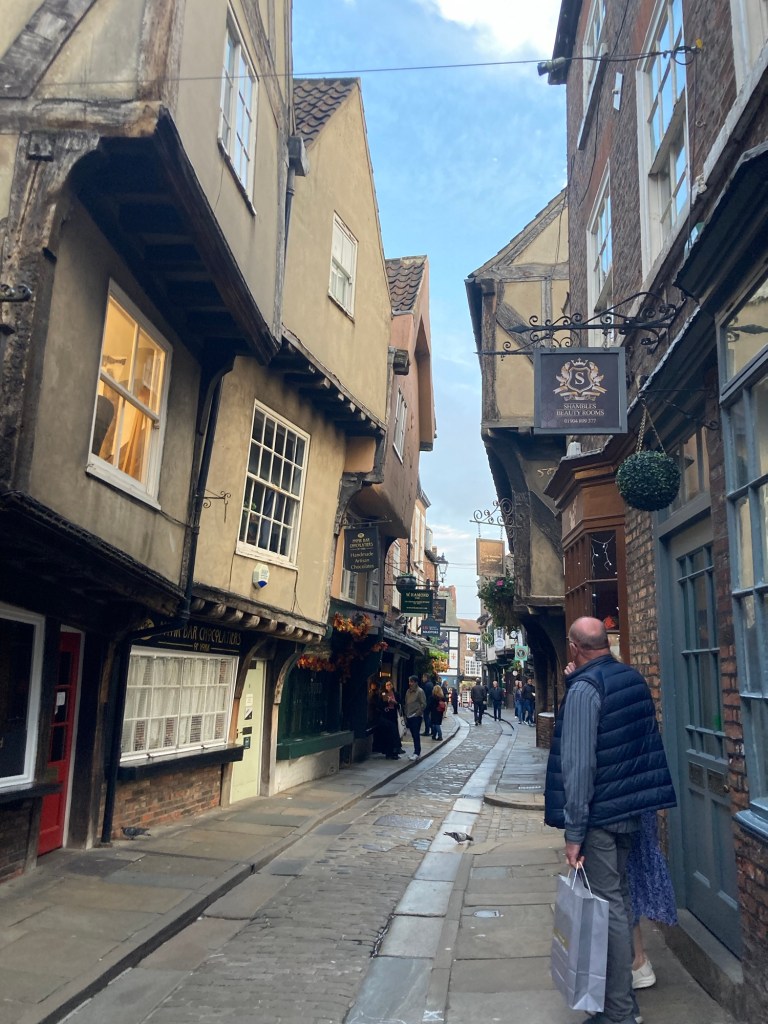
A number of Harry Potter shops line The Shambles, but the most popular one is a store selling little ghost figurines:
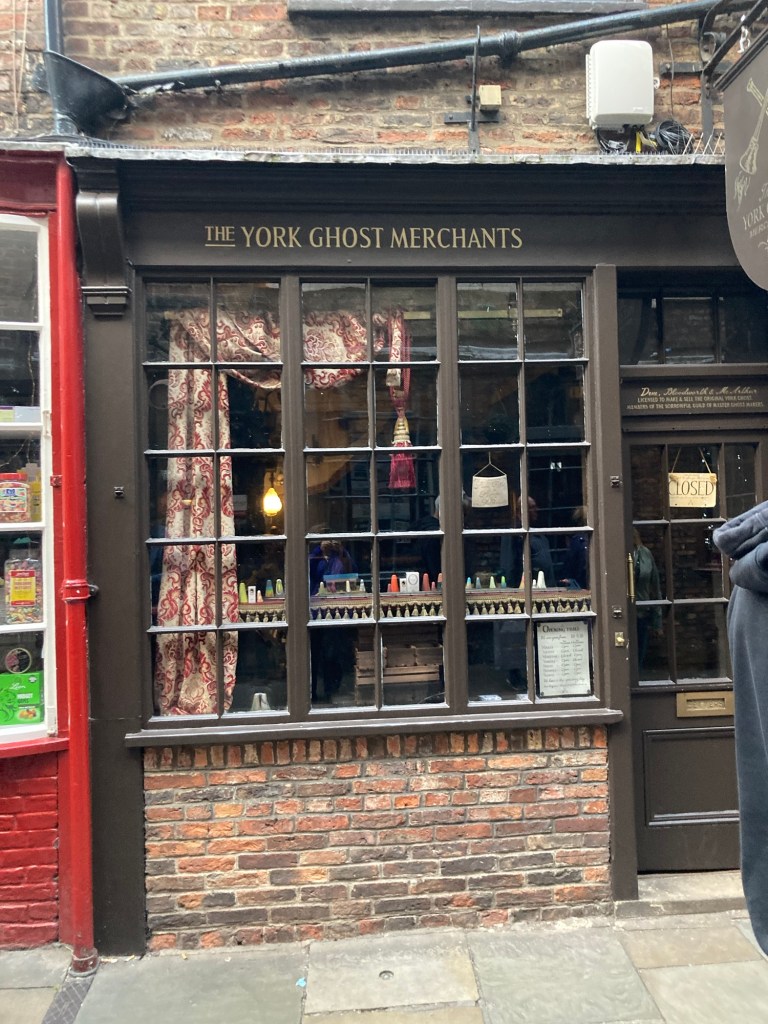
The lines to get in can be up to 3 hours long. On-line shopping is an option, but this apparently defeats the purpose, since the ghost choses its owner, which cannot be done on-line.
The only remnant of York’s Castle is Clifford’s Tower, a 13th century stone building;
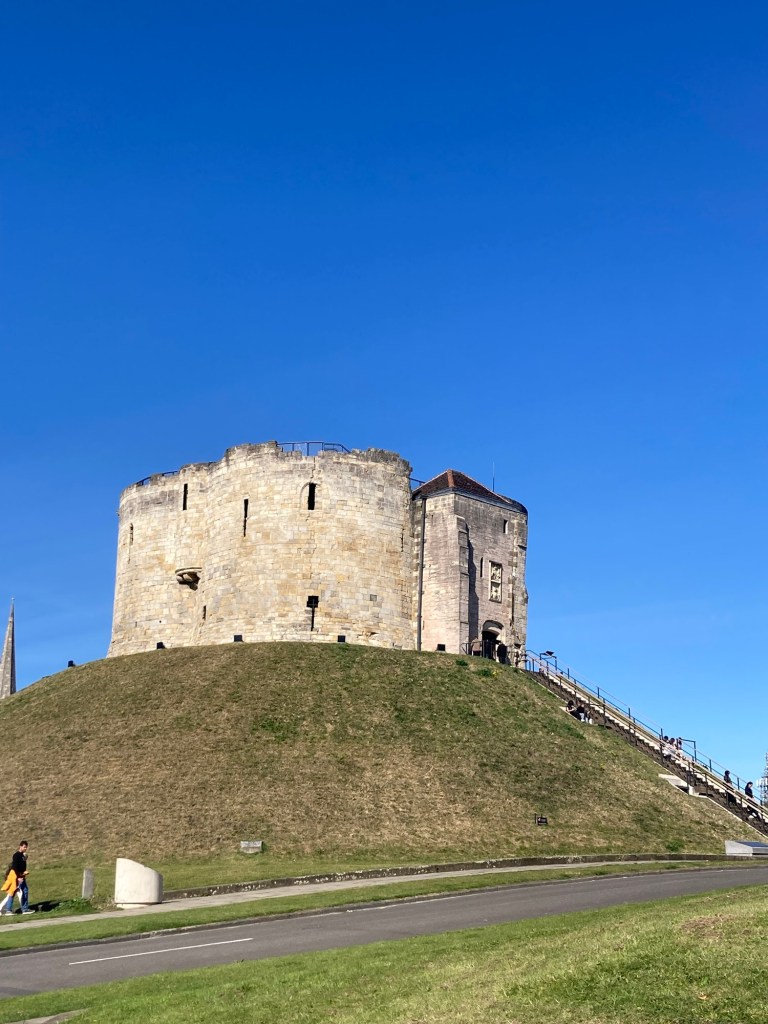
The original wood castle was burned down in 1190, in one of York’s darker periods, when the city’s Jews sought refuge there from a mob. The Jews had originally come to York with William the Conqueror who used them to raise funds; Christians were prohibited from lending money. The Jews had later lent funds to the crusaders, but whether it was anti-Christian sentiment or a means of eliminating their debt, the York mobs set the castle on fire and killed all the Jews within.
Lincoln had no such ugly history, but it too has a marvellous street lined with Norman and Tudor buildings called Steep street because it is very steep:
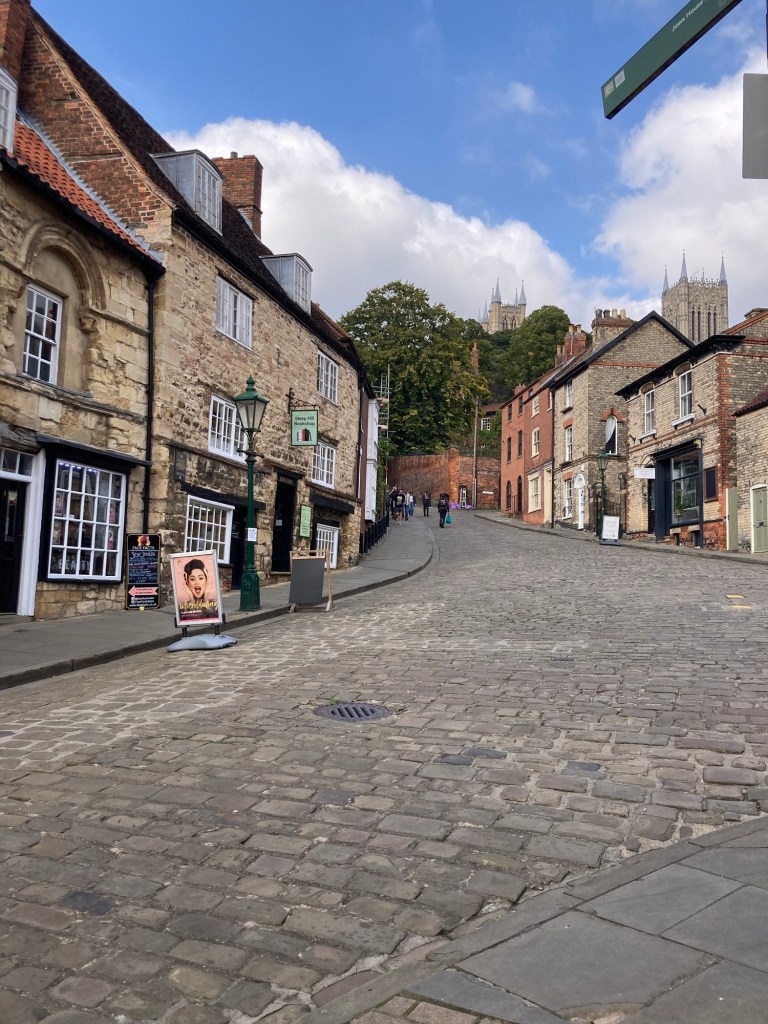
There is a mammoth Cathedral and a Castle which retains its original walls. Part of the original 13th century keep remains, but since the 15th century, the grounds have served as a prison. Numerous and public hangings took place here and the building served as the filming location for Mr. Bates’ prison in Downton Abbey.
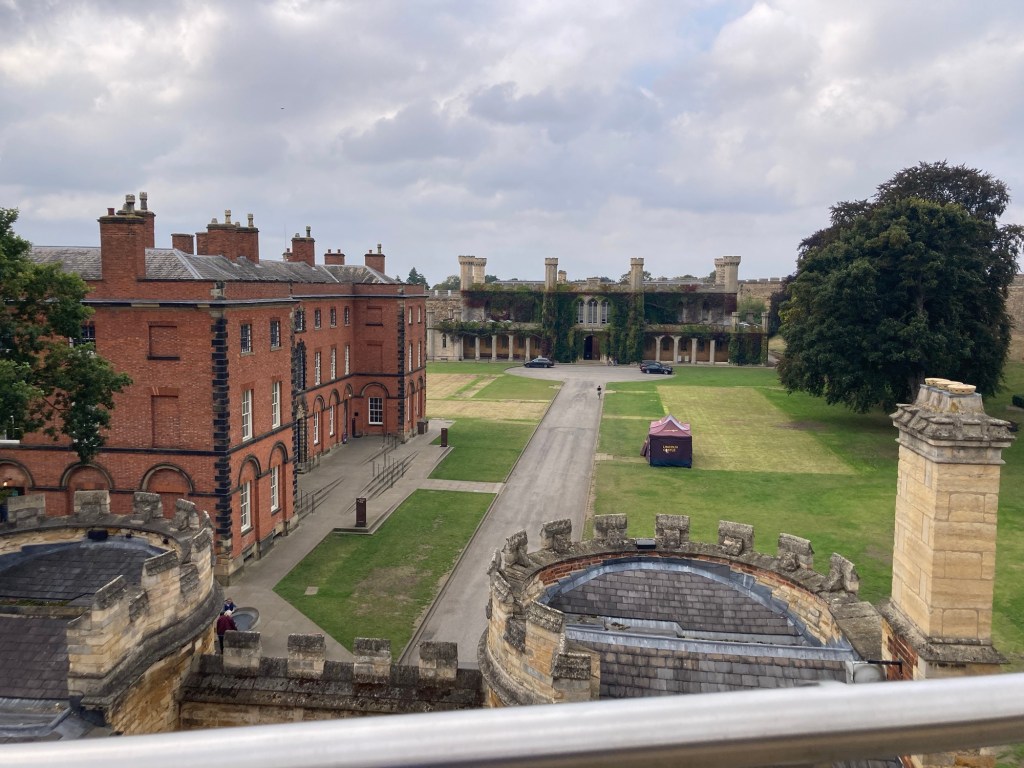
Deep in the vaults of the prison is one of four original copies of the Magna Carta. Photos of it are not allowed but it was good to see. Two of the other originals are in the British Library and the third in Salisbury Cathedral.
My next stop was Warwick, to see its magnificent medieval castle. Originally a wooden fort constructed by the Normans ( this is getting slightly repetitive), it was rebuilt in stone in the 12th century, played a large part in the Civil War and was turned into a country house in the 17th century.

Sadly for me, it was purchased by an entertainment group some decades ago and turned into a playground, with the Grand Hall decked out for an upcoming wedding ceremony and the grounds filled with little boys brandishing toy swords and girls running about in princess dresses. The “ attractions” were mazes and archery displays for the kids with very little for adults. Even the interiors were done up with wax mannequins representing 1920’s lifestyles:
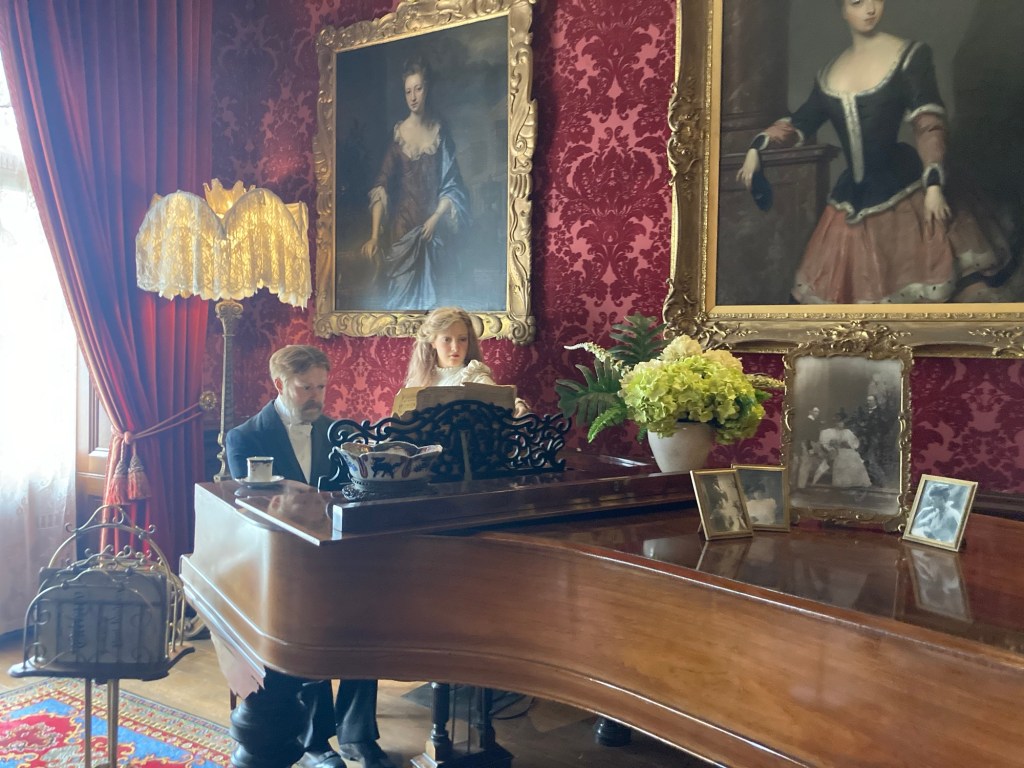
Think Windsor Castle goes to Disneyland. Very disappointing!
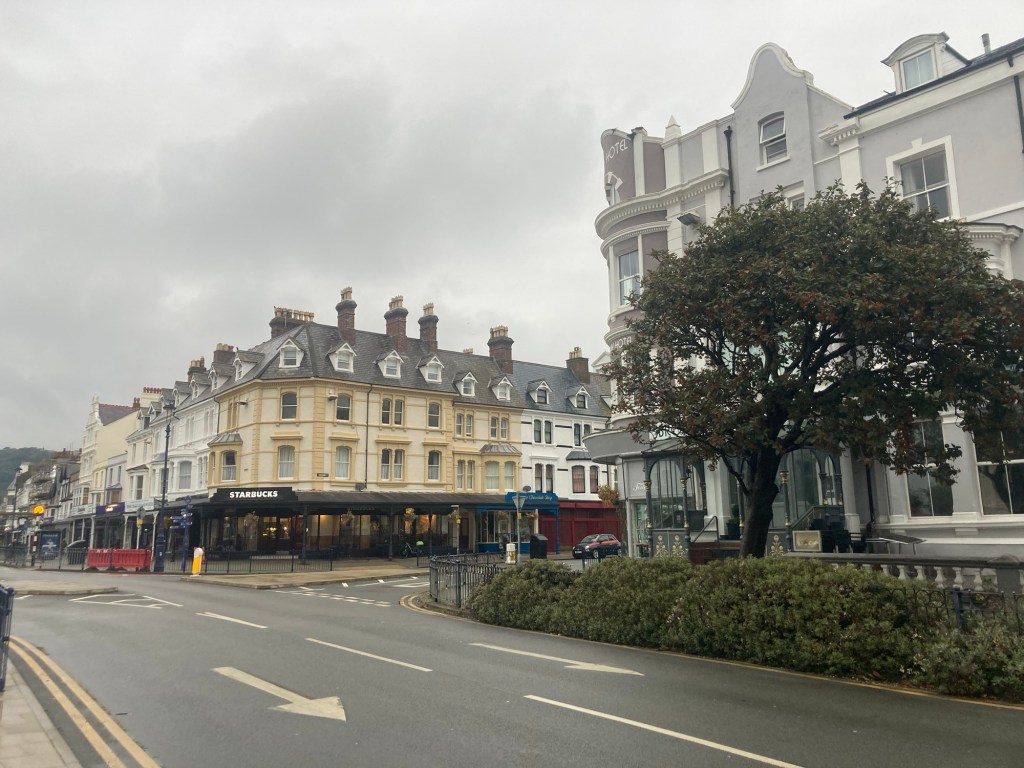
I embarked on a 4 train, 3 transfer trip to Llandundo ( pronounced Clindinda) in Northern Wales. A cosy seaside town, it received large sums of public funds in the 1870’s to develop itself as a beachside resort, which it did very nicely with lots of well preserved Victorian hotels:
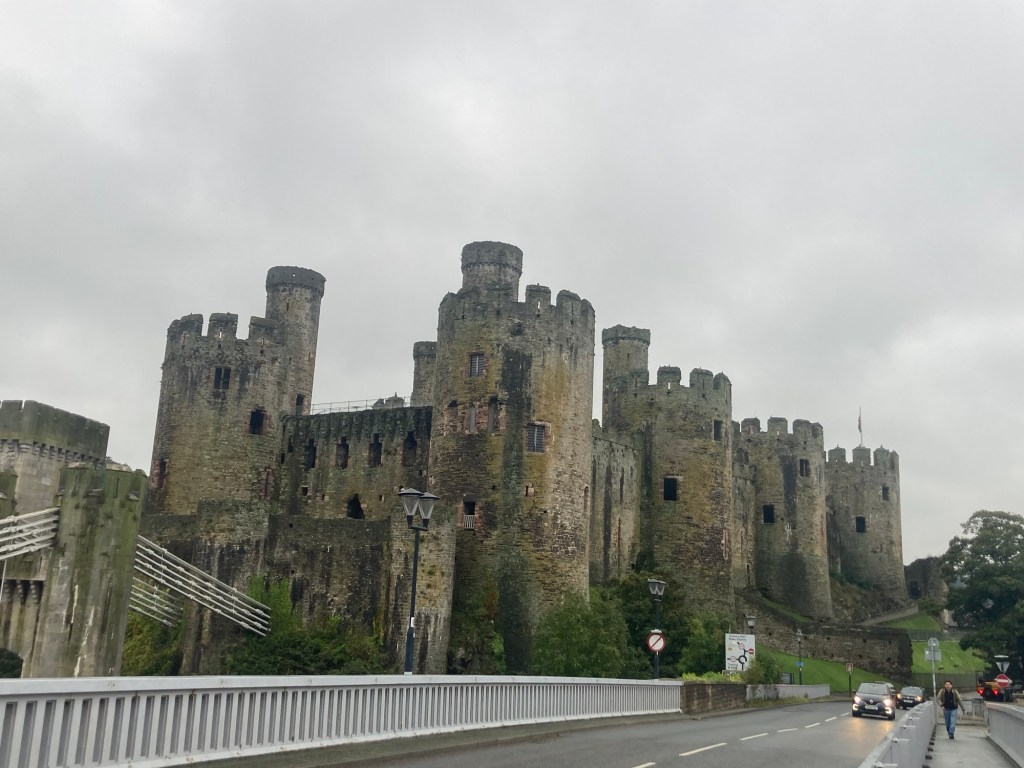
I had signed up for a bus tour of Snowdonia National Park and 3 Castles. Our first Castle was Conwy Castle, in Conwy:
We drove through Snowdonia Park, where our view of Wales’ tallest mountain, Mount Snowdon, was obscured by the rain clouds. Lunch was at The National Slate Museum, on the premises of a former slate foundry.
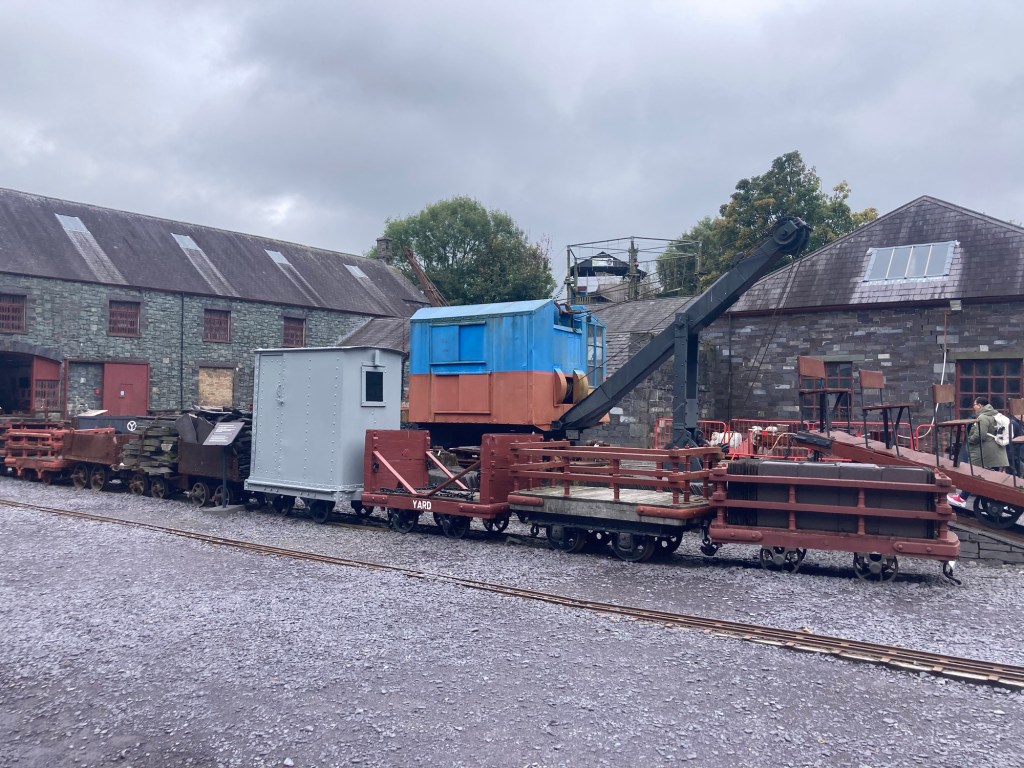
Much of the equipment was on show, along with a display of slate splitting. While slate ( along with coal, tin and copper) had made Wales rich in the 19th and 20th centuries, most of the mines have long since closed.
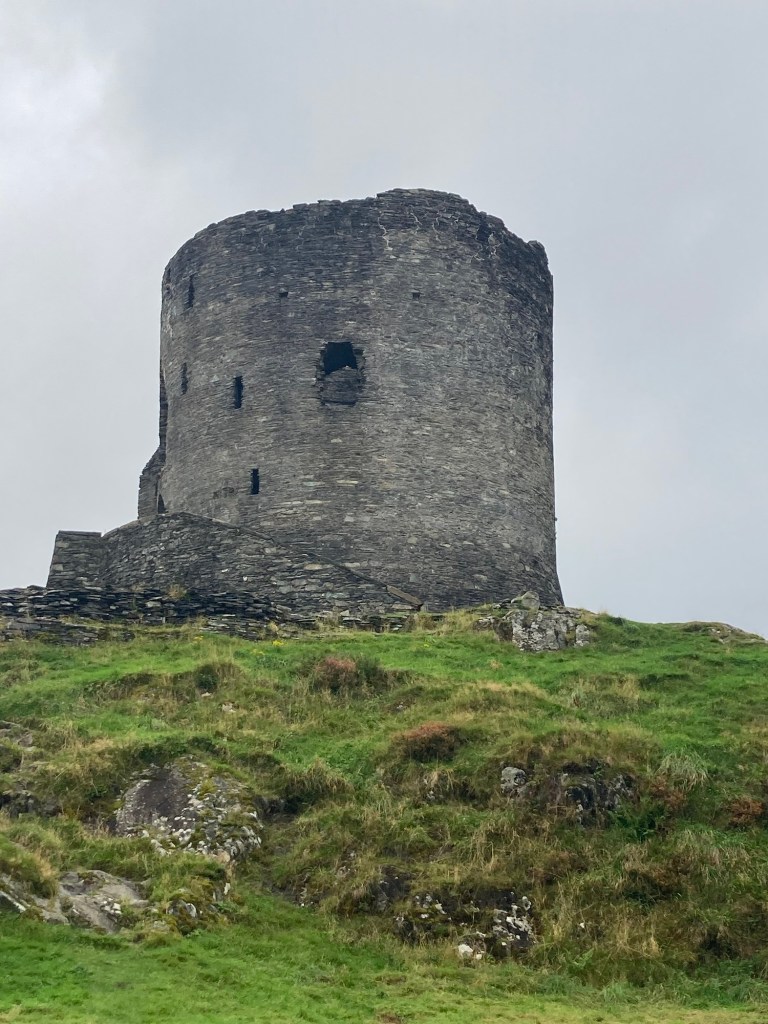
Castle 2 was Dilbadarn, built by a Welsh prince, and not so impressive:
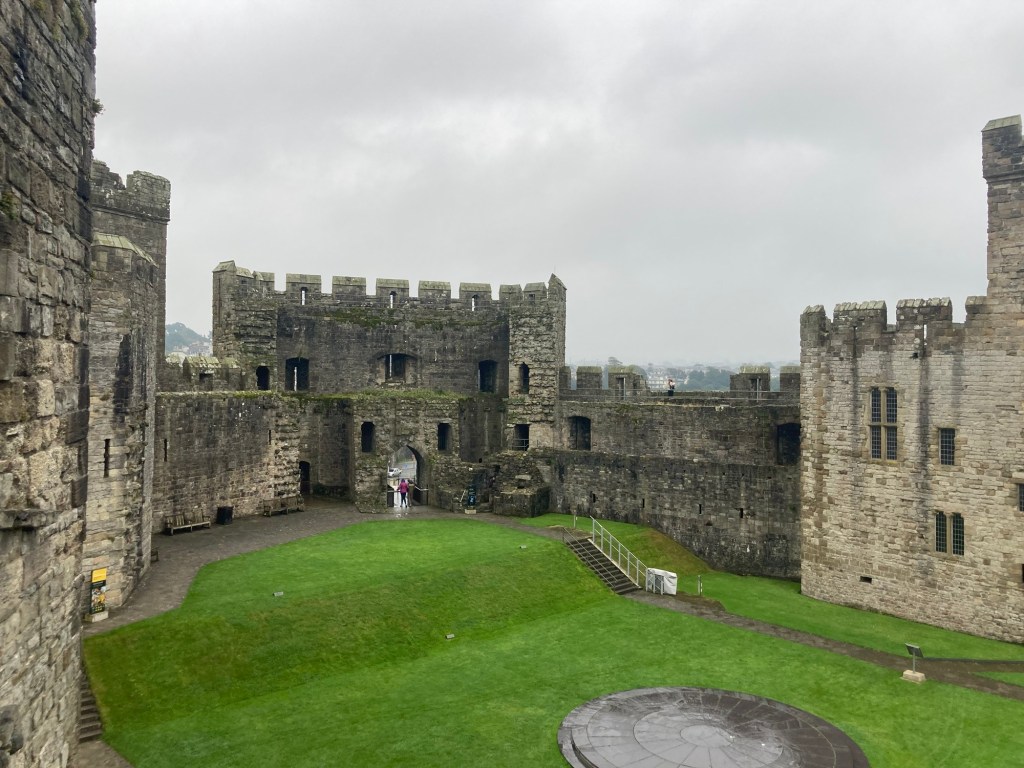
The last castle, Caernorfarn, is where the Prince of Wales is crowned. The ceremony arose after Edward 1 of England captured the Welsh in the 13th century but declared he would make the Prince of Wales someone born in Wales who didn’t speak English. When his son was born at Caernarfarn Castle a few days later, he made him Prince of Wales.
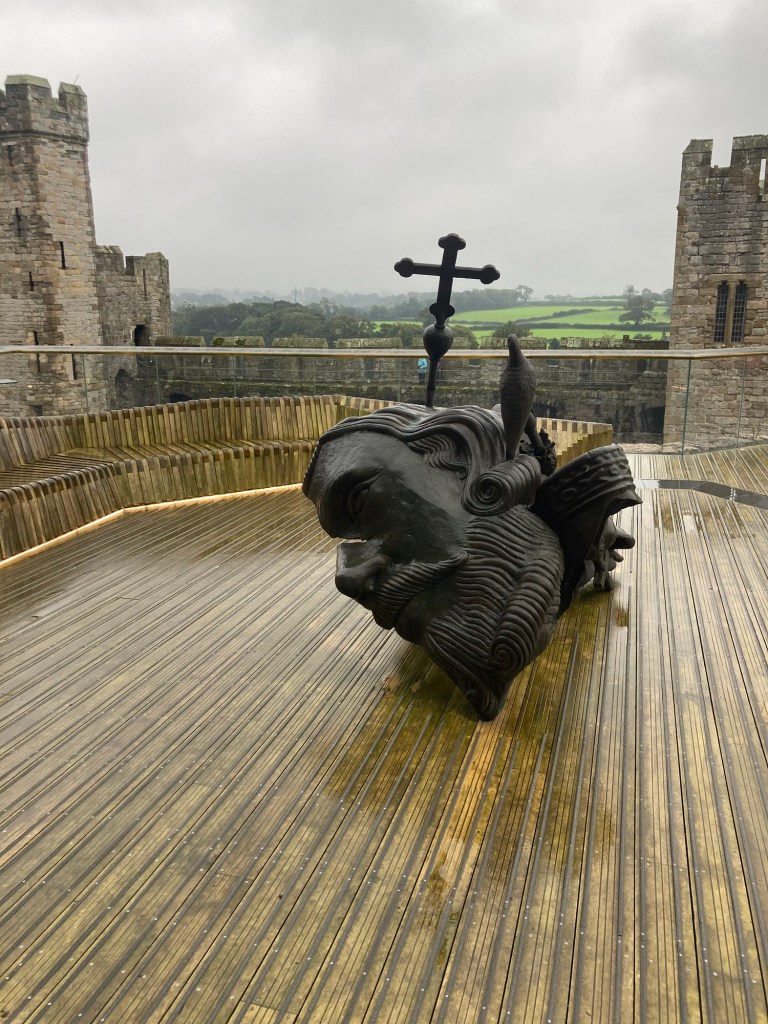
Needless to say, Edward 1 is not remembered fondly by the Welsh, as evidenced by a sculpture at the castle:
Next up was Cardiff, the capital city of Wales, where I visited yet another castle:
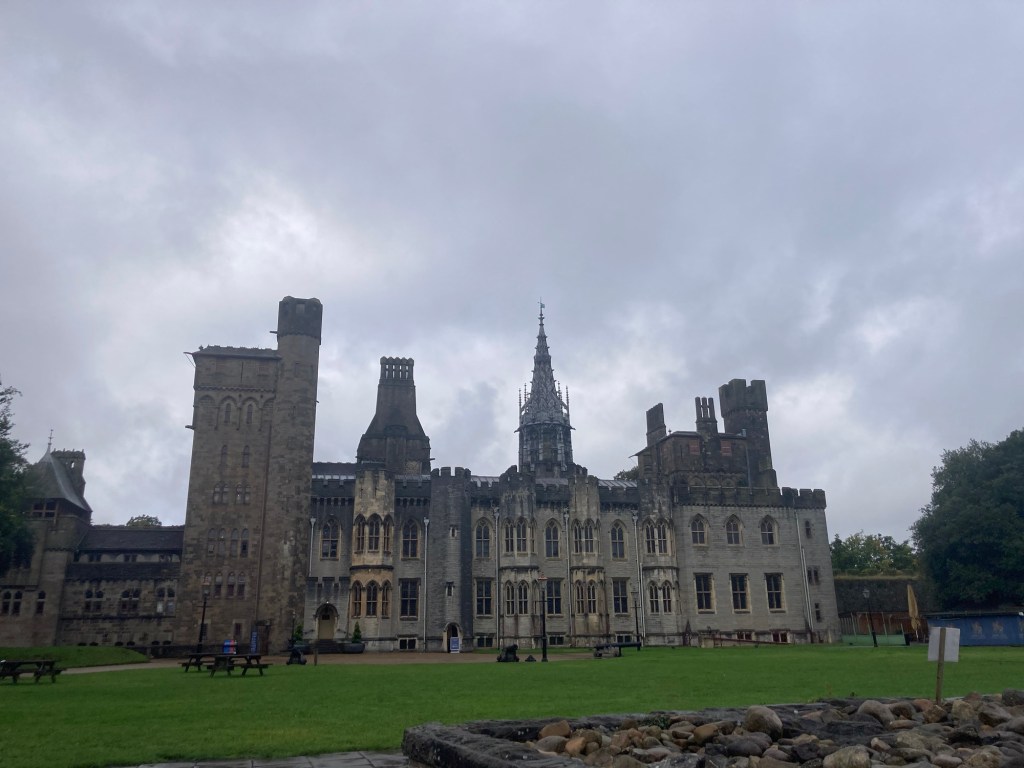
Growing slightly tired of so many castles, I indulged in a Welsh Cake or two:
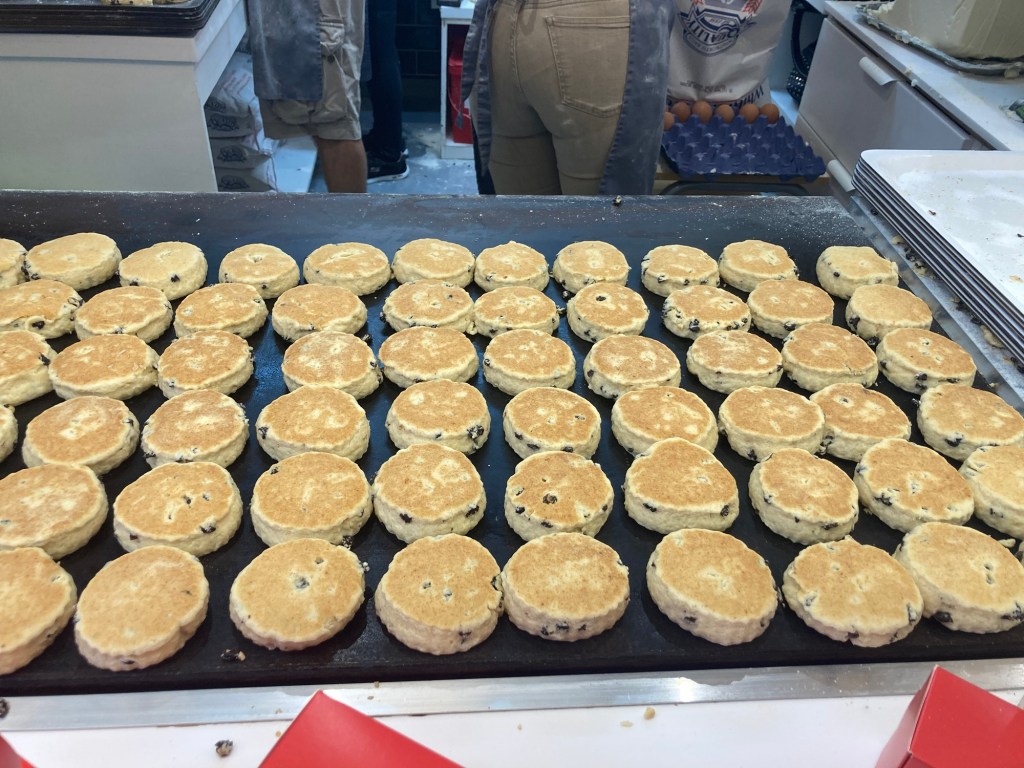
Made from flour, sugar, butter and raisins, they taste a bit like baked cookie dough.
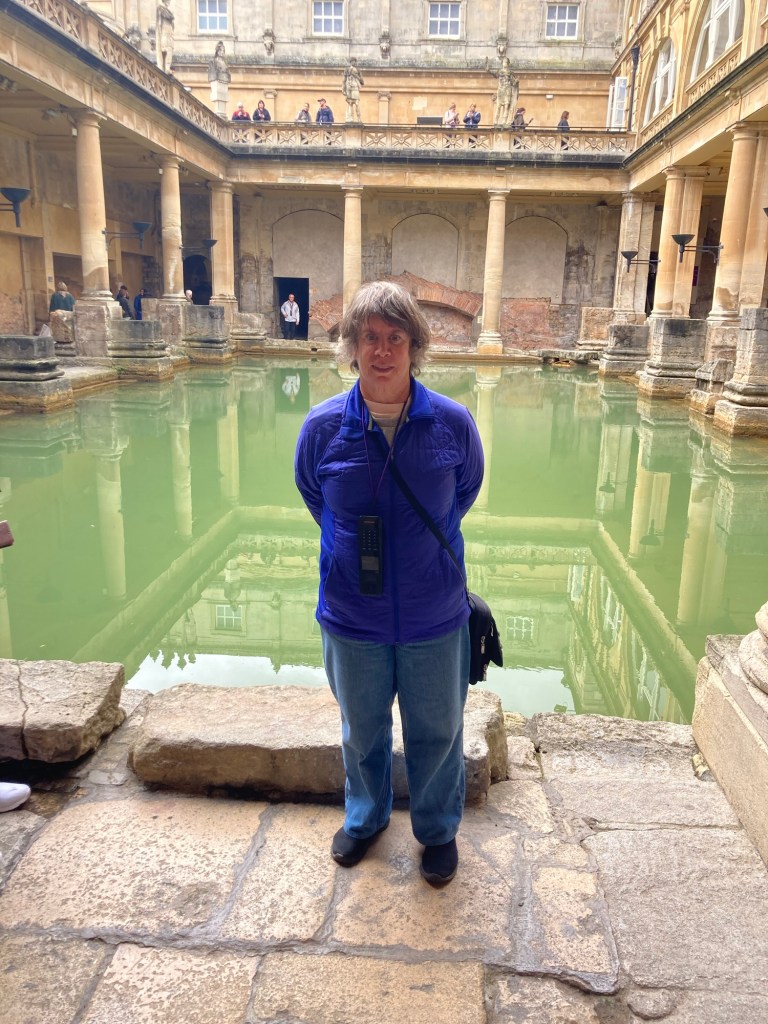
Next stop was Bath, where I toured the Roman Baths:
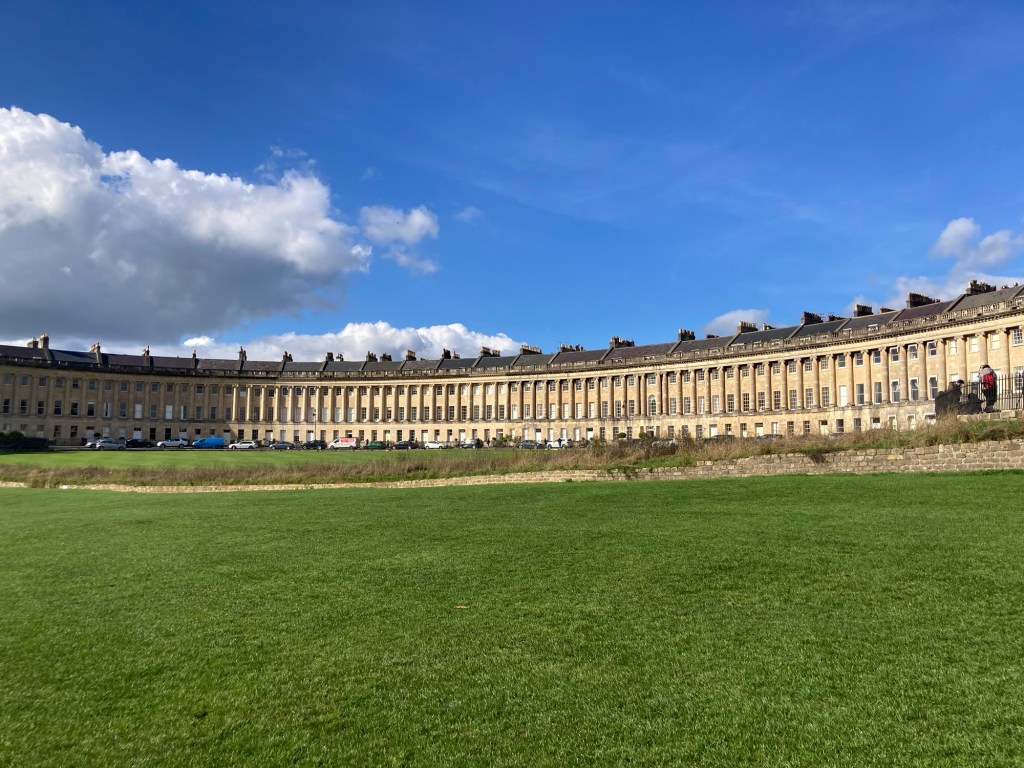
I joined a walking tour, where the focus was on some of Bath’s architectural treasures like the Royal Crescent, a semi-circle shaped group of townhouses constructed in Bath’s distinctive yellow limestone and Palladian style:
I ended in London, where a day long walk took me past the Victoria & Albert Museum, beside Harrods, to Buckingham Palace, Westminster Abbey, St. Paul’s Cathedral and The Tower of London. A final castle, a final Cathedral.
Goodbye United Kingdom, now off to a country of the former Soviet Union..
 travelsnearlyeverywhere.com
Wow!! You certainly have packed in the days. the photos are great and you seem to be enjoying all. Can’t wait to hear about the next leg of your journey. L’Shana Tova. Ellen
LikeLike