
I arrived in Bahrain one blustery afternoon, with everyone complaining about the bitter cold; the high was only 16 and it was rainy, not what I was expecting in this desert country.
First stop, after 4 nights in alcohol free Kuwait, was a trip to the bar for a welcome glass of wine:

Alcohol is freely available in Bahrain, unlike neighboring Kuwait and Saudi Arabia. Another “sin” prevalent here is prostitution, perhaps attracted by the large US naval base situated on the islands. But apparently, 75% of all visitors to Bahrain are Saudis, anxious to relax in the more liberal laws.
As always, I wanted to learn about Bahrain’s history and, to my surprise ( and total ignorance) learned that this island archipelago has been inhabited for over 7,000 years, with the Dilmun civilization constructing temples and large cities since the third millennium BC. I visited the Babar Temple complex, remnants of the second Dilmun temple circa 2,000BC:
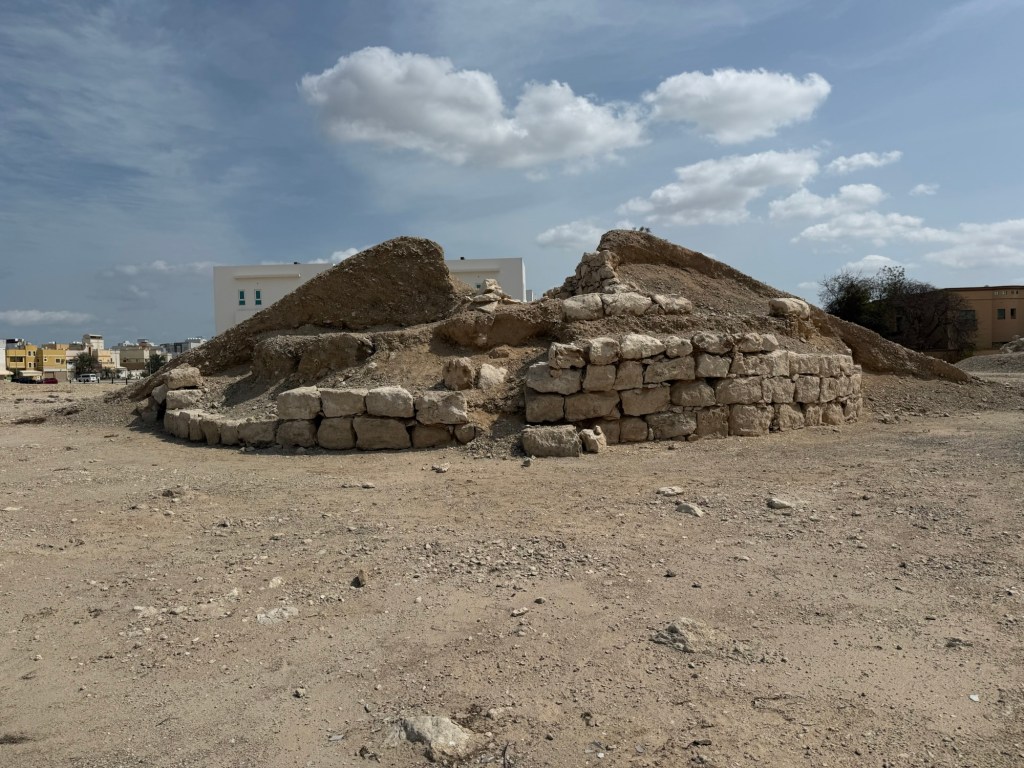
Located in the Arabian Gulf, Bahrain was a convenient stopping off point for traders between Mesopotamia and the Indus Valley civilization and Dilmun is mentioned in the Epic of Gilgamesh as perhaps the Garden of Eden. It had fresh water springs, agriculture, date trees and fish galore in addition to a pearling industry and copper mines. In later antiquity it became an important point for the incense coming from Ethiopia and Yemen north to Persia.
Alexander the Great marched by, the Romans set up shop and early Christians inhabited the island. Islam took hold in the 7th century and over the next 800 years different Arab entities ruled and fought over it. In 1485, the first Portuguese sailed by and eventually built the Bahrain fortress to guard its trade:
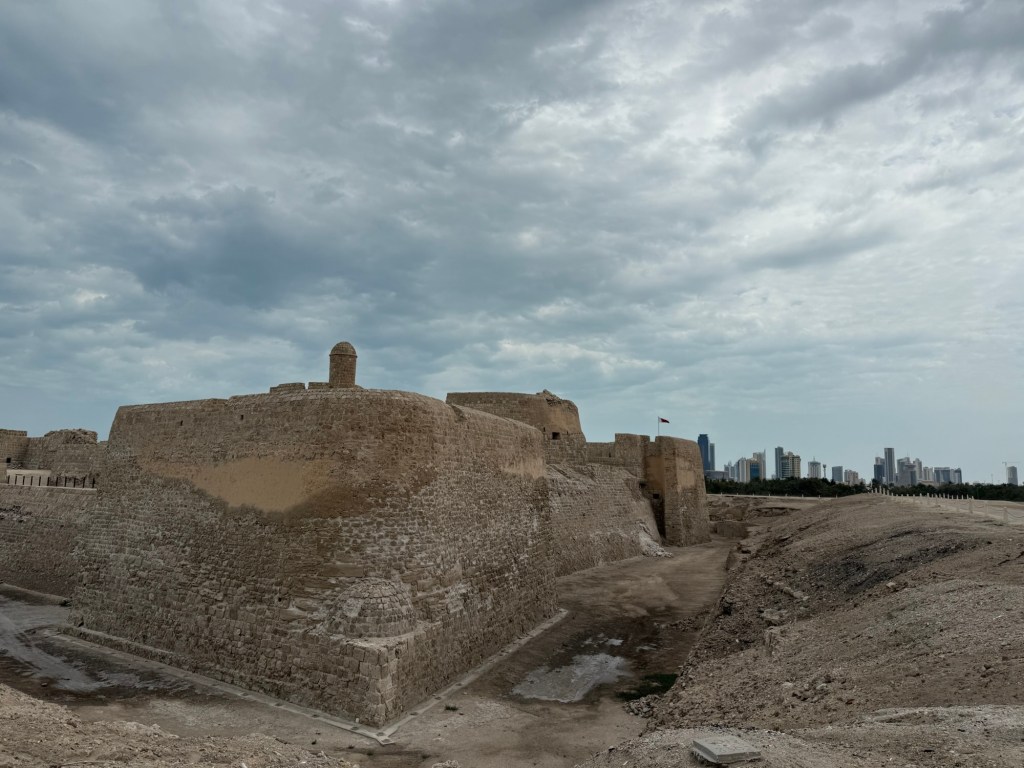
Different Arab entities, the Ottomans, Qataris and Persians, ousted the Portuguese and ruled until 1845 when the sheik signed a treaty with Great Britain, creating a protectorate whereby Great Britain conducted all foreign affairs for the islands. In 1971, Bahrain was granted independence and Great Britain transferred its naval base to the Americans, who have used it since to house its 5th fleet.
This history (minus the naval base stuff) is well articulated in the National Museum, a nicely curated introduction to both the history and culture of Bahrain. In its cultural section, it traces Bahrainian society from birth, through eduction, marriage, work and home life to death, with illustrative dioramas:
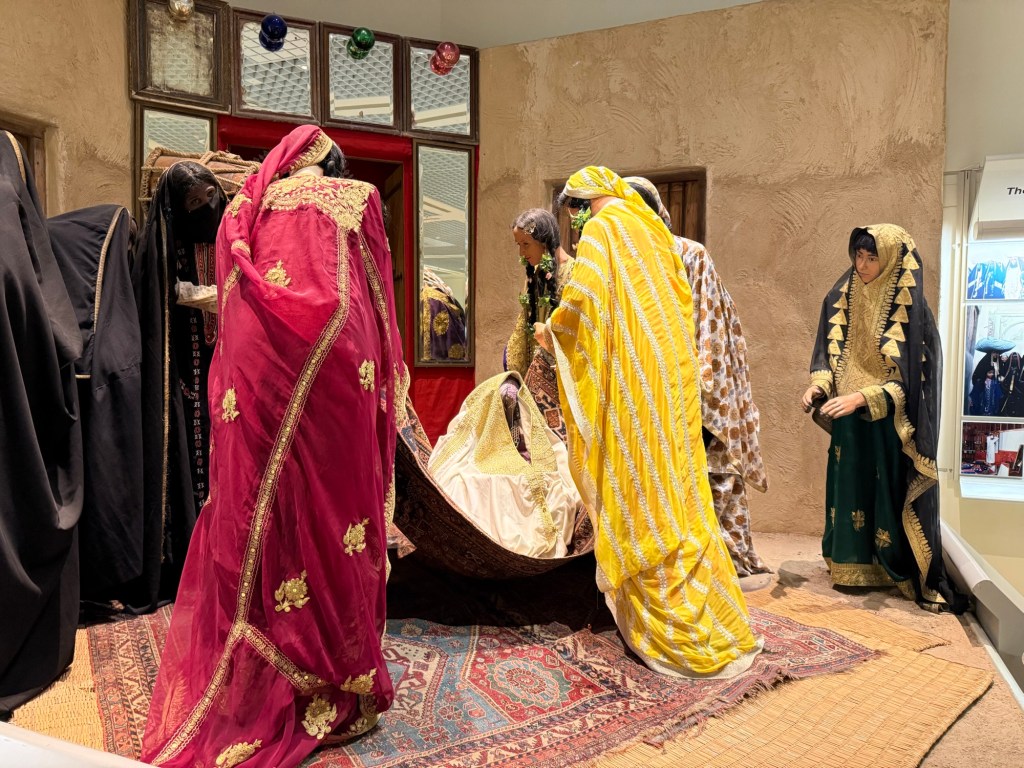
A bit of trivia learned here: most Bahraniam marriages were arranged between cousins.
Oil was discovered in the 1930’s and like its neighbours, transformed Bahrain from a backward pearling center to a wealthy state. It doesn’t have the vast reserves of Kuwait or Qatar, so it has tried to diversify, with burgeoning banking and medical tourism industries. But like its neighbors, it has modern skyscrapers, the most impressive of which is the World Trade Center:
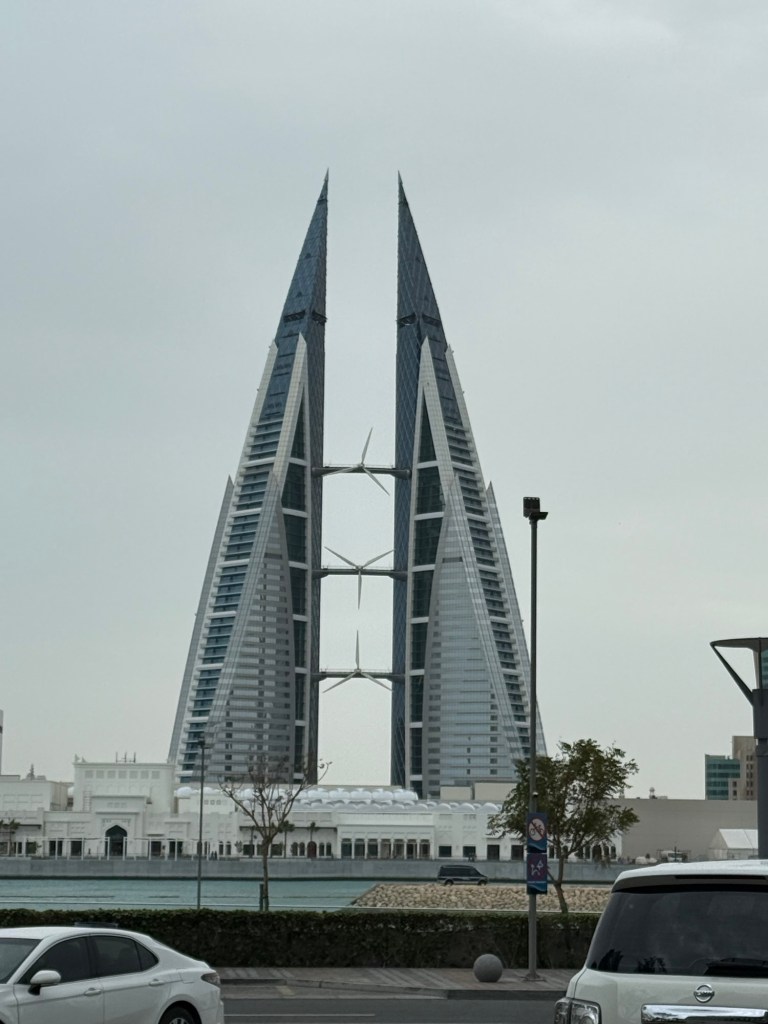
Given my fear of heights, I had no intention of going to its observatory. On much flatter ground is the Bab Al Bahrain, a souq selling a lot of Made in India/China goods and jewellery:
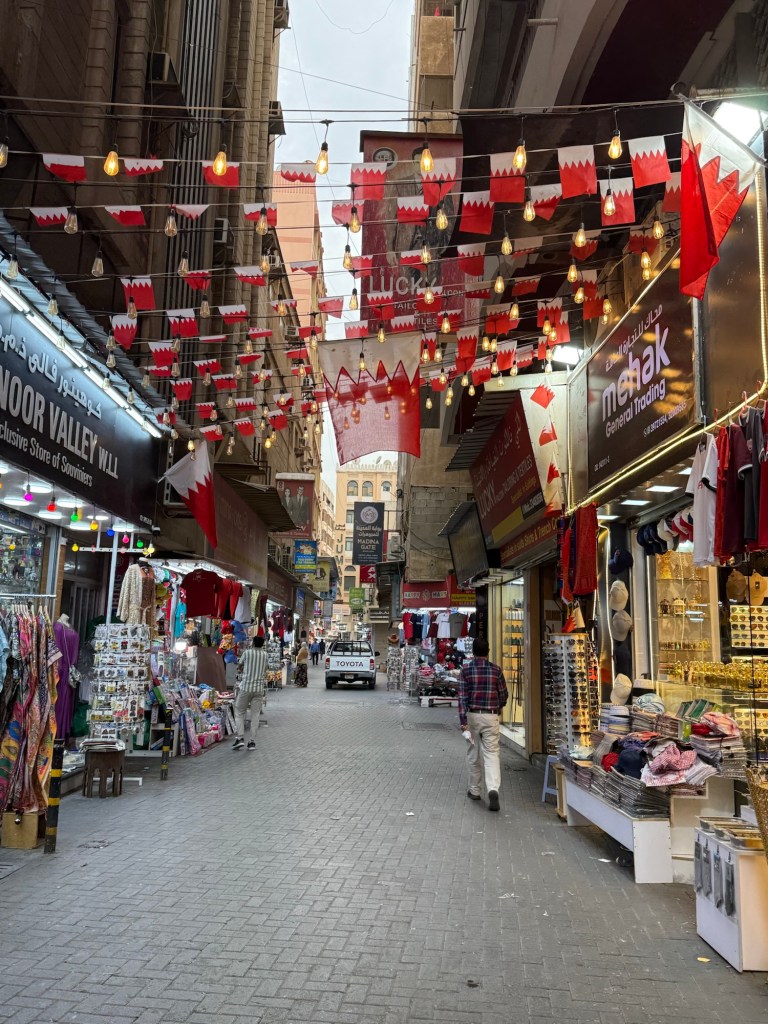
A friend showed me through, identifying the Bahrainian handicrafts (sequinned embroidery, wooden benches and pearl jewellery) before stopping for a traditional meal consisting of chicken Biryani, hummus, pita and kebabs. The meat is soaked in lemons for a delicious, tender taste:

Aside from horrible traffic, Bahrain was a pleasure to visit. With its more liberal rules, thousands of ex-pats calling it home and long and interesting history I quite enjoyed my time here.
Next; Back to conservatism in Saudi Arabia.
 travelsnearlyeverywhere.com
Your latest travels are very interesting, Naomi! Thanks for sharing!
LikeLiked by 1 person