
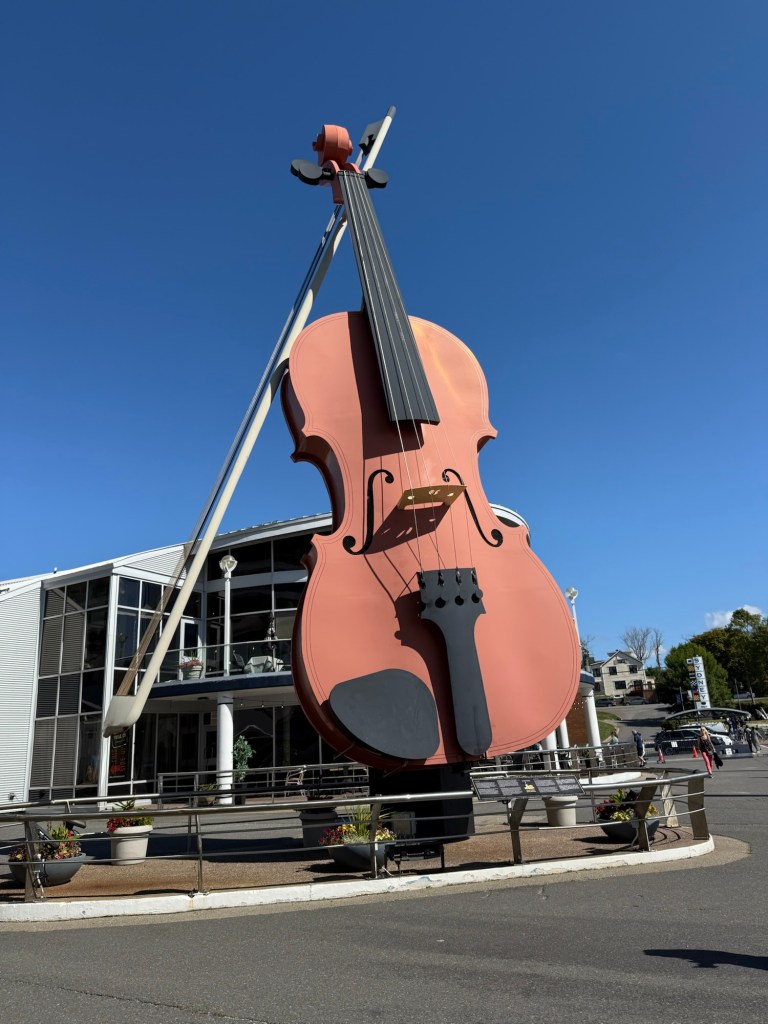
A smooth, 6 hour ferry ride from Port aux Basques, Newfoundland took me to Sydney, Nova Scotia, where I encountered the world’s largest fiddle, conveniently located right at the cruise port terminal:
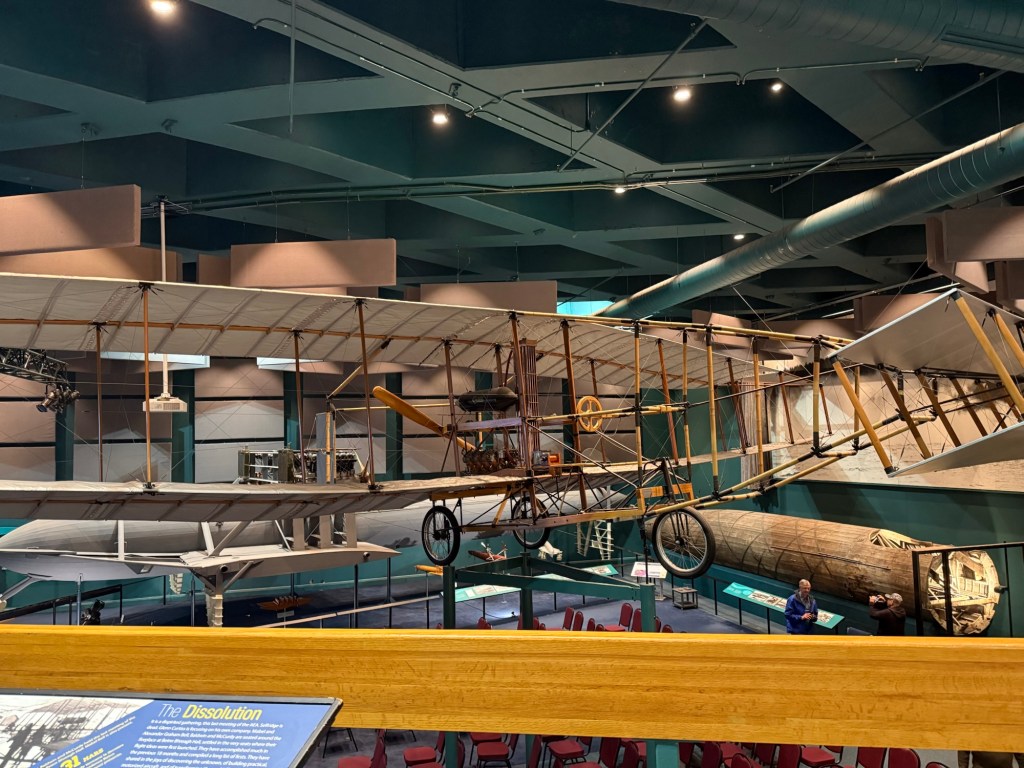
A short drive away is the town of Baddeck, famous as the gateway to the Cabot Trail and the summer home of Alexander Graham Bell. I toured the museum devoted to him, learning he was a teacher of the deaf, a member of the society which brought the first airplane flight to Canada and the inventor of the hydrofoil boat, in addition to being credited with inventing the telephone:
From there, we drove to the Cabot Trail, a 300 kilometre circuit around Cape Breton. Craftspersons, bakers and artists dot the circle, offering all sorts of goodies from glassblowing to chocolate, but the real star is the fantastic views of the coastline:
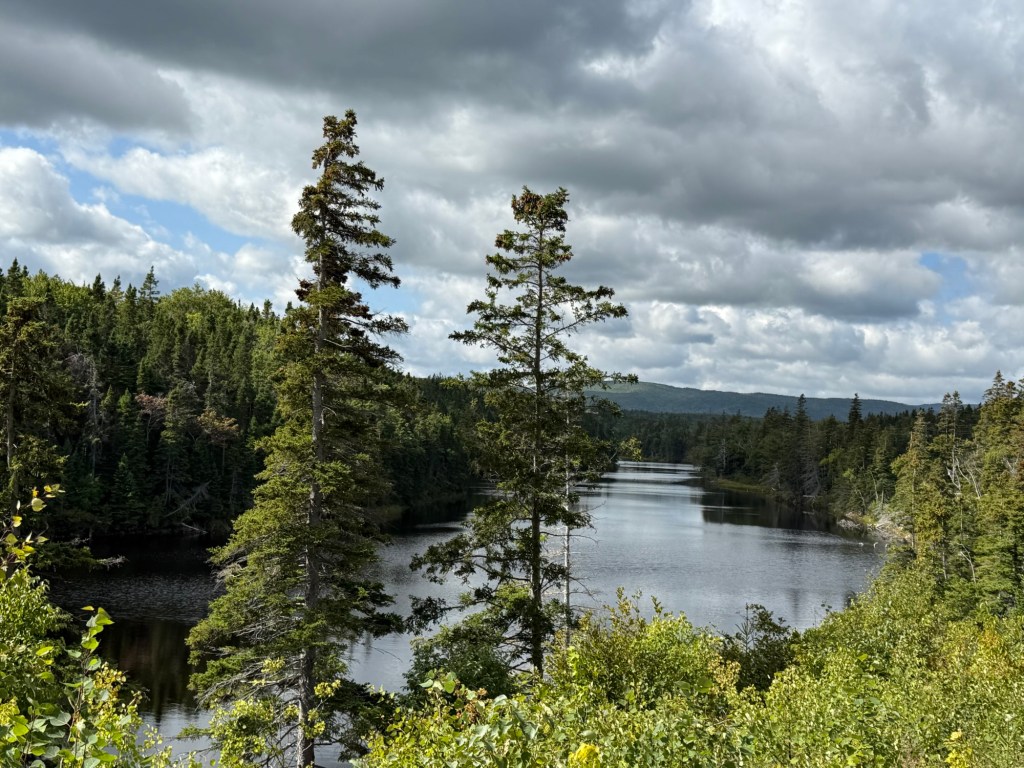
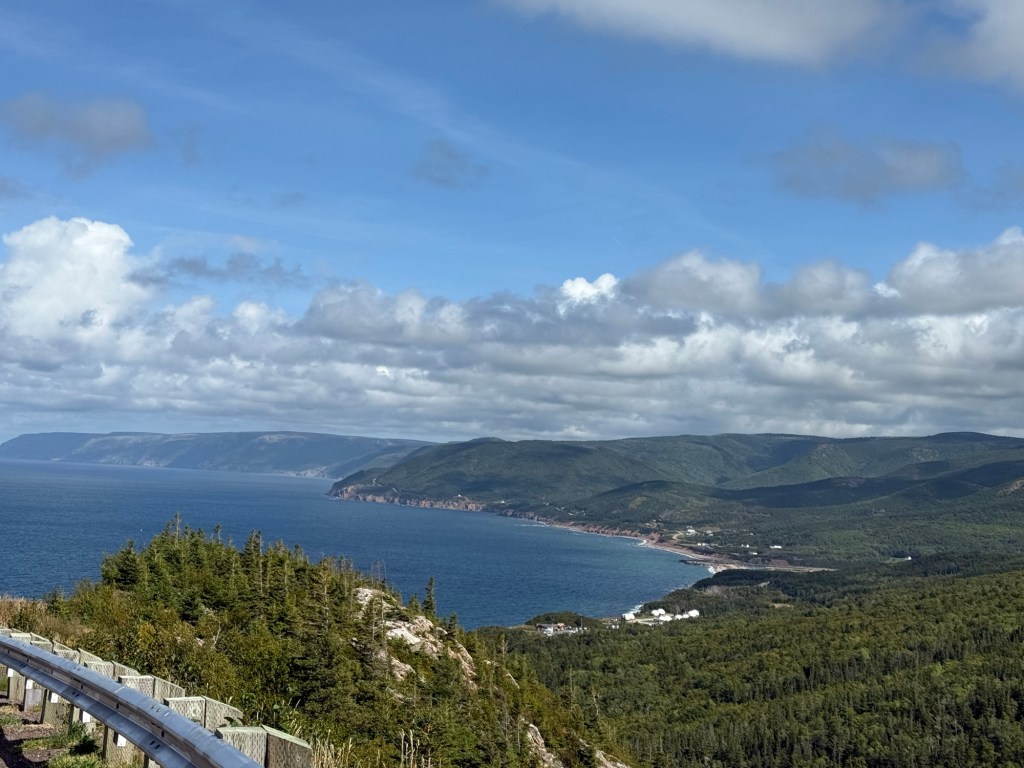
We meandered our way counterclockwise for 5 hours, enjoying the drive and scenery before setting off to Halifax.
Halifax’s deep water harbour is one of the world’s finest. It never freezes and has served as a port for explorers, fishermen, whalers, military convoys, container tankers and cruise ships. The boardwalk is one of the longest- at over 4 kilometers- and is a charming mix of restaurants, souvenir shops, children’s play areas and museums:
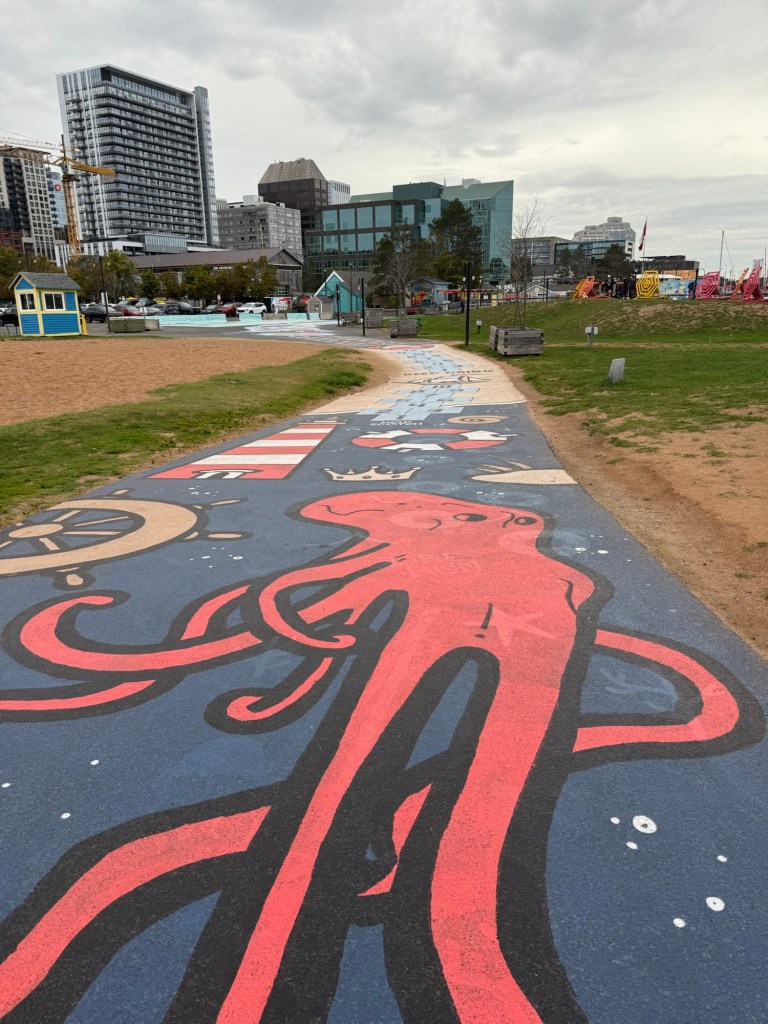
The Maritime Museum showcases Halifax’s contributions to all things naval-related. Information about early ships explains life at sea. The Titanic exhibit showcases mostly the rescue effort and the transport of many of the corpses to Halifax; 150 are buried here. During WW2, Halifax was the meeting point for the convoys of merchant ships travelling across the Atlantic, another exhibit in the museum.
As well, an Exhibit devoted to the Halifax Explosion, on Dec 6, 1917, explains how it occurred (a French ship laden with explosives was hit by a Norwegian vessel, causing a fire leading to the blast). The ultimate explosion was the largest man- made explosion until the Hiroshima atomic bomb. 2,000 people were killed, 20,000 injured and 25,000 left homeless. The city was flattened and, to make matters worse, a nasty snowstorm began that evening.
One odd benefit from the explosion (aside from increased safety in ports) arose because many people rushed to their windows following the first blast, trying to figure out what was going on. When the big blast occurred a few minutes later, the window glass shattered, damaging thousands of eyes. In the aftermath, Halifax became a leader in ophthalmological medicine, which it maintains to this day.
A walking tour took me through some of the highlights- the Government House, the Public Garden, a Clock Tower constructed on Prince Edward’s commands (frustrated by the lack of synchronized timing), but most of the pre-1917 buildings had been destroyed in the explosion, so there wasn’t a lot to interest me.
Nova Scotia has two iconic sites; the first is Peggy’s Cove, located about an hour south of Halifax. I drove there, considered myself fortunate to find a parking spot, walked to the famous lighthouse, took a picture, looked around the town and left.

The second must-see site is the Bluenose schooner in Lunenburg. It’s only about an hour away from Peggy’s Cove, so I drove there, parked and made my way to the harbour, looking for the famous ship. I couldn’t find it and was sad to learn that it was away for the day, not expecting to return until well after dark. I consoled myself with an ice cream cone, and some pictures of the very colourful town of Lunenberg:

My last two days in Nova Scotia was spent in Digby, a pretty little town on the Bay of Fundy. It had the requisite lighthouse, boats which rose and fell with the tide, and lots of seafood restaurants, featuring its scallops, for which it proclaims itself The World’s Scallop Capital. But I was getting a little tired of pretty little seaside towns, so I mostly just relaxed.
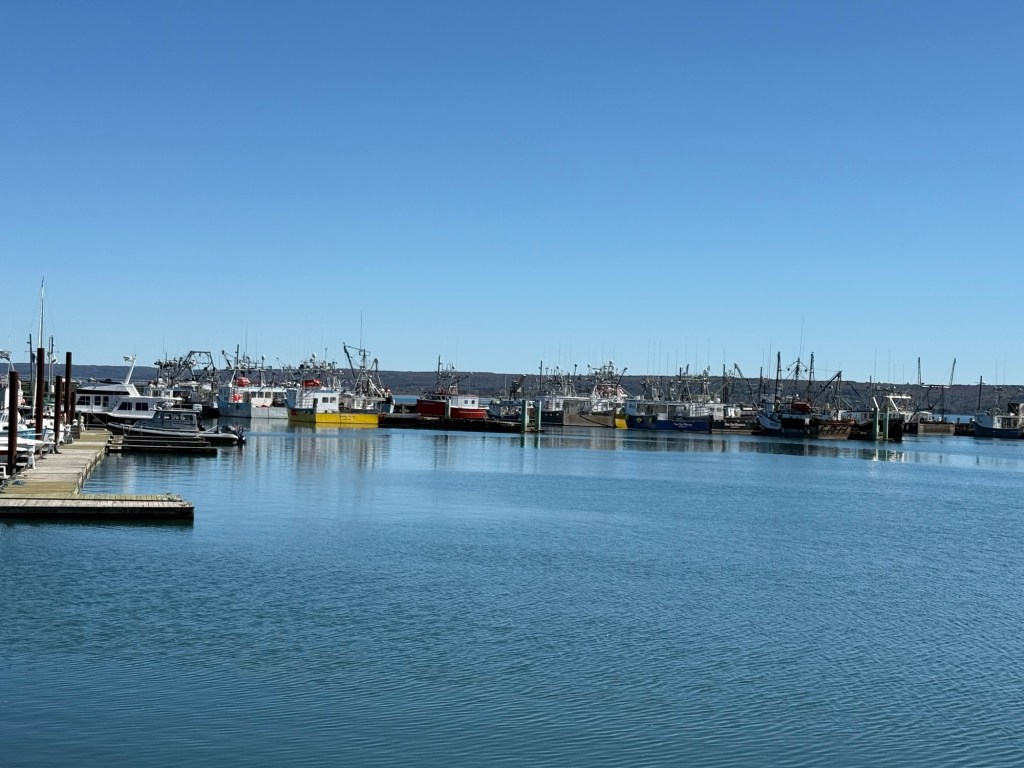
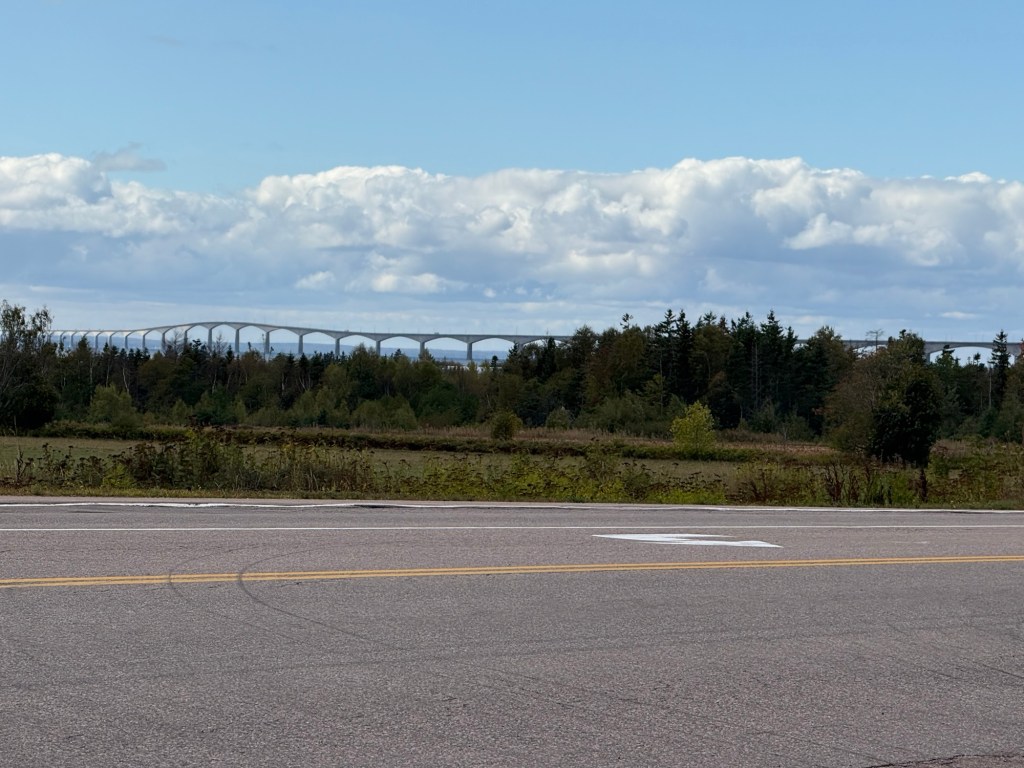
The next province I visited was Prince Edward Island (PEI), which had been a true island until 1997 when the Confederation bridge, linking it to the mainland, was opened. It’s an engineering marvel, spanning 12.7 km and taking 10 minutes to drive across. Vehicles with high walls are prohibited from driving it when winds exceed 80 km an hour; all vehicles are stopped if the winds hit 90 km an hour. Luckily, I traversed it on a clear, windless day. An interesting sidenote, no toll is collected on the way to PEI, but the $20 toll is collected at the foot of the bridge when leaving PEI:
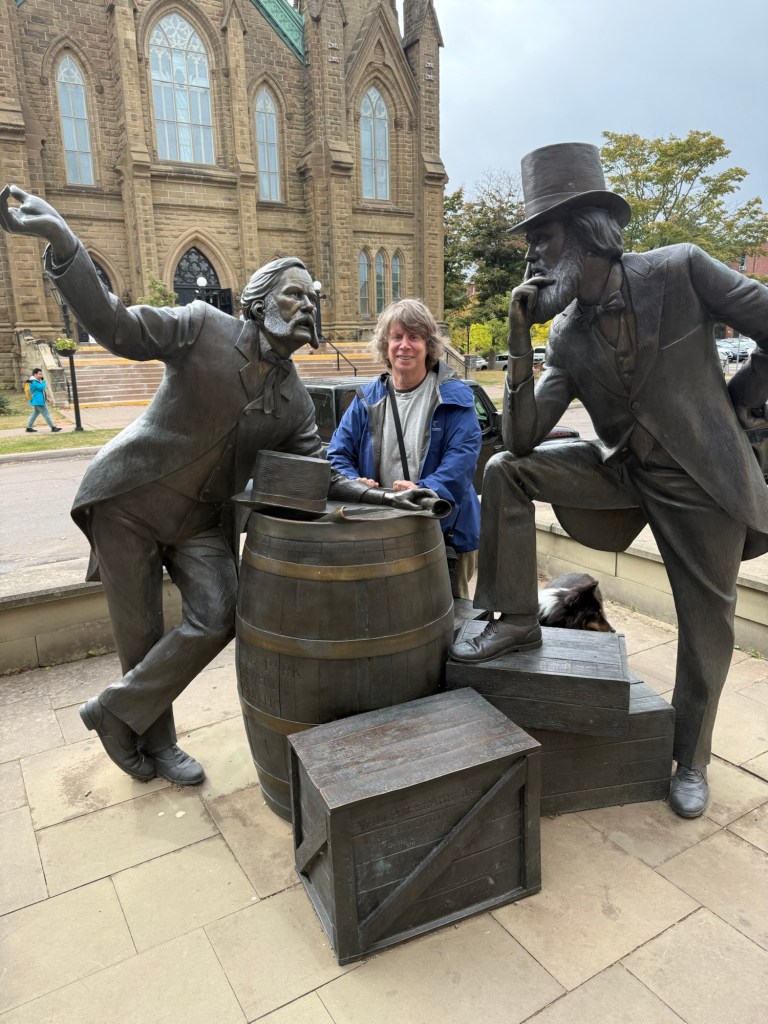
Charlottetown, the capital of PEI, is famous for holding the confederation conference in 1864, which led to the joining of six British colonies and the eventual creation of the country of Canada in 1867. This meeting is commemorated in many spots, including the statues of two Newfoundland delegates whose names escape me, but I had to have my picture taken with them:
Charlottetown’s heyday was in the mid -19th century, when it was a centre of shipbuilding. But that industry doesn’t last and today, its main industries are agriculture, tourism, and fishing. Tourism was evident from the two giant cruise ships in port the day I was there:
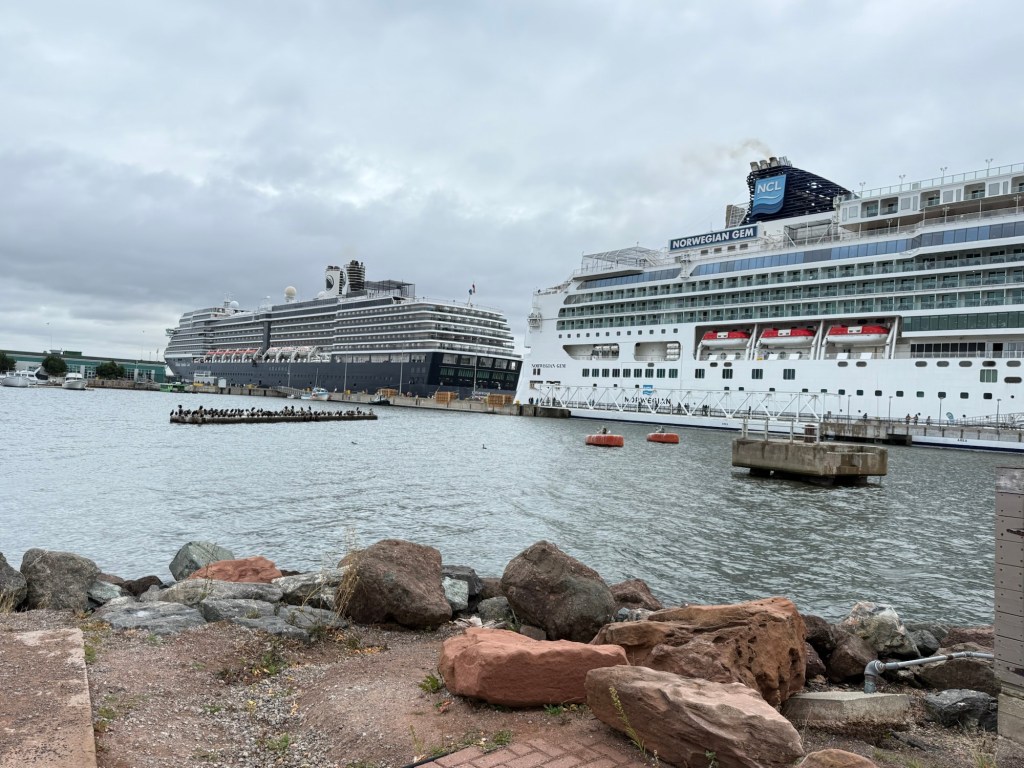
Charlottetown has its share of pretty seaside houses and buildings, most post-datinga devastating 1892 fire, along with a slew of seafood restaurants. But it’s a city of only 40,000 and one day there was certainly enough.
Less than an hour away from Charlottetown is the Anne of Green Gables Heritage Park. Maintained by Parks Canada, it features a visitor center, which traces the life in career of Lucy Maud Montgomery, the author of Anne of Green Gables, and the impact the book has had on it its many readers. Interestingly, all the signs in the visitor centre are in English, French and Japanese.
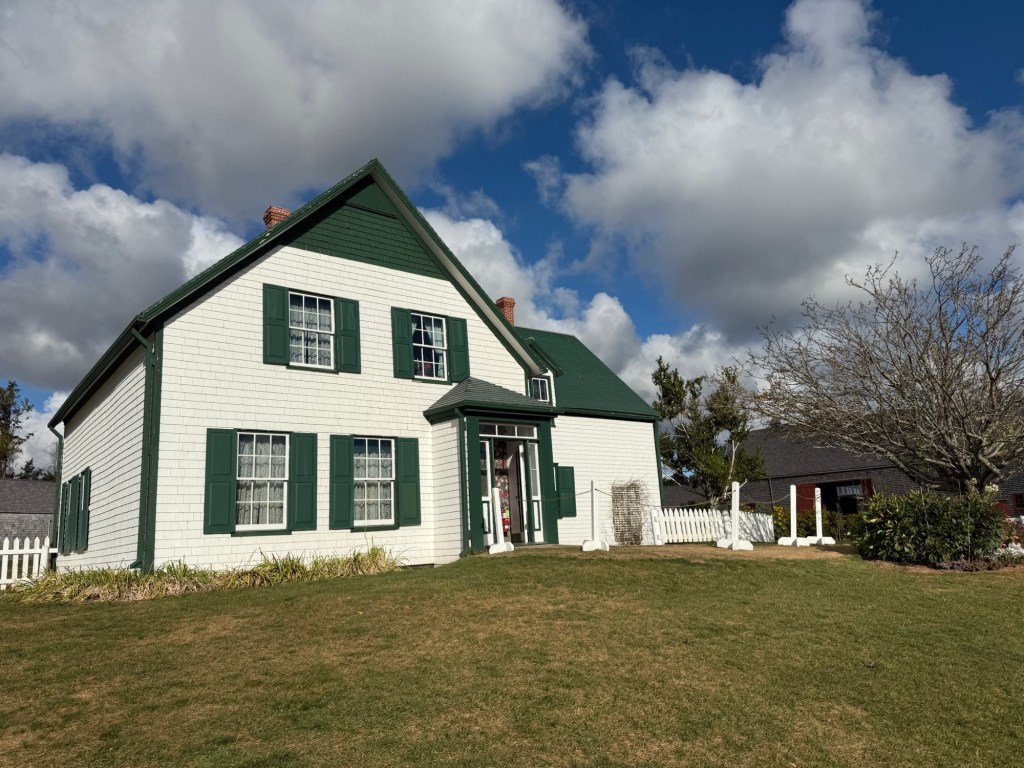
Outside the visitor centre is Green Gables, a farmhouse owned by the Lucy Maud Montgomery s brother and sister-in-law and their farmland. Guided tours are available, but not with the dog, so pup and I walked around the house, took a few pictures and left:
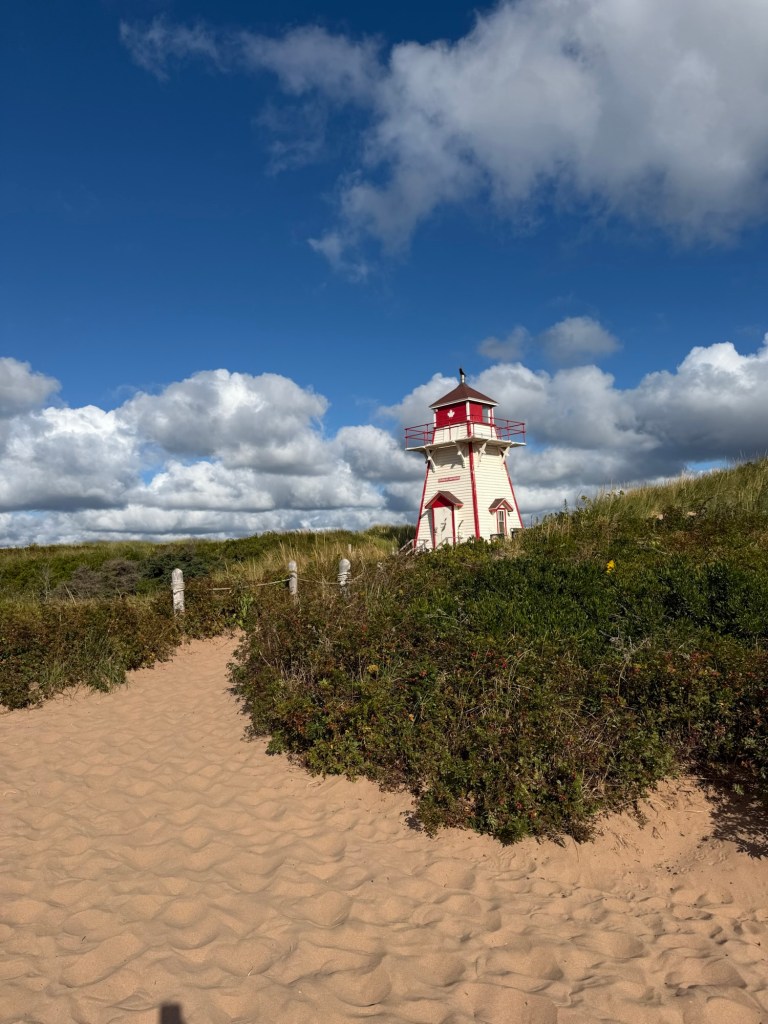
I had planned to circle PEI and visit a number of lighthouses, but after stopping at two, and seeing how much they looked alike, I decided on a different plan and returned to the mainland and New Brunswick having only seen three of PEI’s 81 lighthouses:
I was only spending a day in Moncton, New Brunswick, so I decided to focus on its to-do items. First stop was Magnetic Hill, a hill, which either through magnetism or optical illusion, lets you drive uphill backwards. I drove there, slightly disappointed at the theme park atmosphere surrounding it, but was pleased to see there was nobody on the hill at the time. I read the instructions, which are to drive down to the white Pole, and put your car in neutral. You then drive up the hill in neutral, backwards! So I did and have to admit it was quite fun to feel like I was reversing uphill. As I finished, another vehicle came and did the same thing so I was able to take this photograph:
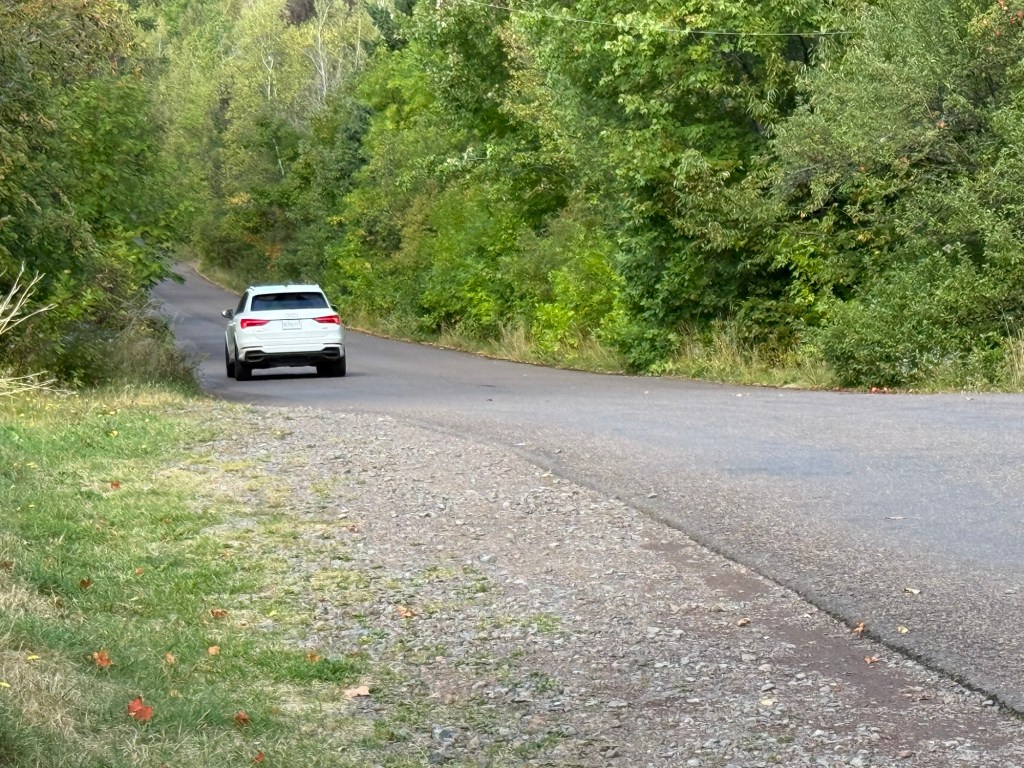
It loses something in the photo, but I really did feel like I was going upwards in neutral.
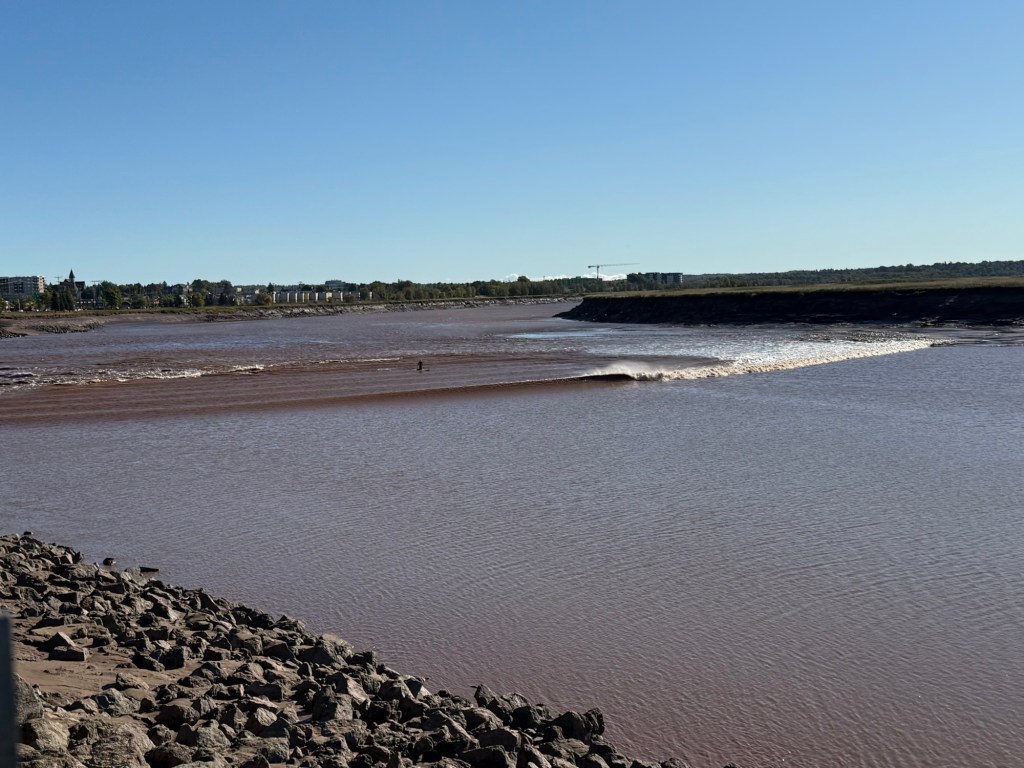
Moncton is located near the Bay of Fundy, a 150 km stretch of water between New Brunswick and Nova Scotia, famous for the highest tides in the world, sometimes exceeding 12 m. The tides create some unique phenomena, including the tidal bore. Twice each day, the strong tides from the Bay of Fundy create a wave so strong it sails up the Petitcodiac River, against its current. I went to see it one morning:
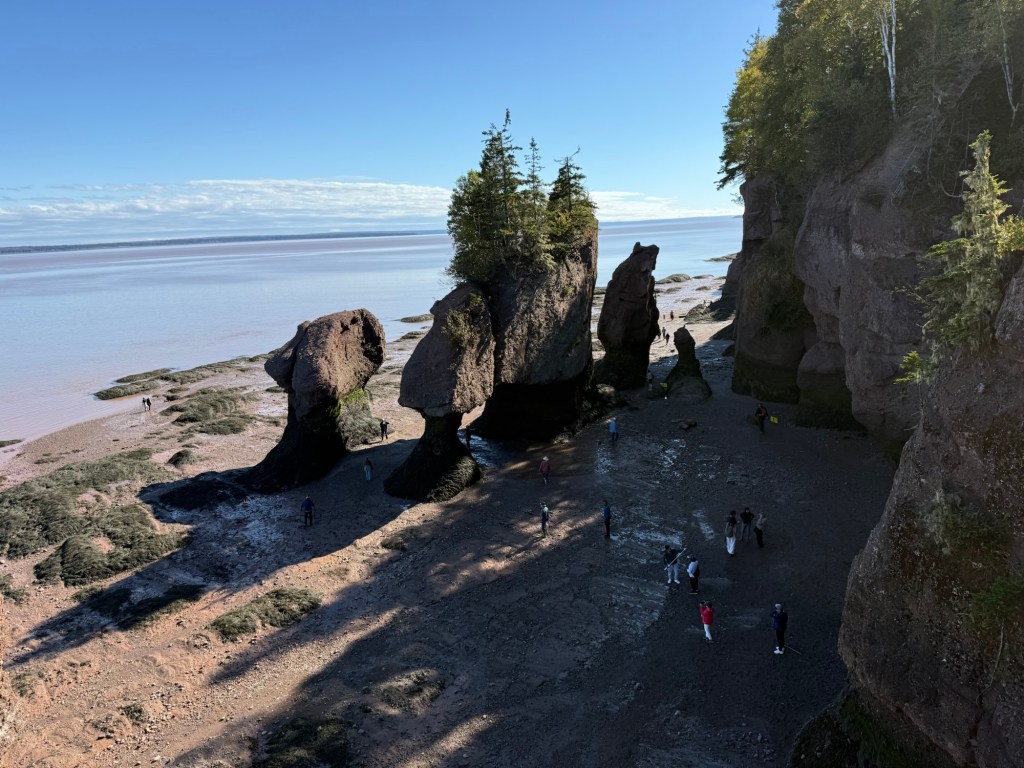
Next step was the Hopewell Rocks, an interesting rock formation on the Bay of Fundy, where the tide covers the rocks at high tide and allows you to walk on the ocean floor at low tide. Pup and I enjoyed a 15 minute walk through the woods to get to the rocks, but looked at the multiple staircases leading to the ocean floor and decided a few pictures from the top would suffice as I didn’t want to have to walk up those stairs:
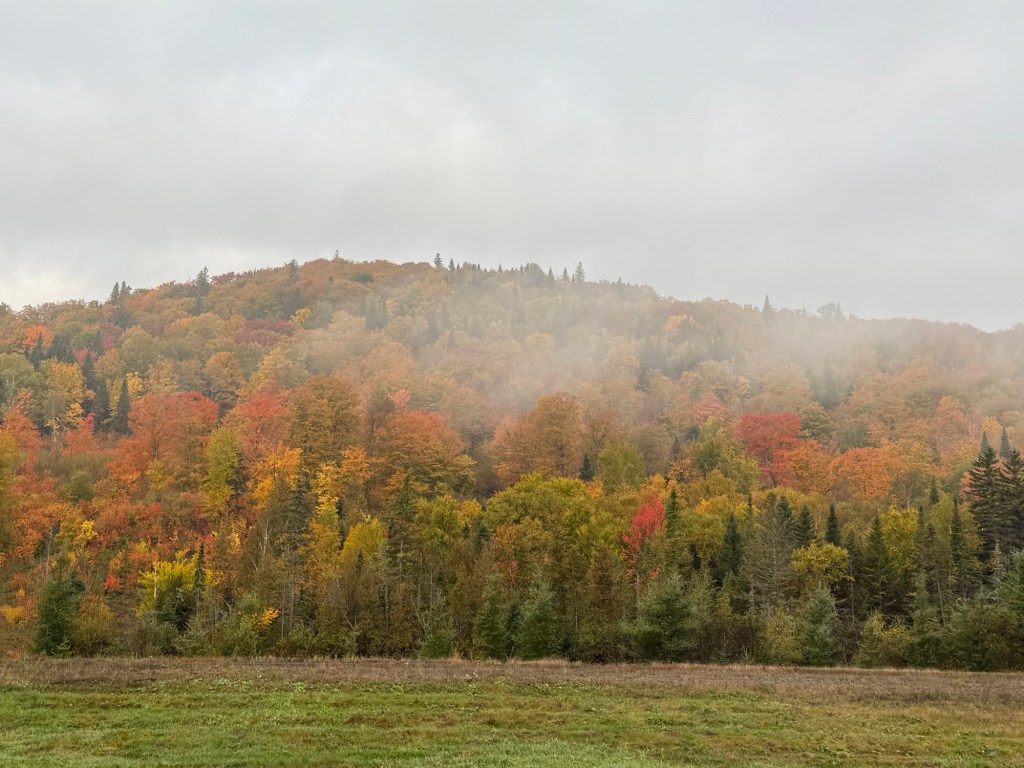
After three weeks, I’d had my fill of pretty coastlines, dramatic lighthouses, and charming seafood restaurants. it was time to begin the long drive home. One last delight awaited me. It was late September and, all along the highways from New Brunswick to Quebec, the trees had started to turn to their magnificent autumn colours:
It was a lovely, 1700 km drive home.
 travelsnearlyeverywhere.com
Hi Naomi,
What a wonderful account of the fabulous next leg of your trip! I’d been to many of the spots that you visited but that was over a couple of decades many years ago and I was interested to read about the changes as well as have some great memories jogged!
Thanks so much for sharing your journey and giving me a virtual vacation.
See you soon!
Carol
LikeLike