
I had first visited Senegal in 2020, just before the pandemic. I had spent all of my time in its capital city of Dakar, enjoying the cosmopolitan vibe and decent infrastructure of a city of 4 million people.
For my second time, I joined a tour of western Africa offered by the Canadian tour company, Adventures Abroad. Our tour started with a city tour of Dakar, which I had seen before. We went to Gorree Island, where slaves bound for the Americas were loaded onto their ships by the Portuguese and later the French. We went to the museum of Black Civilization, funded by the Chinese. We stopped at the train station, built originally by the Portuguese in 1886, but now using a high-speed rail constructed by the Chinese.
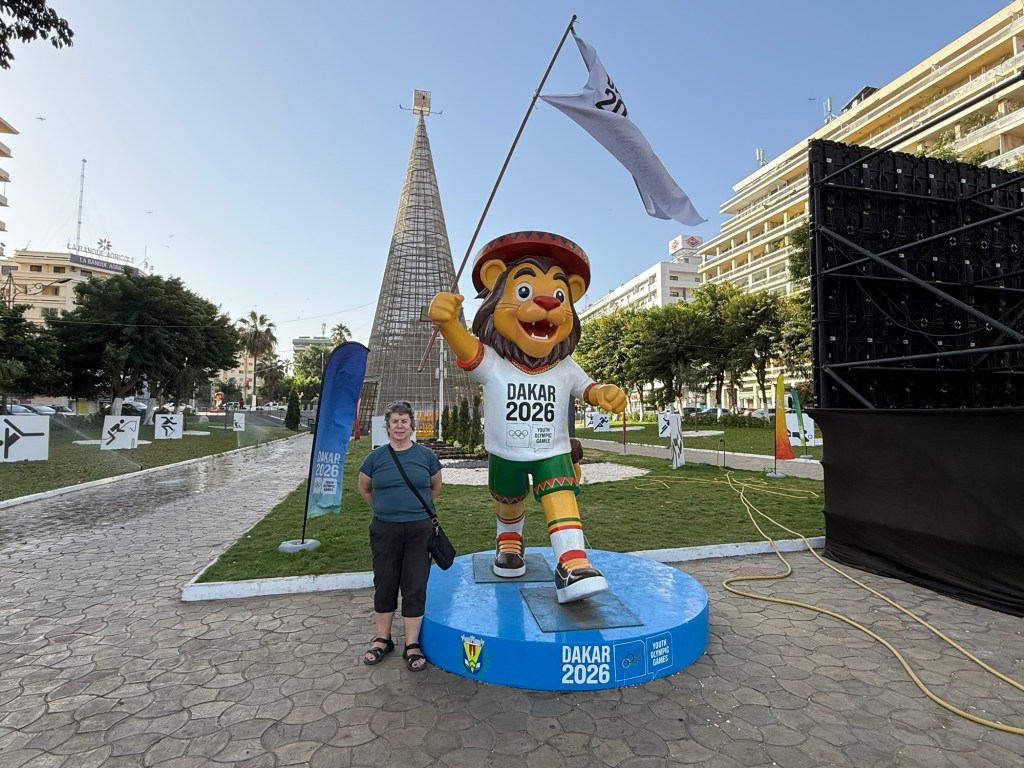
Dakar was all decked out in its finery as it was hosting the youth Olympic Games, the first time for an African city. Mascots dotted the city, and abounded in Independence Square where I couldn’t resist taking a picture:
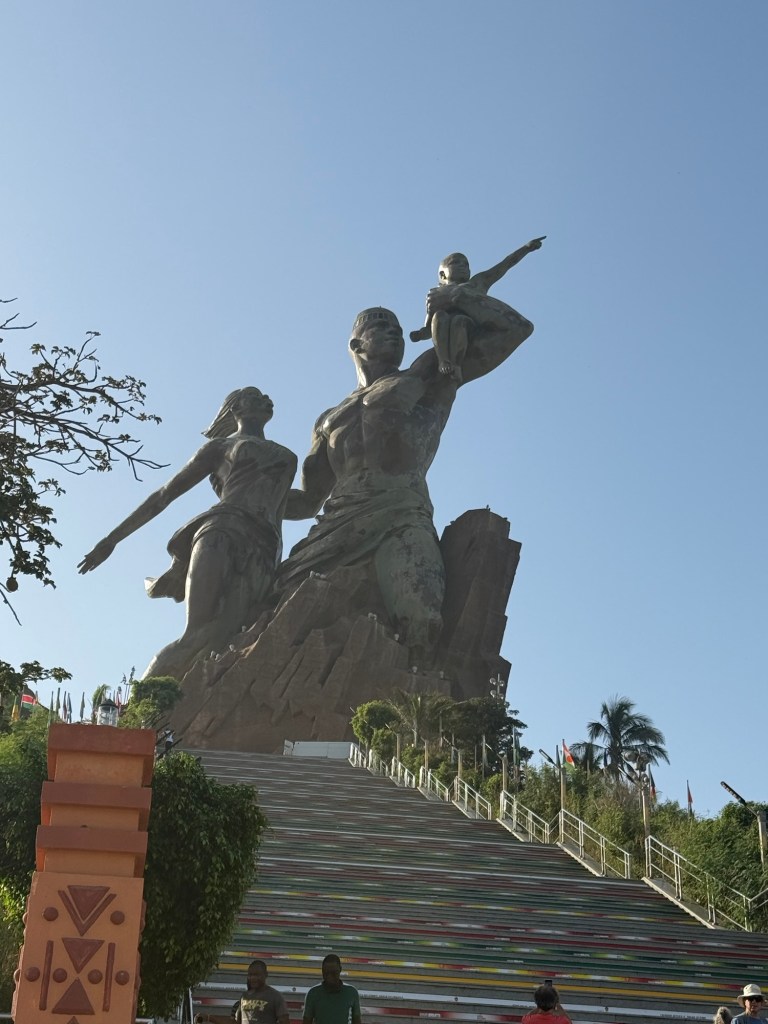
We made two stops before leaving Dakar. The first was at the Renaissance Statue, marking the end of 400 years of slavery:
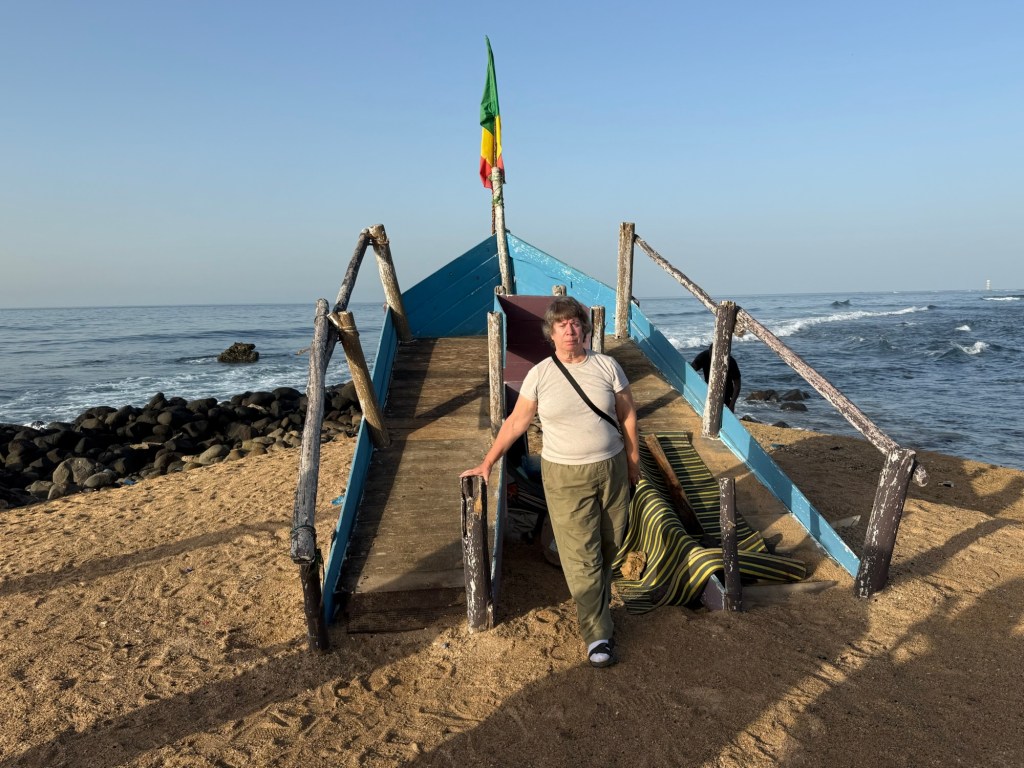
Next was at the most western point in Africa, where, naturally, a photo op lay:
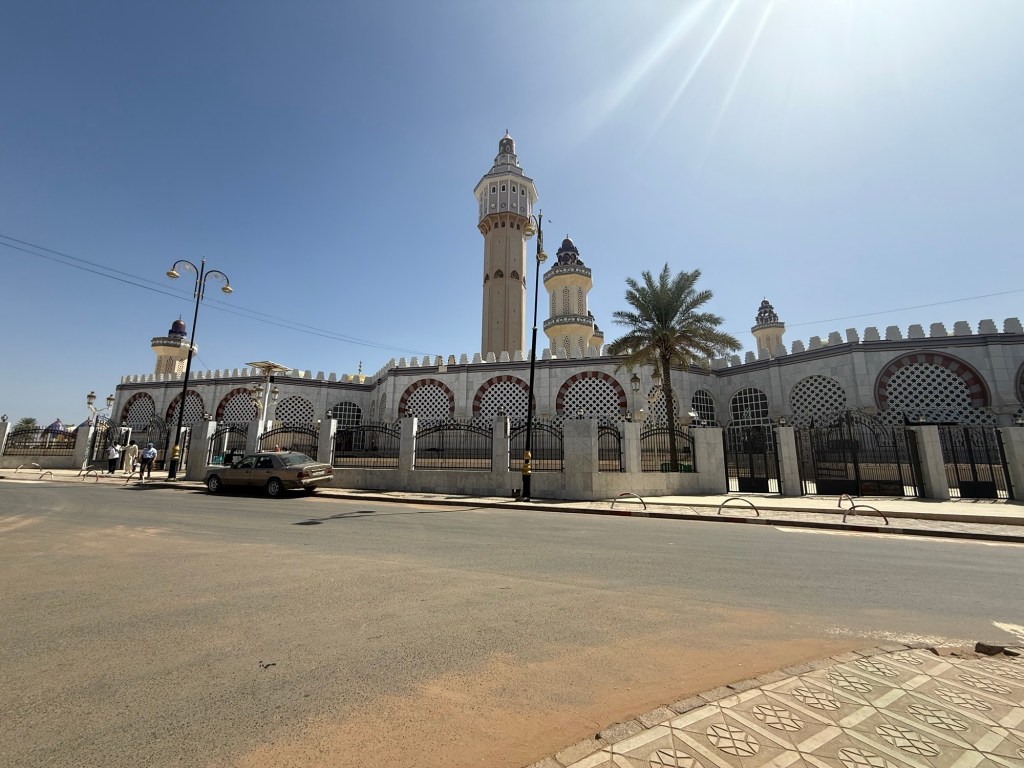
Touba is the second largest city and Senegal’s holiest. Founded in 1887 by Sheikh Bamba, it is the home of a form of Sufi Islam, Mouridism which has a focus on breaking free from colonialism. Not surprisingly, the French were unhappy with this movement and exiled Bamba to Gabon and Mauritania. He was allowed back and even offered the French Legion of Honour for encouraging his followers to join the French in WW1 ( he declined it). All was forgiven and he was allowed back to Touba, where he constructed the Grand Mosque:
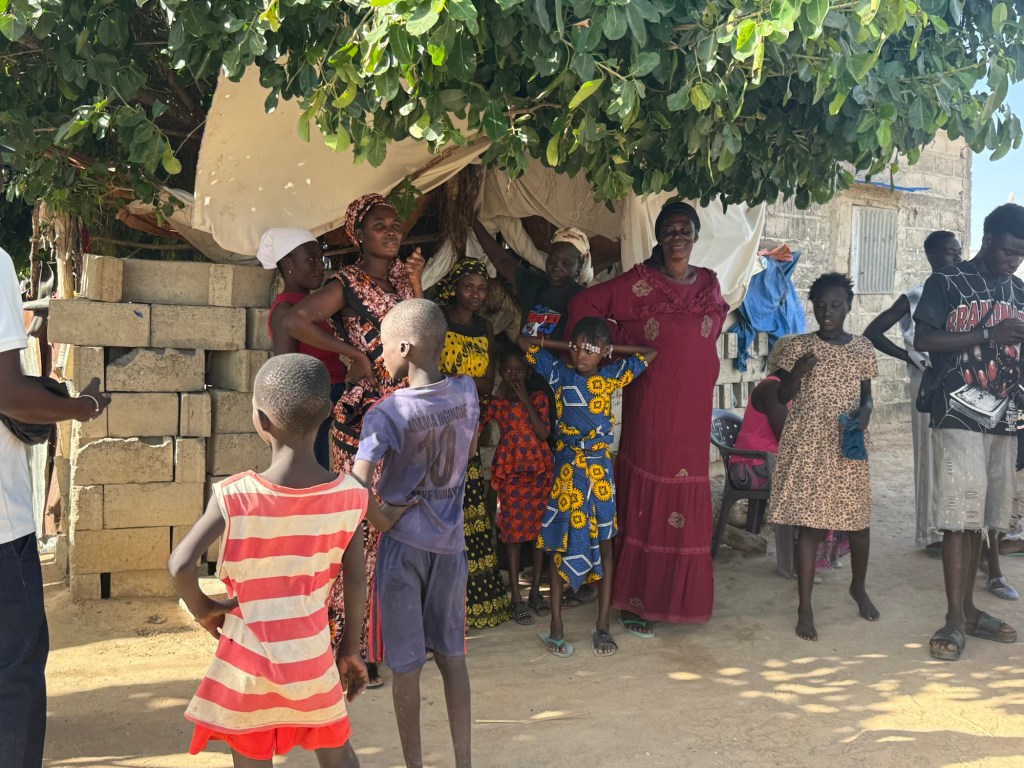
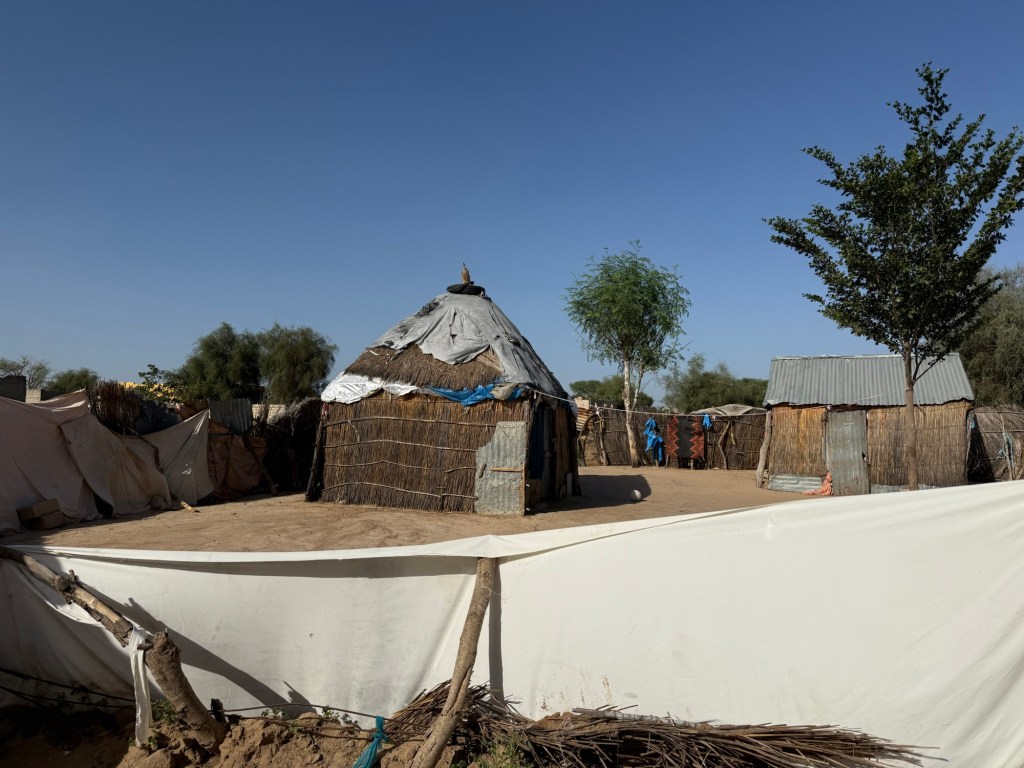
We stopped at a Wolof village, where we toured a transitional compound. The main economic activity is peanut farming, the kids attend a free school but were anxious to say hello and chickens ran about the ground. Traditional round thatched huts were being replaced by rectangular concrete houses with tin roofs:
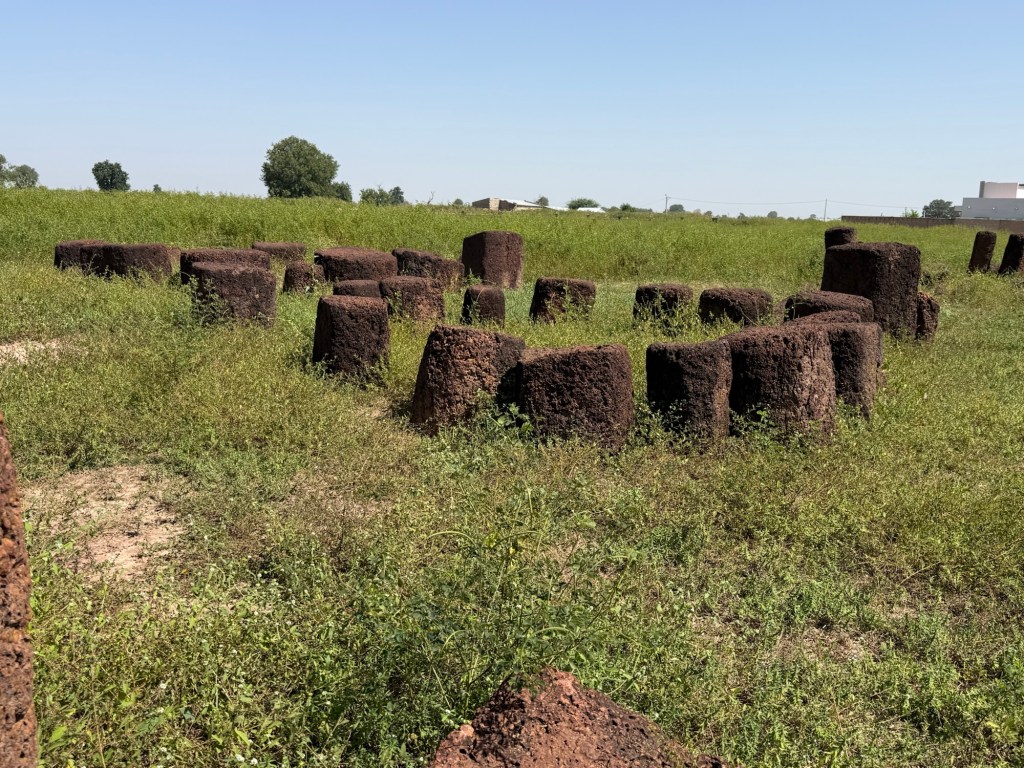
From there, we stopped at one of the hundreds of Senegalese-Gambian stone circles. Some were constructed as early as 3000BC, but by whom and for what purpose is unknown:
Another village awaited, this one of the Jola tribe who depend upon rice as their main food source. We were invited to tour the interior of a house, which would rival any North American property, with a great room, a kitchen and a hallway off of which were five bedrooms. In the great room, was a TV and a dozen chairs. The TV was hooked up to satellite.
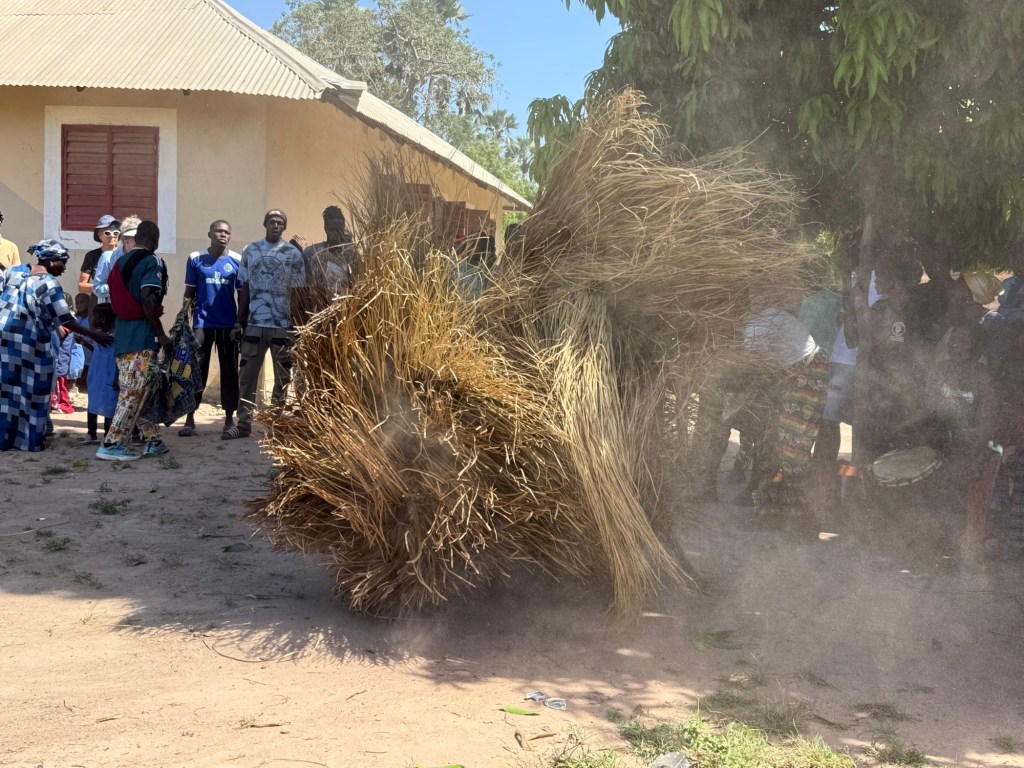
The villagers performed a ceremonial dance for us, with drummers, but the stars were individuals covered completely in a straw uniform, which they twirled about. These costumes were originally used during important events, like namings, initiations and weddings:
Our final stop in Senegal was in the city of Ziguinchor, infamous as the place where a ferry sank, killing nearly 1500 people. Today it’s principal tourist attractions are the mangroves lining the river and the playful dolphins which surround the boat.

Thus ended my second time in Senegal, an opportunity to see far more than the urban side presented by Dakar.
Next up: The Gambia


Amazing descriptions as always! Living it vicariously!
LikeLike