
The Gambia is one of the stranger countries I have visited. First, it is one of only three countries with a definitive article in its name (The Bahamas and The Netherlands being the other two), but more importantly, its existence and geography are solely the result of the colonial scramble for Africa.
With both the French and British fighting for supremacy in the area, they finally agreed in the mid-1800’s that the French could exploit Senegal while Britain would retain control of the important trading route offered by the river, along with slivers of land on either sides.
Thus, The Gambia is the smallest country in Africa, only 30 kilometres wide in places and surrounded on 3 sides by Senegal, with 80 kilometres of the Atlantic Ocean on the fourth side. Right down the center runs the Gambia River, emptying out in the Atlantic Ocean.
Today, the river can be crossed by a ferry or a single bridge. We choose the ferry, buying a fast track pass which took us to the front of the line for boarding, jumping over the hundreds of trucks which had waited for hours or days:

From the ferry, we drove to Banjul, the capital city. Formerly known as Bathurst, it changed its name upon independence from Britain in 1965.
A discussion about its politics since would take an entire book, so I’ll provide the short form. Dictators, multiple military coups, some democracies, the withdrawal from the Commonwealth and the re-entry to the Commonwealth, declaration that it’s the Islamic State of The Gambia and the subsequent removal of the term Islamic State. It’s confusing but what appear to be relatively democratic elections are planned for December, 2026 and we passed by rallies for different parties.
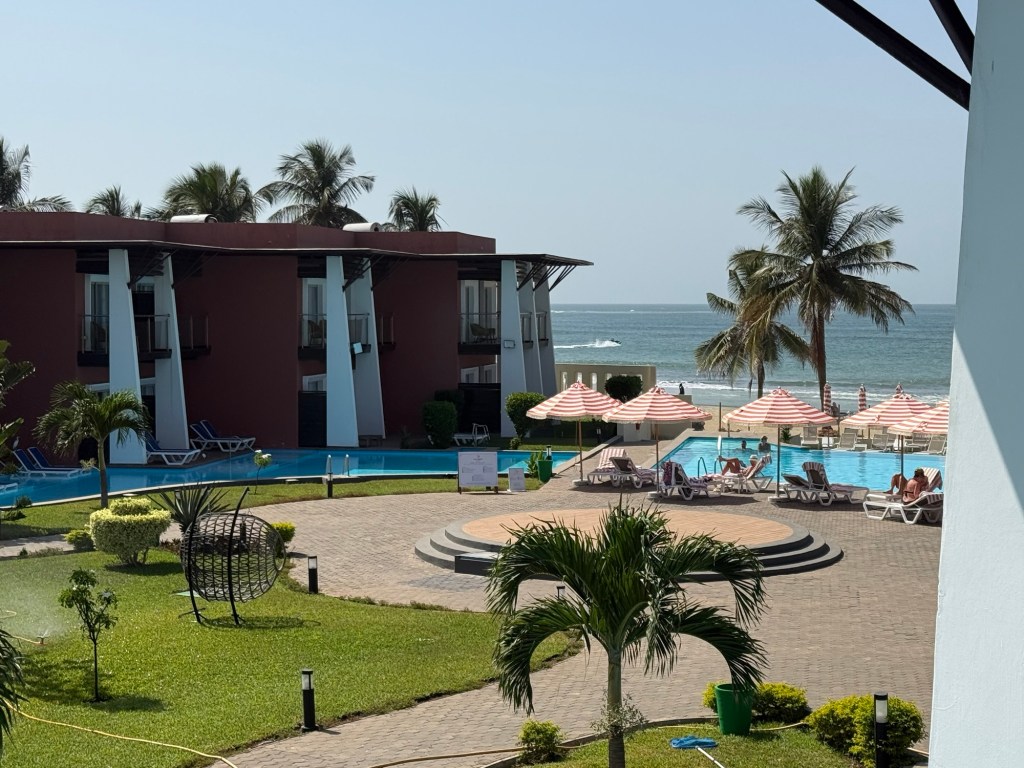
So what is there to do in The Gambia? Embarrassingly, we stayed at one of many 4 star resorts designed to appeal to Western tourists. It was lovely, but hardly an authentic Gambian experience.
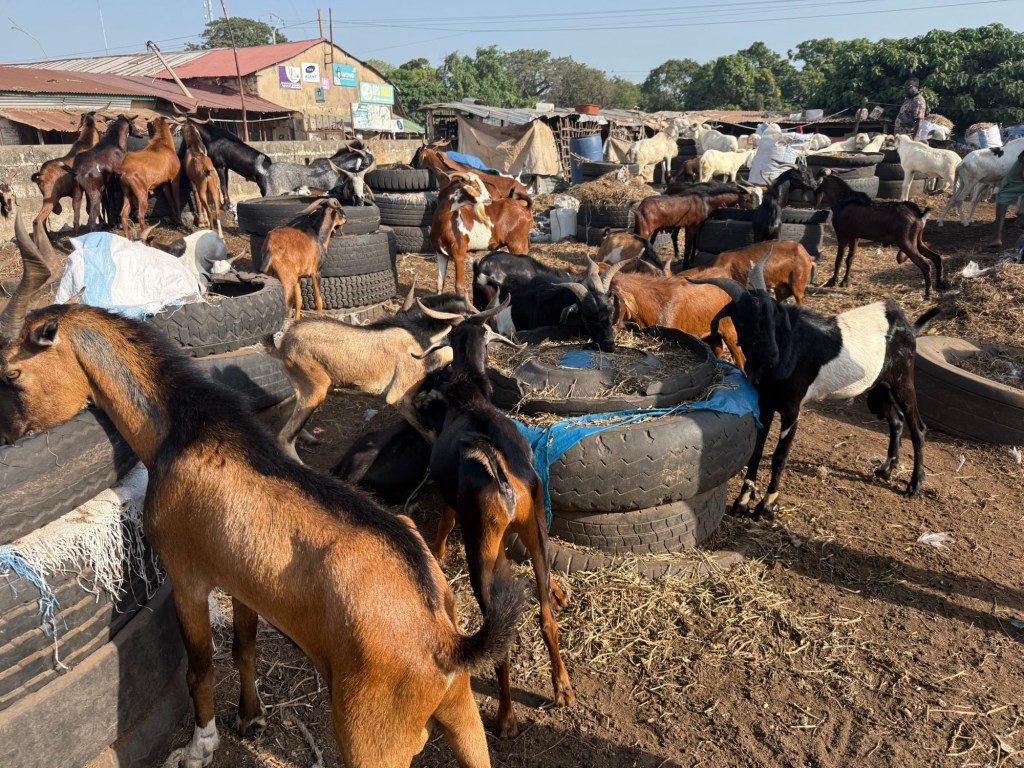
We did a Banjul city tour, starting with a cow and goat market. The animals, all male, are brought into the city, fed, then sold for butchering at significant events like namings, initiations and weddings;
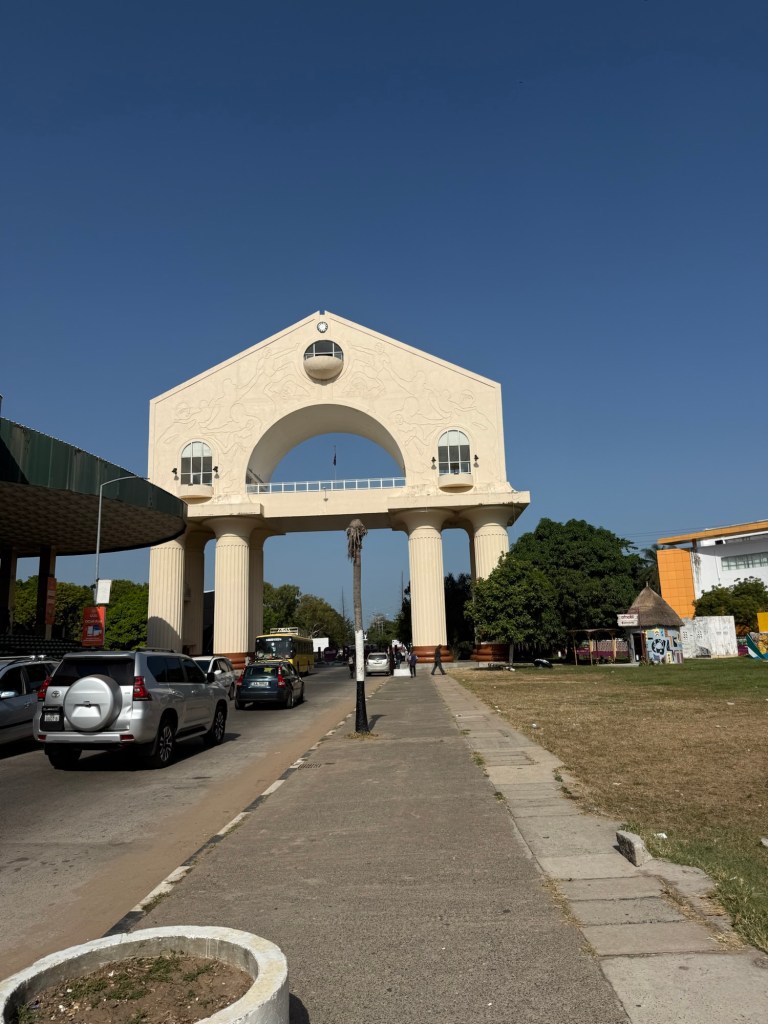
Next up was The Gambian Historical Museum, with displays dating back to pre-historic times all the way up to colonial times and tribal rituals. An arch, constructed to commemorate one of the multiple coups, was nearby:
We stopped at the largest market, the Royal Albert Market, offering foods, clothings and souvenirs, but it was very similar to every African market I’d seen lately.
Next up was the Gambian Ethnographic museum, which had an interesting exhibit about the Gambian’s soldiers assistance in WW2, particularly in Burma ( Myanmar) and the establishment of a British Air Force base in Guinea.
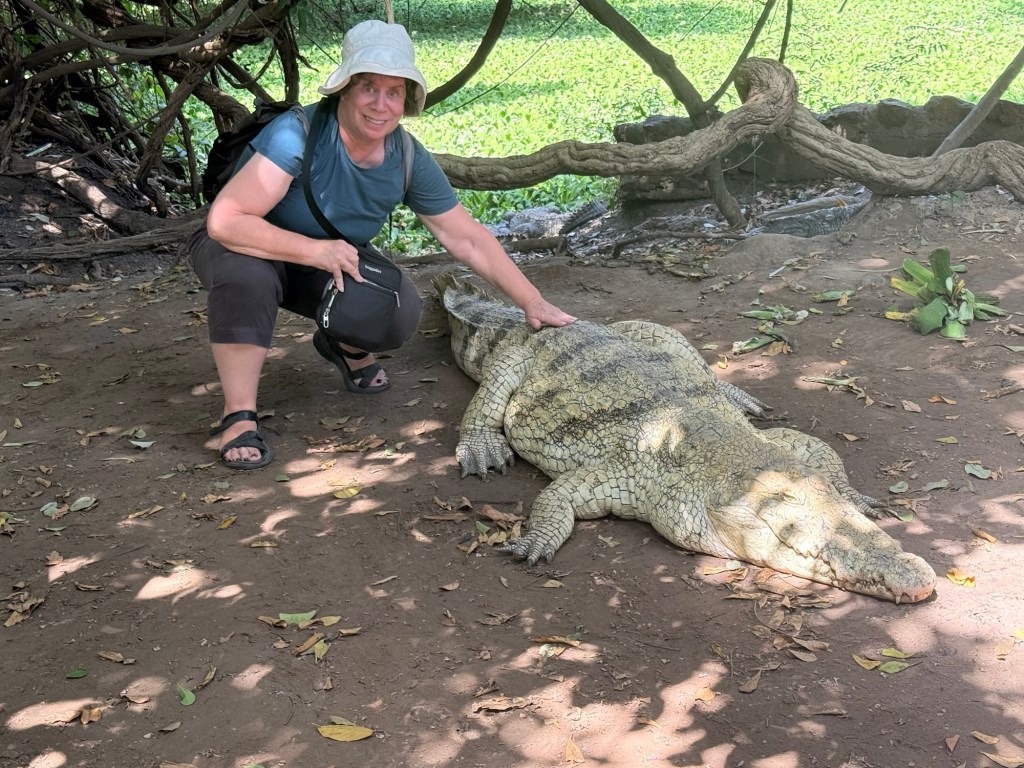
But the real star at the museum was in the back, where people had an opportunity to pet a crocodile. The proprietor informed us there were about 100 crocodiles in the enclosure and, as they had been fed only fish from birth, they weren’t carnivores. We were warned against getting too close to the females. They had recently laid eggs, but in an effort to keep their numbers down, the eggs had been destroyed so the mothers-to-be were a bit ornery. As if to prove the point, he took a stick to a female and she dutifully went into the water.
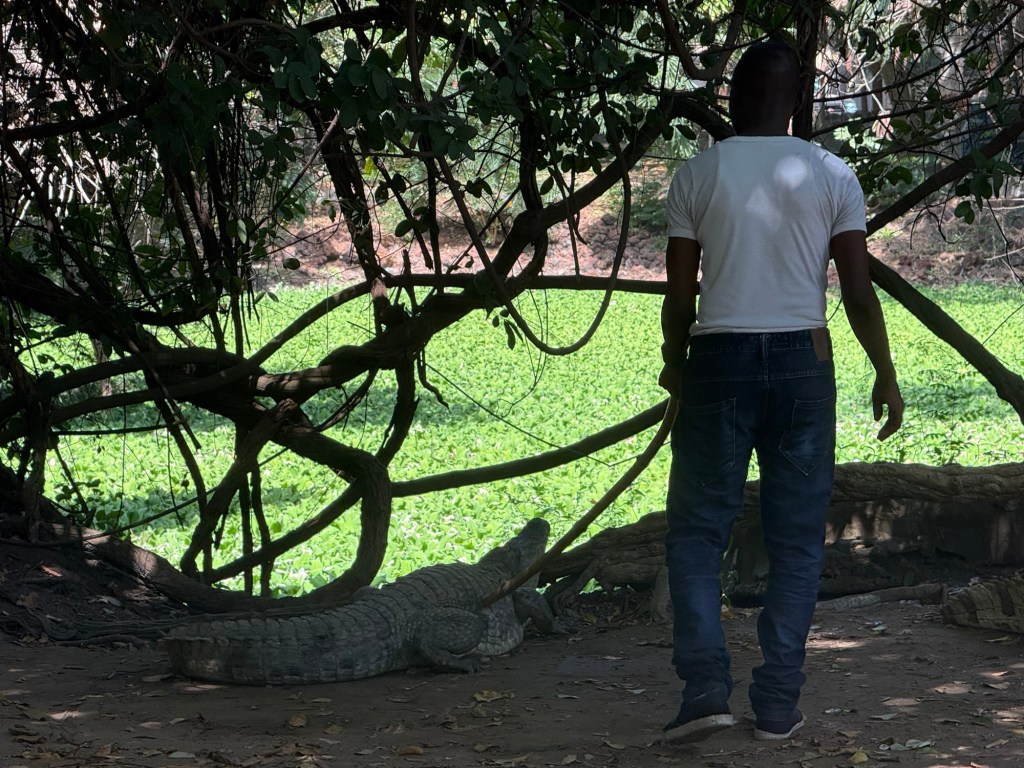
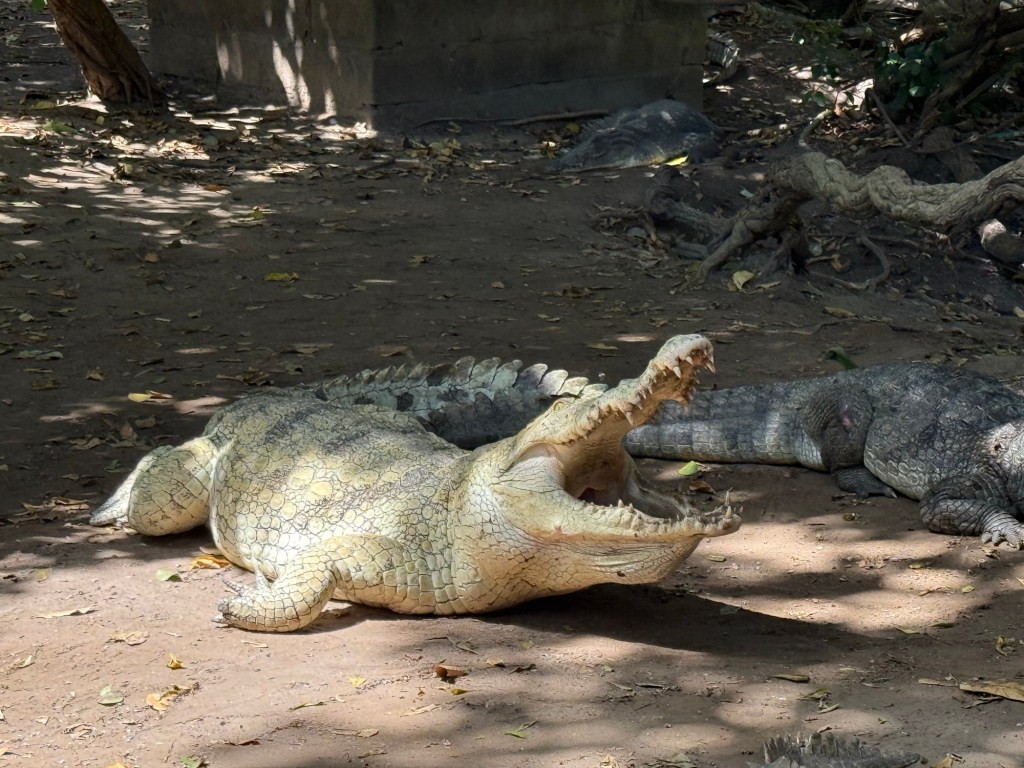
Tony, a 50 year old albino crocodile, was lazing about and looked as harmless as a 3 meter crocodile could. The first brave soul in our group went before me, with instructions not to pat Tony’s head, crouched down, gingerly stroked Toby’s back and had his picture taken.
When my turn came, I threw caution to the wind and quickly walked towards Tony, making sure the proprietor and his stick were close by. In a moment of supreme stupidity, I bent down, put my hand on Tony’s back and smiled for the camera. Done!! I had patted a crocodile and had the picture to prove it.
Tony gave us one last yawn before we left, just to remind us that he has big teeth:
Binjul had one more surprise for me. Our tour went to the fish market just before sunset, where hundreds of fishing boats were coming in with their catch. Young men swan out to greet them and bring the fish to shore, where the women worked, grading, washing, boning and getting them ready for sale:
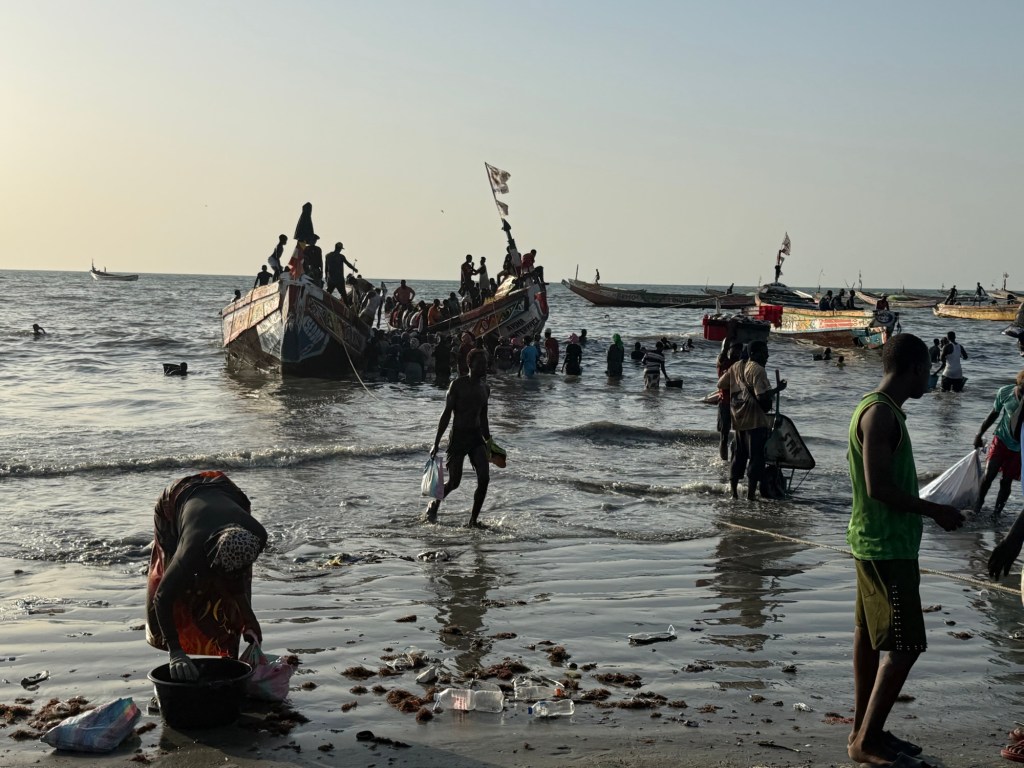
It was chaotic, crowded, dirty, smelly but wonderful; hundreds of people each performing their assigned roles, doing as they’d done for centuries, getting food to the market and their families:
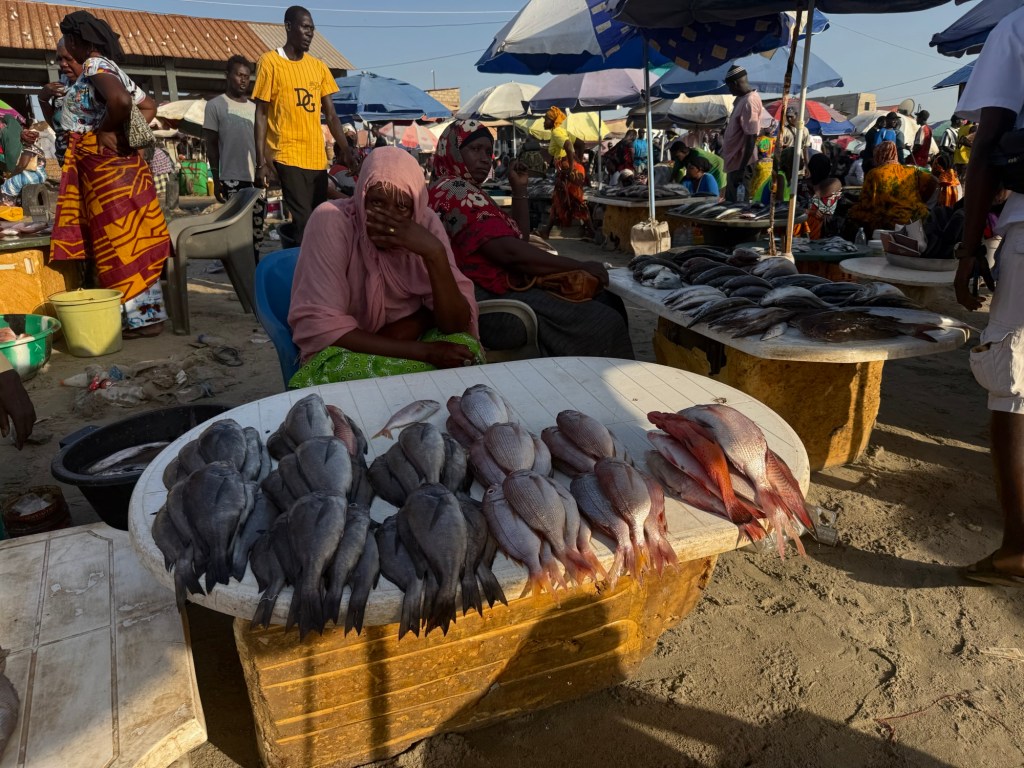
Staying in a four star resort, visiting an obvious tourist attraction at the crocodile farm were great, but walking through the fish market felt, well, sorry to use the ubiquitous “authentic”, but the market felt real. The noise of the hawkers, the wet sand squishing between my toes, the little boys running amok, the stench of fish, all combined to give me my The Gambia moment.
Next up; the sad state of Guinea-Bissau


Very brave to pet the crocodile! Your trip looks amazing so far.
LikeLike
It’s been challenging at times, but quite eye-opening and mostly enjoyable.
LikeLike