
It’s hard to write about a country I had just visited where the overwhelming feeling I left with was one of sadness, but Guinea-Bissau fit the bill. Even worse, I only glimpsed the poverty, poor government and aging infrastructure from the vantage point of a spoiled western tourist staying in the best possible facilities.
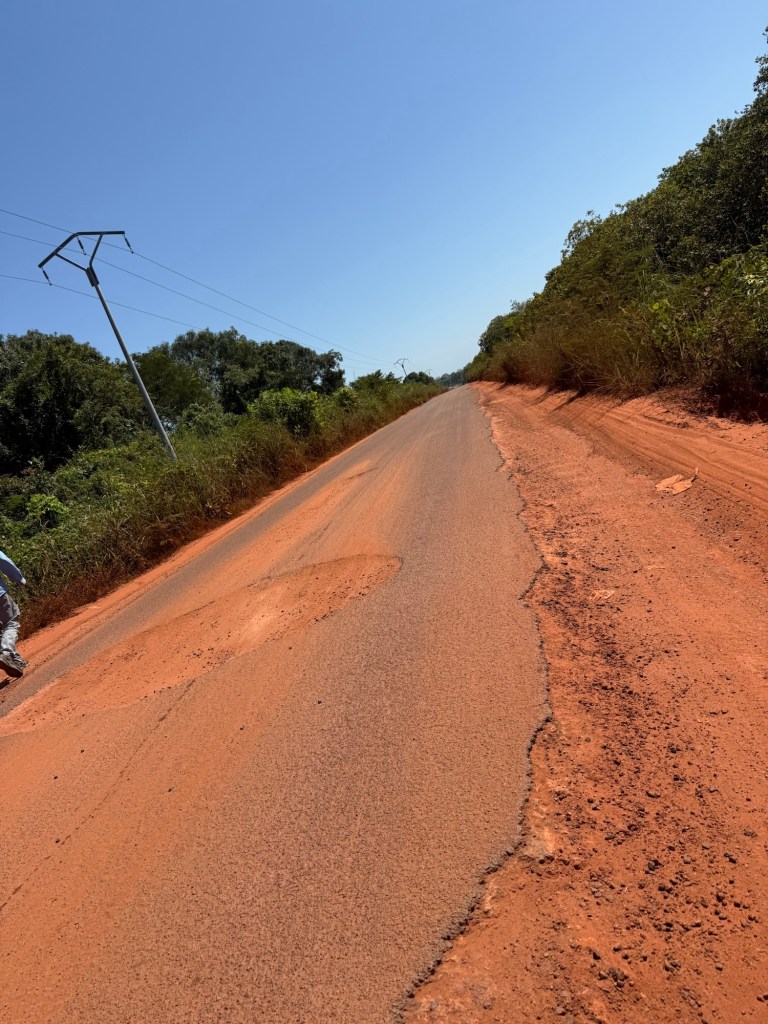
Let’s back up. My introduction to Guinea-Bissau was on the main road from Senegal to its capital, Bissau, which road I’m sure had not been maintained since the Portuguese left in 1974. It took four hours of bumping, bouncing and swerving to avoid potholes the size of a tank to drive 150 km from the border to the first decent paved road near Bissau:
We finally arrived, and were fortunate enough to be housed in the best hotel in the capital, the Ceiba Hotel, boasting an emergency generator, elevators, and AC.
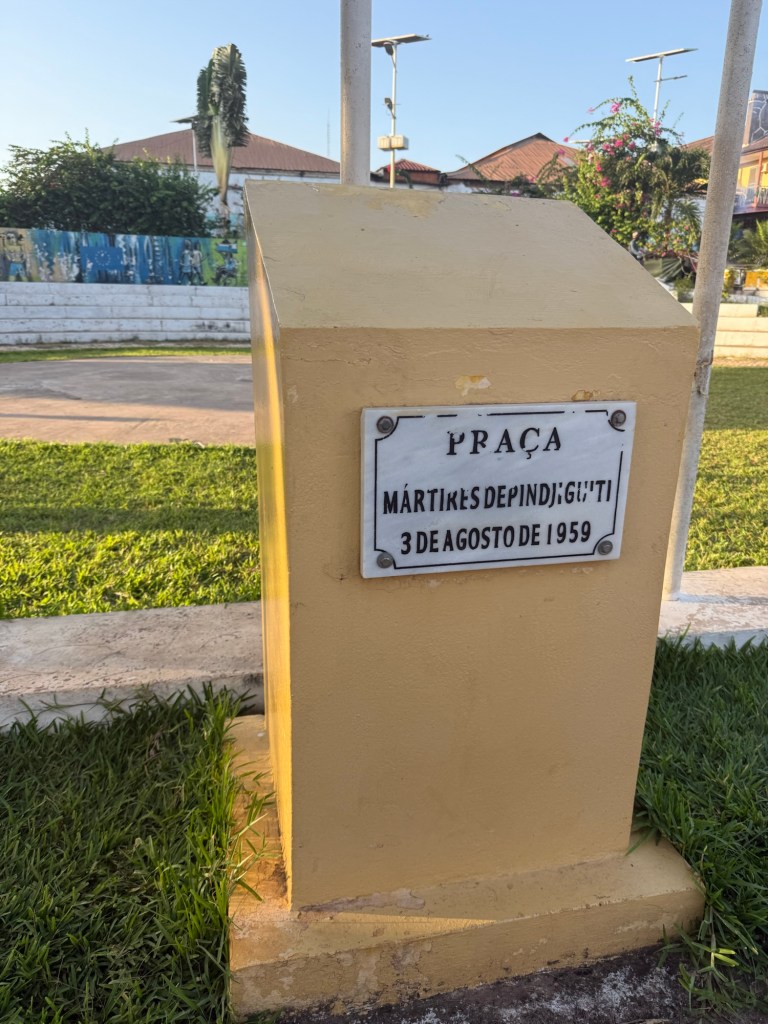
Our tour guide took us on a quick tour of the capital, Bissau, a city of 800,000, but I could only see a dozen or so paved roads. We walked to some monuments, including one to Che Guevara, who is rumoured to have been there in support of Guinea-Bissau’s struggle for independence from the Portuguese, but never confirmed. Another monument commemorated the massacre of 60 local port strikers by the Portuguese in 1959:
A few steps away was a monument to African power:
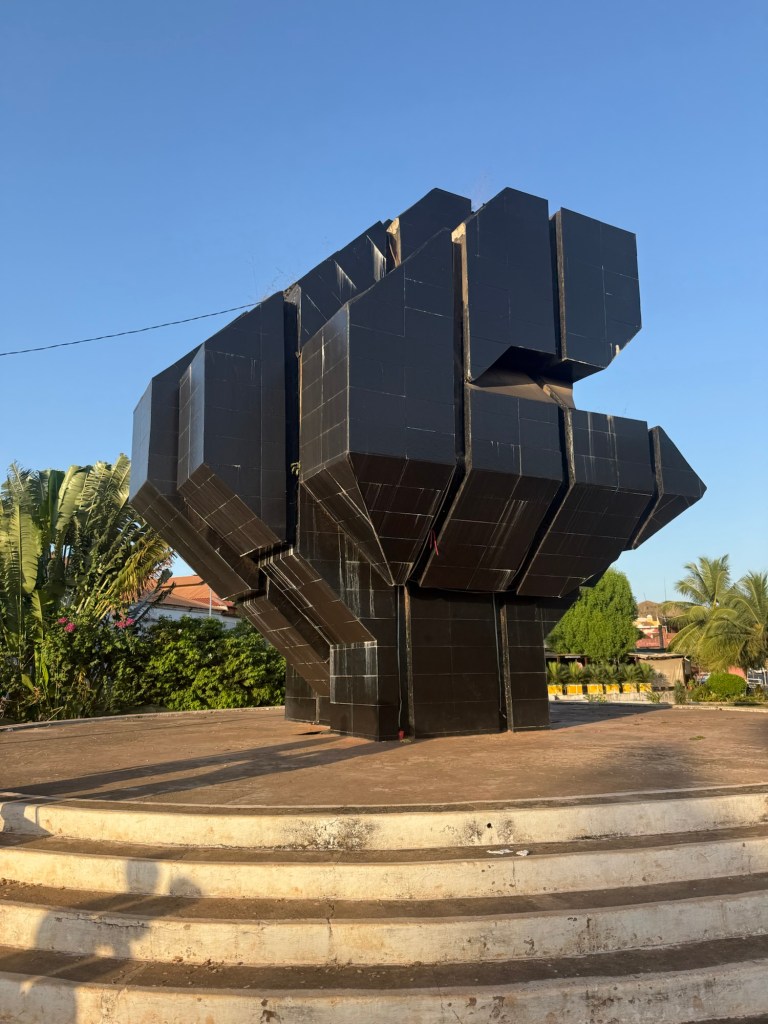
The message was powerful, but I managed to photograph it and avoid showing all the discarded plastic around it and the man sleeping beside it, oblivious to all of us tourists snapping photographs.
We then started walking through the old town, with its colonial architecture evident, but unfortunately, much of it abandoned:
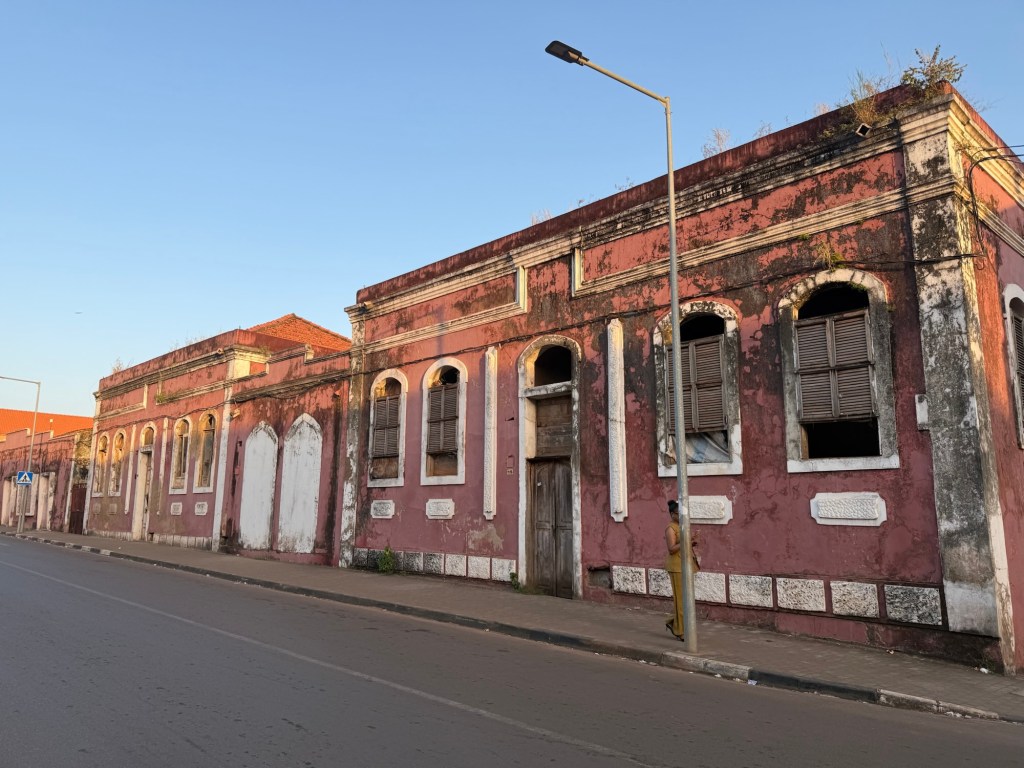
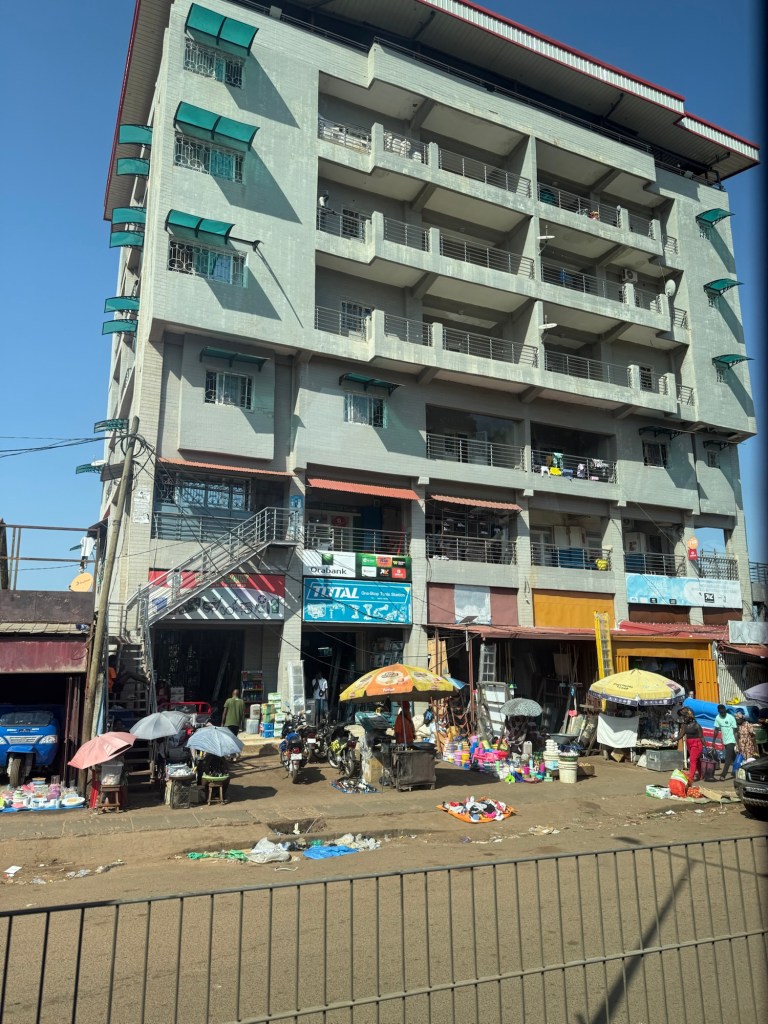
Our guide indicated that the abandoned buildings were probably owned by the Portuguese, but they had left Guinea-Bissau 50 years ago and they-seemed to be a convenient scapegoat for all of the country’s current problems. Other buildings, which didn’t look particularly colonial, were also evident in the city center, with makeshift stalls and a lot of discarded plastic surrounding it
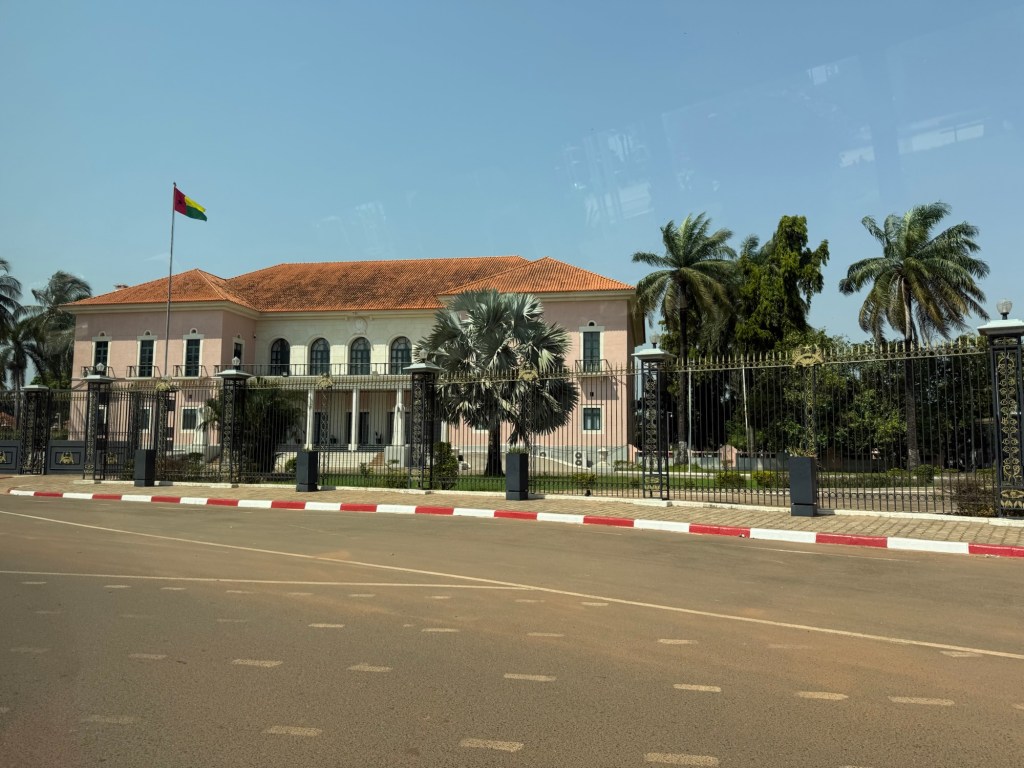
A few buildings looked nice, especially the presidential Palace:
Speaking of presidents, Guinea Bissau has had a difficult history. A variety of tribes lived here until the Portuguese “discovered” it in the mid -15th century. The Portuguese enslaved the local inhabitants and shipped many of them off to the New World over the course of the next 400 years. In the 1960s, the move for independence began, but a bloody war with Portugal ensued for nearly 10 years. Finally, in 1974, independence was achieved, but the government has since been a series of failed democracies, military coups and dictators. Optimism was high in 2025 when, finally, a fair election appeared to have been held, but only hours before the result was to be announced, there was yet another military coup. The current military leaders promised an election in December, 2026, but cancelled it just a few days ago and so the military rule continues.
We only spent the night in the capital and the next day made our way to the port, where an abandoned ship held greeted us:
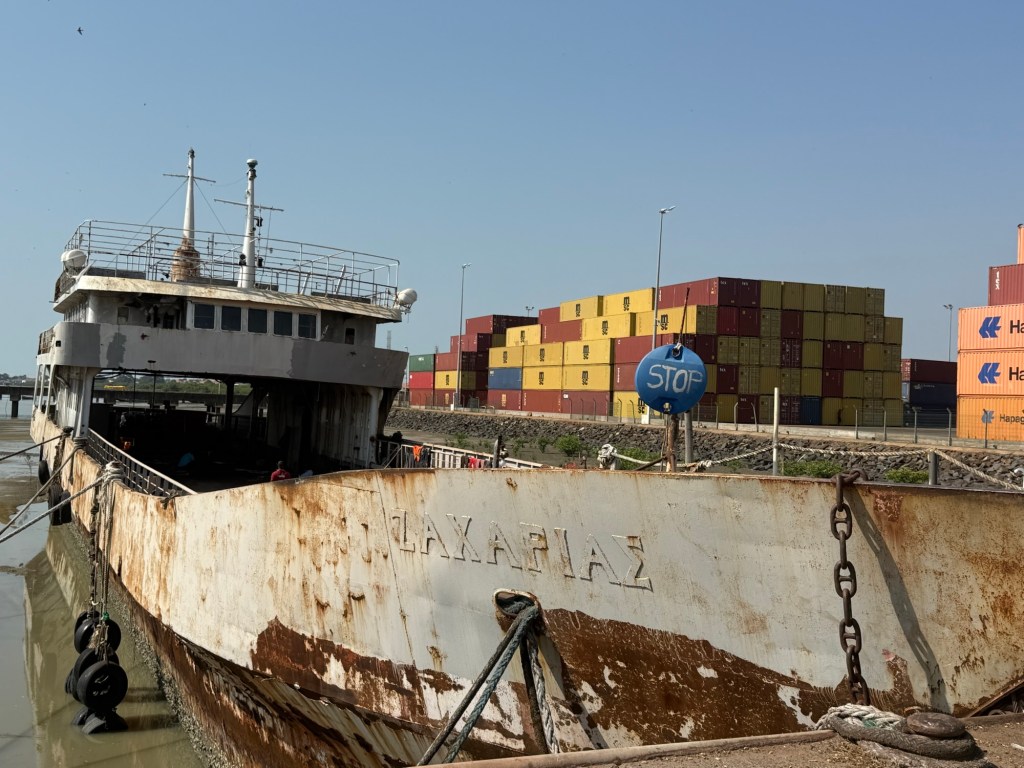
Fortunately, we were on a different boat, although I can’t say it was much more comfortable. 19 of us squished into a boat with a maximum capacity of 14 and embarked on the two hour journey to Rubane, one of a dozen islands in the Bijagos archipelago.
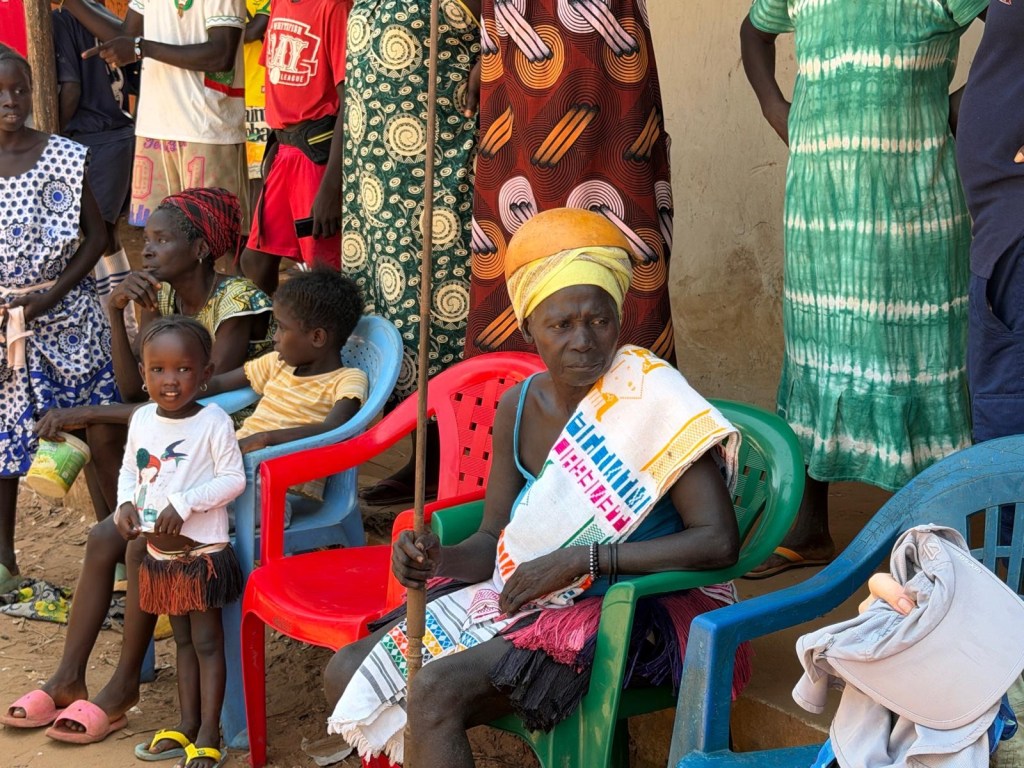
The Bijagos archipelago is renowned for the uniqueness of its Bijagos tribe, a matriarchal society in which power rests with the queen, who makes all the important decisions for her tribe:
But we didn’t stay with the tribe. Rather, we stayed in the luxury resort of Ponta Anchanca owned and operated by Solange, a French National, who arrived 20 years ago, and with the help of locals, had crafted a beautiful resort containing about 40 thatched huts (complete with en suite bathrooms, Wi-Fi and AC) , a swimming pool, a tiki bar and a restaurant boasting fine French cuisine and French wine. My place for three days was very comfortable.:
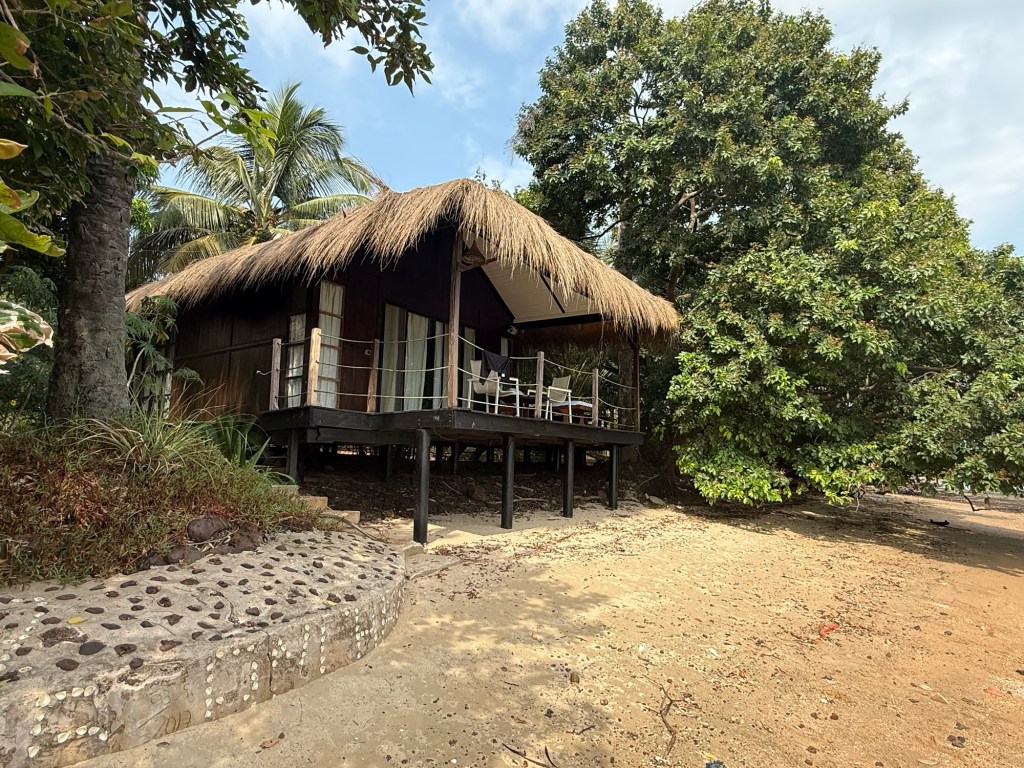
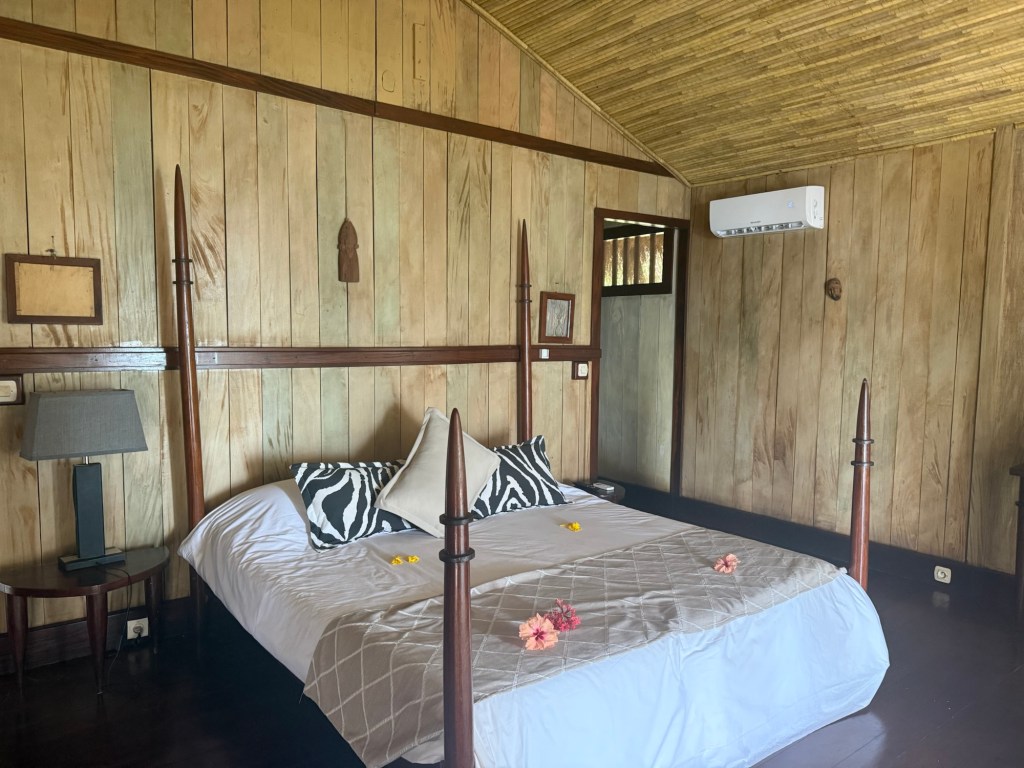
With my group, we took a short boat ride over to the main village of Bubaque where we saw the local market and then went further inland to visit a Bijagos village. The villagers put on an entertaining performance for us with dancers and drums. One of the dances was to ask for peace and another for fertility. However, the one that made the biggest impression was led by a young boy of, perhaps eight years old, dressed in a brightly checkered cape, and head dress, followed by a bevy of young girls. As he danced around, he grabbed a little chick and then walked past each of the observers and asked us each to pet the chick’s head. We all did this, and then, with horror and sadness, watched him take a knife and kill it.
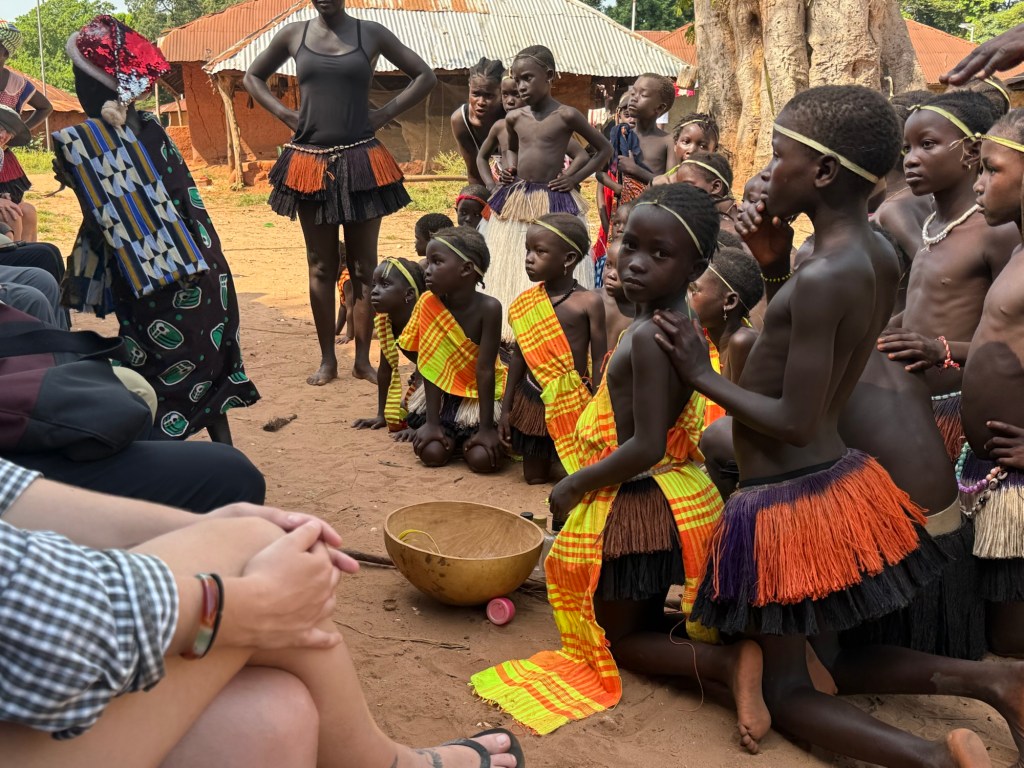
I guess if I want an “authentic” experience, I must accept that this sacrifice is part of the ritual, but I would have happily foregone this particular encounter.
After three days of luxury on the resort, we returned to the mainland and spent another night at the Ceiba hotel before catching a flight to our next destination.
Although I admit my time in Guinea-Bissau was limited to seeing it through the eyes of a wealthy western perspective, I couldn’t help but realize that nobody whom I met was lauding how wonderful the country was, how rich it was or what its potential could be. I heard and saw only signs of poverty, dirt, despair, and distrust of the government and no real hope of there being a better tomorrow. And that made me sad….
Next: Some hope in Guinea

