
Of the eight countries this West Africa tour is visiting, the one I was most looking forward to was Liberia, due to its unique history.
Various tribes lived here until it was “discovered” by the Portuguese in the 15th century. After years of fighting between the Portuguese, the English and the French, the area landed in the hands of the newly independent USA.
In 1816, the American Colonization Society was founded, containing both abolitionists and slave owners who wanted all blacks removed from the USA.
Its first ship sailed from America in 1820 and landed in Sierra Leone where many of the settlers died of disease. In 1822 more settlers from America landed on Providence Island, which is now a national landmark in Liberia’s capital of Monrovia, named after the then President James Monroe.
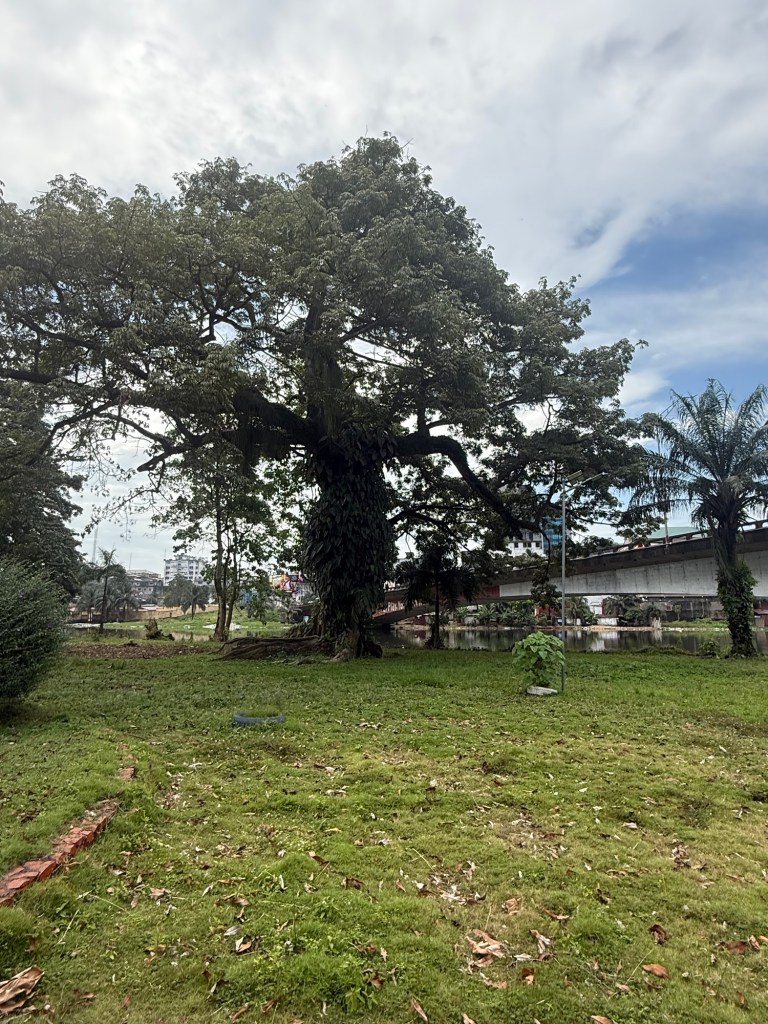
But all was not a paradise. Over the next few years, over 13,000 former slaves arrived in Liberia. They brought with them American customs, like suits, top hats and household slaves. They quickly acquired political power and dominated the government for the next 150 years, causing a divide between the newcomers and the indigenous that was one of the sparks of the country’s later ills.
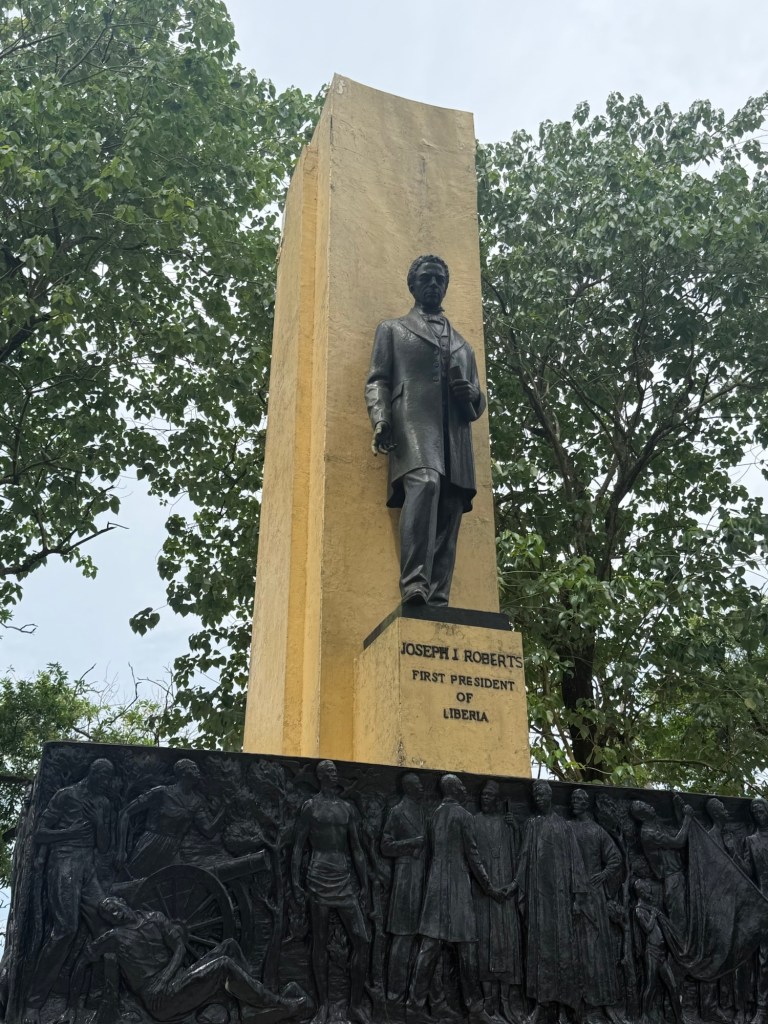
In 1847, Liberia declared independence, the first African state to do so. John Roberts, the son of a black slave and white slave master, born in Virginia, became the first president. A statue of him overlooks the city of Monrovia:
Over the next century, Liberia lost land to England and France and the Ivory Coast, had the fire stone, rubber company, established plantations, and allowed the Americans to open an Air Force Base during World War II.
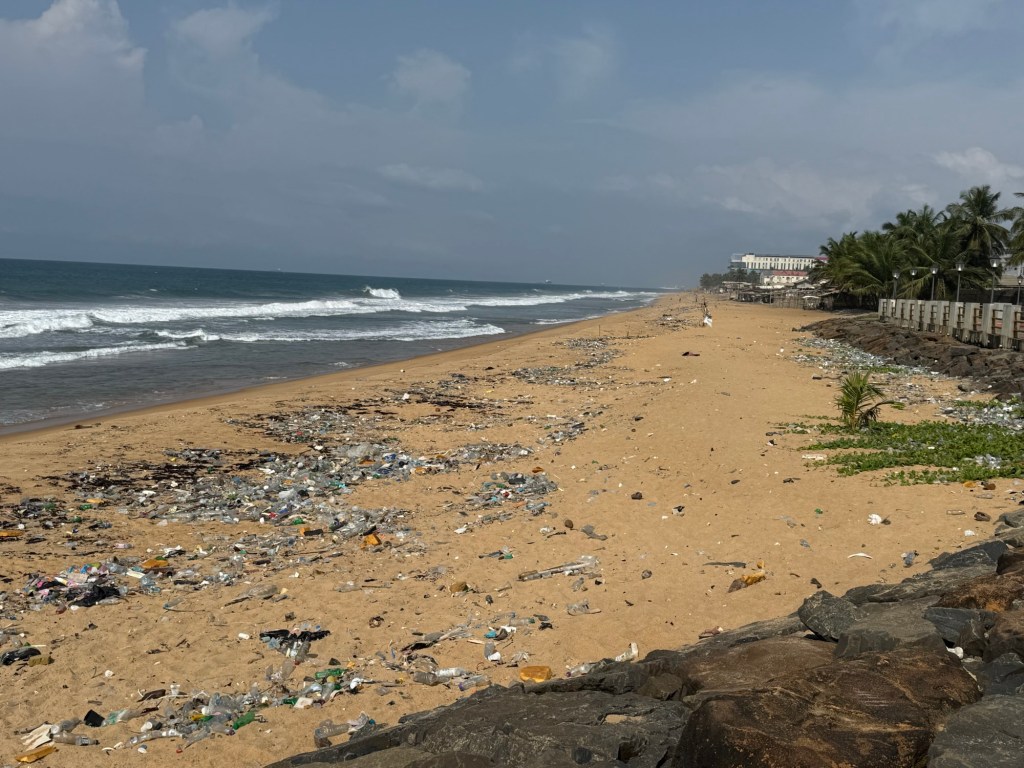
On April 12, 1980, Samuel Doe, a master sergeant in the army of indigenous ancestry, led a coup, overthrowing the government of William Tolbert. Tolbert was quickly killed, and Samuel Doe took 13 of the senior ministers to a beach, tied them to a pole and shot them. The poles were taken by their family members, but we did stop at the beach:
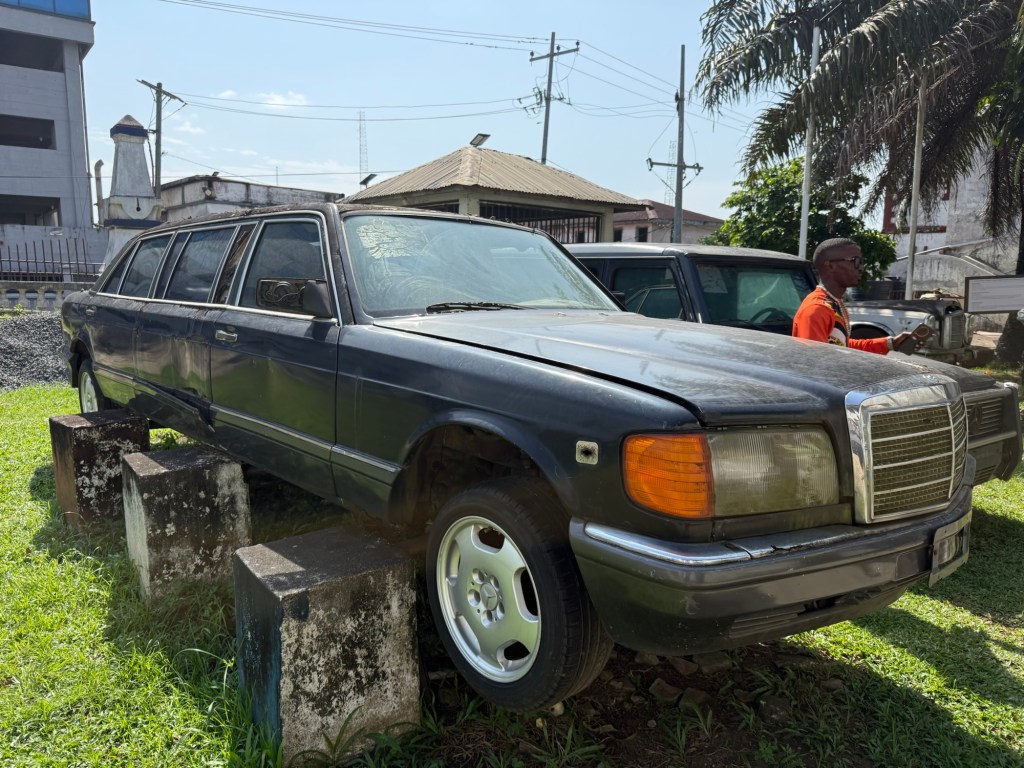
Samuel Doe oversaw a brutal regime and his focus on enriching his indigenous clan led to the country’s economic collapse. In 1989, a coup led by Charles Taylor, captured Doe, took control of the government and executed Doe. Doe’s last car, in which he was captured, is on display at the National Museum:
Taylor’s regime was equally brutal and disastrous, with rebel forces engaging in civil wars, estimates are of 250,000 killed and half the population displaced. In 2003, Taylor resigned and went to Nigeria. He was ultimately tried for war crimes and is currently serving a 50 year sentence in Britain.
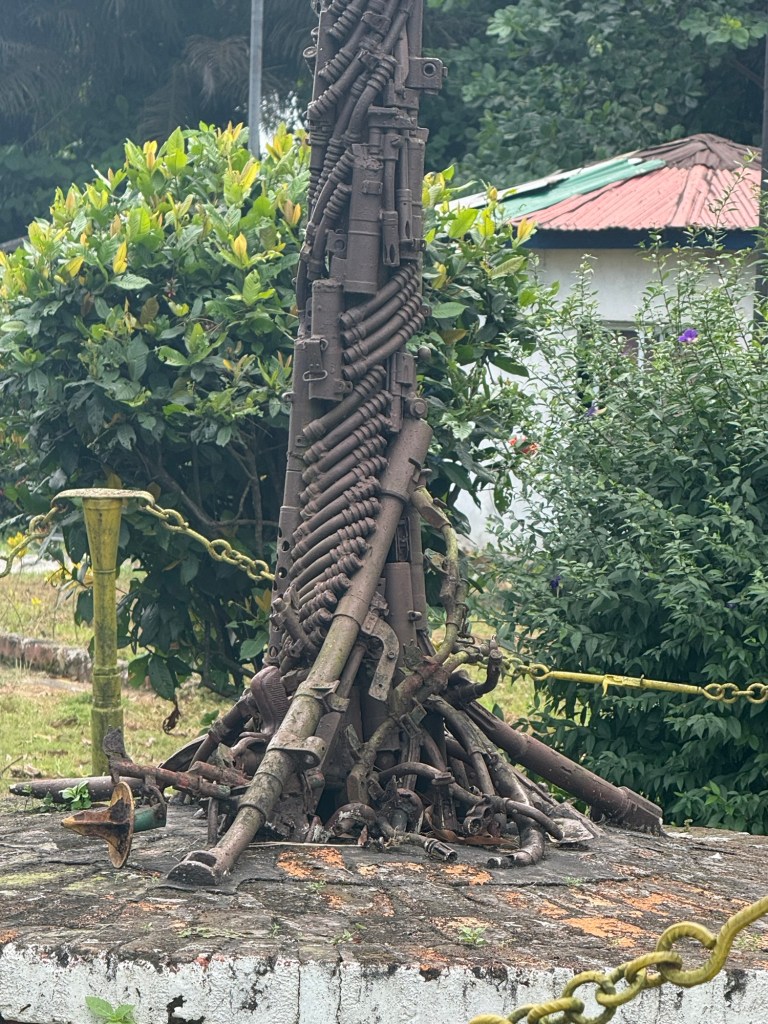
A truth and reconciliation commission was formed, doing much to try and deal with the outcome of the Civil War. In 2005, Ellen Sirleaf was elected president, the first woman elected head of state in Africa. She served two terms and earned the Nobel Peace Prize. Since then, the government and the country have remained relatively stable. An innovative structure reminds visitors of the fragile peace:
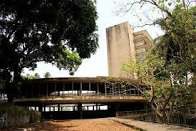
One more reminder of the civil war’s horrors awaited us. The former Intercontinental Hotel, a 5 star luxury resort which had hosted the Queen, Michael Jackson and other celebrities did not survive the war:
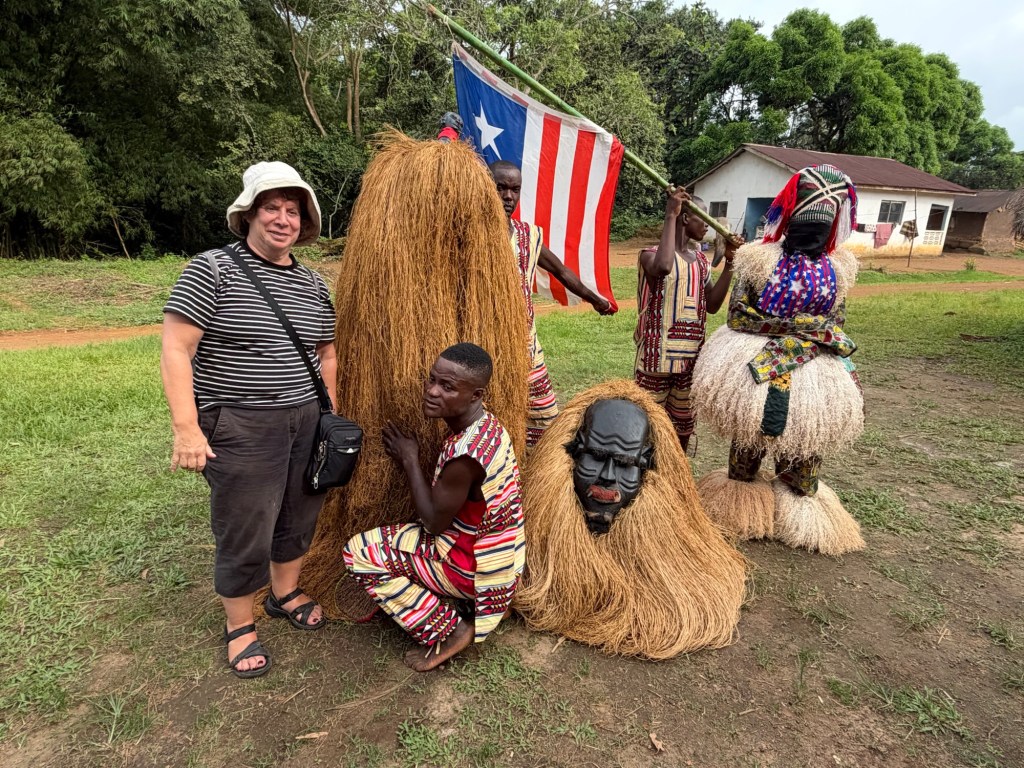
Quite frankly, there wasn’t much to see in Monrovia, but we ended our time in Liberia on a high note. We visited a Demeh village near Monrovia, where the kids entertained us with some energetic, ritual dances:
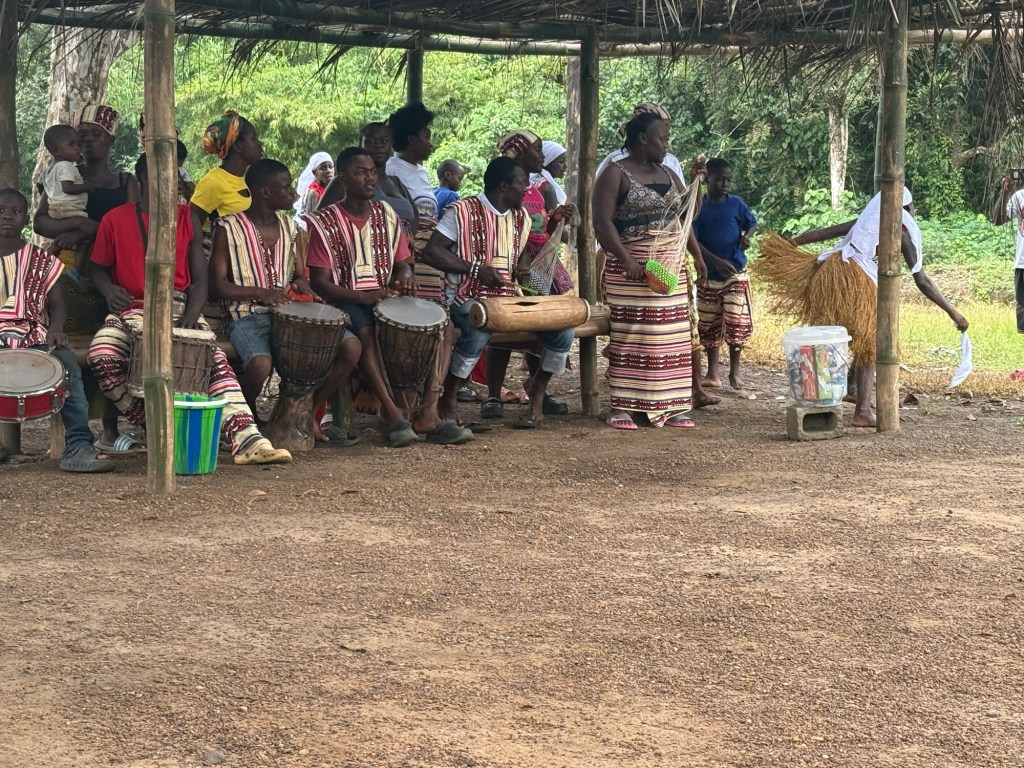
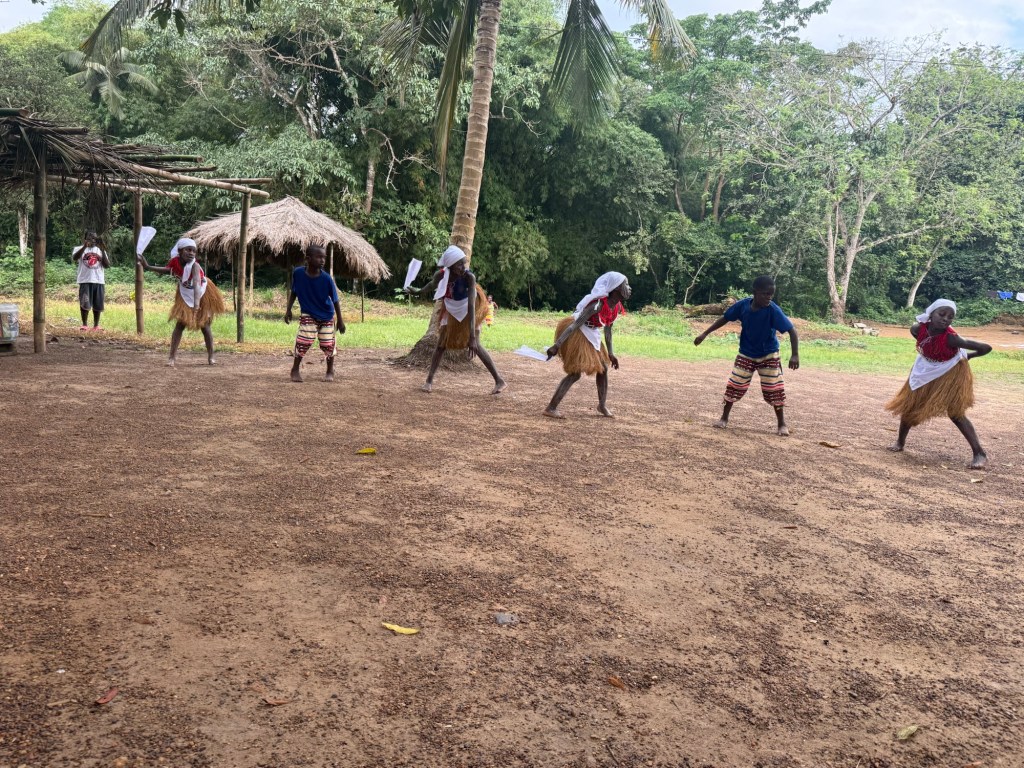
These photos don’t do justice to the intricate choreography and extreme stamina needed to perform the dances, but they rival anything a Western ballet company puts on. And, at the end, they were kind enough to pose for photos:
So, despite its very different experiences during the colonial period, Liberia has endured much of the same miseries faced by other west African nations: poverty, horrible civil wars, ineffective government, lack of infrastructure, short life expectancy, etc. had been hoping for something better……
Next: nearing the end: Ivory Coast

