Transportation Misadventures in Central Europe

Have you ever returned from a sightseeing vacation only to realize you missed some really neat sights? It happened to me in 2019, after spending 8 weeks in the Balkan countries, so this fall, with a bit of time to fill between Turkey and Switzerland, I decided to remedy 4 of my omissions. And a bonus, I could do most of it by train.

Things started off poorly. My leisurely noon hour flight from Istanbul to Sarajevo got switched by Turkish Airlines to a 7:25 AM departure, necessitating being at the airport by 4:30. I was less than thrilled, especially after learning the omelet station in the Istanbul lounge didn’t open until 5:00.

But even worse, the night before, I double checked on my Omission #1, a train ride from Sarajevo to Mostar, often ranking as one of the most scenic rides in the world. I had previously researched it and the website said there was no need for reservations. But for some reason when I rechecked the Bosnian railway website, Mostar was not coming up as a destination.

I checked the news to see if some light could be shed on why, and to my dismay, learned torrential floods a few weeks prior had wiped out the railroad. So much for my train trip.

After the crowds and touts in Istanbul, landing in Sarajevo was a breath of fresh air. The taxi drivers were honest, not inventing a non-existent toll charge on the airport road, and the lack of crowds was a pleasure. I met a small group of Asian tourists at the plaque commemorating the assassination of Archduke Ferdinand in 1916, starting WW1, but that was it.

Instead of the train ride, I endured a 7 hour bus ride to Split, leaving at 6:00am ( why so early???) and arriving only an hour late. I’d like to say the scenery through the Bosnian mountains and quaint towns was spectacular but it was raining, cloudy and generally miserable outside.

My Omission #2, a visit to Plitvice National Park, went off without a hitch. The park is famous for its numerous and constantly changing waterfalls, caused by a unique chemical makeup of the water and rocks. Even the sun decided to appear:
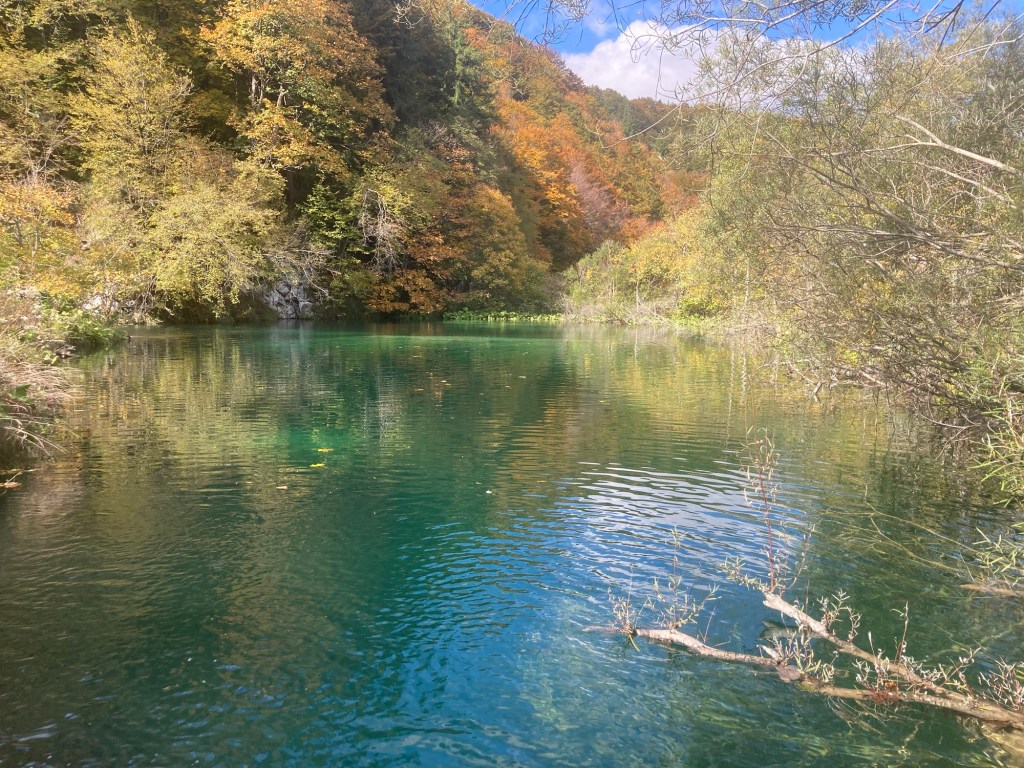
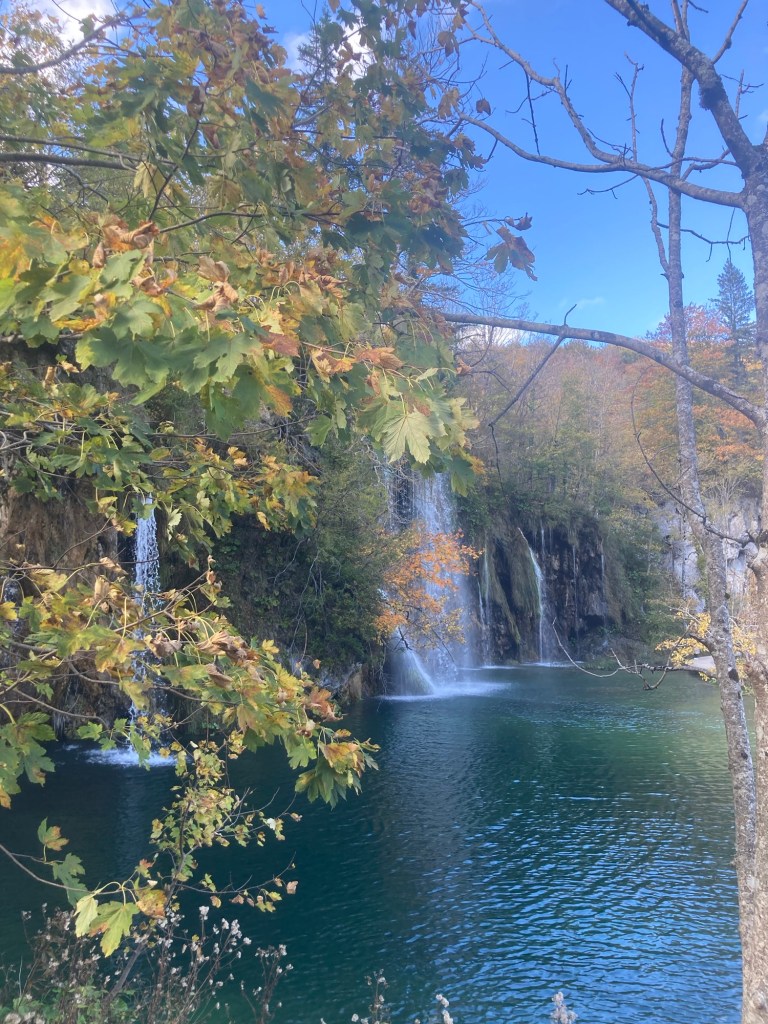
Plitvice National Park

From Plitvice, the plan was to take a bus to Zagreb, catch a taxi to the train station, then take a train to Salzburg, with a transfer at Villach in Austria. If all went to plan, I would arrive there about 7:30.

It did not go as planned. The bus to Zagreb miraculously arrived 5 minutes early, but I refused to pay the $30 the taxi cab wanted for the 5 minute ride to the train station. So I ended up walking, but it only took 15 minutes. The Croatian railroad train had seen better days, but it was comfortable and not crowded:
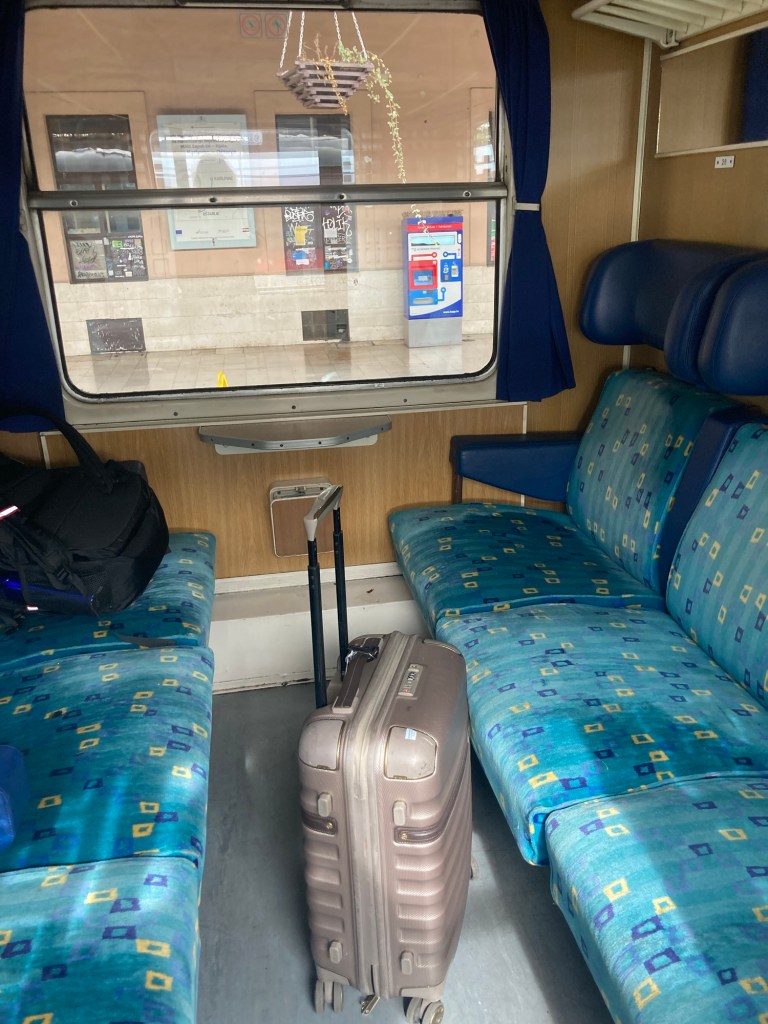
Croatian Railroad

The train left on time, but shortly afterwards, the conductor came by and advised that due to service on the tracks, i would have to get on a bus at Ljubljana, Slovenia. So when we arrived there, me and all the other tourists followed some guy yelling “bus, bus” through the train station to some waiting buses.

A 45 minute bus ride ensued before we were dropped off at another train station. A local Slovenian train arrived, I was on it for 30 minutes before stopping at a train station, and transferring to yet another local train for another 30 minute ride through Slovenia before finally getting to Villach in Austria. Not surprisingly, my train connection had left an hour ago, and I was stuck waiting two hours for the next train. On the plus side, I found a Shawarma place nearby and a convenience store selling Prosecco at a reasonable price so I was not unhappy.

I made it into Salzburg late in the evening, but my hotel was just a short walk away. After a restful night, I set off on Omission #3, a day trip to the town of Hallstatt, often branded as the prettiest village in Europe:
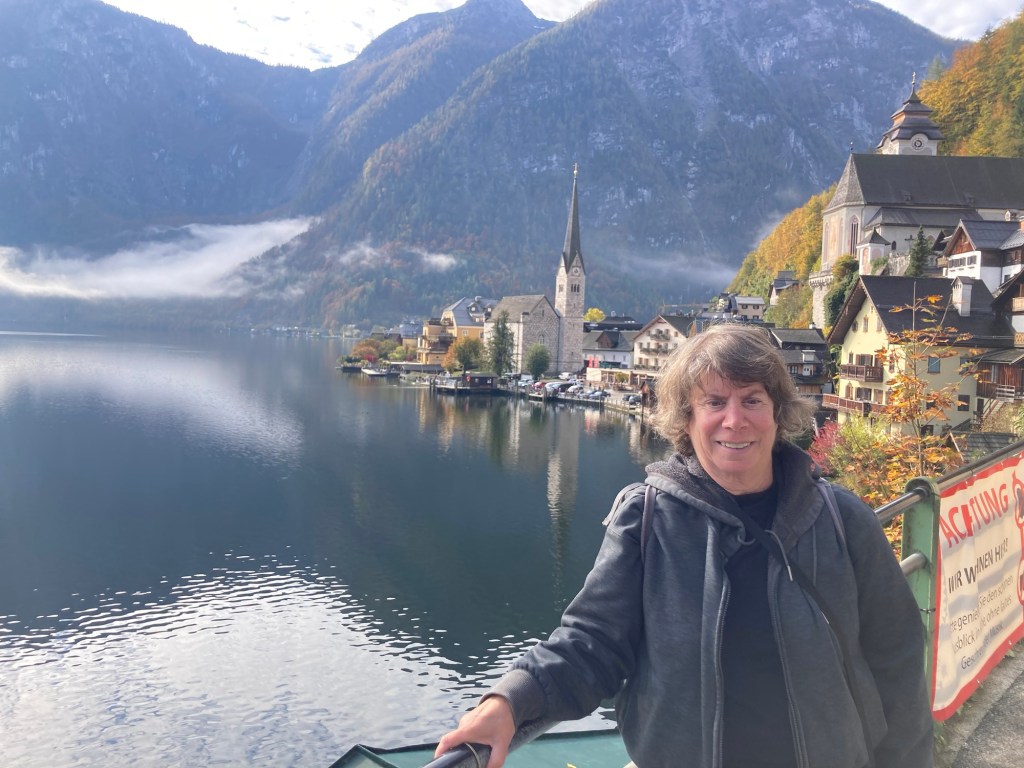
It is beautiful and not even the bus loads of Chinese tourists could dampen the view, although they did photobomb some of my pictures. They started coming here in droves after a Chinese developer built an exact replica of Haltstatt in China. They come to Austria to experience the real Hallstatt.

Of course, I couldn’t come to Salzburg without visiting this lovely city. I had been here in 1995 and done a Sound of Music tour, so I wanted to avoid references to it this time. This wasn’t easy. My walking tour guide pointed out the famous fountain, the cemetery, the singing hall and sang Do Re Mi. But we also passed by Mozart’s birthplace and the Mirabell Palace, a lavish home built by an Archbishop for his mistress and their 15 children. In the garden are 15 delightful, although probably not politically correct, Dwarf sculptures dating from the 16th century and the inspiration for gnomes everywhere:
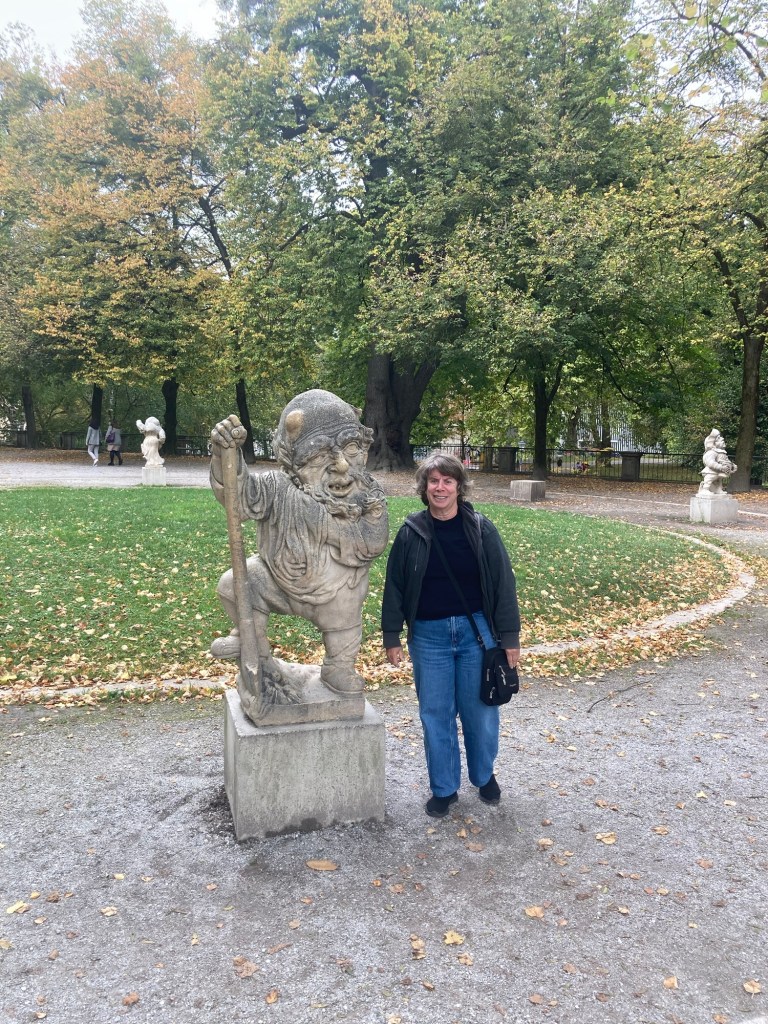
Me and a dwarf sculpture

I had purchased a ticket to Zürich, scheduled to arrive at 7:30, but the first train, to Innsbruck, was 40 minutes late ( no explanation as to why) and my connection to Sargans had left on time, so I had a few hours to kill in the Innsbruck train station.

Over a glass of wine, I started checking travel options for Omission #4, a journey to Liechtenstein. Apparently the best way was to take a train back to Sargans from Zurich and catch a bus. As I now wouldn’t be getting into Zürich until close to midnight, this plan wasn’t making sense. I booked a night in a Sargans hotel and gave up my non-refundable hotel night in Zurich.

The bus ride from Sargans to Vaduz, the capital of Liechtenstein, took about 20 minutes. I was thrilled as I could now count country 125 as visited. But I cannot say there was a lot to do there. Hiking and mountain climbing were out of the question as it was raining. I walked around the center of Vaduz, taking photos of the church, the Parliament, the castle where the Prince resides, the pedestrian walkway and some modern art structures. There wasn’t much else to do. Even the tourist train didn’t start until 1:00pm.
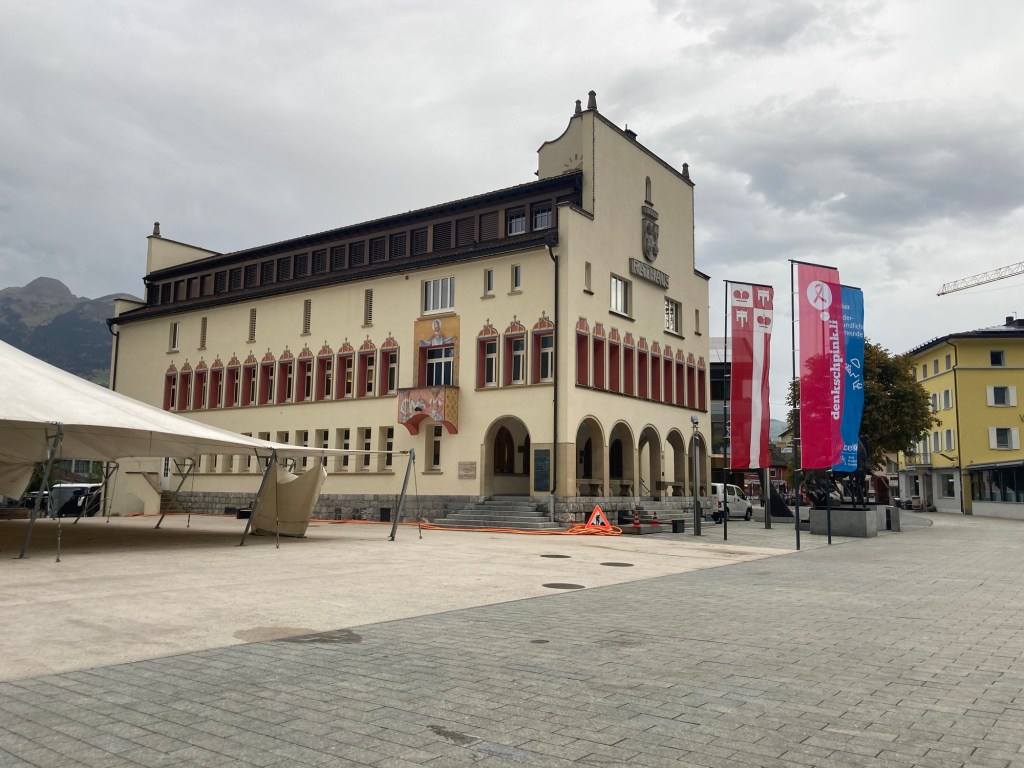
Liechtenstein Parliament

So I returned to Sargans where my on-time Swiss Railway train whisked me to Zürich.

Next up: Switzerland
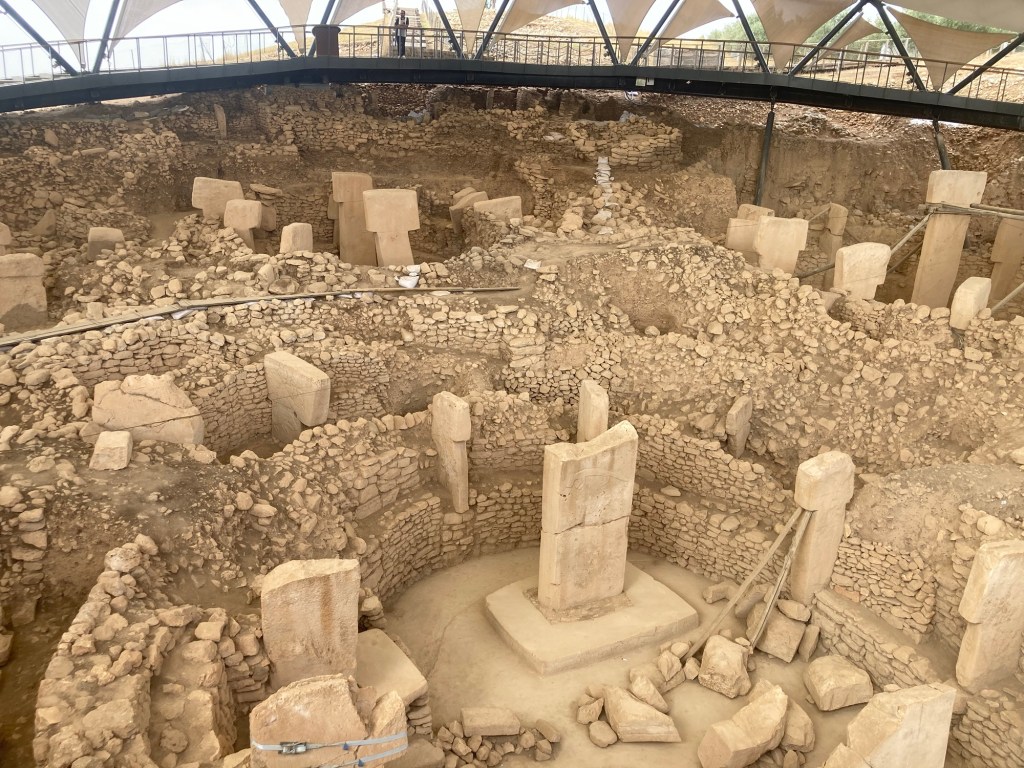
Proving Accepted Knowledge Wrong: Gobleki Tepe

One of the things I love about retirement travel is my ability to add detours to itineraries just to see something of interest. My foray into Turkey, and my flight to Sanliurfa to see Gobleki Tepe fit the bill.

Let me begin by explaining the allure of Gobleki Tepe. For centuries, historians, archeologists, anthropologists, just about everyone, concluded that civilization (another controversial topic but let’s call it large settlements, stratification of work and classes and some sort of communal administration) only began after Homo sapiens discovered agriculture, settled and had food security so people could devote their time to other matters like religion, trade and inventing useful stuff like pottery. Timing for this agricultural revolution depended on the region but the earliest is considered about 8,500 BC.

Prior to this, the academics said, Homo sapiens were hunter gatherers, living nomadic lifestyles following the herds. Settlements were small, maybe 50 people, and might be huts or lean-tos, very primitive with no evidence of communal buildings. If there was a religion, it focused on animism, a connection with the natural world.

These “truths” were taught in schools; , it was what I learned in my history classes in university in the late 1970’s. They were logical, nothing existed to the contrary, so they must be correct.

And then, in 1994, Gobleki Tepe was discovered. Translated from Turkish as “pot-bellied mound”, the hill was known for years to contain ruins but assumed to be a Byzantine cemetery. A German archaeologist named Klaus Schmidt decided to explore the hill a little deeper and, to the world’s astonishment, unearthed giant monolithic structures that date to 10,000 -8,500 BC, at least 4,000 years before humans were supposed to be able to construct anything of this magnitude.

Not only that, but these builders were hunter gatherers who managed to organize hundreds if not thousands of people to quarry the limestone, move monoliths over 6 meters high and weighing 4-6 tons from nearby quarries without benefit of wheels, then create over 20 circular structures, ornately decorated, painted and perhaps roofed.

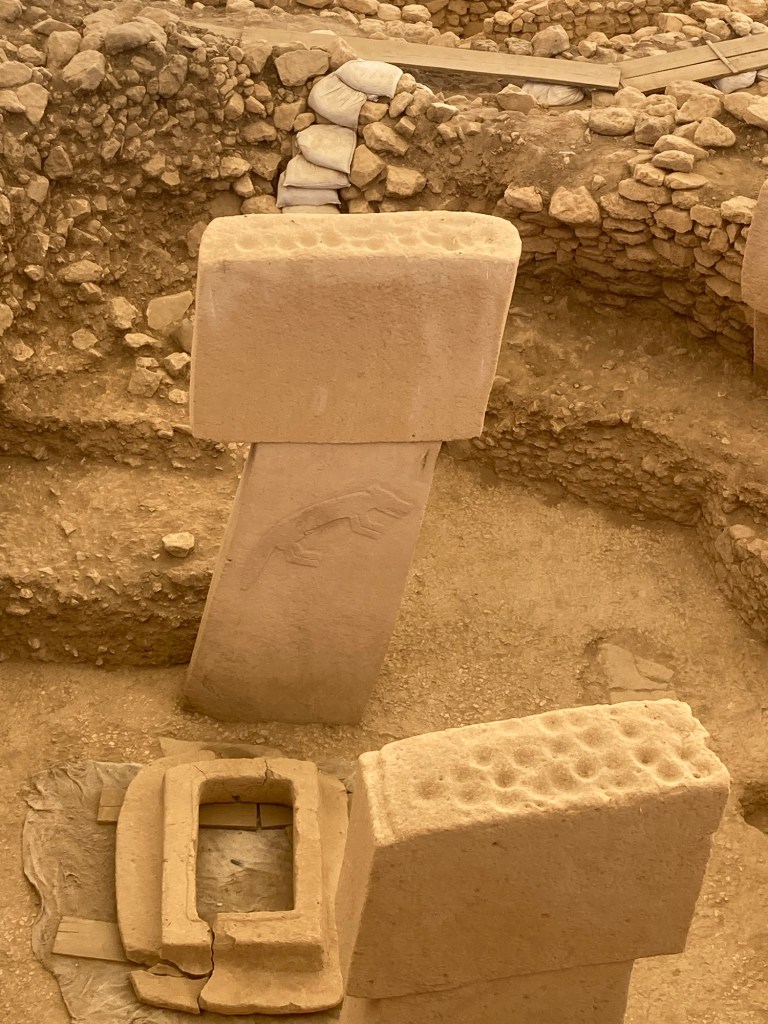
Gobleki Tepe Structure A

History had to be reconsidered in light of this discovery. Hunter-gatherers were capable of coming together and organizing large projects, capable of producing grand structures and for 1500 years, came in large numbers to Gobleki Tepe to gather, contrary to all accepted knowledge.

There are doubters. The most famous, a YouTuber named Graham Hancock, proposes that a long distant civilization, maybe Atlantis, survived the last ice age and either built Gobleki Tepe themselves or instructed the hunter- gatherers how to build the site. Others believe aliens came and built it. No one is really sure who built it but I don’t subscribe to the alien theory.

Nor is it known why. Some of the giant monoliths line up with the night stars, so perhaps it was an observatory of sorts. Many of the sculptures depict animals, so maybe it was a place of animism worship. Many of the human sculptures have outsized phallic elements, so it could have been a place where marriages were made. No one knows.

Carved pillar

After Gobleki Tepe was excavated, archeologists discovered numerous more Palaeolithic settlements nearby, some with similar monolithic structures, some with residential buildings, some 1,000 years older. History must be rewritten again.

So I came to Gobleki Tepe to wonder what other “truths” are perhaps wrong. Maybe humans could fly 50,000 years ago. Maybe the Chinese discovered North America before the Vikings and Columbus. Maybe….well I could go on but you get the idea.

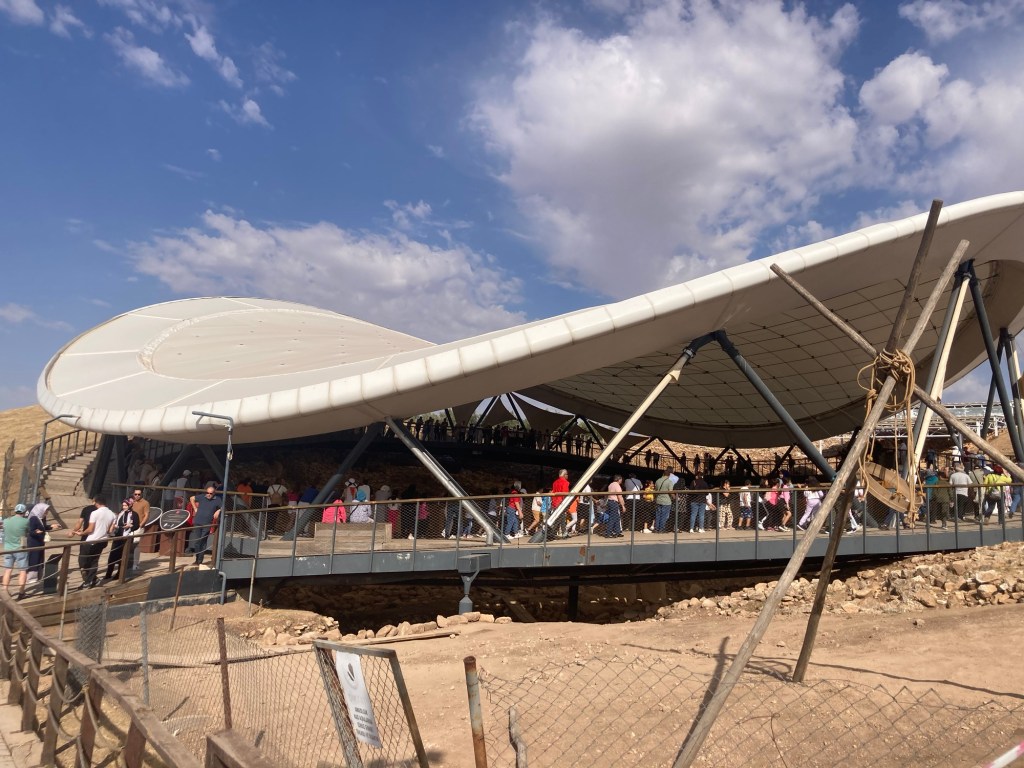
Sadly, my story of Gobleki Tepi ends on a discouraging note. Only 5% of the 120 acre site has been excavated. Underground radar has established at least 20 more megalithic circles still buried. But in 2020, the Turkish government turned over management of the site to a private group, who have prioritized profits over knowledge. To make the site more accessible to tourists, asphalt roads were constructed and a wooden walkway erected with metal poles indiscriminately stuck into the ground for support without regard to the damage caused to the structures below.

Tourists at Gobleki Tepe

While I appreciate the ease of traversing the site the walkways and roads bring, I deplore that such conveniences for tourists are being done at the expense of destroying Gobleki Tepe and limiting the archeologists’ work. This place is an important part of human history, a rare treasure, not a paleolithic Disneyland.

Next: Balkan trains

Moldova: Wine, warm and a little weird

If you’re like most people, your first question is “ Where is Moldova”? It’s in Europe, a small country nestled between Romania and The Ukraine. The next question is “Why Moldova?” The short answer is I am trying to visit all the countries in Europe, and aside from Belarus and Andorra, this is one of the few I haven’t been to.

But it has other virtues. It’s the least visited country in Europe, with only 10,000 visitors last year, so crowds would not be a problem. It is also renowned for its wine, with more vineyards per capita than any other country. During the Soviet times, when Moldova was a Soviet republic, it and Georgia supplied 100% of the Soviet Union’s wine. It is also warm- after enduring rain, winds and highs of 10 during my 3 weeks in the UK -the sunshine and 25 degree temperatures were welcome. And it is weird- I’ll try and explain Transnistria; the country that doesn’t exist- a little later.

I started with a private day tour of the monasteries and the wineries, conducted by Marcel who, when he wasn’t acting as a tour guide, was a driver for the US embassy. That work had picked up hugely since the Russian invasion of Ukraine as the Americans had moved many of their Ukrainian personnel to Moldova’s capital, Chisinau, for obvious reasons.

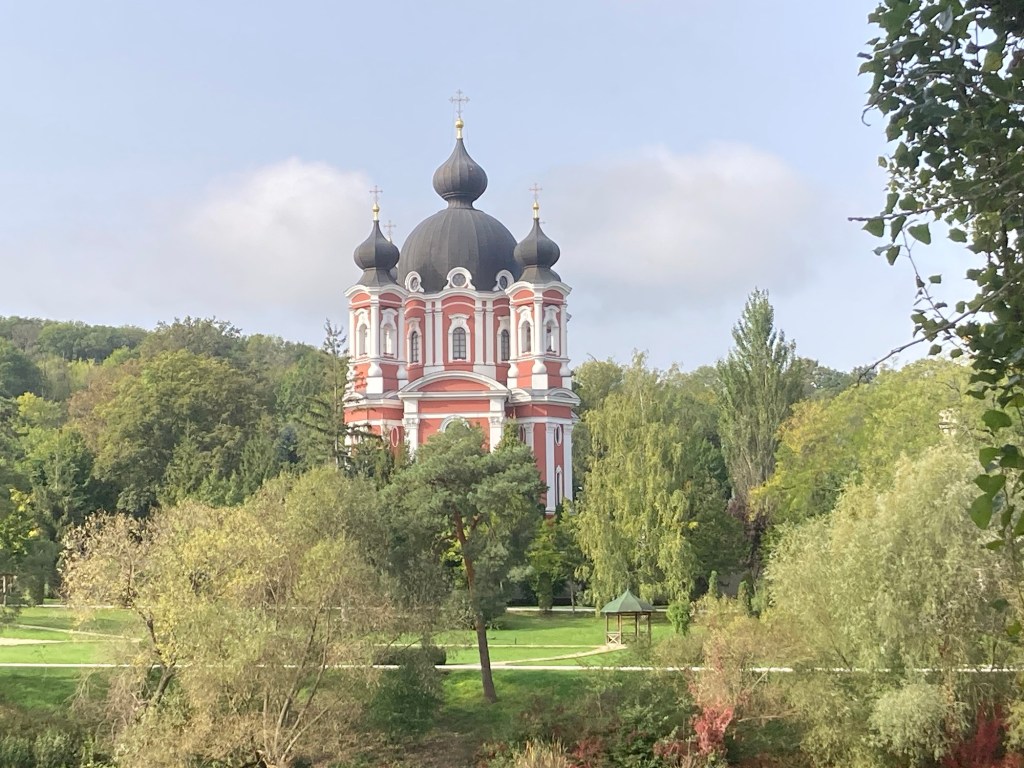
We started with one of three monasteries we would visit, Curchi, considered the most beautiful;

Pretty and inside, filled with icons and gold, but since churches and monasteries had been banned in Soviet times it was fairly new. This one has been used as a psychiatric hospital by the Soviets.

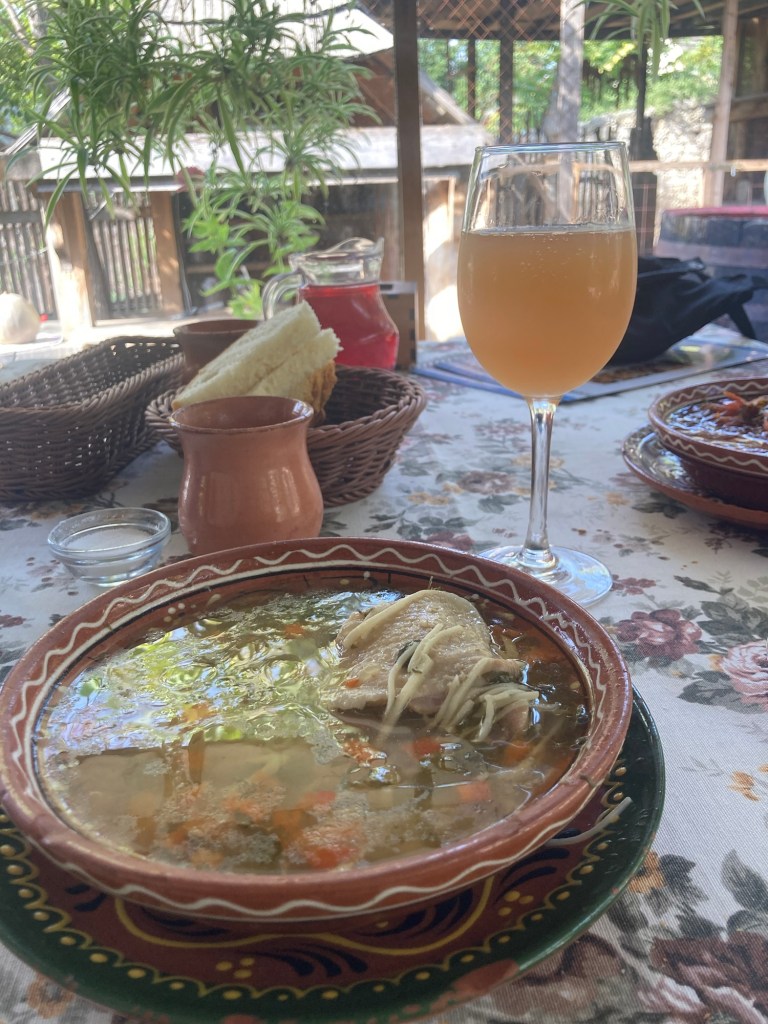
Lunch was in a typical rural community with traditional dishes like Zeama( soup) and placinta, a pastry filled with cheese, cabbage, potatoes or apples, all accompanied by wine.

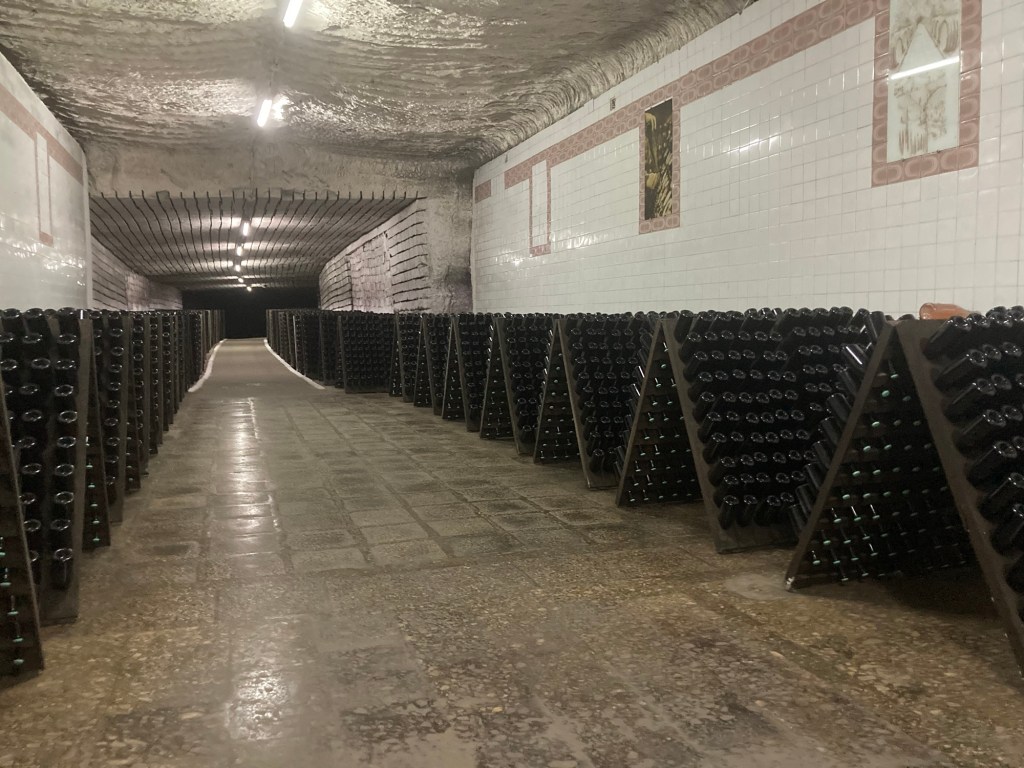
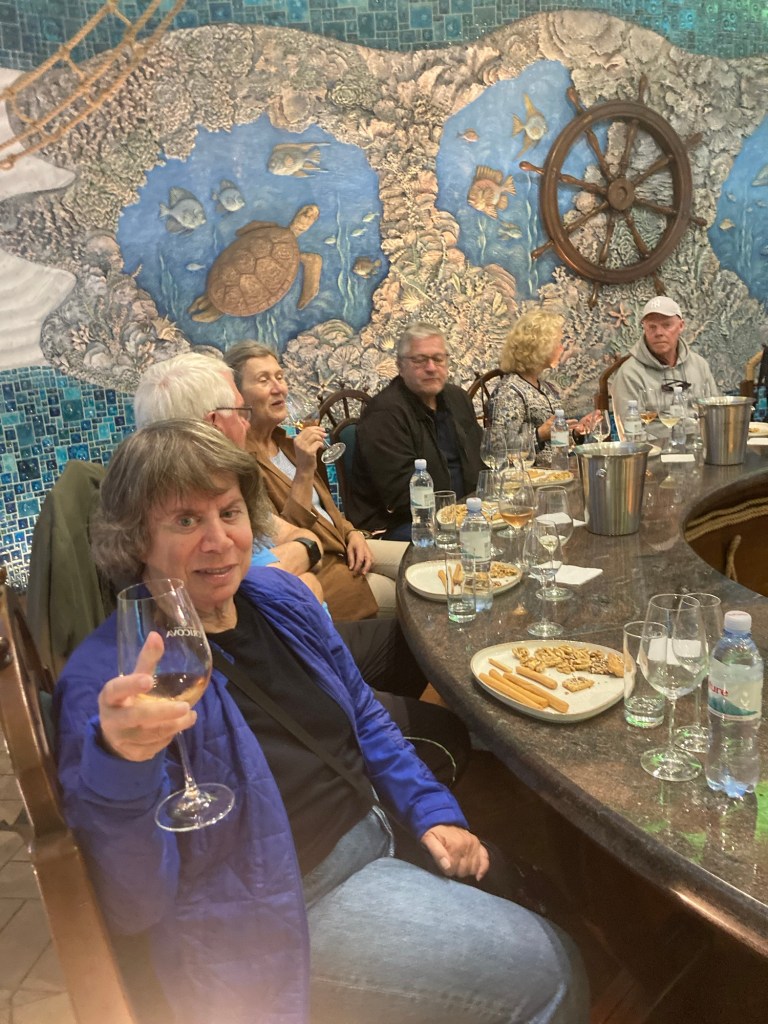
The highlight was a tour and tasting at the country’s second largest winery, Cricova. Over 120 kilometres of limestone tunnels store in excess of 12 million litres of wine. Me and a group of 13 Norwegian tourists were driven through the tunnels, stopping at bottle storage locations, a small museum and the private cellars where celebrities kept their collections until arriving at one of 3 wine tasting rooms

We sampled 4 wines, one each of red, rose, white and sparkling, which is sold as Crosseco, a nod to Italy’s Prosecco.

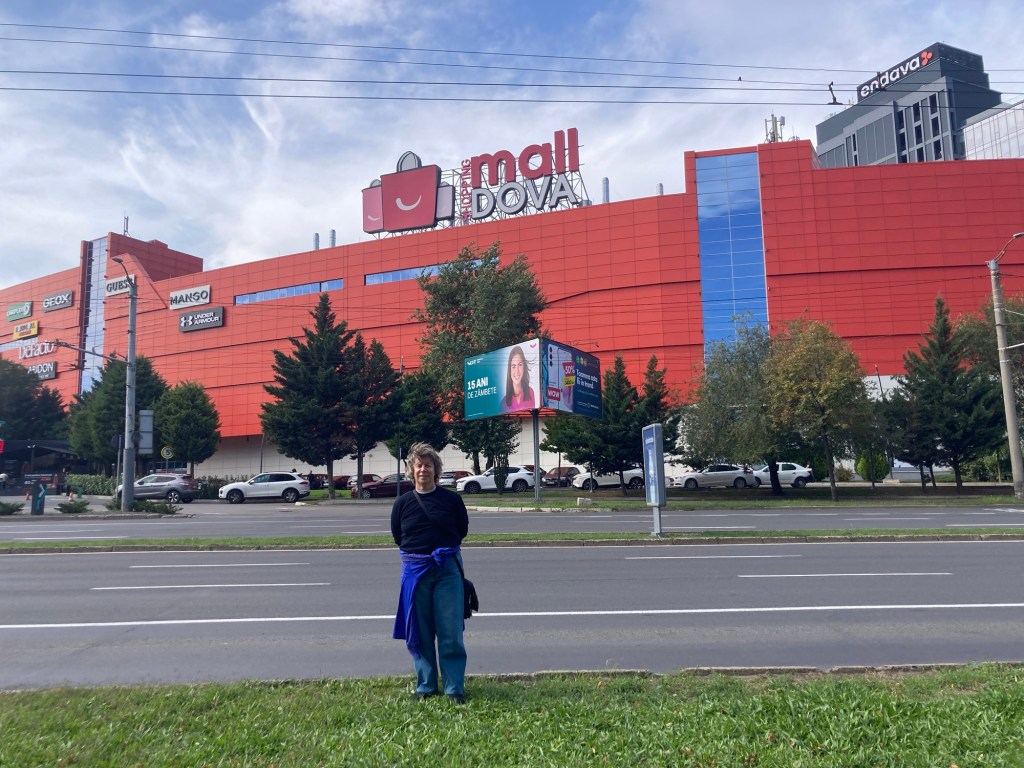
Next up was a tour of Chisinau starting with a picture of the iconic “MallDova”

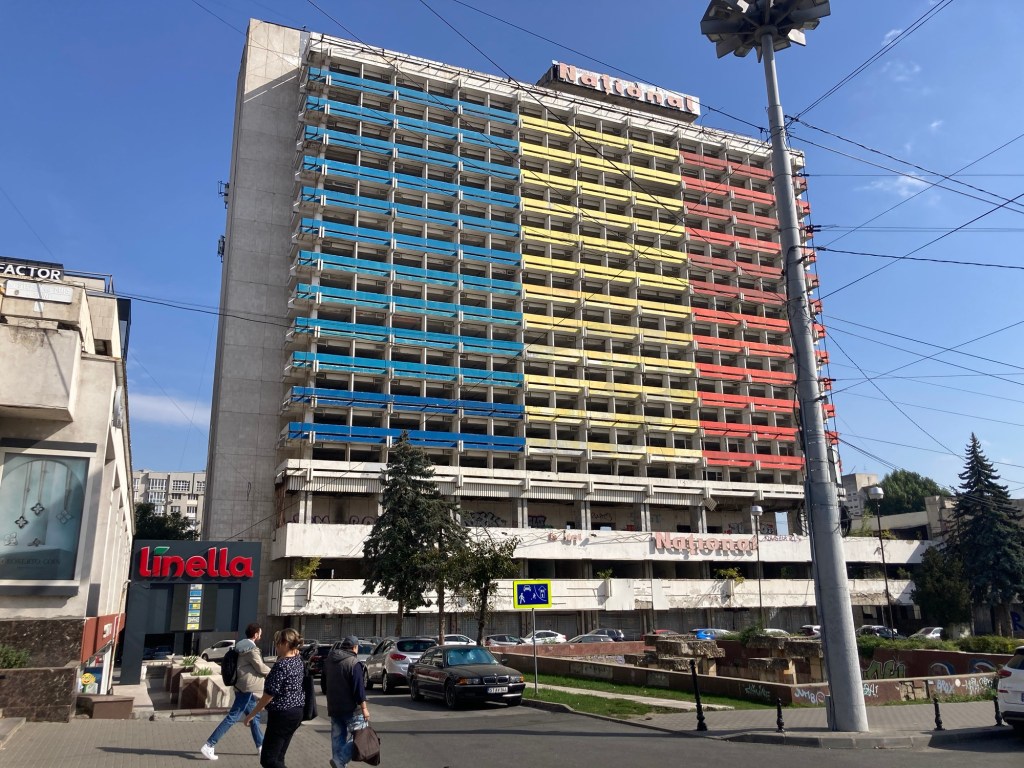
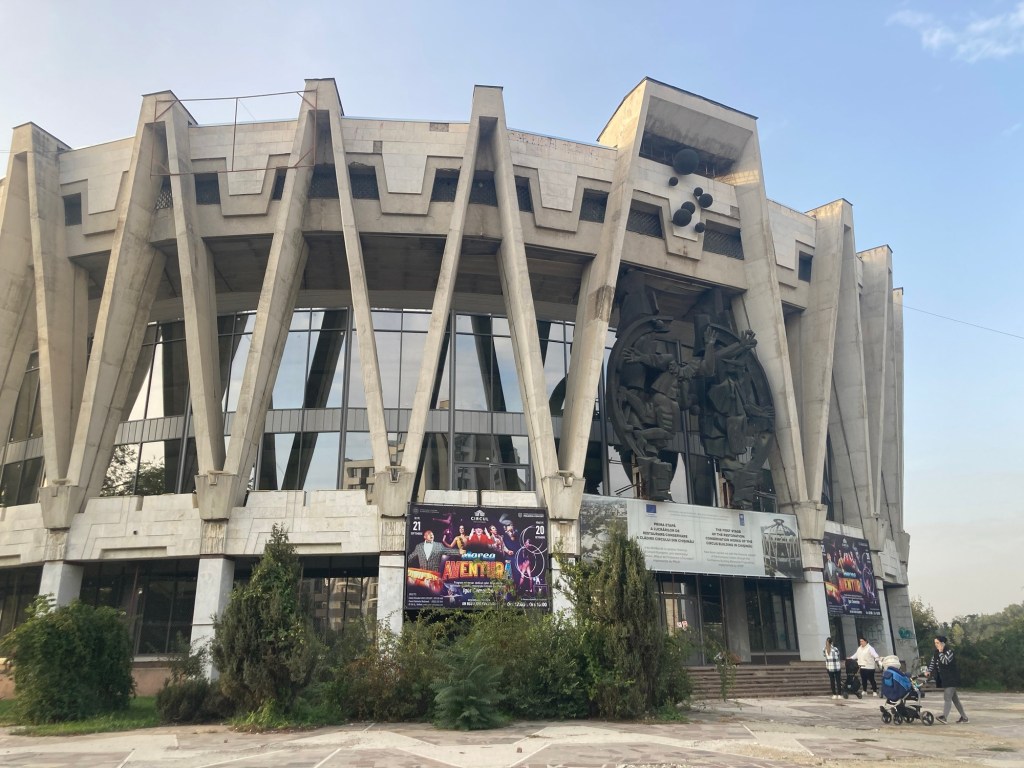
Chisinau has a mix of Soviet architecture and more modern buildings but my favourites were two abandoned buildings, one the former National Hotel, a grand Soviet monstrosity and the Circus building, where the circuses performed:

The former national hotel
The Circus Building

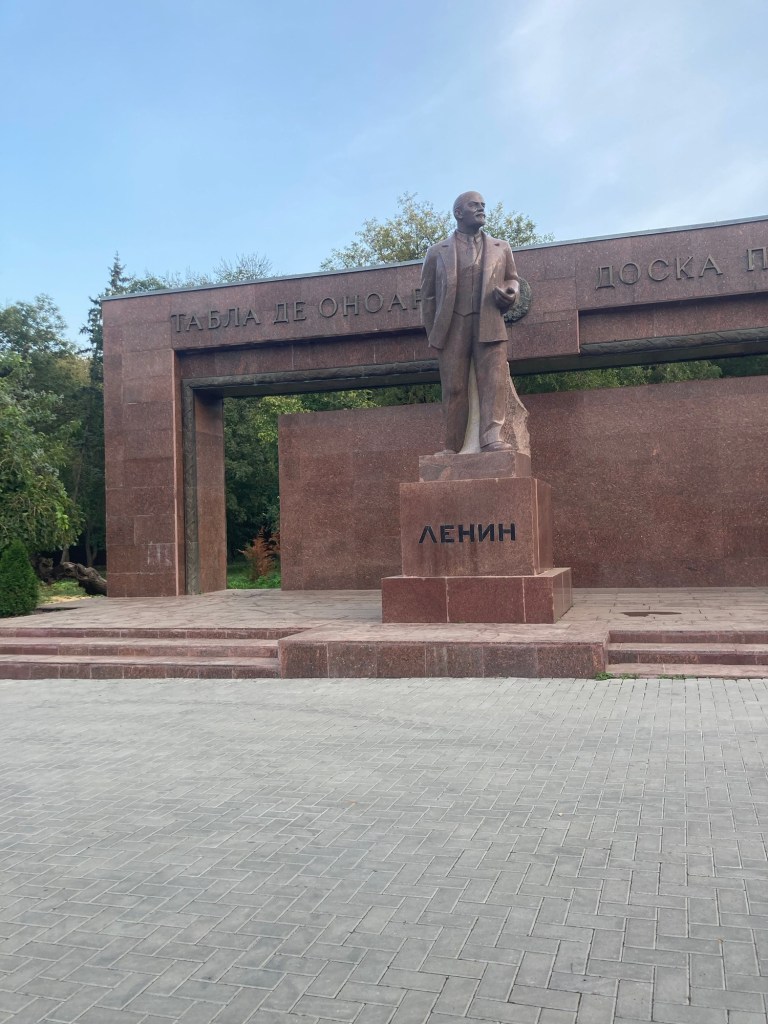
The inevitable statues of Lenin, Marx and Engels no longer were displayed prominently, but they weren’t too hard to find:

Lenin

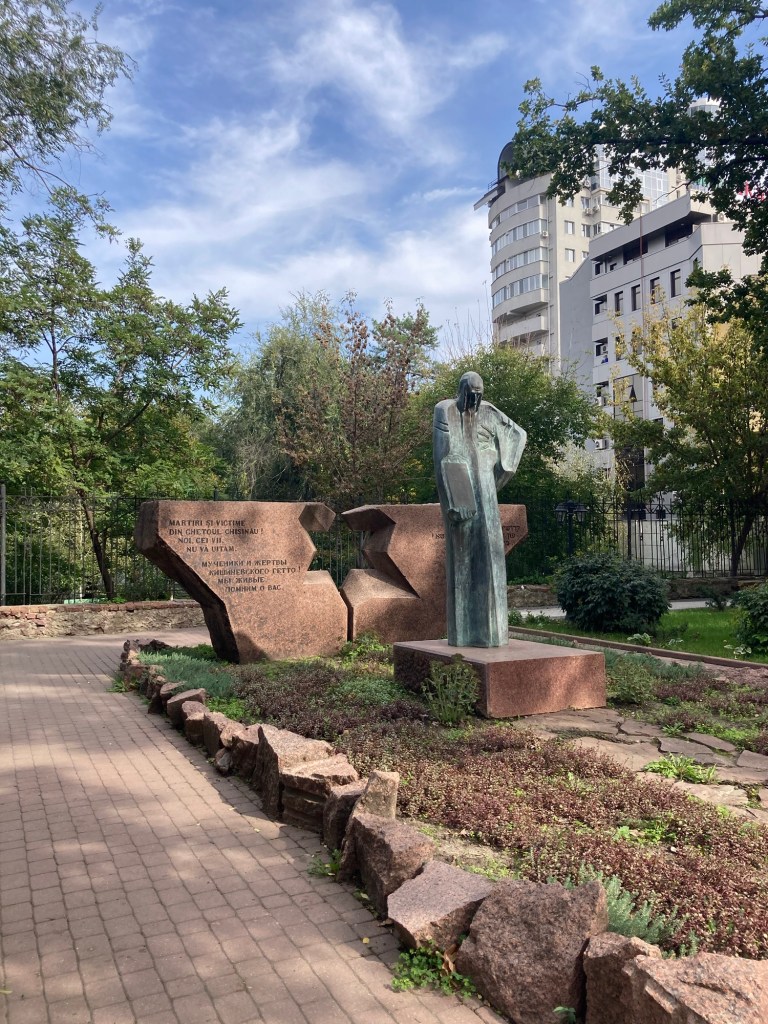
Moldova’s population had, prior to WW2, been 50% Jewish, but occupation by the brutal Romanian nazis and pograms during the Soviet period which followed decimated them. There are abandoned synagogues, numerous cemeteries and a memorial statue where the gate to the Jewish ghetto once stood in Chisinau:

Memorial to the Jewish population

And now for the weird. I’ll spare you a long history of the area, but it’s fair to say since the 1400’s, the current area of Moldova has been fought and ruled over at various times by Romania, the Ottomans and Russia. After WW2, it became a republic of the USSR, with a Romanian speaking section west of the Dneipster river and a mostly Russian speaking population to the east in an area known as Transnistria. In 1990, when everyone was declaring their independence from Russia, the whole of the republic Moldova also did.

Moldova, being a small country, seriously considered joining Romania. It also enacted a law making Romanian the official language. Neither of these actions was appealing to the Russian speaking populace of Transnistria so, in the spirit of the time, it declared itself independent from Moldova. Moldova did not like this and sent in troops.

A civil war ensued and 2,000 were killed on the Moldovan side. Russia stepped in and enforced a peace. Russian peacekeepers are still in Transnistria today and an odd state of affairs remain, with Transnistria considering itself an independent country, which no other country recognizes and Moldova, considering it part of Moldova.

In support of its independence, Transnistria has its own money, its own government, its own law courts, its own military etc. To enter “the country” one has to cross the border, go through passport control and get a visa. Because of its status, it is economically shunned by all countries except Russia. There’s no McDonalds, credit cards aren’t accepted and Moldovan SIM cards don’t work.

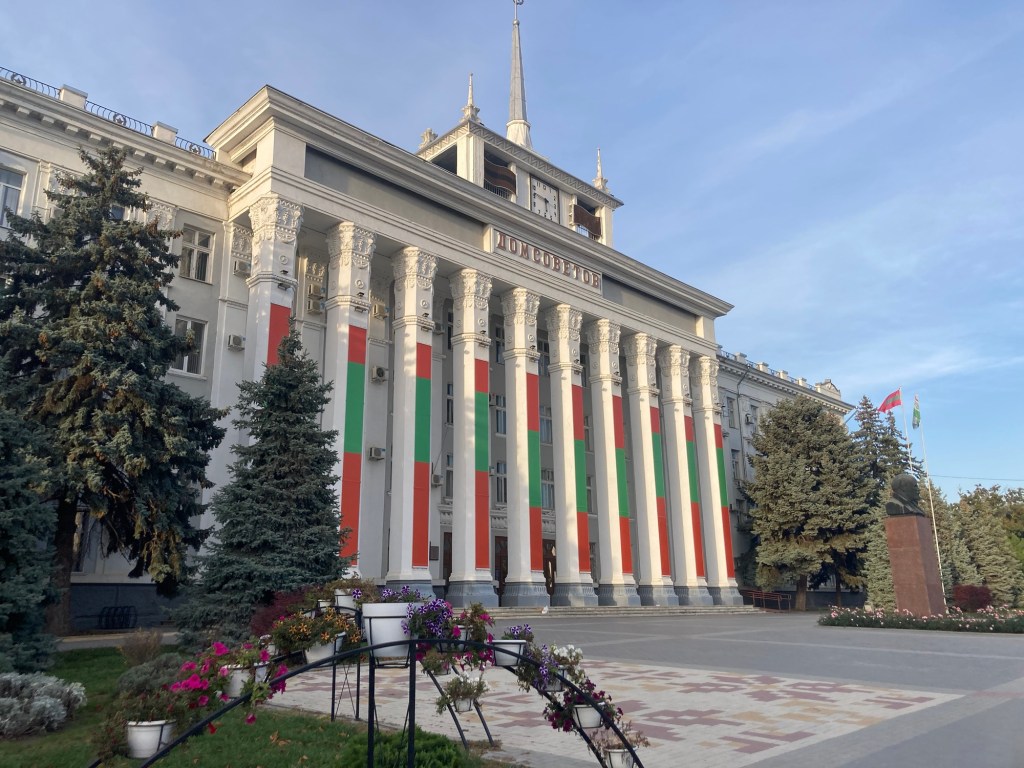
We visited two cities here; Bendery and Tiraspol. Both, in some ways, are throwbacks to the Soviet era, with the city hall in Tiraspol the epitome of Soviet brutalist architecture:

Reminders of Transnistria’s closeness to Russia and its Soviet past were everywhere, from its excessive (in my view) adoration or Russian generals, to statues of Lenin to homage to the Motherland:

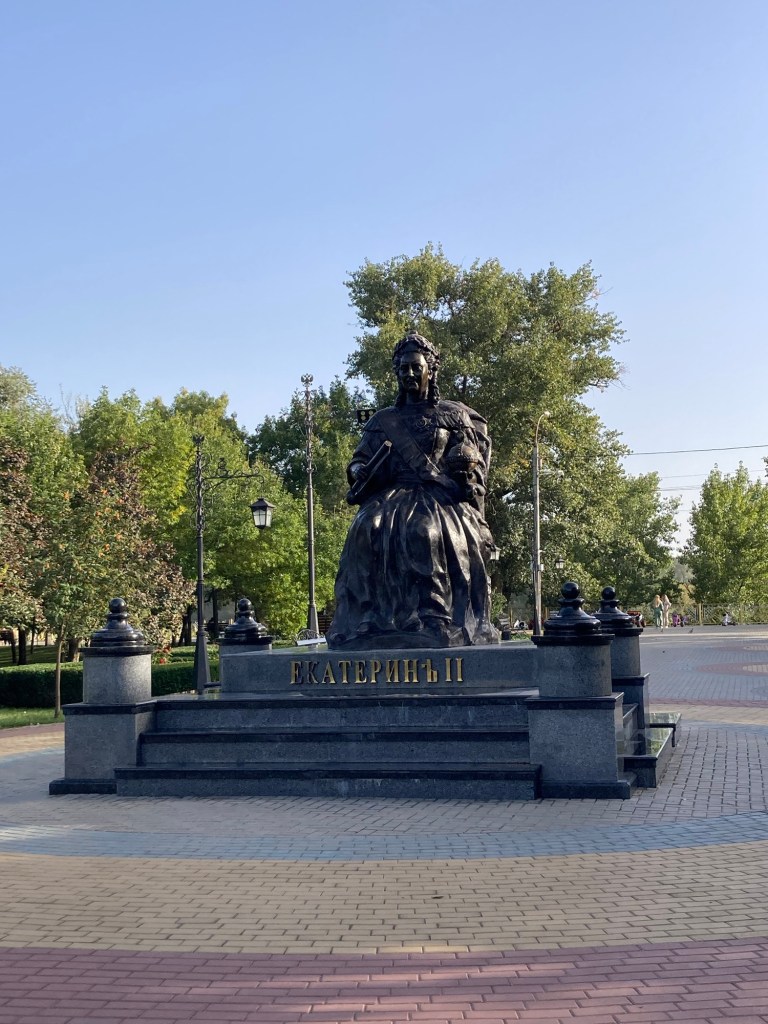
Statue of Catherine the Great

But in the end, its people weren’t that weird. The markets were full of the same food we’d see back home, except everything was organic and no citrus fruits were available. People drove the same cars , but for a Volga, kids in uniform raced home from school and young girls sporting obviously fake fingernails chatted on cell phones.

And so ended my days in Moldova. Pretty, a little different, glad I went but not sure I’d race back.

Next up…the place where everybody got it all wrong..,..,

Castles, Cathedrals and a lot of Trains: The UK

I’ve been to the UK countless times but mostly stay in London or the south. Realizing there were large swaths of the United Kingdom I had never visited, I decided to remedy this deficiency with a train journey through some of its iconic places.

I chose the stops mostly based on their proximity to famous Cathedrals or Castles, so my itinerary ended up being York, Lincoln, Warwick, Llandundo, Cardiff and Bath.

Using trains seemed to be the most practical means of transport and the British Rail site was easy enough to navigate to purchase a pass and reserve seats. Fortunately, of the 14 trains I took, only one ran an hour late and posed no problem. But what was annoying was my stupid decision to travel mostly on the weekends, thinking the trains would be less busy. How wrong I was. On the weekend, the football fans travel to their games, beers in hand at 9:00 am, drinking and singing football songs and crowding the trains. I spent a few uncomfortable rides squished in the door compartment listening to some awful singing.

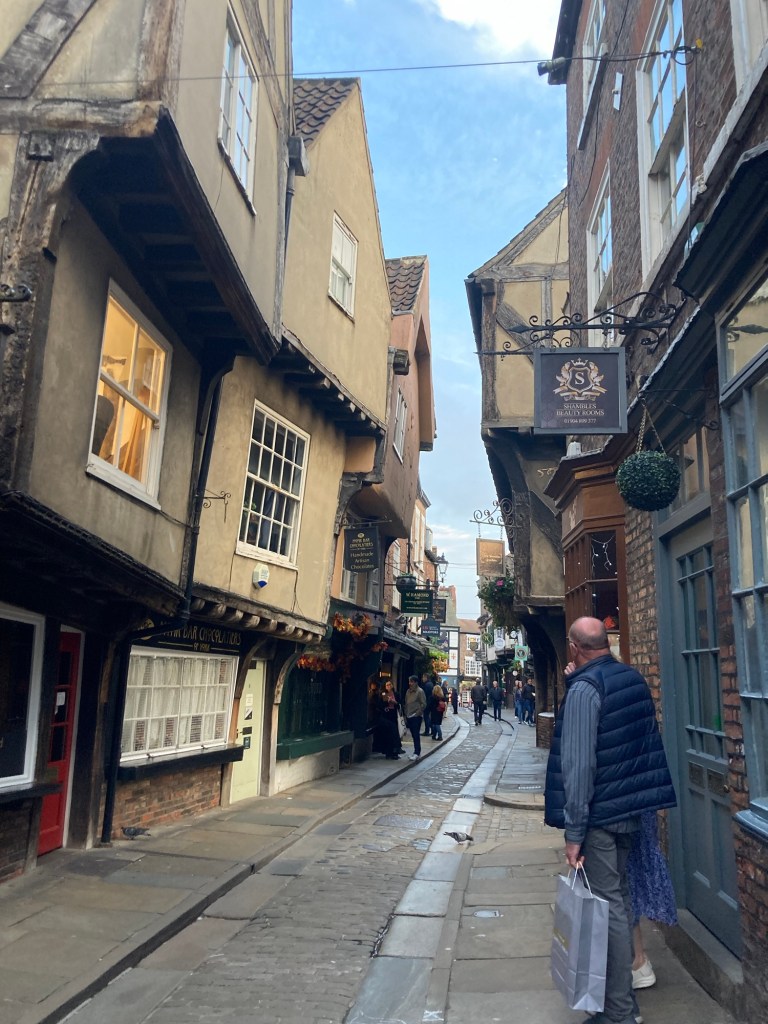
In York, I started by walking the remains sections of the Roman Walls and visiting its massive Cathedral for eveningsong prayers. The Cathedral was originally on the site of a Roman Fort, where Constantine the Great was crowned emperor, then a Norman Church before getting its current form beginning in the 13th century. Nearby are the Shambles, a medieval street which was the inspiration for Daigon Alley in the Harry Potter series:

The Shambled

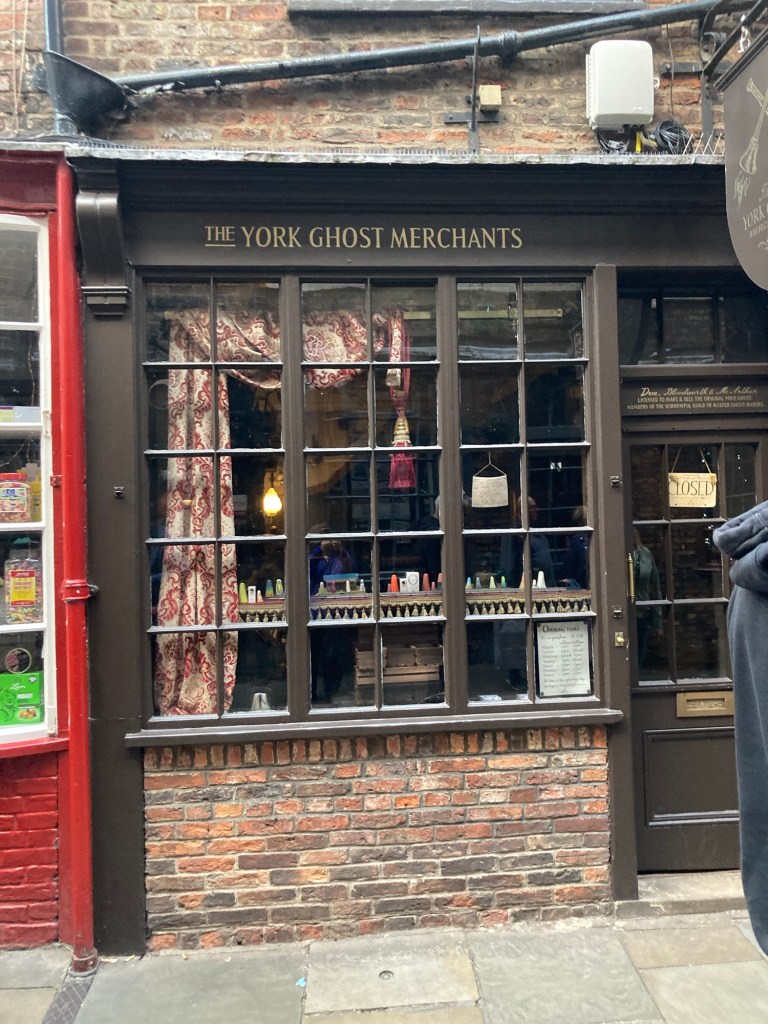
A number of Harry Potter shops line The Shambles, but the most popular one is a store selling little ghost figurines:

The lines to get in can be up to 3 hours long. On-line shopping is an option, but this apparently defeats the purpose, since the ghost choses its owner, which cannot be done on-line.

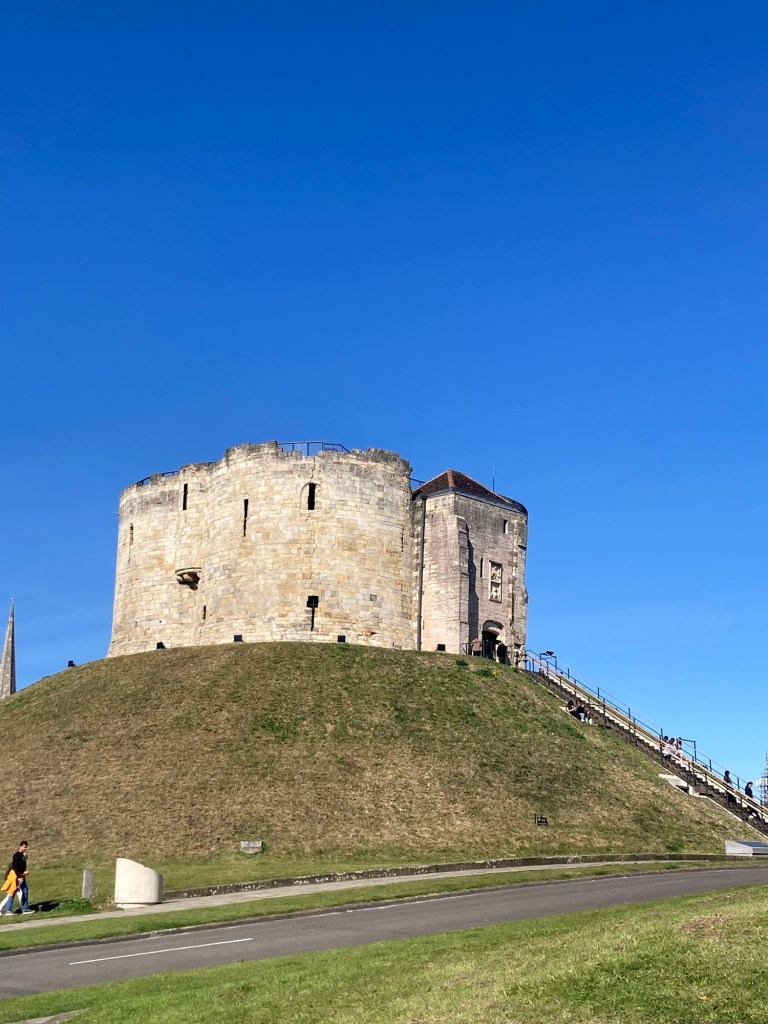
The only remnant of York’s Castle is Clifford’s Tower, a 13th century stone building;

Clifford’s Tower

The original wood castle was burned down in 1190, in one of York’s darker periods, when the city’s Jews sought refuge there from a mob. The Jews had originally come to York with William the Conqueror who used them to raise funds; Christians were prohibited from lending money. The Jews had later lent funds to the crusaders, but whether it was anti-Christian sentiment or a means of eliminating their debt, the York mobs set the castle on fire and killed all the Jews within.

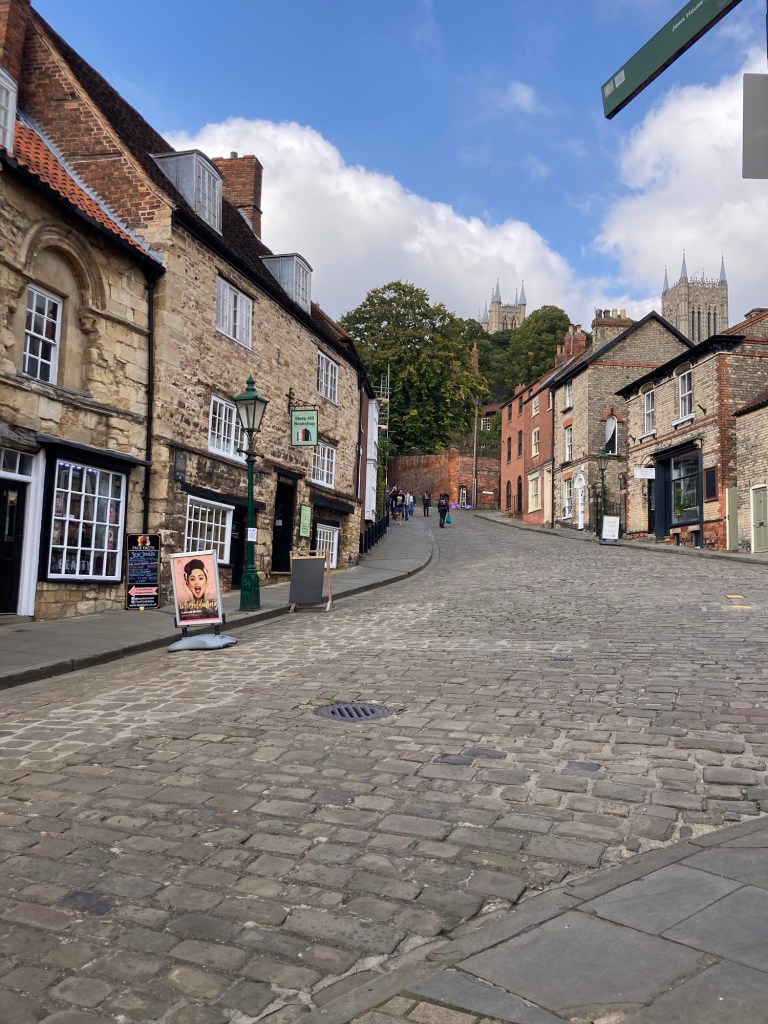
Lincoln had no such ugly history, but it too has a marvellous street lined with Norman and Tudor buildings called Steep street because it is very steep:

Steep Street

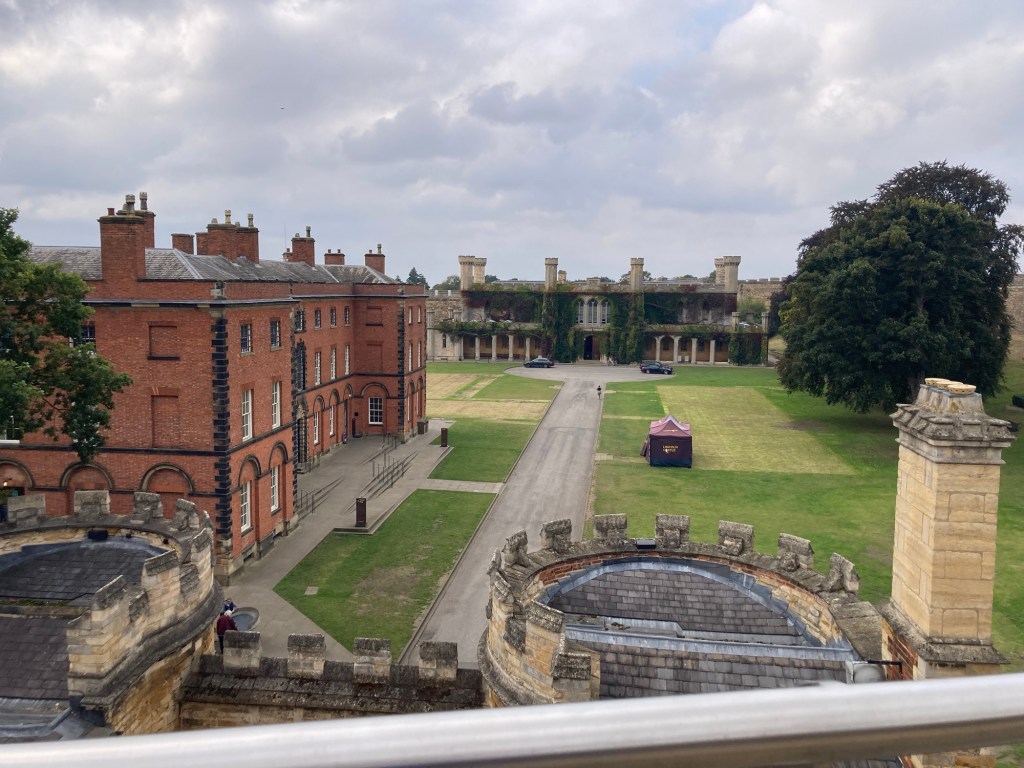
There is a mammoth Cathedral and a Castle which retains its original walls. Part of the original 13th century keep remains, but since the 15th century, the grounds have served as a prison. Numerous and public hangings took place here and the building served as the filming location for Mr. Bates’ prison in Downton Abbey.

York Castle with prison inside and the Magna Carta

Deep in the vaults of the prison is one of four original copies of the Magna Carta. Photos of it are not allowed but it was good to see. Two of the other originals are in the British Library and the third in Salisbury Cathedral.

My next stop was Warwick, to see its magnificent medieval castle. Originally a wooden fort constructed by the Normans ( this is getting slightly repetitive), it was rebuilt in stone in the 12th century, played a large part in the Civil War and was turned into a country house in the 17th century.

Warwick Castle

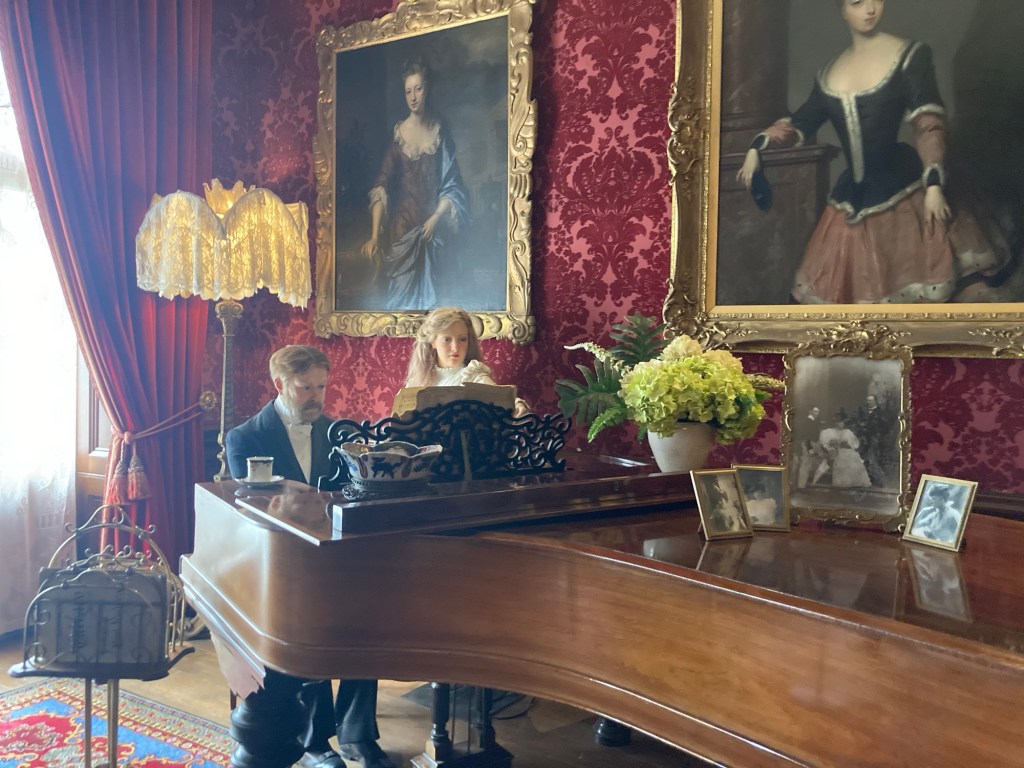
Sadly for me, it was purchased by an entertainment group some decades ago and turned into a playground, with the Grand Hall decked out for an upcoming wedding ceremony and the grounds filled with little boys brandishing toy swords and girls running about in princess dresses. The “ attractions” were mazes and archery displays for the kids with very little for adults. Even the interiors were done up with wax mannequins representing 1920’s lifestyles:

Think Windsor Castle goes to Disneyland. Very disappointing!

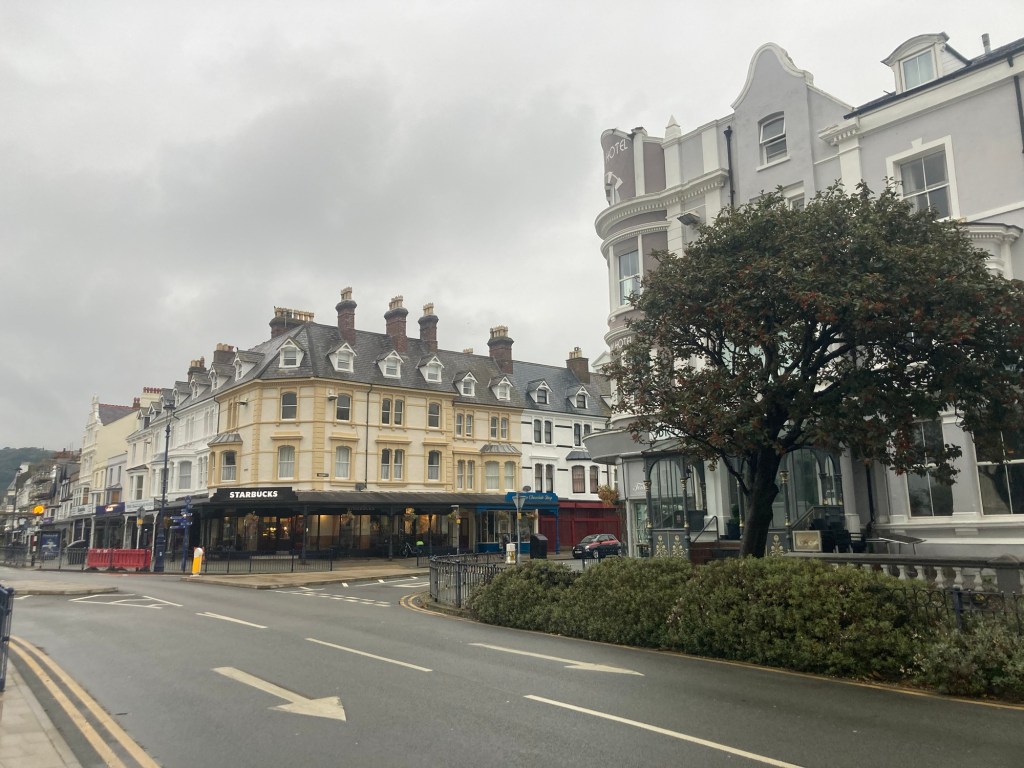
I embarked on a 4 train, 3 transfer trip to Llandundo ( pronounced Clindinda) in Northern Wales. A cosy seaside town, it received large sums of public funds in the 1870’s to develop itself as a beachside resort, which it did very nicely with lots of well preserved Victorian hotels:

Llandundo

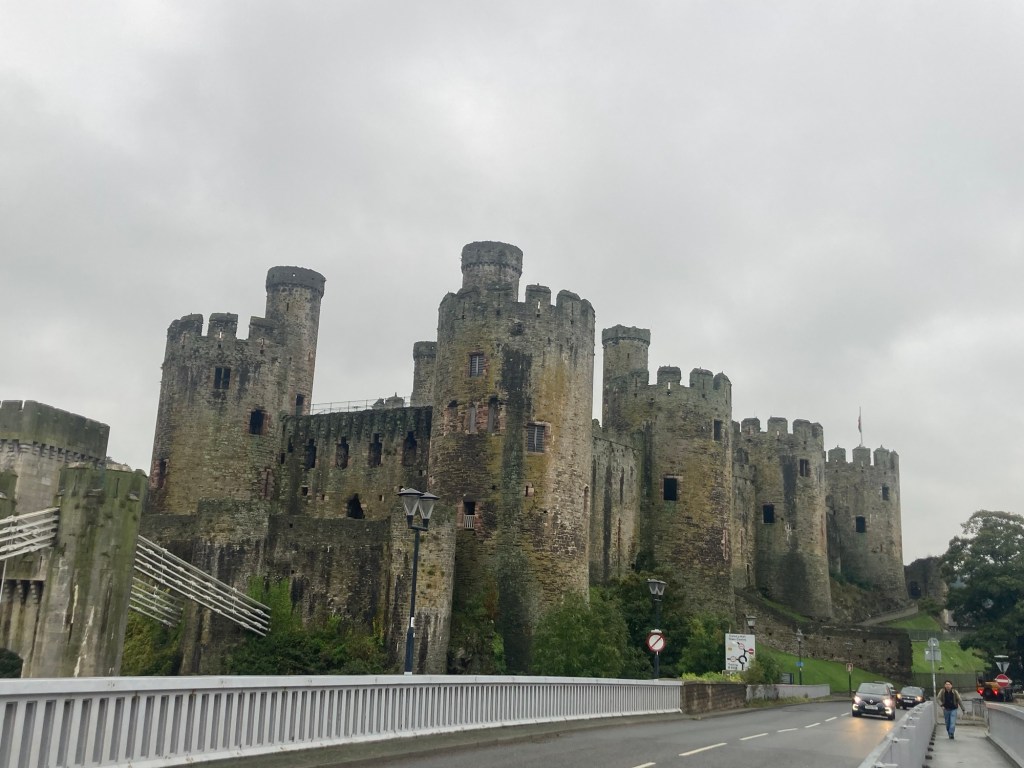
I had signed up for a bus tour of Snowdonia National Park and 3 Castles. Our first Castle was Conwy Castle, in Conwy:

Conwy Castle

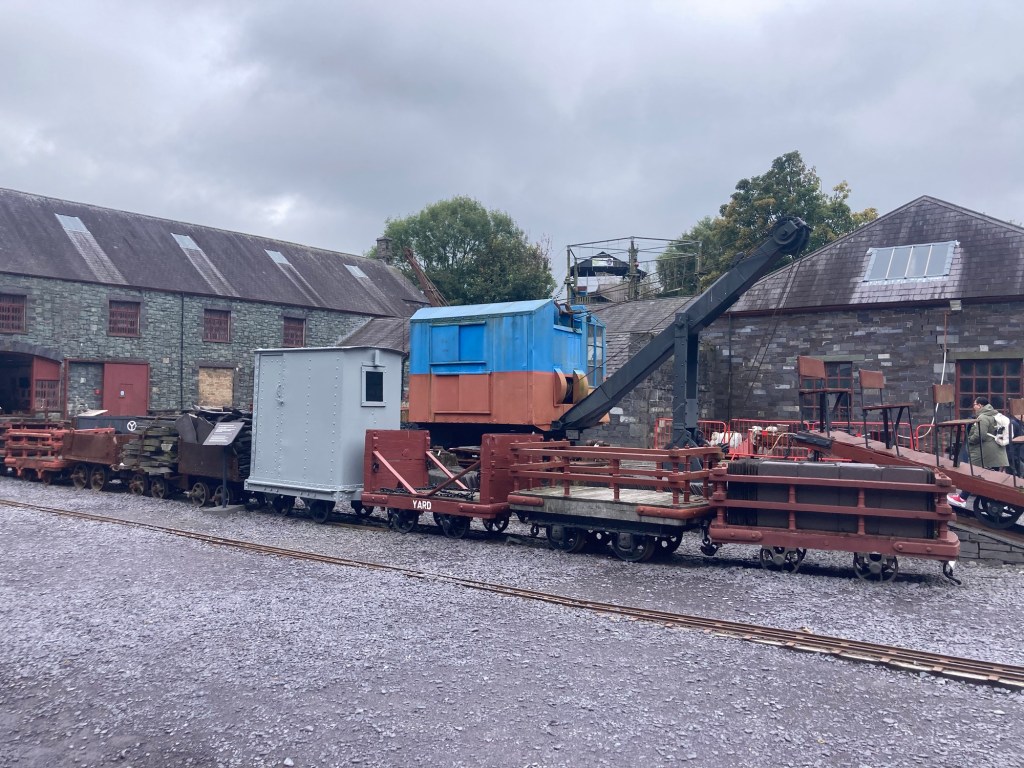
We drove through Snowdonia Park, where our view of Wales’ tallest mountain, Mount Snowdon, was obscured by the rain clouds. Lunch was at The National Slate Museum, on the premises of a former slate foundry.

The National Slate Museum

Much of the equipment was on show, along with a display of slate splitting. While slate ( along with coal, tin and copper) had made Wales rich in the 19th and 20th centuries, most of the mines have long since closed.

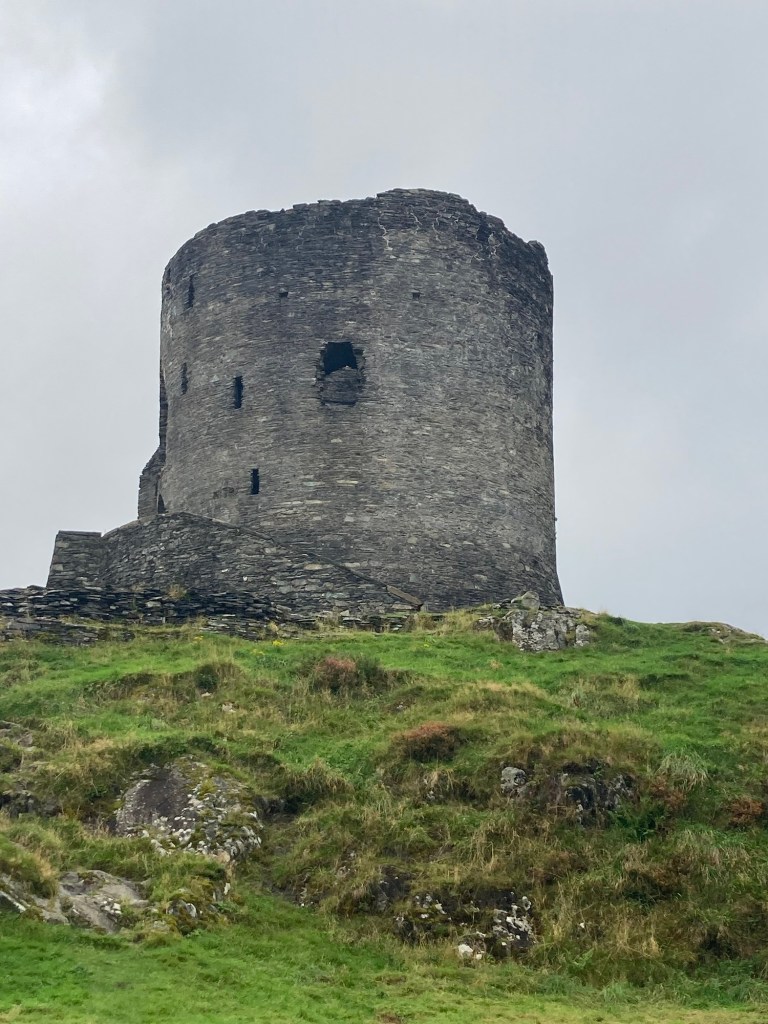
Castle 2 was Dilbadarn, built by a Welsh prince, and not so impressive:

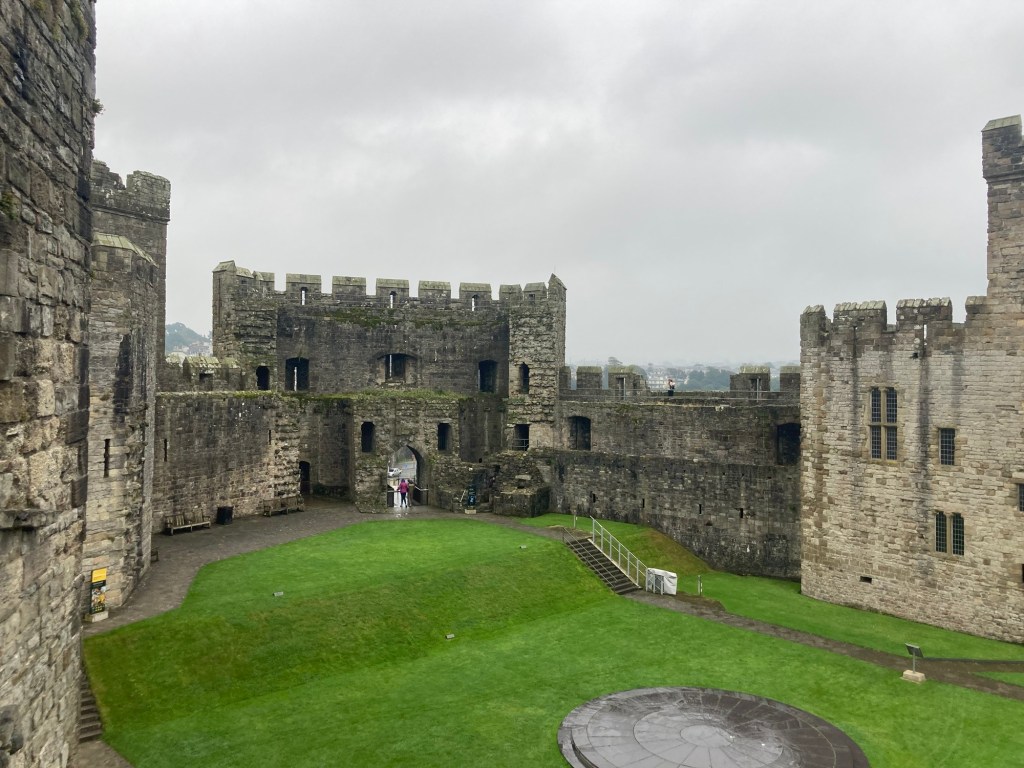
The last castle, Caernorfarn, is where the Prince of Wales is crowned. The ceremony arose after Edward 1 of England captured the Welsh in the 13th century but declared he would make the Prince of Wales someone born in Wales who didn’t speak English. When his son was born at Caernarfarn Castle a few days later, he made him Prince of Wales.

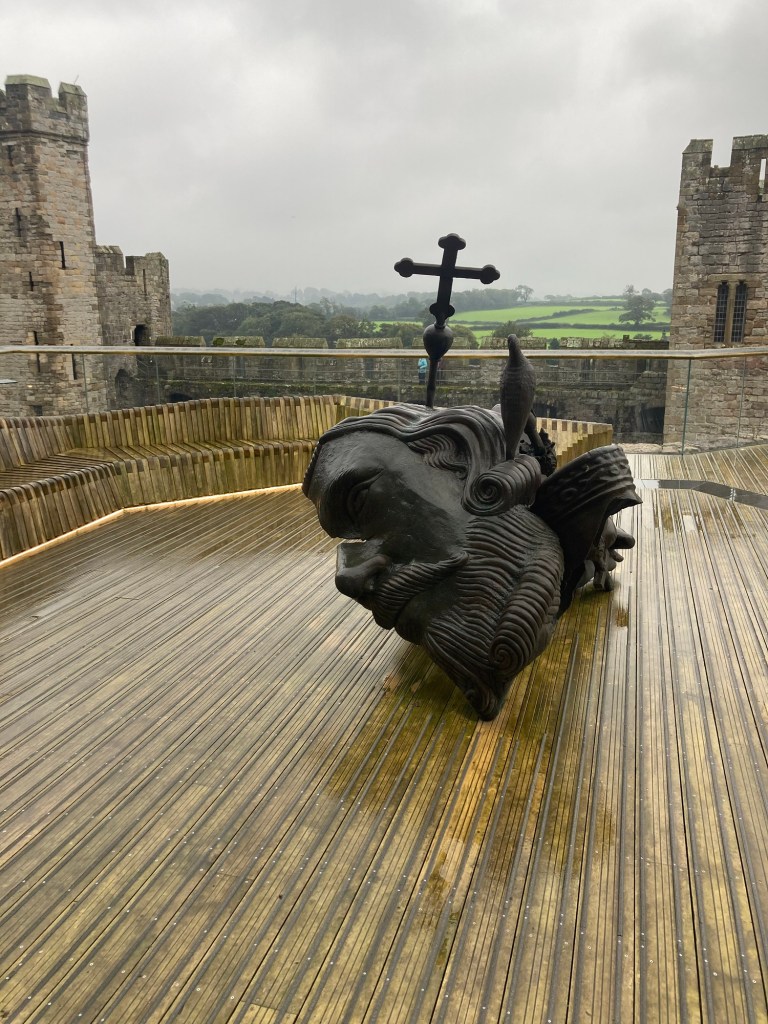
Needless to say, Edward 1 is not remembered fondly by the Welsh, as evidenced by a sculpture at the castle:

King Edward 1

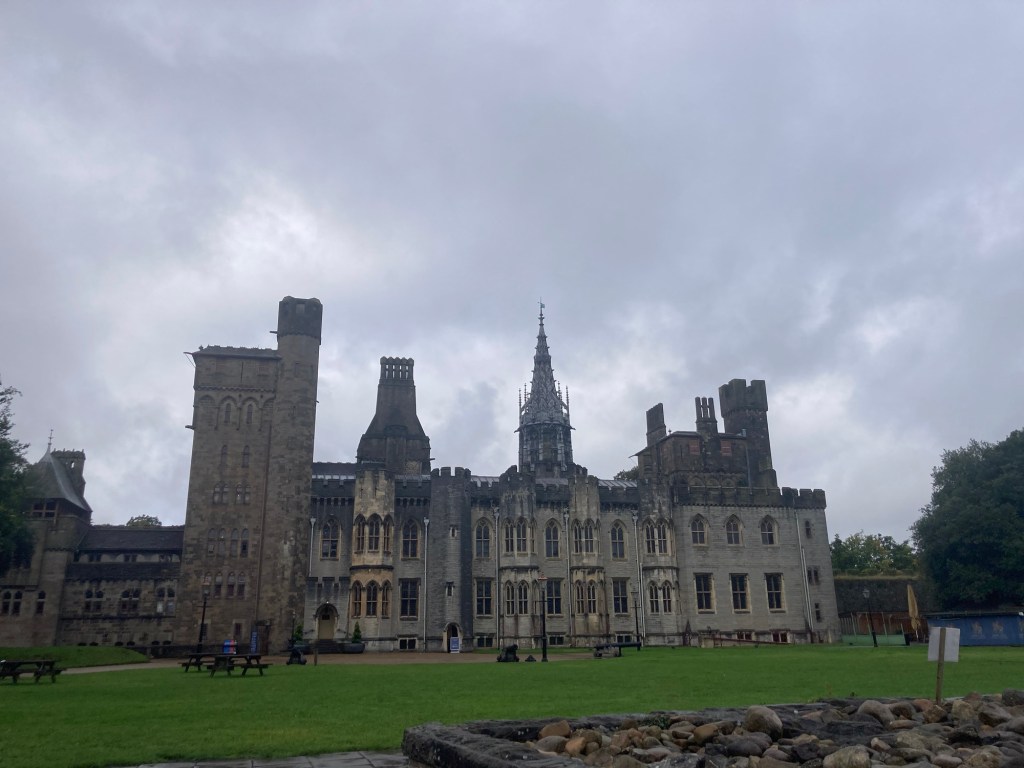
Next up was Cardiff, the capital city of Wales, where I visited yet another castle:

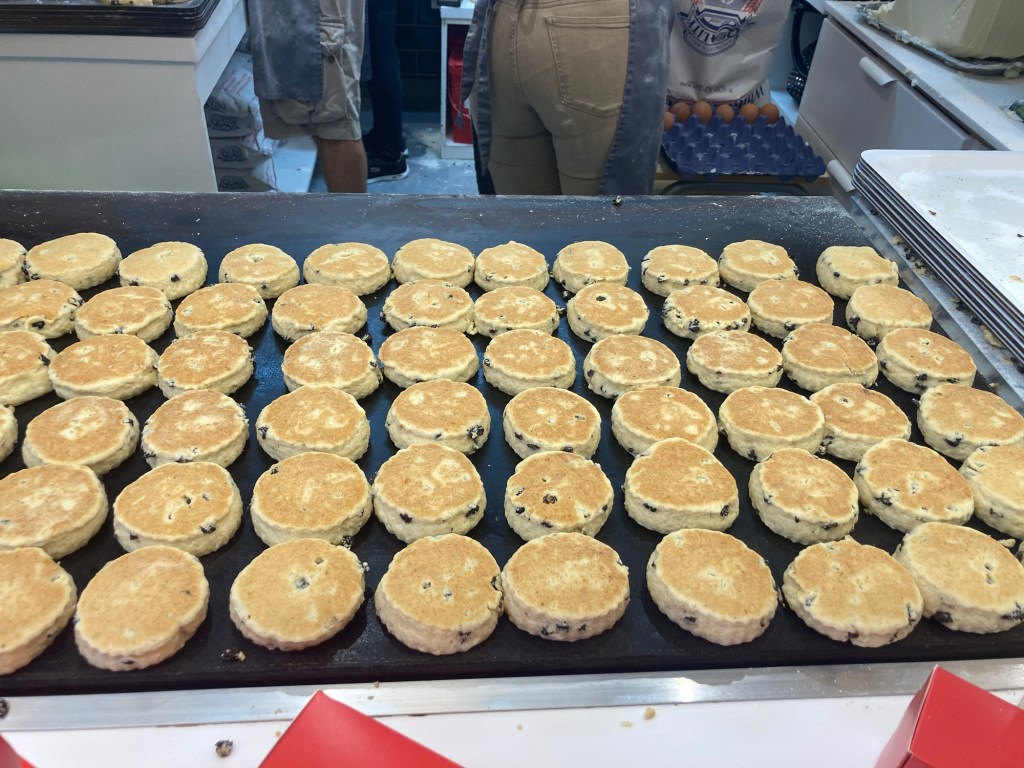
Growing slightly tired of so many castles, I indulged in a Welsh Cake or two:

Made from flour, sugar, butter and raisins, they taste a bit like baked cookie dough.
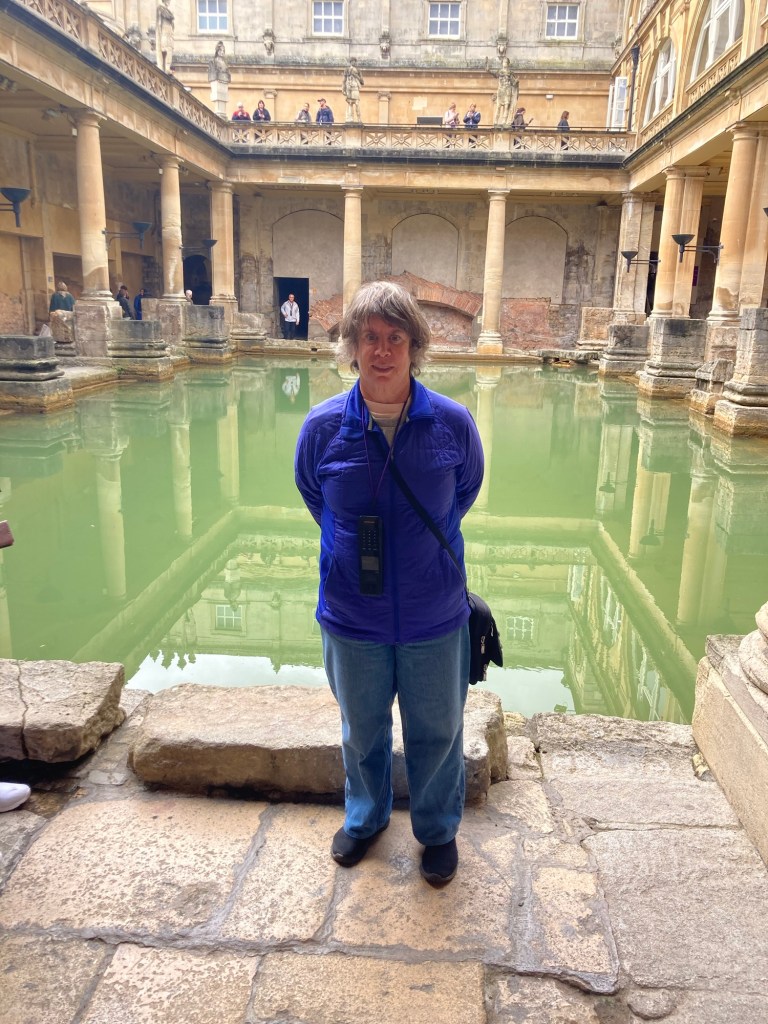
Next stop was Bath, where I toured the Roman Baths:

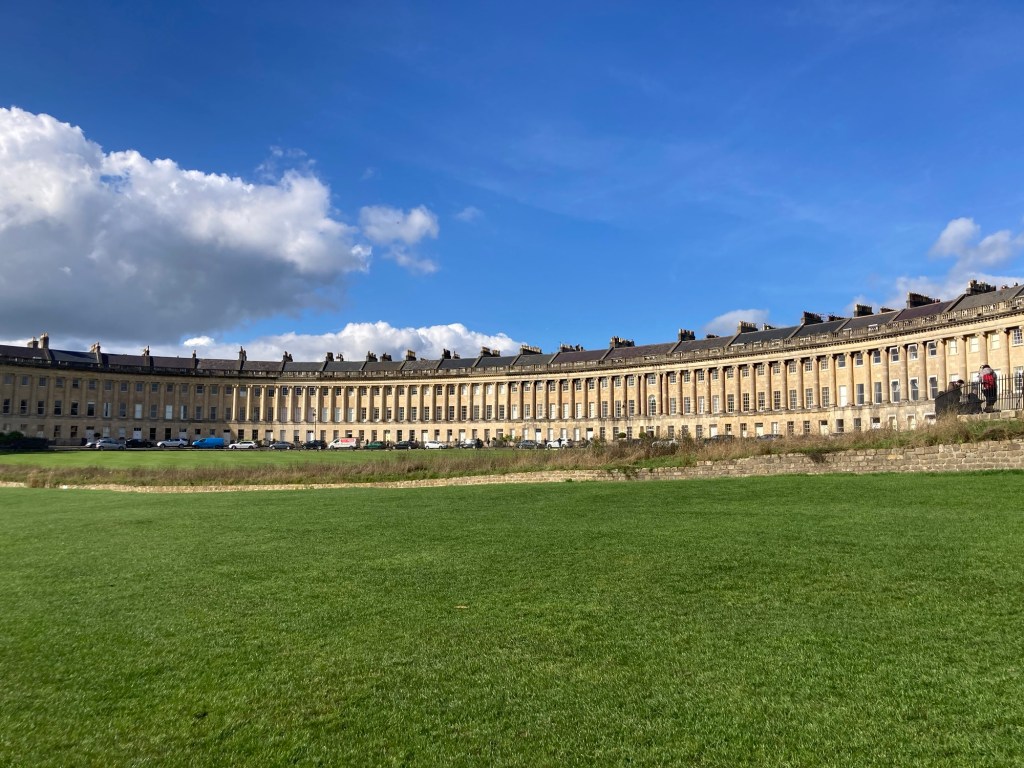
I joined a walking tour, where the focus was on some of Bath’s architectural treasures like the Royal Crescent, a semi-circle shaped group of townhouses constructed in Bath’s distinctive yellow limestone and Palladian style:
I ended in London, where a day long walk took me past the Victoria & Albert Museum, beside Harrods, to Buckingham Palace, Westminster Abbey, St. Paul’s Cathedral and The Tower of London. A final castle, a final Cathedral.
Goodbye United Kingdom, now off to a country of the former Soviet Union..

Scotland: Overpriced, OverTouristed and OverHyped?

My only previous visit to Scotland was 45 years ago when my brother and I and a friend of his spent a week in Glasgow with a day trip to Edinburgh. I recall being underwhelmed by Glasgow, unable to follow the Scottish accent and not loving the food. I figured a return trip was long overdue.

I began with a five day stay in Edinburgh, utilizing the services of a shared Airbnb because I couldn’t justify the ridiculously high hotel prices which seem to start at about $300 a night. A trip to the grocery store indicated the prices were double what they were back home and the cheapest glass of wine I had was $15.

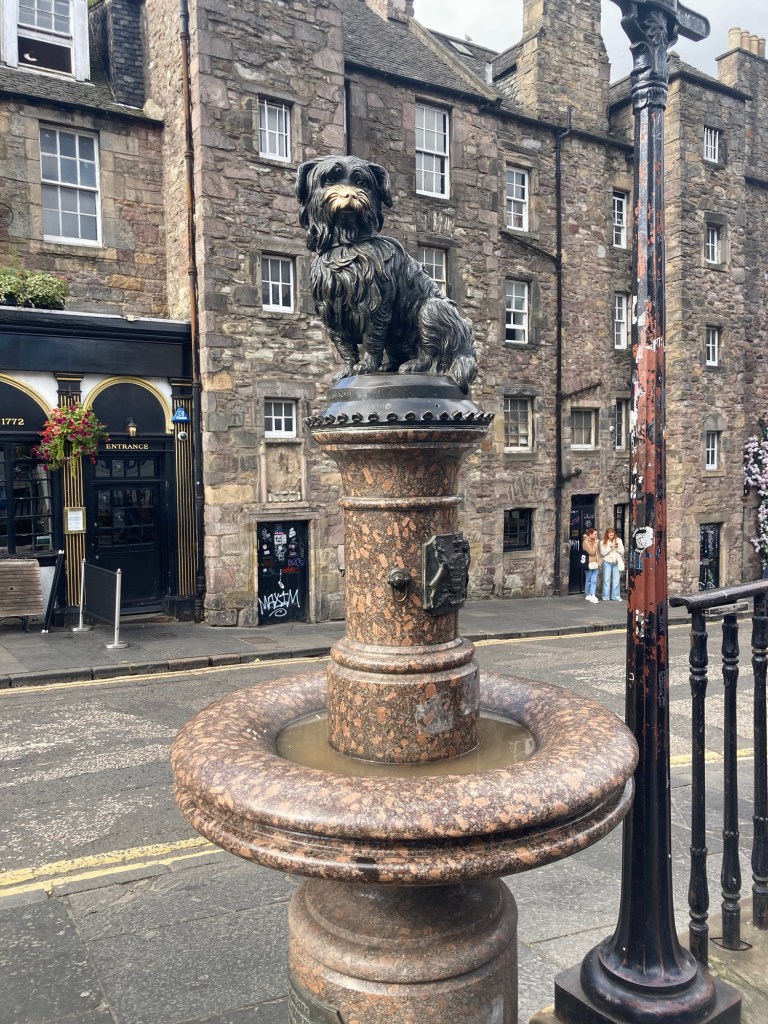
I started my sightseeing with a walking tour of the Old Town, taking in all the must see sites along the Royal mile, Edinburgh castle, Holyrood Palace, the alleyways known as closes and the Greyfriar cemetery, where I duly rub the nose of the statue of Greyfriar Bobby, the legendary dog who visited its deceased owner’s gravesite for 14 years.

Greyfriar Bobby

I was unable to visit inside St. Giles Cathedral, best known where John Knox started the Presbyterian movement in Scotland, or the Writer’s Museum, dedicated to Robert Burns, Sir Walter Scott, and Robert Louis Stevenson due to the intrusive filming of a movie Frankenstein, which was blocking access to numerous sites.

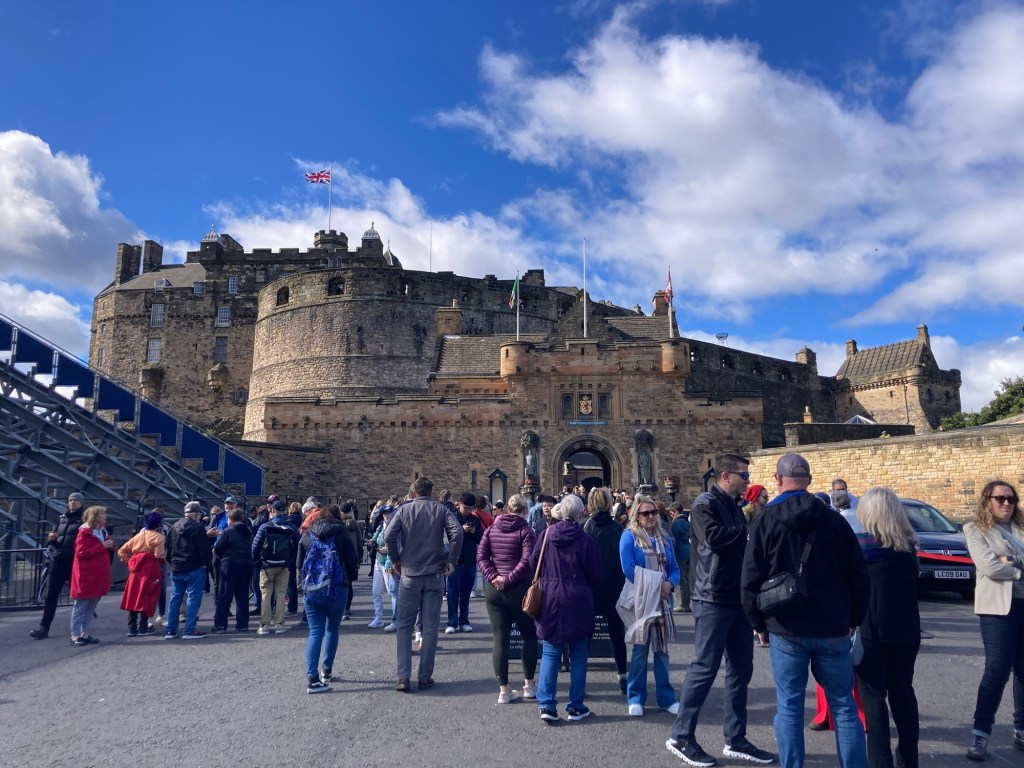
The film crews only added to the large number of tourists in and around the Royal Mile. Queuing was a necessity to enter just about every attraction and, except for the free museums, were expensive. I passed on the £20 pounds required to enter the Holyrood Palace; the Royal family is rich enough already. Food and beverages in the old town were probably double the price everywhere else and generally not as good. I did indulge in excellent fish and chips at Bertie’s, a chippy shop run by Italians where a plate of fish and chips cost only $35.

Crowd at Edinburgh Castle

On every tour I took, we learned the history of the Scots. In a nutshell, different Celtic tribes settled here about 7,000 years ago. The Romans tried, but failed, to conquer the land they called Caledonia. Out of the dark ages, Scotland emerged as a kingdom, until Edward I invaded in the 12th century and took it over. Rebellions by such luminaries as William Wallace and Robert Bruce restored the Scottish kingdom for a few centuries.

Following Elizabeth I death, James VI, a Stuart, of Scotland became James I of England, but after a few tumultuous decades, his descendant abdicated and William of Orange took over both the British and Scottish thrones. The countries officially unified in 1707, but supporters of a Stuart king, called Jacobites, rebelled a lot until the defeat of Bonnie Prince Charles in 1746. Scotland has been part of the United Kingdom since.

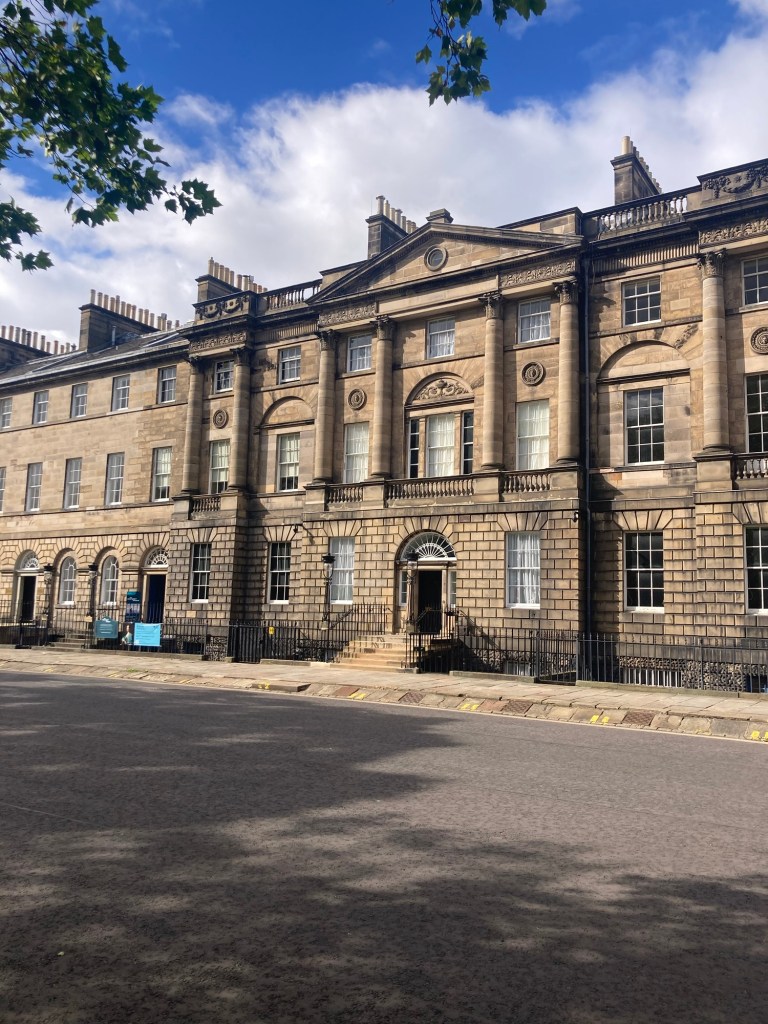
I took a walking tour of New Town, one of the first master planned communities. Begun in the mid 18th century, it was designed to lure the wealthy from the overcrowded Old Town at top of the hill and London, with its Georgian architecture, broad boulevards and private parks. It’s still retains many of those features today, along with the official resident of the Prime Minister of Scotland, which was not secured in anyway:

Scottish Prime Minister’s house

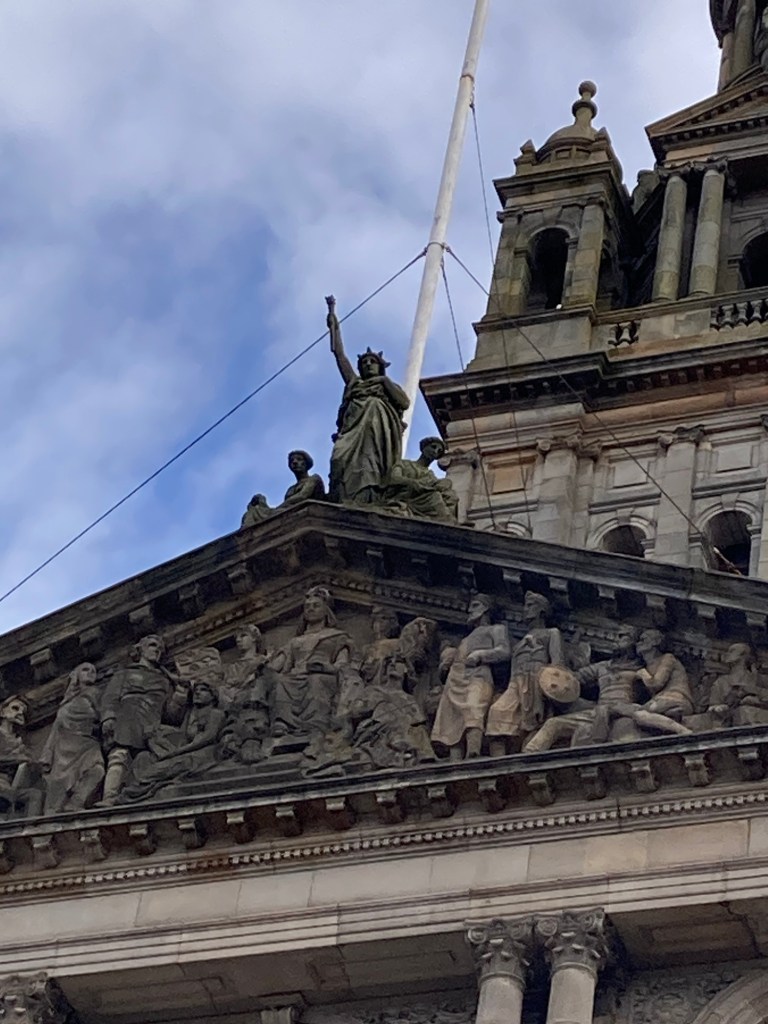
A quick 50 minute train ride took me to Glasgow, where my tour guide delighted in showing us the more comedic sights in Glasgow, like the City Hall. It’s adorned with carvings of Gallileo, Newton and the Statue of Liberty, none of which have any discernible connection to Glasgow;

Then there is Conehead, aka, The Duke of Wellington with a cone on his head. Started as a prank by a bunch of drunken college students 40 years ago, the city removed the cone every morning and it reappeared every night. After 20 years of this, the city gave up and embraced it, putting on cones relevant to the season;

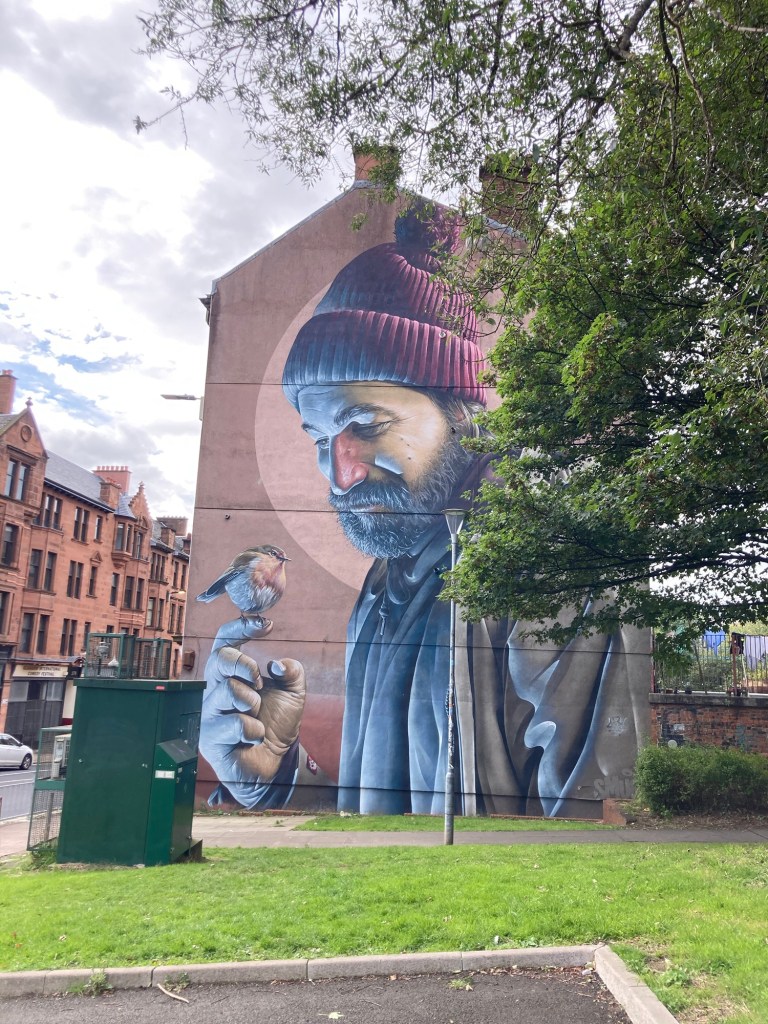
Glasgow started a program of beautification, encouraging and later commissioning hundreds of murals to adorn its buildings’ walls:

Glasgow was much less crowded than Edinburgh and, while it lacks the grandiose attractions of Edinburgh, certainly had enough to interest this tourist for a day.

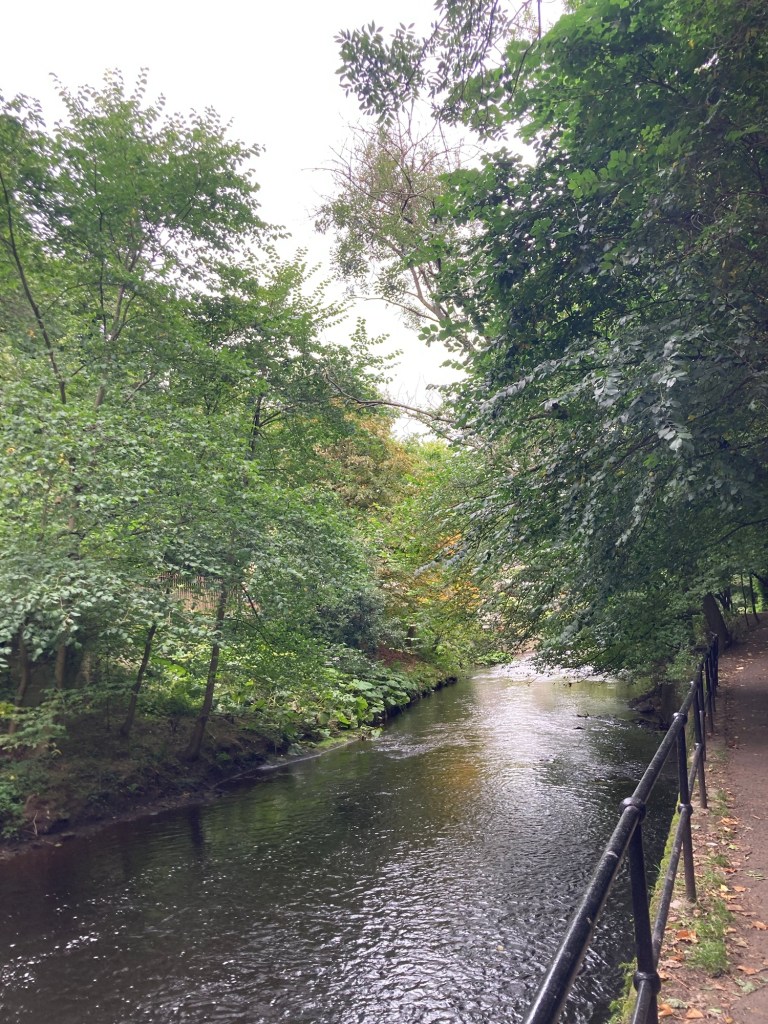
Back in Edinburgh I got off the tourist track and walked along the Leith Water, a 13 mile path along the river Leith, ending in the Firth of Forth where the Royal Yacht Britannia is berthed. The walkway is a peaceful paradise in a busy city:

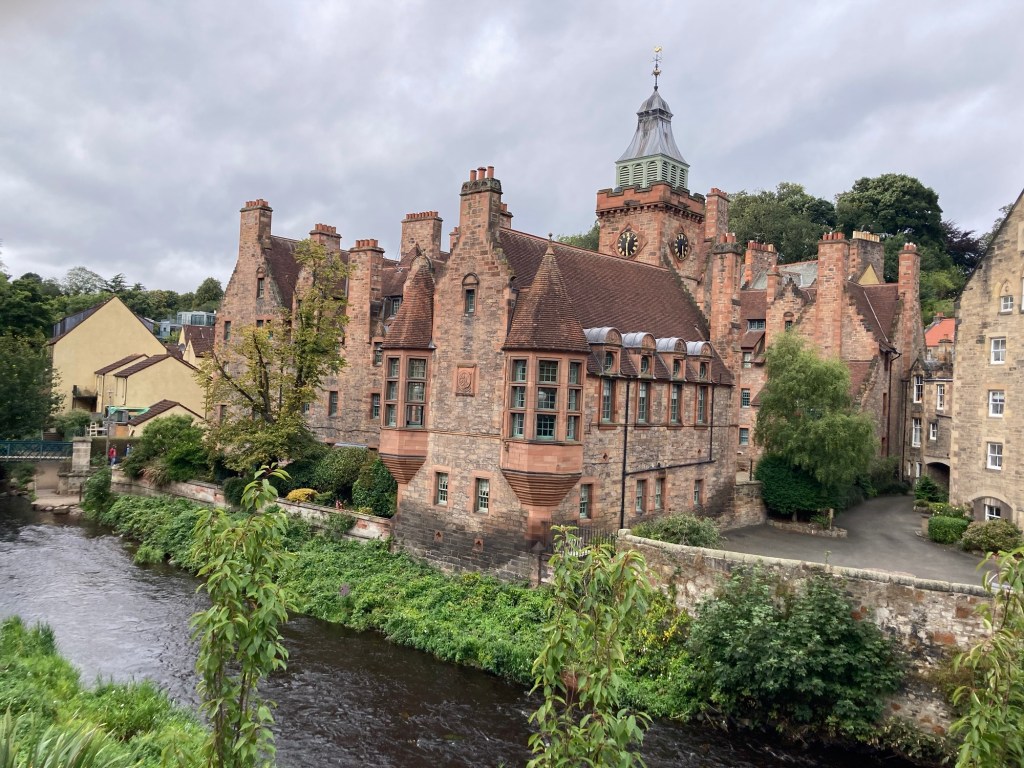
One of the highlights along the walk is Dean Village, a well-preserved medieval town:

Dean Village

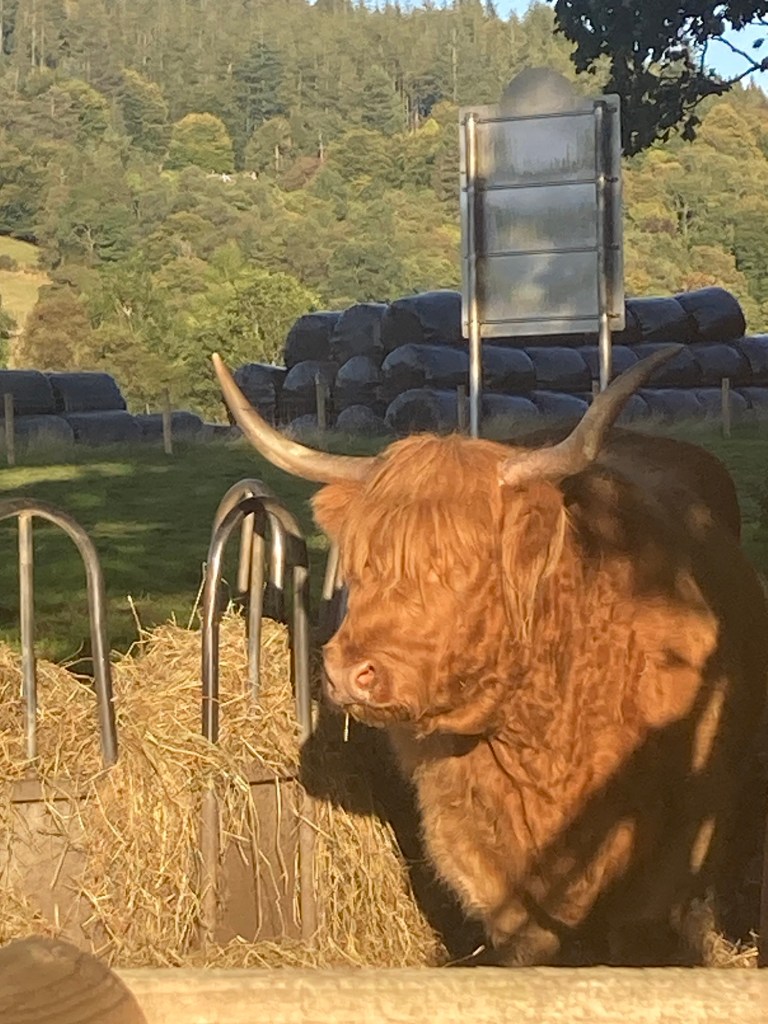
The next day, I started on my 3 day tour of the Scottish Highlands and the Isle of Skye with 22 other tourists aboard a bus called the Hairy Coo, named after the hairy cows brought over by the Vikings a millennium ago:

A hairy cow, not our bus

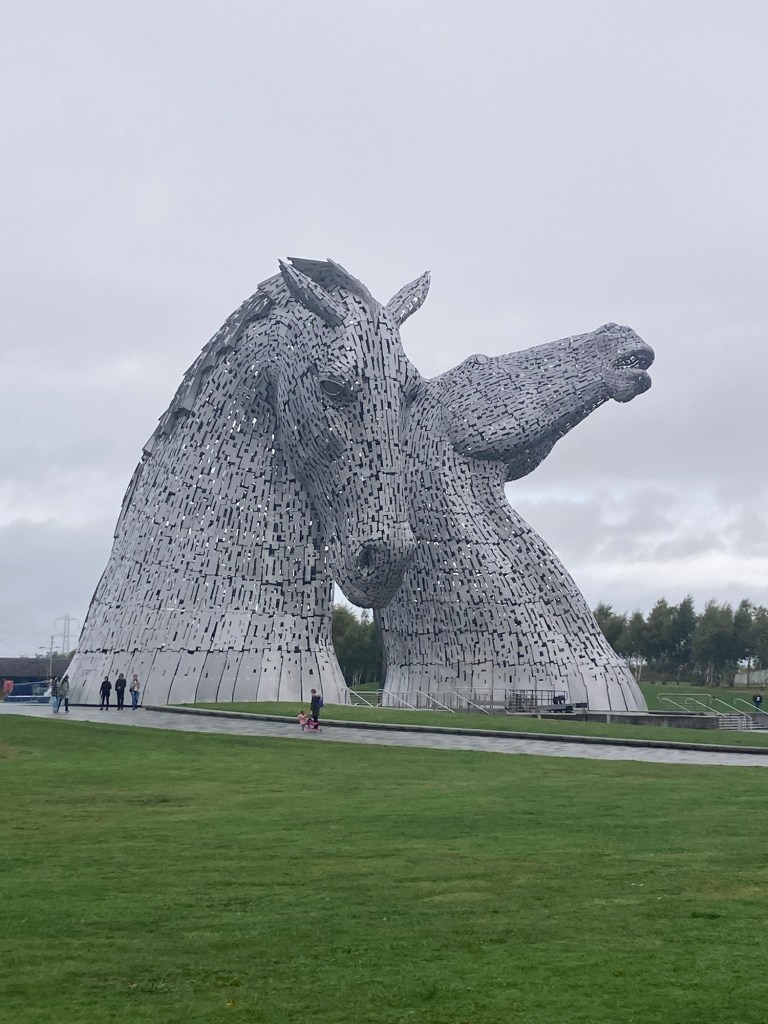
Our first stop was at one of Scotland’s newest attractions, a gigantic sculpture of two kelpies, mythical water creatures who eat sailors and take the shape of white horses;

The Kelpies

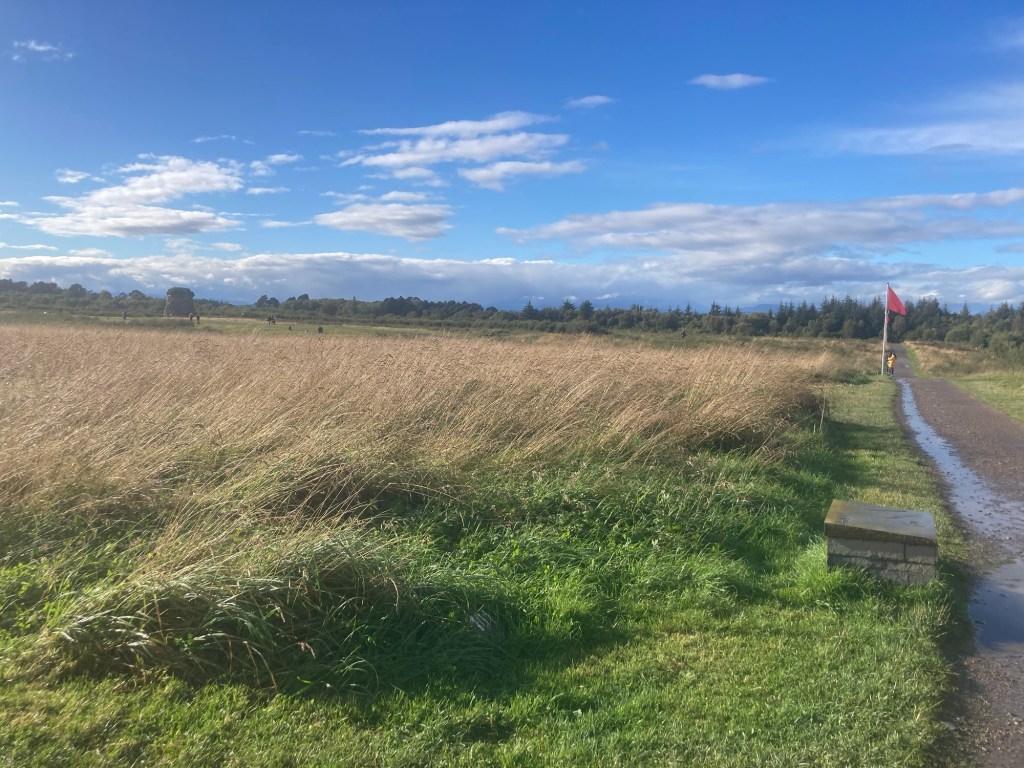
A few stops later, we arrived at Culloden, the site of the final battle on English soil where the Brits defeated Bonnie Prince Charles and quelled the Jacobite rebellion. As battlefield sites go, it was pretty standard; a large expanse of green fields with a few flags to mark different troops’ lines and various commemorative plaques:

Culloden Field

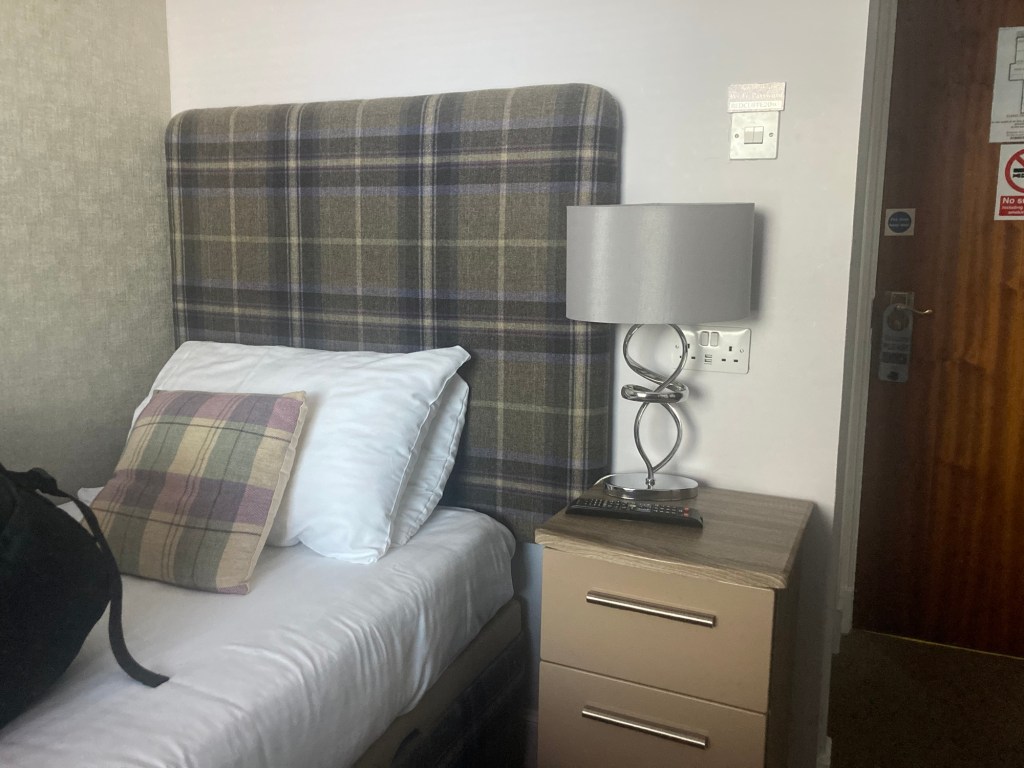
Just to bring home how expensive this country is, this is my $212 per night room in Inverness:

At least it had a private bathroom and the staff were kind.

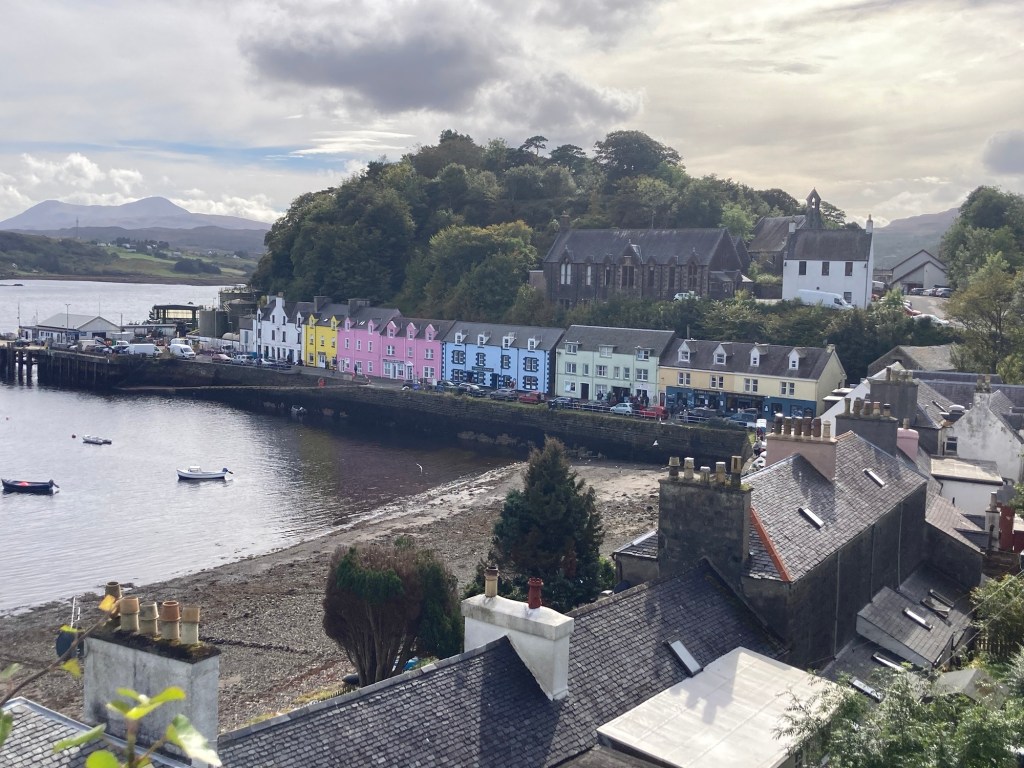
The next day saw us take the bridge over to the Isle of Skye, where the main attractions were the pretty town of Peartree:

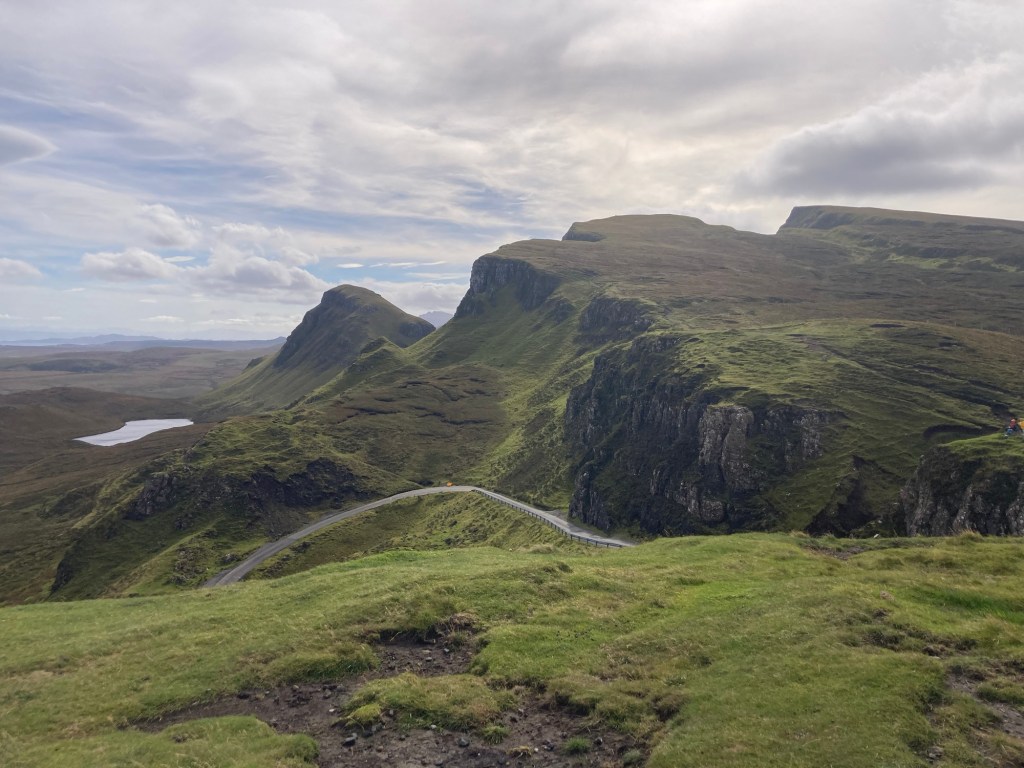
And the stunning scenery, described as wild, rugged and untouched:

Yes, it was pretty. Not much more to say about it.

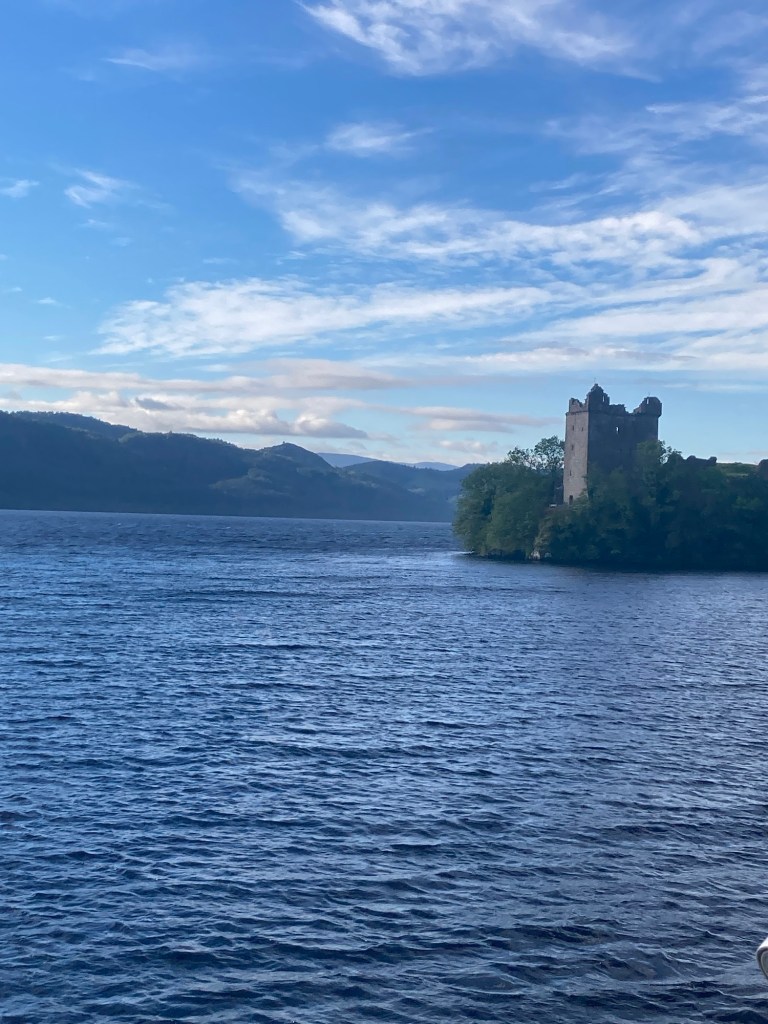
Our final day saw us cruising Loch Ness, looking intently for Nessie the Monster:

Needless to say, no monster was spotted or you’d have heard about it on the news, but we did sail by Uruquart Castle, a medieval fortress mostly destroyed during the Jacobite rebellions.

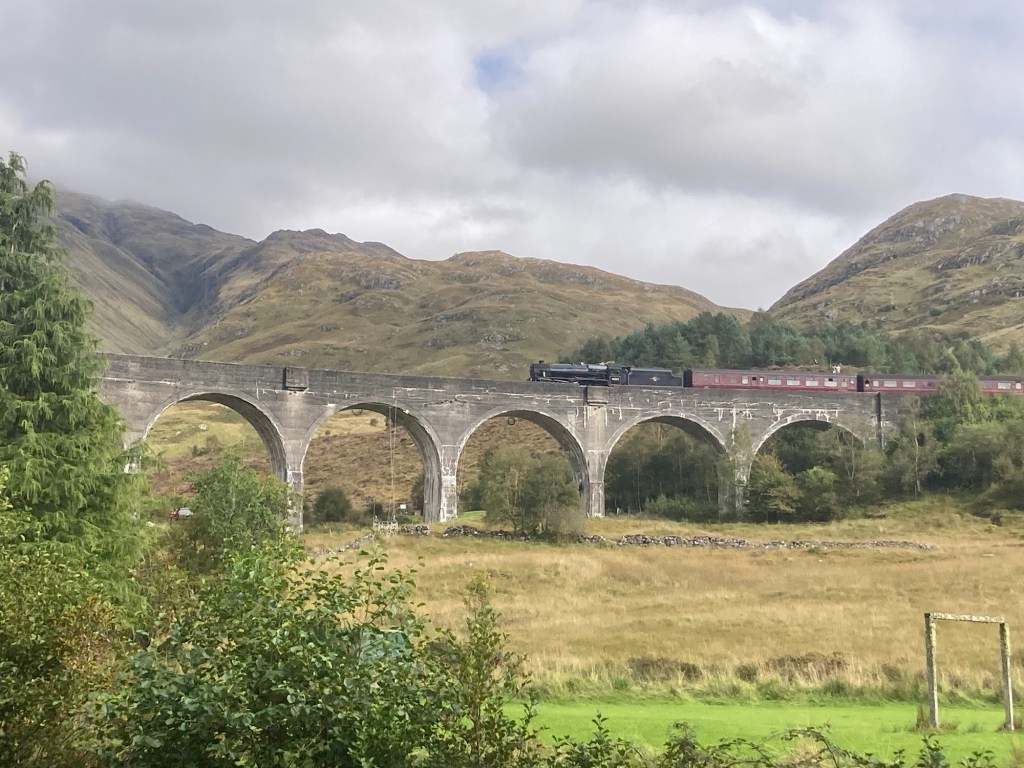
A trip to the highlands would not be complete without a stop at Glenfinnan Viaduct, constructed in 1892 but achieving fame in Harry Potter as the Hogwart’s Express steamed towards the school. Today, at 1:20 ( never early, often late) a tourist train rolled across to the delight of hundreds of tourists eagerly snapping photos and videos (myself included):

My tour, and time in Scotland, ended after 8 days. So were my preconceived notions borne out? It is surely very expensive and there are way too many tourists for my liking. But overhyped? No. It’s a fascinating country with lots to interest this history buff along with modern art, pop culture and innovative features. It was definitely worth my return visit.

Next stop: The UK by train

Bolivian Highs

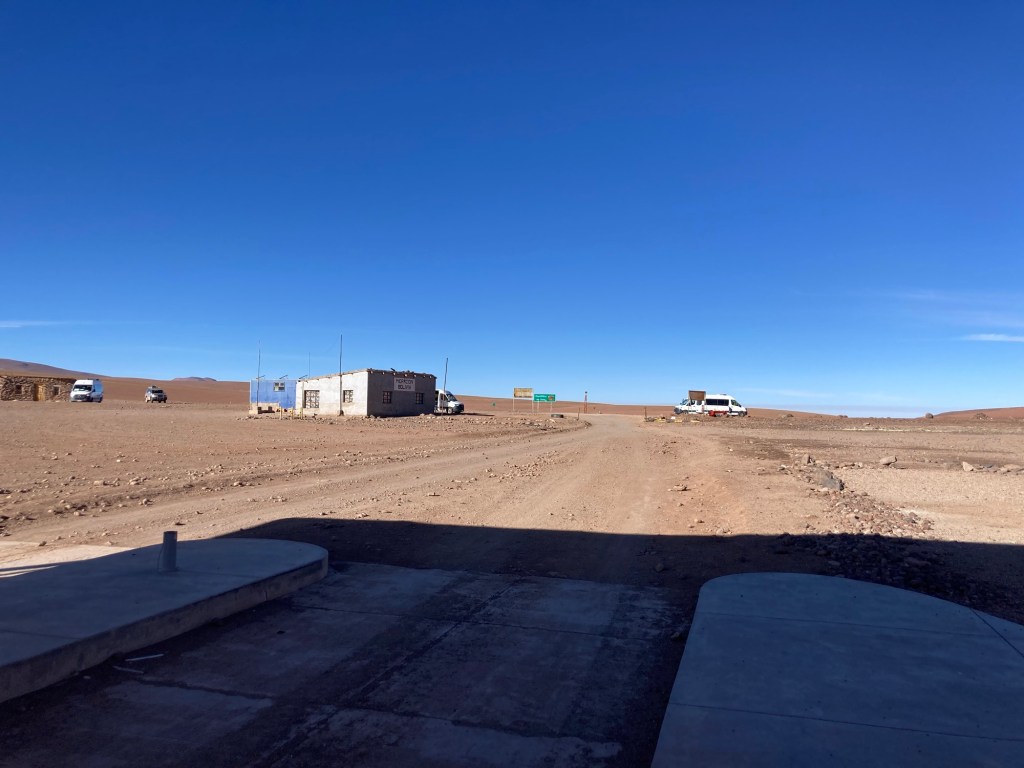
My entry to Bolivia was not smooth. After a 30 minute drive from San Pedro de Atacama in Chile, the paved road abruptly turned into a sandy red path leading to a small outpost high atop the Bolivian plateau. Me and the other 7 tourists travelling with me were unceremoniously dumped outside a building with a single open window, at the end of a long line snaking towards the only immigration officer doing anything. It was cold and windy, but no one from the Bolivian office seemed to care and whenever an American, needing to pay for a Bolivian visa, got to the window, it closed for 15 minutes. A long two hours later, I finally received the necessary stamp in my passport and clamoured into the four wheel drive truck that would take me all the way to the Uyuni salt flats two days hence.

Bolivian customs office in the middle of nowhere

On we drove for at least 5 minutes before stopping at the Bolivian customs office where we all had to scan a QR code and fill out info about what we were bringing into Bolivia. Apparently cocoa leaves were fine but cash over $10,000 was not. We all passed, returned to our vehicle and drove another 5 minutes before stopping at the national park office and paying our national park fee. Now I’m sure you see where I’m going with this but why couldn’t the three bureaucratic agencies have shared a single building rather than requiring 3 separate stops? I don’t know but the whole mess took about 4 hours and was frustrating as heck.

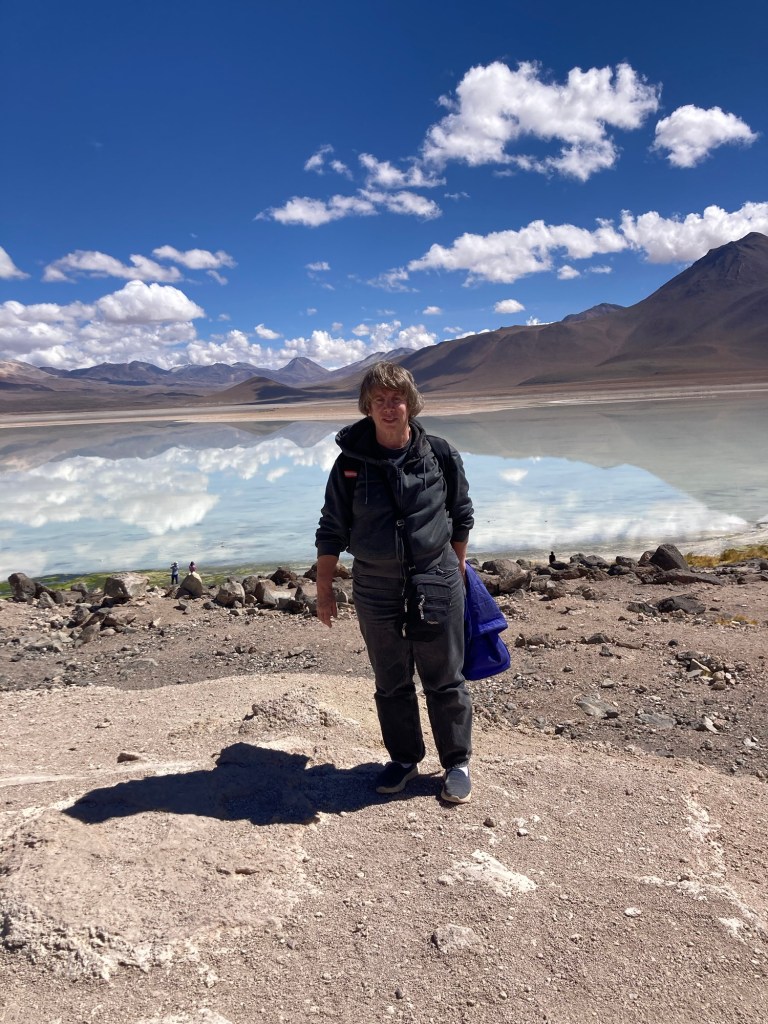
Finally our tour started proper and our first stop was at the White Lake , created out of the volcanic craters of the Bolivian altiplano, the second highest on earth:

Me at the White Lake

It’s beautiful but at 3500-4000 meters, the altitude can be problematic. I used the anti-altitude pills which prevented headaches but didn’t do a thing for the lack of stamina so I tried to avoid anything strenuous, like walking more than 50 feet.

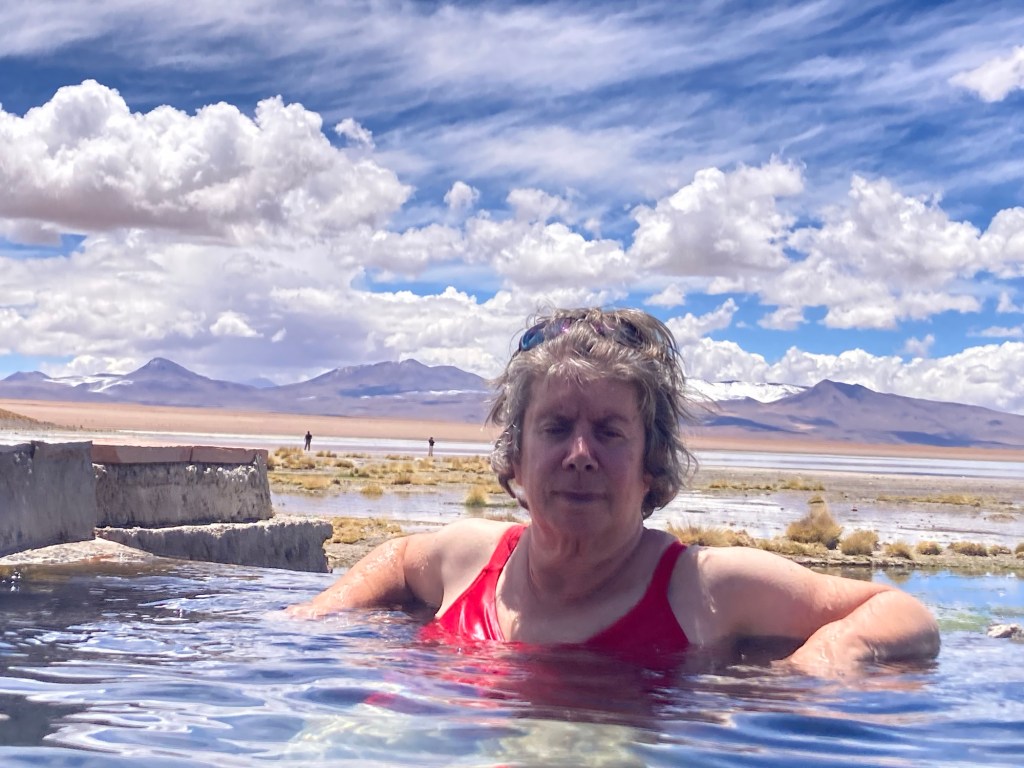
Since the whole area was formed by volcanoes, geysers and hot springs abound. Our tour stopped at a hot spring and I changed into my bathing suit and melted into the very hot water:

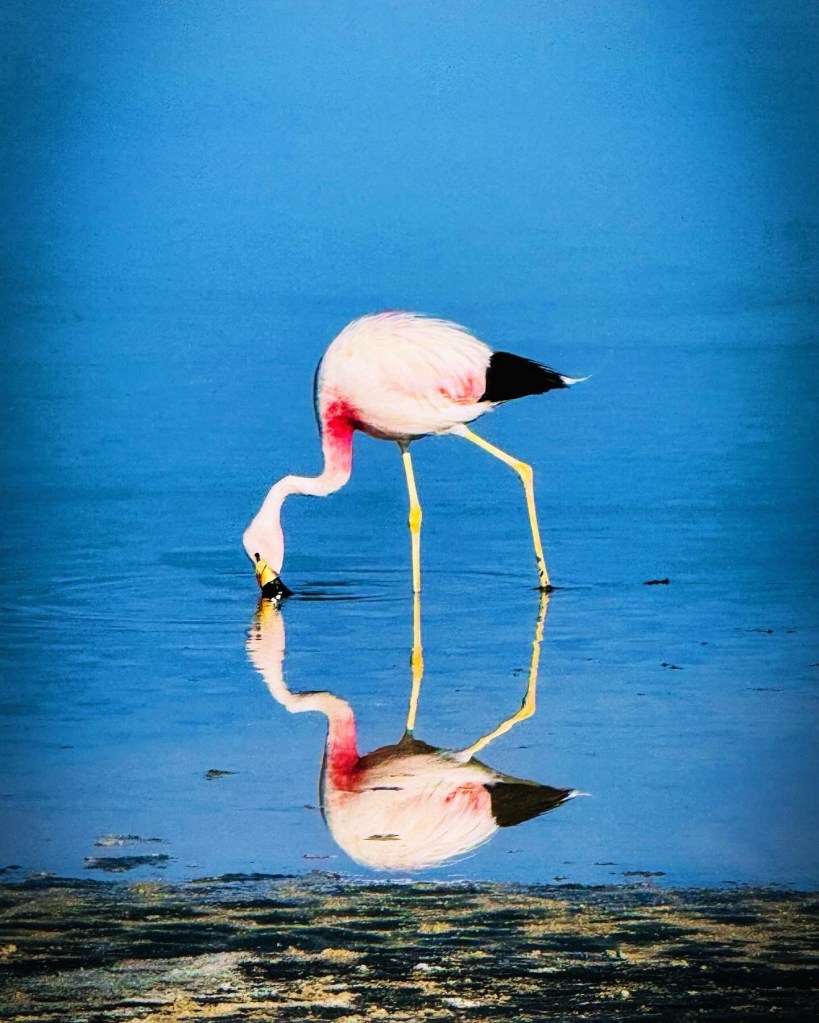
A few more lakes followed and even though we were at the end of the season, hundreds of flamingoes remained:

My thanks to my fellow traveller, Eward, for the photo- my camera isn’t that good.

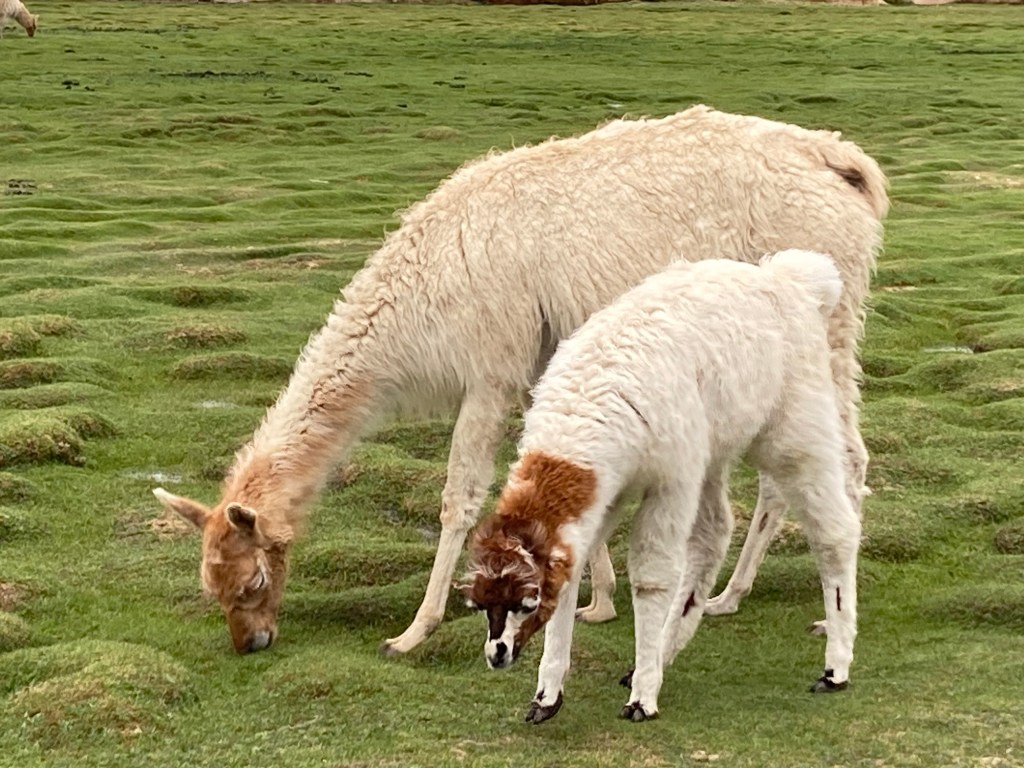
Flamingoes weren’t the only wildlife. Wild vacunas, a relative of the llama, would bounce alongside our vehicle:

Later, llamas appeared, although they were probably not wild given the pink bows in their wool:

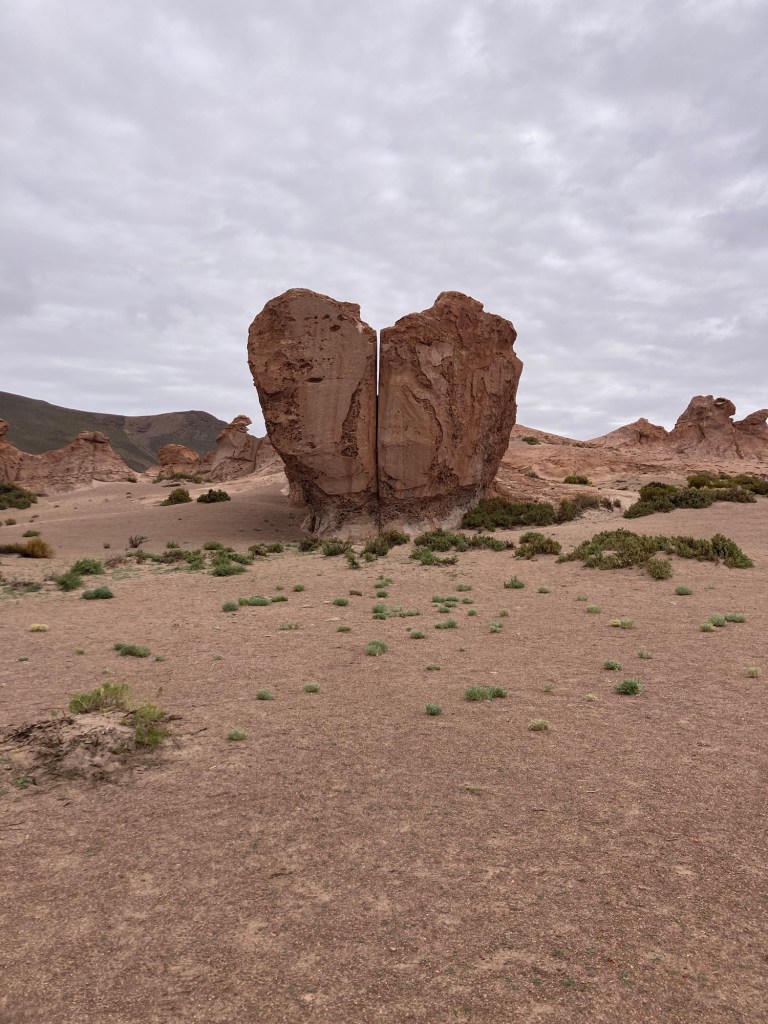
After a number of spectacular lakes and lots of vicuñas and llamas, the landscape turned to desert with interesting rock formations, created after centuries of winds eroded the rocks. My favourite was one called the broken heart:

Broken heart rock formation

The highlight of the tour began the next day with a 4:00am wake-up and an hour drive to see the sunrise over the salt flats:

The Uyuni salt flats are the largest in the world, nearly 11,000 square kilometres of salt. I was there in the rainy season, so a small layer of water covered the salt, creating an interesting phenomenon so that discerning where the salt and water ended and the sky began was impossible:

Again thanks to Eward and his drone for the photograph.

Eventually we made our way to a dry spot, where we could enjoy the salt flats at its salty best:

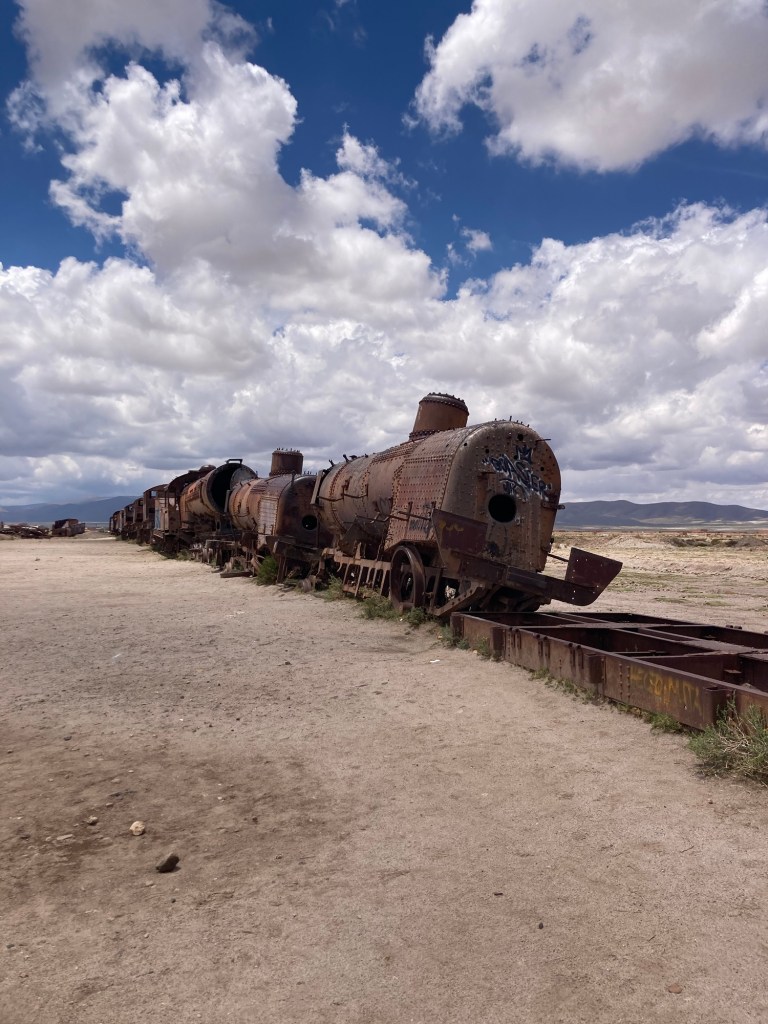
A few hours later we drove to the town of Uyuni where we stopped at the train cemetery, a collection of rusty, dilapidated locomotives and other train carriages:

The Uyuni Train Cemetery

For a train fanatic, the ability to climb all over these decrepit beasts was quite wonderful.

Our return to San Pedro de Atacama, Chile took about 10 hours on the same bumpy road we had previously taken, coupled with another 4 hours at the Bolivian/Chilean border. But we all made it in one piece so I guess I shouldn’t complain.

A few days later, I flew into La Paz, Bolivia’s largest city and the highest city, at 3600 meters, in the world.

My walking tour started at the San Pedro prison, which became notorious some years back for its tours. Prisoners are required to pay their rent, and for some prisoners, it’s a bargain spot in central La Paz so they bring their families to live with them. In the more luxurious ( and higher rent) area, there are ensuites and jacuzzis. While some guards patrol the perimeter, the prisoners inside rule the place, with biannual elections etc. As security to get in and out was pretty lax, some enterprising prisoners started offering tours to curious tourists. Things went well for a number of years until authorities realized the tourists were frequently coming in to buy cocaine.

San Pedro Prison

The tours officially stopped but unofficial ones still continue. The problem is visitors are requested to give their passports to the guards as they enter and stories abound of the need to pay excessive bribes to get them back and leave. Needless to say, I didn’t try and visit.

But I did go to the witches’ market, so named for all the potions, amulets and other weird items for sale. The oddest, to my mind, are the llama infants and fetuses. Traditionally, they are buried for good luck at building sites; the bigger the building, the larger the offering should be:

Llamas for sale?

Again, needless to say, I didn’t buy any dead llamas.

The walking tour continued, passing what I was starting to recognize as standard buildings in former Spanish towns: a Roman Catholic Cathedral, a National Congress, the Presidential Palace complete with a gruesome tale of a past president who was dragged out by an angry mob and hanged, the police station and the Justice building.

When my tour ended, I partook in what I consider to be one of the most interesting developments in La Paz: the proliferation of cable cars as a means of transport. La Paz is basically built in the bowels of a valley, with the center at the bottom and the residential buildings constructed on the slopes with wealth defined by how high up on the hills one’s house is. The roads are narrow and jammed with traffic. In 2010, cable cars were erected to provide alternatives to vehicles and by most accounts, have been well received.

A cable car

Ten different cable car lines connect much of the city. They are cheap, clean and efficient- it took me less than 10 minutes to get to the city center from my hotel for about $.40 but a cab ride would have cost $10 and taken 45 minutes. I spent a few hours riding different lines and seeing the city from different cable cars. It was a great way to see the city.

And so ends my 2024 South American journey.

Chilean adventures

I first visited Chile in 2006 with my son. We had focused on the south, visiting Punta Arenas at the very tip, Tierra del Fuego and sailing a Navimag ferry through the fiords.

It had been 18 years and a return visit was long overdue. I started in San Pedro de Atacama, the gateway to the northern desert with lots of hiking and trekking opportunities. I took a tour to the Uyuni salt flats, which I’ll describe on my post about Bolivia.

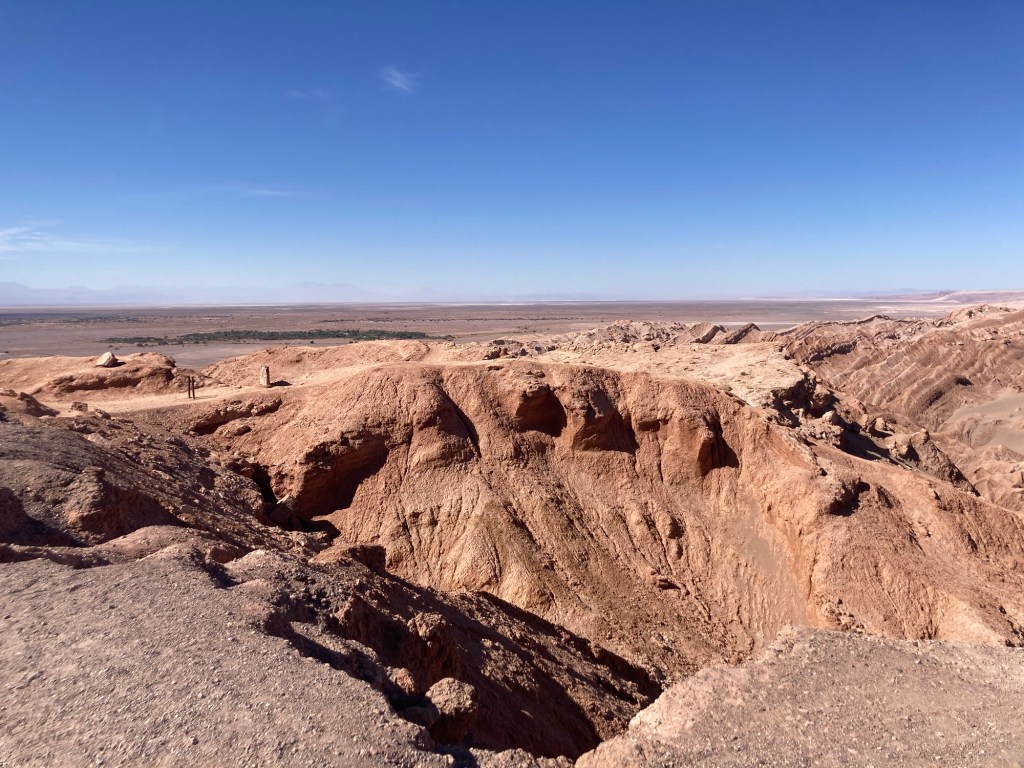
San Pedro does offer panoramic views of its otherworldly landscapes; it has acted as planets in the Star Wars movies:

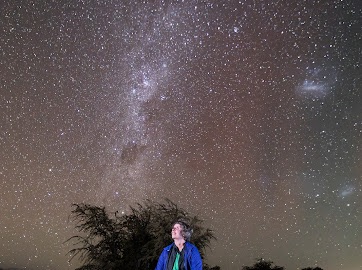
Due to its relatively high altitude and low population, stargazing abounds in San Pedro. I took an astronomy tour where our guide pointed out the southern sky, many constellations, and through a large telescope invited us to look at three nebulae. He is also an expert photographer who sat me down for a few poses with the night sky as a backdrop:

From San Pedro de Atacama I rejoined my friend Cathy and we went to Valparaiso. Once the most important port on the Western seaboard, its importance, and wealth, diminished once the Panama Canal opened.

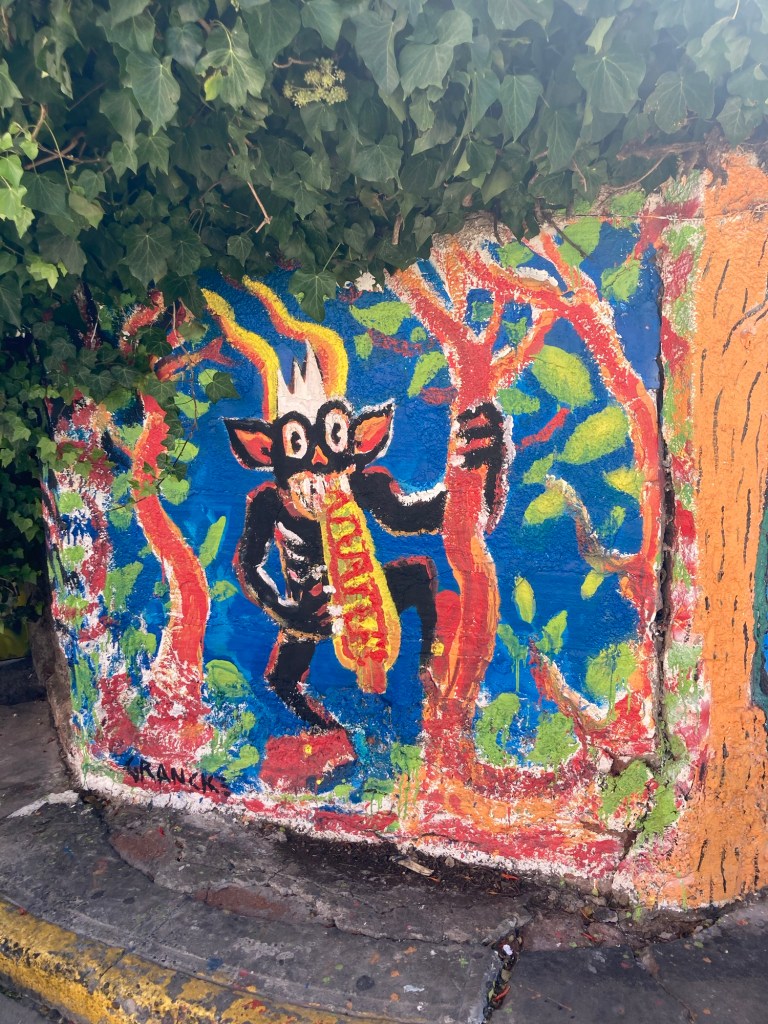
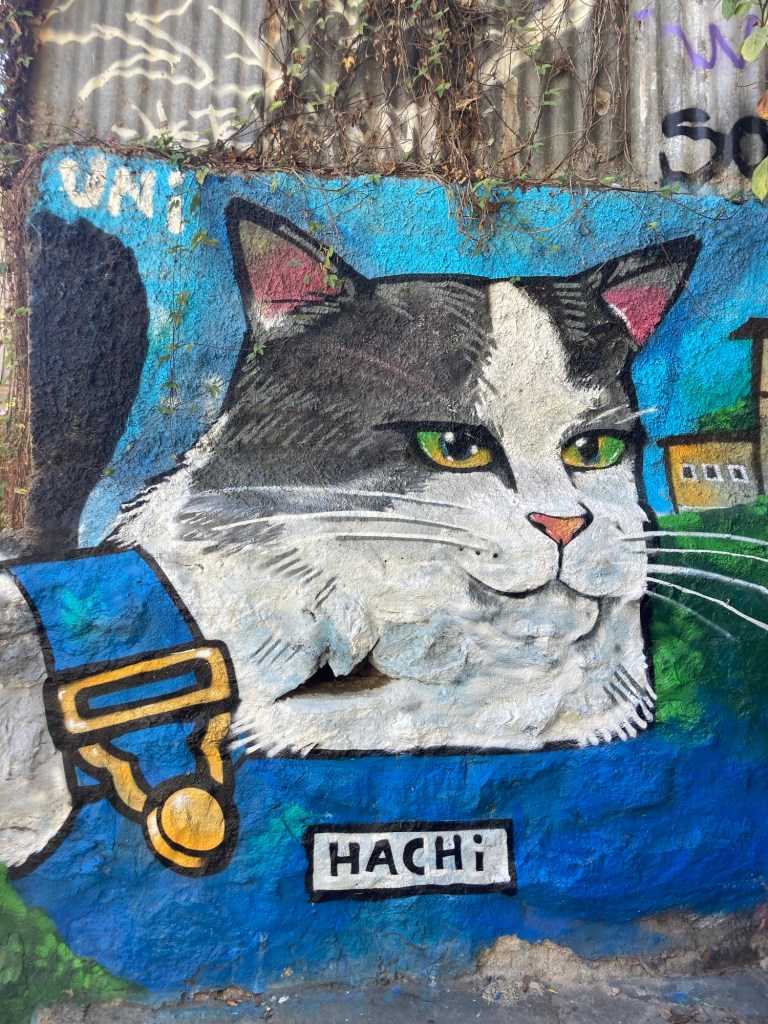
Valparaiso is famous for its murals, of which there are hundreds. UNESCO put the city and its murals on its heritage list. Some are commissioned by the local government, like that representing summer decorating the side of this building::

Others are done by local artists, some of whom look have become very famous for their mural art:

The murals run the gamut, from aliens, to indigenous representations to just for fun:

Valparaiso’s other claim to fame is its numerous funiculars. The city is built on 46 hills, so there’s lots of climbing up and down. Beginning in 1886, up to 30 funiculars were built to connect the businesses near the port with the residences high in the hills. They are being repaired and modernized, currently 7 are running:

Funicular station

Our time in Santiago was cut short by a cancelled flight from Rapa Nui, but we still managed to spend a day sightseeing. Our walking tour began in the Plaza de Armas, the center square of all former Spanish colonial towns. Founded in 1541 by the conquistador Pedro de Valdiva, its first 300 years were characterized by multitudes of wars with the local indigenous tribe, the Mapuche, earthquakes and fires. Chile declared independence from Spain in 1810 and after 8 years of war, was granted independence.

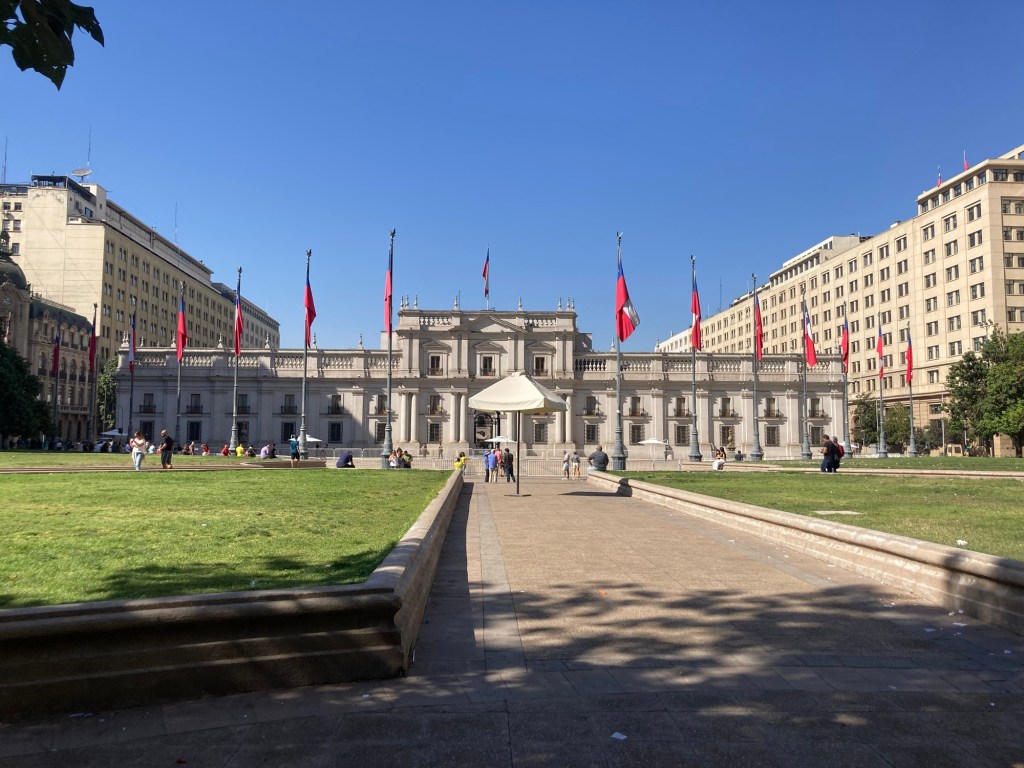
In 1805, the Presidential Palace was constructed although it was used as a mint until 1842 when the president moved in. It was here, on September 11, 1973, that the army, commanded by General Pinochet, surrounded the building, bombed it with Air Force jets and caused the death of the democratically elected, socialist president Salvador Allende.

The Presidential Palace

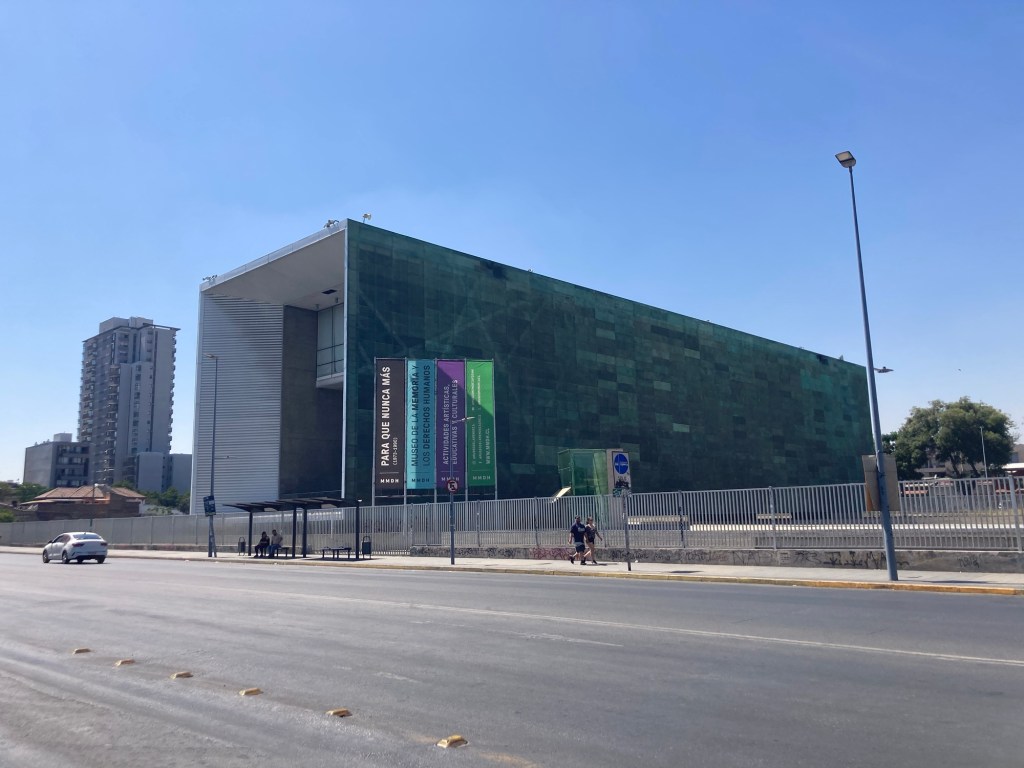
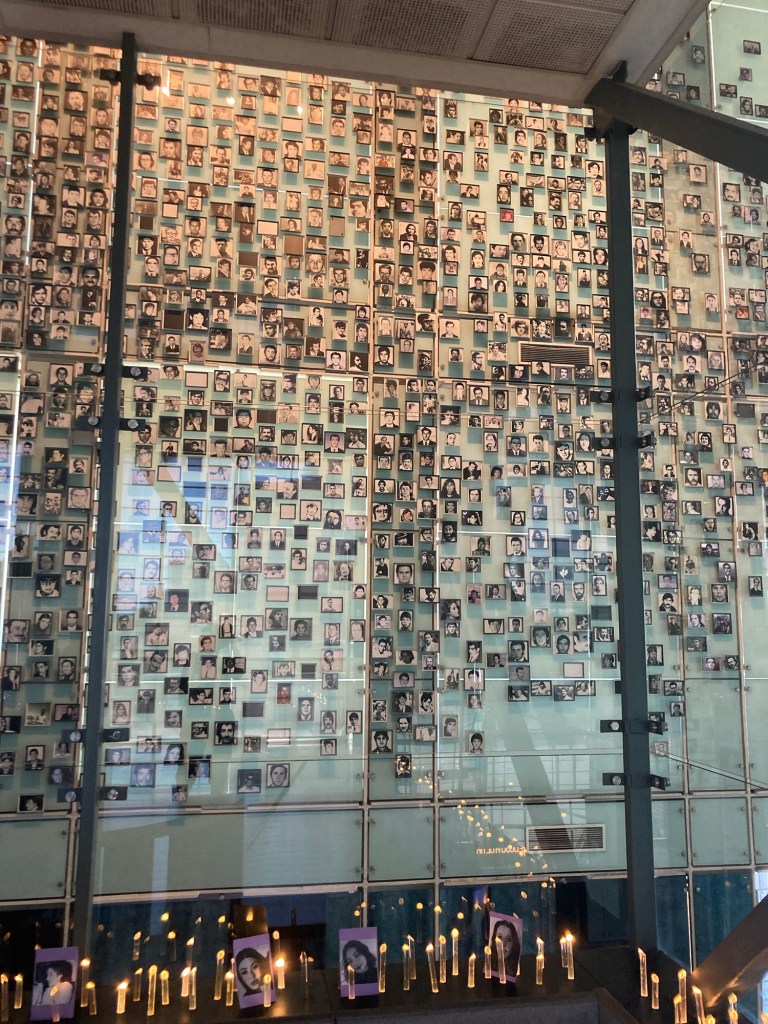
Thus began 17 years of cruel, dictatorial rule by Pinochet. The atrocities of his regime are documented in the informative, but sobering Museum of Memories and Human Rights:

The Museum
Photos of the disappeared

Ousted in 1989 by a referendum forced upon him by his own party and international pressure, Chile has since been ruled democratically and boomed economically, becoming the wealthiest country in South America.

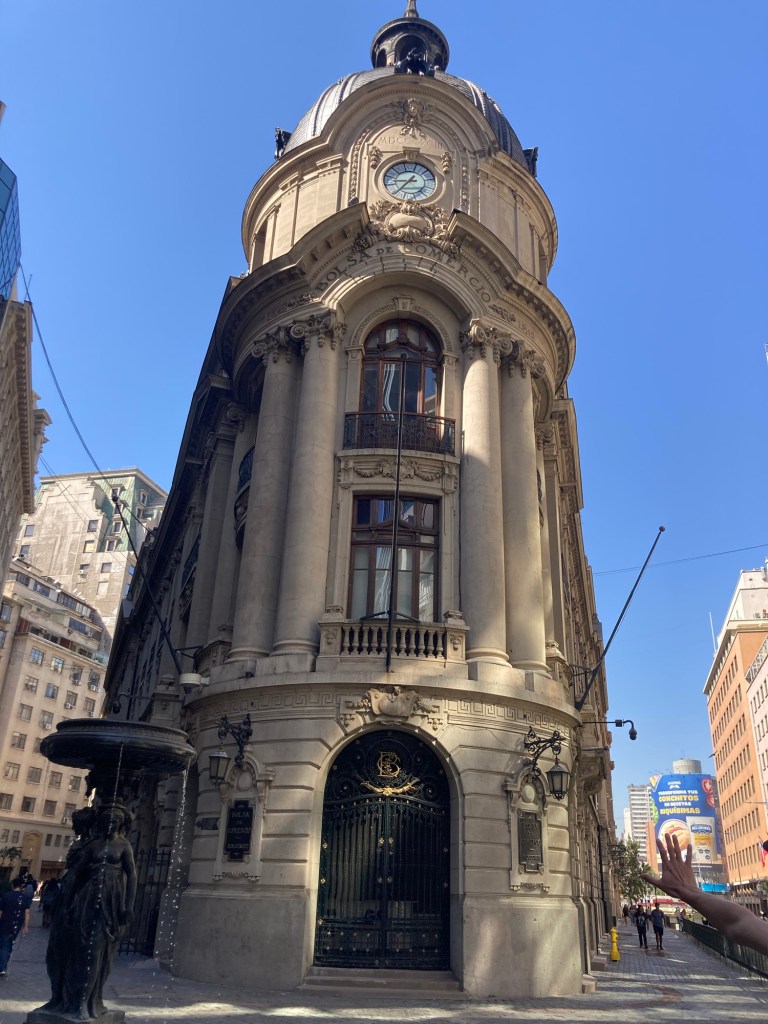
Walking around the center of Santiago, we saw a multitude of buildings reminding me of its past- colonial gems, grandiose churches, ornate opera houses etc. but my favourite is Chile’s first stock exchange:

The stock exchange.

Built in a neo-classical style, its architecture resembles late 19th century New York. Not surprisingly, the area surrounding is known as little New York.

I’ll leave Chile with one piece of trivia learned on our walking tour. The name “Chile” has nothing to do with peppers or the temperature. Rather, it derives from an old Mapuche word meaning “ the ends of the earth”.

Next up: Bolivia

Rapa Nui (Easter Island)

Some places just evoke a sense of wonder and awe; Rapa Nui, in the middle of the Pacific Ocean, with its ancient statues standing guard over bygone villages, is one of them.

My friend, Cathy, and I literally plopped down here after an outrageously expensive flight from Santiago, Chile. We flew over the Pacific Ocean for 5 hours before landing on this isolated, small island in the middle of nowhere. Its nearest inhabited neighbor is Pitcairn, of Mutiny of the Bounty fame, some 2,000 kilometres away. Air Traffic Controllers don’t allow two flights at a time to be heading to the island; if one crashes and blocks the runway, the nearest diversion is 5 hours away in Santiago.

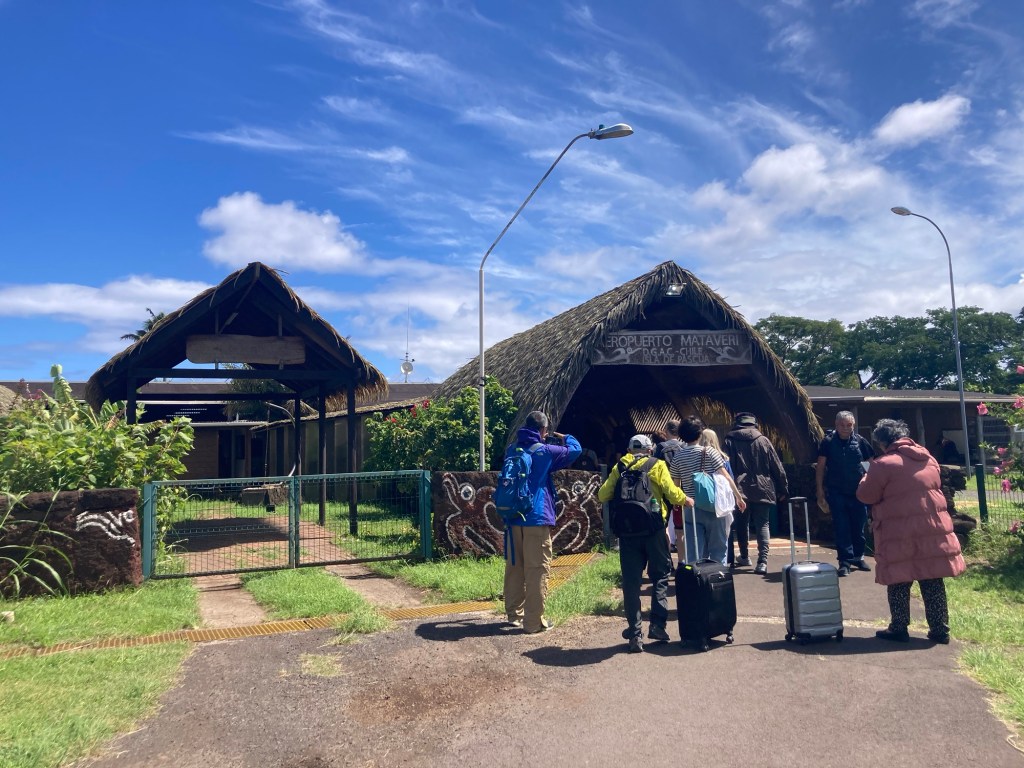
The airport is cosy, to say the least, although the runway is extra long, having been extended by the USA to act as an alternative landing spot for the space shuttle:

Rapa Nui airport

But enough about airports. Let’s talk about the Rapa Nui people. Originally from somewhere in Polynesia, perhaps Tahiti, they sailed here between 800 and 1200 AD, settled, farmed and constructed villages. Society was quite hierarchical and governed by a king, with 10 tribes, each descended from one of the king’s children, living fairly isolated. Although they were excellent sailors, there’s no evidence they traded with Polynesia and despite Thor Herydal’s theory that Polynesians could have originated in South America, there’s scant evidence of linkage between the two cultures save for one intriguing crop- sweet potato which is endemic to South America but the Polynesians somehow cultivated it also.

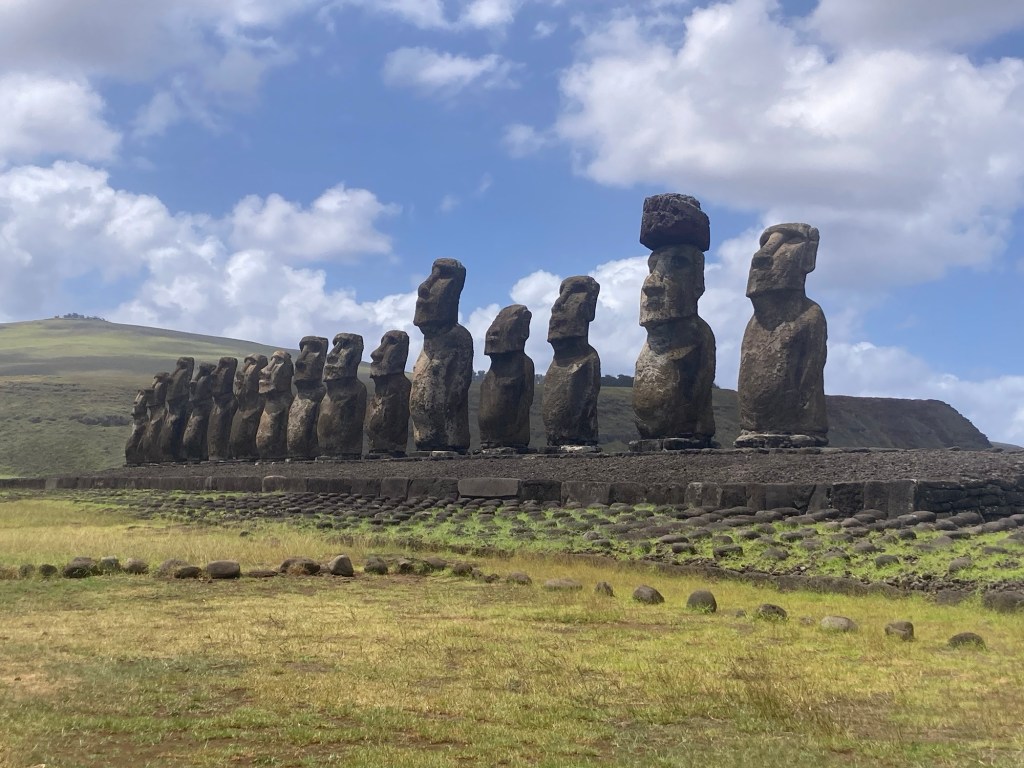
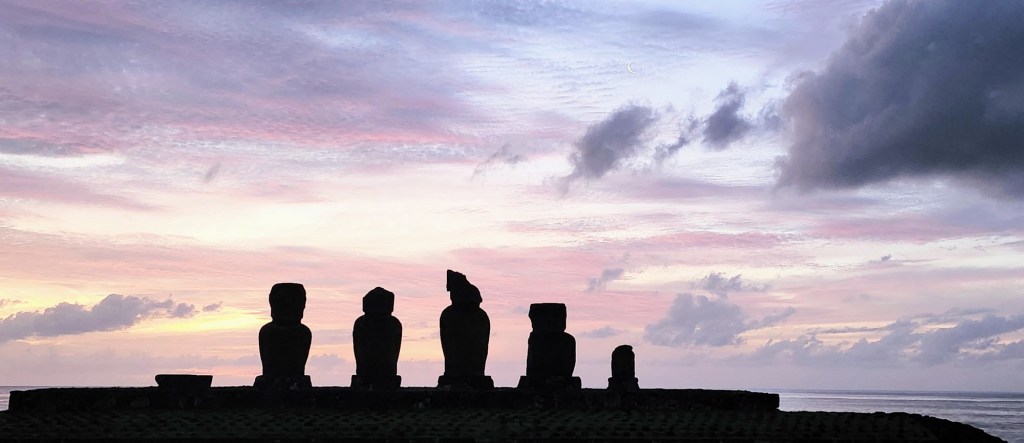
The Rapa Nui are most famous for the Moai they carved. Ranging from 1 meter to 20 meters high, they were carved from local tuff with features resembling a revered ancestor and placed on Ahus, or platforms facing the village to guide and protect the villagers:

The Moai were mostly carved from a single quarry; some which didn’t make it to an Ahu rest on the quarry’s slopes:

How they made it to the Ahu is hotly debated. Some suggest the Moai were rolled on logs, but the local legend is that they’ve “walked”, likely being rolled from side to side. The Moai on the quarry all have their eyes closed; it was only once the Moai made it to their resting place on the Ahu that their eyes were carved open and a piece of coral placed in the socket.

The golden age of Moai carving lasted until about 1700. Deforestation, caused by over logging, infestation by Polynesian rats and climate change wreaked havoc on the island. Agriculture became difficult, fishing was reduced by the smaller boats and water became scarce. The tribes started fighting over the limited resources, toppling their enemies’ Moai as a sign of disrespect for the villages’ ancestors.

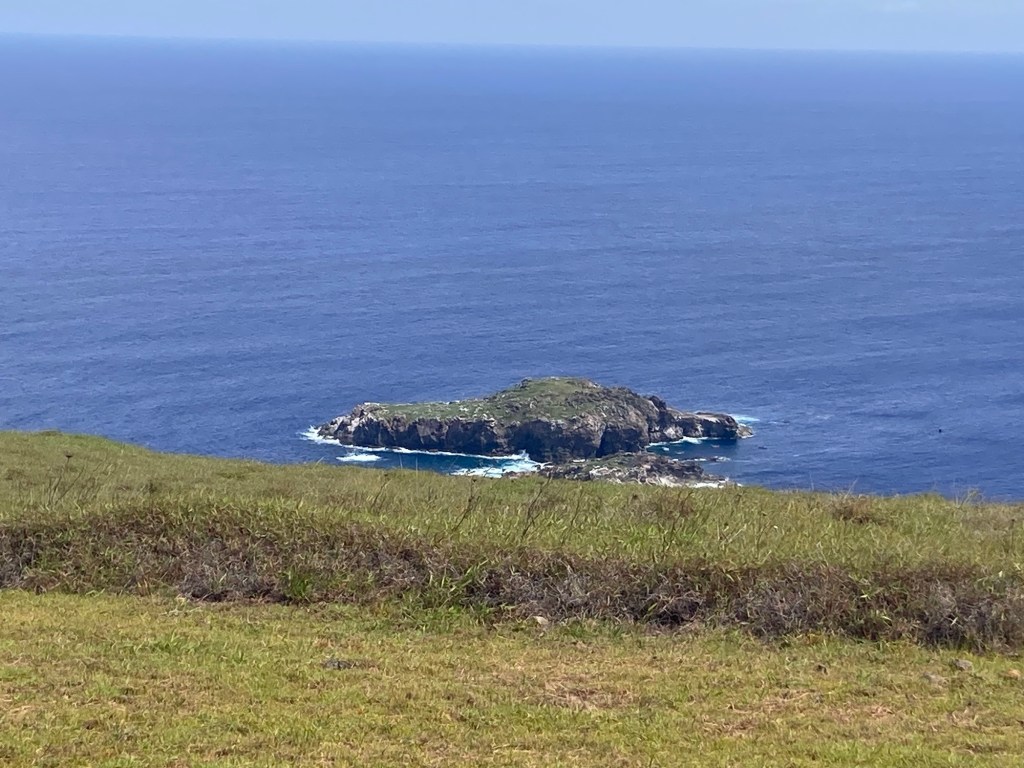
The religion manifested by the Moais ended abruptly ( and without explanation we know of) to be replaced by the Birdman cult in about 1700. Every spring, a man was chosen from each tribe to compete in a race requiring descending a high cliff, swimming about 1.5 kilometres to a nearby island, retrieving the egg of a term and returning back to Rapa Nui, egg intact. The winner’s tribe would select the religious and political leader for the year.

The island on which the terns bred

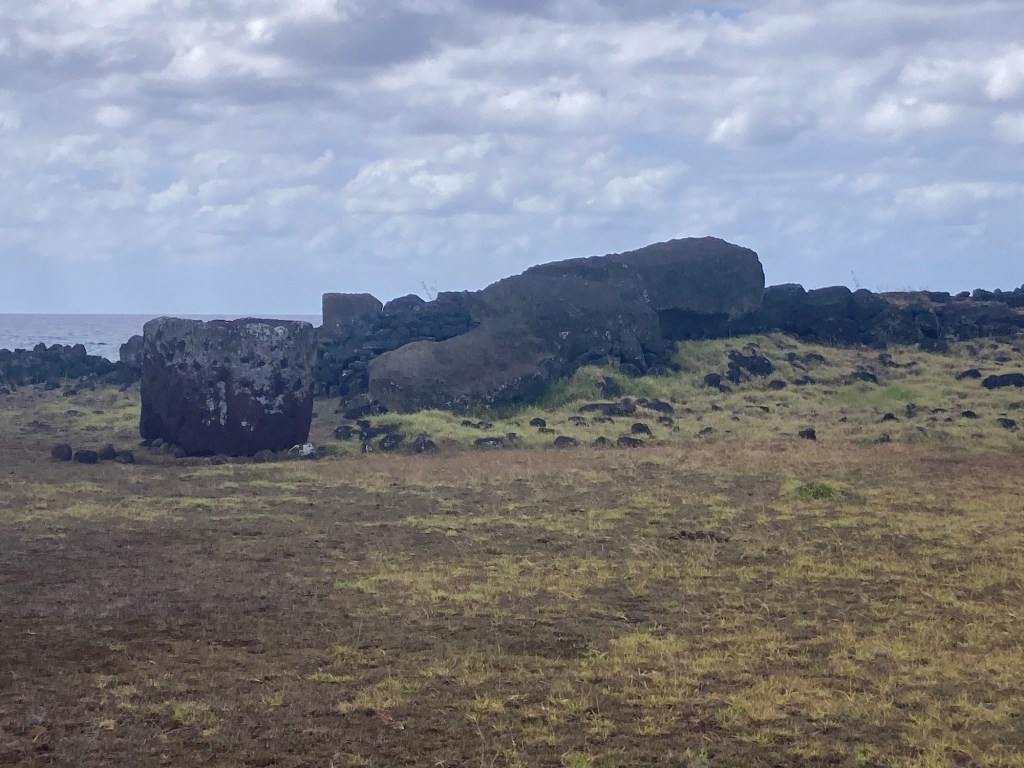
But the Birdman didn’t resolve all the issues. The Dutch sailed by in 1722 on Easter Day and Christened the place Easter Island. The Spanish dropped by and in 1782, Captain Cook stopped on the island. He noted that many of the Moai had been toppled, but not all. By 1822, the largest and last Moai was toppled:

The last Moai standing

In the 1860’s, missionaries arrived, christianizing the Rapa Nui, eliminating the Birdman and re-instating the king. Peruvian slave traders kidnapped hundreds of locals and introduced disease to the island. In 1888, the king signed a treaty with Chile, ceding the lands to Chile.

Over the next 75 years things went from bad to worse for the Rapa Nui. The Chileans leased most of the land to a commercial farming enterprise, with the result that all the Rapa Nui were confined to the single town on the island, Hanga Rua, and subjected to a permit system which prevented them from leaving the island.

Things started improving in the late 1950s. A runway provided for better connectivity, the people were granted Chilean citizenship in 1966 and the permit system abolished. Thor Heyerdahl came and started re-erecting many of the fallen Moai:

Tourism has become the main economic focus. Certified Rapa Nui guides are required to visit most of the archeological sites, only Rapa Nui are permitted to own land, Chileans May only stay up to 30 days on the island and the Rapa Nui language is taught as a second language in the primary schools.

It’s a fascinating place. While it may have started as a paradise where innovation and hard work overcame local resource and environmental issues, the self-destruction of the Moai by the warring tribes is a stark reminder of how easily man can destroy what he has built.

I was going to end by saying after 4 days, we flew back to Santiago but, alas, our return flight had problems ( your guess is as good as mine) and the Chilean airline company, LATAM, the only airline flying here, left most of its 300 passengers in a lurch, simply telling us to find our own accommodation on an island notorious for limited hotel options, and to come back the next day for another flight.

Luckily, some cajoling, lots of tears and a kind hearted lady who offered to room with her son saw us with a room back at our original hotel. This despite LATAM having booked all the rooms there 3 hours before officially cancelling the flight! Needless to say. LATAM is quickly becoming my least favourite airline.

But alls well that ends well and so, back to mainland Chile.

Steak, pizza and lamb: Argentina

A five hour bus ride from Asuncion and a trek through three borders ( Paraguay, Brazil and Argentina) brought me to Iguazu Falls in Argentina, one of the most spectacular waterfalls in the world.

I met up with my friend Cathy and despite the late afternoon rain, we decided to try and see Iguazu Falls from the Brazilian side. Our driver did his best, but a line-up at the border, lots of construction and a miscommunication in Spanish involving Park vs Waterfall meant we missed the last entry so we returned to Argentina and what I was looking forward to most: steak.

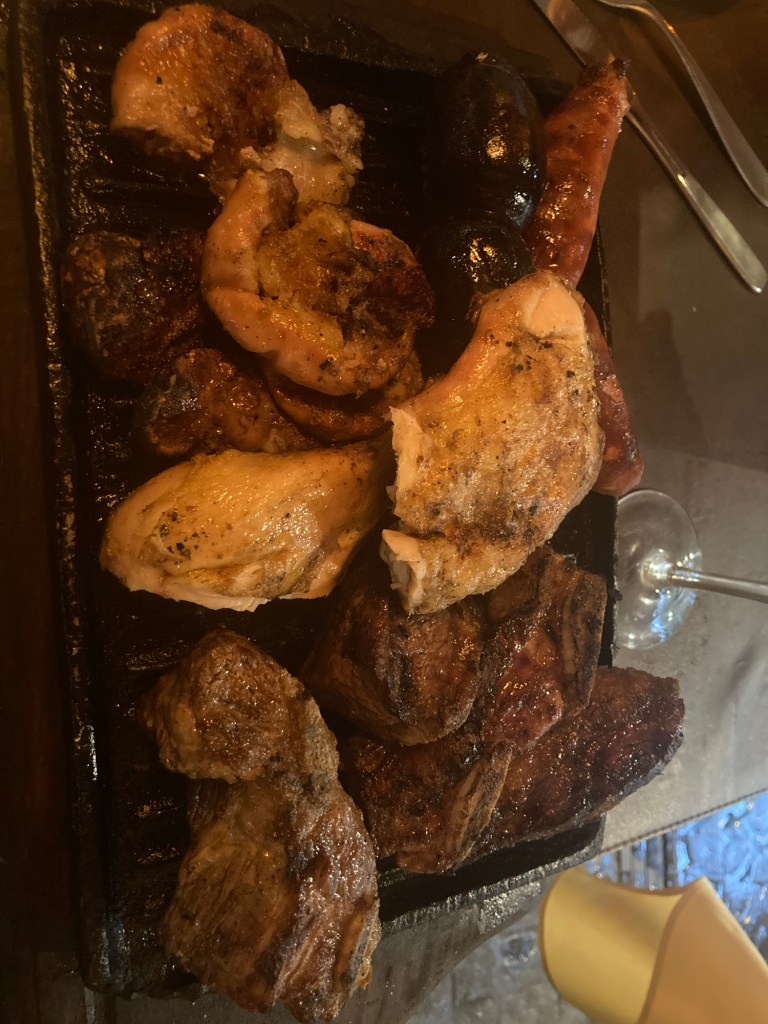
I had visited Argentina twice before and my fondest memories had been of delicious, inexpensive steaks. This time did not disappoint. We found a restaurant and ordered the meat platter for two. Steaks, chicken, sweet breads soon arrived and we dug in:

Stuffed, we returned to our Airbnb to prepare for the next day’s journey to the falls.

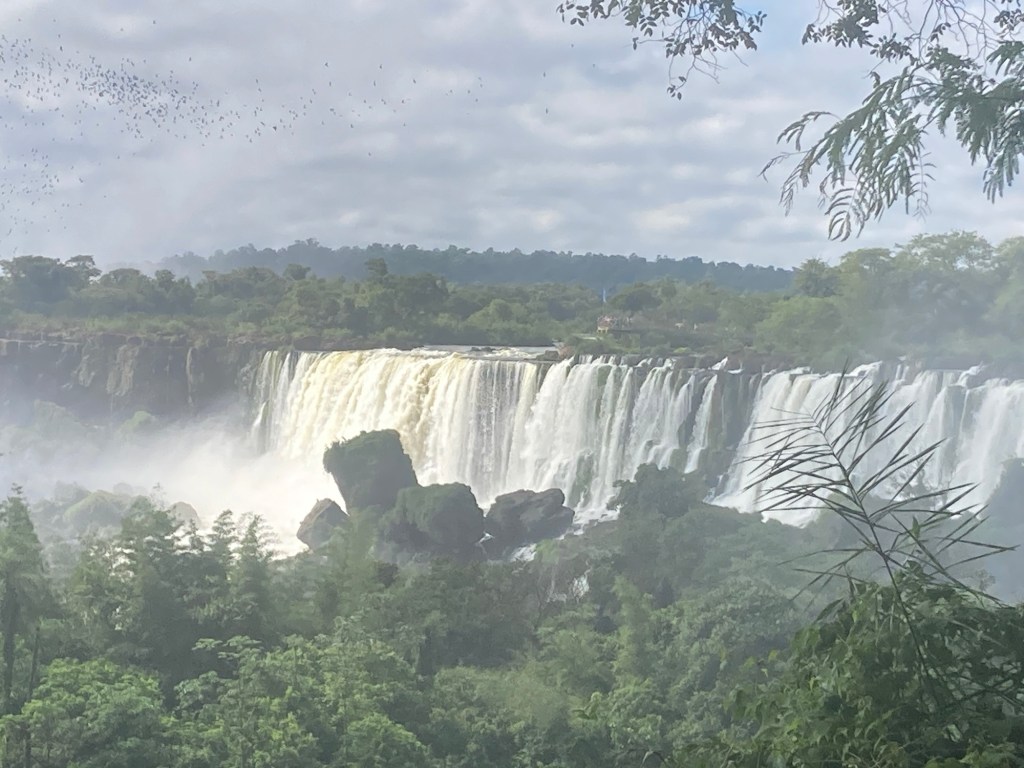
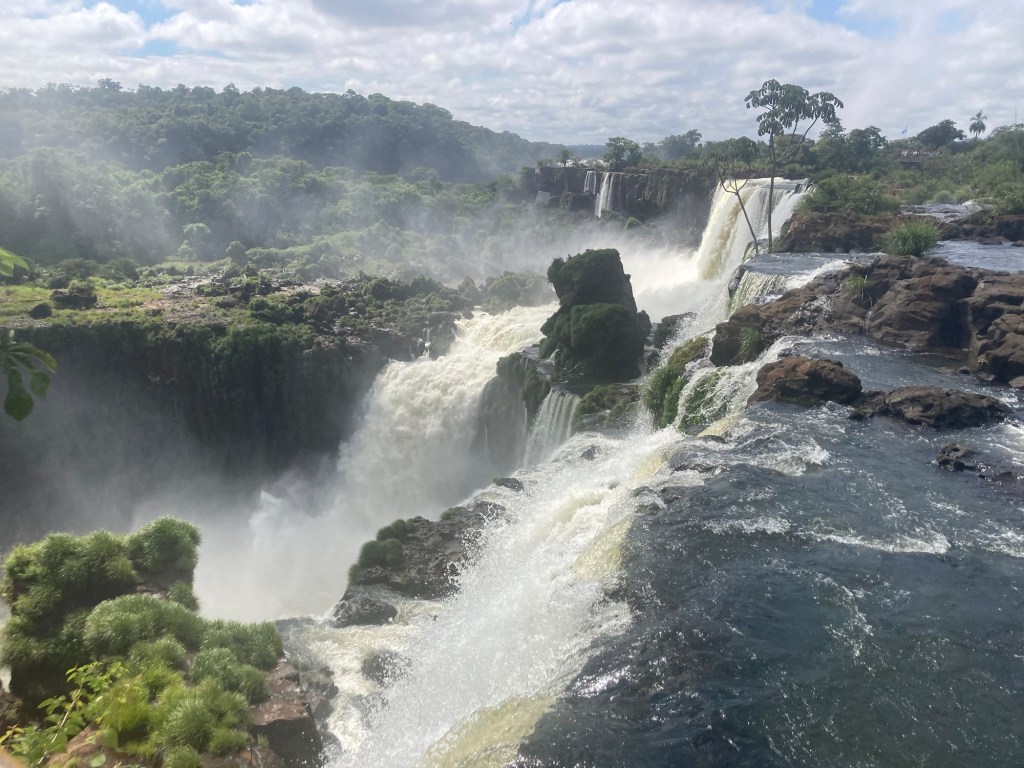
Two circuits were open at the falls, the upper and lower with the former giving you lovely vistas of some of the falls:

The roar of the water was deafening but unfortunately drowned out by the constant whirling of helicopters ferrying tourists above the falls. We made our way to the lower circuit, where we got up close and personal with more of the falls:

Along the way we were entertained by the falls’ very cute rodents, the coaties:

Before flying to Buenos Aires, we were given a lesson in Argentinian economics. Hyperinflation prevails and the peso is constantly being devalued. If we exchanged US$ at the official rate, or withdrew cash from an ATM, we would receive about 850 pesos to the dollar. But if we used a credit card or went to a blue marketer, we’d received about 1050 pesos to the dollar. The blue market is not legal but is tolerated and we exchanged our dollars on the blue market, at shops which doubled as shoe stores:

Blue market cash machines

On to Buenos Aries, where we took a walking tour of the center, seeing the National Congress, the Presidential Palace where Evita had delivered her Don’t Cry for Me, Argentina speech, and the Obelisk, commemorating the city’s 400 anniversary but having nothing else to do with Argentina. More interesting are the painted white headscarves in the main square. When previous governments had disappeared many youth, their mothers would gather once a week, white scarves on their heads, and silently walk in pairs around the square:

Another walking tour took us to La Boca. Originally a port where millions of immigrants from Europe, mostly Italian and Spanish but also German and Eastern European Jews, arrived between 1870 and 1950. A few of the tenements in which they were originally housed have been restored, coloured brightly and now house souvenir shops and artist stores:

La Boca is also football mad and its favourite son is Diego Maradona, the Argentine great , whose image is everywhere but overshadowed only by Messi, the current Argentine football hero. His image dominates in La Boca including on a balcony where long lines form to take a photo beside him;

The large number of Italian immigrants brought some of their culinary traditions, including pizza, to their new country. Pizza places are ubiquitous but we ate in one of the famous old pizzerias, Bancheros ( since 1932):

We enjoyed a few more days in Buenos Aries, visiting the Japanese Gardens, the Evita Museum, the Opera House and indulging in a few more steak dinners before it was time to leave for our next destination, El Calafete, in the Patagonia region of the country.

A three hour flight gave us our first glimpse of Lake Argentino which dominates the area:

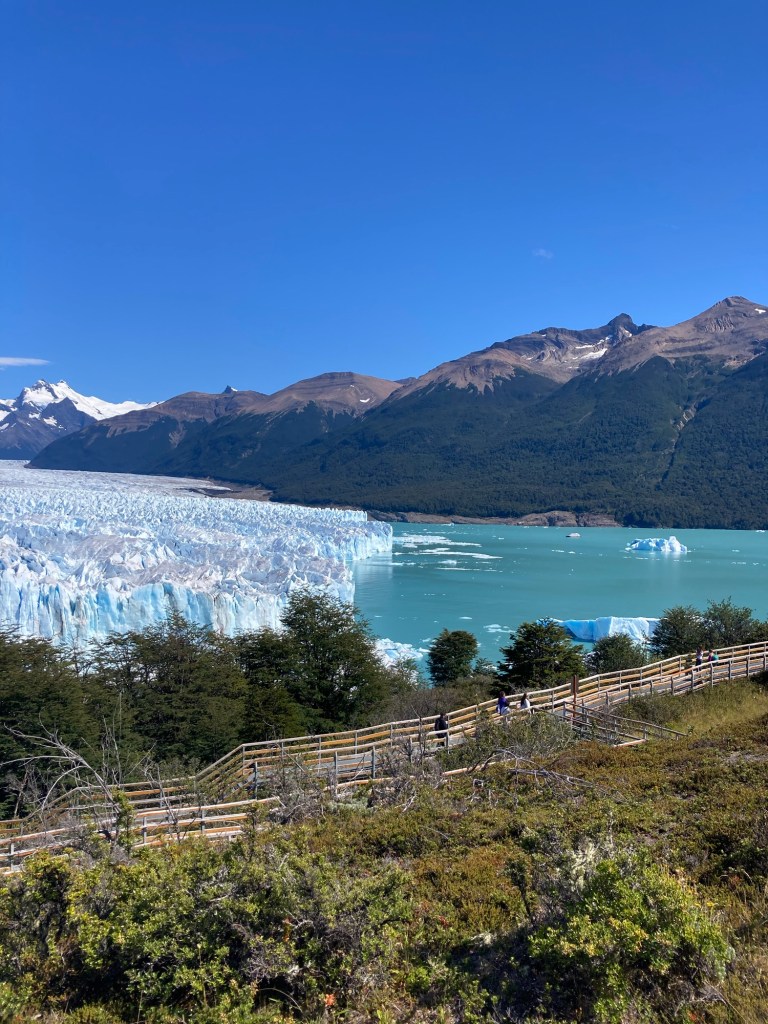
El Calafete is known for its great hikes. Not being much of a hiker, I satisfied myself with a day bus tour to one of the nearby glaciers, Perito Moreno. Ideal for non-hikers, the various metal trails offer different views of the glacier:

A boat ride offers a different view:

Beautiful yes, but having visited Antarctica in 2010, not overwhelming.

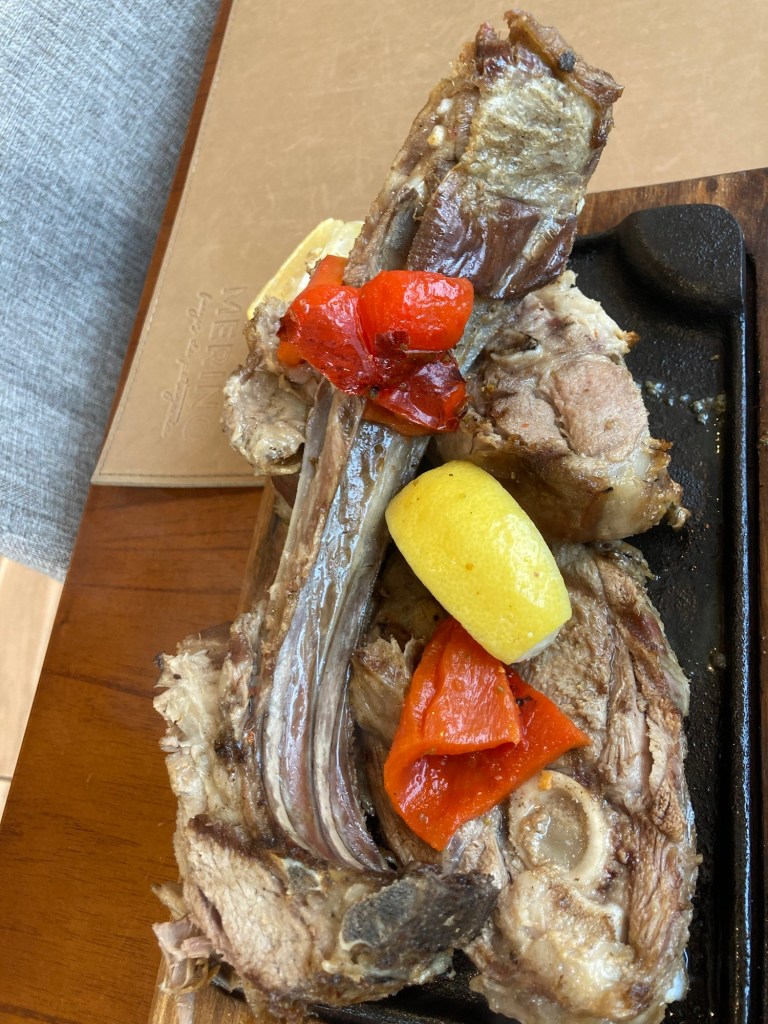
But the lamb was. El Calafete has good steaks but it is famous for its lamb. It’s also famous for its guanaco goulash, a relative of the llama, but I chose to stay with more familiar foods. I had lamb twice, both excellent and both relatively inexpensive:

And so I leave Argentina, stuffed with steak, pizzas and lamb.