People ask why Paraguay exists. The short answer is that although it was the loser in the war against the triple alliance ( Brazil, Argentina and Uruguay) in 1860 to 1874, Brazil and Argentina thought it best to have a buffer state between them and, thus, Paraguay exists to this day. It has lots of jungle, cattle and the largest navy of any landlocked country in the world.
So why visit Paraguay people asked when I mentioned it. Good question since there’s not a lot of tourist attractions. The jungle creates a wealth of birdwatching opportunities and nature hikes, neither of which interest me. Asuncion, the capital, is largely devoid of architecturally interesting buildings as, so my guide told me, Paraguayans didn’t really care about that and destroyed most of them. The former governor’s house, where the Spanish governor surrendered to rebels in 1811, paving the way for Independence, was razed and a park now stands there.
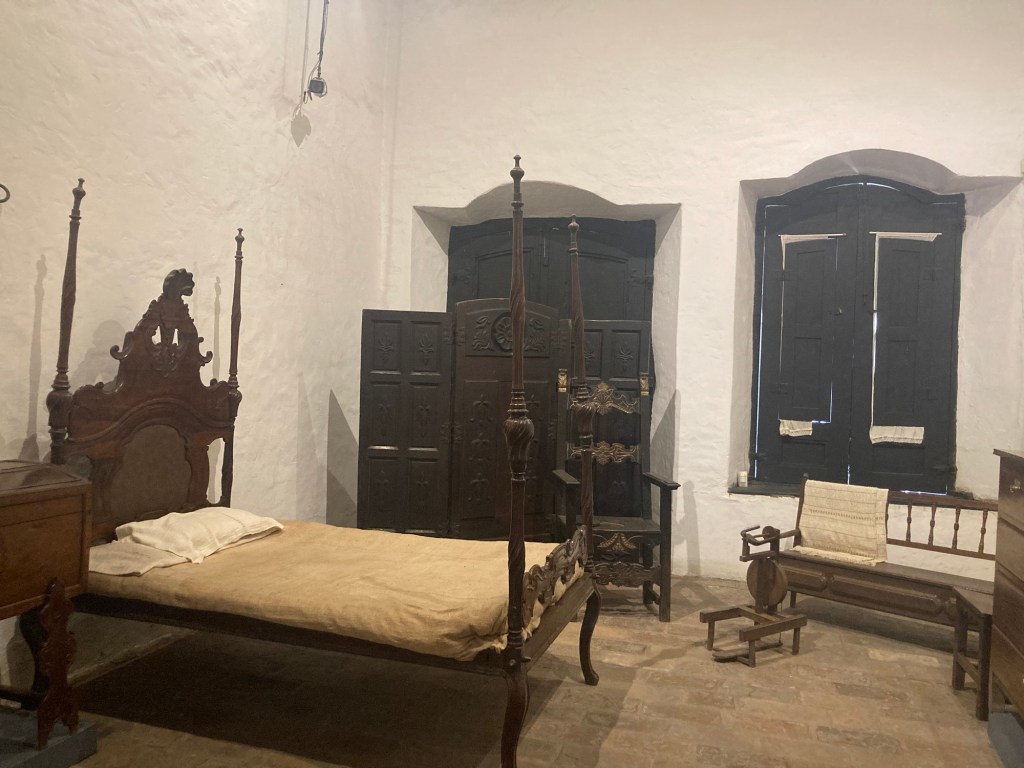
One of the few colonial buildings still standing is Independence House. It’s a museum detailing Paraguay’ s road to Independence. It’s furnished as it was a few hundred years ago, with a mix of Indigenous wood furniture and imports from France:
Independence HouseInside independence house
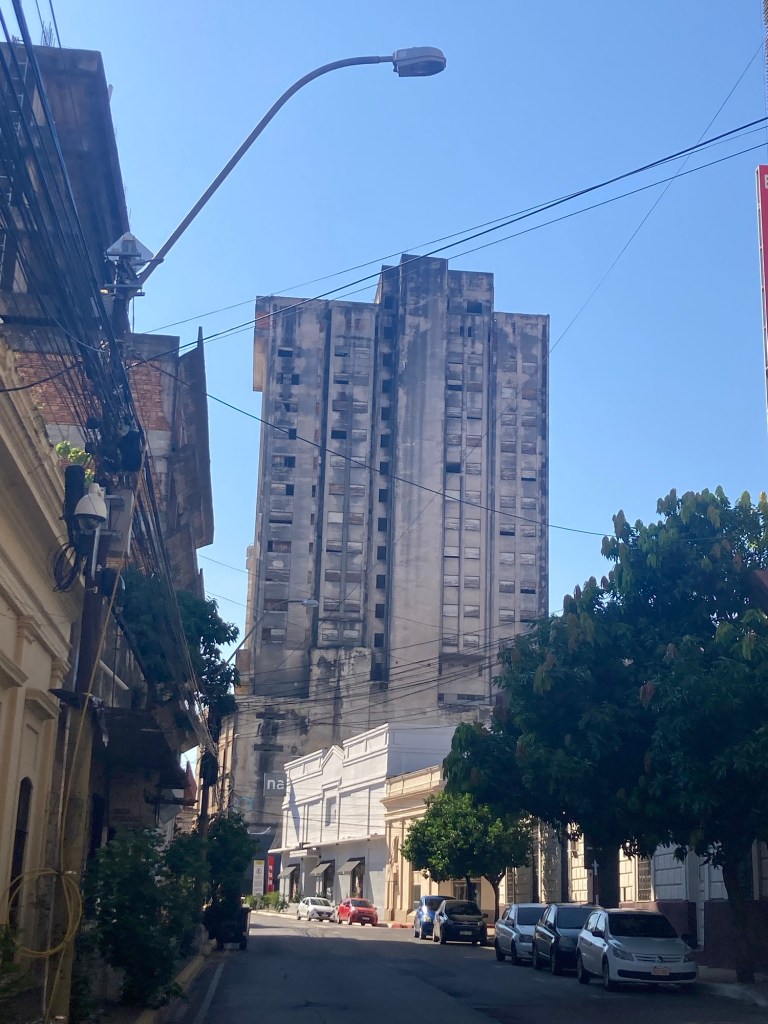
Other than a few historical buildings and government offices, the center of Asuncion has largely been abandoned for the suburbs. 1960 era apartment buildings stand vacant:
An abandoned high rise
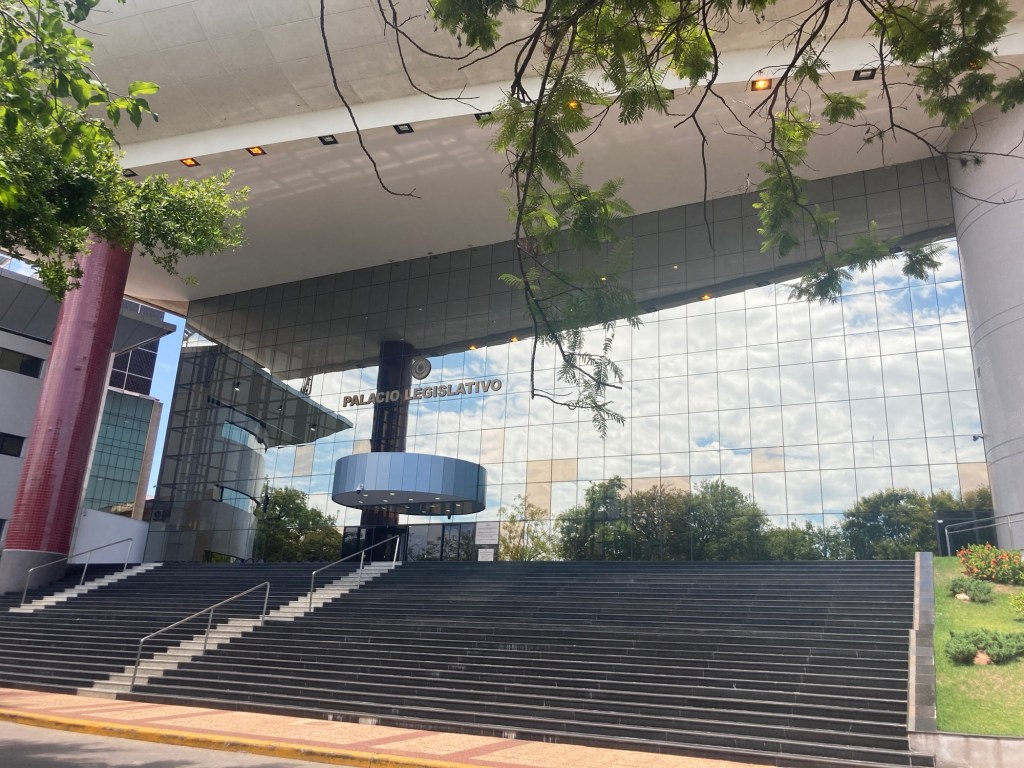
The new Parliament sits downtown. The funds to construct it were donated by Taiwan, one struggling democracy to another:
Other downtown highlights include the Presidential Palace, painted pink as it’s the second cheapest paint colour after white:
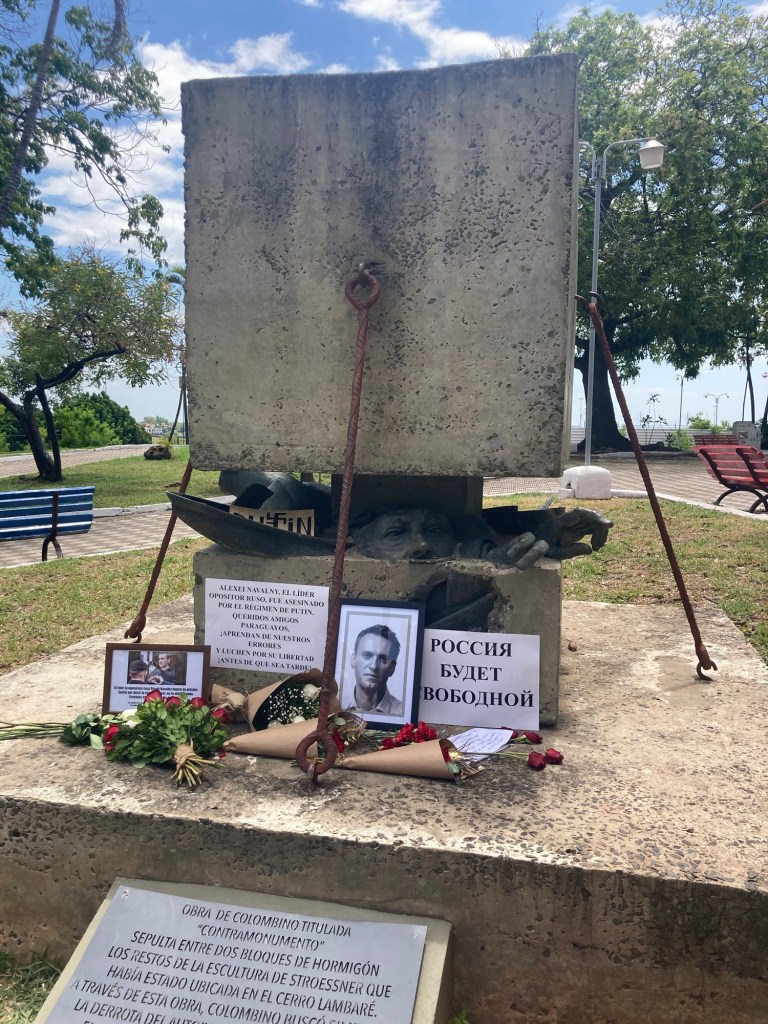
There’s the main cathedral and the Pantheon, both a church and a mausoleum housing the remains of many Paraguayan heroes. One person who is not there is the dictator, Alfredo Stroessner, who ruled with the help of the USA between 1954 and 1989. His legacy includes thousands of “disappeared”, child sex slavery rings and providing refuge to Josef Mengele, the maniacal doctor from the Auschwitz concentration camp. There are no memorials to him that I saw, but there is a memorial to the disappeared:
A small museum is dedicated to the railroad in Paraguay. Constructed in 1861, it ran between Asuncion and Encarnacion, until 1999. Powered by steam engines, the train was one of the earliest in South America. The museum is in the old Asuncion station and has memorabilia relating to the 1800 and 1900 train experience in Paraguay.
So, why Paraguay? I confess I’m counting countries and as I’d never visited Paraguay, it was hot and on my way to Argentina, it seemed like a good stop. Sadly, most of the tours I wanted to take, to ruins of Franciscans and Jesuit missionaries, were not running and all the wildlife tours wanted at least two people, not ideal for a solo traveller.
But I enjoyed my time in Asuncion. I walked to the Museo del Barro, which showcases both pre-Colombian artifacts and modern Art. The people were kind, prices cheap and the weather great. I won’t race back but I’m glad I spent a few days there.
This trip to Malta makes up for one I didn’t make, in April, 2020, when the pandemic caused my flight to be cancelled and the border to close to non-residents. Instead of Malta, I ended up back home in Toronto. It was time to try again.
I arrived after a short flight from Sicily on a gloriously sunny and hot (27 degrees) for November day at 8:00am. Instead of taking a cab to my hotel, I paid €2 to hop on the public bus which 20 minutes later dropped me at the walls of the capital city, Valetta. From there, it was an easy 6 minute stroll down a pedestrian walkway to my hotel. What a delightful introduction to the country.
On a walking tour, I learned more about Malta’s history. Being in the middle of the Mediterranean (70 kilometres from Sicily, 200 kilometres from Libya and Africa), its been a popular stopping off point for most everybody: Phoenicians, Greeks, Romans, Arabs, etc. Malta’s most famous residents were the Order of St. John – the helping monks who founded St. John’s Ambulance- not the military branch the Knights of St. John or the Knights Templar. The monks were invited here by the King of Sicily and quickly settled.
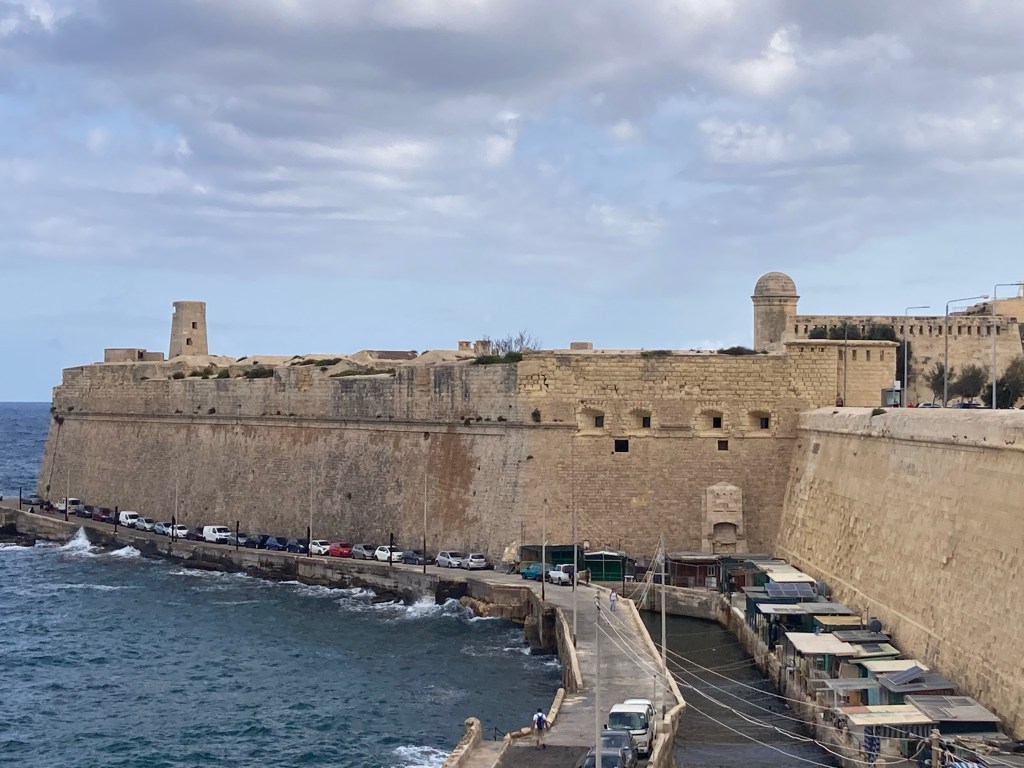
The monks laid Valletta’s first stone in 1664 and it has the distinction of being the first planned city. Its streets are straight and its walls fortified against a potential Ottoman invasion which never came:
Instead, Napoleon showed up and claimed the islands as his own, but they devolved to the British upon his defeat in 1798 and thus remained until independence in 1964.
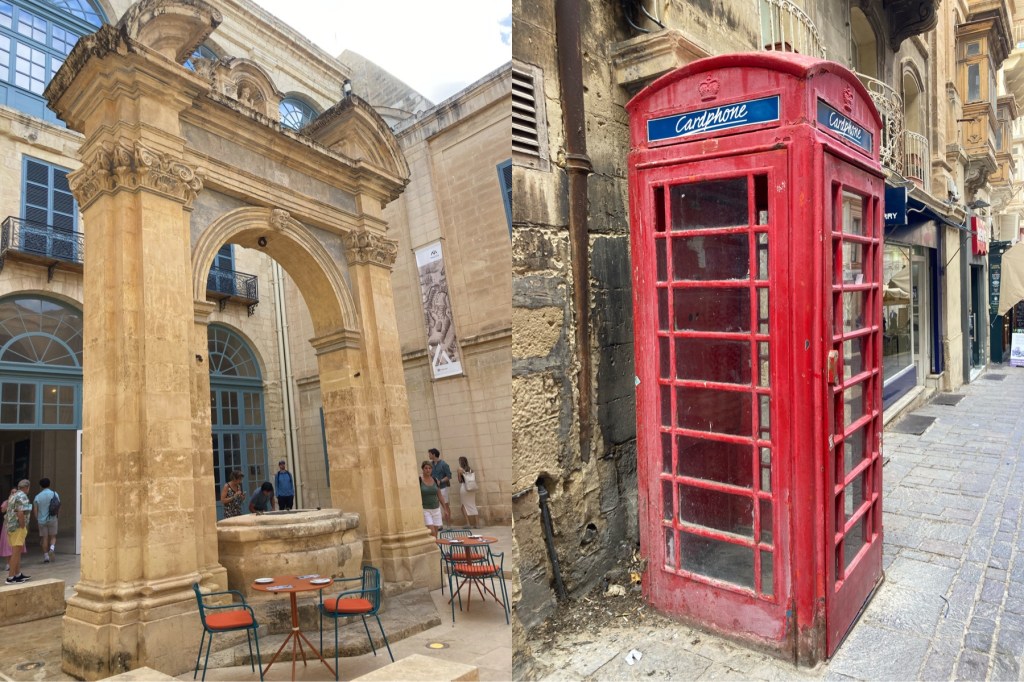
The British left their mark. English is one of two official languages; Maltese, a derivative of Arabic, is the other. A Mark’s & Spencer stood in the main square and empty British phone booths were everywhere;
Being a British colony situated between North Africa and Italy during WW2 was not good. Malta was subject to intensive Axis bombings, over 5,000 tons, and much of Valetta was destroyed. The ruins of the old Royal Opera House stand as a memorial to the devastation:
Valetta is Europe’s smallest capital with only 5,000 inhabitants, although half a million live in its suburbs. The city was largely left untouched after the war, but it being named as an European City of Culture in 2012 sparked a renovation boom. Today, Valetta is a pretty, walkable city known for its ornate balconies:
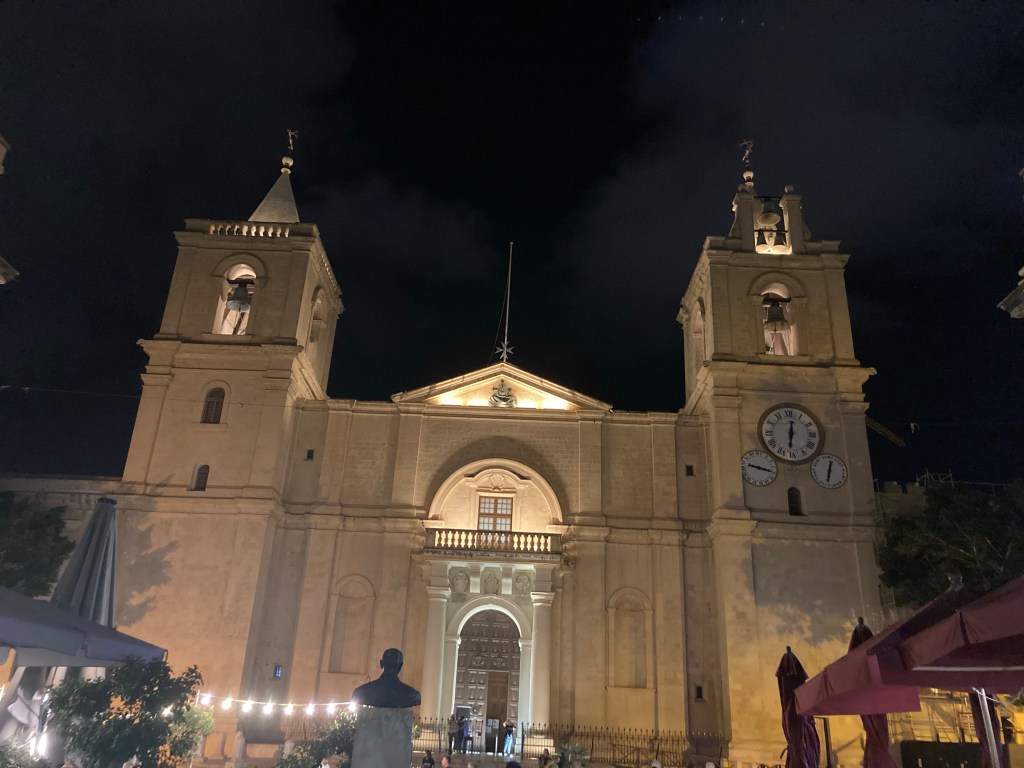
Given its medieval origins by a Christian order, it’s not surprising the country is 96% Roman Catholic and 365 churches are on the islands:
As I’d had my fill of churches in Italy, I passed on visiting any on Malta.
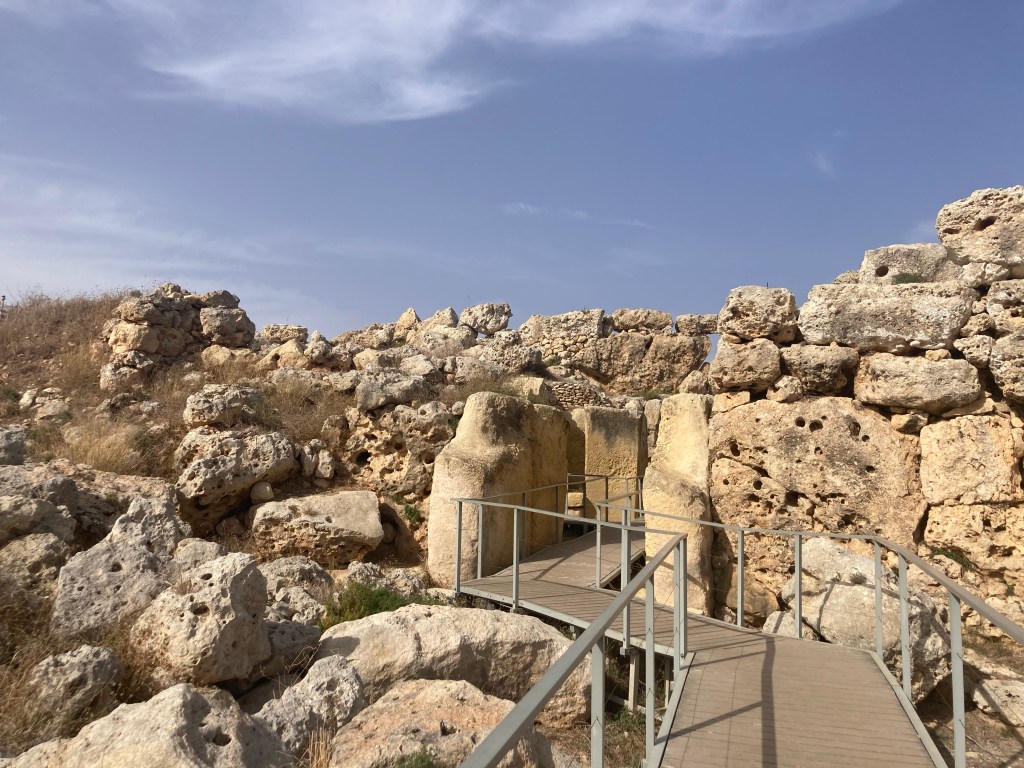
What I did visit were 2 Neolithic ( of 7 on the islands) temples. Constructed as early as 4100 BC, they claim to be the oldest freestanding temples, predating both Stonehenge and the Pyramids. Ggantija, on the island of Gozo, also has many tombs. Archeologists do not know who the inhabitants were or why they disappeared about 2500BC, but from the human remains and sculptures in the temples have deduced a lot of information, like they were farmers, wore skirts and beads as decoration, suffered from toothaches and arthritis etc.
True it looks like just a pile of rocks but the rocks were quarried, chiselled and moved over 6,000 years ago.
We arrived in Sicily in a most unique way, aboard a train ferry whisking us across the Straits of Messina that separate Sicily from the mainland. Unfortunately it was dark so the scenery was limited.
We awoke the next morning to clear, bright skies, a welcome change from the clouds and downpours which dogged us in the north. Feeling rejuvenated in the sun, we set off on a No Mafia walking tour through the center of Palermo. Led by Ermes, we learned about the rise of the Mafia in Sicily ( a weak government creates a power vacuum the Mafia exploits) and attempts to reduce its power. Ermes belonged to an organization which loosely translates to Good-bye Protection Money and it recruits shops which display its mantra:
We walked around Palermo, to the law courts, the police station, to memorials of judges, lawyers and police officers killed in the anti-mafia campaign.
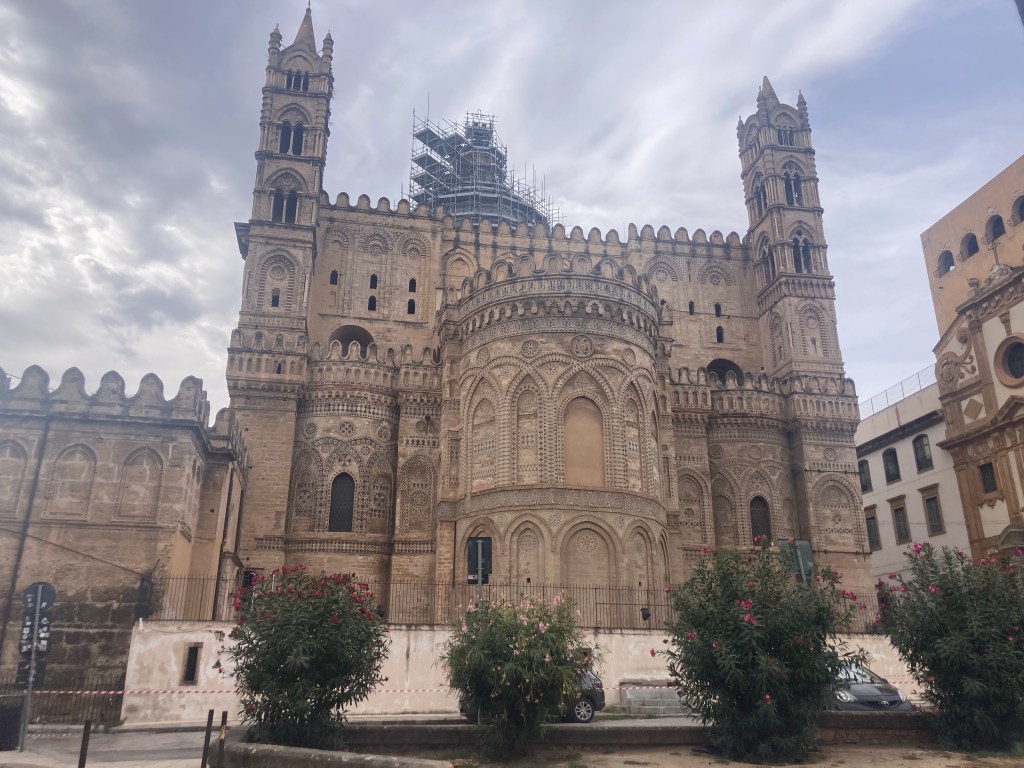
We then did some non-Mafia related sightseeing, enjoying the Norman architecture reflected in Palermo’s main buildings, including its imposing palace and the Duomo:
In the evening, we joined Annalise and a French couple for a street food tour. We started with traditional Sicilian treats like the deep fried rice ball- arancini- before progressing to the infamous spleen sandwich, offal in bread with ricotta cheese:
They look better than they taste- like dry liver. The story goes in medieval times, Jews were employed by the butchers and, in part payment, were given the unsellable pieces of the cow. Due to dietary laws, they couldn’t eat the spleen, etc. so they cooked it, put it between bread and sold the spleen sandwiches.
Of course, we finished with gelato, which Palermo contends it invented. I think the Florence populace would disagree.
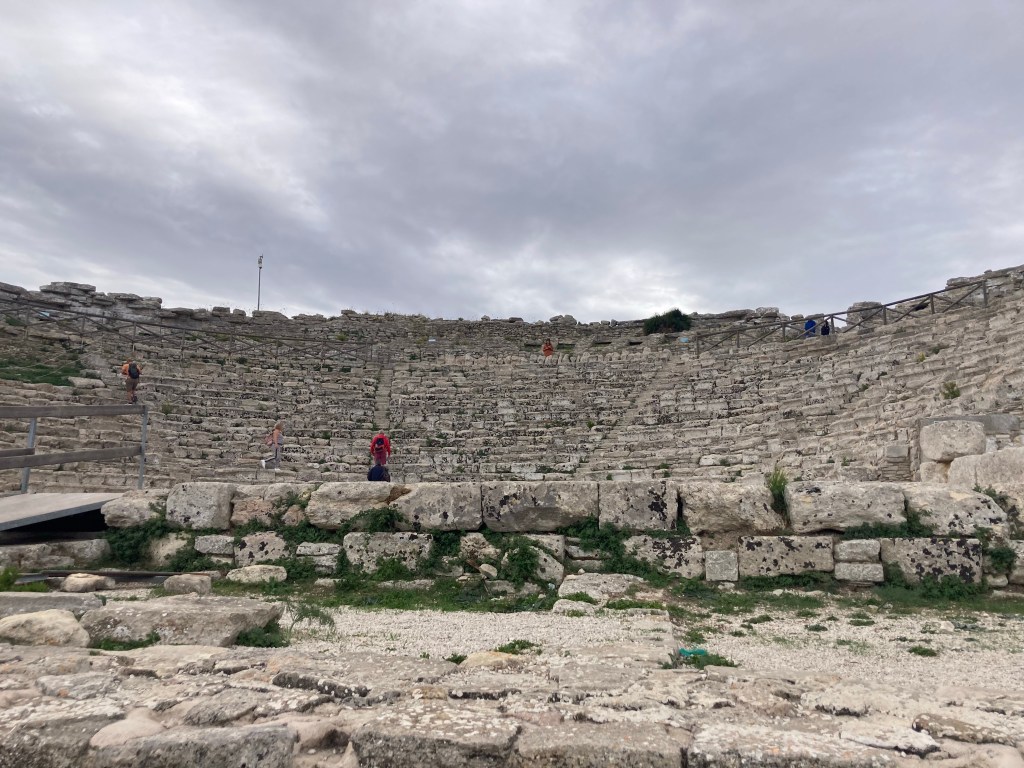
We picked up a rental car and drove to the Greek ruins of Segesta where a 6th century BC Temple and Ampitheatre greeted us:
The Temple is considered one of the best preserved and afforded us expansive views of the surrounding countryside:
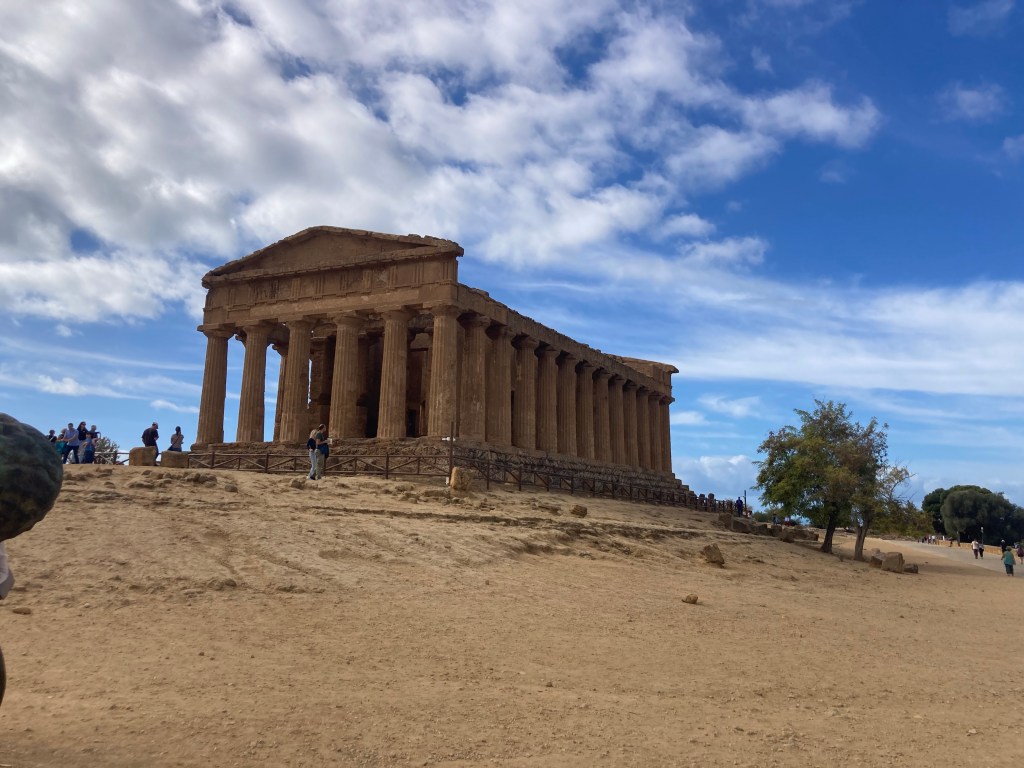
Continuing with the Greek theme, we drove to the city of Agrigento, a one time Greek colony with an extensive archaeological park. Stretching over 2 kilometres, the park contains the ruins of 7 temples, a few necropolises and other remnants from Ancient Greek and Roman occupation. Its Temple of Concord is remarkably intact for a 2500 year old building:
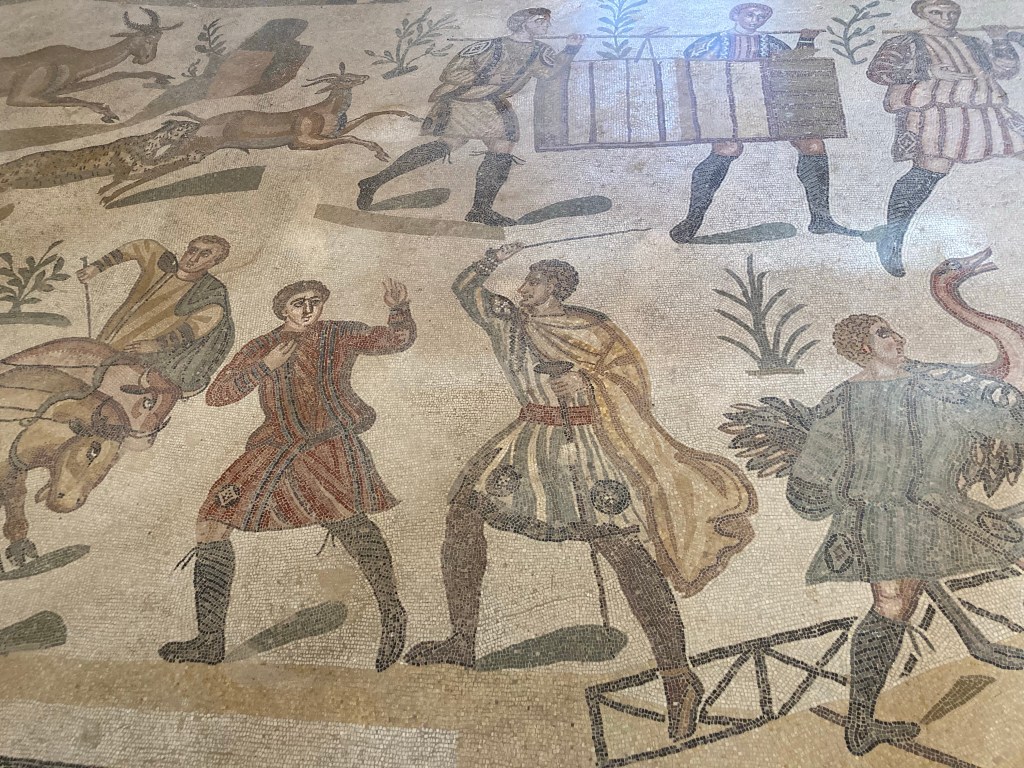
Much as I love Ancient Greek temples, one of my highlights in Sicily was the detour we took to the Villa Romana del Casales, the remains of a 2nd century AD Roman Villa with the most spectacular non- religious mosaics imaginable. It’s thought to be the country house of a wealthy Roman trader and all of its rooms are richly decorated with mosaics:
A 200 foot hallway’s mosaics depict the transport of exotic animals from Africa to Rome:
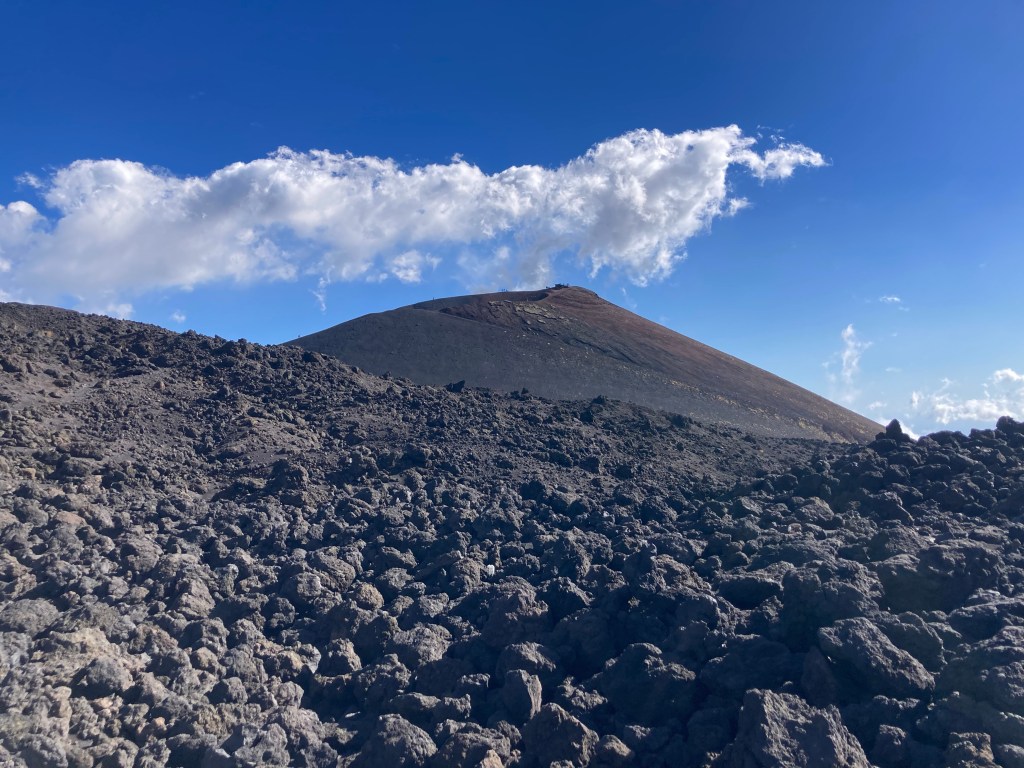
After a brief stint in Siracusa, another former Greek colony, we made our way to our final destination, Catania. We splurged for a tour of nearby Taormina and Mount Etna. Daria, our guide, enthusiastically explained how the volcano has dominated life in the region for centuries. Its super rich soil dictates what crops to grow, the constant lava flows create good building blocks and various saints are reputed to have miraculously stopped eruptions:
Climbing is possible to see one of its many craters, but on the day we went up, it was only 10 degrees and extremely windy. My companion climbed up, but I settled for a short trek to one of the lower craters.
We ended our time walking around old Catania, seeing a plethora of pretty Baroque churches and an ugly, unfinished one:
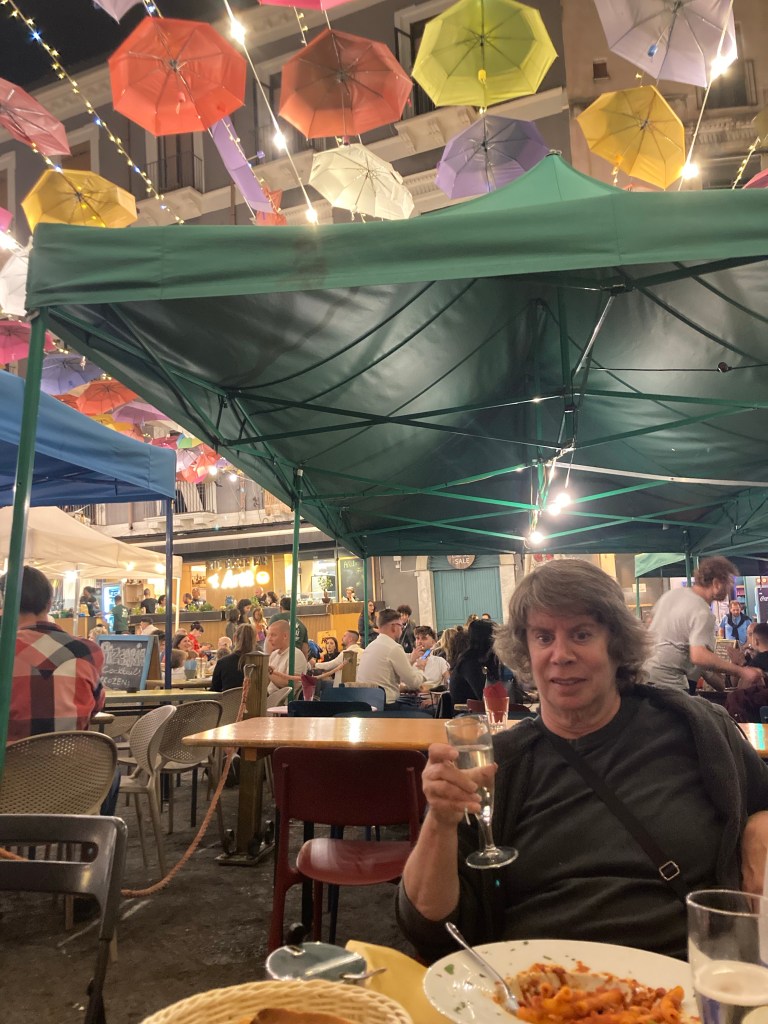
After a week, it was time to leave. One last dinner of a caprese salad and pasta and a glass of Prosecco:
La Speizia to Florence is about a 2 hour drive, but Pisa is on the way so we couldn’t resist stopping in at its leaning tower, along with about a million other tourists. The square was packed, the lineup to climb the tower about three hours long, and everything seemed very touristy. Perhaps it was a good warm-up for what awaited us in Florence. So we snapped a few photos of each of us holding up the tower, looked around and left.
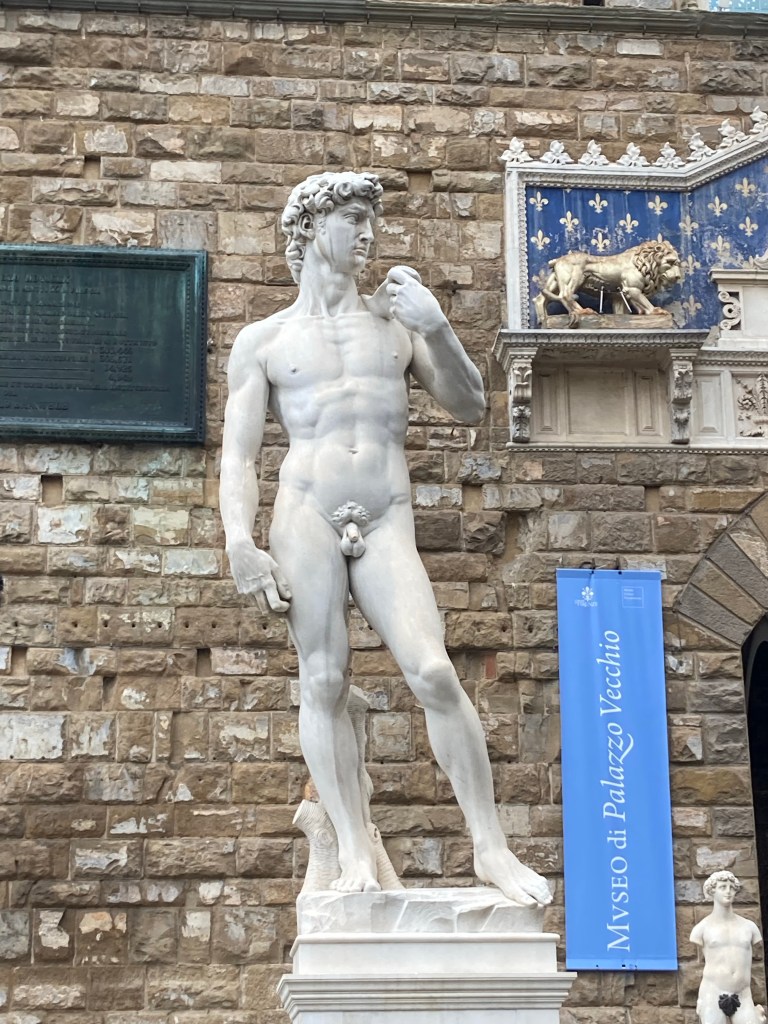
Florence is one of the most beautiful cities I have ever visited. In the old town, art and architecture marvels at every corner. We started with a Medici walking tour, beginning at the Medici tombs at the San Lorenzo church. We made our way to the Duomo with its baptistry and bell tower, then went to the Uffezi gallery to look at the fake David statue before finishing at the Ponte Vecchio bridge.
The real David statue is in the Academie, but tickets are hard to get so the city of Florence has kindly put a number of fake David statutes all around.
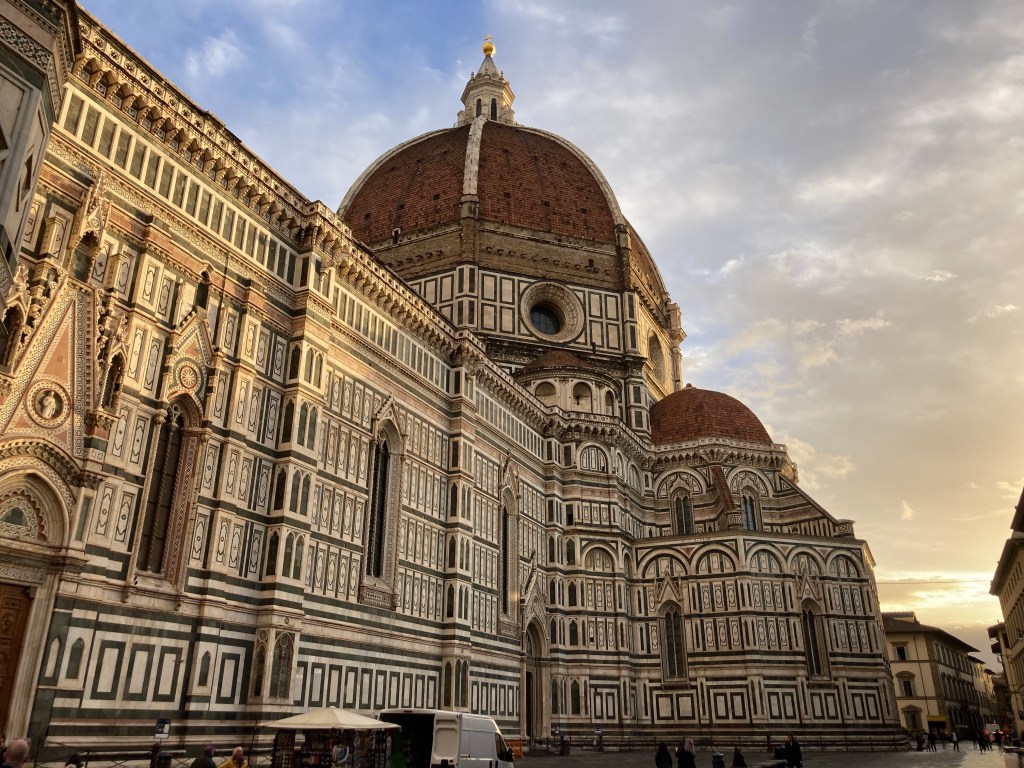
MaryAnn decided to hike up the 441 steps of the bell tower but I chose instead to sleep in. The next day, I did go to the Duomo early and managed to get some photos of it without a throng of tourists in front:
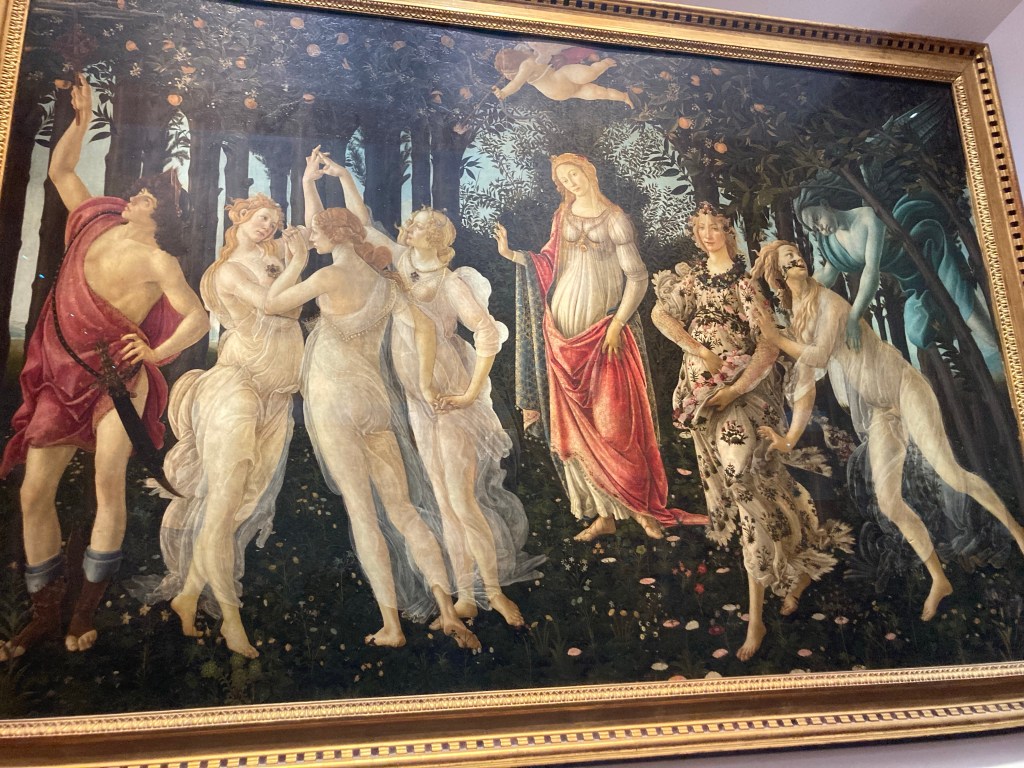
We did the usual tourist things. We braved the gold stalls on the Ponte Vecchio bridge without buying a thing, we visited the largest Medici, Palace, Pitti Palace, and it’s Boboli gardens where we got drenched in a downpour. I toured the Uffezi Art Gallery and admired The Birth of Venus masterpiece:
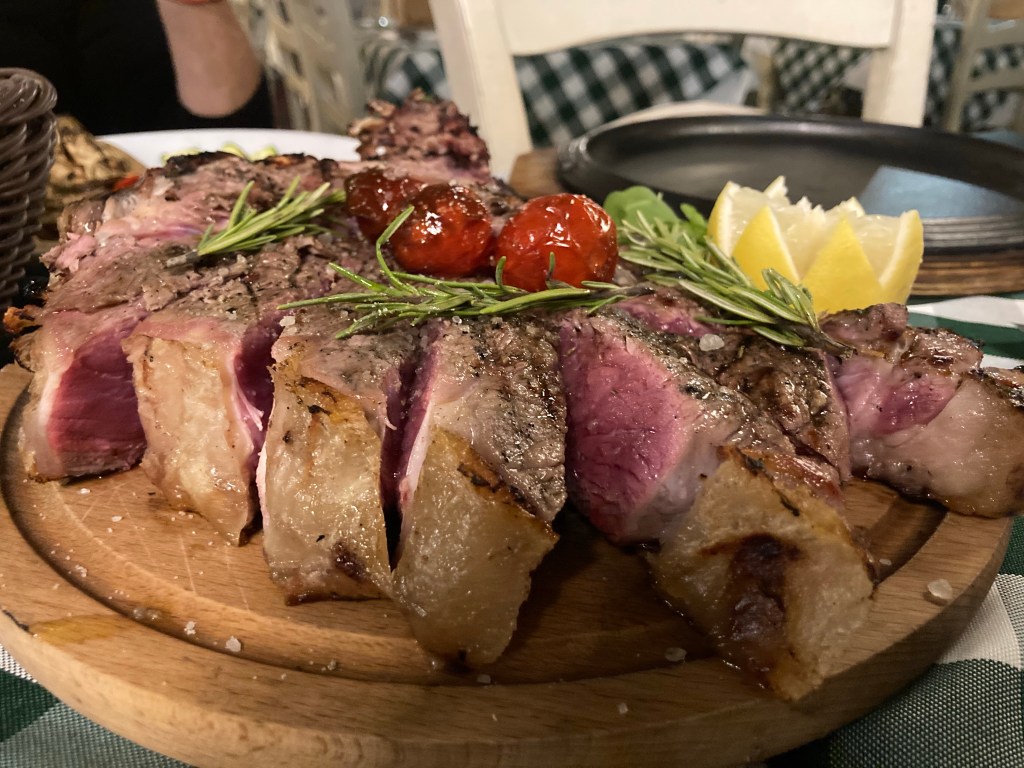
Of course we indulged in Florence’s foods: gelato and a T-bone steak at least 3 fingers high and cooked rare:
But for the constant rain and huge number of tourists, it was a short but sweet visit.
We drove on to Bologna, where the food fest continued with its specialties, Parmegiano Reggianno cheese, balsamic vinegar, Parma ham but no spaghetti Bolognese, which has no connection to Bologna. Rather Bolognese tagliatelle is its famous namesake, fettuccine like noodles with a meat and tomato sauce.
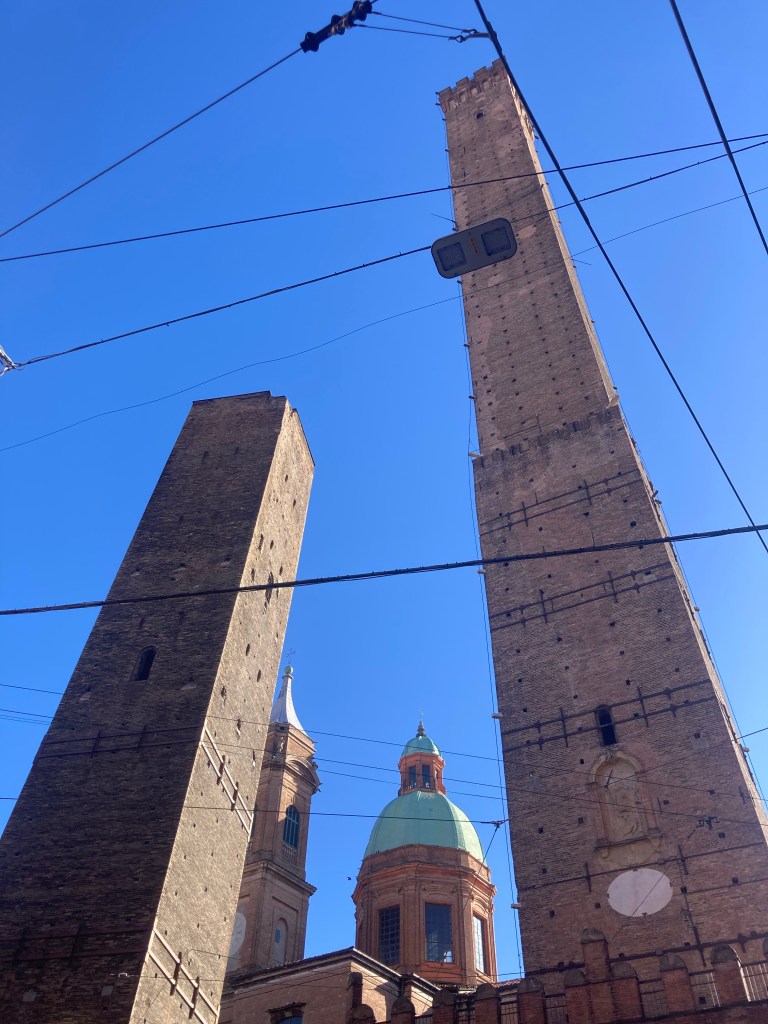
Bologna’s architectural treasures are its towers. Constructed as residences in the 12th and 13th centuries by wealthy families, they were a sort of building competition to see who could have the highest tower. At one time, over 100 towers dotted the cityscape but today only 22 remain, each with varying degrees of lean:
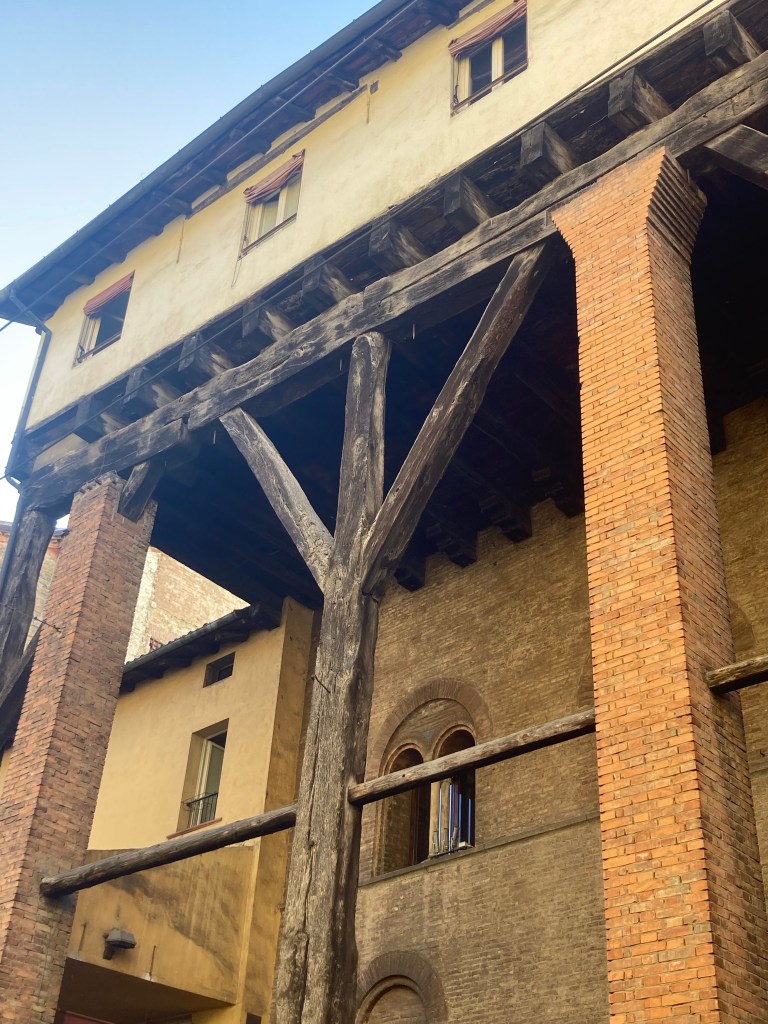
Bologna’s porticos are a UNESCO site. Begun in the medieval ages when a housing crisis threatened, the city offered a tax exemption to homeowners who built student housing above the sidewalks:
Today, their 50 kilometres plus offer a welcome shield from the rain:
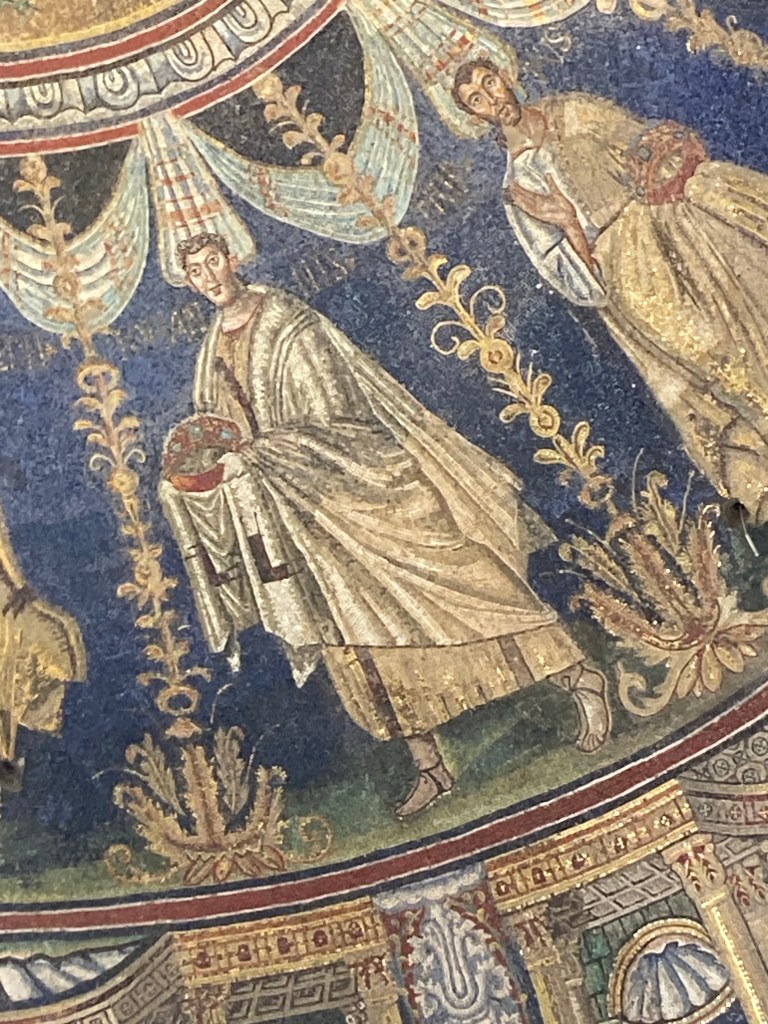
Our highlight was a trip to Ravenna, the capital of the Roman Empire in the 5th century and home to the Gothic kings before Byzantium recaptured the city. Its mosaics are spectacular;
The colours are vivid and the designs so intricate they portray movement:
Ravenna was a welcome relief from the crowds in Florence and Bologna and the rain finally let up as we walked from church to church in the city, admiring the mosaics. Ravenna was a wonderful surprise and a city not to be missed.
But now, we head hopefully to sunshine in Sicily.,..
I confess the only reason I went to San Marino was to be able to add another country to my country’s visited count. We were driving around Italy and planning to stay in Ravenna, just an hour away from San Marino, so why not visit it.
San Marino is old; it’s the world’s oldest republic. It is also small, about 60 square kilometres. For reference, Toronto is nearly 650 square kilometres. It was founded by a former Croatian named Marino who was escaping the Roman Emperor Diocletian’s anti-Christian edicts. In 301AD, he founded the republic atop Mount Titano. When he was later made a saint, San Marino was renamed in his honour.
The view from Mount Titano
San Marino’s main attraction is its 3 towers, built between the 12th and 14th century either for defensive purposes or as prisons, no one is quite certain.
Tower 1
So why does it exist? It was one of a multitude of Italian city states that survived into the 19th century. Girabaldi, the statesman credited with unifying the many Italian city states into a single entity in the 1850’s was given refuge in San Marino from anti-unification forces. As a gesture of gratitude, he guaranteed San Marino’s independence. In 1862, Italy and San Marino signed a friendship treaty cementing its independence.
So it stands today, looming high above Italy on Mount Titano. Besides walking between the towers, which takes about 15 minutes, there’s not a lot to do. We visited the Crossbowman’s Quarry ( a 5 minute walk from the hotel) and the palace which serves as the seat of government ( another minute walk). We did pay €5 at the Coin Museum to get a San Marino stamp in our passport. We saw advertisements for a Vampire Museum, but passed on visiting it.
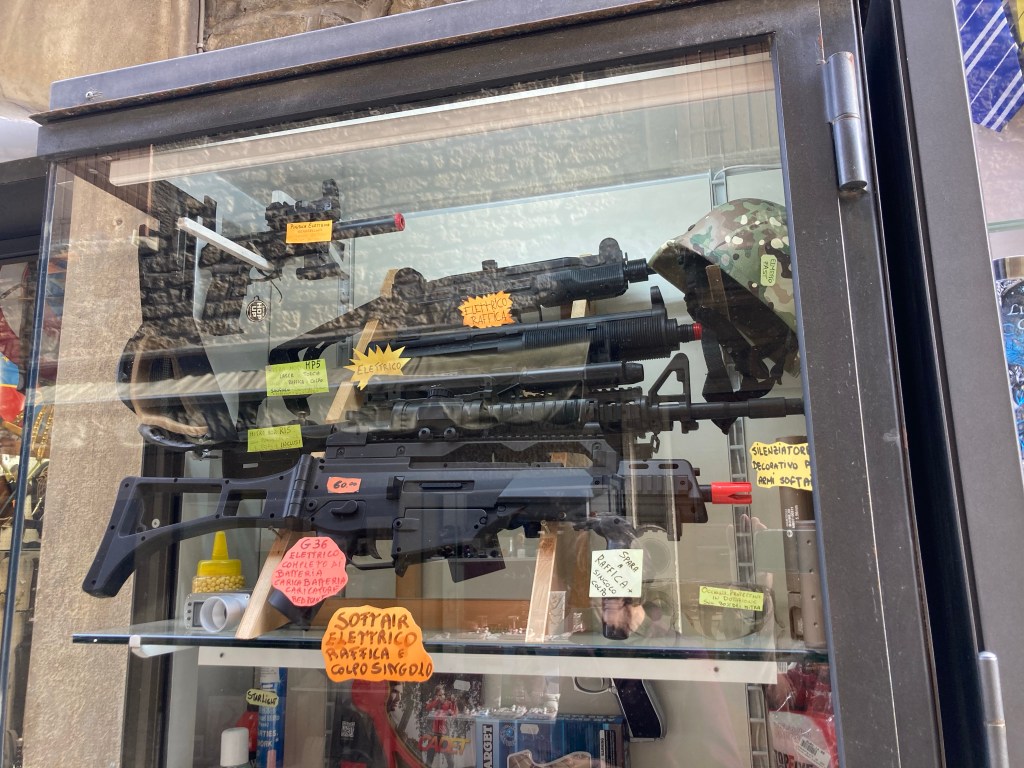
The country earns its income primarily from tourism with some banking and ceramic manufacturing as well. But its most obvious source of revenue, and this came as a big surprise to us, is from weapons’ sales. Apparently it has the most liberal gun laws in Europe:
Gun shops and sword shops sat side by side the souvenir stores and some nifty toy stores. We didn’t stop in the gun stores; we probably couldn’t bring them back to Canada.
If all had gone according to plan, I would be on a tour of Eritrea, Djibouti, Somaliland and Sudan but plans go awry and with medical facilities post-COVID in short supply in the Horn of Africa and a civil war raging in Sudan, the tour company cancelled the trip. To salvage some of my flight plans, I invited a former work collegue, Maryann, to join me for a jaunt through Italy.
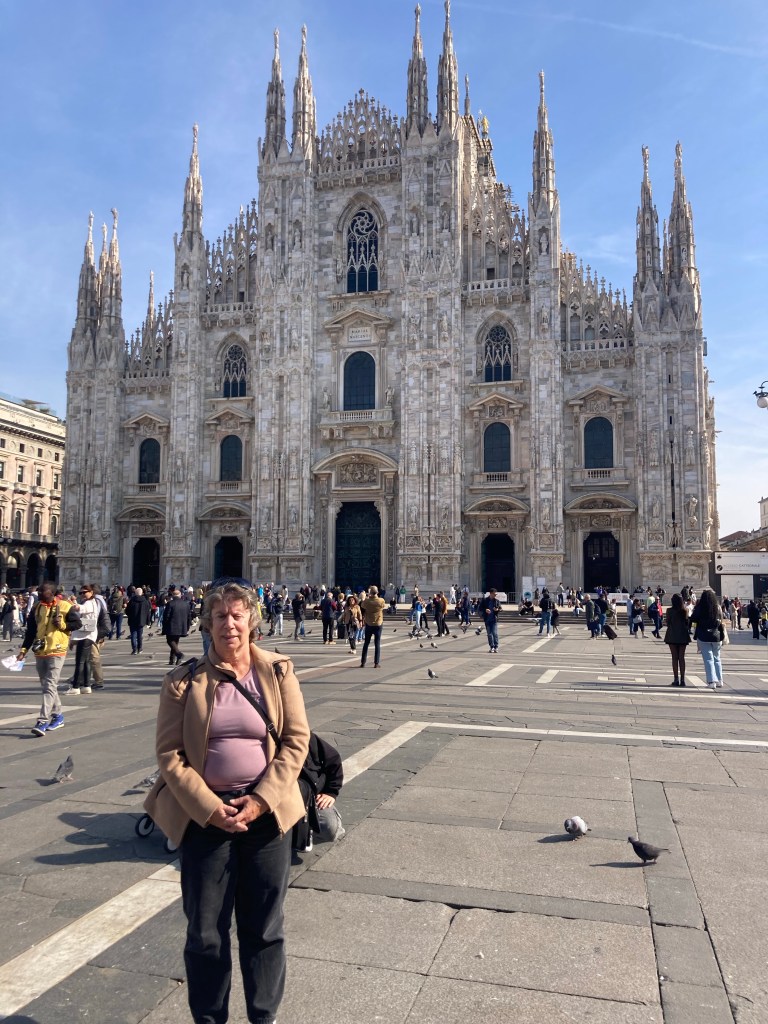
Thus we arrived in Milan one sunny mid-October afternoon. The weather forecast was not optimistic. While it had been hot and sunny for the preceding 4 weeks, the next few weeks were to be cool and rainy. We raced to Milan’s central Cathedral, the Duomo, in the hope of getting a few photos with a clear blue sky:
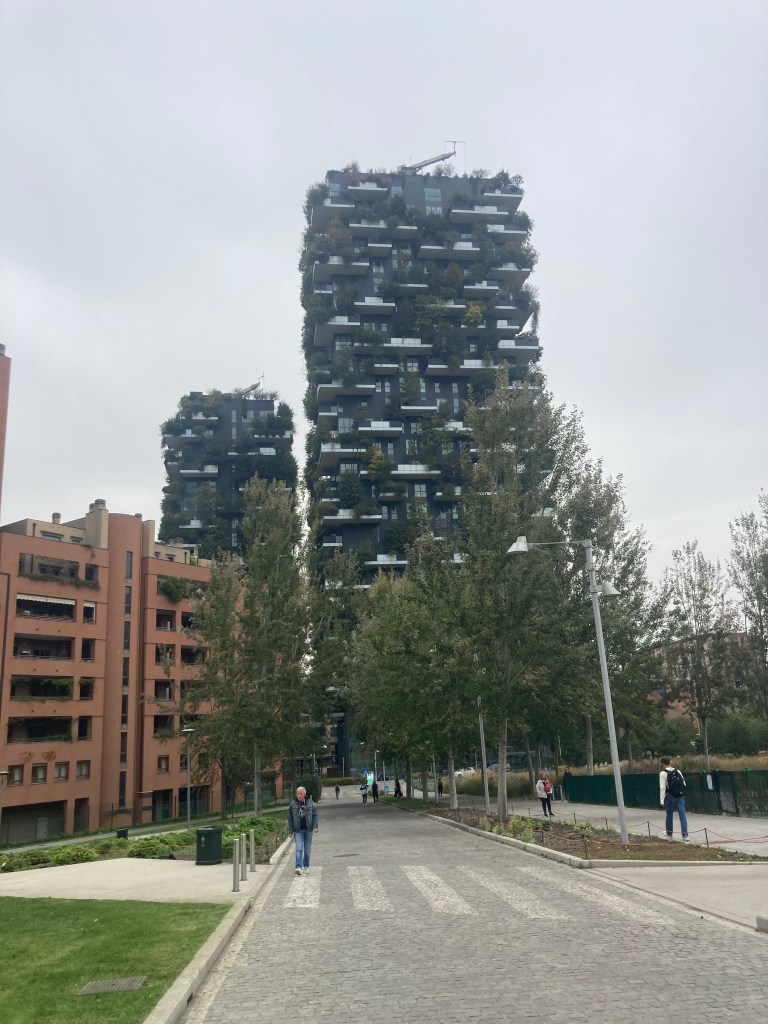
The skies started clouding over but the rain had not yet started so we enjoyed some outdoor sights, walking the terraces on the Duomo roof, visiting the Monuments Cemetery and gawking at the environmentally innovative Bosca Verticale apartment high rise with its plethora of trees growing on its balconies:
The rain started and we focused on indoor activities. Leonardo da Vinci’s Last Supper is Milan’s most famous art piece. Nearby, the Science and Technology Museum has a Leonardo da Vinci exhibit with many of his futuristic designs and drawings on display, with life-size models finally created in the 1950’s, beside the drawings.
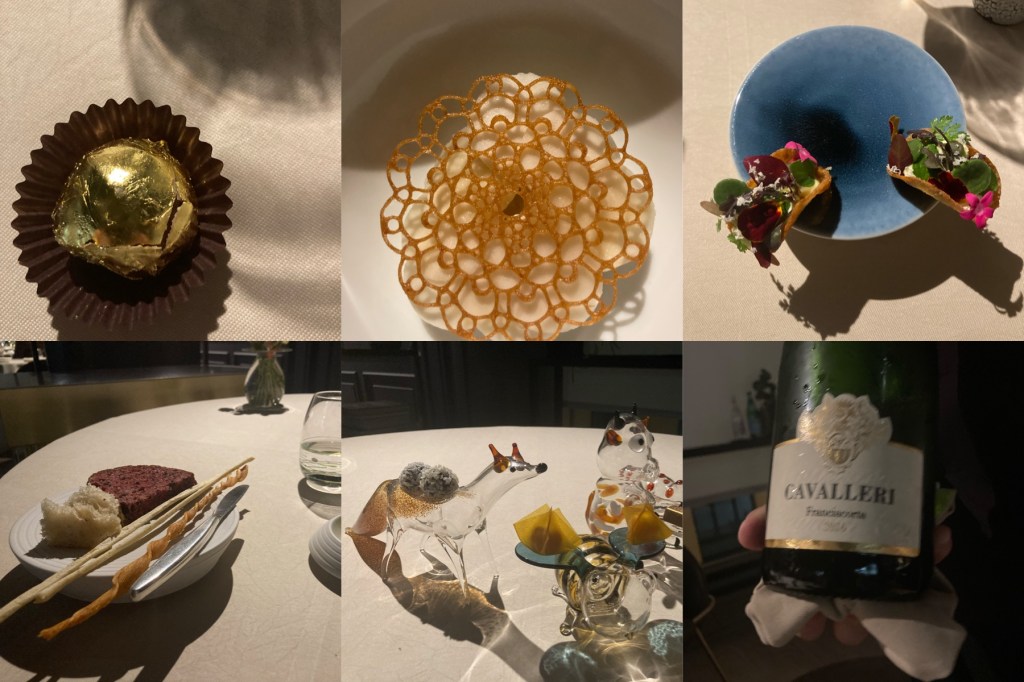
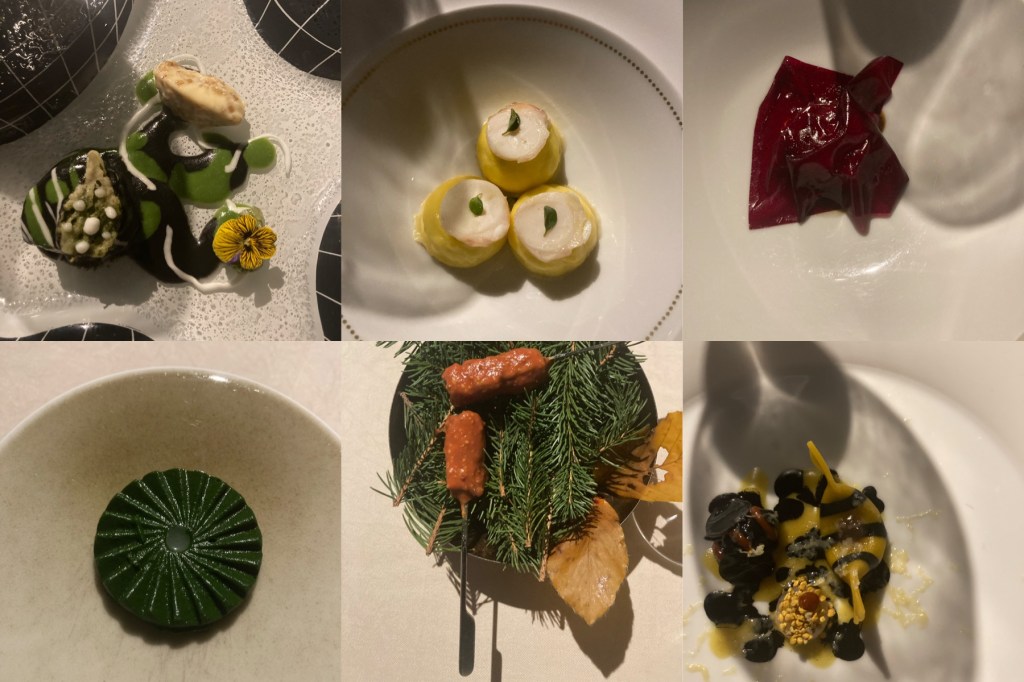
The highlight of Milan for us was dinner at the 3 Michelin star restaurant Enrico Bartolini. This was a belated Happy 60th celebration, originally scheduled at another Michelin star restaurant in April, 2020 in San Sebastián, Spain. However, the pandemic happened and our dinner did not.
We arrived at 7:30 and were seated in a sparsely furnished dining room. The performance, and it can only be described as a performance began, with wait staff bringing our beautifully crafted dish after dish, each accompanied by explanations of the food, its preparation and its significance. A sommelier brought wine pairings for each of the 10 courses and even the chef himself, Enrico Bartolini, stopped by the table to say hello. Over the course of 5 hours our tastebuds were delighted with such delicacies as scallops, crab tacos, truffles, pigeon breast, eggplant emulsion in squid sauce, edible gold leaf, a spiced apple, etc. too much to remember but here are photos of just a few:
It was a lovely end to a few days in Milan.
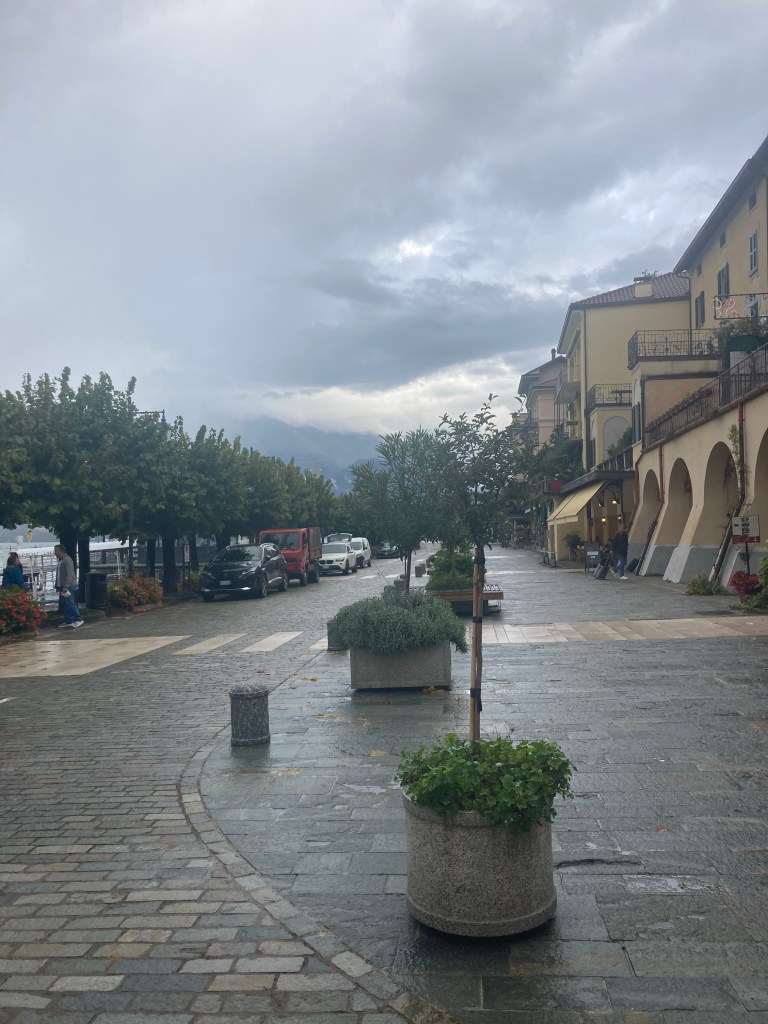
Next up was a short trip to Lake Como. Sadly, the rain joined us and we got drenched in our 10 minute walk around the town of Menaggio. We cowered from the rain inside the ferry for our crossing to the pretty town of Belaggio, spending just a few minutes on its boardwalk before racing back to the cover of the ferry terminal:
It’s easy to see why people are charmed by Lake Como but that charm was obscured for us by the rain. Not a great visit.
The forecast was for a bit of sunshine the next few days as we drove to our next stop – La Speizia- where we would catch a train to Riomaggiore, the first of 5 villages making up Cinque Terre. The plan was to hike the seaside paths between the villages and return via a scenic boat ride.
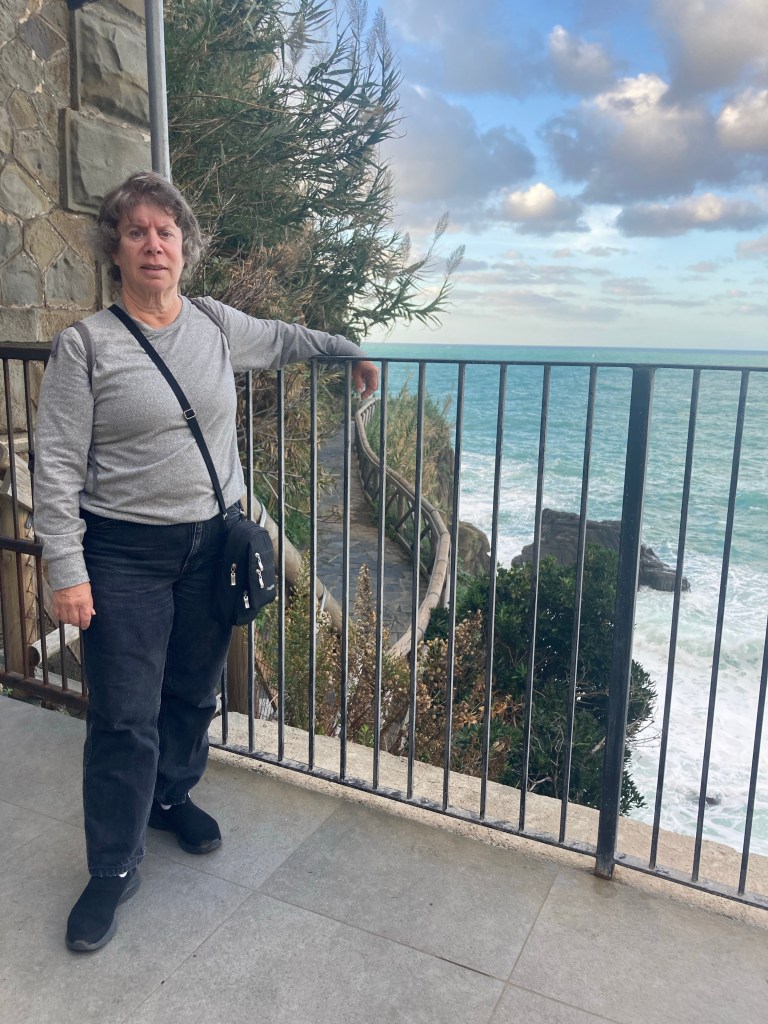
Alas, it was not to be. Though the day was relatively sunny, the prior days’ rains had made the seaside paths too slippery. They were all closed:
A few of the high trails were open but we were warned they were slippery, difficult, dangerous and not recommended. We passed on the trails and resigned ourselves to taking the train between villages.
Unfortunately the boats were also not running due to high waves. So every potential hiker, boater and passengers from 3 cruise ships docked nearby all crammed into trains making the whole trip feel like a romp in the Tokyo subway at rush hour. We did make it to all 5 villages and, according to my I-Phone counter, climbed the equivalent of 55 flights of stairs and walked well over 20,000 steps so the day was not a complete wash out.
I’d been to Japan in 2007, zipping through the country on a Shinkansen to Kyoto, Hiroshima and Tokyo, so this time, while I planned to return to Tokyo, I also wanted to visit a new place. Osaka, the third largest city in Japan, is a base to see a lot of the historical sites.
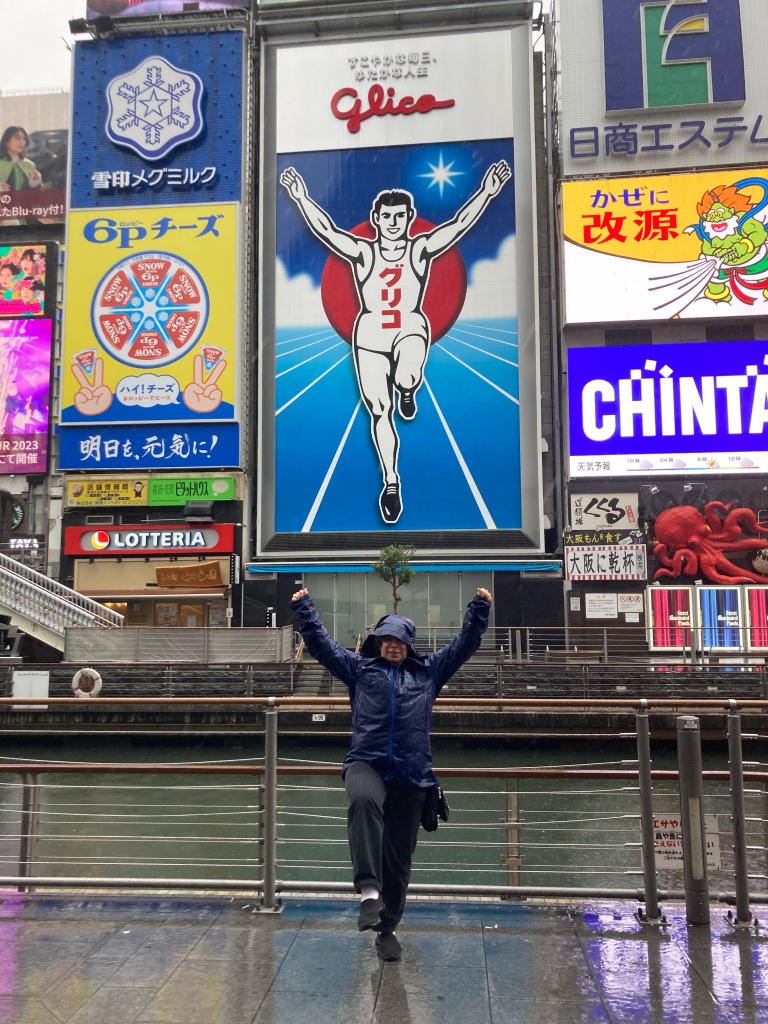
My Osaka walking tour started in a rain storm, so we spent the first hour in Osaka’s Dotonbori district, a lively area with restaurants, bars and neon lights brightening the walkways on either side of the canal when it’s not pouring. The iconic symbol of the city is the Glico running man, a local chocolate company’s symbol who has been running and welcoming visitors since the 1930’s:
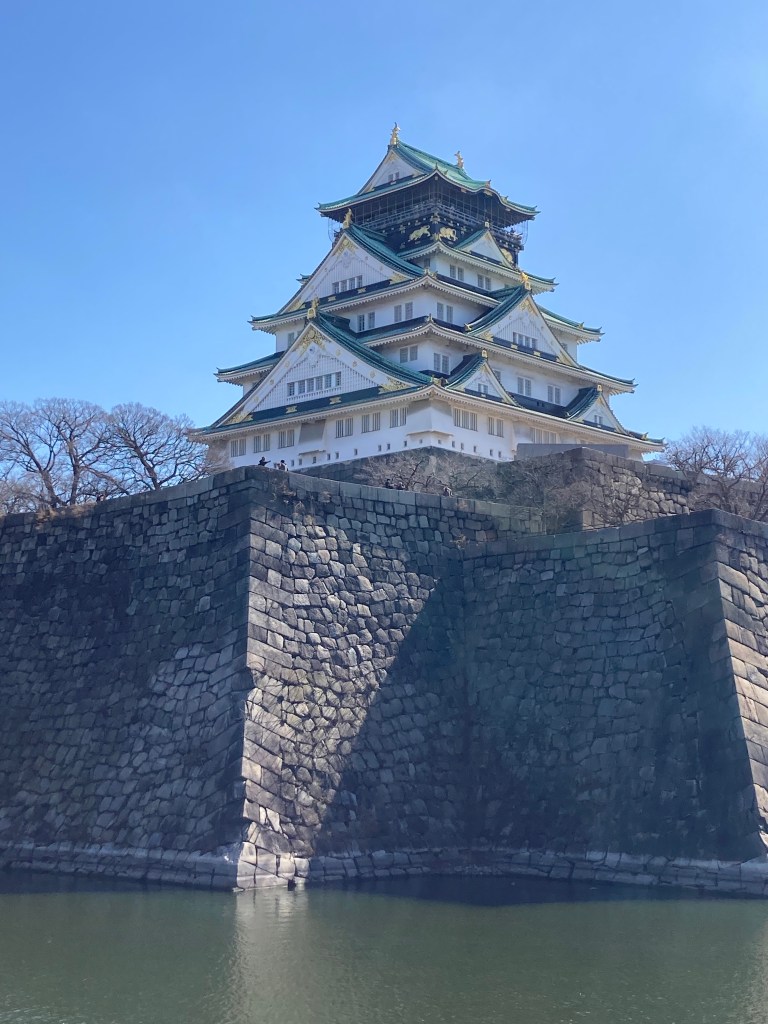
Osaka’s main cultural site is Osaka Castle, a replica of the original 1583 one which was destroyed in 1645, then rebuilt and destroyed a few more times including during WW2. It was reconstructed in 1997 and is an example of Edo-style architecture.
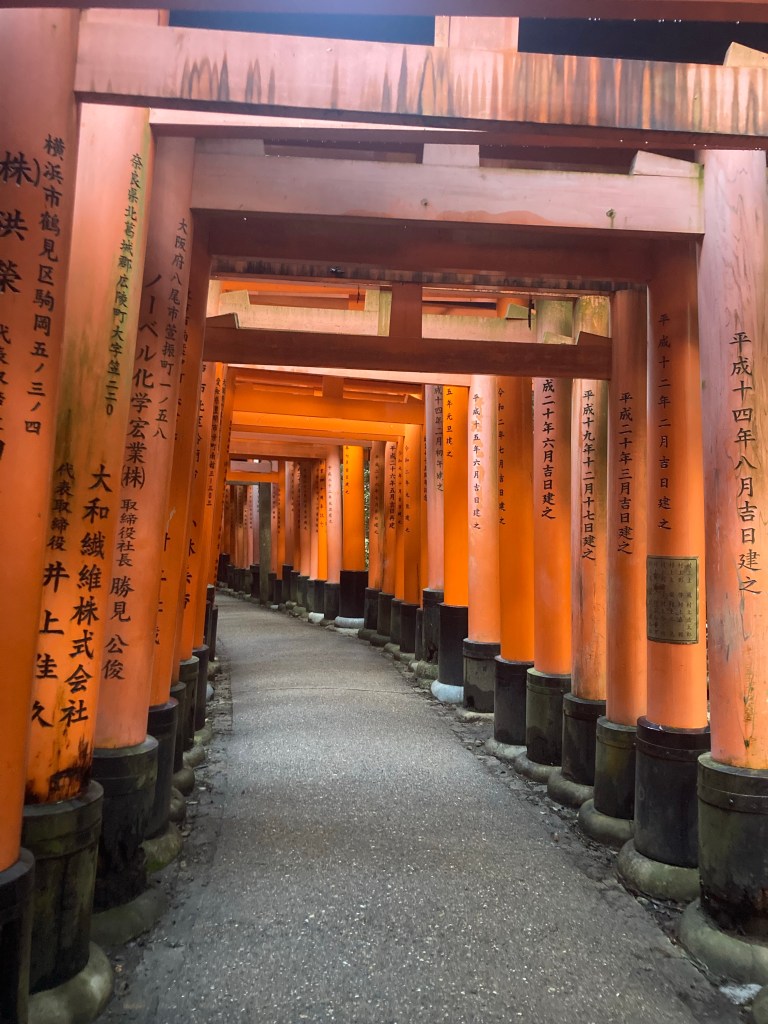
Just 30 minutes away by metro is Kyoto and I wanted to see two sights, the first being the Fushimi Inari-Taisha Shrine with about 1,000 red torii or gates leading up winding paths around a mountain to the shrine at the top. The gates are donated by local businesses as a means of securing good luck; the deity inari looks after rice and business:
After climbing around the mountain and through the gates, I was ready for a flatter surface. A train ride later, I arrived at the Bamboo Forest, so named because it is a forest made up of bamboo trees:
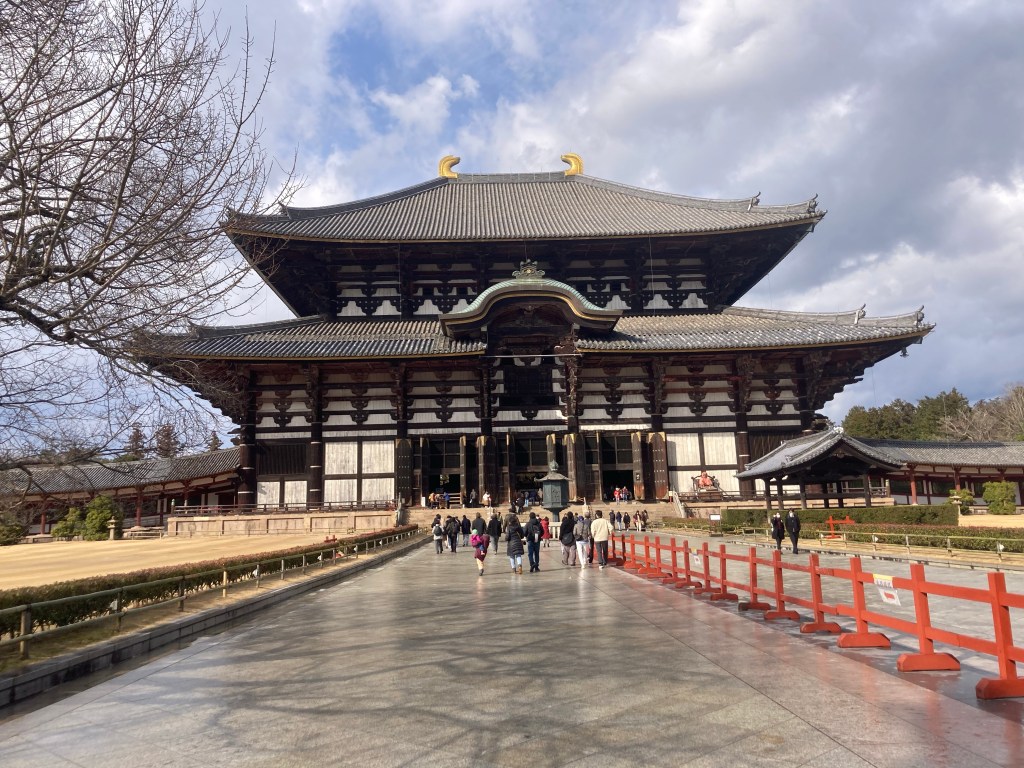
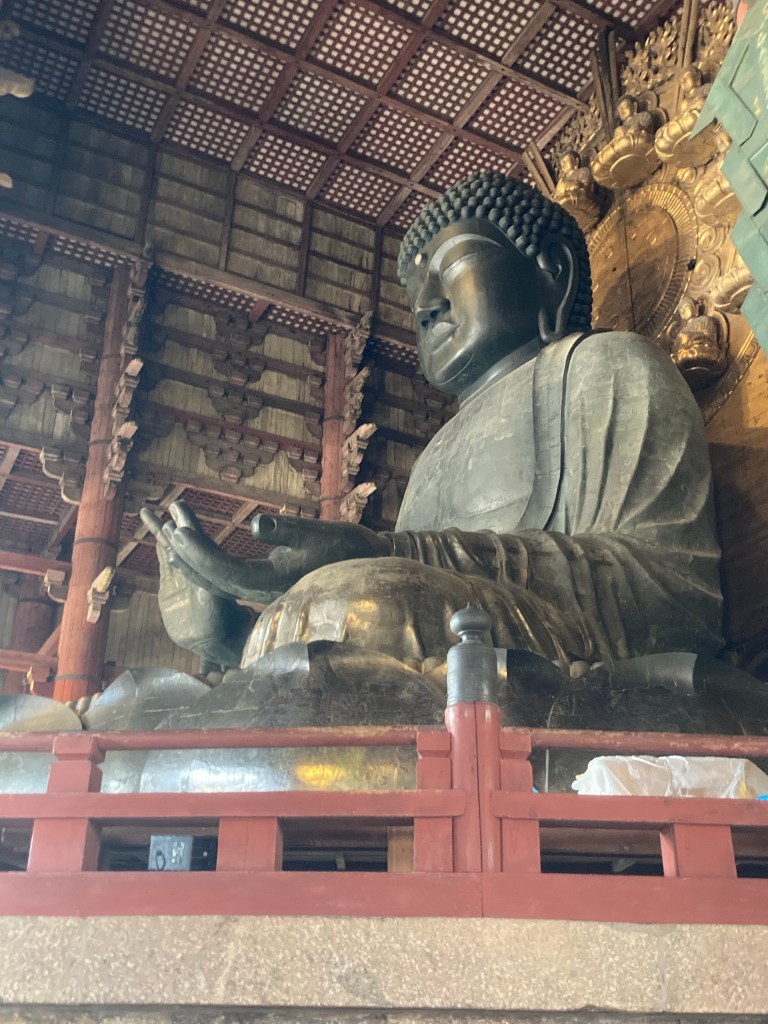
Next stop was Nara Park, an old capital of Japan and home to some impressive, and original, temples and shrines including the Todaiji Shrine with a gigantic Buddha inside:
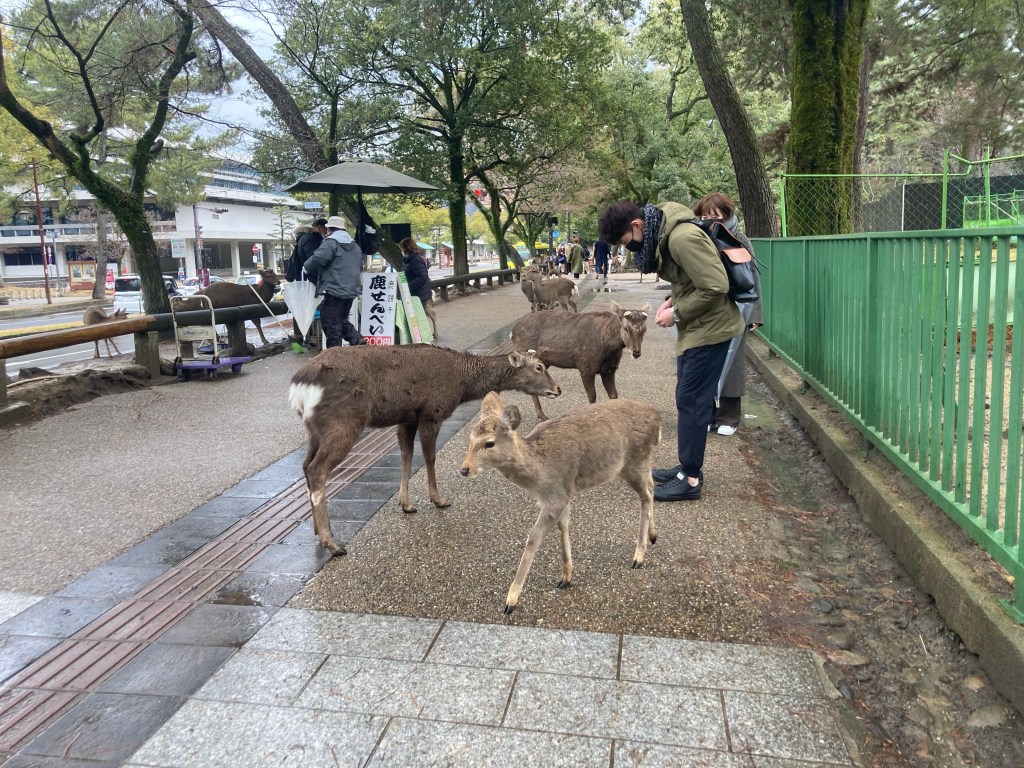
The real stars of Nara Park are the Nara deer, hundreds of feral deer who greet all comers looking for food. Vendors sell deer friendly crackers, but I was warned if I started feeding one to a deer, a whole herd would follow me until they were satisfied I had no more, so I passed on the feeding:
Himeji Castle, in the city of Himeji, is the largest and most visited castle in Japan. Started in 1333, it has undergone rebuilds and restorations but is largely intact and remains the best example of Japanese castle architecture.
Inside, there’s a lot of wood and not much more. I was ushered along the visitor route, up 7 flights of slippery, steep stairs then down 7 flights of slippery, steep stairs with no chance to escape. I guess I should appreciate the exercise.
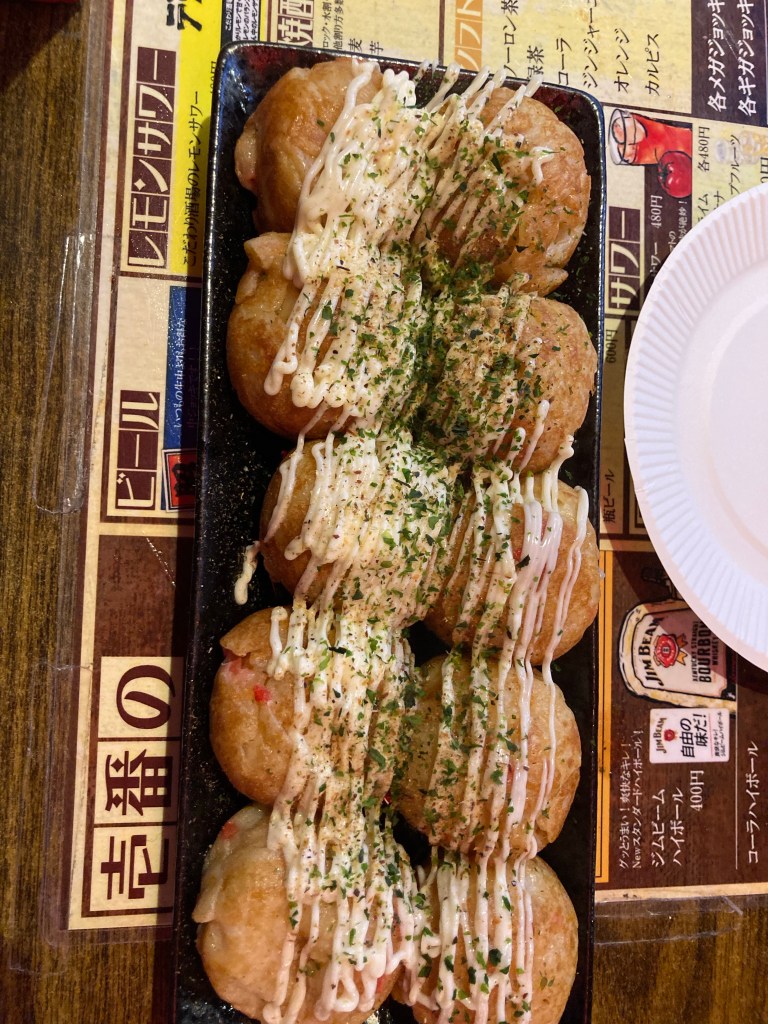
Osaka is famous for its cuisine and I embarked on a food tour to sample some of its finest. Takoyaki is the most famous – little chunks of octopus immersed in a wheat flour ball and deep fried:
Let’s just say it’s an acquired taste. We sampled 9 other local dishes – pork and bean sprouts wrapped in an omelet, deep fried shrimp, chicken wings and some ramen noodle soup- along with lots of sake. It was all good, but nothing I’m inspired to try cooking at home.
After 5 days, lots of castles, shrines and deer, it was time to depart.
TOKYO
After 8 weeks of history, temples and old castles I took a different tact to sightseeing in Tokyo: I would see nothing that hadn’t been constructed this century. In Tokyo, which embraces all things new and modern, this was easy to do.
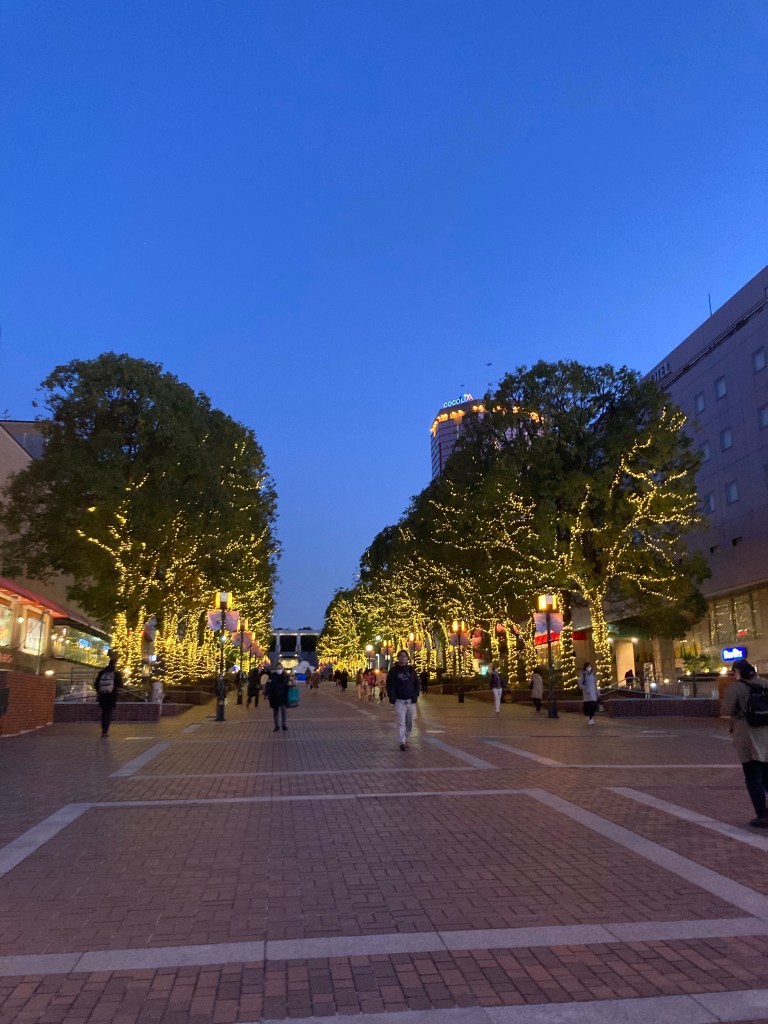
My first stop was the Tama Centre trees, a yearly illumination of trees:
A bit underwhelming, but the next attraction definitely delivered. TeamLab Planets creates immersive art exhibits, along the lines of the popular Toronto Van Gogh Immersive Art exhibit, but without a focus on a famous artist. After entering, you’re required to take off your shoes and socks and roll up your pants – your feet are going to get wet.
After a few warm- up exhibits, you walk into a room filled with knee-high water dancing with sparkles and fish:
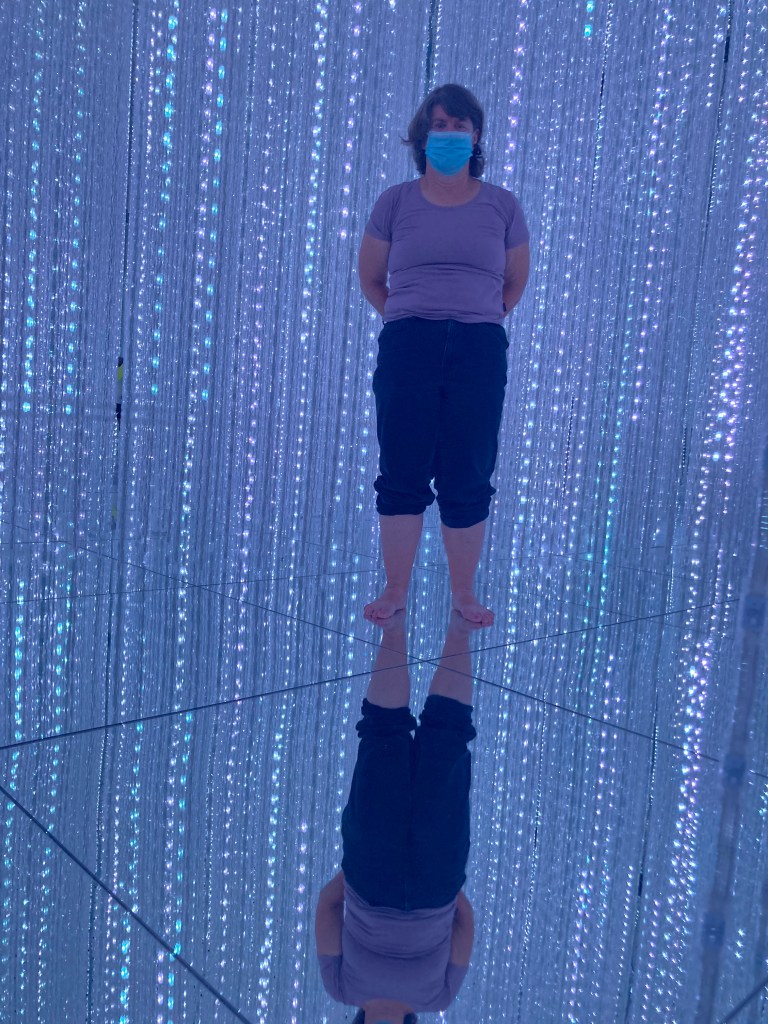
It took me a few minutes to realize the fish were just lights. A few exhibits later, I walked into the Chrystal Room:
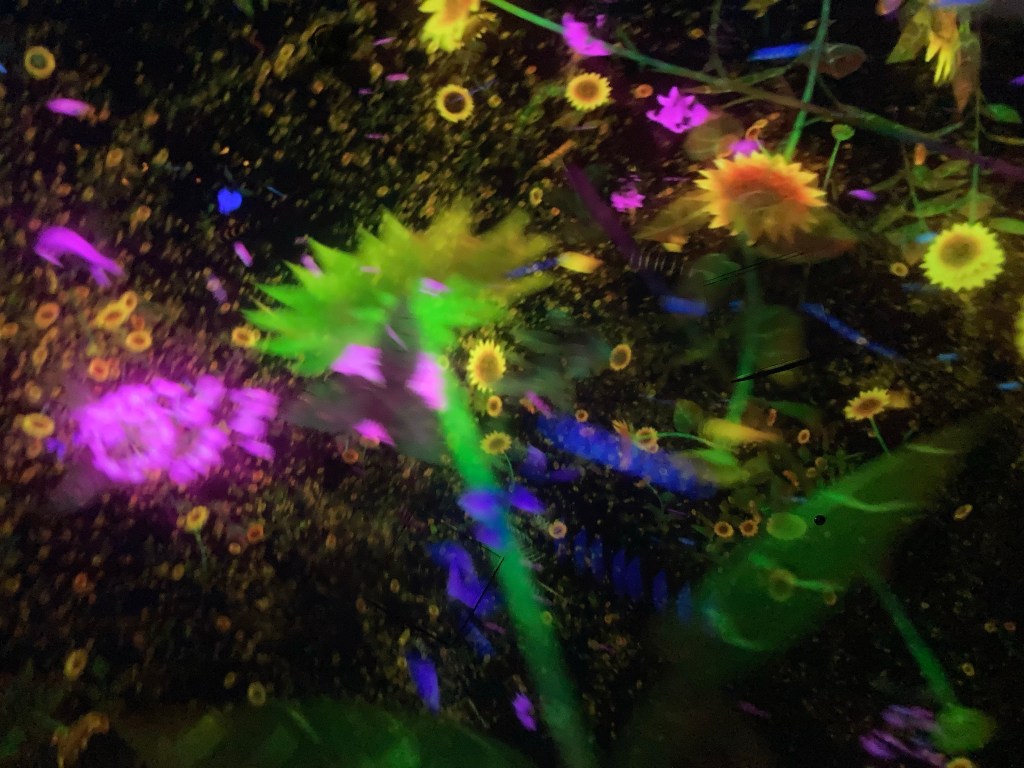
My favourite exhibit was the shooting flowers, a room where I lay on my back and watched as computer generated flower images danced and flew across the ceiling:
Other exhibits, all designed to challenge conceptions of both art and how we see the world, were equally interesting.
Next up was the Suginami Animation Museum, devoted to exploring the Anime/Manga ( cartoon and comic books) culture in Japan. Though the first anime shorts in Japan started in the 1930’s, the subject felt modern enough to meet my sightseeing criteria.
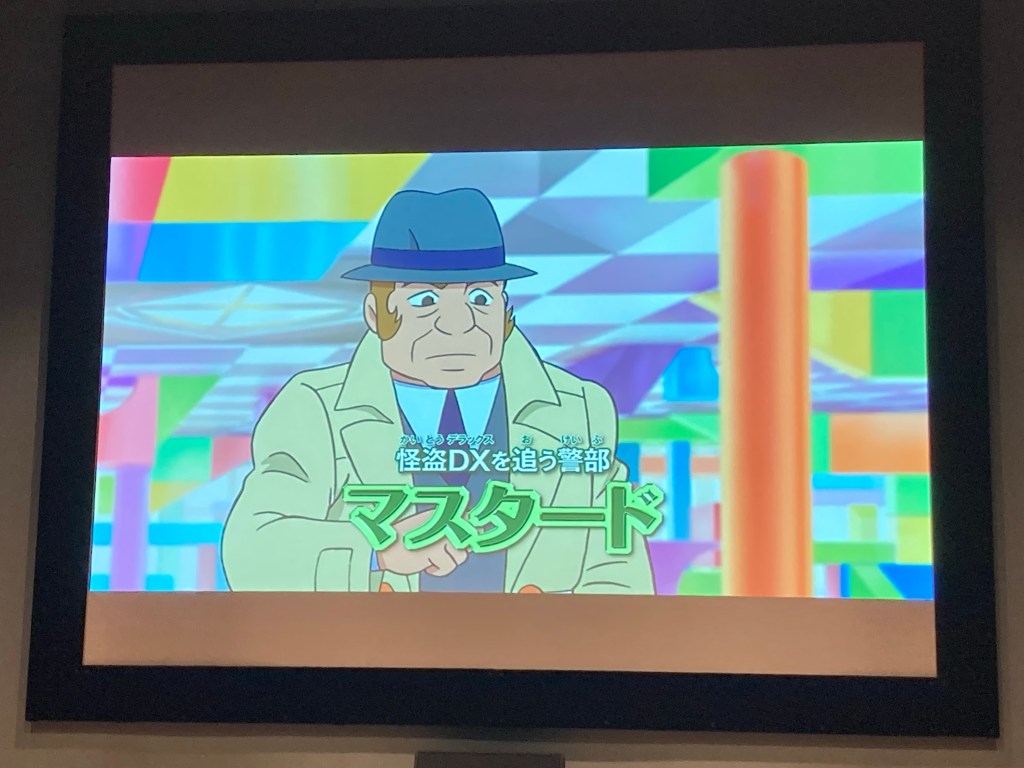
The museum walks through the history and development of anime, its impact on Japanese society and vice versa, along with the principles governing anime and, of course, a theatre running the best of the medium:
Needless to say, I didn’t understand too much.
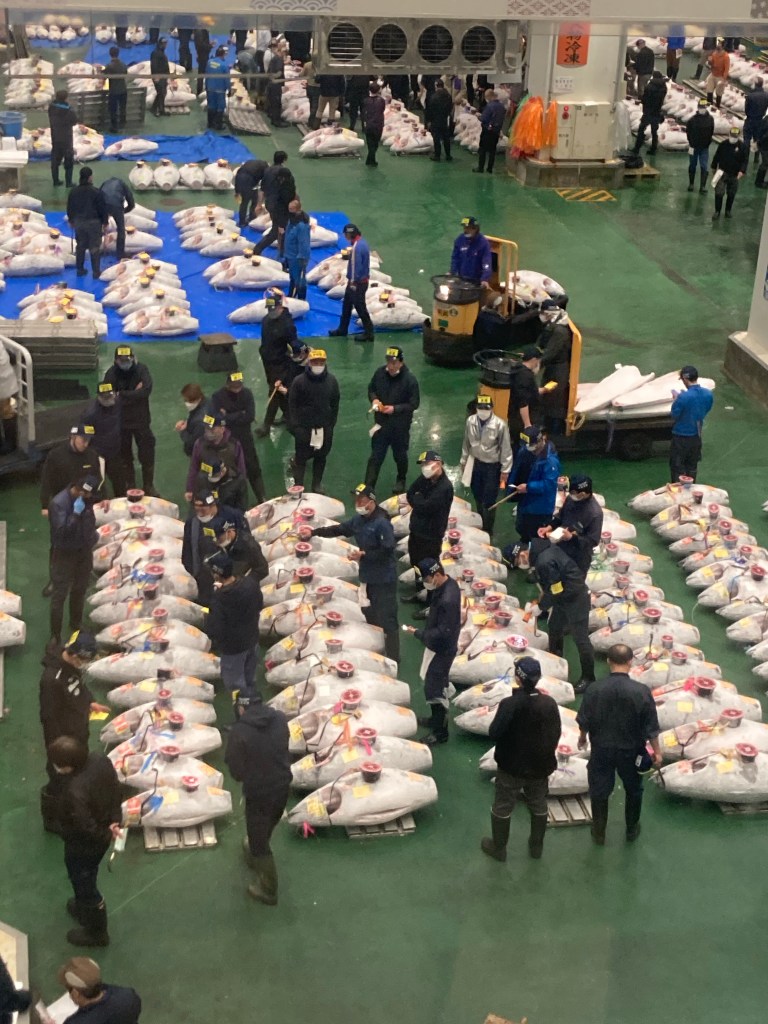
Far more comprehensible was my fish day. Beginning at 5:30 am, I made my way to the newly constructed Toyusu Fish Market to watch the daily tuna auction. The old market used to allow anyone onto the trading floor, so tourists could get very close to the often chaotic, and smelly, action. The new place is larger and much cleaner, but spectators are limited to watching from a glass enclosed section a floor above. Still seeing these giant tunas hauled around is mesmerizing:
The Tuna Auction
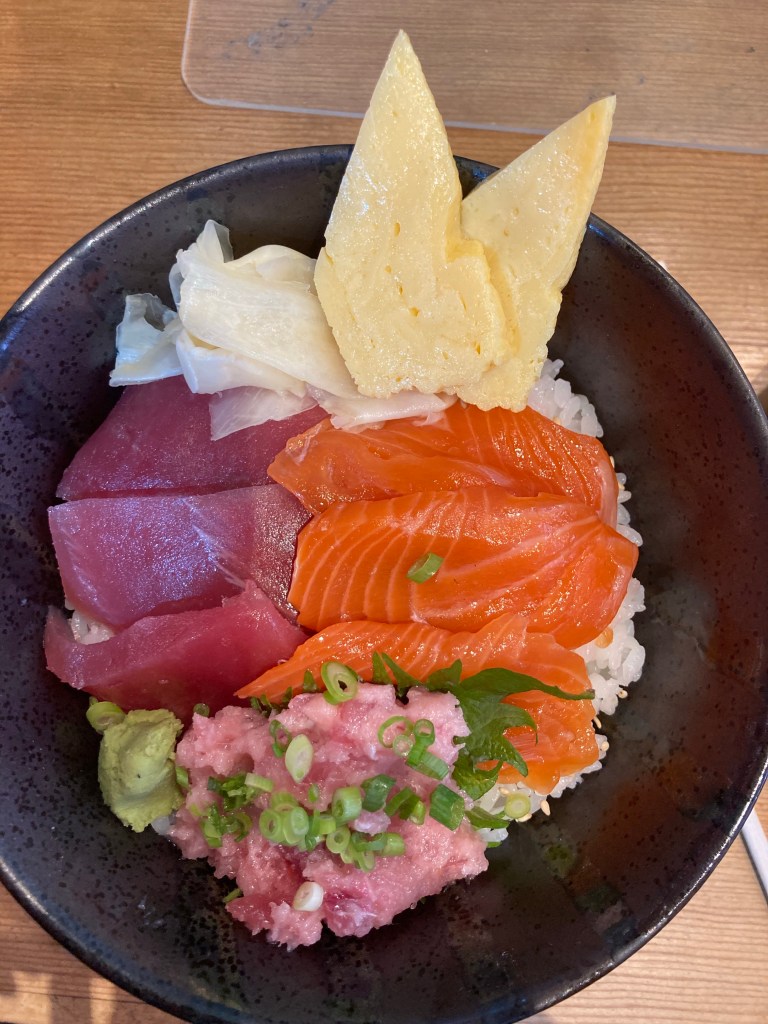
The former fish market was at Tsukiji, where a cottage industry had developed of sushi stores and restaurants, most tiny little booths. I ate a fabulous tuna and salmon sashimi lunch there.
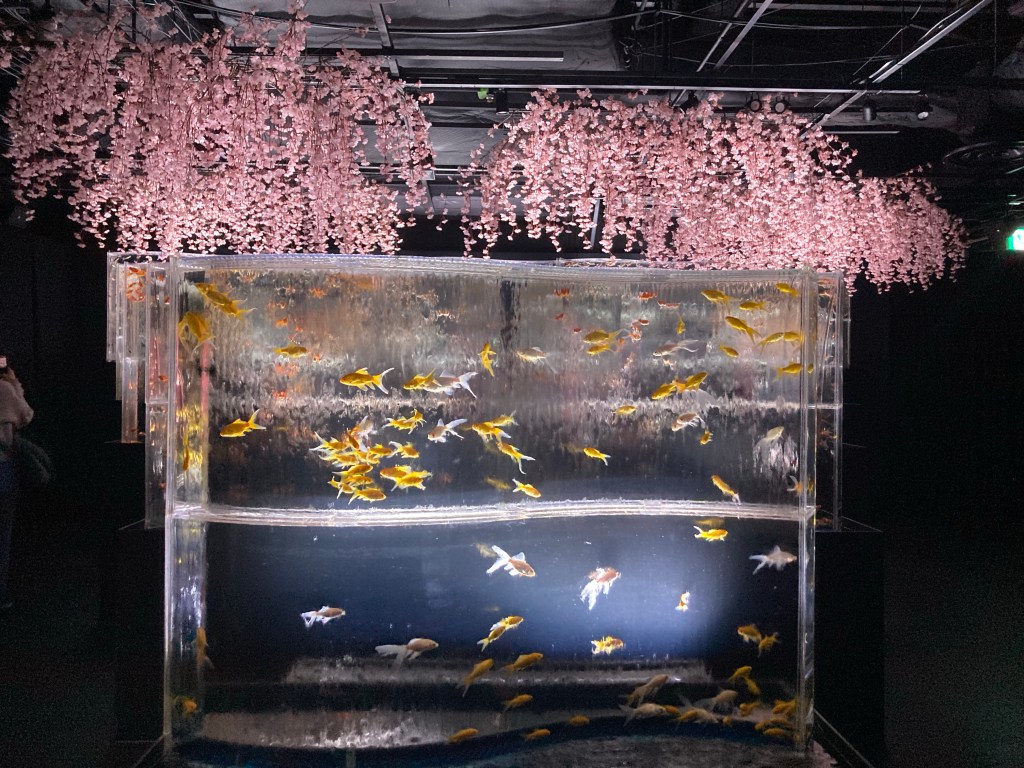
Tiring of seeing so many dead fish, I made my way to the Art Aquarium Museum where thousands of live goldfish are displayed in unique installations:
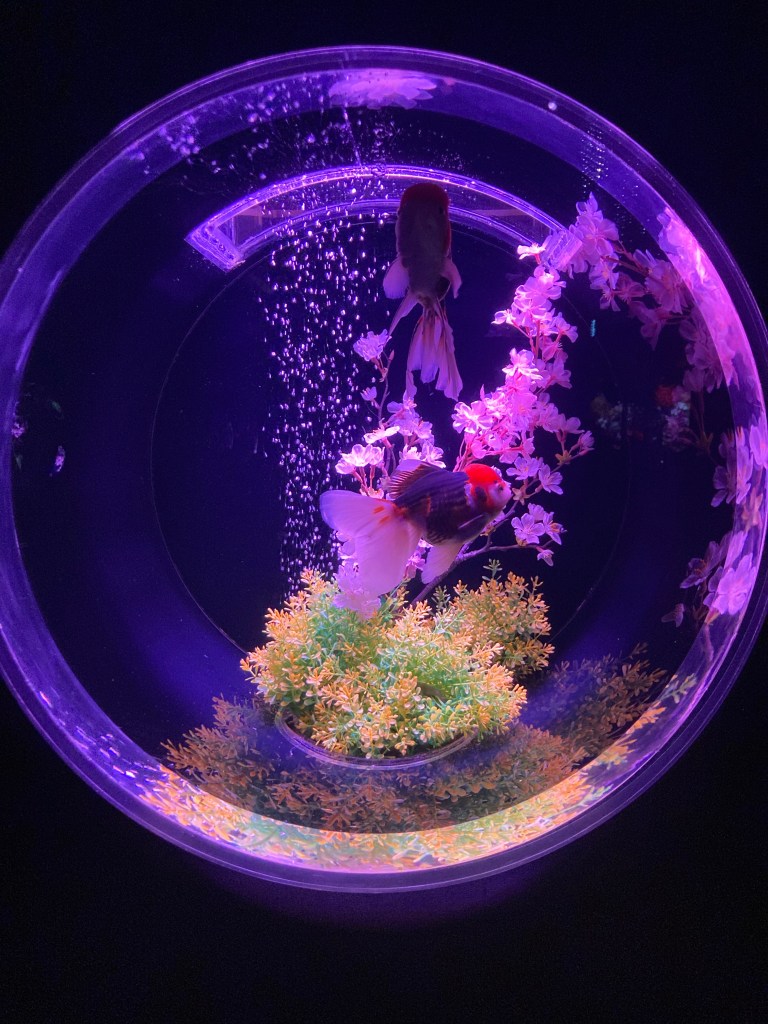
The Japanese imported the custom of watching goldfish from the Chinese over 200 years ago. The collection includes some very rare goldfish:
Not much more to say about goldfish. The rest of my Tokyo days were spent walking around some of its famous areas, visiting gardens and going to noodle street at the Tokyo Station for ramen noodles.
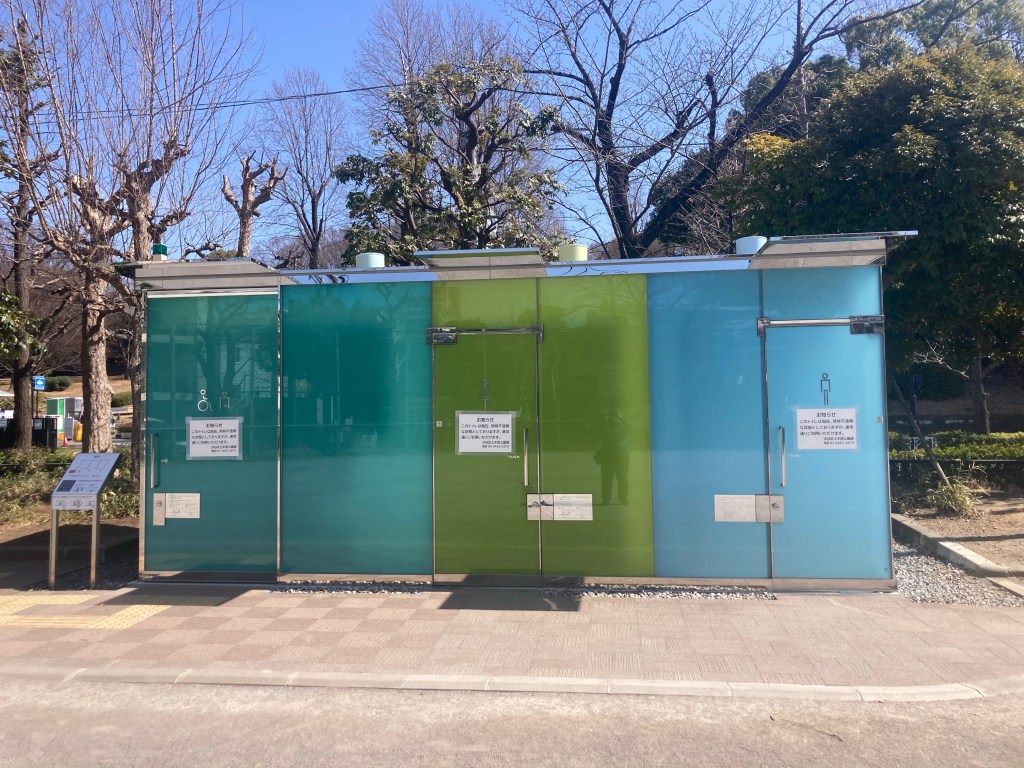
It seemed fitting to end my time in Tokyo visiting one of Japan’s most loved devices- a toilet- and I don’t mean your average run-of-the-mill toilet. For my time here I had been delighting in the toilets; heated seats, automatic wash and dry functions, noise disguising sounds, etc. I walked to the transparent Shibuya Toilet, which is designed to be fully visible until someone enters, then goes opaque automatically when in use. The thinking is you can check the toilet’s cleanliness before committing to going in:
Unfortunately they didn’t seem to be working and my non- existent Japanese suspects the signs on the door say “ Out of Order”.
After 9 weeks in Asia it was time to return to Canada. So until my next adventure, thank you for visiting and reading.
There are very few countries I have visited that I would say I hate, but top of the list is Laos. This was based on a trip in 2007 with my son to the island of Don Khong. After 2 relaxing days, we asked the hotel proprietress for help getting us to Siem Reap in Cambodia. What ensued was an hours long negotiation about price between the proprietress, a restaurant owner and us, the former in cahoots with each other. In the end, they promised us a single vehicle, one day ride to Siem Reap for $35.
What followed was an hour ride to the border with a demand by the border guards to pay the Sunday overtime charge ( it was Monday at 8:00 am), a change of vehicles to some town in Cambodia where the driver told us no further ride would be available until the next day. Me, and a mass of other Westerners, protested and eventually a rickety mini-van was produced which ferried us to Phnom Penh, but only after I forced Stefan to sit in the stairwell for lack of seats. At the outskirts of Phnom Penh, we were met by a bunch of scooters, anxious to take us into the city. Given our heavy suitcases, motorcycles were out of the question. Finally, a taxi took us to a hotel on the Mekong, where the next door’s discotheque pounded music until the wee hours. It was one of my worst days and the duplicity of the hotel proprietress left a bad taste in my mouth about Laos.
Time made me realize it was unfair to condemn an entire nation based on the lies of two people, so I decided to give Laos another try. My arrival without the necessary visa was met with a few shrugs by the immigration officer who pointed me to the visa line where one was quickly obtained and I was welcomed to Laos.
I was in Luang Probang, the ancient capital, Laos’ second city and a magnet for tourists seeking a relaxing, meditative experience. Its peacefulness, compared to Thailand, was palpable. Motorists did not honk horns, there was no garbage strewn about and the sidewalks were wide and regular.
Some history is in order. The Laotians are generally regarded as a subset of a Thai tribe that migrated from the Chinese highlands in the 13th century and settled in the area that is now Laos. Its greatest kingdom governed from the 1350s to the 1700s with Luang Probang as its capital. Suffice to say its borders contracted and expanded depending on the outcome of battles with the Thais, Vietnamese, Burmese and Chinese. In 1750, the Siamese took over until 1890, when it ceded Laos to the French in exchange for Siamese independence.
The French period is regarded as “ soft colonialism”, with the Laotian people mostly being used as cheap labour for French projects in Vietnam. Cries for independence started following WW2, but was only granted in 1965 following the defeat of the French in the French/Indochine war. During the Vietnam War, the USA carried out its secret war in Laos, covering the country with bombs in an attempt to halt Vietnamese arms transport along the Ho Chi Minh trail. The USA left a trail of destruction, death and land mines which still explode occasionally today.
Following the North Vietnamese victory in 1975, Laos, too, was taken over by a Communist party, which has retained control through to today.
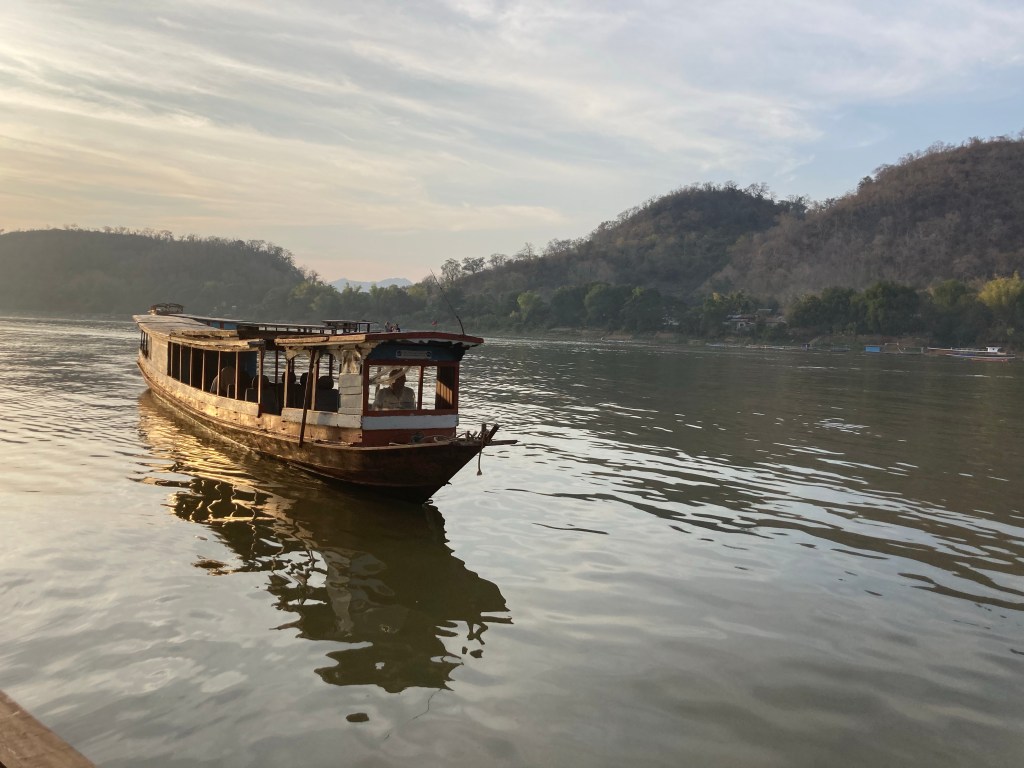
Luang Probang offers a number of sites and experiences for the tourists and I engaged in most of them. First off, the requisite sunset cruise along the Mekong River aboard my private boat:
It was a bit cloudy, so I’ll spare you the not so spectacular sunset photos.
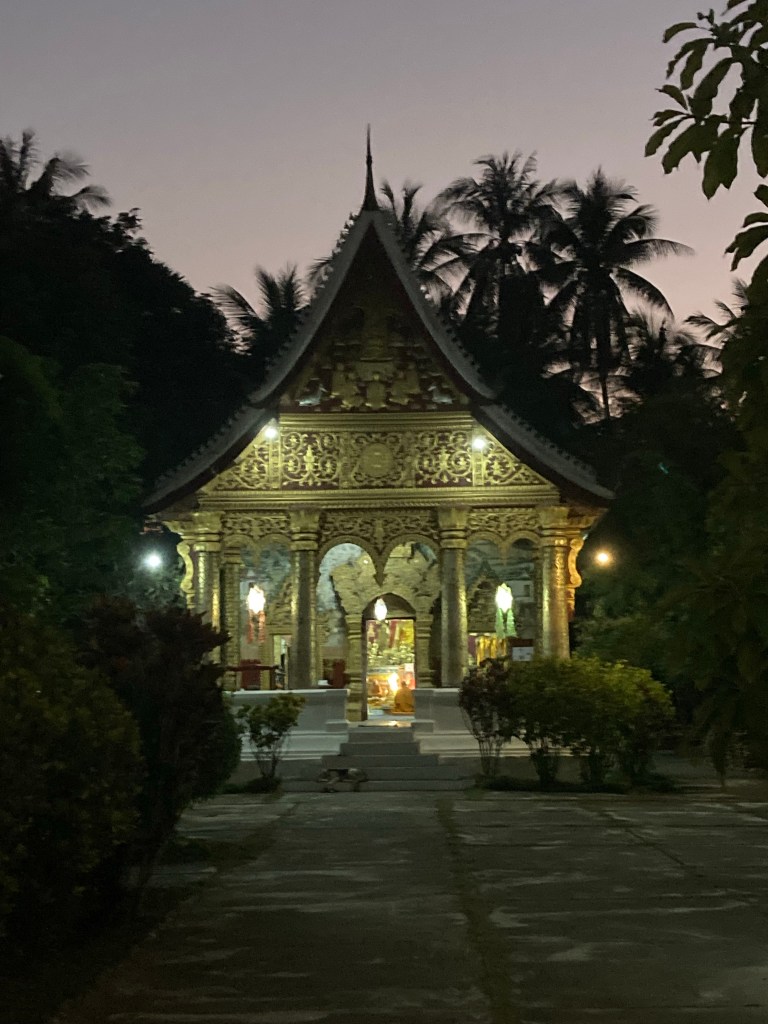
Next up, seeing the temples, of which there seemed to be hundreds:
Quite frankly, after the first dozen or so, they all started to look the same and, really, how many photos do I need of pretty, gold coloured temples.
The night market, along a Main Street blocked every evening, has the usual array of local crafts and tacky souvenirs:
Luang Probang has one unique experience high on every tourist’s list and that is the march of the monks. Every morning, before dawn, the orange robed monks leave their dorms and walk down the streets toward the temples as locals and tourists give them rice- their sustenance for the day. It is highly recommended and I wanted to see it, but…,
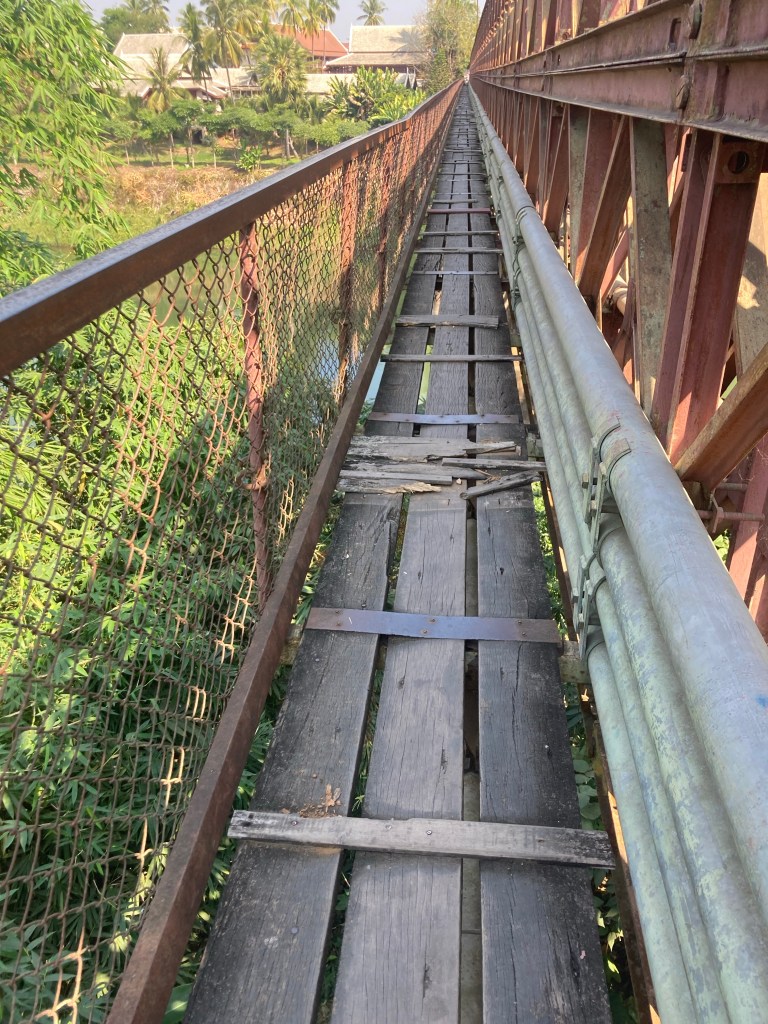
The bane of my time in Luang Probang was this bridge:
To get from my hotel to the center of Luang Probang, I had to either call a taxi tuk-tuk and pay $16 to go the 15 minutes via the new bridge or I could walk over the old bridge’s planks for free and be there in 5 minutes. The problem is I get vertigo and have a strong dislike of rickety old bridges so every time I had to walk across it was an unpleasant chore.
I finally compromised and decided I’d walk across the bridge in daylight, but use the taxi after dark. And since there were no taxis waiting at the hotel at 5:00 am, no amount of promised fantastic experience could convince me to walk across the bridge before dawn, so I didn’t see the monk’s march.
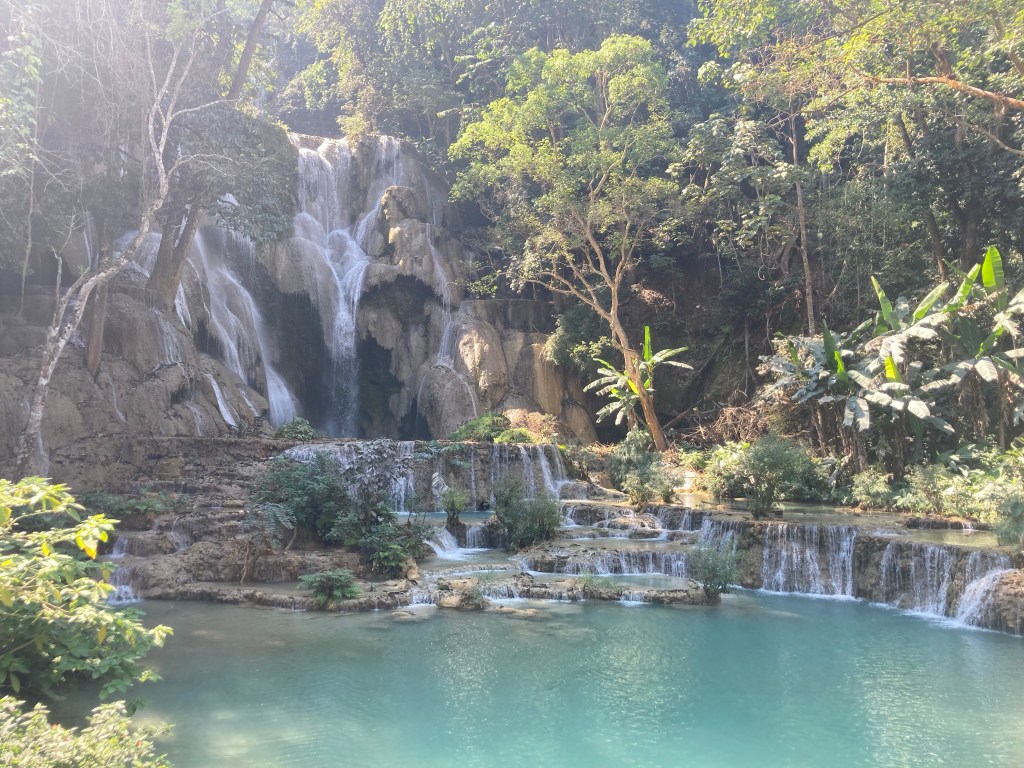
I couldn’t leave Luang Probang without visiting one of its many nearby waterfalls. An hour’s drive away is Kuangsi waterfall, a popular picnic point for locals and tourists alike:
Pretty, but quite busy. More serene was the the nearby butterfly park and, while there were many beautiful butterflies there, getting a decent photo was near impossible.
Vientiane is the capital of Laos and to get there from Luang Probang involves a $150 flight on Lao Airlines, a 9 hour minivan ride through mountains and winding roads or a $35 ( after commission) ride on the newly built Chinese railroad. The problem is that train tickets go on sale only 3 days before and require personal attendance to buy them.
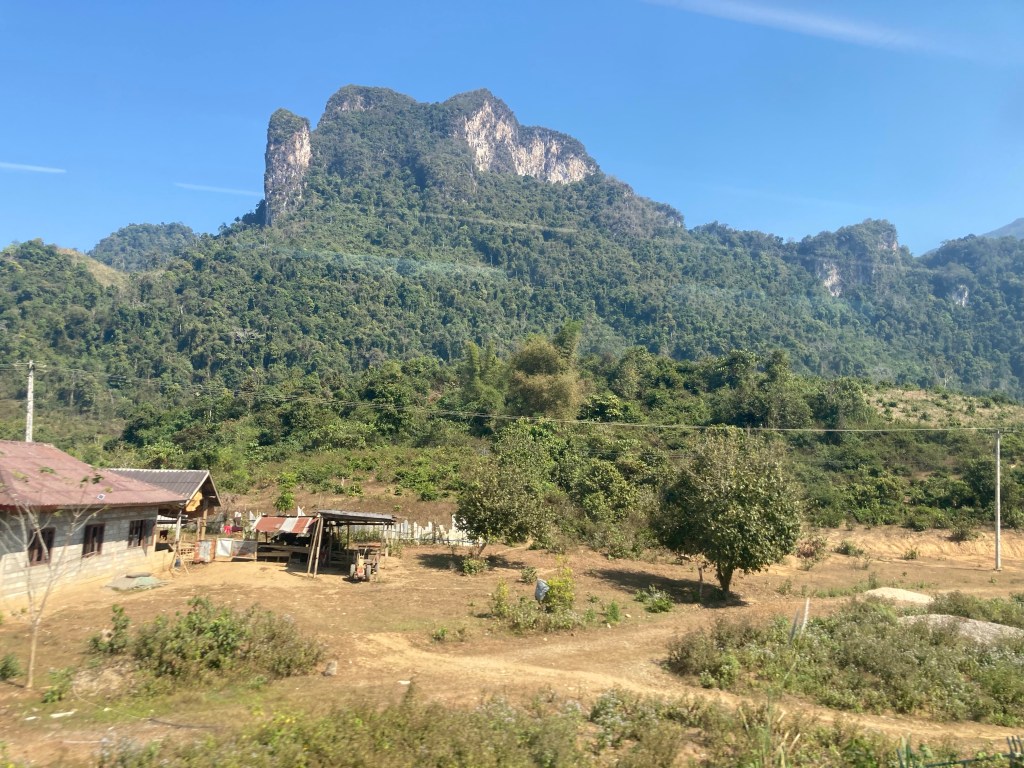
I opted for the train ride and happily paid the commission for the agent to stand in line at 4:00am 3 days prior. My hoped for business class ticket wasn’t available but a regular seat was procured. On the appointed day, I arrived at the stark, newly constructed station and settled in ( after 2 passport and 1 security checks) for the ride. I’d read the scenery was spectacular but the first hour was filled with so many long tunnels it was hard to see much, but what was visible was quite pretty:
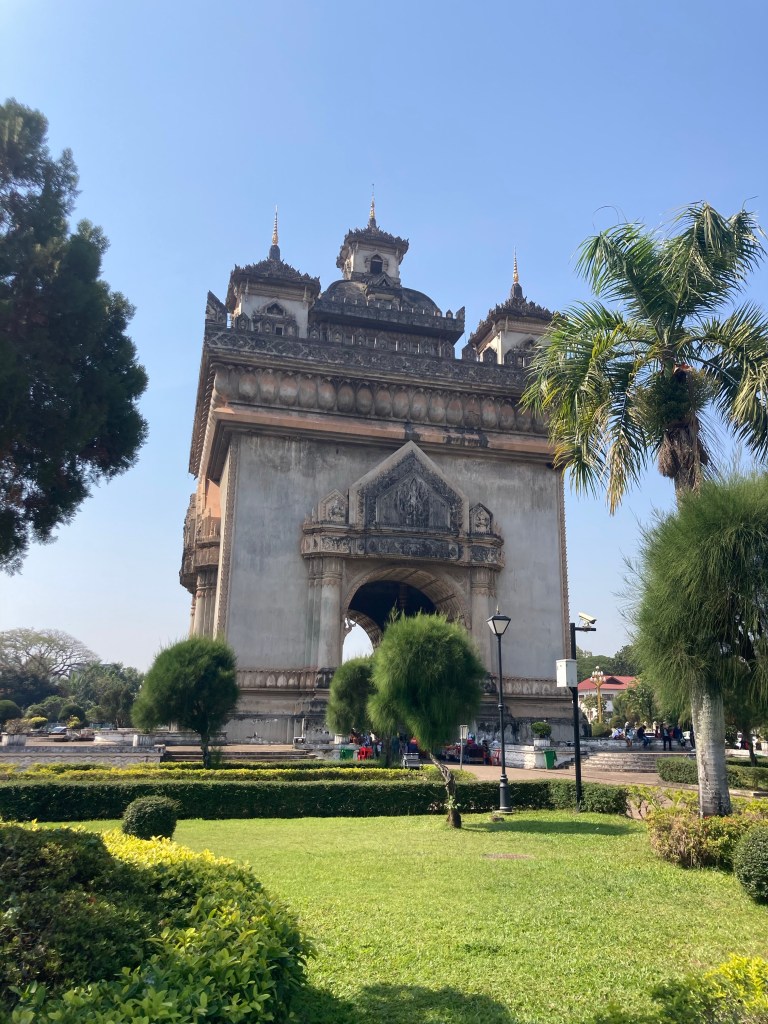
Vientaine is considered a quiet, relaxing capital, which it was. I hired a private driver, found a list of top things to see and crossed most of them off in two hours. They included a few temples, a few temple museums and the Patuxai Monument, commemorating those who died fighting the French and later, the non-Communists:
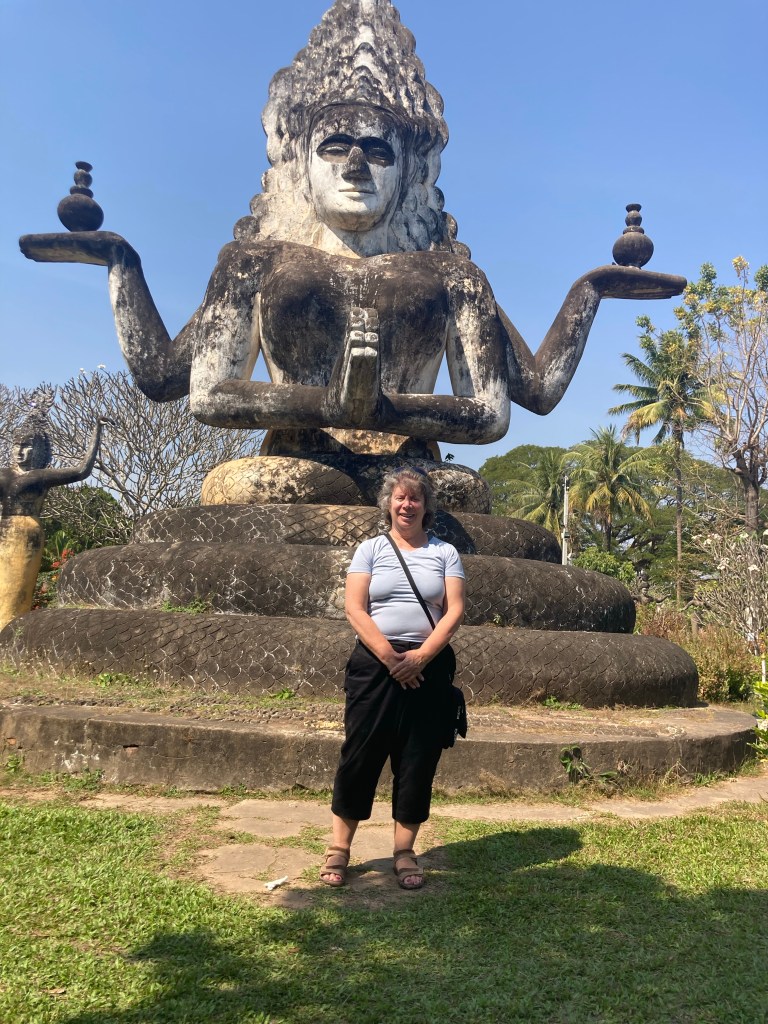
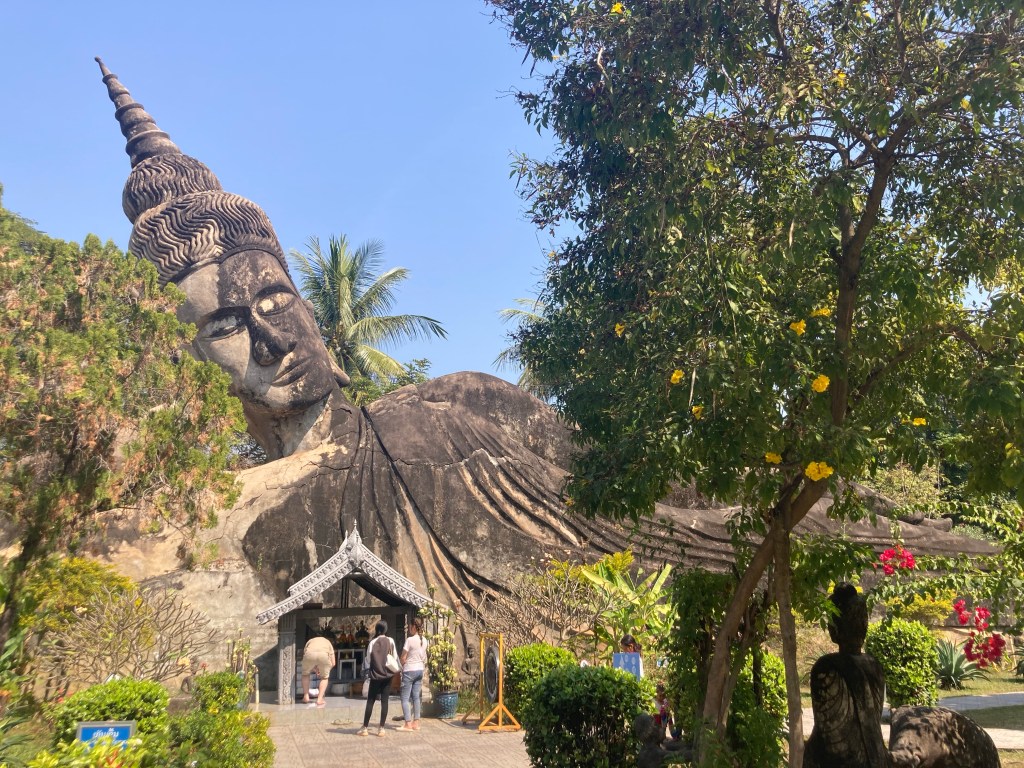
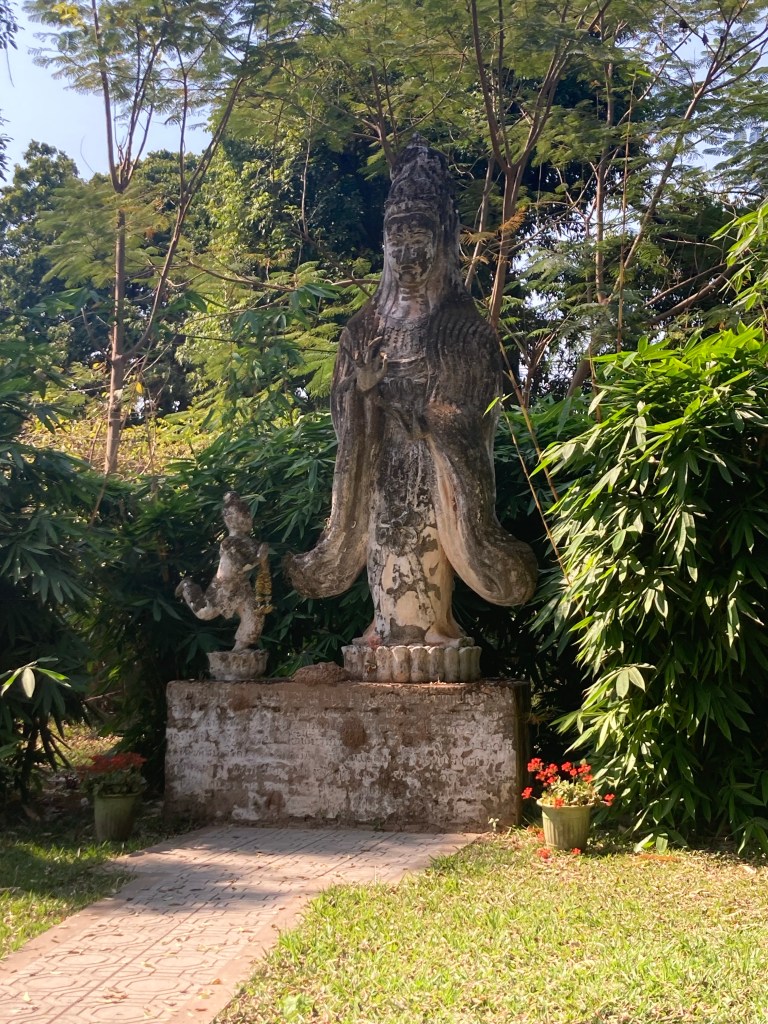
I could bore you with descriptions and photos of more temples, but I will spare you and move on to my Vientaine highlight, Buddha Park. It’s a built for tourists park containing in excess of 150 Buddha and Hindu statues. Here are just a few:
I appreciate this may not be everyone’s cup of tea, but after enjoying the monument park in Budapest ( displaced Communist statues), I couldn’t resist another one. Yes, it’s kooky and slightly irreverent, but it was jolly good fun seeing all these Buddha statues poking up everywhere.
And thus ended my time in Laos. It had mostly redeemed itself ( until I went through the security check at the airport but that’s for the next blog). I didn’t love Laos, finding it a bit too laid back for my liking, but it is no longer on my “hate” list.
I just spent 10 days touring Taiwan and I leave with what is best described as ambiguous feelings. Yes it was nice and some parts are extraordinarily pretty, but it’s a newish country and while it’s current politics are fascinating, it’s a little short on history.
So let’s delve into the history. Taiwan was first settled by Polynesian peoples 5,000-8,000 years ago. Today, these aboriginals make up about 500,000 of the island’s 23 million people.
In the 1600’s, Chinese from the mainland first settled and in 1694, the Ming dynasty incorporated the island into Greater China. For the next two hundred years, Europeans, – Dutch, Portuguese ( who called it Formosa) and British – colonized it along with the Chinese, who variously ruled it or retreated.
1894 is regarded as a seminal year. Following the loss of the Sino-Japanese war, the Chinese ceded Taiwan to Japan, beginning 50 years of colonial Japanese occupation. The Japanese suppressed dissent, but also modernized the country with railroads and mandatory education. During WW2, Taiwan was bombed by the Allies as it was considered part of Japan.
Meanwhile, back on the mainland, the Republic of China (ROC), under the leadership of Chiang Kai-Shek, had taken charge but were fighting a civil war against Mao’s communists. In 1945, the writing was on the wall for the ROC, and with the urging and promises of support by the USA, the ROC and its army eventually fled to Taiwan and set up the ROC on the island.
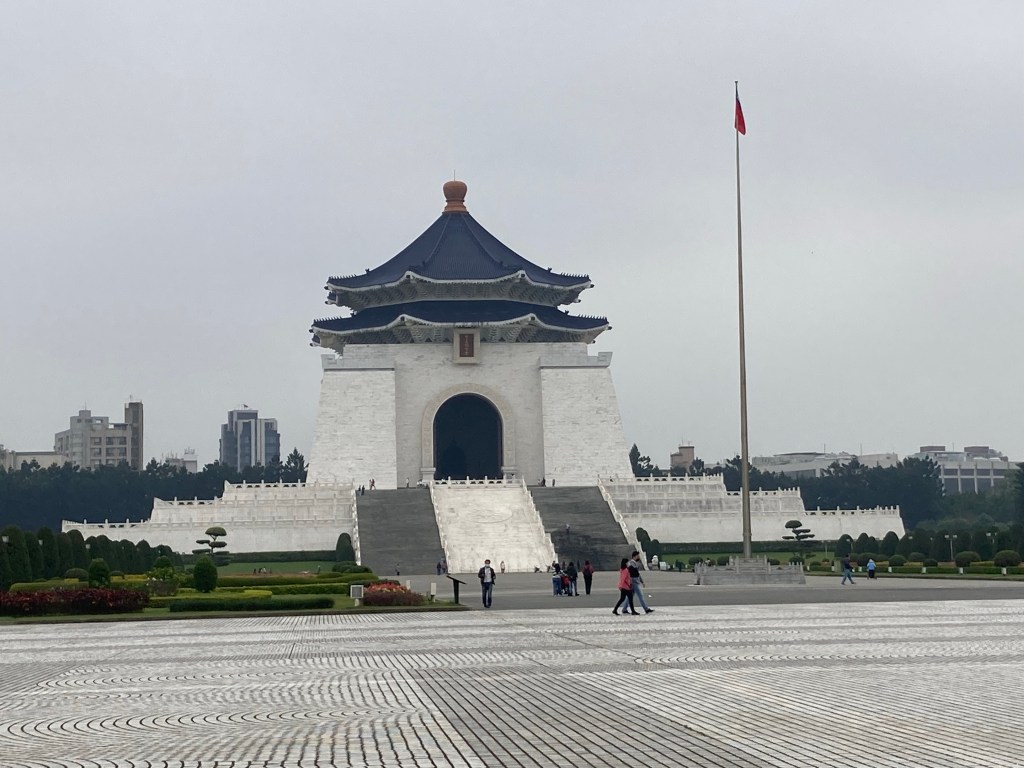
Chiang Kai-Shek was a polarizing character. He is regarded as the father of the country and immortalized in a giant memorial and statue:
But he was a brutal dictator who declared martial law and killed hundreds of dissidents. It was only upon the death of his son and successor in 1984 that Taiwan embraced democracy.
Today, both China and Taiwan claim to be the rightful rulers of a unified Taiwan. In Taiwan, it’s two major parties focus on the relationship with China. The Green Party advocates for an independent Taiwan while the Blue Party wants to reunify with China but only with it as the governing party.
I expected what the West perceives to be growing China aggression toward Taiwan to be a major topic, but my tour guides only referred to it briefly as “the tensions”. I could detect little immediate concern, although I did run into a peaceful protest against the proposed land mining of the west coast. Military service for men was recently increased from four months to a year and temporary runways were being built along the major highway. Granted my inability to understand Chinese hindered my observations but it just seemed to me that everyone was going about business as normal. Then again, I’m not sure what might one see if a country is preparing to be invaded. Maybe a run on toilet paper and generators?
What was a surprise to me is how “ Chinese” the island is, reminding me very much of Hong Kong. Its vibrant food industry is all about Chinese food. The tv is full of mainland Chinese stations. Temples are in the Chinese style- either Taoist or Confucius.
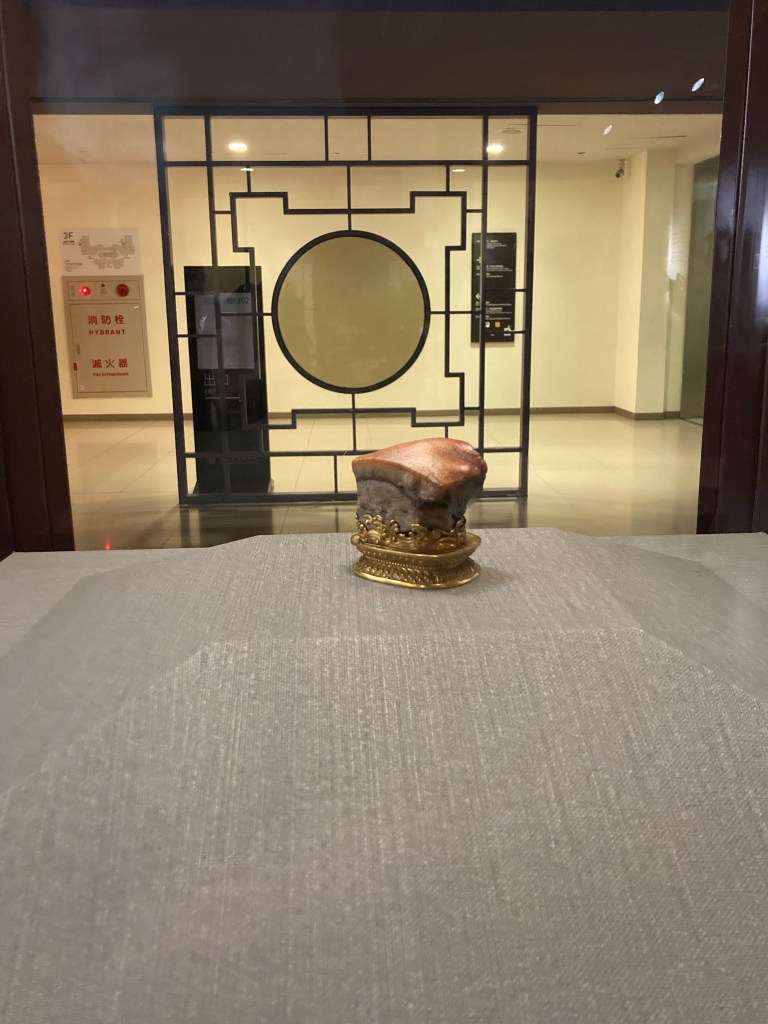
I visited the National Palace Museum, reputed the best in the city. An impressive array of Chinese treasures, most brought over by Chiang Kai-Shek, were on display including jade, Ming vases and a famous stone carved to look like a piece of pork:
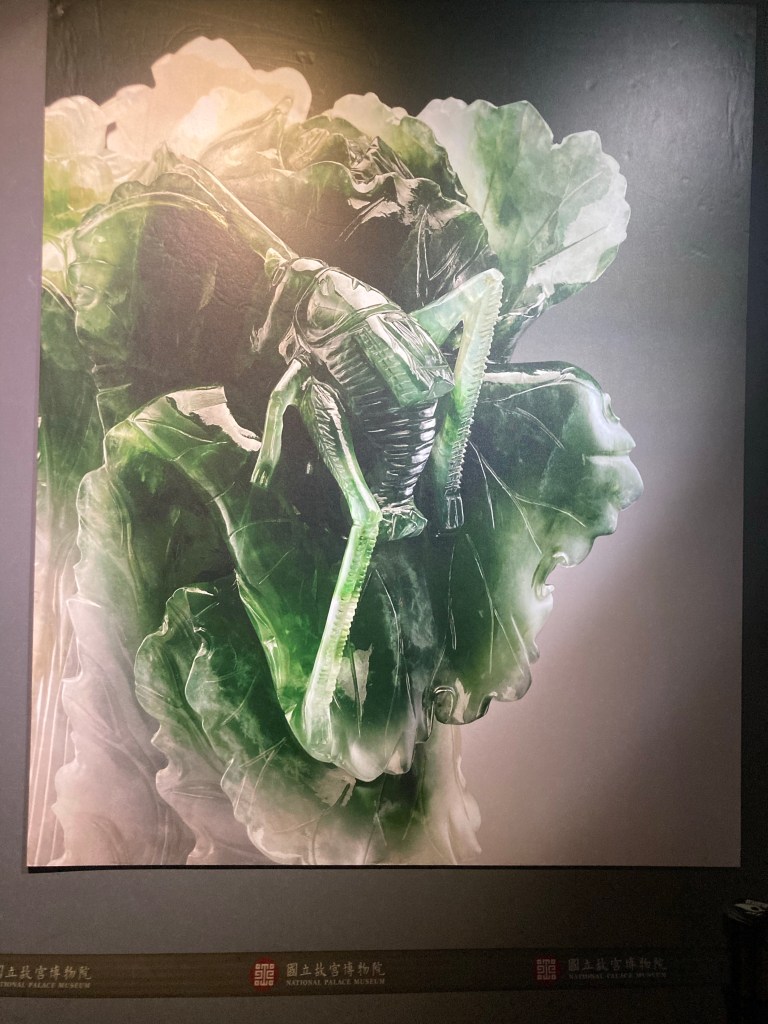
The jade carved to look like a cabbage leaf was away on loan but I could look at its photo:
The other major museum is the Taiwan History Museum where I thought I might learn more about the aborigines. The standard dinosaur fossils and exhibits about fauna took up the main floor but I was directed to the third floor for the aborigines exhibits. Oddly, the focus was on the documenters of the aborigines- a photographer and writer and a carver of aboriginal figurines, with scant mention of the aborigines themselves.
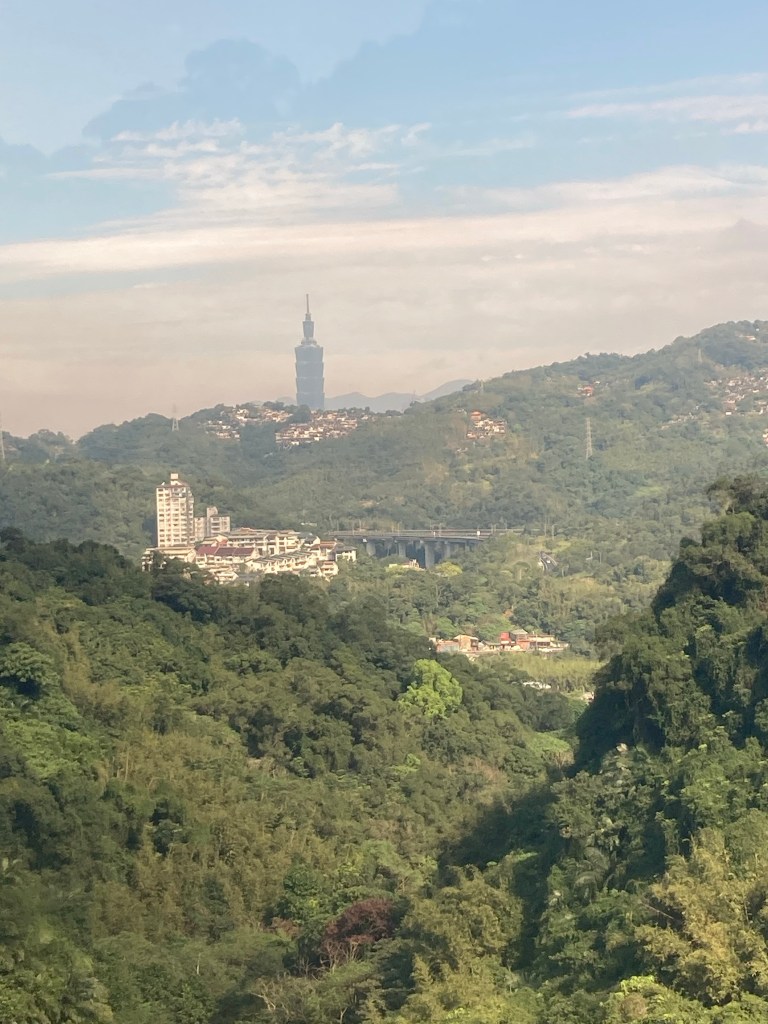
To get a bird’s eye view of Taipei, my options were to pay $25 to be whisked by elevator to the top of the tallest building in the country, Taipei 101, hike 500 steps up Elephant Mountain or take a cable car up Maokong Mountain. The lesser of three evils won out and I found myself riding the cable car. A haze of pollution obstructed the view of Taipei 101 in the background:
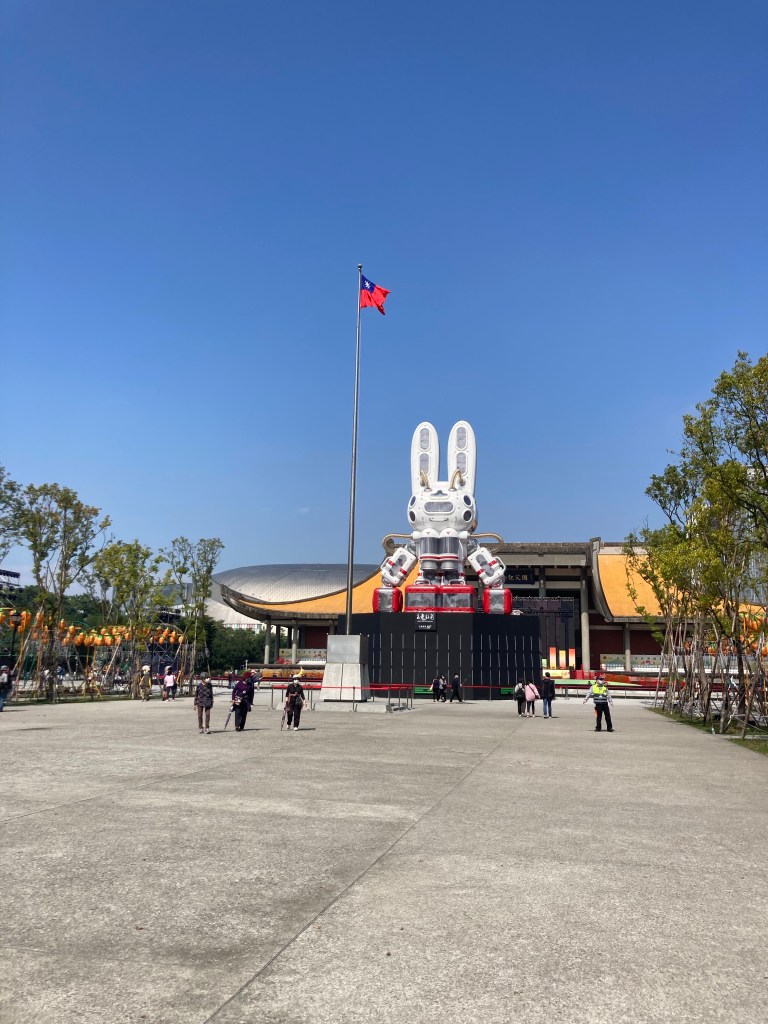
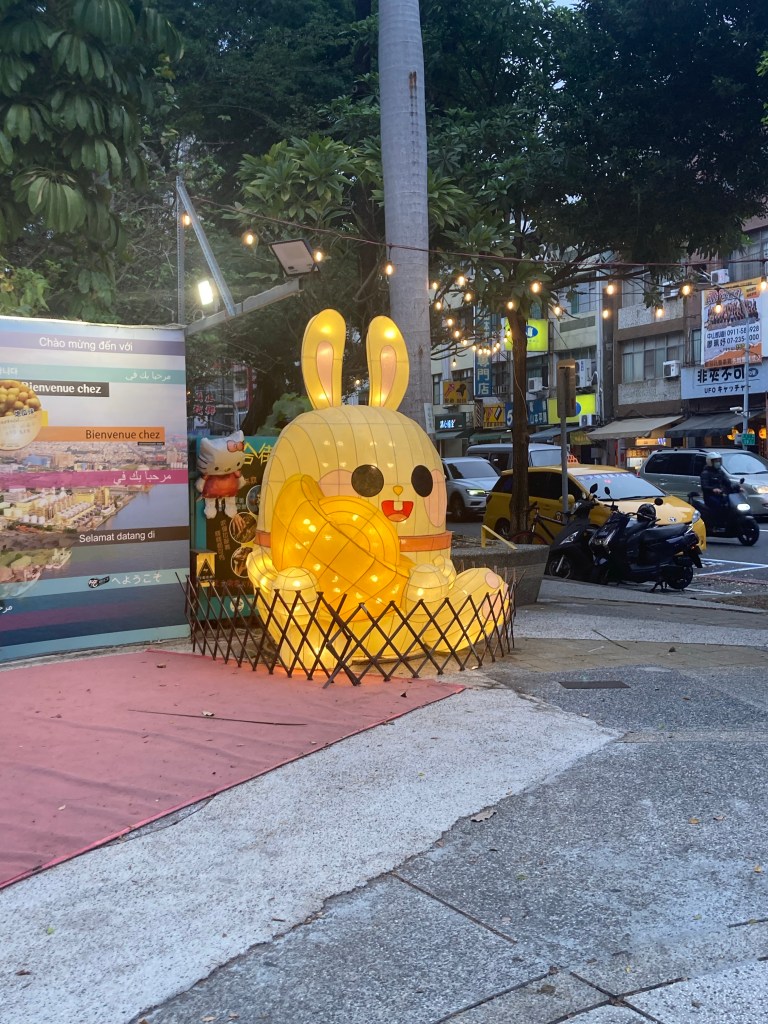
Taipei wasn’t all temples, Memorial Halls and museums. The Lunar new year had just ended and to celebrate the year of the rabbit, cute oversized bunnies hopped out all over the place:
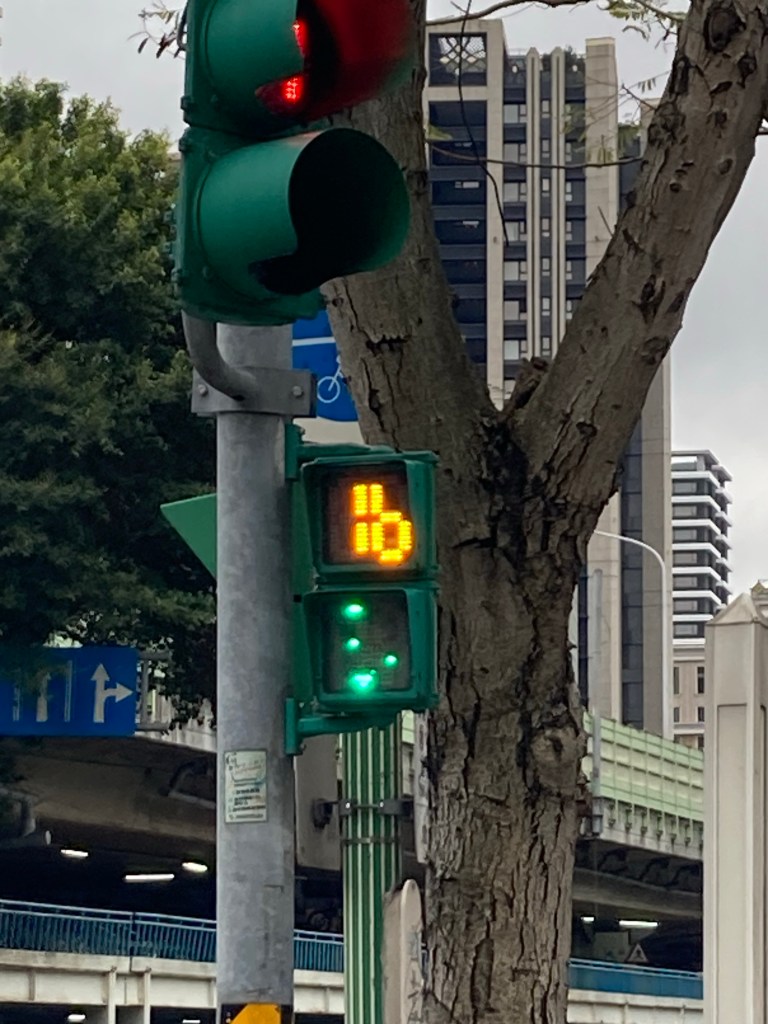
For me, the most endearing sight in Taipei was…….the pedestrian walk signals. Don’t walk is the standard red person but the walking signal starts with a green man actually walking. As the time runs down, the green man speeds up to a run. Apparently every 20,000 steps, the walk man trips and falls but I didn’t see this. It’s hard to photograph the running man but he was:
I splurged on a 4 night, 5 day bus tour promising to circle the island and show us the best of Taiwan.
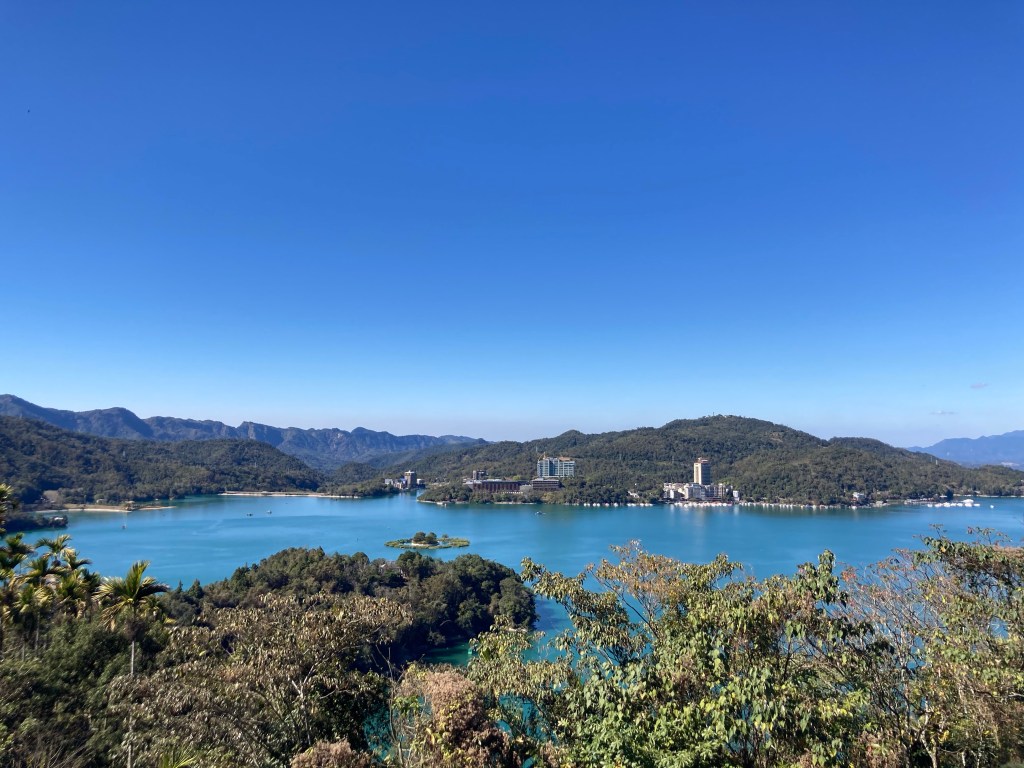
Our first attraction was Sun Moon Lake, a popular resort area with a beautiful lake and lots of fabulous walking trails:
The day was spent visiting various temples around the lake and admiring the views. The next day, we left the lake and went to the Fo Guang Shan Monastery, one of the islands largest. It also houses a university, hotels and plenty of souvenir shops. The tradition here is to erect a statue of every monk who serves in the monastery, so there is a plethora of statues:
The original monastery dated to the 1950’s – the head monk had been a soldier in Chiang Kai-Shek’s army- but it had been destroyed by an earthquake in 1999 so the current structure is pretty new.
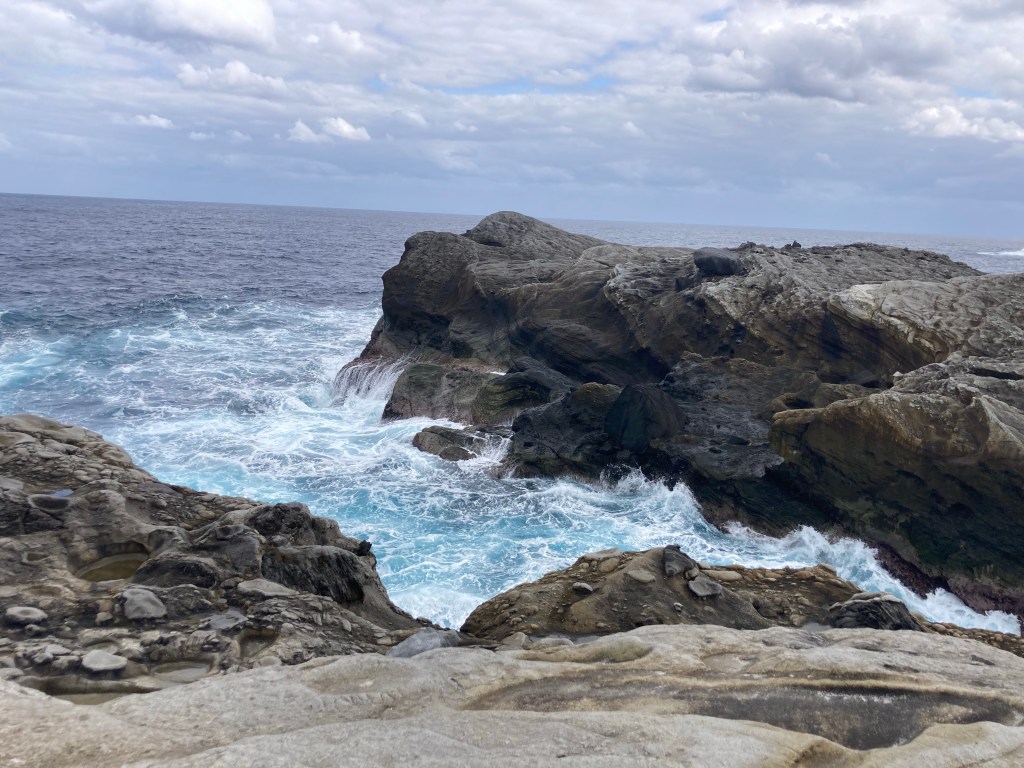
Days 3 and 4 were spent driving the Pacific Coast Highway, the western equivalent of the USA’s Pacific Coast Highway, with equally impressive vast vistas of the ocean:
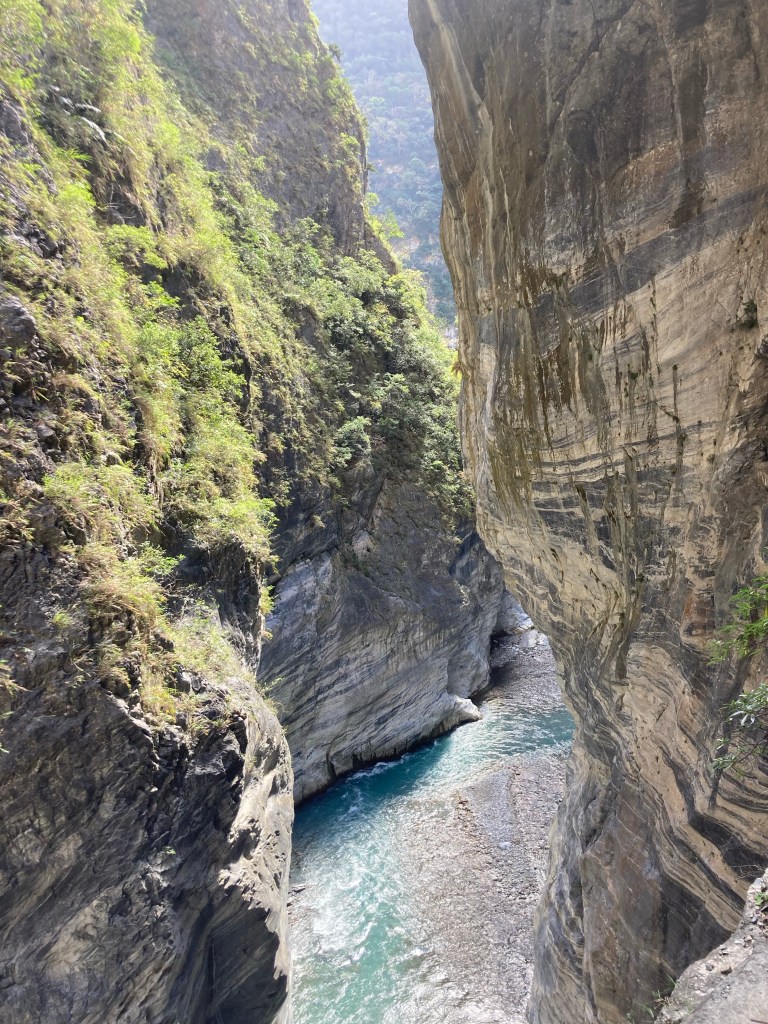
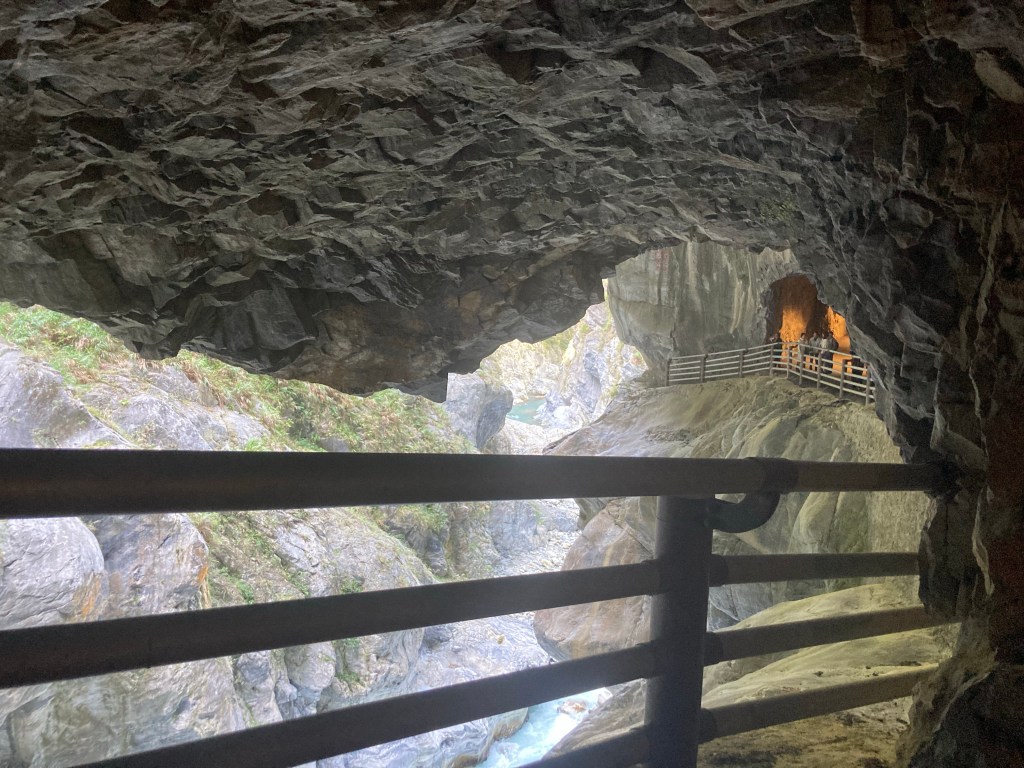
The highlight of our final day was the Taroko Gorge where the Liwu River carved out magnificent cliffs in the sandstone:
Wonderful walking paths, tunnels and bridges carved out by idle soldiers from Chiang Kai-Shek’s army make for some great viewing:
Thus ended the tour and my time in Taiwan. As I mentioned, I left with ambiguous feelings. I was surprised by the country’s lack of an extensive history separate from mainland China and how much of it, in architecture and atmosphere reminded me of any large Chinese city. But I was impressed by all of its green space, its national parks and rugged coastline.