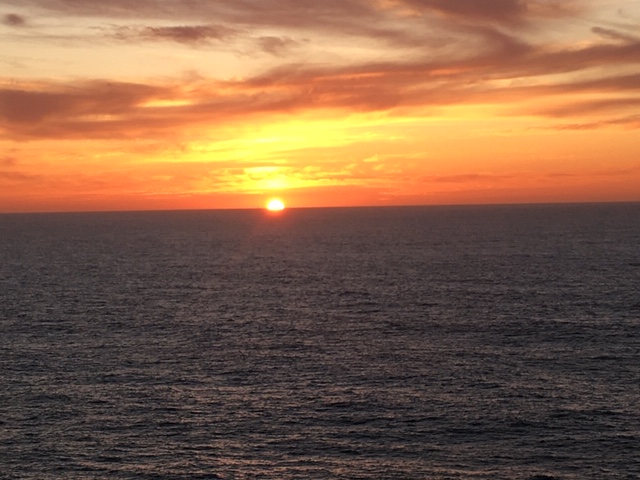
Seeing Seoul

I ended up in Seoul, not out of any deep rooted desire to visit it, but due to the quirks of airline pricing which made it much cheaper to fly Seoul to Tokyo to Toronto rather than Tokyo directly to Toronto.

Thus I found myself one coolish February day in Seoul with little knowledge of South Korea’s history other than the war with the north and no real plan as to what to see or do other than a tour to the Demilitarized Zone (DMZ) which separates the two Koreas.

A few YouTube history documentaries, a review of TripAdvisor Things to Do and a wander around the National Museum of Korea gave me a fair idea of its background and some not to be missed sites.

First a bit of history. Peoples have inhabited the Korean peninsula for over 8,000 years but the first kingdom came about in the 2nd century BC.

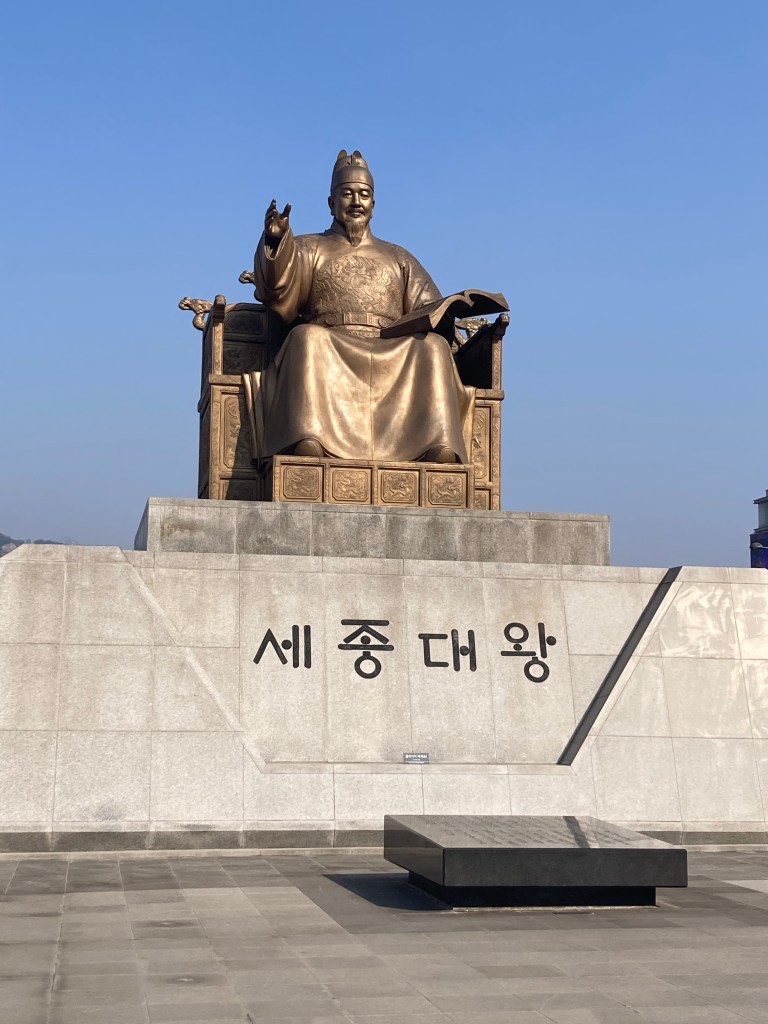
Various kingdoms came and went but the most famous and long lasting was the Joseon dynasty which governed a united Korea from 1392 to 1897. King Sejong the Great ( 1397 -1450) is credited with creating the Korean alphabet, a moving clock and the printing press, amongst other accomplishments and his statue is prominently displayed on the Main Street:
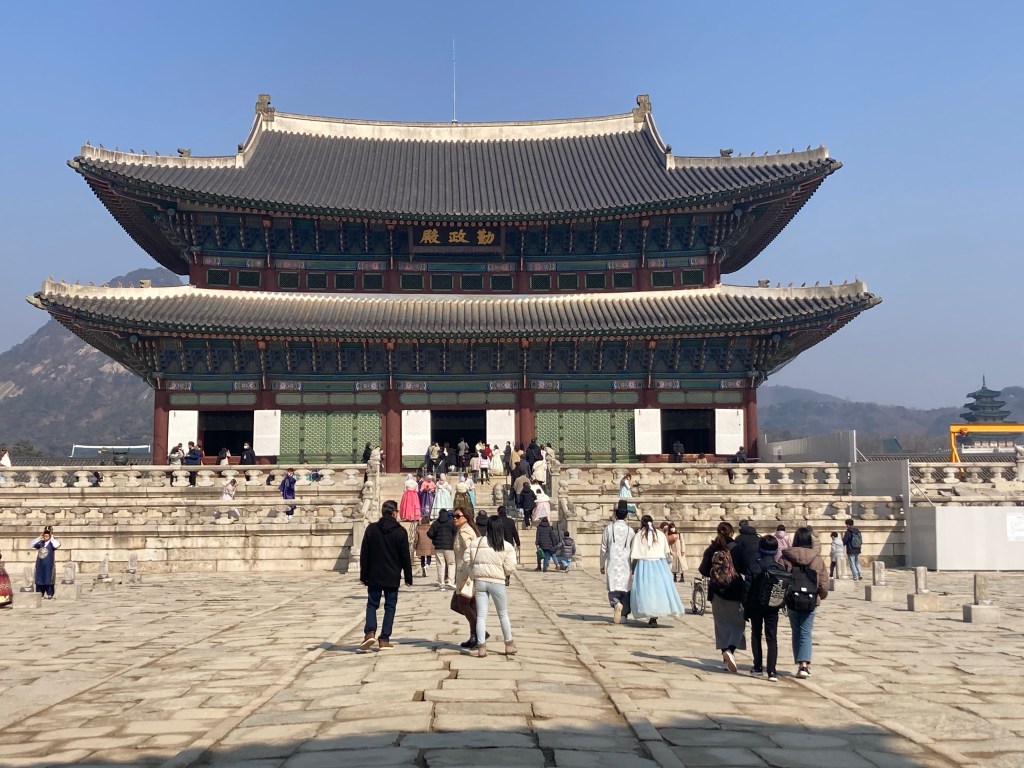
The Joseons were prolific builders and 5 of their palaces have been carefully reconstructed on their original sites in downtown Seoul. The originals, mostly made of wood, were destroyed by fire or the Japanese. The new palaces, although true to the originals, are now made of red pine imported from Canada. Here’s what just a small portion of Gyeongbokgung Palace looks like:
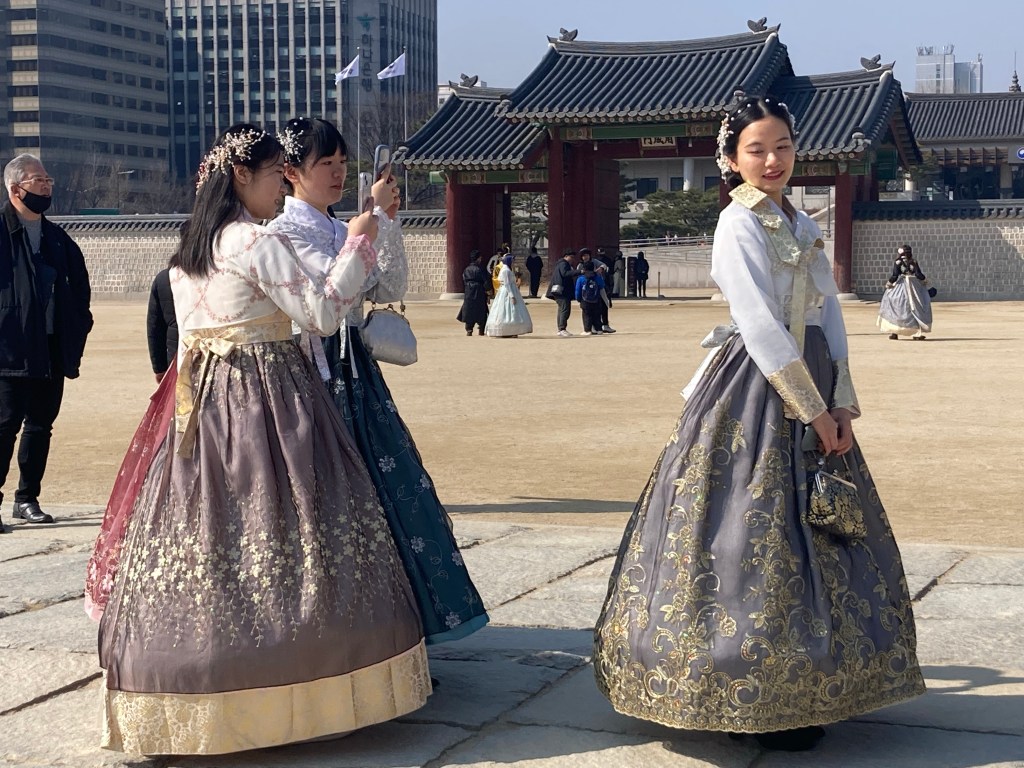
A lovely feature of the palaces in Seoul is if you wear a traditional costume, entrance is free. Thus, plenty of locals and a few foreigners went to the many costume-for-rent stores by the palaces and donned the Hanbok:
Beside the palaces lies the village of Bukchon Hanok. Built to house the administrators employed in the palaces starting in the 15th century, nearly 900 of the houses still stand, interspersed among todays apartments and garages:

It’s said that Korea’s worst problem is its geography. With China, Russia and Japan as its neighbours, its estimated to have been invaded over 3,000 times. The Joseon Dynasty dealt with these invasions by alternatively sealing its borders and becoming a hermit kingdom and opening up to foreigners to develop ways of getting rid of unwanted armies.

In 1894, following China’s defeat after the Sino- Japanese War, the Chinese left and in 1904 the Russians were driven out after losing their war with Japan. Thus began one of the darkest periods in Korean history when Japan annexed Korea and colonized it. Numerous atrocities were committed by the Japanese towards the Koreans during this occupation, the worst of which was the taking of the “comfort girls”, 15 and 16 year old girls who were used as sex slaves by the Japanese soldiers during WW2. A pretty sculpture pays tribute to those girls, of whom only 6 are still alive today:
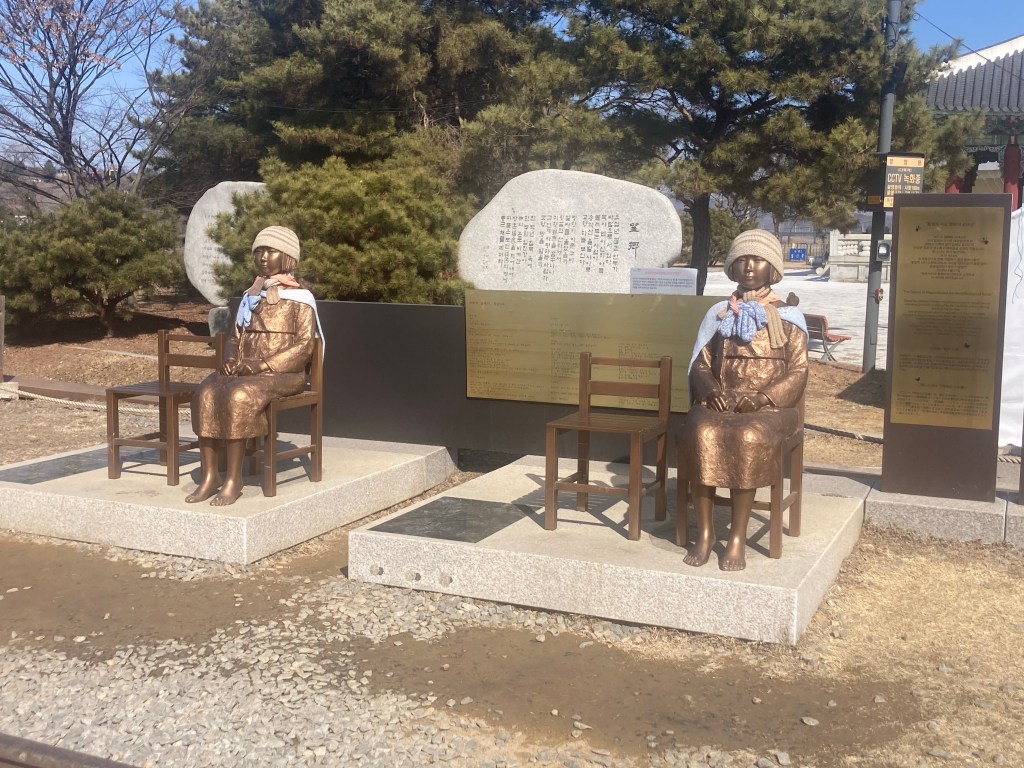
Little love is lost between the Koreans and Japanese. Tourism between the countries is minimal, there’s not a lot of Toyotas around and no one seems anxious to establish better relations.

After WW2, Korea became a proxy for the Cold War. The Russians installed a former guerilla fighter as president of North Korea and, along with China, heavily armed it. In the south, a puppet of the USA was made president. On June 25, 1950, North Korea invaded the south and advanced to Seoul.

For the first time, the UN, heavily backed by the USA, sent a military force to protect a country’s sovereignty. The Korean War waged on for three years until the Secretary General of the UN and North Korea signed a ceasefire agreement establishing the border at the 38th parallel. The war has never officially ended and South Korea does not consider itself bound by the ceasefire agreement it never signed.

The DMZ serves as a buffer zone between the countries. Originally 2 kilometres on each side, it is now a 1.2 strip per side that runs about 155 miles across the peninsula. No arms are allowed inside the DMZ, but each side is heavily guarded.

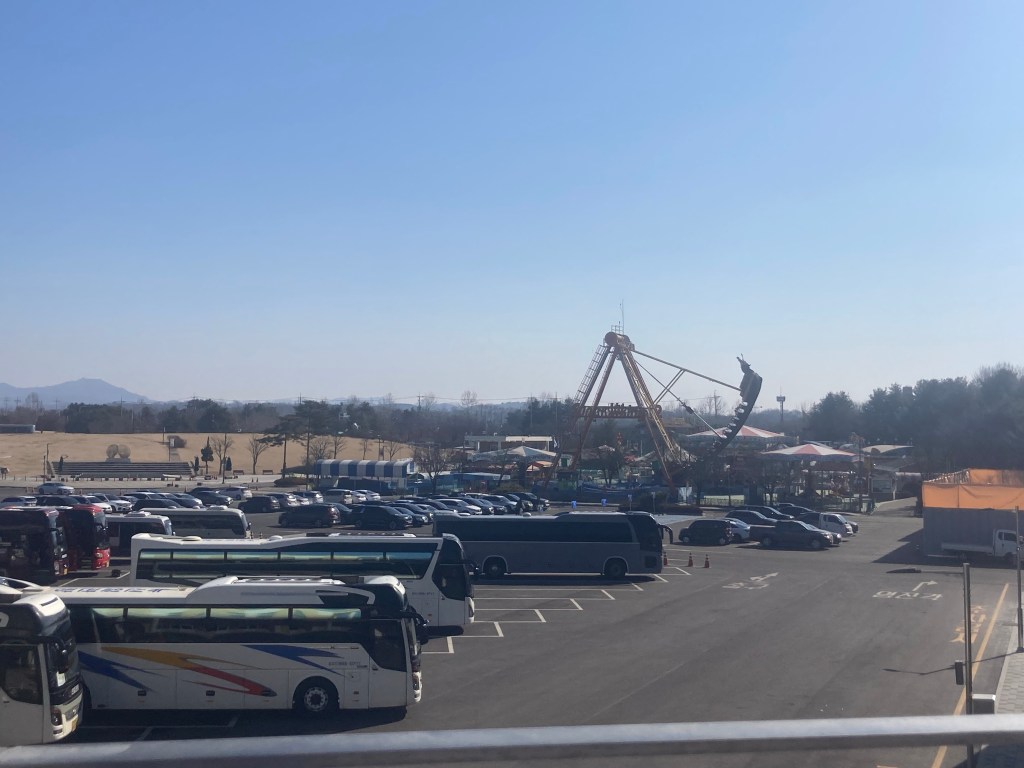
It was against this backdrop, and a few passport checks, that I was expecting something somber and grey on my bus tour to the DMZ, so I was a little surprised at our first stop beside the DMZ to find, you guessed it…..a theme park complete with food fair, a cable car ride, a movie theatre an amusement park: and a giant parking lot for tour buses:
Our second stop on the tour was a little more serious. The North Koreans had, at various times, burrowed four tunnels designed to quickly move 30,000 soldiers into the South. The tunnels were discovered, blocked and now provide tourists like me the opportunity to get as close to North Korea as possible. The one I walked through ( they are quite large and about 2 metres high) is 75 metres underground.

On our final stop, we went to an observation tower where we could clearly see the DMZ and across the border, North Korea’s third largest city. Using the powerful binoculars, I could make out a single North Korean sentry walking around the guard tower. Photos through the binoculars were not possible, but this is what the DMZ looks like:
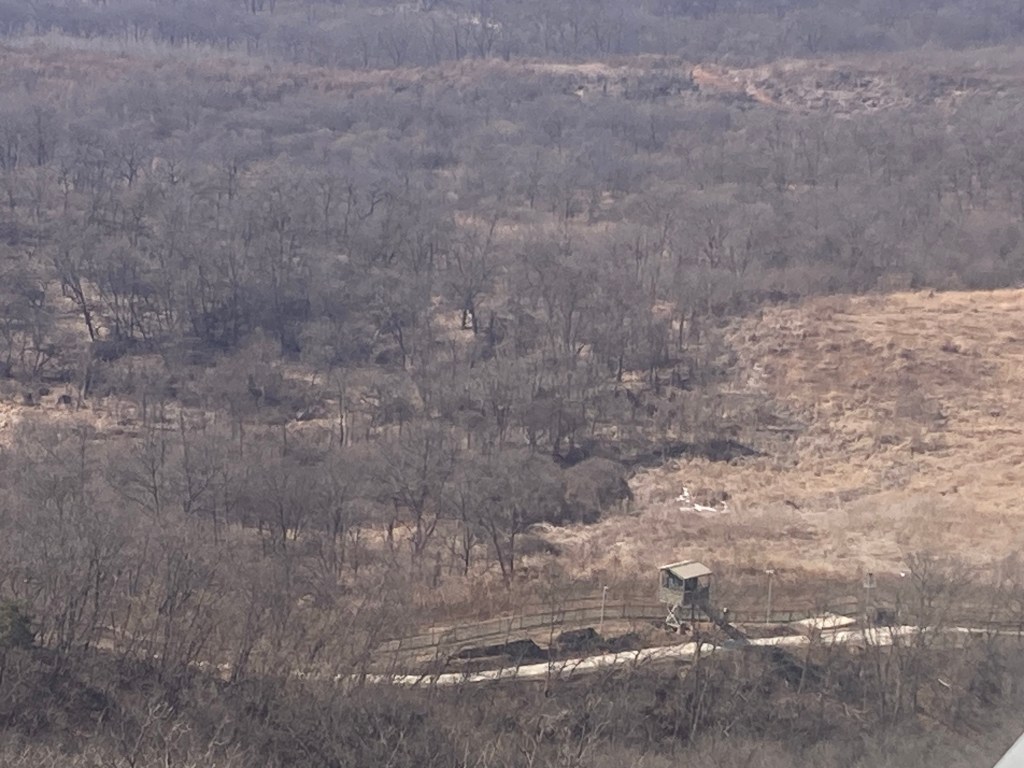
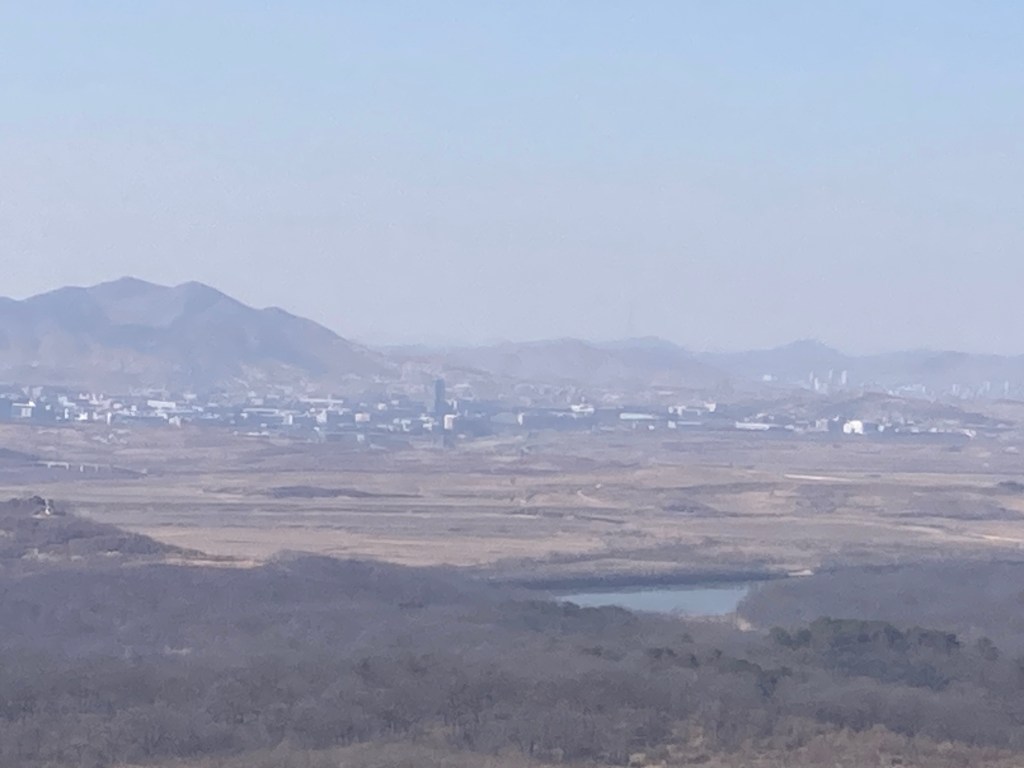
North Korea as seen from South Korea

Our tour guide, a mid -30s local lady explained what she thought about reunification “it’s our parent’s issue, not ours. We’ve never known a unified Korea and we’re a little afraid of the heavy price we’d have to pay to absorb the much poorer north. As for North Korea and its missiles and nuclear threat? We think they’re more of a nuisance than anything else. It’s a way for Kim Jong-un to get attention. Nothing more”.

I visited the war memorial commemorating the 5 million soldiers and civilians who died during the Korean war; unfortunately the museum was closed the day I tried to visit. I walked through a few of Seoul’s noteworthy neighborhoods and tried a variety of Korean foods. I walked to the Hangang River which bisects the city and was forced to listen to K-pop, Korean hip hop, for two hours at a protest beside my hotel.

It was all very pleasant, but without meaning to sound dismissive of Seoul, after five days I had seen all I wanted to see and was ready to move on.

Next, Japan.
Vietnam Ventures

My only prior visit to Vietnam, in 2007, was limited to Hanoi and Halong Bay. Both were fabulous, but I didn’t really feel like I had seen enough of Vietnam, so I booked myself a two week trip there, stopping in 4 new-to-me cities.

Ho Chi Minh City is the country’s second largest and the former Saigon, occupied by the Americans until their ignominious retreat in April, 1975. The American War (what we refer to as the Vietnam War) is recalled here in the War Remnants Museum. I was greeted by a sign promising “ the honest story” about the war.

Well you know the saying “history belongs to the victors.” It was fairly evident in the museum, with the Viet Cong referred to as martyrs and patriots and the US as imperialists and propping up a puppet government. US interests in the region were scarcely mentioned, but in retrospect, other than a vague desire to uphold democracy and stop the spread of Communism, I’m not sure the motives are much deeper.

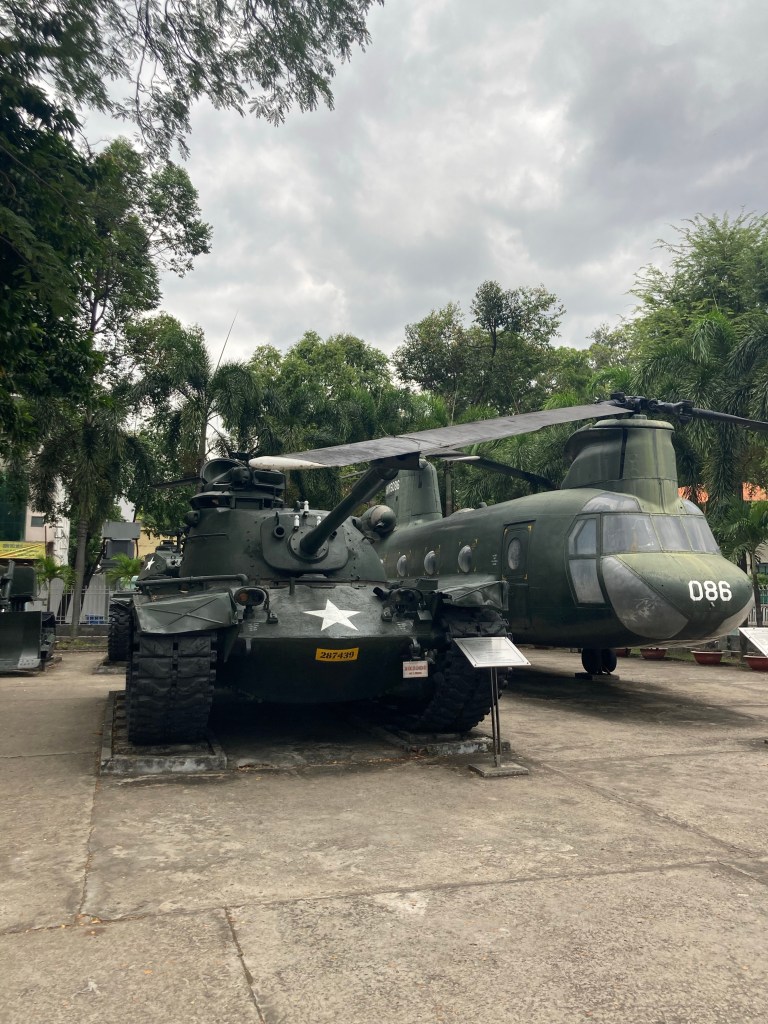
The museum identifies the key events leading to the war and the players, but then focuses on the horrors committed by the US – the My Lai massacre where US military killed 500 civilians for no apparent purpose, the Napalm attacks and the effects of Agent Orange. Two exhibits were devoted to photojournalism; one on the many journalists who lost their lives during the war and another showcasing their work. Finally, I returned to the courtyard which was decorated with US hardware; taking selfies beside a tank seemed to be a thing but I managed one picture without getting photo bombed.

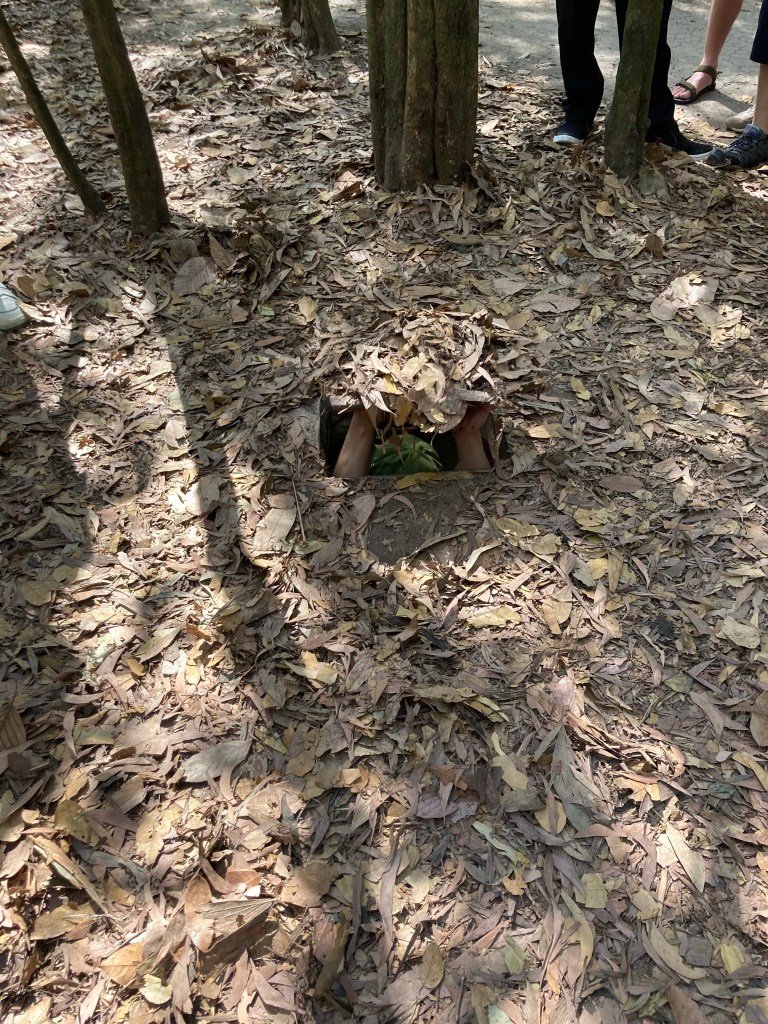
Continuing the war theme, I embarked on a tour of the Cu Chi tunnels, where the Viet Cong dug an elaborate series of tunnels near US bases to smuggle both arms and soldiers and to attack the Americans. There, the guide showed us the many booby traps used to capture US soldiers and the ingenious entrances to the tunnels:

We could walk through some tunnels, enlarged to accommodate fat tourists and try our hand at shooting AK-47s on the conveniently located firing range. I passed on both, but left with the sense that the Vietnamese were proud of the ways in which they seemed to outsmart the Americans at every turn.

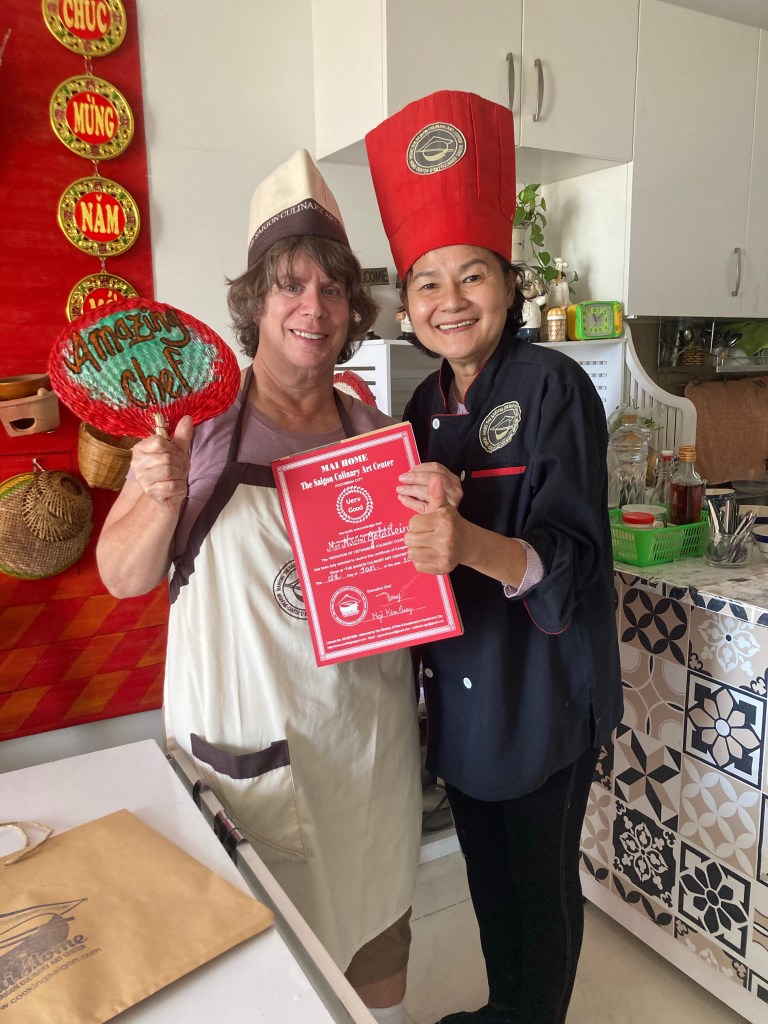
Having had enough of the War, I joined Qwi for a Vietnamese cooking lesson. It was held in the kitchen of a high rise apartment block; she had lost her restaurant during the pandemic. She was a great teacher and we made spring rolls, Vietnamese pancakes and the iconic Vietnamese dish, pho. All were delicious.

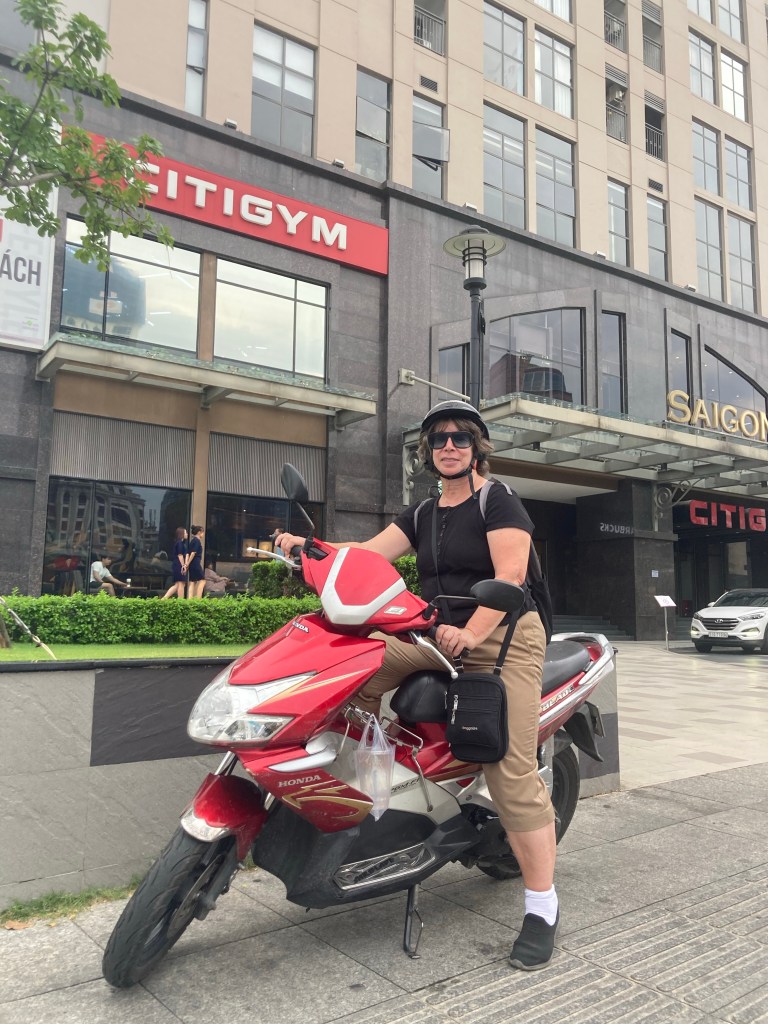
Travel sometimes entails leaving one’s comfort zone and in Ho Chi Minh City, I left mine far behind when I signed up for a city tour with a student on a scooter. I’m basically petrified of motorcycles and have never been on one in Canada, but a scooter in Vietnam, where they are so ubiquitous, seemed sensible.

Timothy, my guide/ driver was an English literature student who spoke with a proper BBC accent. After giving me a helmet, we proceeded to scoot around the city, joining the other 4 million scooters zipping in and out of traffic, deftly missing pedestrians and giving way to honking trucks and buses. I was enjoying the wind in my face and thought I could get used to this until I read a few days later that Vietnam has a very high fatality rate amongst scooter riders:

From Ho Chi Minh City, I flew to the central city of Hue, the formal capital of the newly unified Vietnam between 1802 and 1945, when the French exiled the last king.

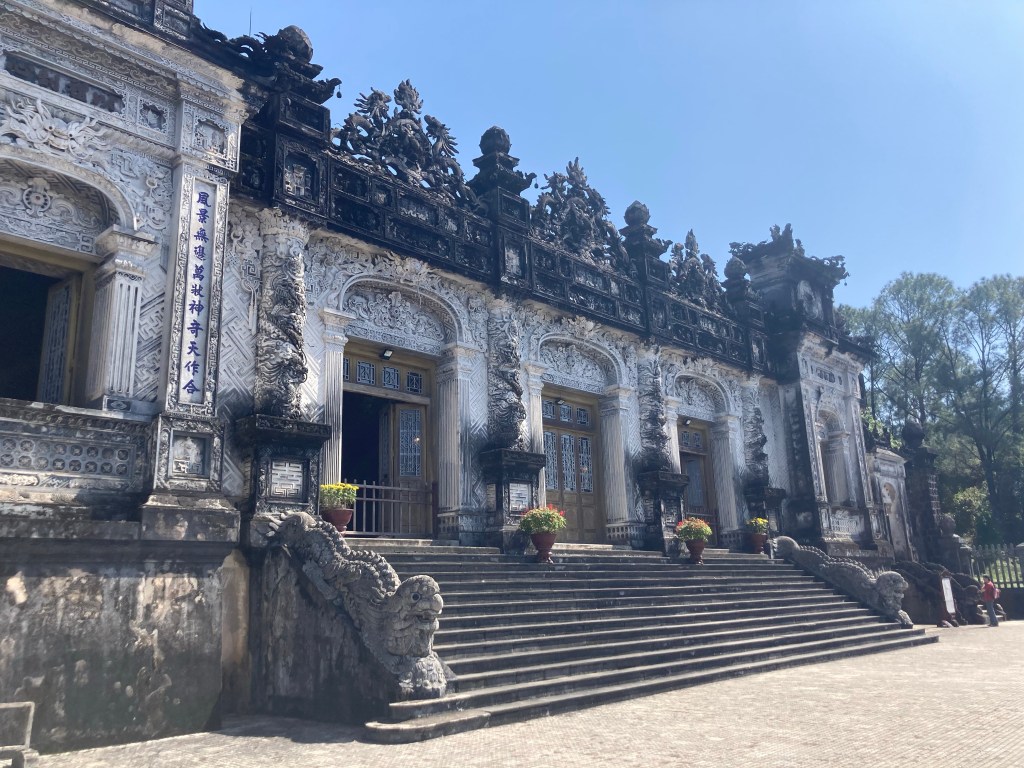
The kings were famous for building tombs, most of which survive today. I visited two, the serene yet fantastic tomb of the 4th king, set in a park like setting and the more ornate, nearly gaudy one of the 12th king:

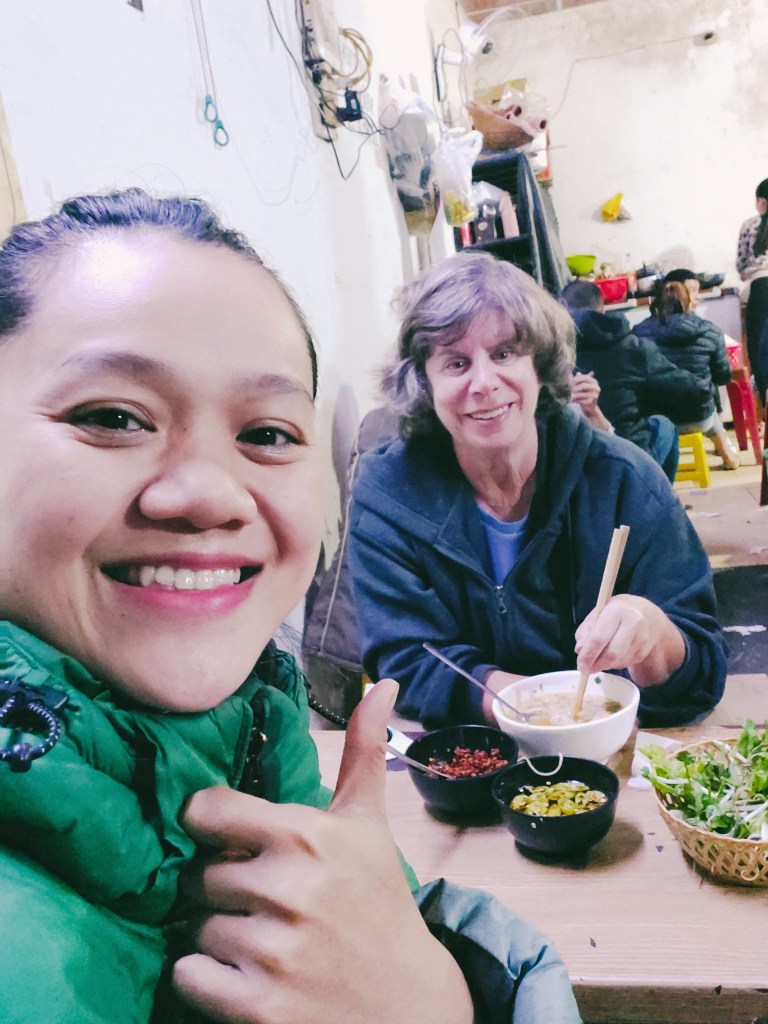
I also signed up for a street food tour. Led by Ruby, we scooted around Hue in search of the best local street food. I indulged in a Banh Mi, Pho, a dry noodles dish and a jellied rice dish. All were good, but I’m getting tired of Asian food and dreaming of fajitas.

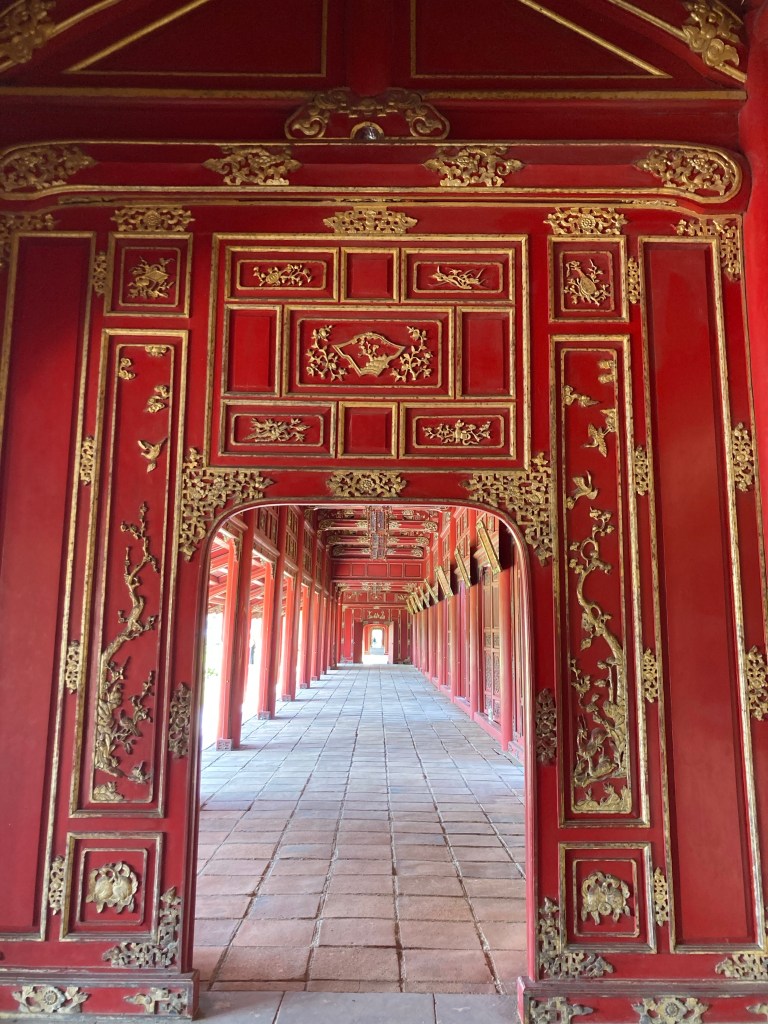
In addition to the tombs, Hue is famous for its Imperial City. Modelled after the Forbidden City in Beijing, it was a walled, planned city for the royalty to live in. Some of the buildings were destroyed during the war, but many still remain or have been reconstructed:

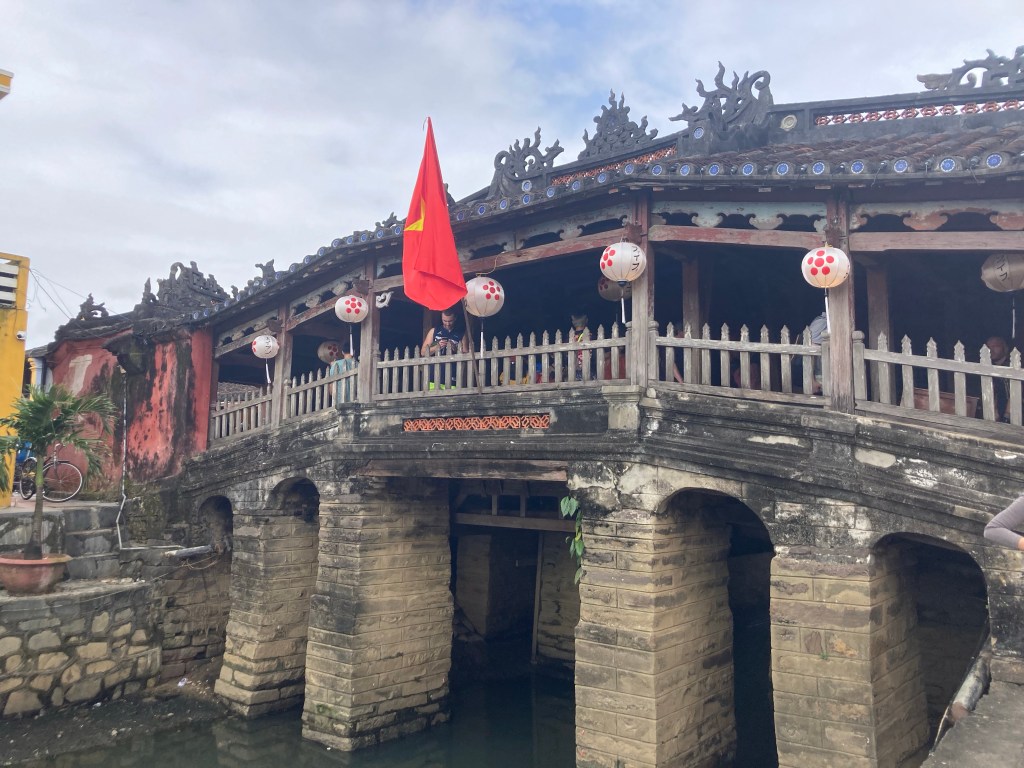
From Hue, Hoi An is a two hour taxi ride. It started as a trading port, attracting Chinese, Vietnamese and Japanese mariners and merchants and their history is evident today in the many Temples, Assembly Halls and old houses I visited in the Old Town. The most famous landmark is the Japanese Covered Bridge:

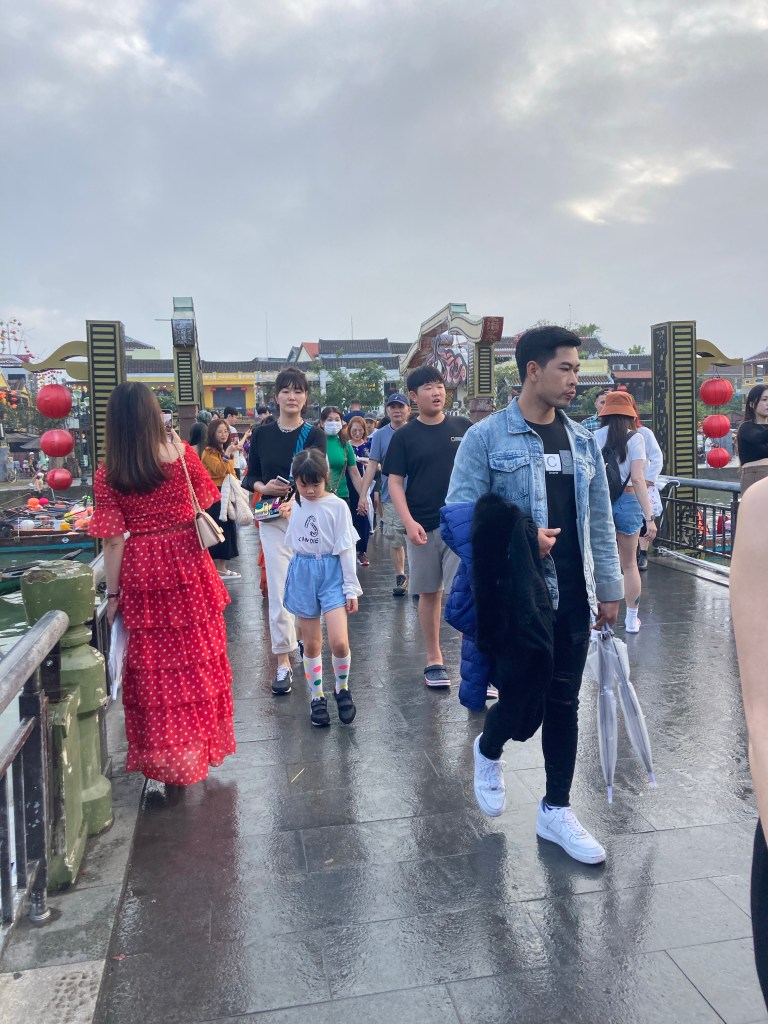
It was basically impossible to get a photo of it without a ton of tourists; Hoi An has done a good job of marketing itself as a tourist destination and the crowds were huge. Walking around the Old Town felt like shuffling through a crowd at a baseball game:

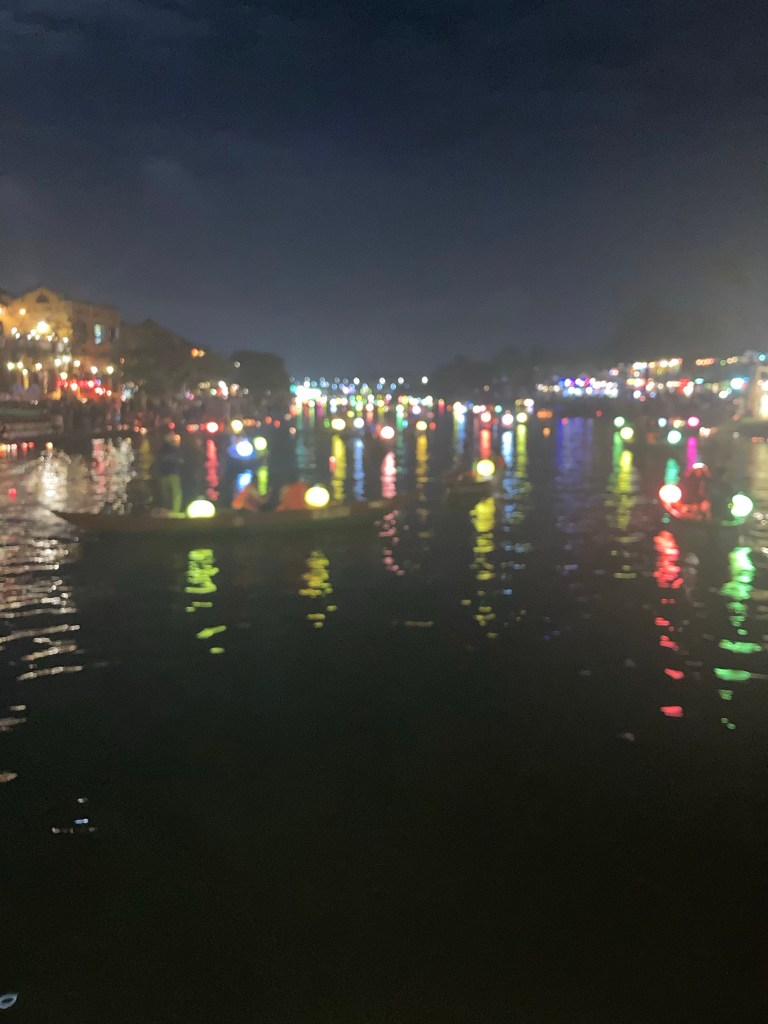
The lantern festival, held monthly on the first night of the lunar calendar, was dreamed up by the Hoi An tourist board. Basically, you buy a lantern for about $1, light the candle, make a wish then set it on the water and watch it sail away. I, along with thousands of others, couldn’t resist:

It’s quite beautiful but hard to photograph all the lights in the dark.

If you’ve made it this far and aren’t completely bored by all the history, jump with me to the 21st century and my visit to the Bana Hills. Originally developed in the mountains outside DaNang by the French seeking relief from the heat, it lay abandoned until about 1991 when it was developed into a theme park.

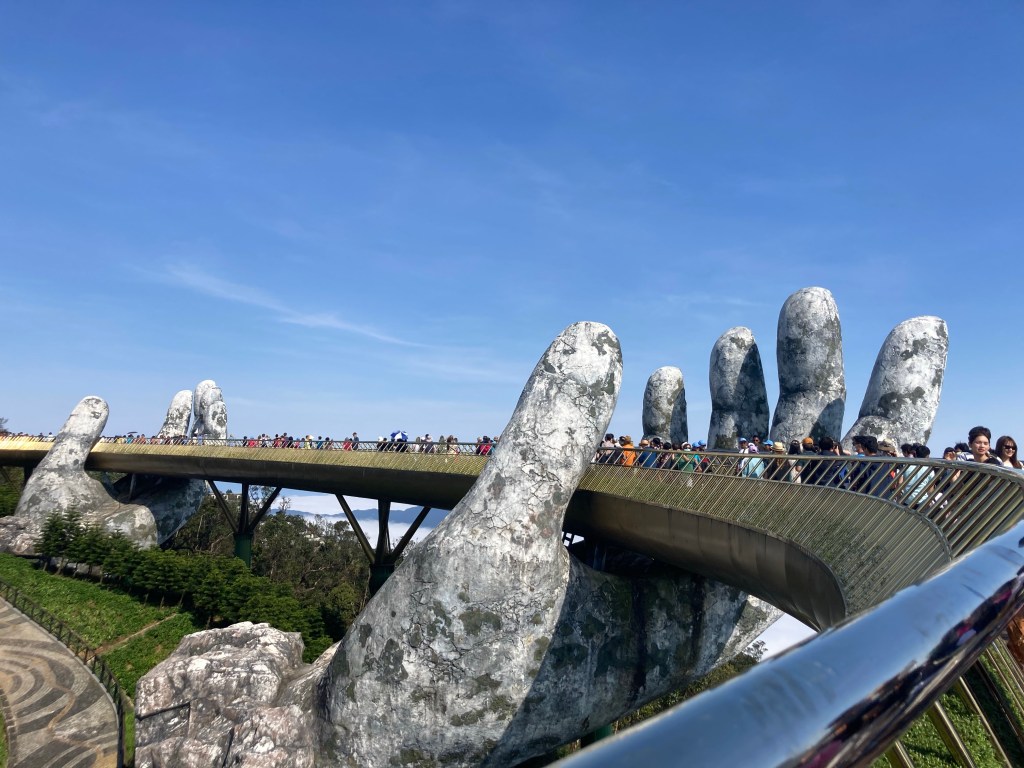
The French used to be carried up there by the Vietnamese; today the world’s longest single rope cable car whisks you up in about 10 minutes and the newest attraction- The Golden Bridge- comes into view:

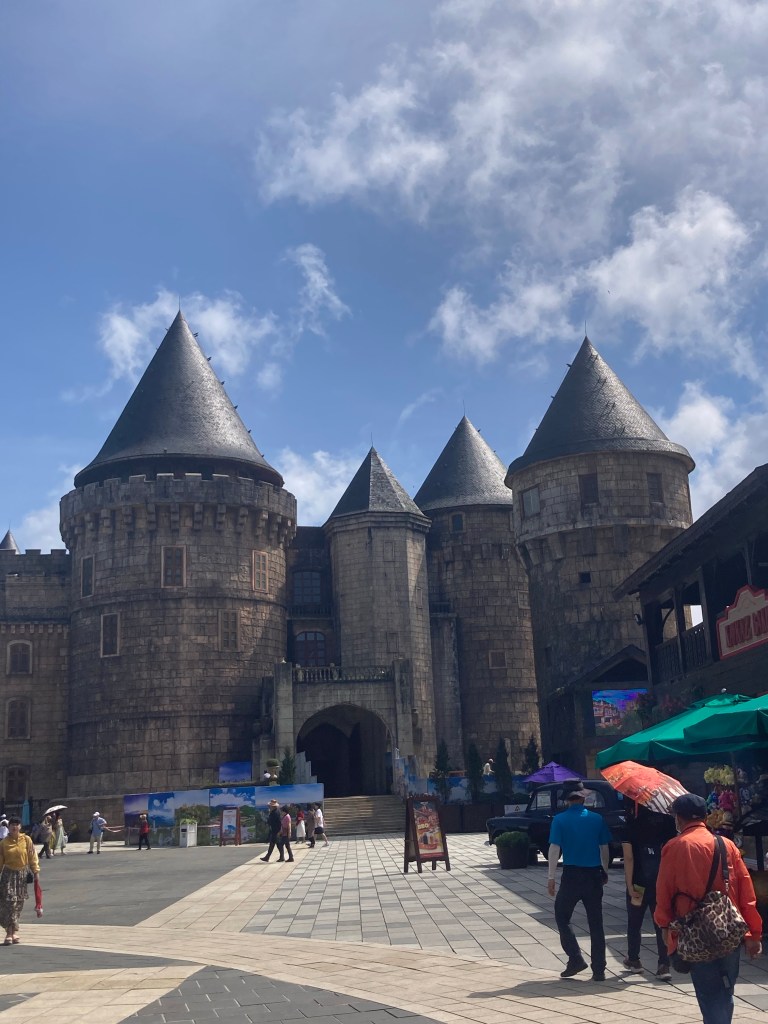
Another short cable car ride deposited me in the French Village, complete with a Cathedral, European garden, of course, a Loire Valley inspired castle:

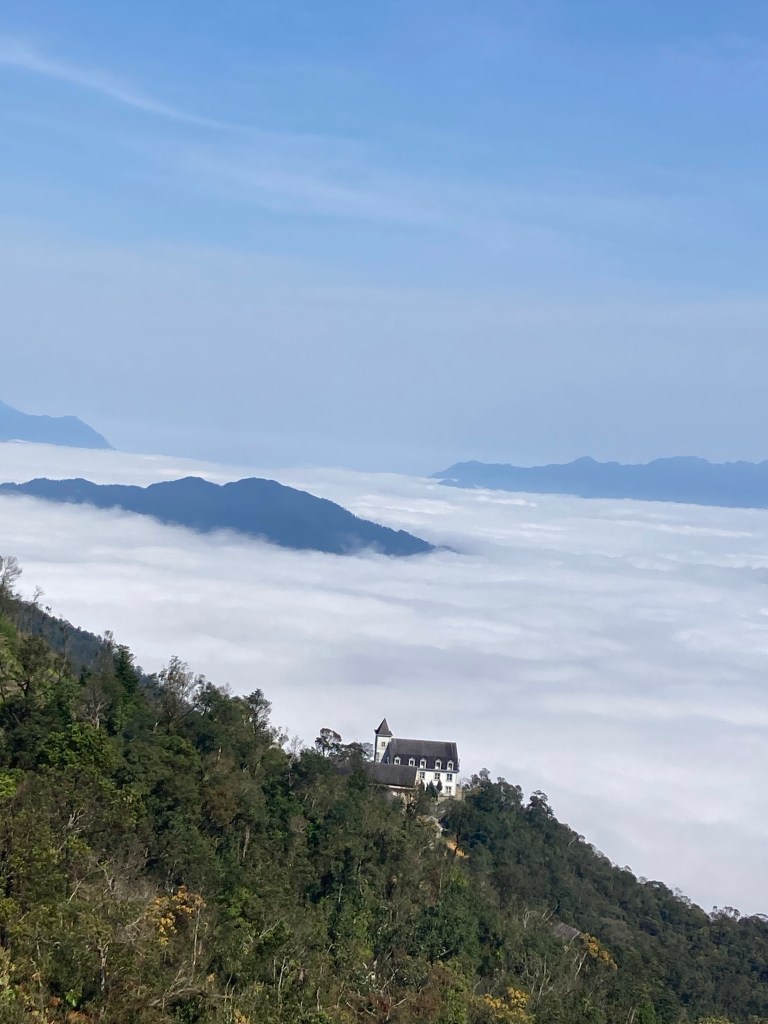
It’s very busy with both local and foreign visitors, a testament to the skills of the marketers. Despite the craziness of walking through a French village in Vietnam, the imagination of the Golden Bridge designers or the indoor theme park, my favourite part of the day was the cable car ride. Despite being basically terrified of cable cars, this one started in the misty plains, then went through the clouds before stopping in glorious sunshine. From atop, I was able to photograph the clouds below:

Mother Nature trumped mankind!

And so ended two weeks in Vietnam.

Of Temples and Trains: Thailand

I’ve been lucky enough to visit Bangkok three times prior, so I’d been to the usual tourist attractions: the Royal Palace, the Emerald Buddha, a cruise along the river. This time, I had two objectives.

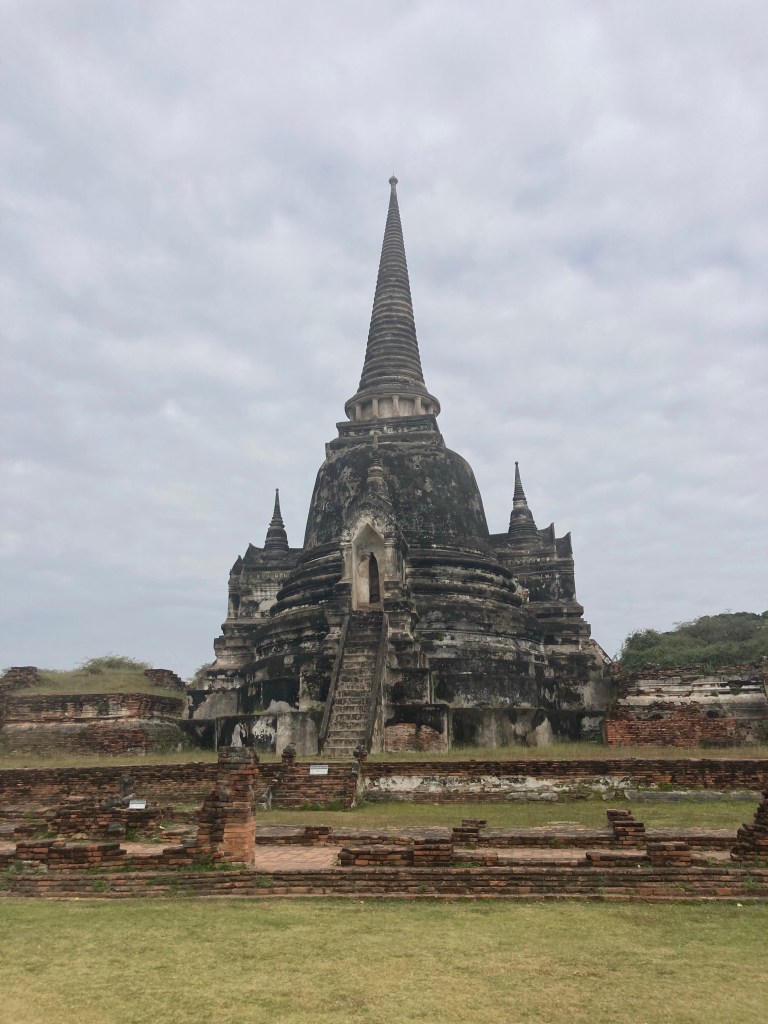
First, I wanted to learn more about the history of Thailand. I booked a day tour to the ancient city of Ayutthaya, located about 90 minutes from Bangkok. The Siam dynasty succeeded the Khmer dynasty in 1351 and constructed Ayutthaya as its capital city, still mostly in the Khmer style which explains its resemblance to Angor Wat in Cambodia. Siam ruled the area for 400 years, battling the Burmese and Laotians. Finally in 1730, the Burmese ransacked the city and the Siamese decamped to the newly built city of Bangkok.

We went from temple ruin to temple ruin:

They were quite beautiful, but after the fourth or fifth one, they all started blending into each other. Our guide, with hard to understand English, offered little explanation and very few of the signs were in English so much of what I learned about the area was from Wikipedia.

My second goal was to visit the train market. I’d seen photos of one in Hanoi, where the train runs very close to market stalls, but as Hanoi is not on my current agenda, I wanted to make a point of seeing the Thai equivalent.

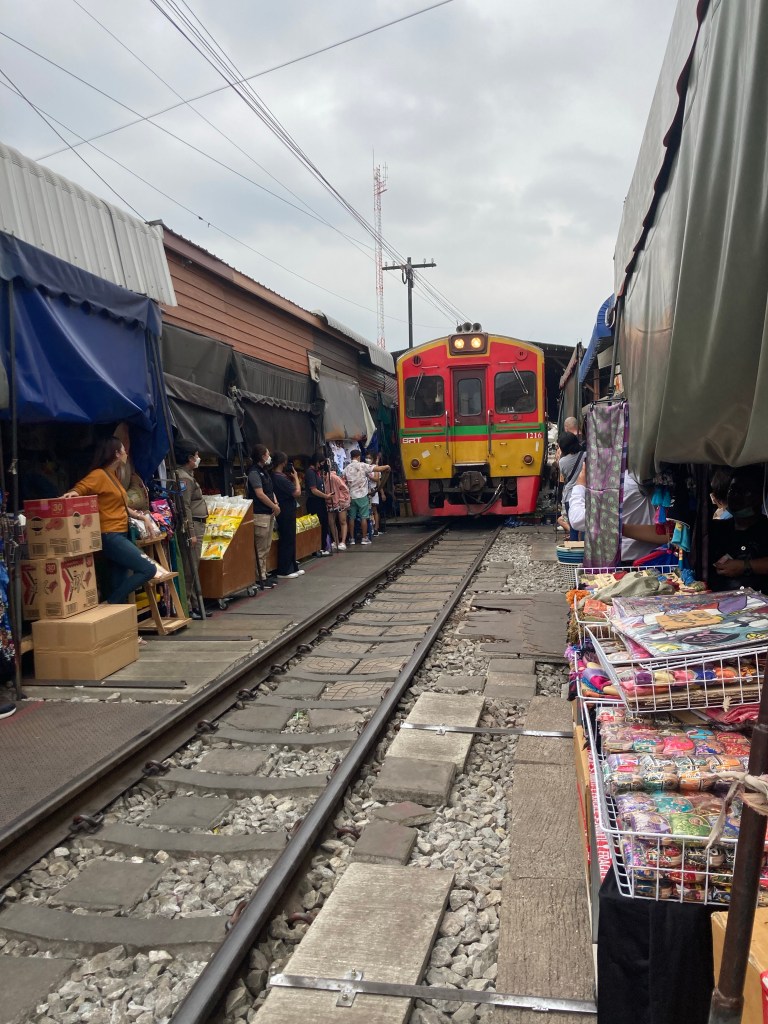
After an hour drive out of Bangkok, my tour group was dropped by some train tracks along with hundreds of other tourists in the middle of nowhere. A few minutes later, a train appeared, we boarded the rickety old commuter train and settled in for the half hour ride.

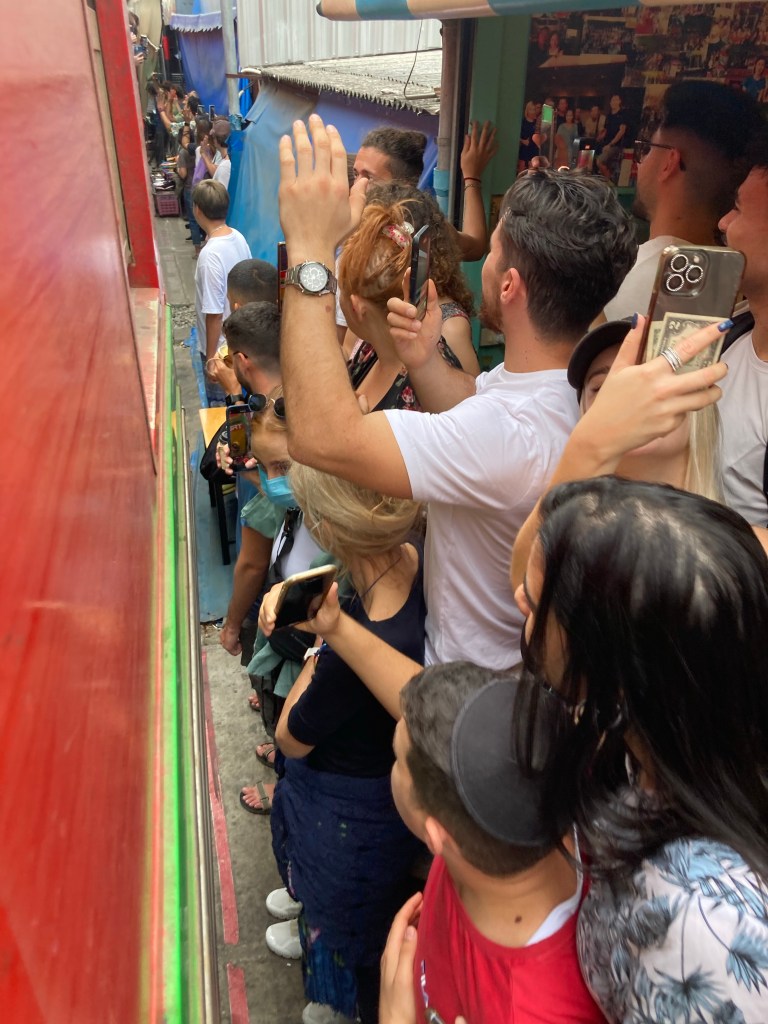
At the 28 minute mark, the guide yelled “get ready”and we all looked out the windows to see market stalls just inches away. Standing below were camera toting tourists anxious to take a photo and high-five the train passengers – we were that close:

It was jolly good fun and everyone laughed as the train inched its way along the track. After it stopped, we disembarked then stood behind the red line to watch as the vendors packed up their stuff as the train made its way back up the track:

A visit to the floating market, indulging in Thai street food, a foot massage and a $12 haircut completed my time in Bangkok. In my younger days, I would have taken the 12 hour train to Chiang Mai, but I’ve lost patience for that so I flew to my next city, Chiang Rai.

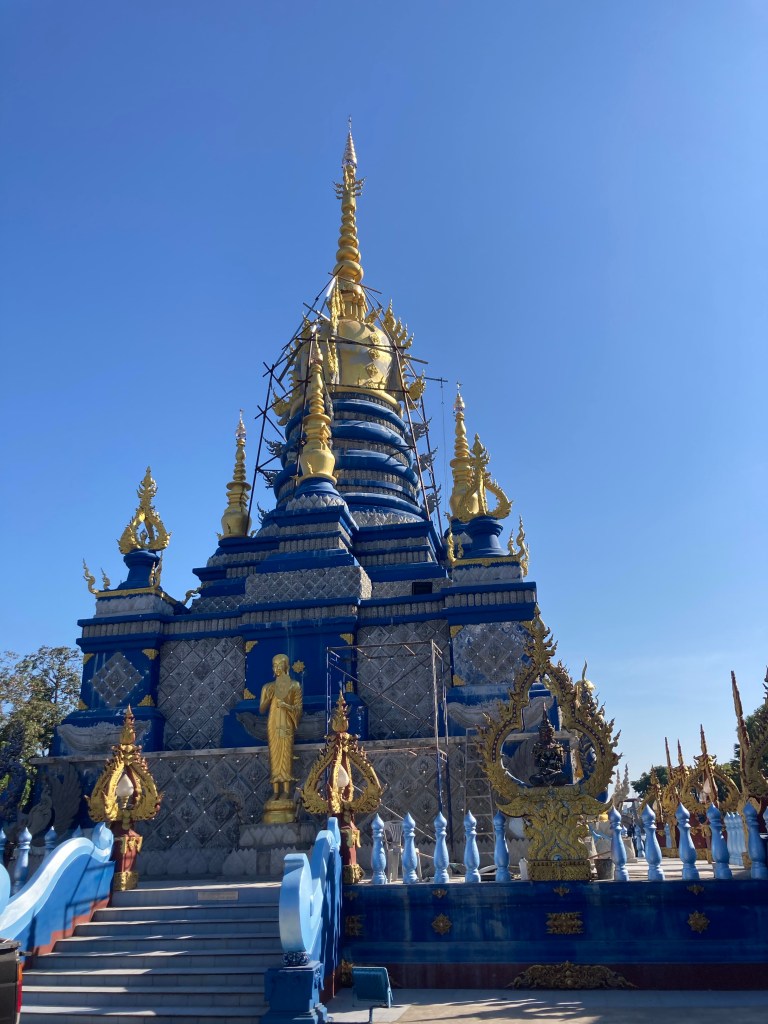
Chiang Rai is the northernmost city in Thailand, near the border with Laos, and having a population of about 200,000. One of its highlights is the Blue Temple:

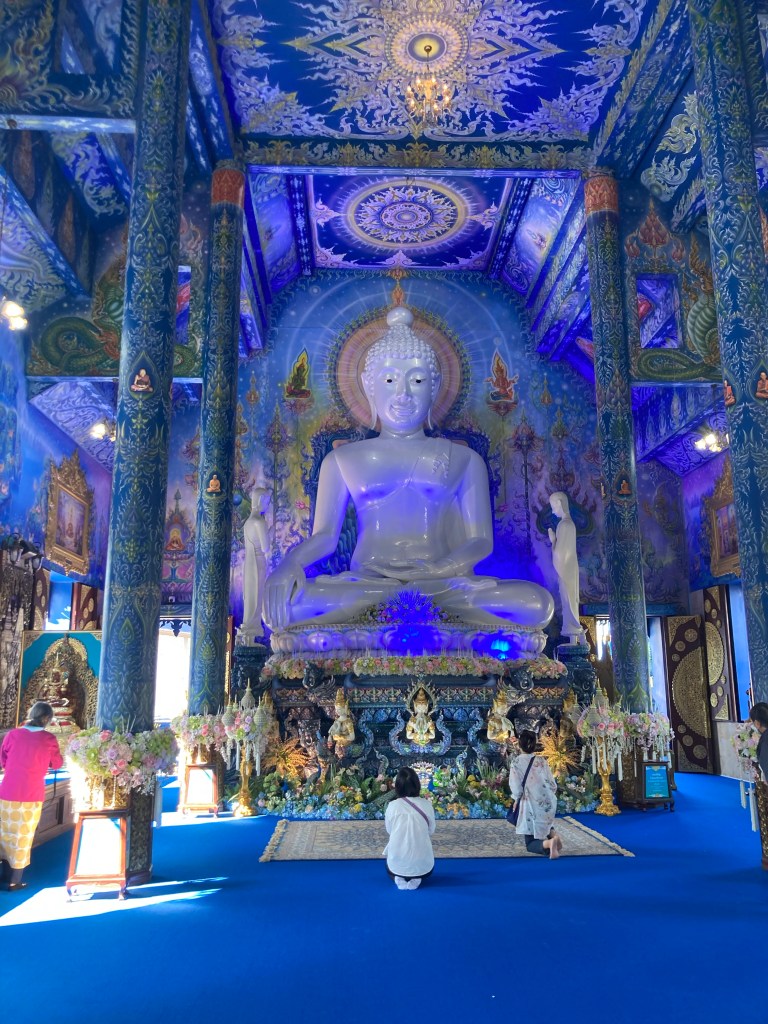
As you can see from the photo, it is quite blue. Inside, it is also blue:

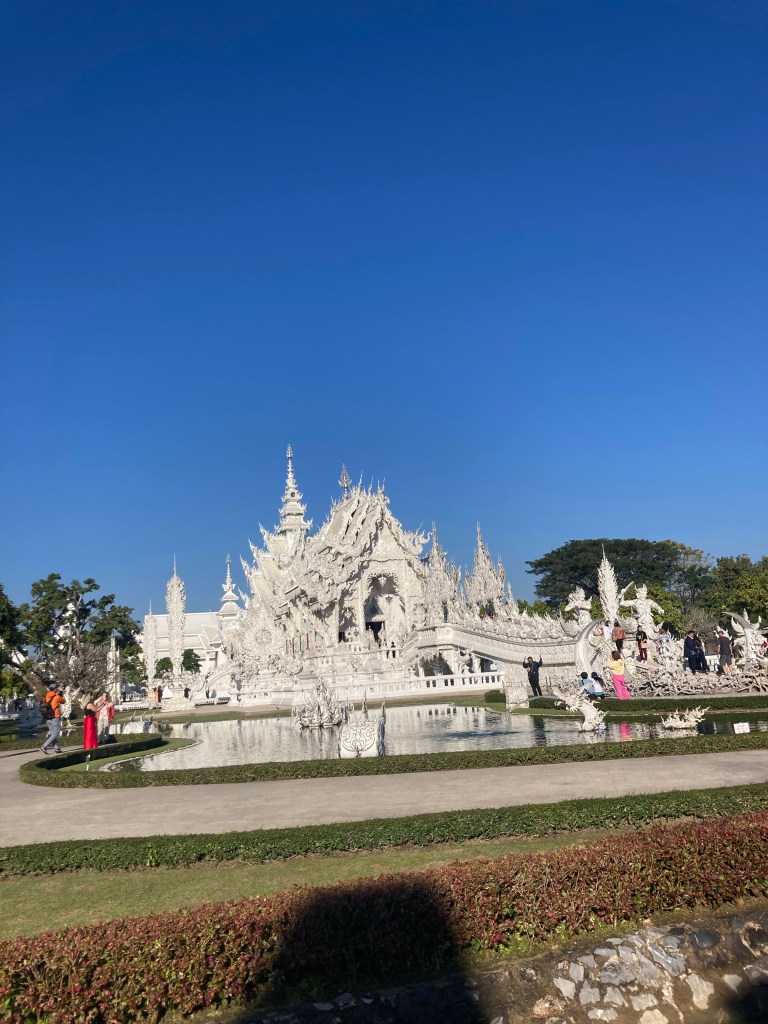
Not to be outdone by the Blue Temple is the White Temple. Construction began in 1997 by a local artist and it is absolutely gorgeous;

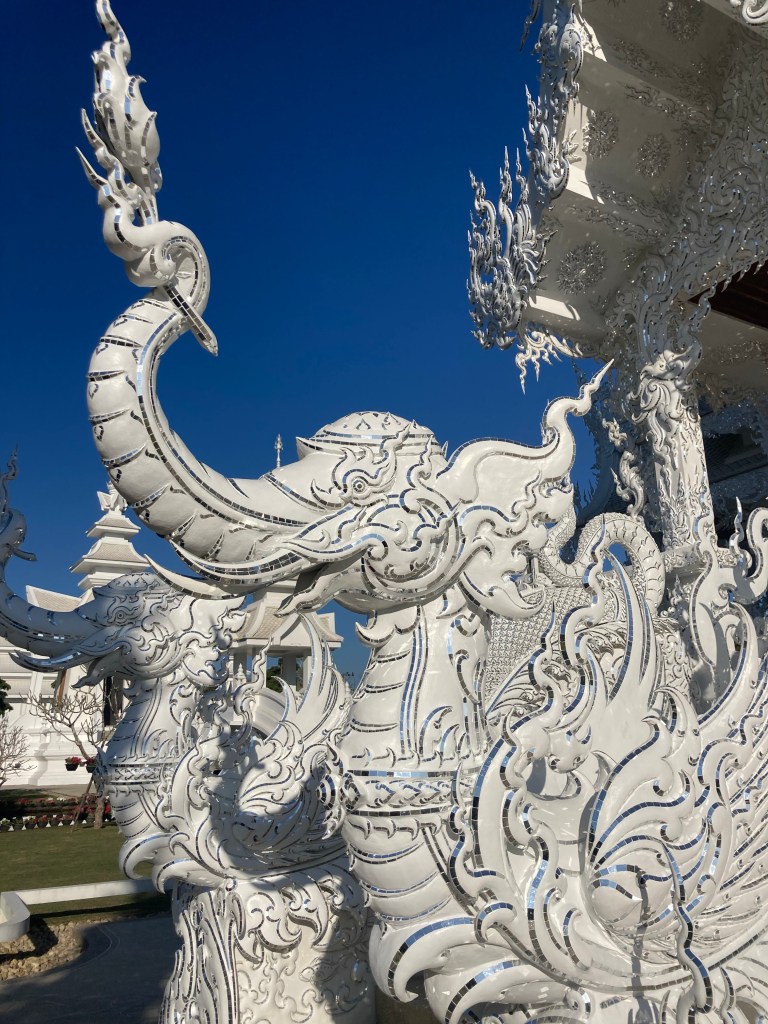
Both inside and out are intricate carvings, all in white:

It really is magnificent; a fitting memorial to an artist’s imagination and aesthetic that, in my mind, ranks with the Taj Mahal as one of the world’s most beautiful buildings.

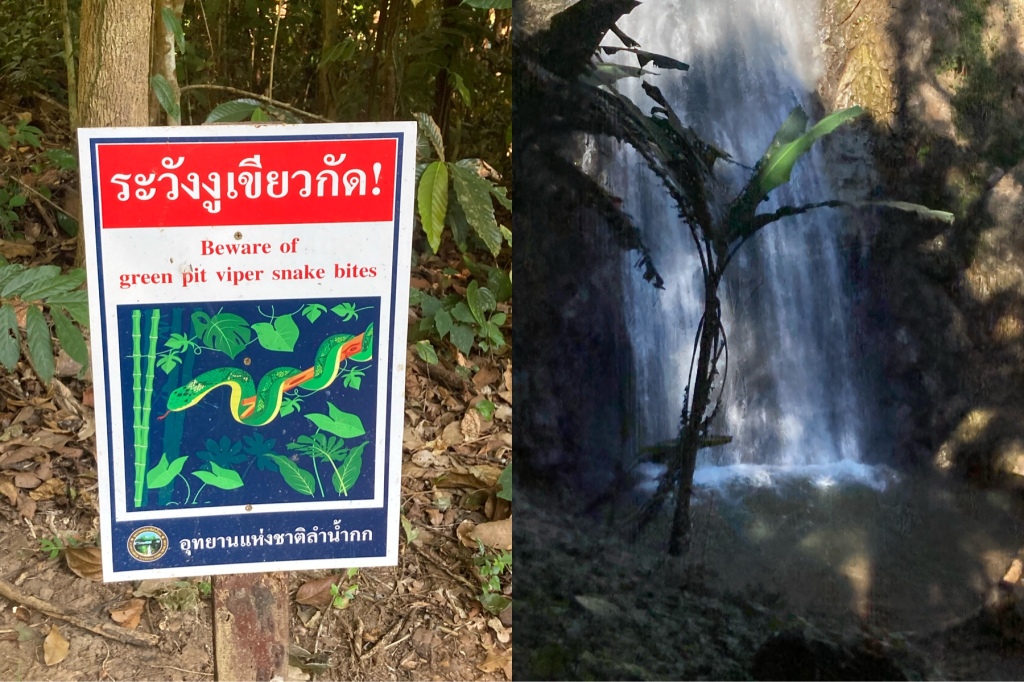
Needing a change of scenery from all the temples, I went on a 30 minute hike to a nearby waterfall, the Khun Korn waterfall. As I started, I was greeted with this sign:

Fortunately I saw no green pit vipers, or any other snakes, and made my way to the waterfall without incident.

A comfortable 3 hour bus ride landed me in Chiang Mai. The second largest city in Thailand, it’s advertised as a quaint, quiet town with few tourists and an old town replete with walls and hundreds of temples.

Well, there is a wall and lots of temples, but I wouldn’t describe it as quaint or less touristy. The old city is a warren of tiny streets, a temple on every corner and impromptu market stalls on every spare inch of sidewalk:

As for fewer tourists, that’s debatable. Although there was an absence of Chinese and Russian visitors, there were plenty of Europeans and Israelis. Cheap massage parlours, express tailors and food stalls abounded. Touts hawked treks to the nearby mountains and elephant sanctuaries promising “no riding” were heavily promoted.

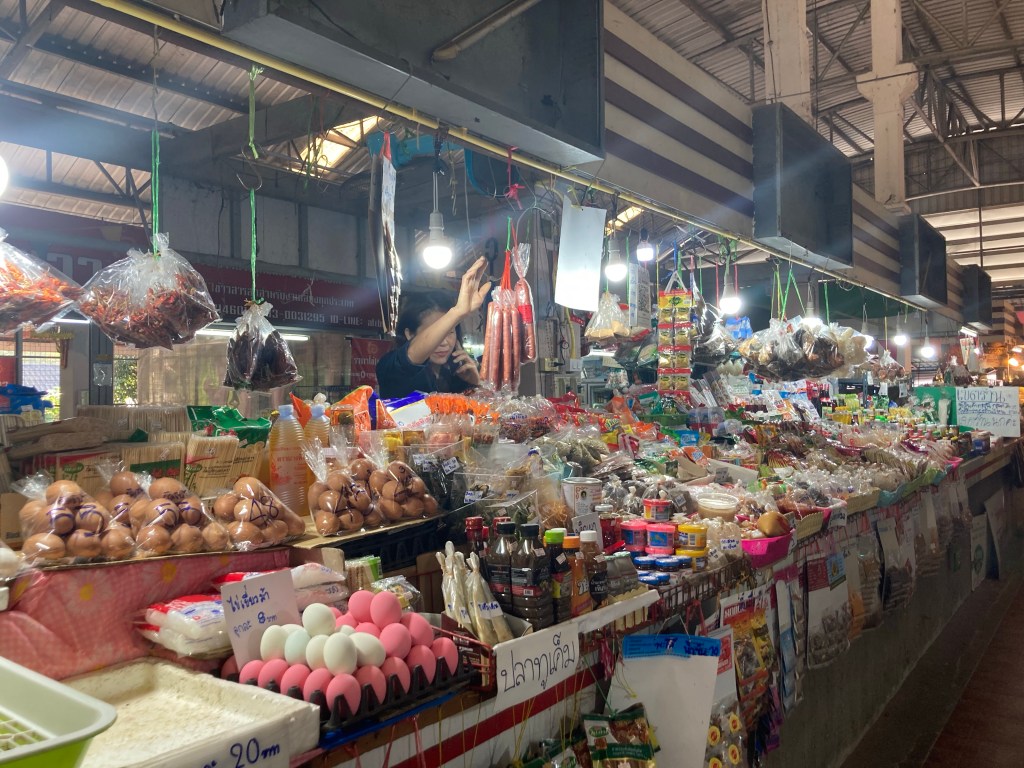
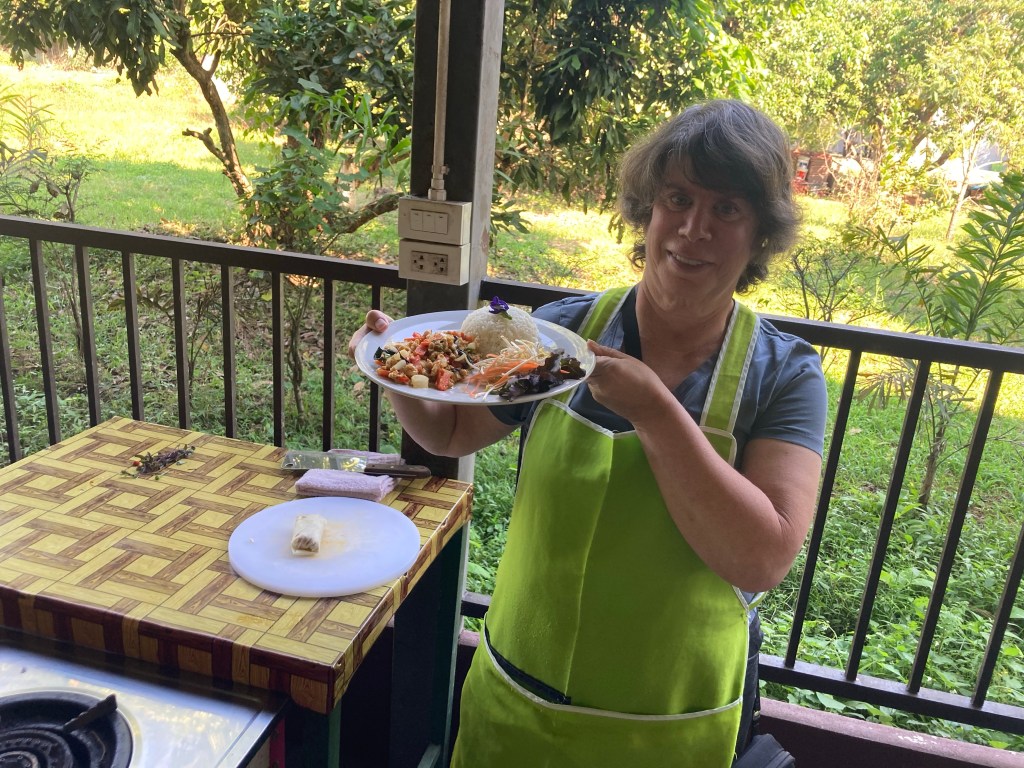
I choose to do a cooking class at the Simple Organic Farm. It started with a quick stop at a market, than a ride to the farm, actually a well organized cooking school with dozens of individual cooking stations. We each choose 3 Thai dishes and with the excellent instruction of Natty, chopped, pounded, diced and cooked the ingredients. I made Green Curry Chicken, Holy Basil Chicken and Hot and Sour Soup. I managed to eat most of it, but forwent the mango ice-cream for dessert.

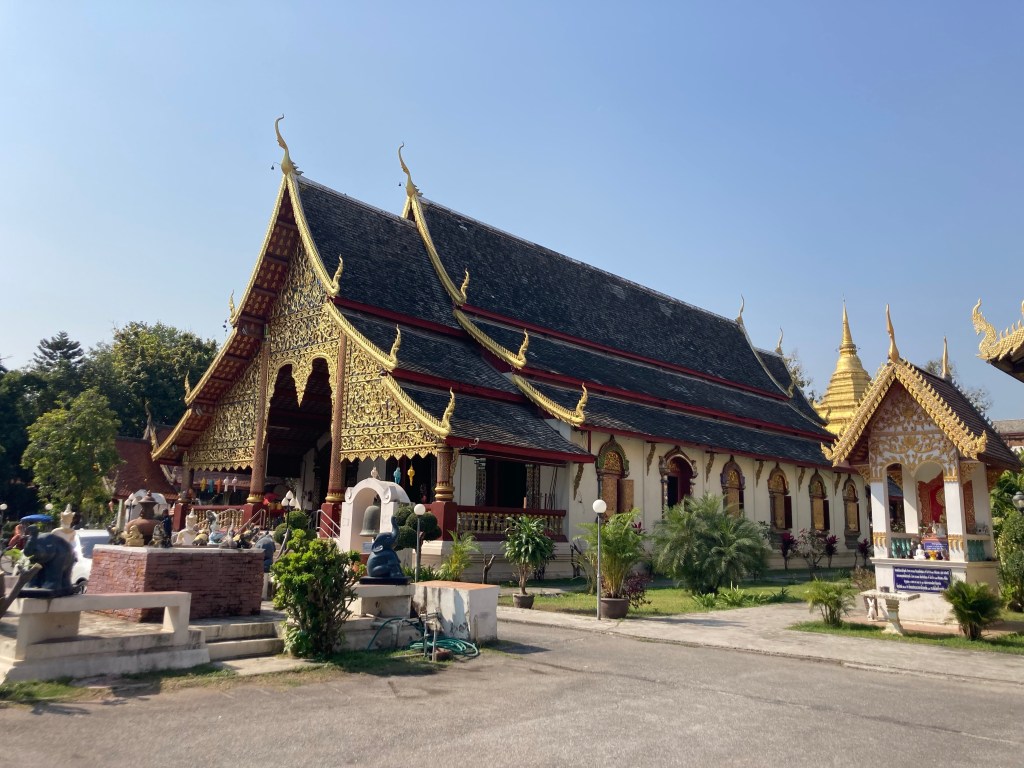
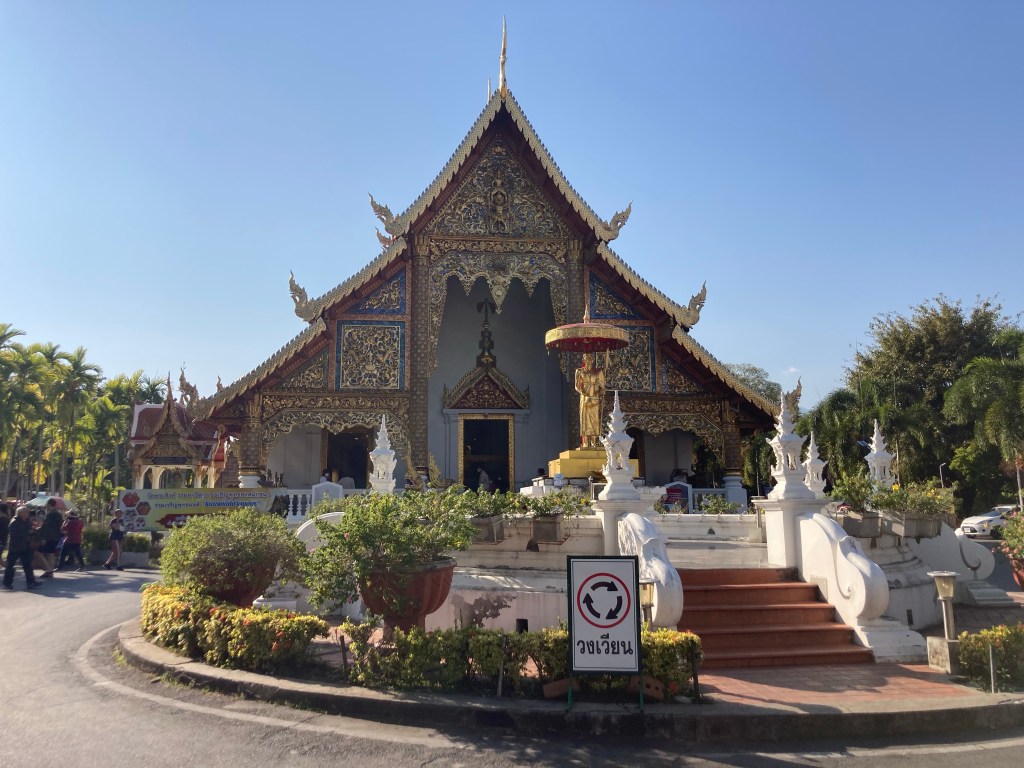
Chiang Mai is famous for its plethora of temples. I found a “10 great temples list” on the internet and, with the help of Google Maps, started walking to each one. They were all beautiful:

But after finding 6 on the list, and dozens not on the list, the temples were becoming indistinguishable from one another and I was having a hard time appreciating each temple’s beauty. I’d had enough.

So I consoled myself with a $8 massage and a pedicure, had some pants made, got laundry done and ate too much delicious Thai food. It was time to move on.

Next up: Laos

Sweating in Singapore

Determined to avoid another cold Canadian winter and thanks to the kindness of my dog sitting cousin, I embarked on a two month journey to East Asia one cold, January morning.

My first stop was Singapore. I had previously visited in 1994, emptied my pockets of chewing gum, duly drank a Singapore Sling in the Raffles Hotel and spent too much time and money in the shopping Mecca that is Orchard Road. But the tourist board and the travel writers promised a new and more vibrant Singapore and I was eager to see what the city had to offer these days. Besides, its temperature is a fairly constant 30 degrees which would keep me nice and warm.

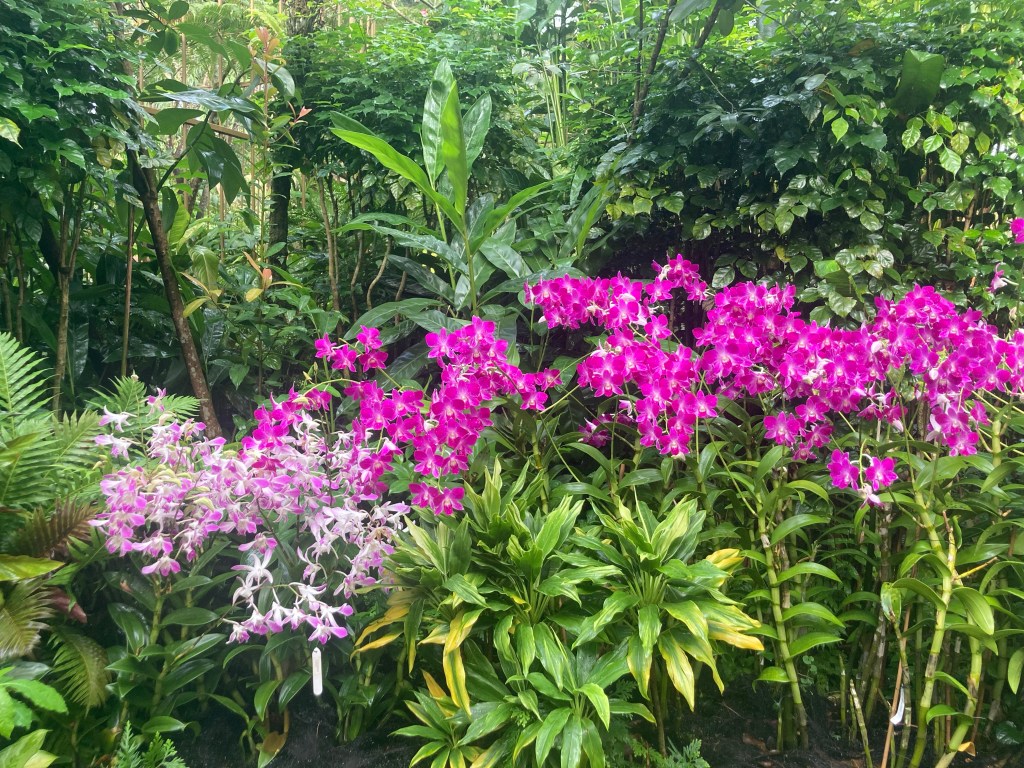
My first stop was to a traditional site; the UNESCO world heritage Botanical Gardens with its marvellous outdoor orchid garden:

Beautiful as the orchids were, my highlight was being asked for ID to establish I was eligible for the senior’s discount entry fee. Good to know I don’t look over 60.

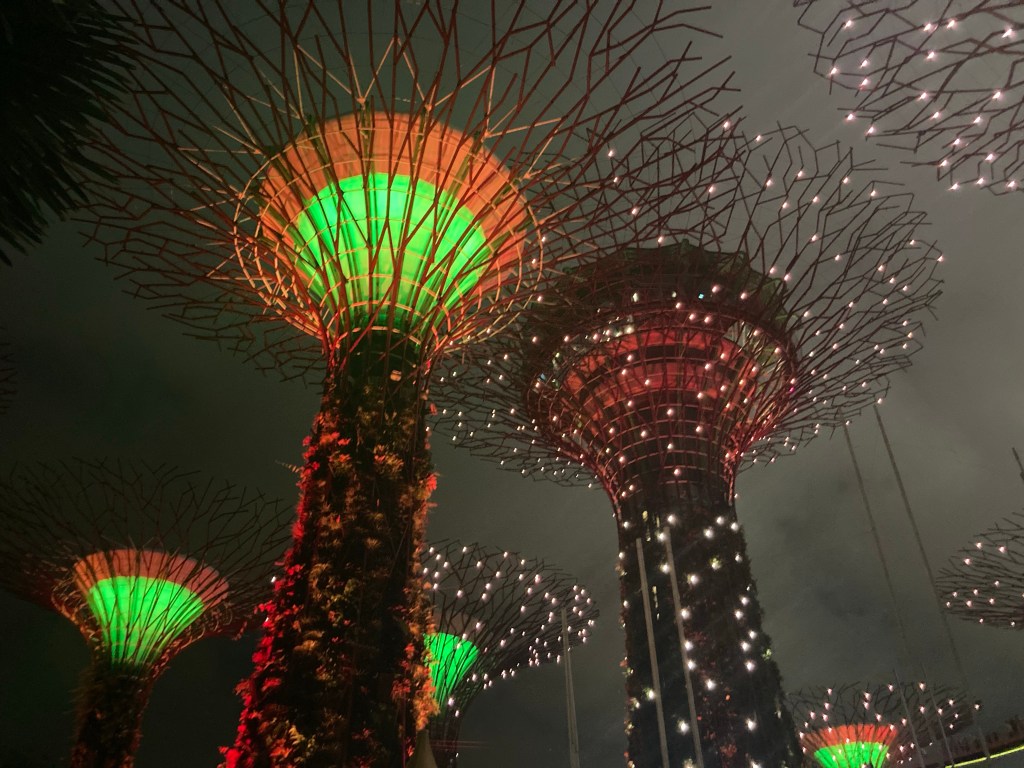
After enjoying real flowers, I made my way to the Gardens by the Bay, a fabulous garden complex constructed on recently reclaimed land. The Supergrove is its star, a complex of giant metal trees which treat everyone to a dazzling sound and light show every night:

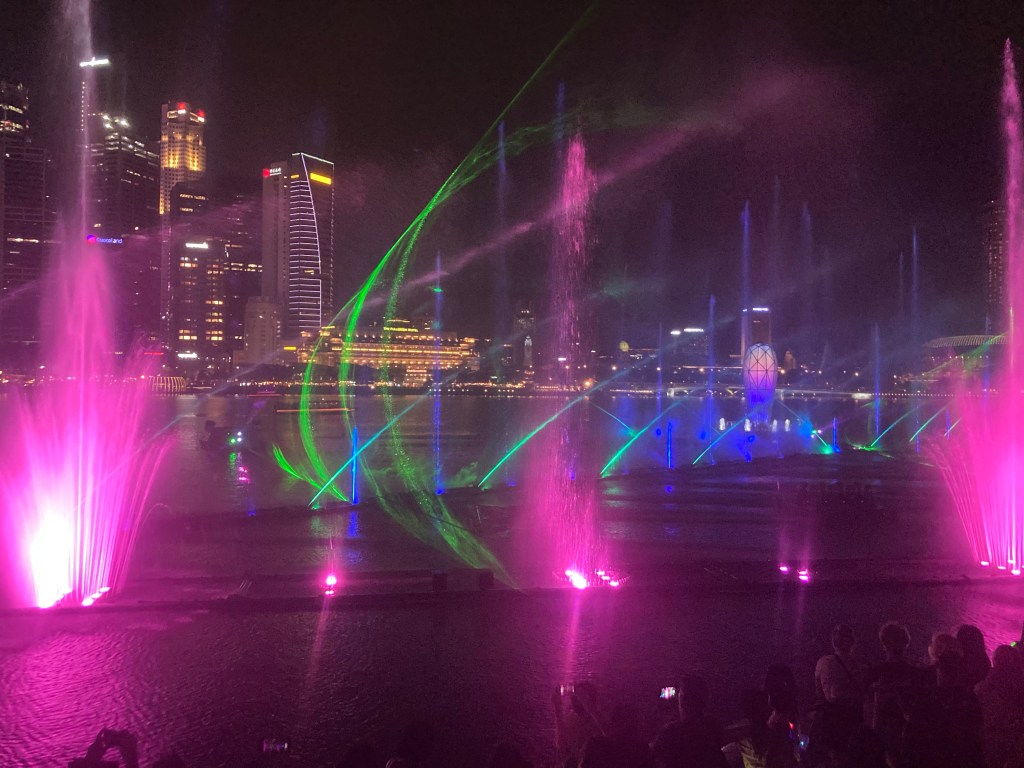
Not to be outdone is the nearby Marina Sands, which offers a nightly water dance; music plays as scores of fountains spray and splash and circle about in a spectacular array of lights and colour:

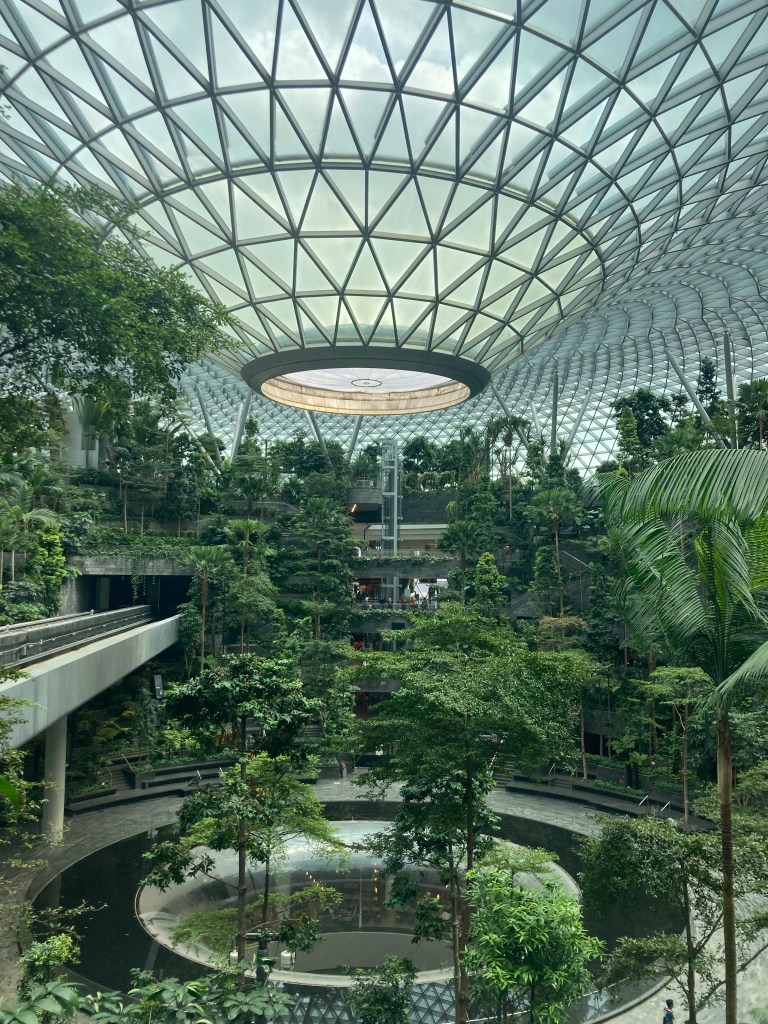
Often described as the third modern wonder in Singapore is Changi Airport, with its Jewel containing the world’s largest waterfall. However, when I went there was no water:

I decided to console myself by going to the Changi Airport Butterfly Garden, but after searching for half an hour, was dismayed to learn it was only available after clearing security in Terminal 3. Since I arrived at Terminal 1 and was departing Terminal 4, the butterflies were not to be. My trip to Changi was a bust.

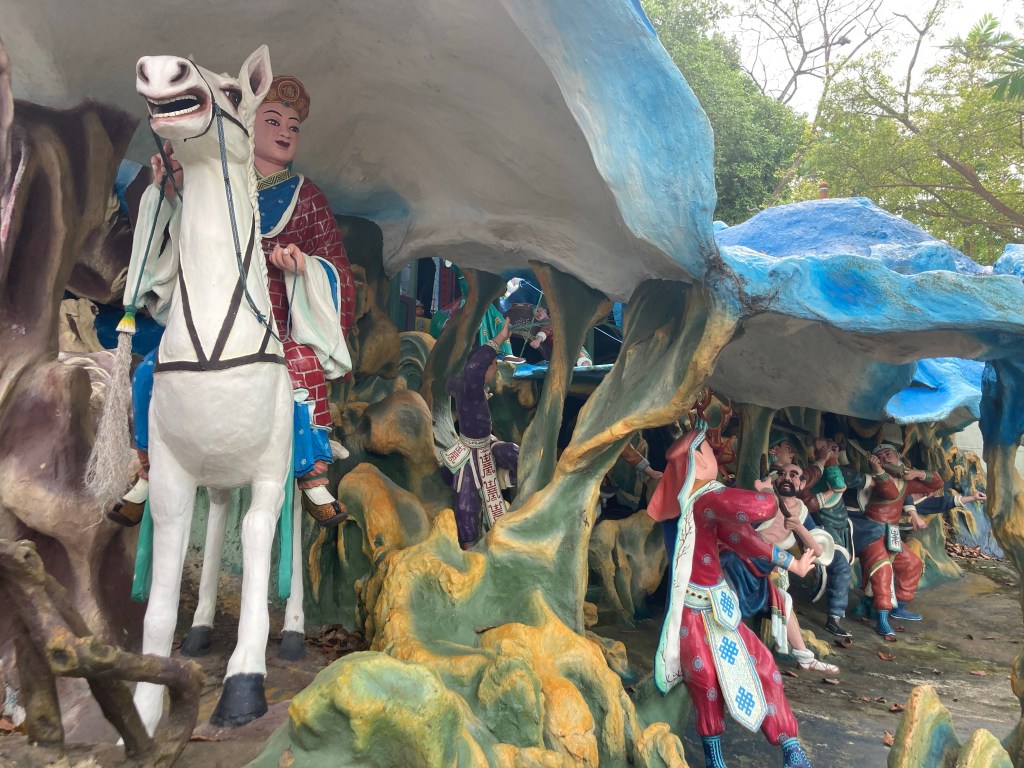
Not so my visit to Haw Par Villa, a theme park offering 150 dioramas depicting different exploits of Chinese gods in vivid colours:

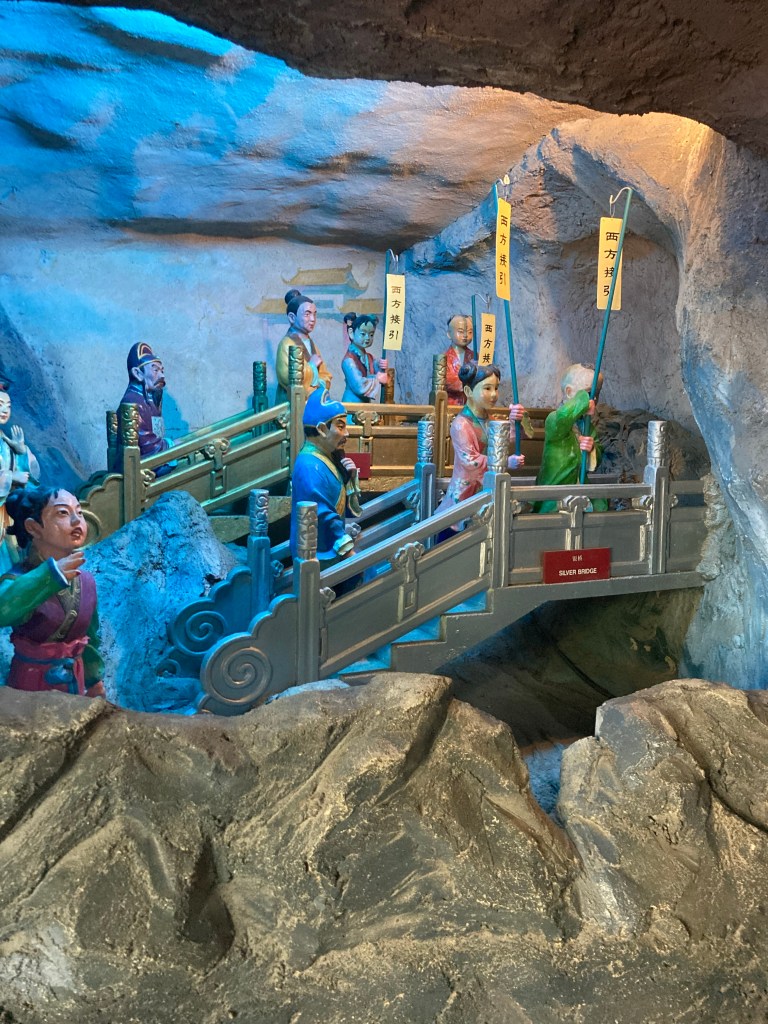
Imagine 150 such scenes and you get the idea it’s a sort of “ you’ve got to be kidding” moment, reminding me of all the floats at the Mardi Gras Museum in Mobile, Alabama. But more illustrations awaited as I entered the Hell’s Museum where an additional 10 dioramas showed the 10 step progression through the Chinese purgatory:

Seeking something slightly less colourful, I took a free ( before tip) walking tour with Just, a local guide anxiously awaiting the return of the Chinese tourists who used to make up nearly half of all visitors. We walked around many of the older, British legacy buildings: the Victoria Theatre, the Supreme Court Building and the formerly whites-only cricket club.

Singapore had been little more than a marshy swamp when Stamford Raffles founded the city in 1820 as a trading port along the Singapore River. Britain colonized it, subjected its local Chinese, Malay and Indian inhabitants to the usual humiliations of colonization and did the usual British stuff, laying railways, building churches, speaking English.

In 1942, Britain unceremoniously surrendered the city to invading Japanese forces and left. Though they returned in 1945, the locals did not forgive them and the independence movement took shape. Granted independence in 1965, Singapore has been ruled by the benevolent dictator Lee Kuan Yew and his son ever since.

The remnants of the British colonialism and its tendency to segregate different ethnicities is found in the various neighborhoods: Little India, China Town and Arab Street. I walked around each, but as I live in a very multicultural city with its own ethnic neighborhoods, the ones in Singapore were underwhelming, filled mostly with tacky souvenir shops and self- proclaimed trendy bars and restaurants. I didn’t linger.

The one exception is the hawker centers. Best described as a conglomerate of independently owned food stalls serving mostly cheap Chinese food, I made my way to a few of them for lunch and dinner, enjoying roast duck and fish soup meals for a few dollars.

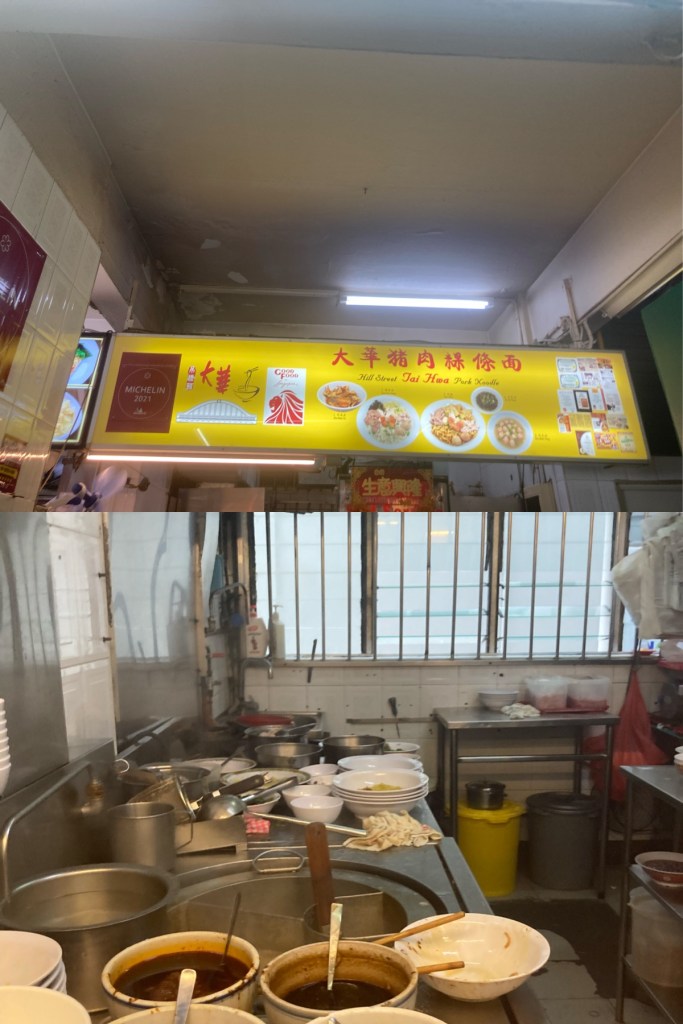
But the culinary experience highlight was eating at Tai Hwa Pork Noodles, the only Michelin starred food stall in the world.

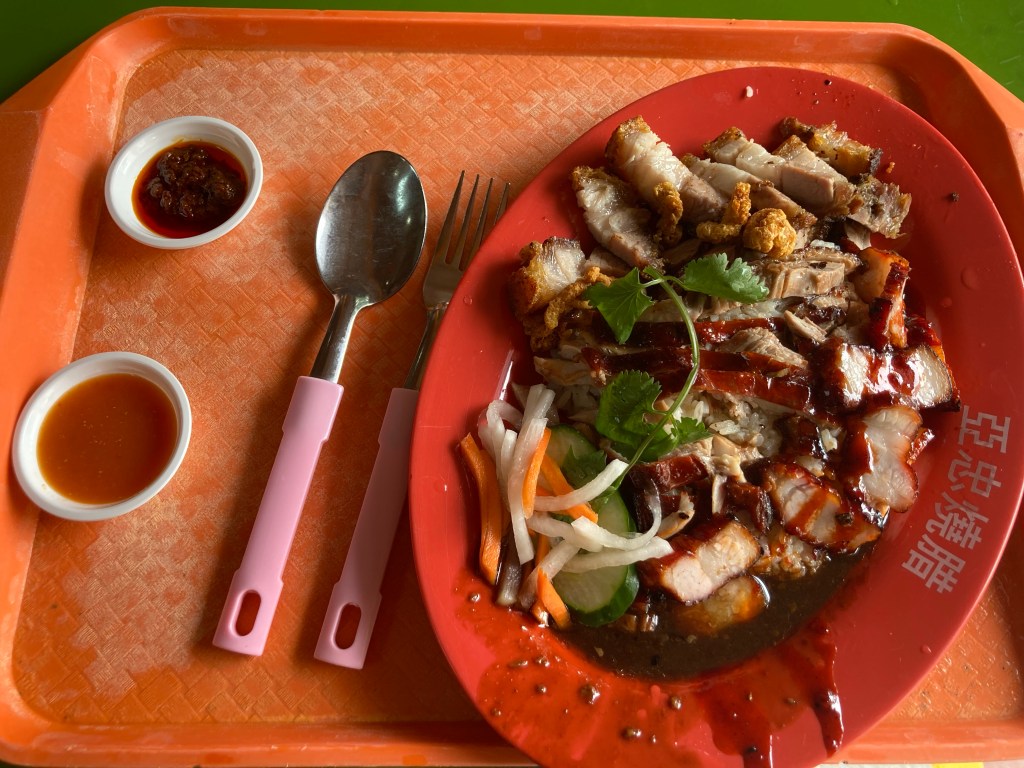
I waited in line for over an hour before ordering its signature minced pork over noodles dish:

The pork was okay but the noodles and sauce absolutely delicious.

And thus ended my time in Singapore.

Up next: Thailand

Driving Germany’s Romantic Road

The Romantic Road was a term dreamed up by PR types trying to entice tourists back to post-war Germany. It’s a pretty enough route, but I failed to find any love interest on my week long journey around it.

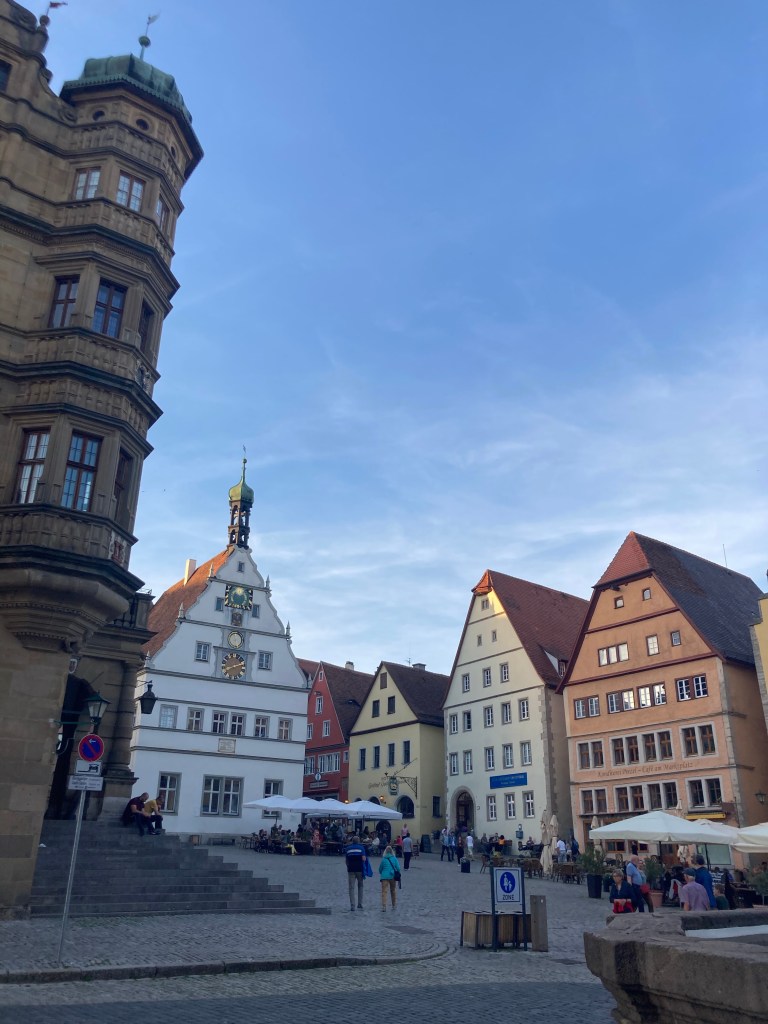
After picking up a rental car in Munich, my friend Cathy and I drove to our first town, Rothenburg ob der Tauber, one of the best preserved medieval towns in Europe, replete with timber framed houses and an old town square fronted by the Town Hall:

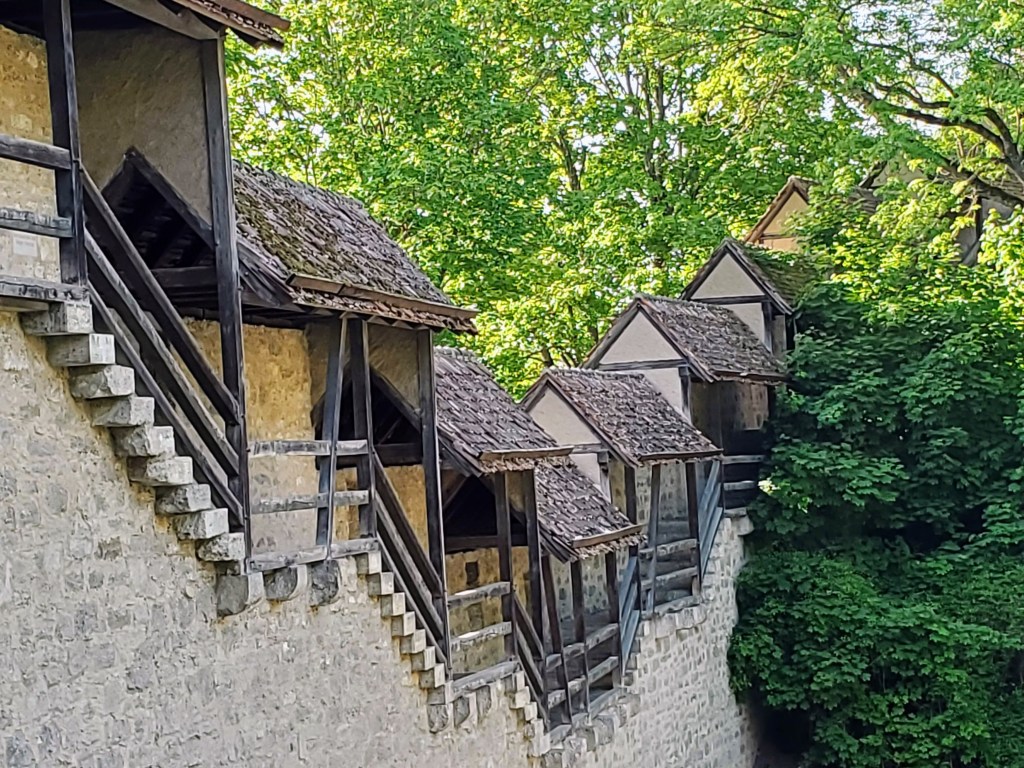
It’s one of three walled towns still existing and wall walking is a common pastime, so we indulged:

A must-do is to take a walk with the Night Watchman, who regaled us with stories of life in medieval Germany. Then, the place stank due to lack of plumbing, plague and other diseases ran rampant and the church controlled every aspect of one’s life. Hardly a paradise;

The Night Watchman

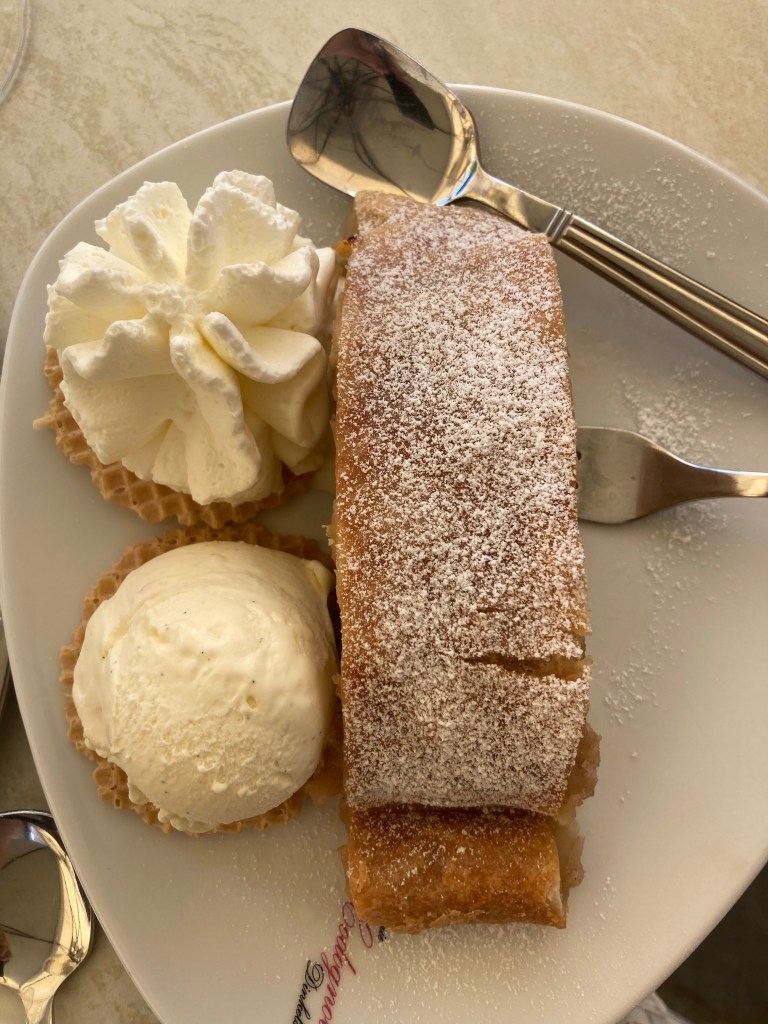
For a change of scenery, we drove 35 miles to the second walled town of Dinkelsbuhl. It too had timber framed houses, ramparts and a town square. Rather than repeat our Rathenberg ob der Tauber experience, we started on our second quest, eating lots of good German food. Thus, we sat in a cafe near the Cathedral and ate a delicious piece of Apple Strudel:

The third of the trio of walled towns is Nordlingen, which has the usual medieval attractions but also the Ries Crater Museum, which as its name suggests, is about craters and more specifically about the 25 kilometre wide crater where Nordlingen rests, created when a meteor crashed into the earth about 15 million years ago. The museum was a welcome change from all things medieval, focusing on how the universe and earth were formed.

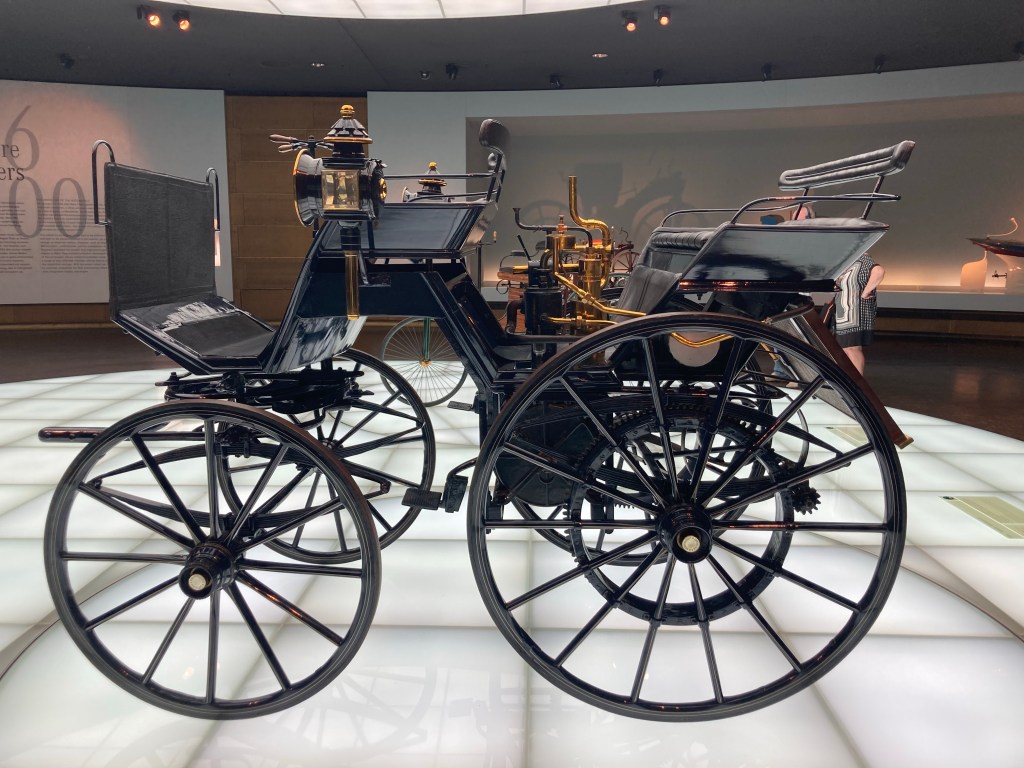
Another diversion from the 15th century was a detour to Stuttgart and the Mercedes Benz Museum. Housed in an elliptical building, the museum whisked us to the 8th floor in a pod like elevator. From there, we slowly walked down, with exhibits about Mercedes Benz intertwined with world events. Daimler patented the first motor car in 1885, but it wasn’t until the Paris World Fair in 1889 that his car really took off; it being one of the main attractions there after the Eiffel Tower:

The Museum was full of interesting tidbits. The name “Mercedes’” was adopted when one of Daimler’s engineers christened his race car after his daughter “Mercedes”. Benz and Daimler never met; financiers forced the two companies to merge in the wake of the financial crisis in Germany in the 1920’s. During WW2, Mercedes Benz used over 30,000 forced labourers, mostly prisoners of war and concentration camp victims. It has apologized for this but no mention was made of reparations.

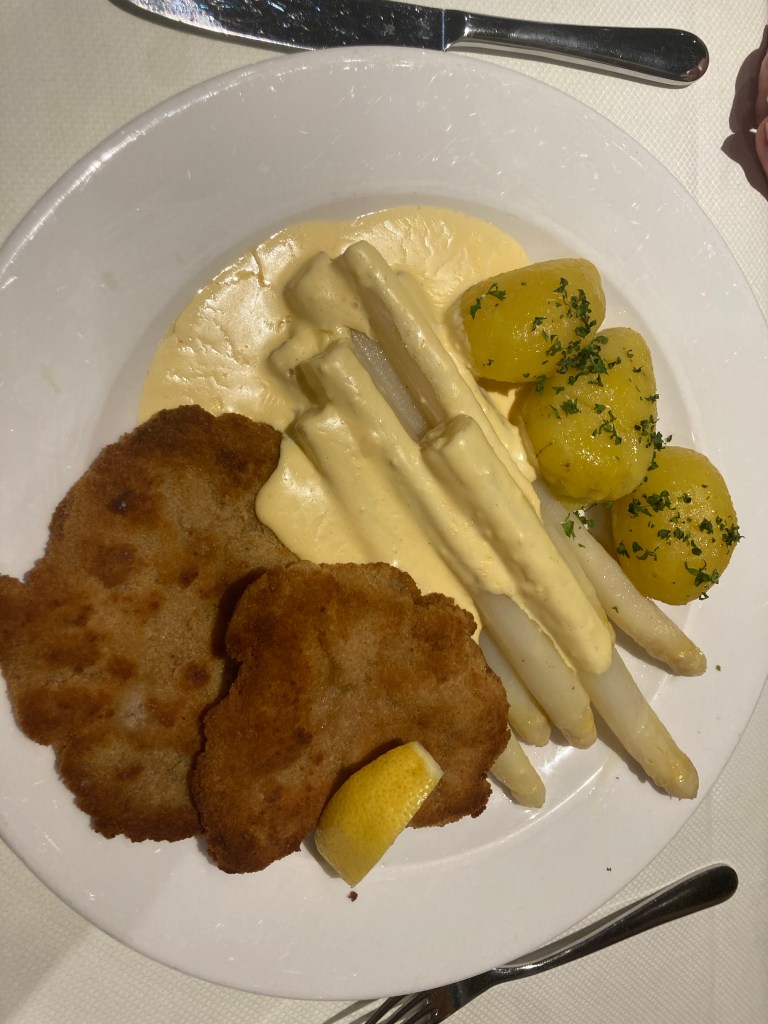
In furtherance of our food hunts, I finally was able to enjoy white asparagus, loved in France and Germany every spring. It’s white because it is grown completely underground so it lacks chlorophyll but served with Hollandaise sauce and weiner schneitzal makes for a very hearty meal:

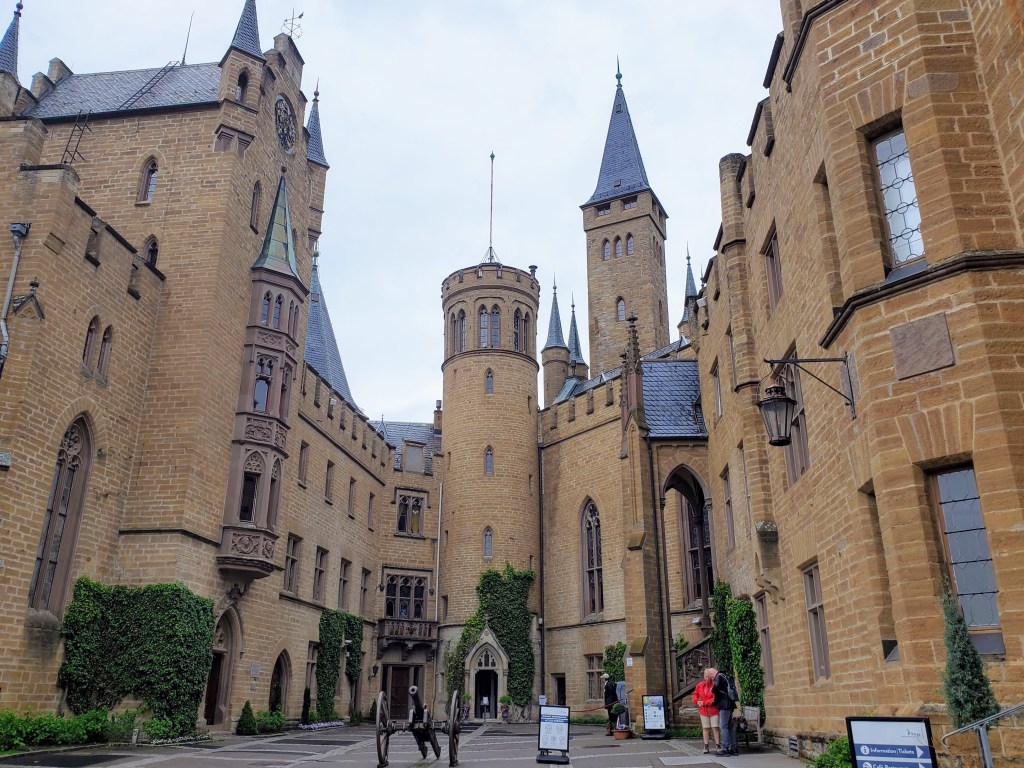
Part of the romance part of the Romantic Road is the plethora of pretty castles. We visited Hohenzollern Castle, an 18th century Gothic Revival castle built by Crown Prince Frederick William IV of Prussia on the remains of a much older castle:

Inside, it was as opulent as one would expect a palace to be. Unfortunately due to a mix up in castle names causing me to buy tickets for Hohenschwagua not Hohenzollern castle, the only tour available was in German and the only thing I understood was “stay on the carpet” so my information is a little thin.

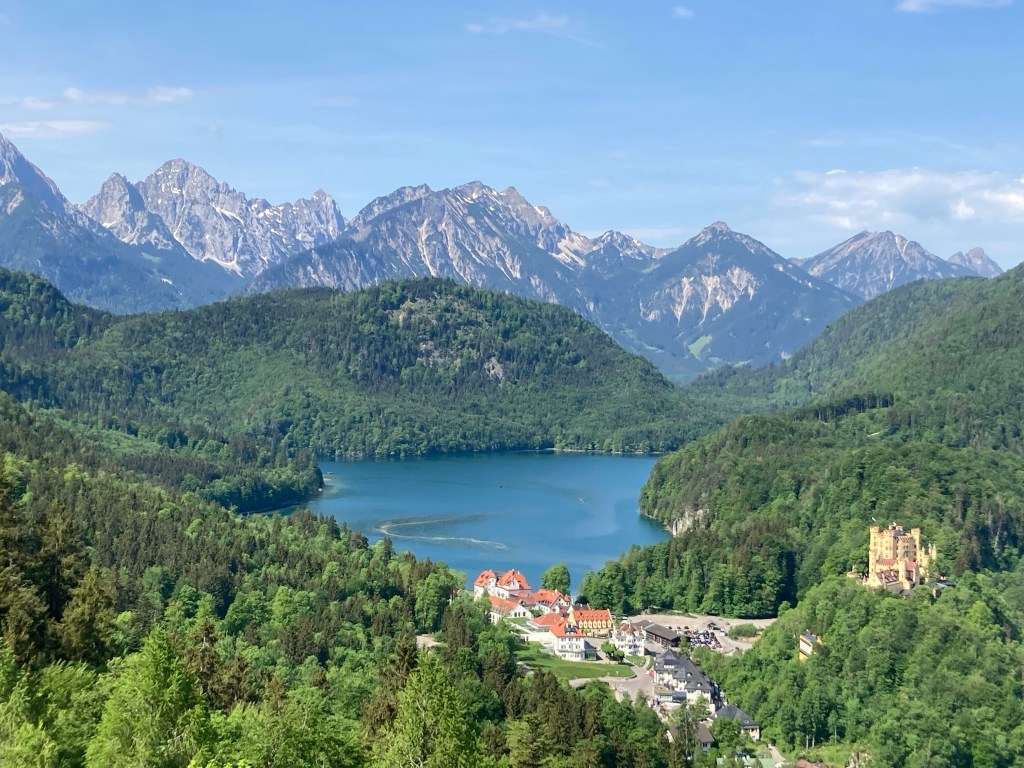
On our way to our final castle, we passed through the Bavarian Alps, beautiful in their thick forests, lush green grass and glacier fed lakes:

If you look closely in the picture above, you’ll see Hohenschwagua castle on the right, which we did eventually find on route to Neuschwanstein Castle but having already shelled out 30€ to try and visit it earlier but went to the wrong castle, we didn’t try and visit it again. The tickets had very strict date and time entries and we’d missed both.

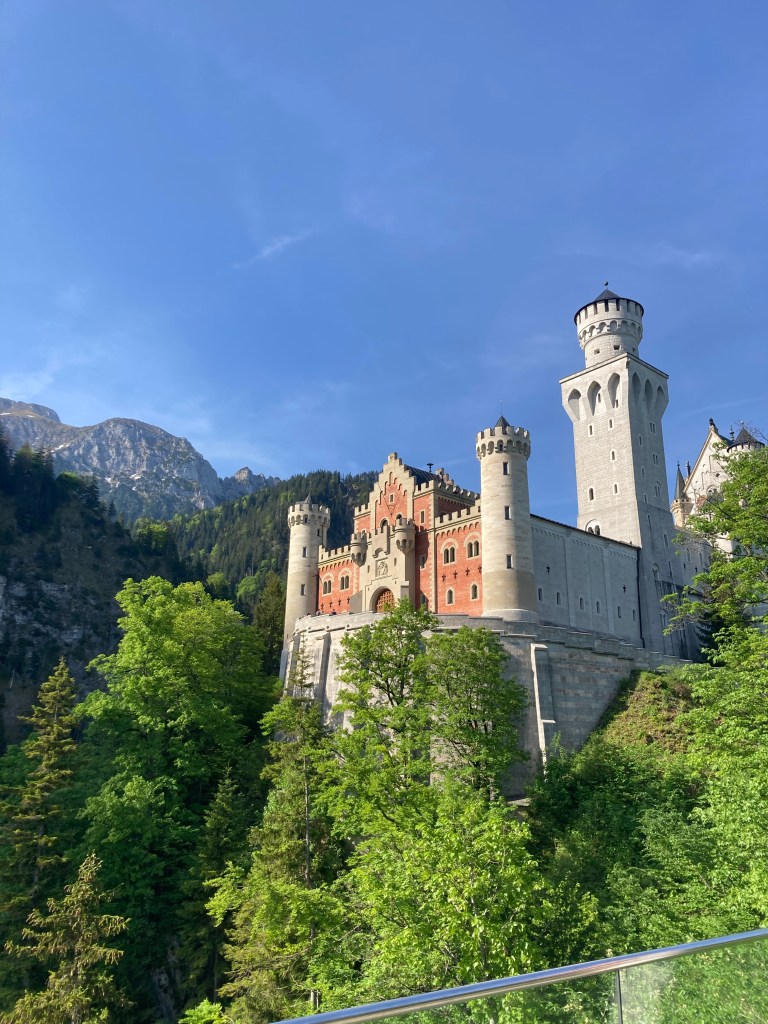
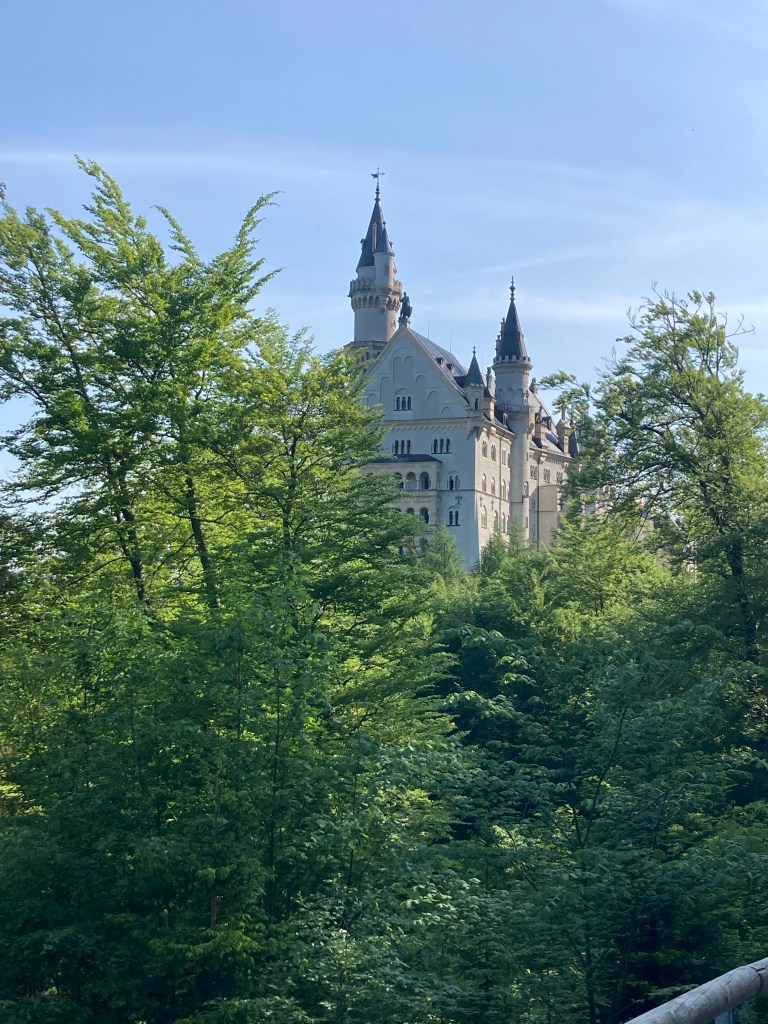
So on to the ultimate castle, Neuschwanstein Castle. Conceived by King Ludwig II of Bavaria in the 19th century as his version of a medieval castle, its setting is spectacular:

We managed to buy the correct tickets for the English tour and were led through the castle by the guide who explained King Ludwig’s masterpiece. Frustrated by his limited constitutional powers, Neuschwanstein was built so King Ludwig could engage in his vision of a medieval king; omnipotent, a brave warrior, etc. To this end, he had a room that looked like a cave and another one pained with scenes of his favourite stories of Parzaval and Lohengrin. Alas, no pictures were allowed inside.

The castle is the subject of many rumours, most of which were ignored by the guide. It is said to have inspired Disney’s Sleeping Beauty’s Castle. It was also said to have been built for the German composer Richard Wagner. King Ludwig was also supposed to be mad, which our guide did address, but his take was that King Ludwig just liked to visit an alternative reality, no different than today’s kids playing video games. So rather than being mad, the king was just ahead of his times.

Believe what you like, I found the castle enchanting, a monument to one man’s dreams. And thus ended our Romantic Road journey.

Armenia: The Third Caucasus Country

The problem with doing a 3 country tour is that once you get to the last one, you feel like you’ve seen it all before and the prospect of visiting yet another medieval church or seeing another stunning mountain vista becomes more of a chore rather than something to look forward to.

Thus, I entered Armenia after visiting Azerbaijan and Georgia a little tired, a little jaded, planning to go through the motions rather than truly embracing it. Of course, I was wrong. Armenia has plenty of novel attractions to satisfy my quest for unique and interesting.

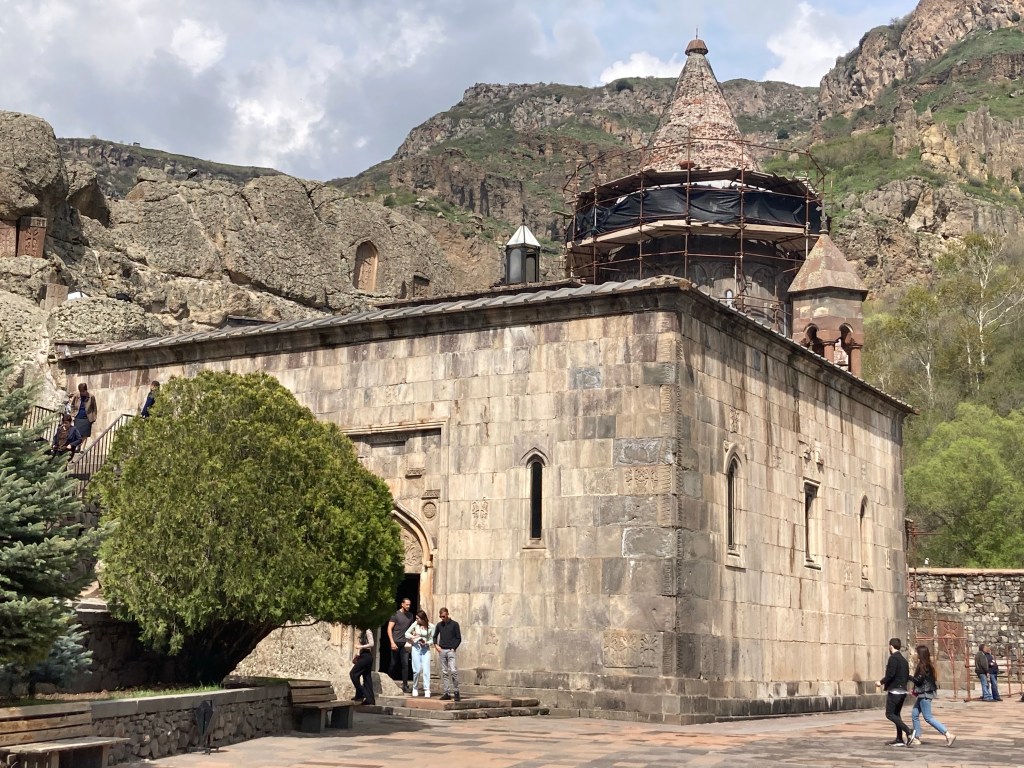
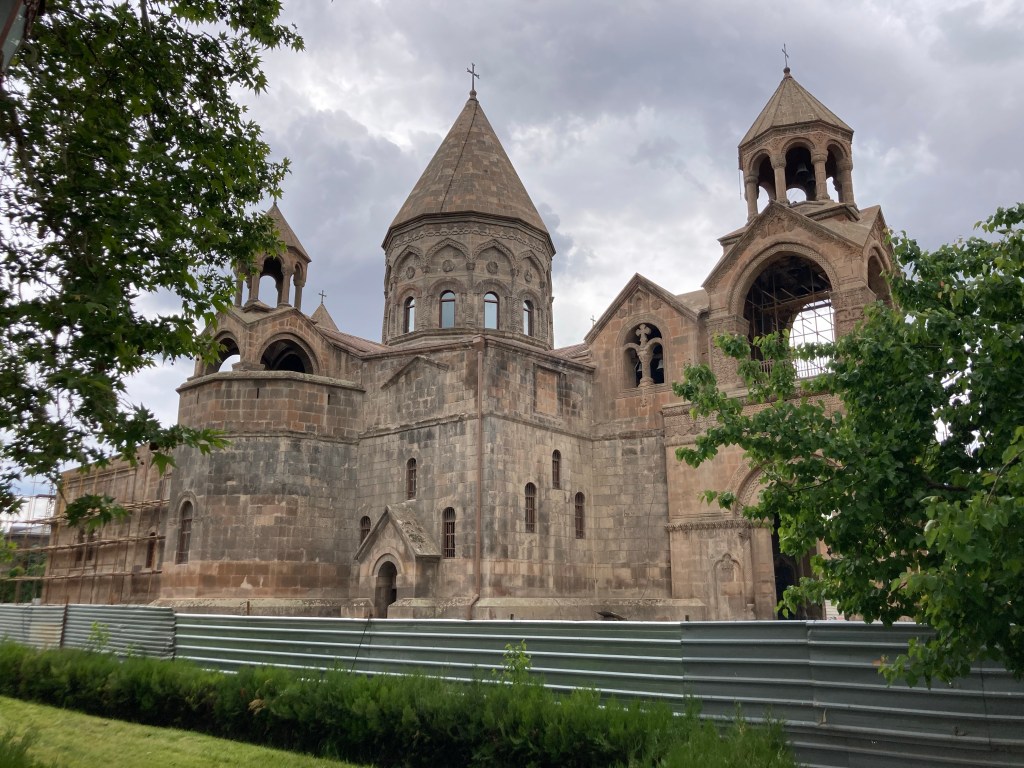
To be sure, my tour stopped at quite a few churches, not surprising as Armenia had been the first country to adopt Christianity in 301. The man responsible, St. Grigor the Illuminator, is remembered in a monastery partially carved out of a cave and set against the Caucasus mountains:

I also visited the Mother See of Holy Etchmiadzin, the seat of the Armenian Orthodox Church and generally considered the first Cathedral in Europe, dating to 301. Unfortunately it was under renovation and scaffolding so we could not enter.

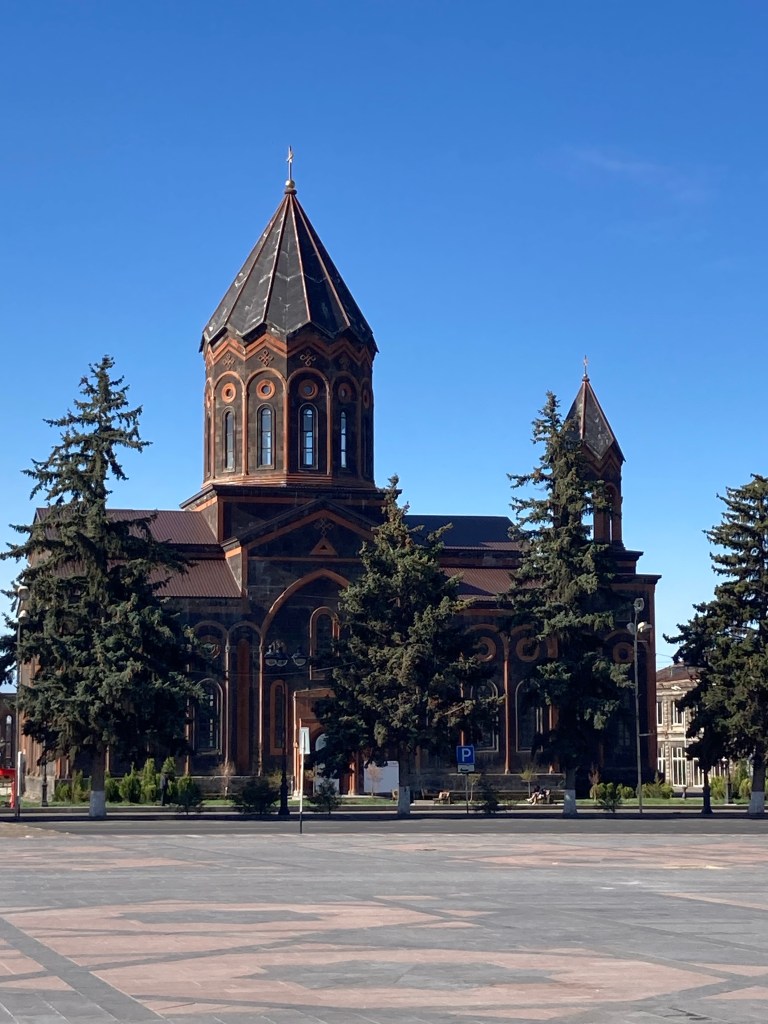
But Armenia offered plenty else. Many of its buildings are constructed from tufa, a limestone formed by lava with lovely hues. In the second city of Gyumri, most of the center’s buildings are tufa, including the still under construction main church:

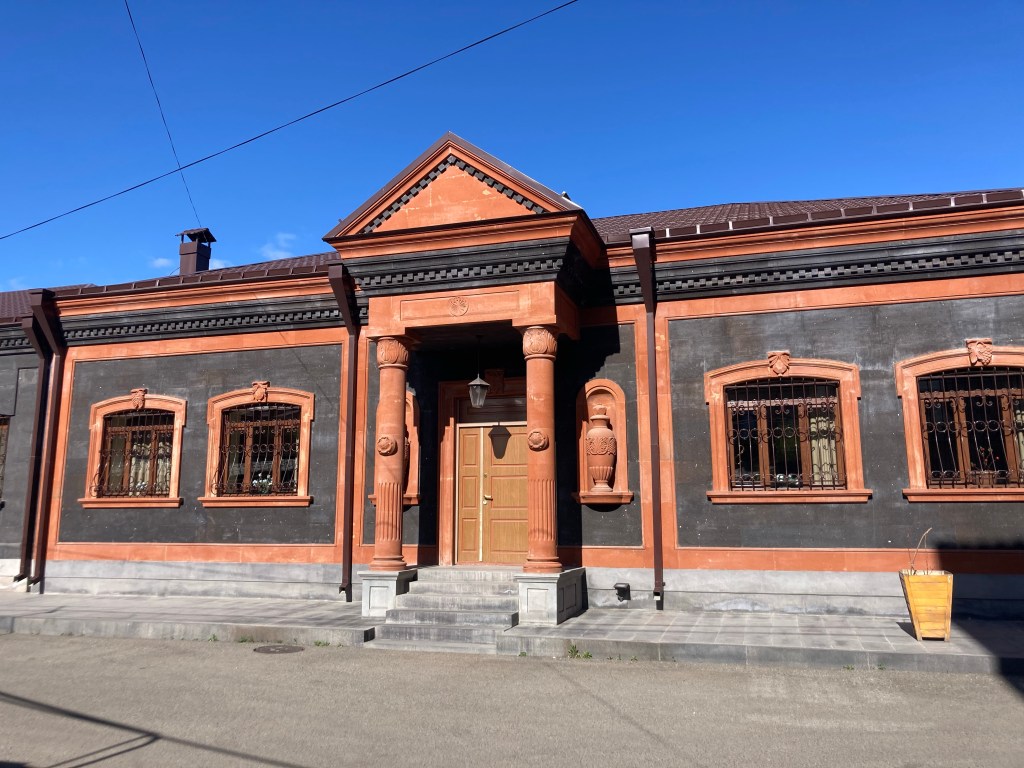
Gyumri was close to the epicentre of the 1988 earthquake which devastated the country, killing 25,000, leaving 500,000 homeless and levelling 60% of Gyumri. Most of the buildings destroyed were of the bland, Soviet era variety, while the replacements are the Armenian tufa style:

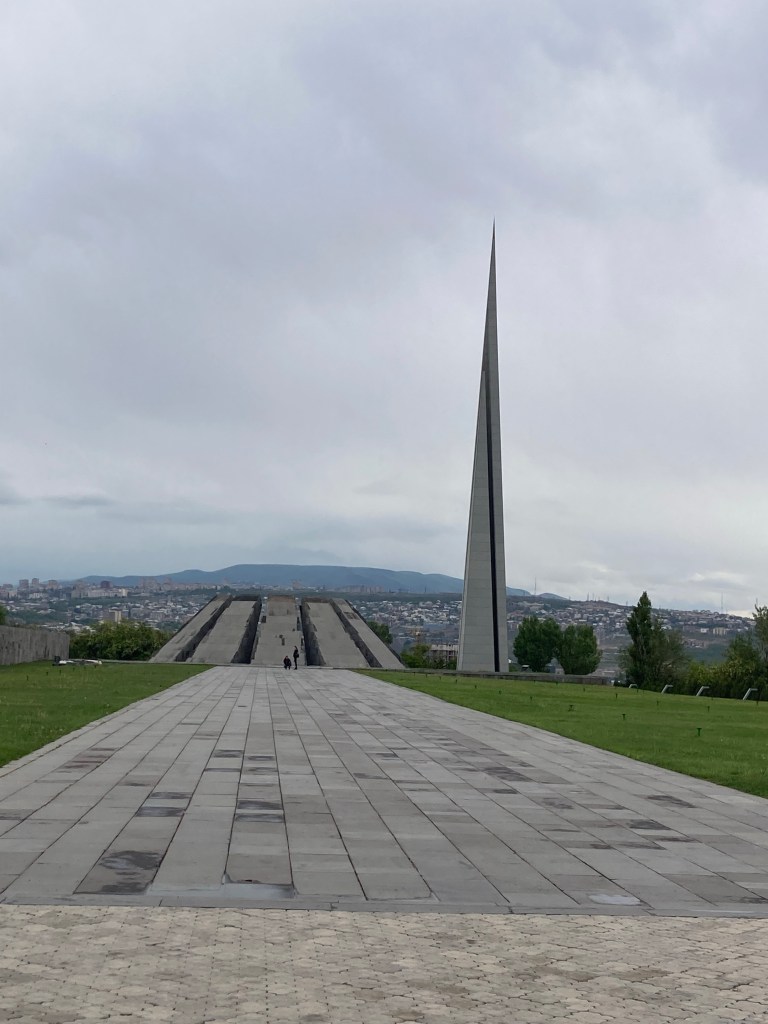
In the capital city of Yerevan, I visited the Genocide Memorial, commemorating the 1.5 million Armenians living in nearby Turkey who were killed between 1895 and 1925.

The archeological museum contains treasures from Armenia’s golden period, from the 9th to the 4th century BC when it stretched 400,000 kilometres, covering parts of modern Turkey, Iran, Georgia and Azerbaijan. A 20th century nationalistic movement seeking to regain part of Greater Armenia was exploited by Stalin and his mass relocation of different ethnic groups and is the root of the territorial dispute with Azerbaijan over the Nagorno-Karabakh region which has seen three wars between Armenia and Azerbaijan since 1991.
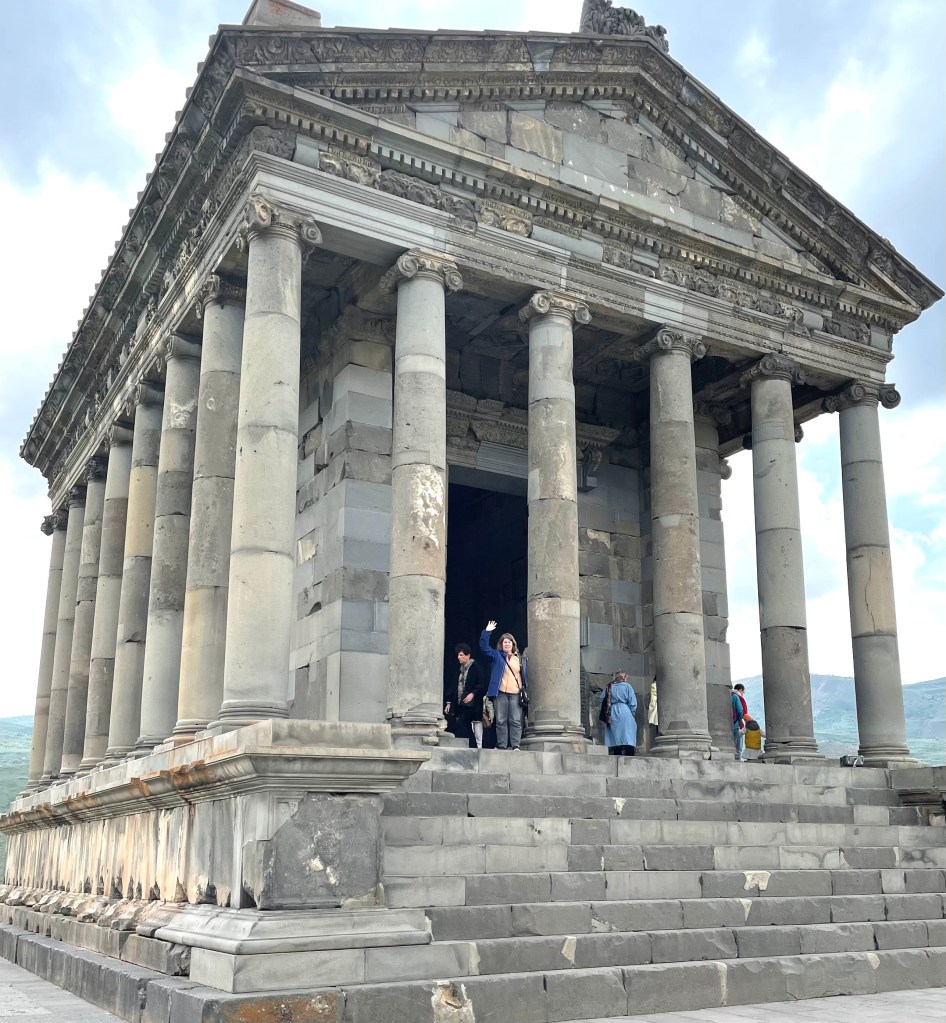
To satisfy the need to visit something quirky, I went to the Temple of Garni, a Soviet era reconstruction of the Greco-Roman temple to the sun king Mihr. It’s a sign of pre-Christian pagan Armenia, which might explain why the Soviets rebuilt it, the original having been destroyed in an earthquake in 1679.

The Matenadaren, or Manuscripts Museum, is the largest depository of Armenian manuscripts, many dating to the 4th century. Painstakingly translated and drawn by Armenian monks, the western world has these translations to thank for preserving many famous works by the ancient Greeks and Latins after the originals were destroyed at the Great Library at Alexandria in one of its purges. Alas, no photos were allowed inside.

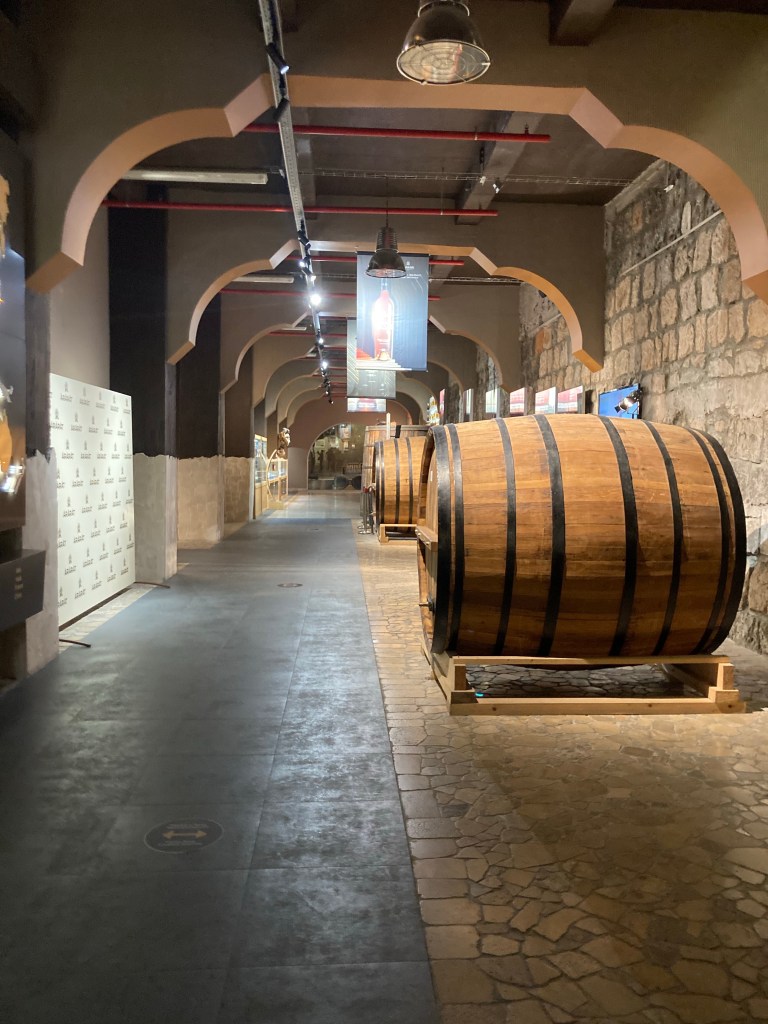
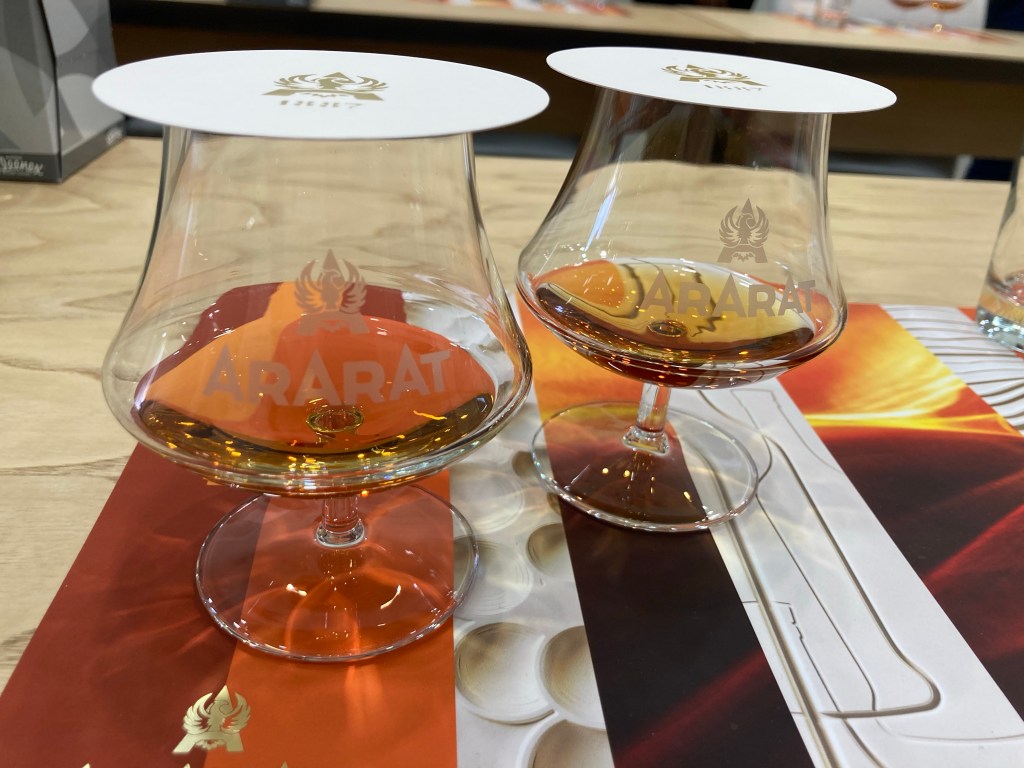
Like Georgia, Armenia is a grape growing region with delicious wines. However, it was its brandy (or cognac) which our tour focused on at the Ararat Brandy facility. A brandy tasting followed the facility tour. My favourite? A 7 year old vintage sipped after slowly eating a piece of dark chocolate:

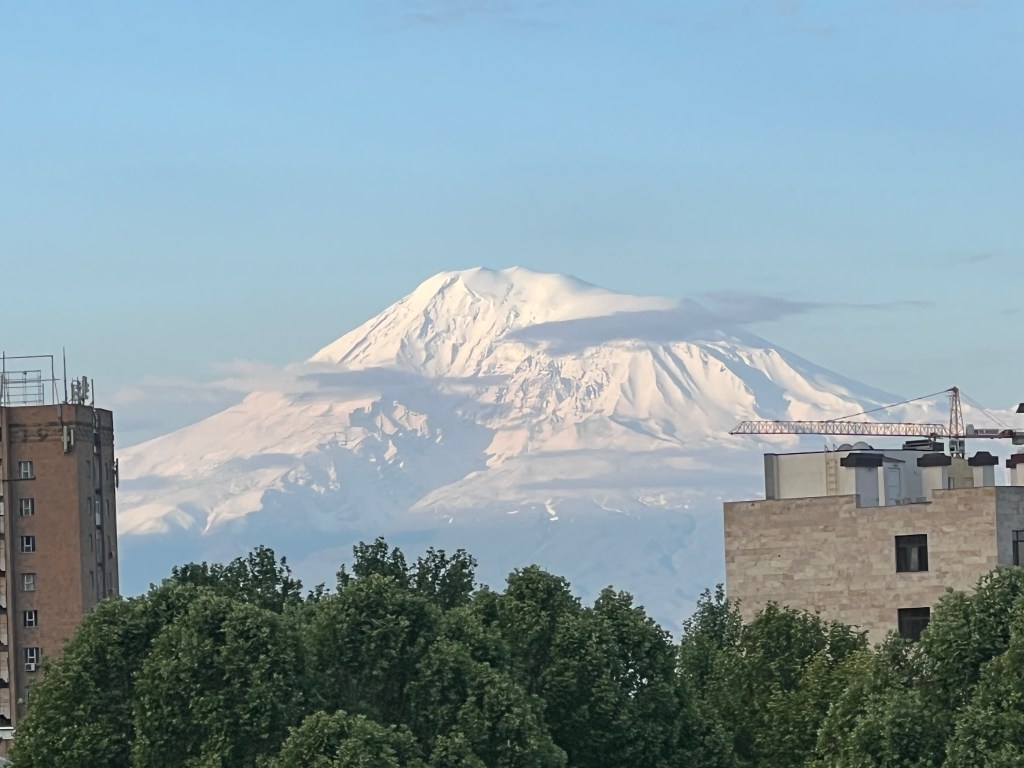
Although located in Turkey, Mount Ararat, of Noah’s Ark fame, is visible on a good day from the capital. It’s only 40 kilometres away. So important is it to the psyche of the Armenians that all of Yerevan was designed so the mountain would be visible from everywhere in the city. We had mostly cloudy days, but managed one clear early morning sighting:

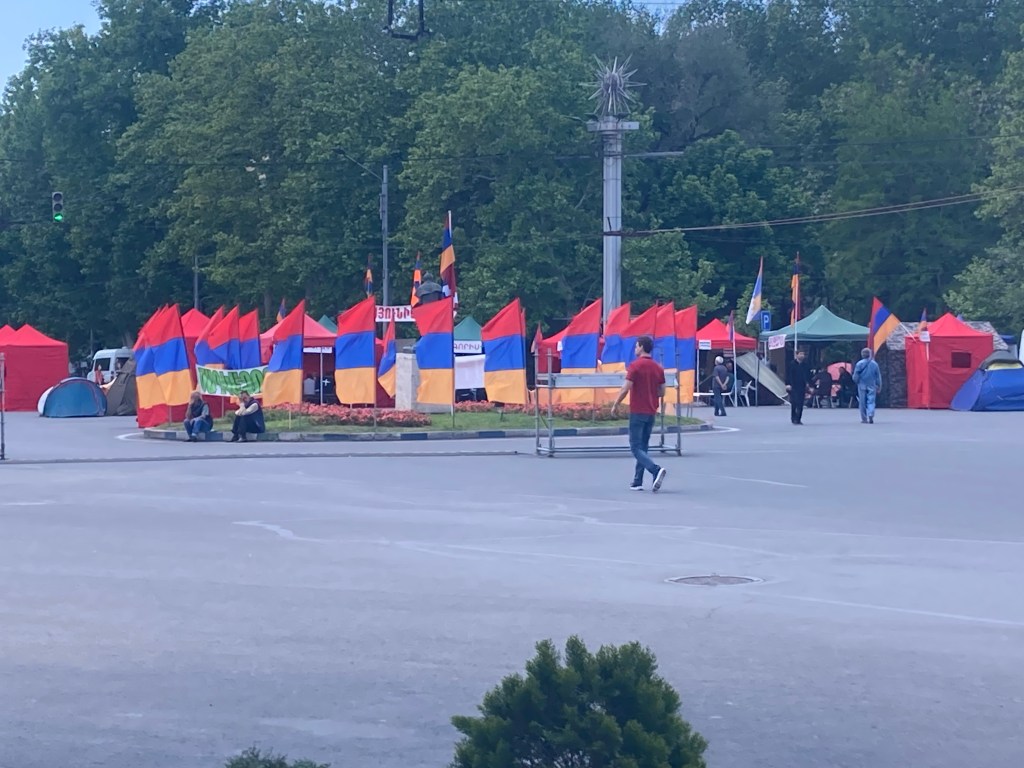
Mention must be made of the current political climate. Armenia is a close ally of Russia, so I didn’t see any Ukrainian flags. Of more importance to many Armenians was the signing of the Russian brokered treaty with Azerbaijan whereby Armenia was giving up its rights to the Nagorno-Kharabakh region. Protests in opposition to this treaty erupted everyday in Yerevan, snarling traffic and making access to some points difficult. But, so far, the protests have been peaceful and the protesters’ tent city almost had a carnival atmosphere:
After 4 days I left Armenia. A short visit but one which gave me a taste of the country. Next up, something more romantic.

Georgia: Wine, Monasteries and the Russians

Georgia is known for its wines and, as if to prove the point, our group was met on arrival at the Tblisi airport by our tour guide, whose first act after introducing herself was to hand out small bottles of Georgian wine to enjoy on the bus. This country was off to a good start.

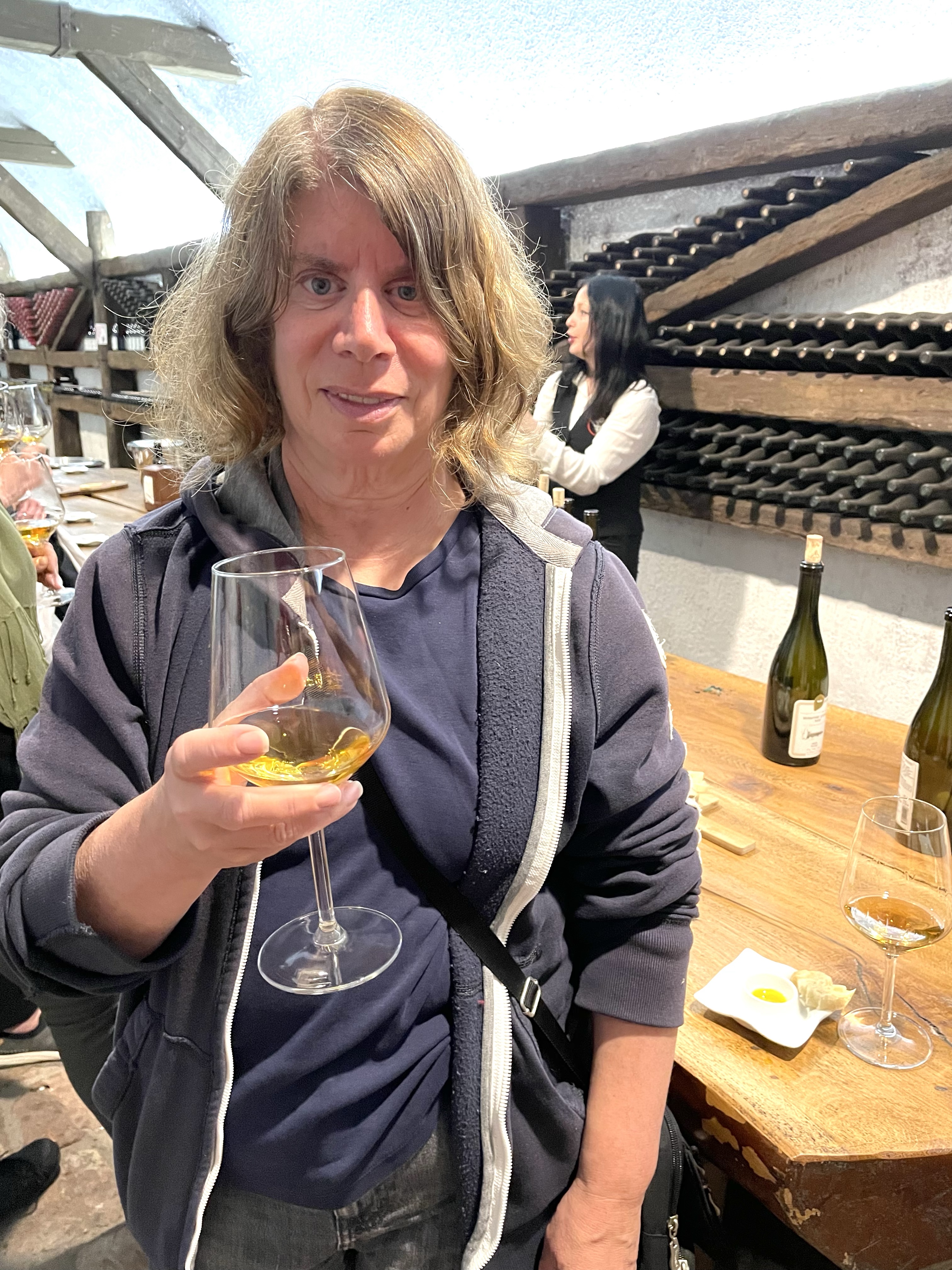
Georgia is considered the birthplace of wine, with some wine resins dating back 8,000 years. Just outside of Tblisi, we began to see vineyards where some of the 500 different varieties of grapes in Georgia are grown. We enjoyed a wine tasting at the Khareba Winery, deep in one of the 13 kilometres of tunnels, learned about the difference between Georgian wine making technique (the skin and seeds remain throughout the fermentation process) and the European technique. And of course, we sampled many of the local wines at all of our meals in Georgia.

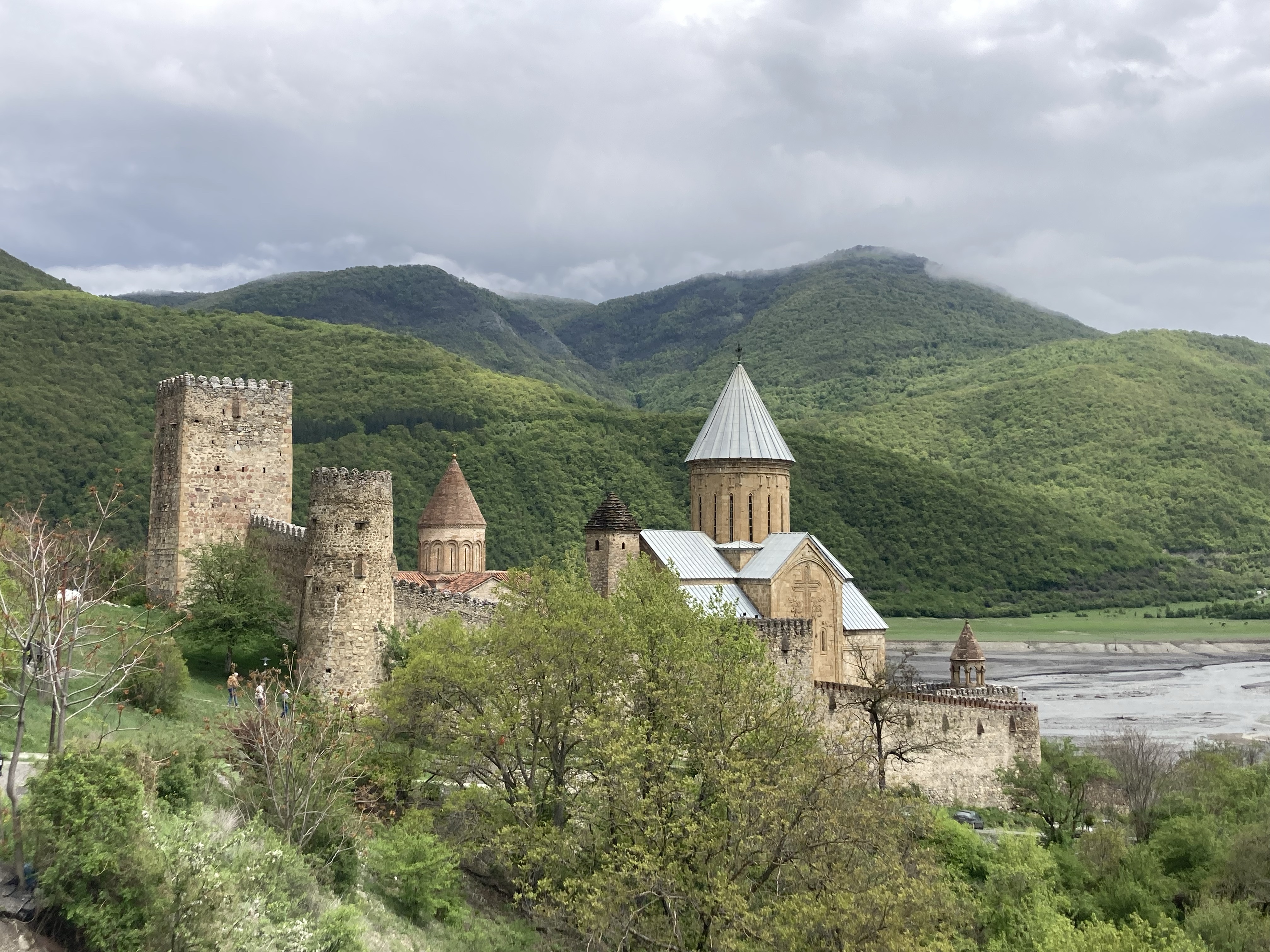
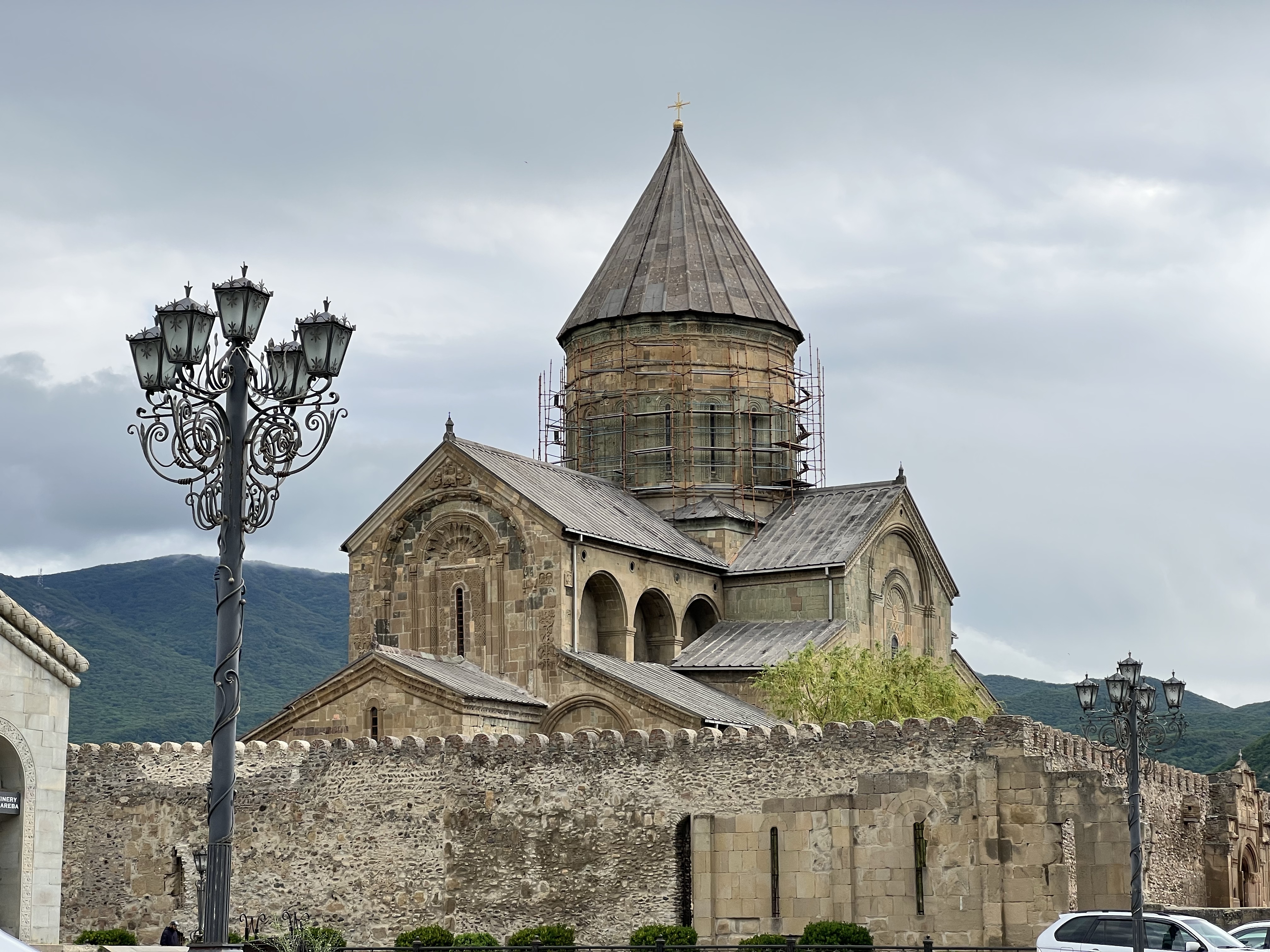
Georgia was the second country to adopt Christianity as its state religion in 326, after St. Nino cured the Queen of ill health. Many churches/monasteries date from this 4th century, but Georgia’s glory period, between the 10th and 14th centuries saw the construction of some glorious churches by such monarchs as David the Builder and Queen Tamar. Many of the churches escaped destruction by various invaders – Persians, Mongols, Turks, Russians- unlike other grand palaces and universities, which were uniformly razed.

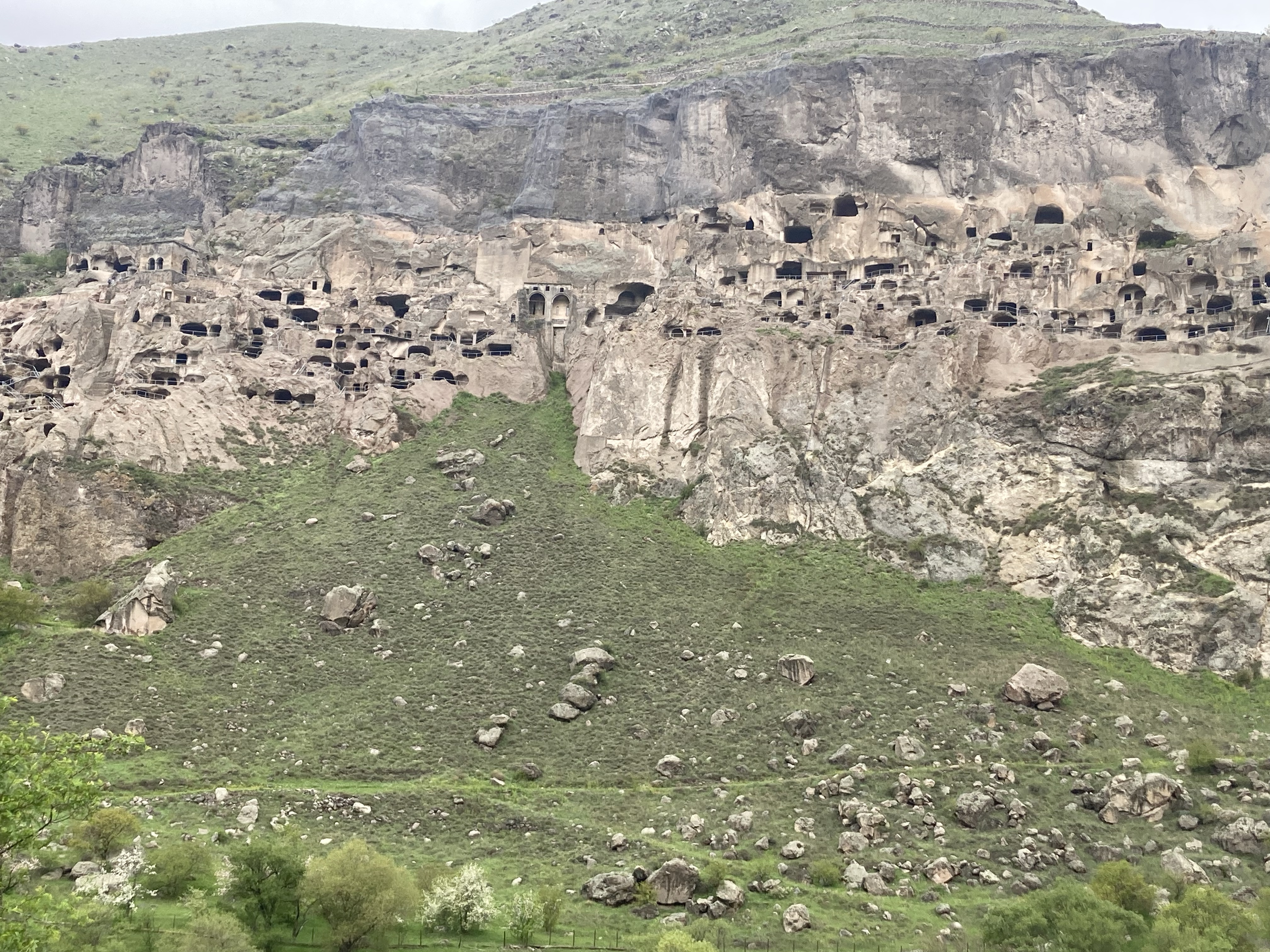
If I had a favourite, it was the modest church in the Vardzia cave city. Originally carved by monks in the 12th century, the 13 story high cave city expanded to house up to 50,000 inhabitants and contained amenities such as stables, water pipes, stores and a church, everything needed to hide out for a few years:

An earthquake struck in the 13th century, leaving much of the cave fronts open, but the city was reinforced and used for another two centuries. During the Soviet period, it was a museum but off-limits to most people.

Now, about the Russians. Situated right above Georgia, Russia has had its eyes on Georgia for centuries as a buffer between it and the Persians/Ottomans. In 1783, it signed a treaty with the Georgian King in which Russia took over Georgia’s foreign policy. A few years later, in 1803, Russia invaded the country and occupied it until 1918. In the chaos of the Bolshevik revolution, Georgia declared independence, but it was short-lived when Russia again invaded in 1920, brutally put down the independence movement and annexed the country, making it a republic of the USSR.

In the capital Tblisi, the National Museum dedicates a floor to the Soviet occupation, with graphic illustrations of executions, the gulags and the repression of free speech and political parties. The great purge of 1937 saw aristocrats, intelligentsia, political prisoners and rich peasants tortured and killed.

Independence movements began in the 1980’s; it was declared initially in 1989, suppressed but finally granted in 1991. Nonetheless, it remains precarious with Russia arming two breakaway republics, both of which have declared independence, recognized by nobody except Russia.

As a result, over 20% of Georgia territory is currently occupied by Russian forces and people fear that Russia will turn its sights on Georgia next after Ukraine. Its strategic position, along with rumoured reserves of oil and gas and rare earth minerals and Putin’s desire to return Russia to the glory days of the USSR, make it a tempting target.

I’d be remiss if I didn’t mention the invasion of Ukraine on Georgia; its effects were all around. Although the country’s largely ceremonial president has spoken out in favour of Ukraine, it’s prime-minister prefers Russia. And little wonder as his biggest supporter, and former prime minister, is a major shareholder in the Russian petrol-giant Gazprom.

So Georgia walks a tightrope. Flags supporting Ukraine are everywhere:

Large numbers of Russians and Belarusians, unable to remain in their home countries, have fled to Georgia, where they await visas for Western Europe or North America. Two whom I met both proclaimed they would return home “when Putin is dead. ”

But not all Georgians welcome these Russian dissidents. There is great dislike and distrust of all Russians, regardless of political persuasion.

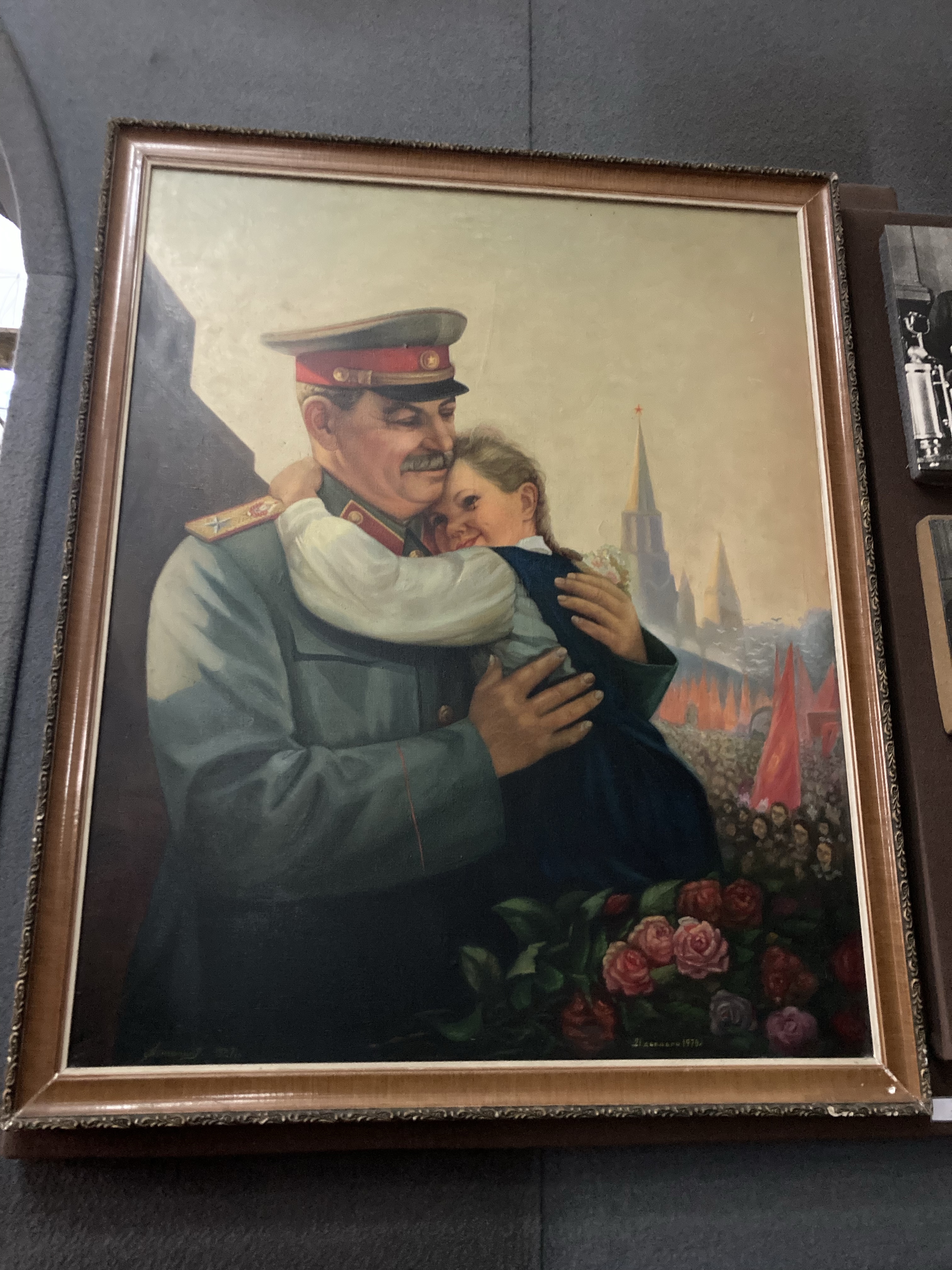
A controversial exception, but only to some, is Georgia’s most infamous citizen, Joseph Stalin. Born in a rented two room house in Georgia’s second city of Gori, he initially studied to be a priest but failed to finish likely due to his political dissent activities. He was arrested 7 times and was sent to Siberia, where he managed to escape 6 times. Eventually, he befriended Lenin and Trotsky and rose through the ranks to become the Soviet leader until his death in 1953.

All this and much more is documented in the Stalin Museum in Gori. I toured it with an English speaking guide, who delivered a matter-of-fact commentary about Stalin, neither flattering him nor referencing his atrocities.

She focused on his ” damaged arm”, always out of sight in official pictures, his refusal to exchange his prisoner of war son (who was executed) and his personal possessions, like his pipes.

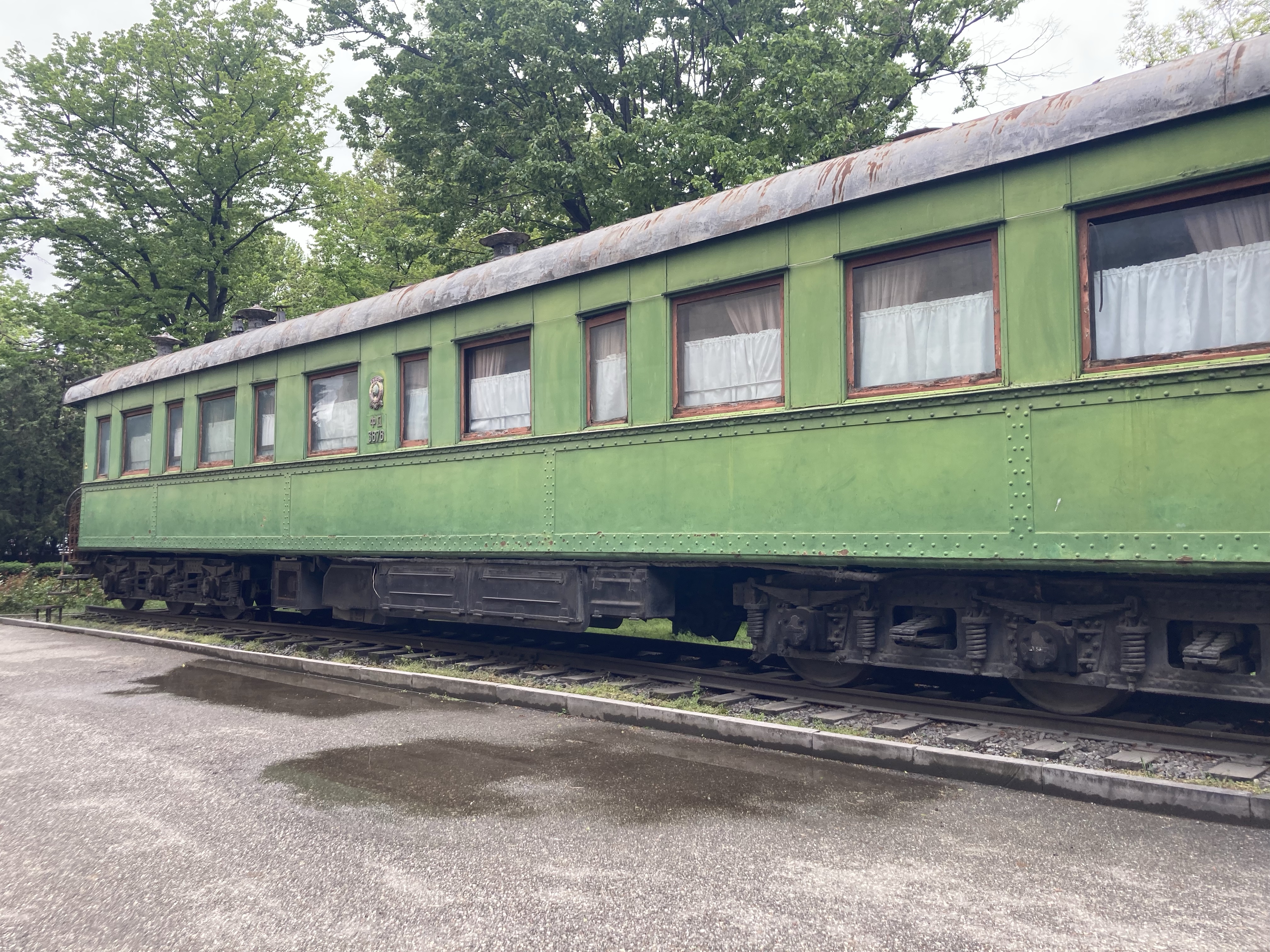
The museum has his birth house on its grounds and his refurbished train. Apparently Stalin was afraid to fly. Inside are his meeting room, security office, bedroom and bathroom, all furnished in a mock Art Deco style. I wonder how he would feel having loads of western tourists snapping photos of his toilet. I did but I’ll show the whole train instead:

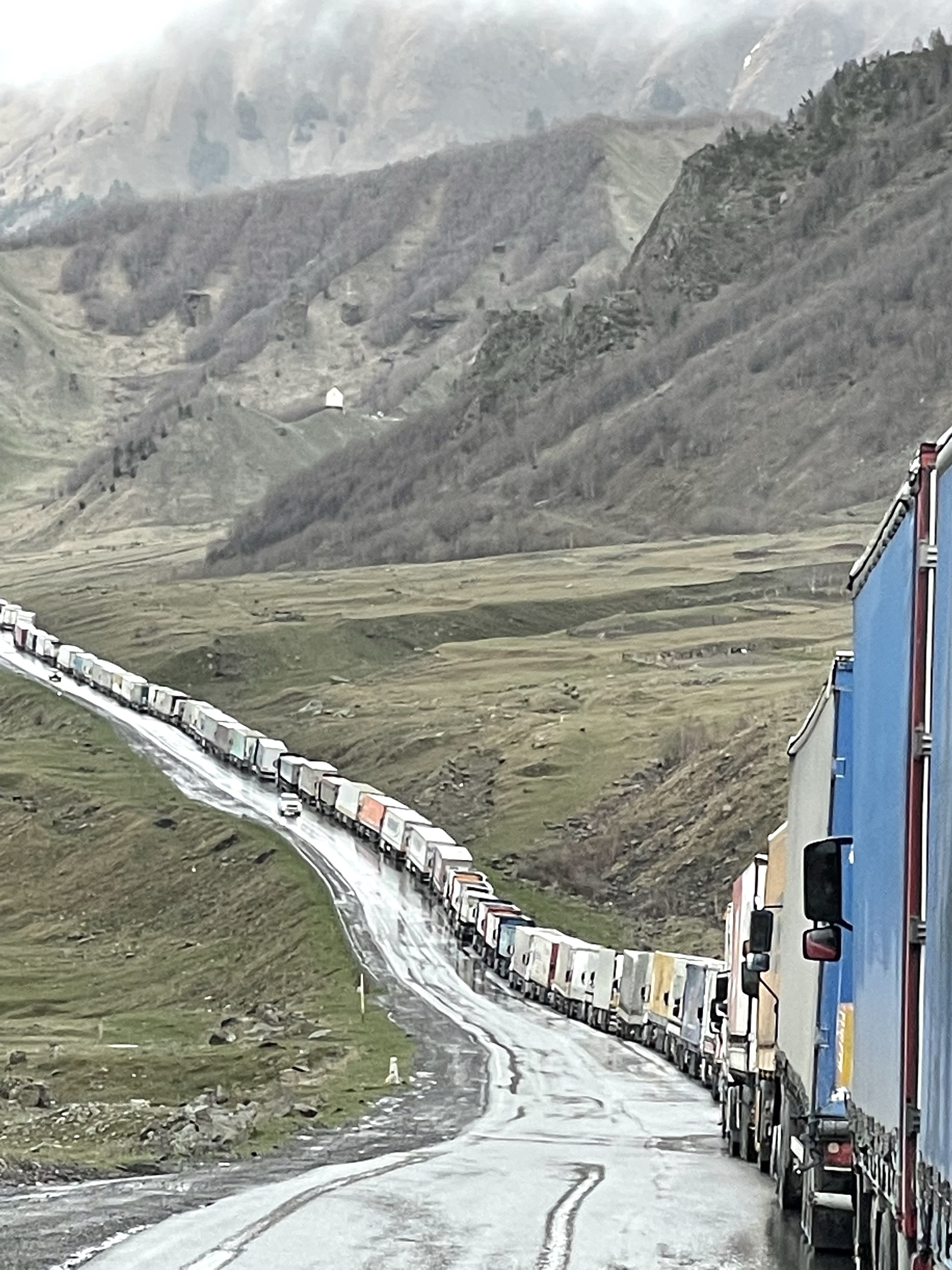
Another inescapable consequence of the Ukrainian/Russian war is the plethora of trucks on the Georgian highways. As soon as Russia invaded, all surrounding countries except Georgia closed their land borders. Thus, the single open border into Russia has a line- up of trucks over 150 kilometres long. It takes a minimum of 4 days to cross:

Thankfully, I was not in a truck trying to cross into Russia.

Next stop, Armenia.

On the Road Again: Baku, Azerbaijan

After two years of limited travel (two weeks in Madrid and Portugal, a crazy drive across Northern Canada to pick up a puppy and six weeks in Florida), I’m finally on an extended trip, starting in Baku, the capital of Azerbaijan. I’ve joined a tour offered by Adventures Abroad of the Caucasus; Azerbaijan, Armenia and Georgia.

Let’s start with the geography. The Caucasus is a mountain range bordered by Russia to the North and Iran and Turkey to the south. In the west is Georgia and the Black Sea; to the east is Azerbaijan and the Caspian Sea. Its neither in Asia or Europe or in both, depending who you ask. And despite its name, the Caspian Sea is not a sea, but the largest lake in the world.

I could give a long dissertation on the history of the region, but there are great documentaries on YouTube if you’re interested. Suffice to say, the region has been fought over by Persians, Christians, Muslims, Mongols, Ottoman Turks and Orthodox Russians for centuries. The countries first declared independence in the 1920’s, but Russia brutally annexed them after 23 months and made them each republics of the USSR. The Soviets displaced hundreds of thousands of ethnic Armenians and Azerbaijani and created artificial borders, resulting in the tension and war between the countries that still exists today. Independence from the USSR occurred in 1991, despite a bloody crackdown by the USSR in Azerbaijan in 1990 resulting in massive fatalities.

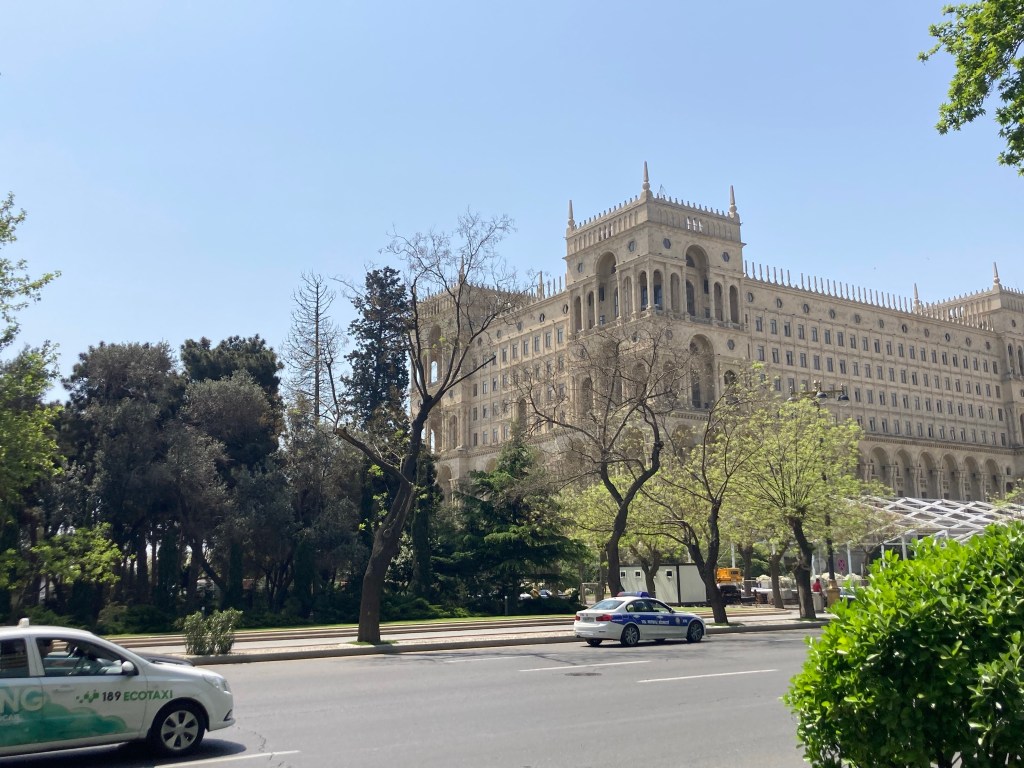
I would like to tell you that Azerbaijan is filled with fascinating architectural and archeological sites dating from time immemorial but that wouldn’t be correct. Invading armies, earthquakes and Soviet policy left little intact. Instead, the current regime has embarked on a massive reconstruction of past buildings in an effort to create a glorious Azerbaijani past. Thus, we visited reconstructed fire temples, mosques and palaces, all dating from 2000 or later. To erase the Soviet Realism style of high rise buildings, many of the facades have been refaced in a more Azerbaijani style, like government house:

Government House

Now about the government. Two year after independence, in 1993, Heydar Aliyev, former KGB and former Communist Party member became president. He was succeeded by his son, the current president, whose wife is vice-president and his son is the heir apparent. There are “elections” which the opposition alleges are fraudulent, a dictatorship disguised as a democracy. Freedom of expression is not allowed; opponents to the regime are either jailed or living in exile. We were warned not to discuss politics with locals.

However, the government is wealthy, owning the expansive oil & gas reserves that make the country rich. Ostensibly, it spends its money on public works; the streets are broad and well cared for, cranes dot the city skyline erecting modern high rises, water, power and internet are reliable. Education and health care are free.

But it’s somewhat of an illusion. The vast amounts spent on public works do little to benefit the majority of the population who struggle to survive on meagre wages. Preparations for a Formula 1 car race inconvenience the entire city for six weeks prior to the race. Corruption is rife. Ill paid doctors, teachers and police officers demand bribes to do their jobs. As if to prove the point, our tour bus was stopped by a police officer “ seeking dinner money” before allowing us to resume our journey.

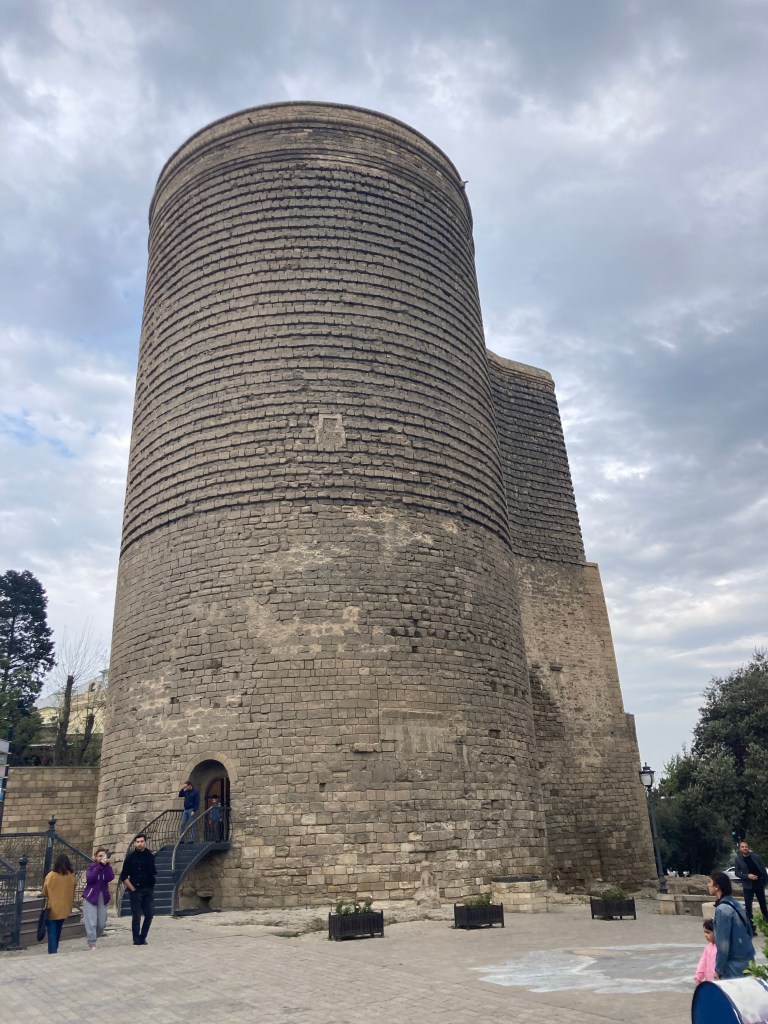
We visited some of the main sights in Baku, like the Maiden Tower, one of the few non-reconstructed towers, which no one can accurately date and whose purpose is unknown:

Maiden Tower

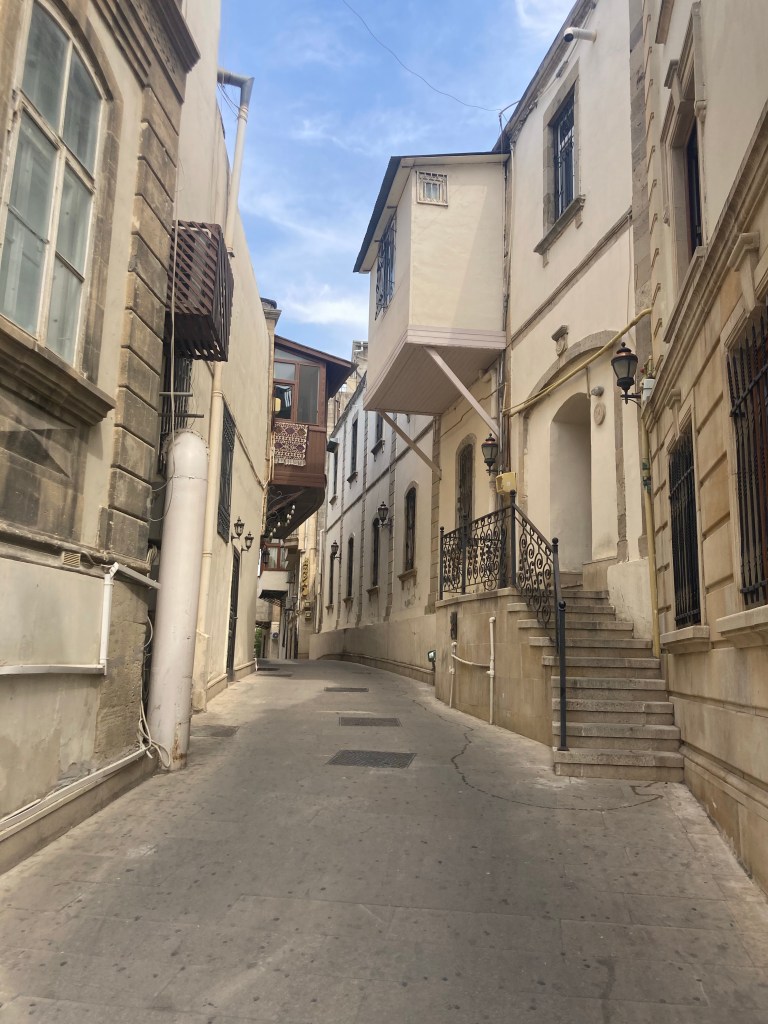
And walked through the attractive but mostly reconstructed Old Town:

Old Town

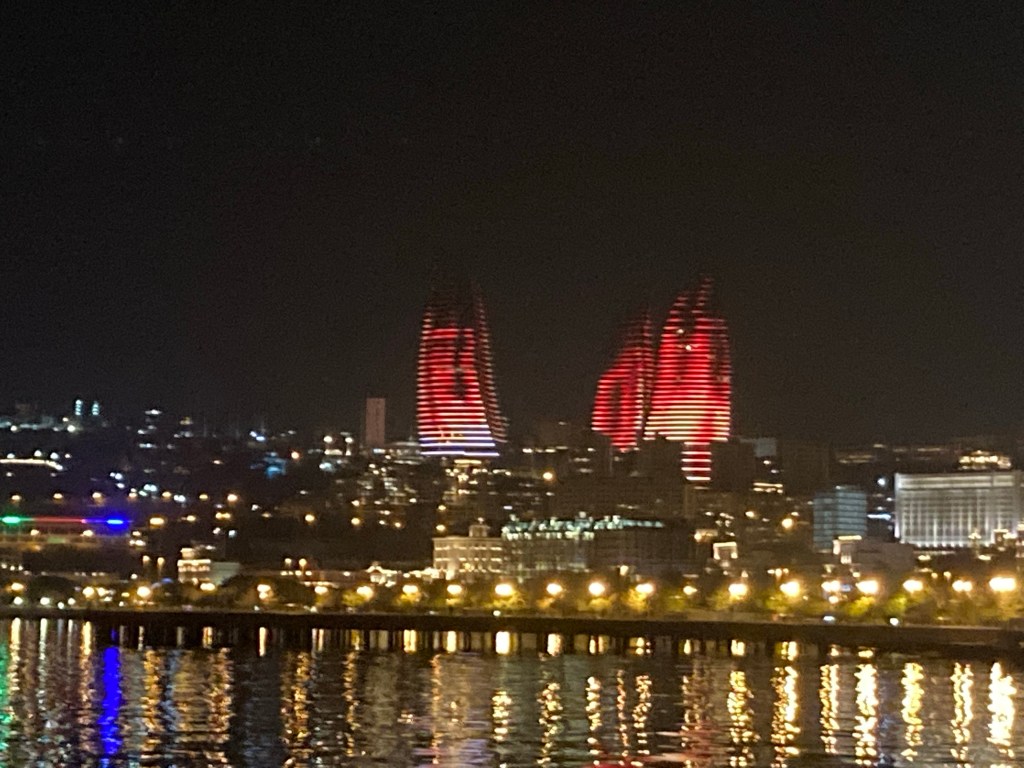
Wonderful new buildings line the Caspian Sea waterfront, including the Flame Towers, so named because in the night, their lights resemble flames:

Our tour travelled to the old capital of Shaki, stopping along the way at more reconstructed buildings – a mosque, a Zoroastrian fire temple, a palace- all rebuilt in the last few decades following destruction by Mongols, earthquakes or the Soviets, take your pick.

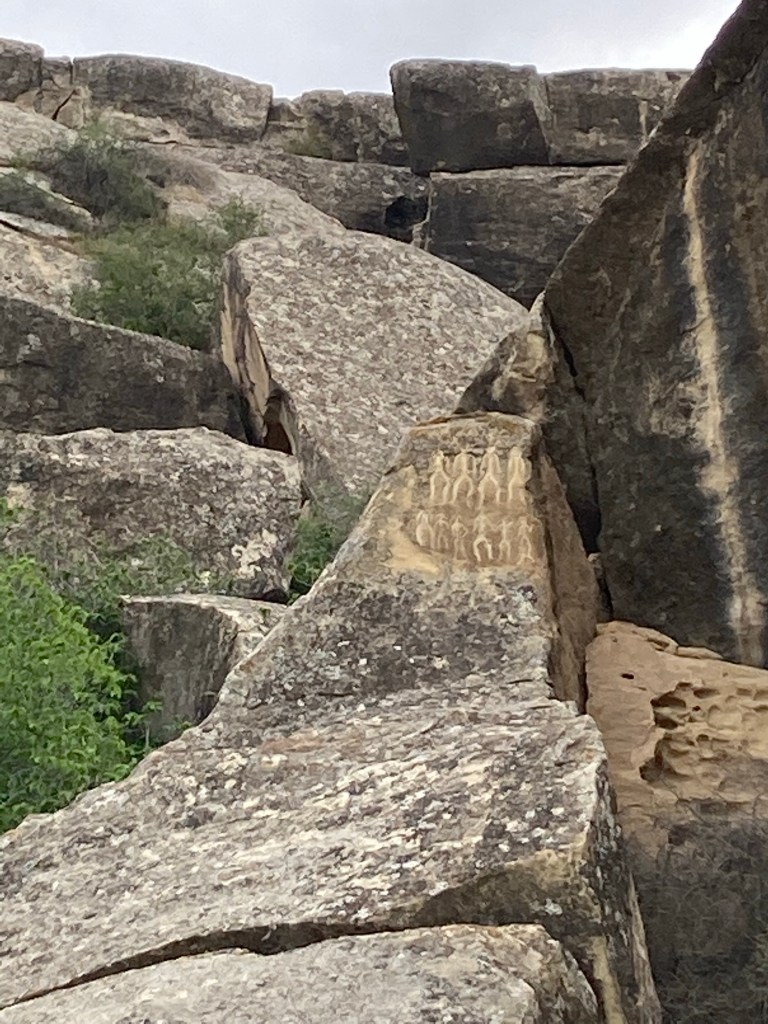
The single original sight is the petroglyphs in the Gobustan National Park, where a large number of cave art paintings dating back to Palaeolithic times (10,000 BC) are visible, including the dancing women:

I spent a pleasant 5 days in Azerbaijan. The country is clean, safe, with modern roads and good food, but lacks the eye-catching historical sights that I love. What it does have is an interesting political history with Russia and Turkey fighting a proxy war in the area for territorial supremacy and Caspian Sea access. Azerbaijani people we met were divided over the current war in Ukraine. While some expressed displeasure at the Russian invasion and decried Russian aggression, we also saw signs supporting the Russian fighters.

I was happy to have visited Azerbaijan but was equally happy to move on to a new country. Next up, Georgia.

COVID-19 wins/ Me, the Tourist, loses

On Saturday, I waved the white flag and booked a flight from Ponta Delgada, in the Azores, Portugal, to my home town of Toronto for Tuesday, March 17, 2020. Despite all my attempts to continue travelling during the COVID-19 pandemic, it is becoming more and more difficult. I like to think I know when to quit and, so, I am trying to.

But let’s back up a bit. I had booked a 6 week holiday in Spain back in December to begin March 31, when I was to meet up with a friend in Madrid. Over the last few months, hotels and Airbnbs had been booked, a rental car reserved, advance payments made when requested. I’d also arranged to meet my son here in Ponta Delgada for a week of sun and hiking during the second week of March, a well deserved holiday for him as he left one job and was about to start a new one.

In January, new reports started filtering out of China about a novel virus and a city under quarantine and ships getting turned away from ports in the Far East, but it was a distant thing, of little concern to me. In February, I flew to Accra in Ghana and, after a week there, went to Senegal.

It became time to start booking plans between Senegal and Spain. Everywhere was safe except China and maybe South Korea. I booked 10 days in Lagos, Portugal on the Algarve coast before I was to head to the Azures. After a week in the Azures, I would visit a new country for me, Malta, before going to Milan, Italy, where I planned to visit the iconic opera house, La Scala, and take a train to walk the five towns that make up the Cinque Terres before flying to Madrid.

At the time the plans were made, in late February, the virus had barely hit Europe and was traceable only to persons who had been to China. But once I got to Lagos, events started happening quickly. Italy, mostly Venice and Milan, started reporting outbreaks. My flight from Malta to Milan was cancelled by the airline. A few days later, the flight from Milan to Madrid, on Ryanair, was cancelled. To its credit, Ryanair offered the best, most simple refund mechanism imaginable. Just a few clicks on the link it sent me and the money was back on the my credit card.

Then my son sent me an email from his new job indicating all employees who had travelled to China or been in contact with anyone who had been would not be allowed to enter the building for 2 weeks. He was nervous ( it turned out rightly so) they would expand the ban to anyone who had travelled internationally. He told me he wouldn’t be joining me in the Azures.

Lagos seemed to be operating normally; there were plenty of tourists and no obvious precautions. Nonetheless, I started watching YouTube videos on how to properly wash my hands, managed to buy 3 small bottles of Purell for the usurious price of $26.00 and realized, to my chagrin, how often I touched my face. Twelve days later I left, via Lisbon where I spent 4 hours in the airport. Again, nothing out of the ordinary was observed.

On Thursday, my 3rd day in the Azores, Trump gave his disastrous pep talk from the White House and, all of a sudden, things started going a little crazy.

A digression and a bit of history. The Azores is a group of 9 islands in the mid-Atlantic, about 1500 kilometers from mainland Portugal. Portugal explorers discovered them in 1427 and started settling them soon after. They’re volcanic, with the last major eruption in 1563-4. Today, on the island of San Miguel where I am, are a number of calderas filled with lakes and hiking trails.

On Friday, I noticed a cruise ship outside the harbor. It had been denied entry and was sailing away to parts unknown.

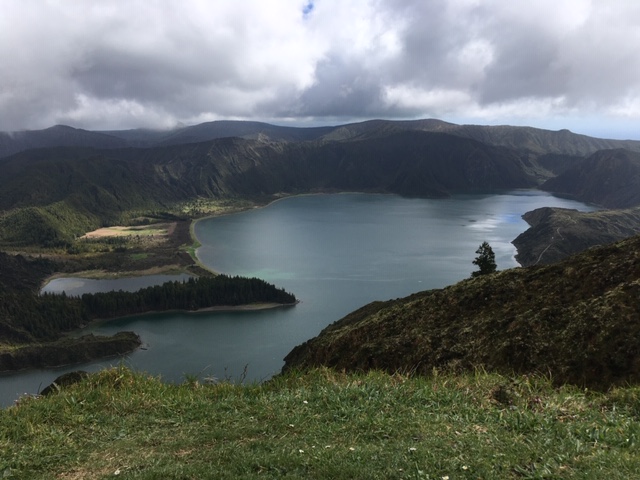
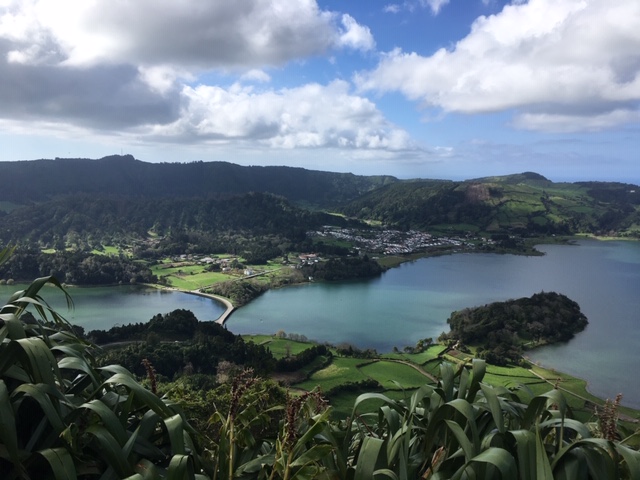
I had booked a tour of San Miguel Island, the largest and most populous island in the Azores, which went to two of the crater lakes: Lake Green/Blue which, as its name suggest, has both a green and blue portion and Lake Fugo

IMG_5835
Lake Fugo

The tour was scheduled to visit Caldeira Velha, a national park with hot springs and sulfur steam spraying from cracks in the ground. But alas, that morning, the Portuguese government had ordered a shut-down of all parks. I contented myself with the beautiful views of the Blue/Green Lake.

IMG_5858
The Green/Blue Lake

More bad news when I checked GoogleNews during lunch. Malta would impose a mandatory 14 day quarantine on all non-Maltese newcomers who landed on the island. After the tour ended, I went to cancel my flight and hotel reservation there. After being on hold for 3 hours with Expedia, Air Malta cancelled my ticket and refunded it all, despite it being non-refundable. Not so the Grand Excelsior in Floriana, Malta, who didn’t seem to care that its government was telling tourists to stay away, and refused to refund any of my money. So please, if you go to Malta, boycott this hotel.

As I already had a flight booked to Lisbon on my way to Malta, I decided I would go there for a week and managed to book a Lisbon./London/Toronto flight for March 24th. But that night, the authorities ordered nightclubs and museums to close all over Portugal. On Saturday morning came the news that 5 flights from the UK to Spain had been turned around mid-air since they wouldn’t be allowed to land in Spain.

Enough was enough. There is a non-stop flight from Ponta Delgada to Toronto on Tuesday, March 17th. I booked a seat. The timing was lucky. Later in the day, Trudeau told all Canadians to come home as quickly as possible. My flight sold out soon after.

So it is Monday now and I wait for the flight, hoping it will go. The island is quieter than when I arrived. The Tourist Office and half the restaurants are closed. Packets of sanitary wipes began appearing on the tables at the hotel breakfast yesterday and today the entire staff is wearing gloves. Only 2 people are being allowed into pharmacies at a time, so crowds are mingling on the street as they wait their turn.

I can do little more than walk around or cycle on the 4 kilometer bike path along the sea wall. It is a beautiful town, its architecture a mixture of Portuguese and colonial. Most prominent are the white buildings framed in black, basalt stone, a nod to the volcanic nature of the island.

If for some reason I do not get home tomorrow, I keep telling myself it is no big deal. My hotel, with a balcony overlooking the harbor, is very inexpensive and has lots of toilet paper. The restaurants which are open serve great fish and meat dishes. Before the islands turned to tourism, their main source of revenue came from cows, a breed brought over hundreds of years ago from The Netherlands. They are grain fed and apparently their milk, cheese and meat are highly prized. The steak I had was delicious.

The weather is also wonderful. Semi-tropical, the temperature rarely goes below 15 or above 25. A warm breeze keeps the air humid and, even though the temperature was only 17 the week I was here, it was warm enough for just a t-shirt and shorts.

But I get the message. Now is not the time to be travelling. Much as I would like to take advantage of the near empty, normally crowded tourist hotspots, I don’t want to be disrespectful. Governments don’t want foreigners on their soil, potentially spreading the virus and imposing on all ready over-burdened health care systems.

Besides, it is not fun anymore. I am inundated with hourly emails from back home from concerned friends and family reporting the latest WHO figures or the newest closures. Emails from lists I have long since unsubscribed from all start with their concern over my well-being and safety. The news reports nothing but the COVID-19 virus. My plans, and the back-up and the back-up to the back-up, have all been thwarted. I hate the uncertainty.

So I will be responsible. I will return home if my flight leaves here tomorrow, armed with a few cans of tuna, a bag of rice, lots of hand sanitizer and 12 rolls of toilet paper.

IMG_5890

For now, my travels are over.

Another Slavery Hotspot: Lagos, Portugal

I had just spent two weeks in Western Africa, where the main tourist sights related to slavery; the ugly capture and transport of millions of Africans to the Americas between the 16th and 19th century, so I thought Portugal would be a welcome relief from the saddening tales of the Ghanian and Senegalese slaves.

The Slave Trade:

My landing point was Lagos, a city of 30,000 on the south coast of Portugal, in the famed Algarve region. A friend had stayed here last year and highly recommended it as an inexpensive but warm vacation spot with lots of good food, plenty of sunshine and decent wine. I booked a place for 12 days and arrived after an all night flight from Dakar (only red eyes fly from Senegal to Europe) to Lisbon, a quick hop to Faro and an hour mini-van ride from the airport to the hotel. Situated right on the marina, my one bedroom offered a large balcony, reliable hot water and decent wifi, all welcome contrasts to my prior hotel in downtown Dakar. As an added bonus, there was no daily 6AM call to prayer to wake me.

But my belief that I had left the slave trade behind was completely erroneous. In fact, Lagos had been the capital of European slavery for centuries, beginning as early as 1450. Fifty years before the Portuguese claimed Brazil and 42 years before Columbus discovered America, Europeans were importing slaves from North Africa and selling them in the main market square in Lagos. A small Slave Museum, located in a former Customs House, details the slave trade to Portugal. Slaves, allegedly mostly prisoners of war sold by Arab traders, were sold in Europe where they were used in construction and heavy labour jobs. Somewhat incomprehensible to this explanation in the museum is an extract from a contemporaneous manuscript describing a slave auction, where a mother tried desperately to stay with her child. How mothers and children became prisoners of war is never explained.

History:

I took a walking tour with a history fanatic through the center of Lagos. In addition to the slave history above, we were handed a sheet with a timeline of significant events in Lagos, which went something like this: original inhabitants were Celtics, followed by the Romans whose main legacy is the road system.. When their empire disintegrated and the dark ages reigned, the Visigoth tribes moved in. In the 8th century, Arabs conquered the area and created cities using Arab building techniques still evident today. Between the 11th and 13th century, tribes who eventually became the Portuguese from Astoria in the north battled the Moors for supremacy, eventually driving the Arabs out of Portugal in 1249.

Lagos reached its heyday in the Middle Ages, when ships bound for Africa and America called it home. Fleets moored in Lagos during the Spanish/ British wars were attacked by Sir Francis Drake (Portugal was under Spanish rule at the time), along with various pirates who regularly plundered the city.

In 1755, a massive earthquake and tsunami destroyed the city along with most of coastal Portugal. Lagos slowly rebuilt itself.

Portugal remained a monarchy through the Napoleonic invasions and the industrial revolution. A few 19th century civil wars reduced the monarch’s power to that of one of a constitutional monarchy but in 1910, the king was deposed and sent into exile. The Republic was born.

Over the next 65 years, Portuguese politics was plagued by military coups, dictatorships, fascism and communist parties. It remained neutral during WWII, assisting both sides as the wind blew. But in 1975, the country adopted a democratic government which has ruled ever since.

Henry the Navigator:

Lagos’ most famous citizen was Henry the Navigator, a Portuguese prince born in 1394 , died in 1460, and who, while he was a prince was not much of a navigator. Rather, his claims to fame are his contributions to navigation; he is rumored (but disputed) to have started a school of navigation in nearby Sagres, where two significant discoveries were made. First, the caravel, a lighter, more maneuverable ship was developed under his tutelage. Second, cartographers mapped more of the world, including the Canary Islands and the Azores in the Atlantic and the coastal areas of Africa below Bojador in the Western Sahara. They learned how to navigate using the stars, permitting the Portuguese to sail beyond the coastline, something the Vikings had figured out some 400 years before but that’s neither here nor there.

Lagos today:

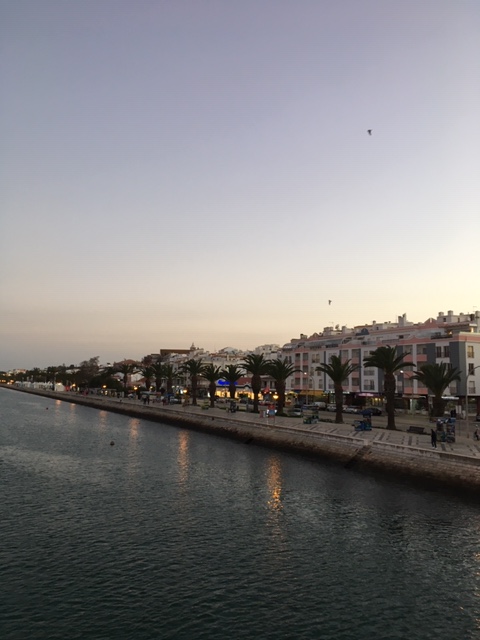
Of course, most people don’t come to Lagos for its history or its architectural marvels. Rather, its primary attraction is as a well-deserved, relaxing tourist destination. Prices are inexpensive, with good Portuguese wine costing only a few dollars a glass, rotisserie chickens in the supermarket the equivalent of $5.00 and bus fares costing just $2.00. Hotels with all the modern conveniences abound, there’s a pretty pedestrian way with restaurants offering lots of fish dishes. Along the main road, pretty white low-rise buildings evoke pictures of traditional Portuguese houses and palm trees sway in the breeze.

IMG_5559
Lagos and its canal

The area has at least 13 golf courses and lots of water sports, including fishing. For those that prefer to walk, the streets are lined with sidewalks, zebra crossings are everywhere and cars most diligent about stopping to let pedestrians cross the street.

Tourists walk along the canal, up the shopping streets, towards the fort or beside the churches. It’s a bit of a walker’s paradise, with oodles of hiking trails. My favourite was a 45 minute walk from the marina, up a hill, to Ponta de Piedade, where wooden walkways criss-cross fields and run alongside cliffs overlooking limestone formations in the Atlantic Ocean below. Along some of the the walkway, a bevy of yellow flowers were in bloom, making for a lovely sight, but naturally, not in the pictures below:

Large numbers of Europeans – Brits, Germans and French – come here every winter to enjoy the mild (average about 20 degrees) weather and sunshine and Canadians have started coming here also. One sign read “We speak francais and quebecois.” Bars catering to foreigners line the marina  where British football matches play continuously, menus advertise Roast Dinners every Sunday and the singer, a guitarist, played mostly Tom Jones songs, but the loudest singalong was reserved for Neil Diamond’s Sweet Caroline.

Sagres

Thirty kilometers away is the town of Sagres. Reputedly home to Henry the Navigator’s sailing school, at its end is Cape St. Vincent, the most southwestern point in Europe and regarded as the end of the earth in ancient times. A lighthouse marks the end of the Atlantic Ocean where ships enter the Mediterranean Sea.

Today the lighthouse still stands and, in clear weather, its light can be seen for 60 kilometers. People, myself included, flock here for the nightly sunset, watching the sun drop into the ocean.

IMG_5657
Sunset at Cape St. Vincent

The Grottos

The waves have carved beautiful grottos into the limestone cliffs; most are accessible only by boat. Kayak and stand-up paddle boat tours take intrepid travellers into them, but I, being less fit and much lazier, opted for the speedboat. Little did I know the driver considered terrifying the passengers with sharp turns and dizzying speeds over high waves part of the experience, so I gamely held on  to my chair for the 25 minute terror ride to the grottos. The views were my reward; I will let some pictures speak for themselves.

Closing Thoughts:

Lagos wasn’t the most fascinating place I’ve been to, historically, architecturally or  culturally, but what it lacks in those areas, it certainly makes up for in great weather, easy travelling and nice, welcoming people. After 12 days here, I understand Portugal’s attraction for tourists escaping winter.

Next: Travelling in the time of Covid-19