
After being discouraged by the poverty, filth and corruption in Guinea-Bissau, I held little optimism for its sister-named country, Guinea, or, as is more commonly described, Guinea-Conakry.
We were spared another long, gruelling bus ride with a flight between Dakar and Conakry on Senegal Airlines, which was only 4 1/2 hours late, no explanation provided. We were lucky to be staying at one of the better hotels in town, The Noom, but a music festival was going on that weekend and the lobby was abuzz with hip hop stars and their entourages. A small price for luxury.
Our first tour stop was to the island of Kissa, a former bauxite mining site. Bauxite is used in the production of aluminum and Guinea has some of the largest bauxite deposits in the world. The French had first exploited the bauxite, followed later by the national government, but these days most of the mines are owned and operated by the Chinese:
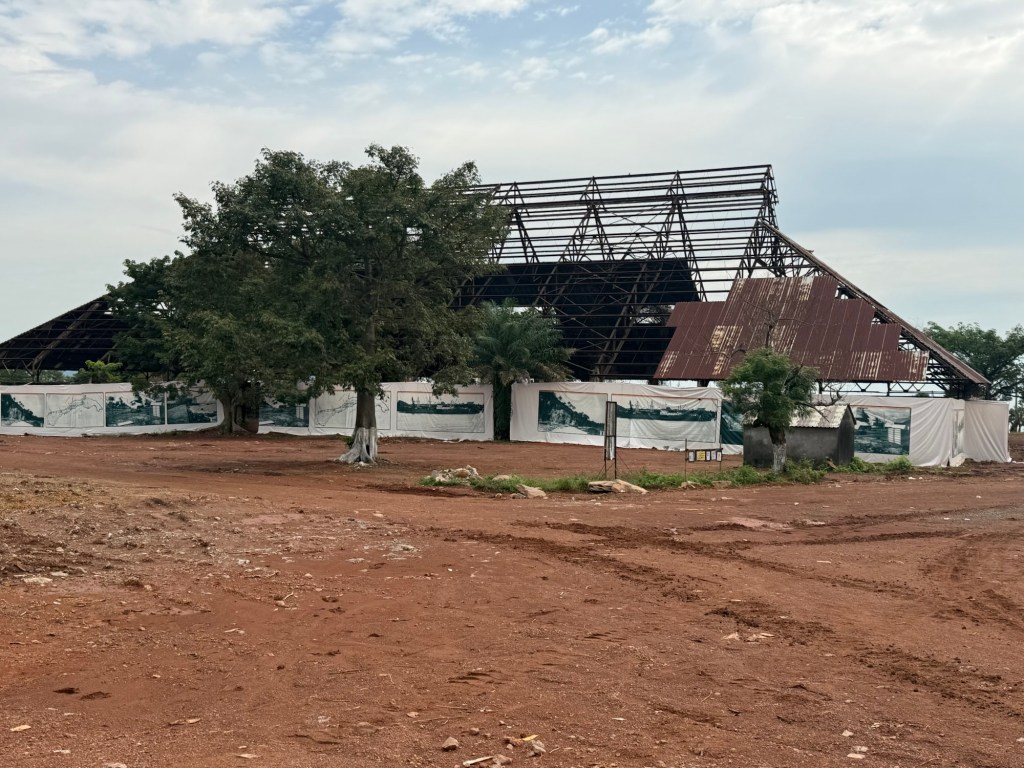
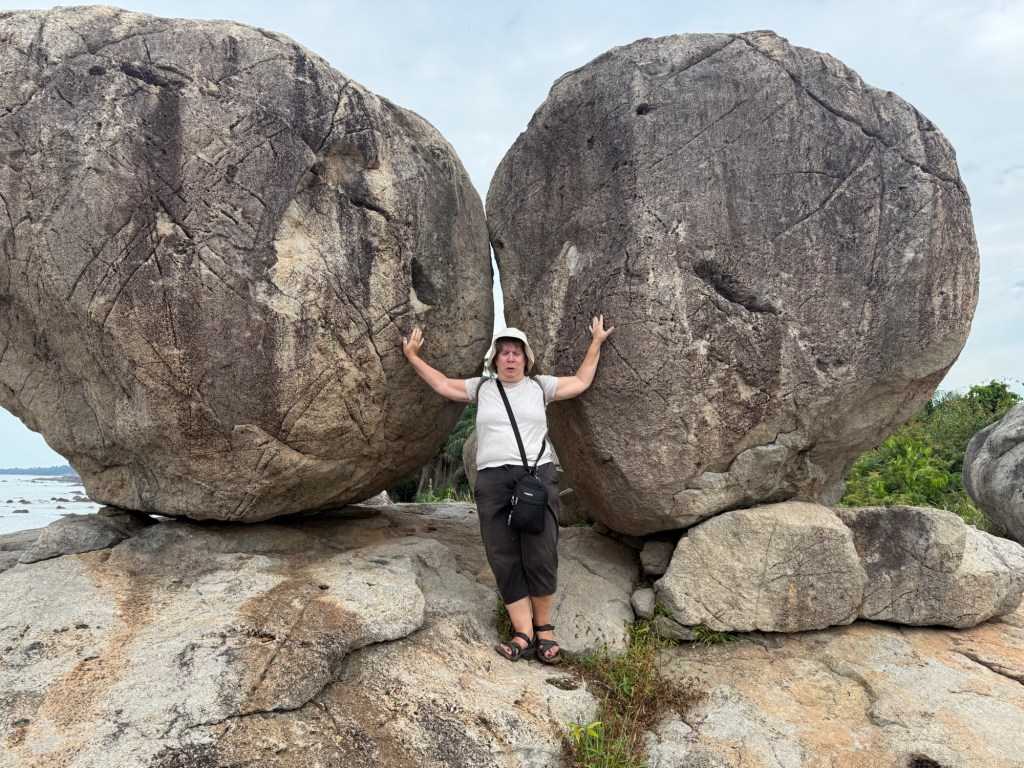
The Kissa mine has long been abandoned, in favour of inland mines, but the remnants of the buildings remain. On the beach, the sand is red from the bauxite and giant boulders provide photo opportunities.
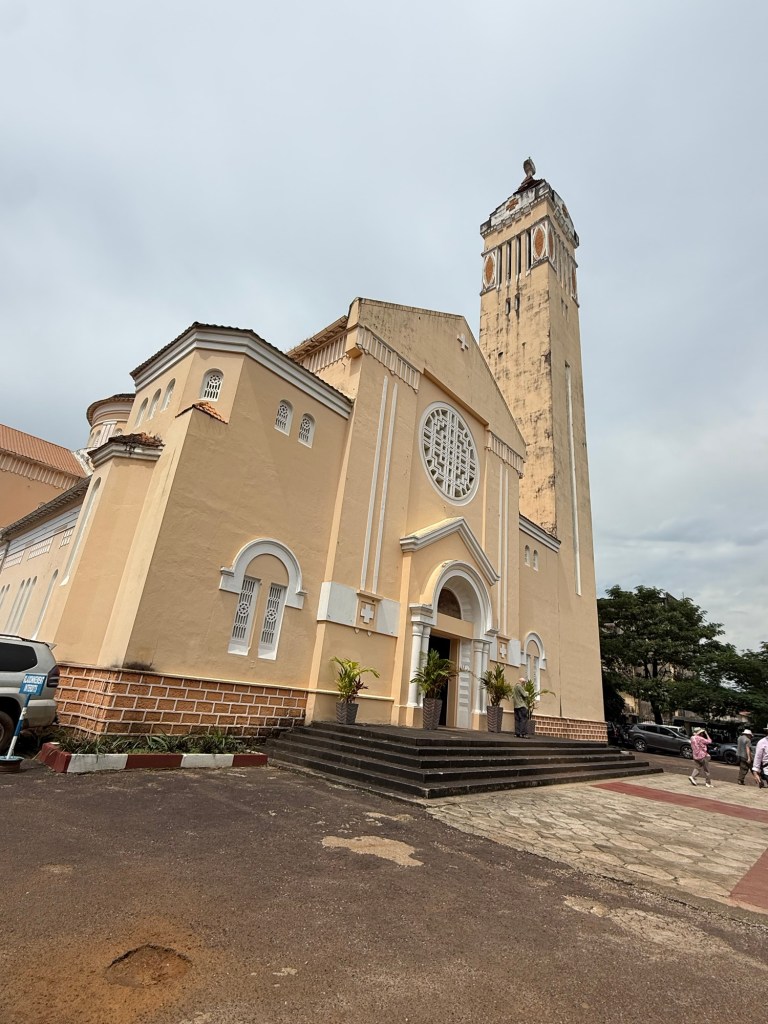
Even though Conakry is the capital, and a city of 4,000,000, interesting sites for me are few and far between. The Catholic Cathedral of Santa Maria was constructed by the French and bears little or no nod to its African location.
We stopped at the National Museum of Guinea, which was notable for its very strong and welcome AC, but other than that, was rather thin on exhibits-a few masks, a map and some initiation costumes. Over half of the building was given over to an exhibit of a Russian artist. I won’t even bother you with a photo.
Besides, photos were discouraged all over Conakry, with the women in the markets angrily covering their faces when they saw a phone. YouTube abounds with tales from vloggers who tried to take photos near the Presidential Palace and were arrested for their efforts.
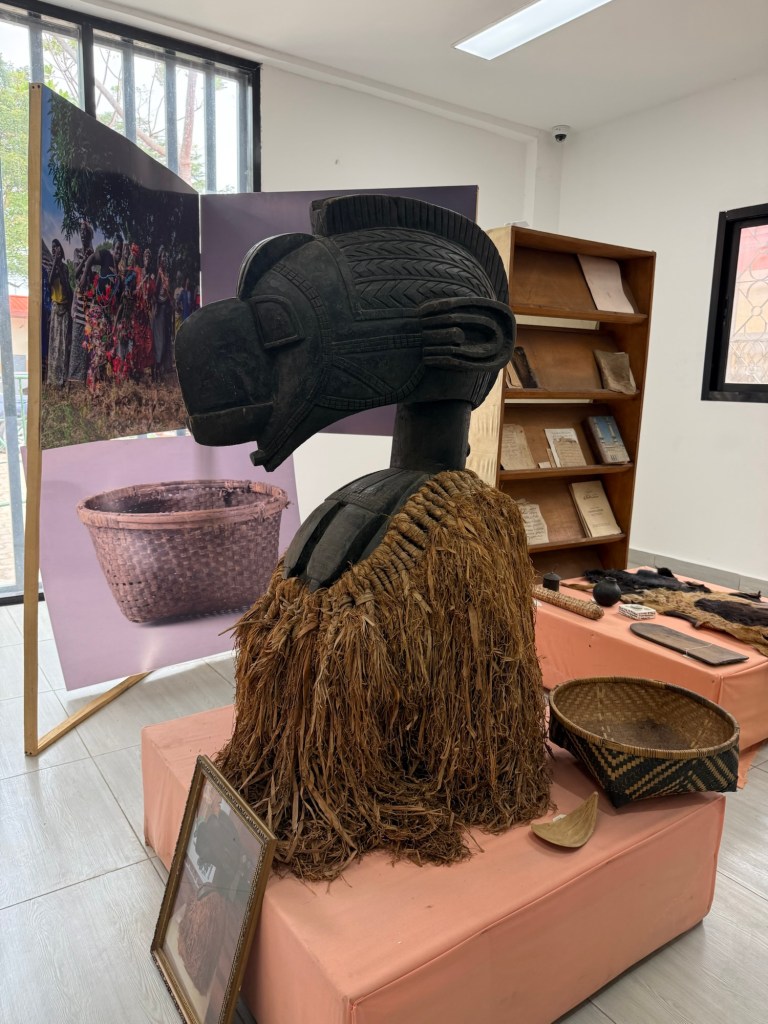
Photos were allowed of the Nimba, the popular goddess of fertility and productivity:
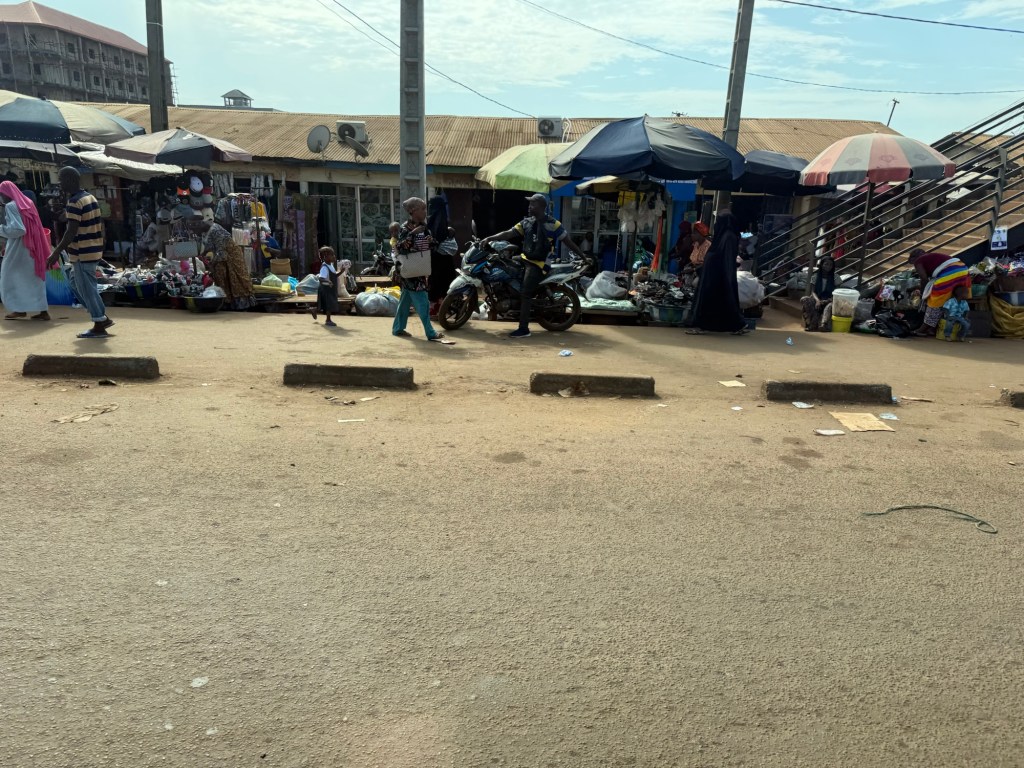
I was able to snap a few pictures surreptitiously from the bus window of the street scenes with makeshift stalls, garbage strewn about, broken pavement:
Aside from its large mineral wealth, Guinea-Conakry was beginning to feel sad, not unlike Guinea-Bissau, but then we were treated to a show by a dance troupe made up of local, impoverished youngsters called the Fanyi Fan, which uses only drums and a xylophone to create traditional African music:
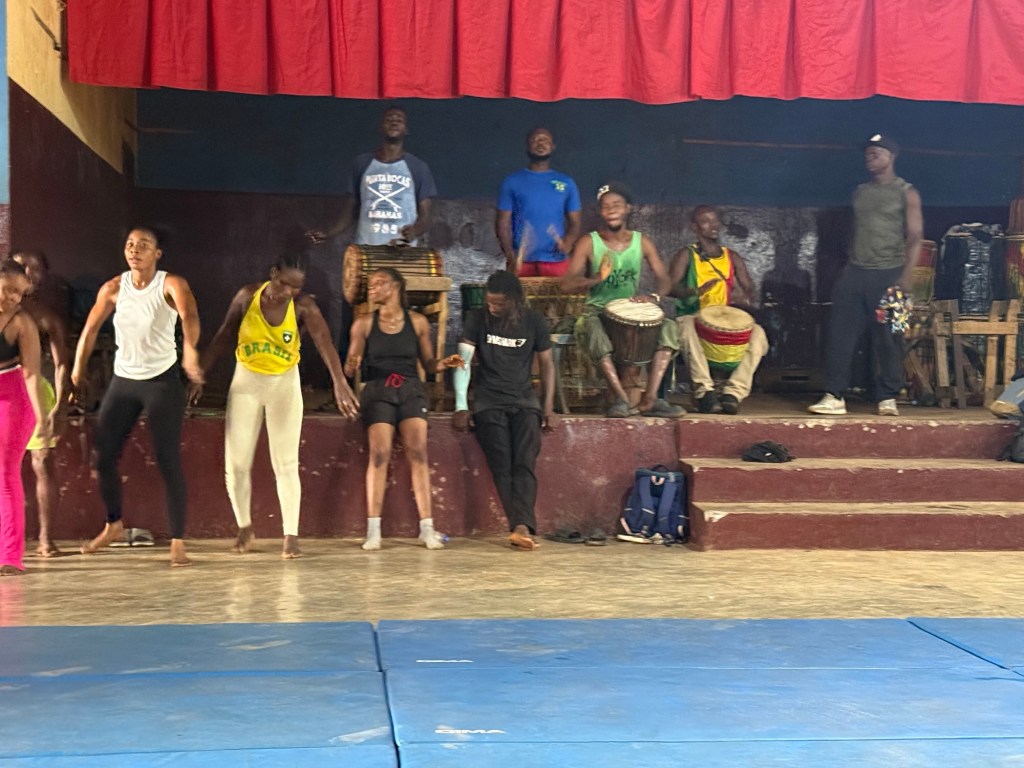
The real magic happened when the dancers and acrobats appeared, full of raw energy and unbounded enthusiasm:
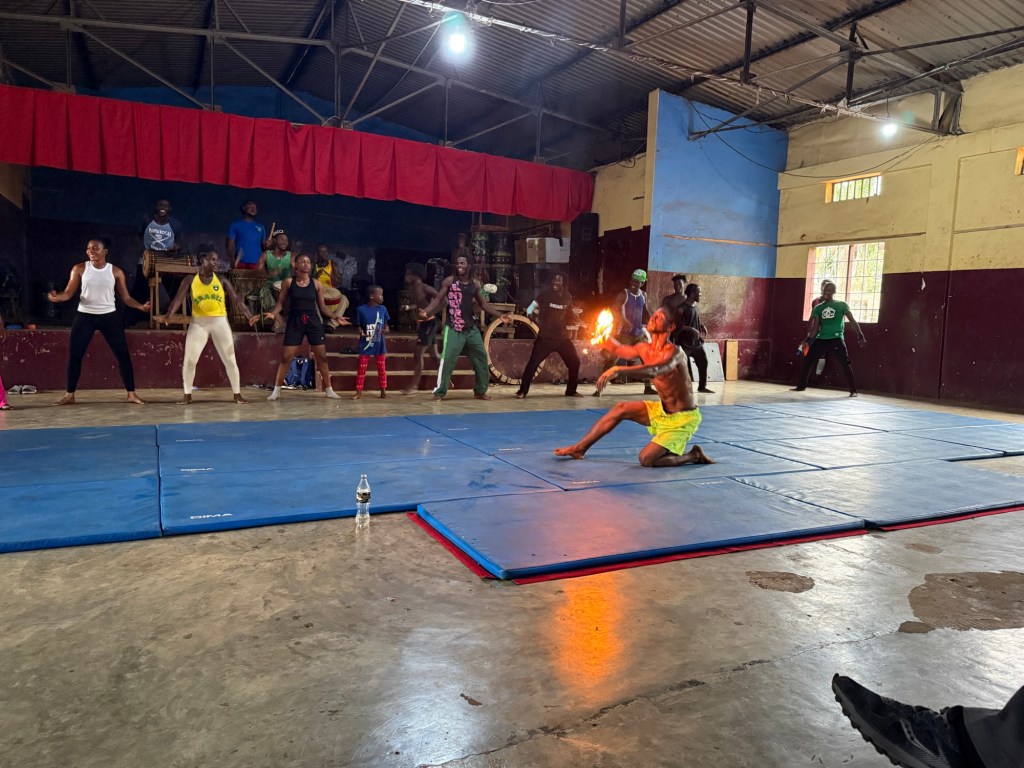
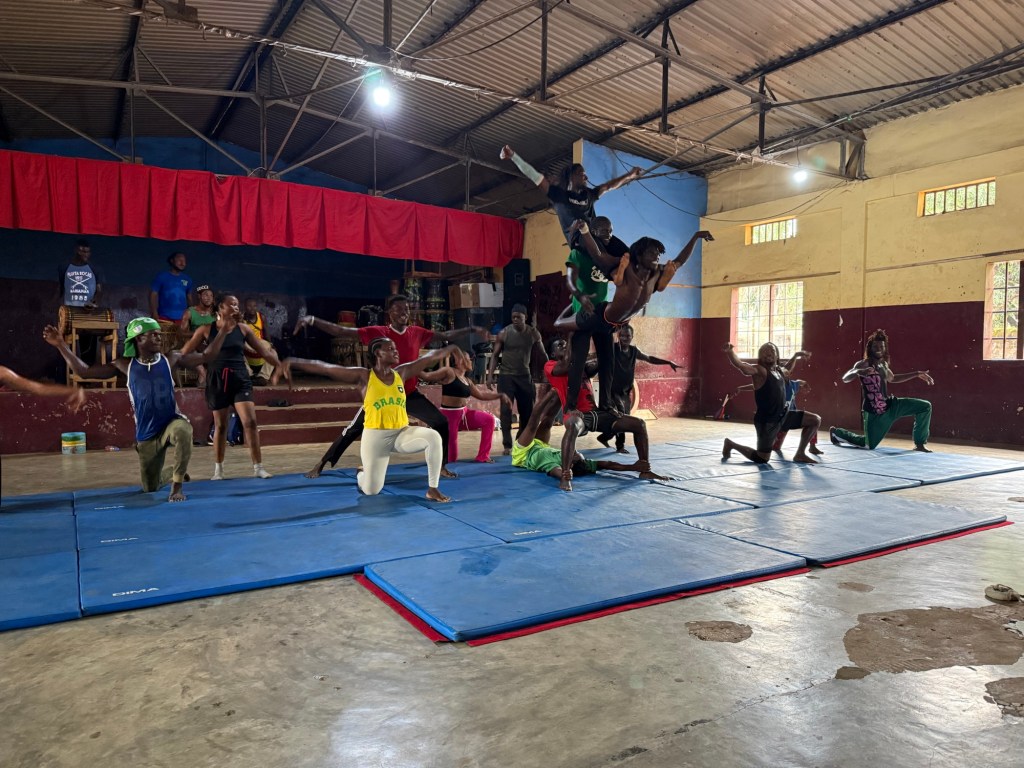
As we were watching, the windows and doors filled with neighborhood kids ( and some adults) clapping and hooting along. It was a treat to watch. Interestingly, a similar group is currently performing on America’s Got Talent, into the finals.
So this was my final impression of Guinea-Conakry. It has lots of problems- an unstable military government, poverty, poor infrastructure but it has hope. It’s extensive mineral wealth is being exploited, it’s large population is becoming literate but it was the joy and optimism of the youthful performers which left such a positive, lasting impression.
Next up: A bit of a s*^+%%show: Sierra Leone

