
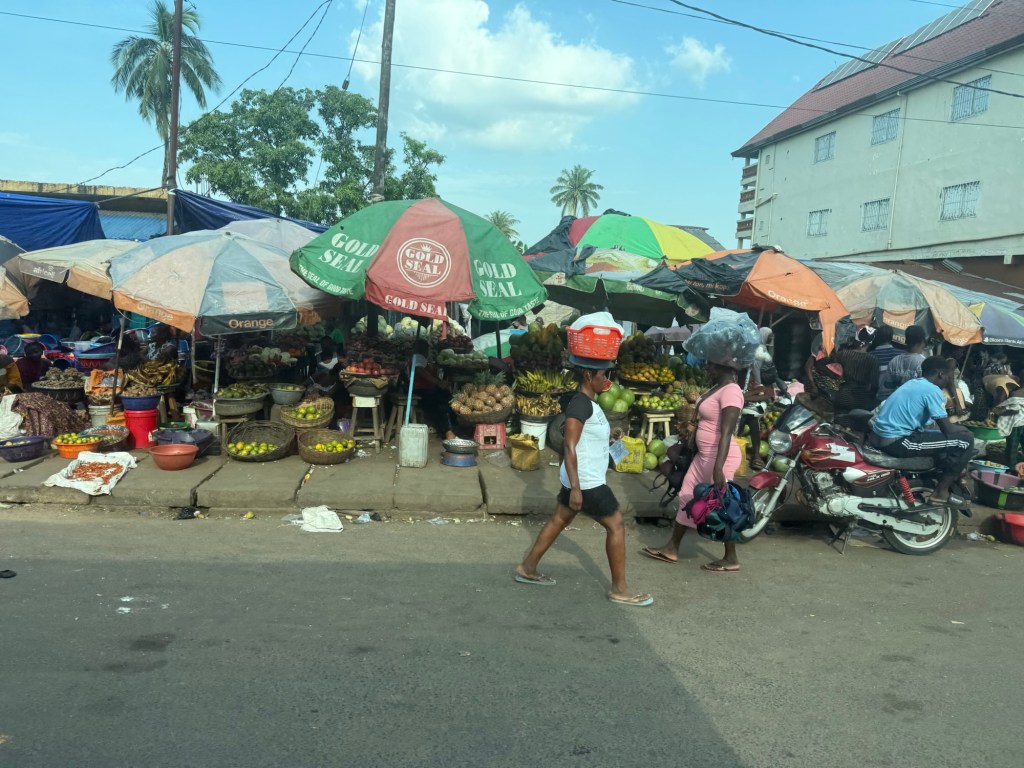
With apologies about the title, but it was my prevailing impression of Sierra Leone. My visit to the country actually started nicely. Having endured a bumpy 3 hour drive on a terrible road from Conakry to the Guinea-Sierra Leone border, the newly paved double lane highway constructed by the Chinese, complete with three tolls, was a welcome change. We zoomed along for 3 hours, until we got to the outskirts of Freetown, where, unfortunately, traffic and roads were horrendous, and it took an additional 3 hours to crawl our way through the city. Along the way, I got glimpses of Sierra Leone’s capital city, none of them particularly promising:
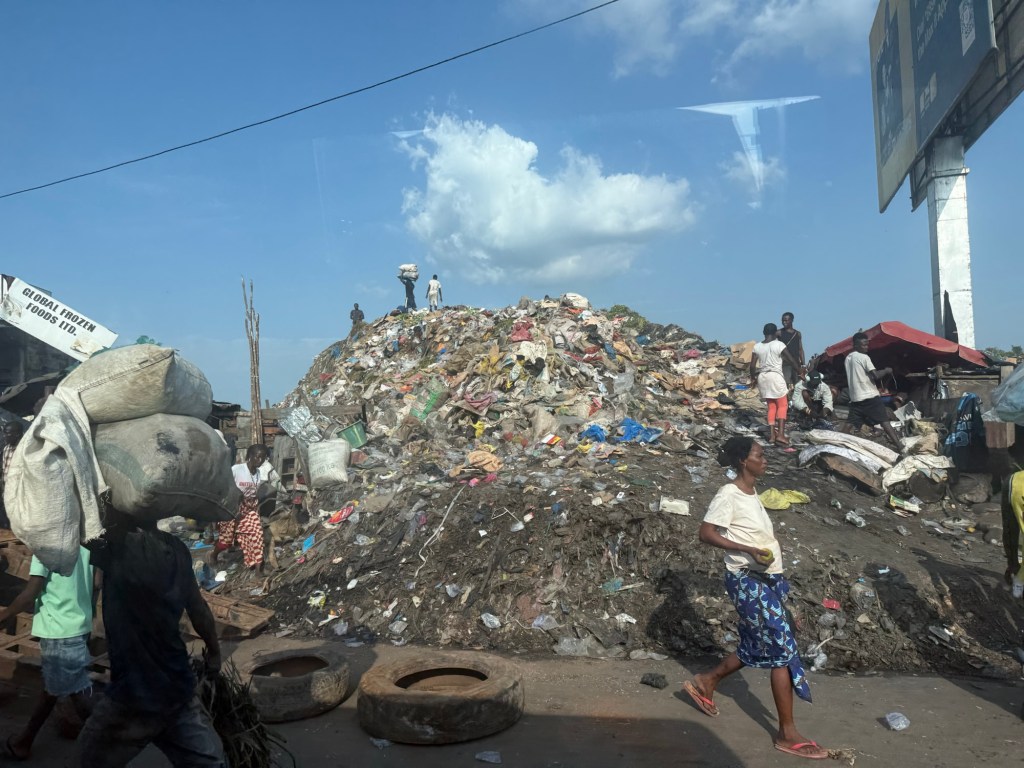
Giant piles of garbage were everywhere:
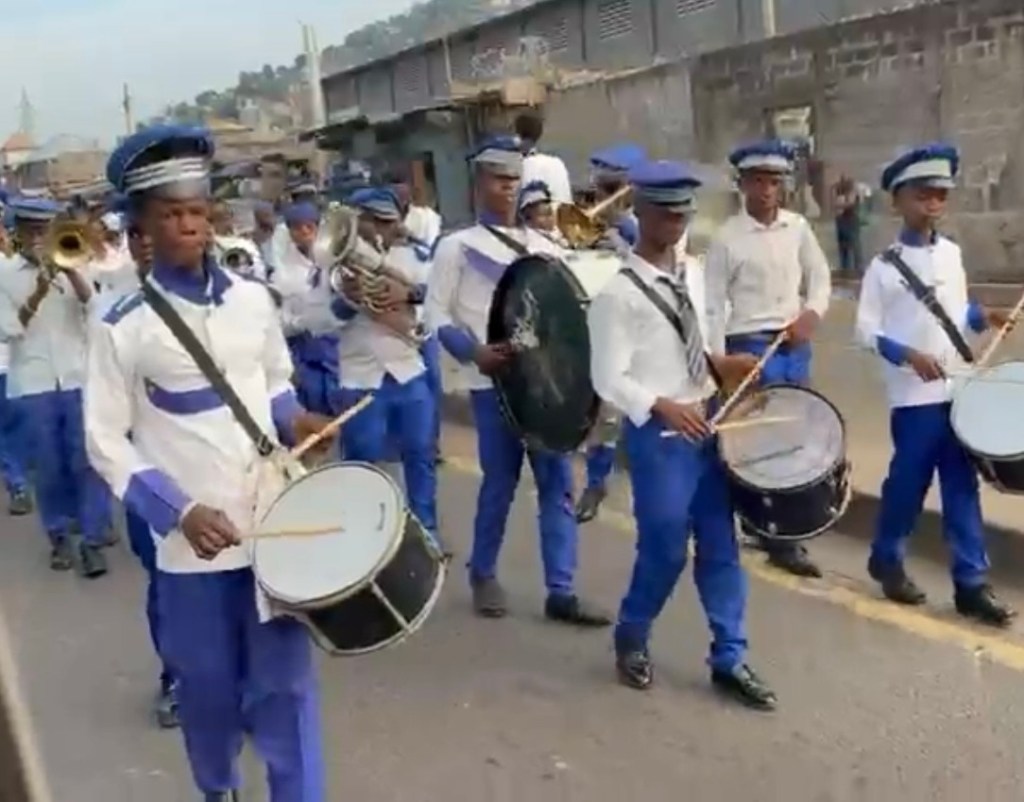
At least we were entertained during a 30 minute traffic jam by a marching band playing “Memories” on its way to a funeral:
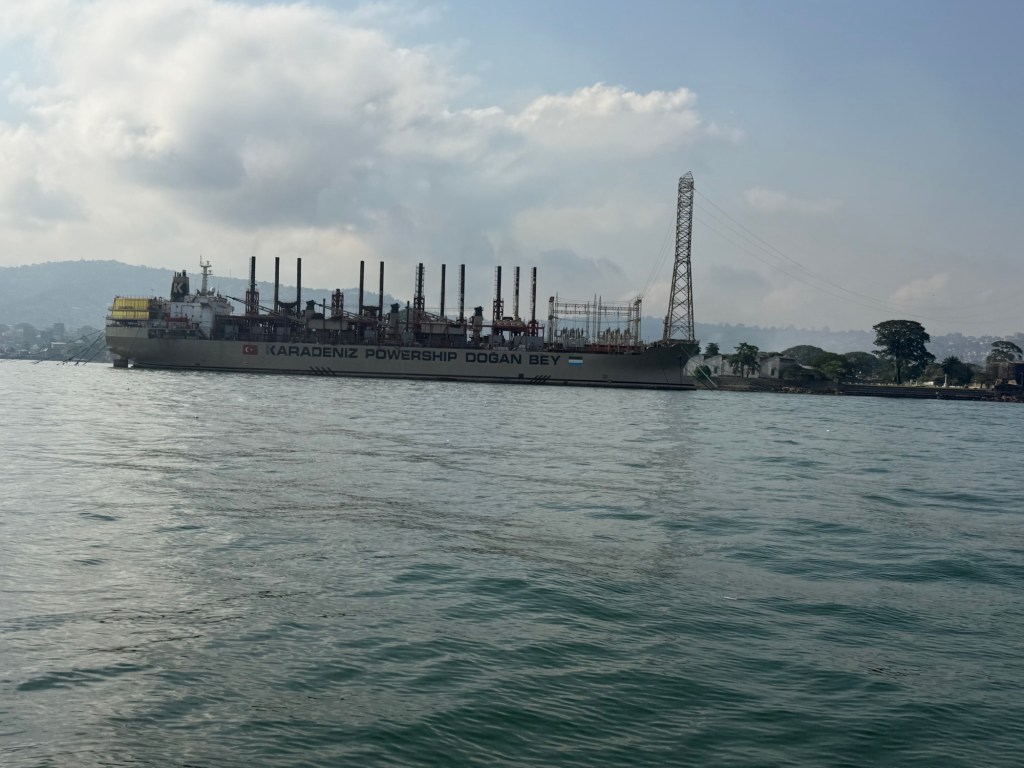
From Freetown, a boat ride took us by The Karadeniz, a Turkish power ship moored in the harbour which provides electricity to all 3,000,000 million inhabitants of Freetown, with its 12 generators fed with palm oil:
We were on our way to Bunce Island. Although the Portuguese were the initial Europeans in the area, by the 17th century the British had assumed dominance and established a slave trading fort on Bunce Island where slaves were brought from all over the area, put in open air pens and sold to work on plantations in the New World. Remnants of the fort remain today:
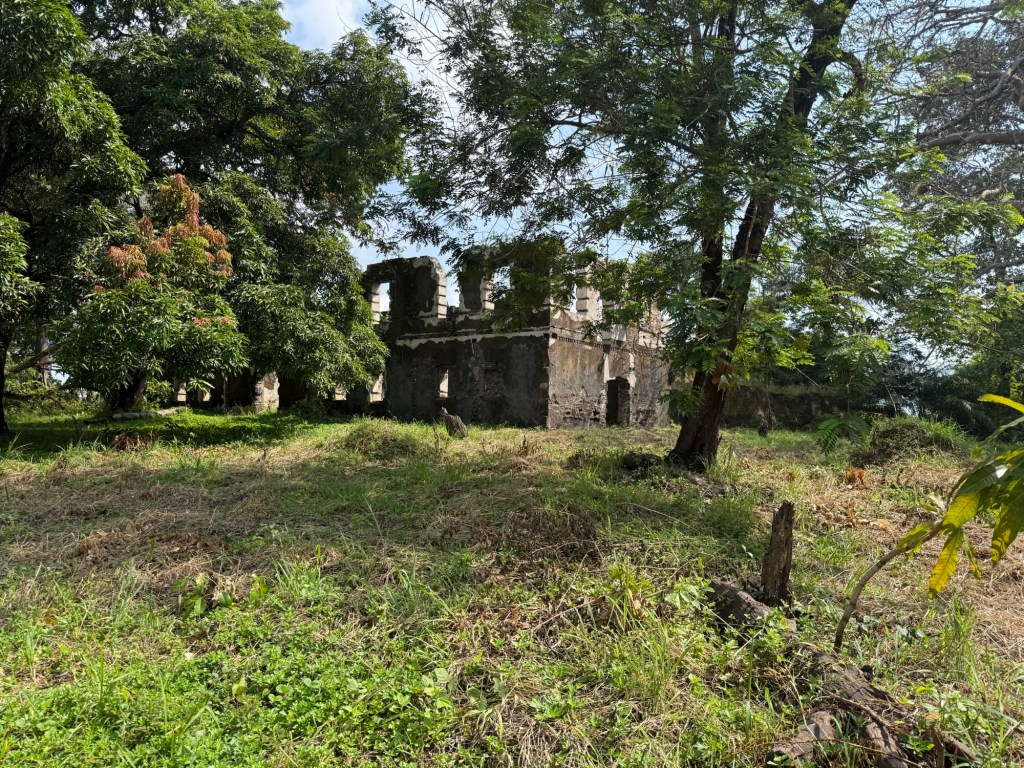
On the way back, we passed another ship, this one from China, being loaded with iron ore from one of Sierra Leone’s many mines:
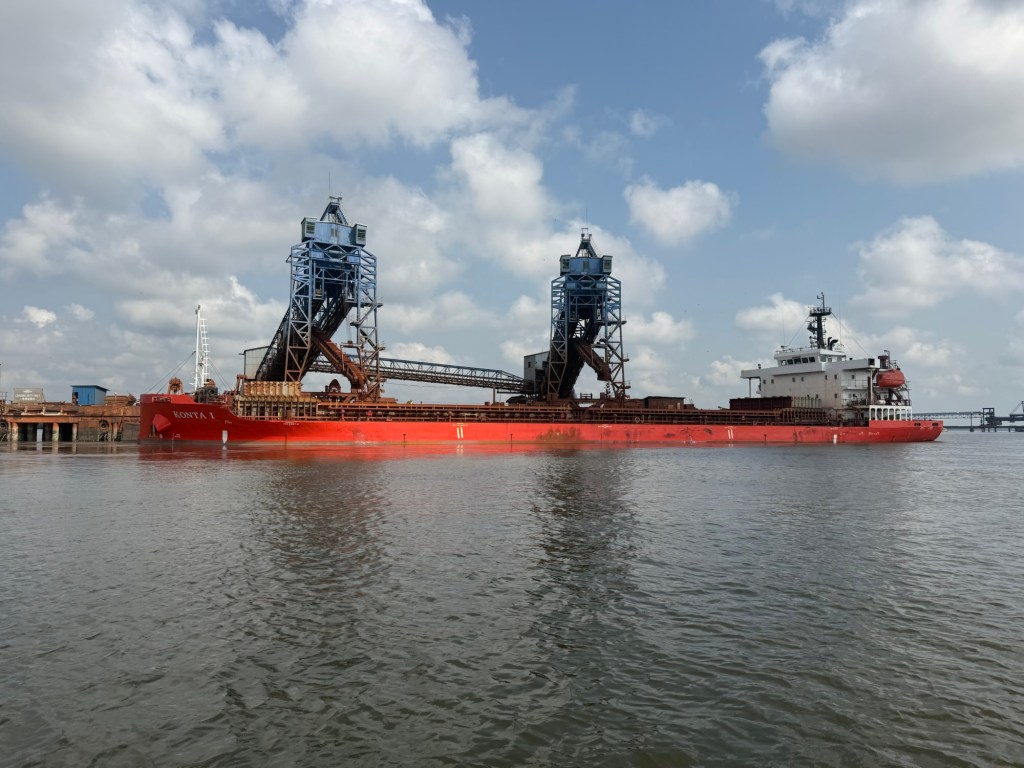
We returned to Freetown to visit the sites, but there weren’t many. Freetown had been established by the British in 1792 as a place where black loyalists who’d fought for Britain during the US War of Independence could live freely. Many of those loyalists came from Nova Scotia and were known as settlers. Tradition has it that they met the locals under a giant cotton tree in the center of Freetown, but in 2023 winds ripped the tree to shreds and all that remains is a hollow shell of a trunk:
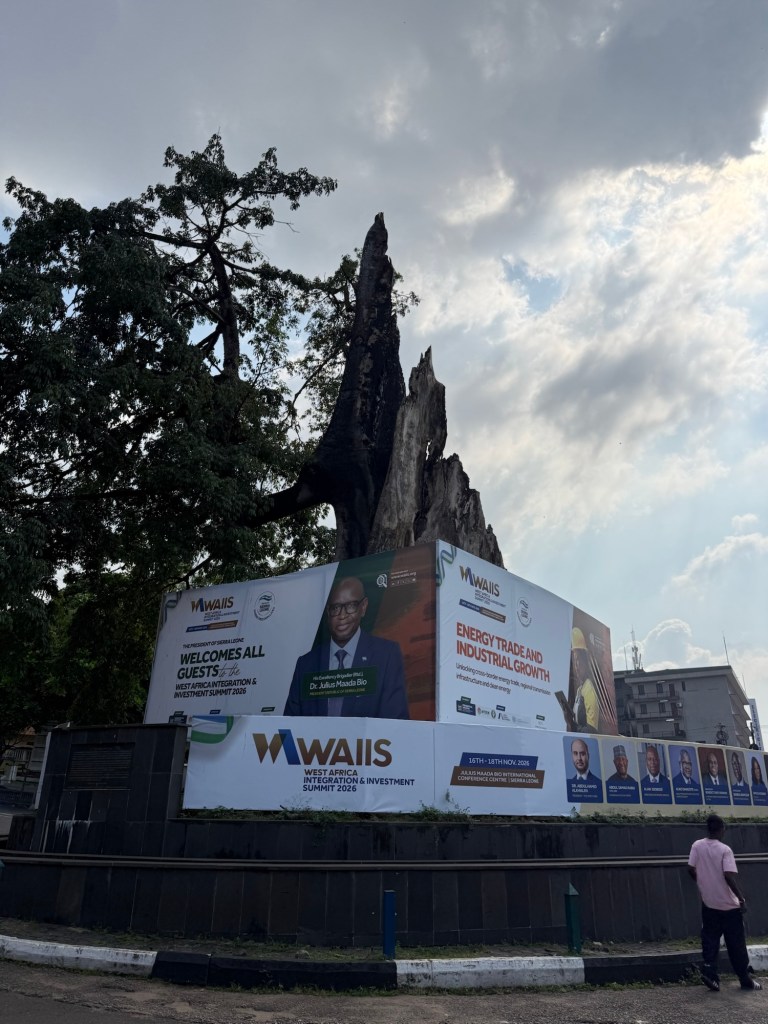
Signs for candidates in the upcoming election surround the tree, but democracy was slow coming to the country. It became independent in 1961, followed by 30 years of one party rule. Beginning in 1991 and lasting 11 years, a bloody civil war shattered the country, with estimates ranging of up to 2,000,000 dead. The movie “Blood Diamonds” charted the civil war’s course, with various government forces battling private militias using child soldiers in efforts to control the country’s diamond mines.
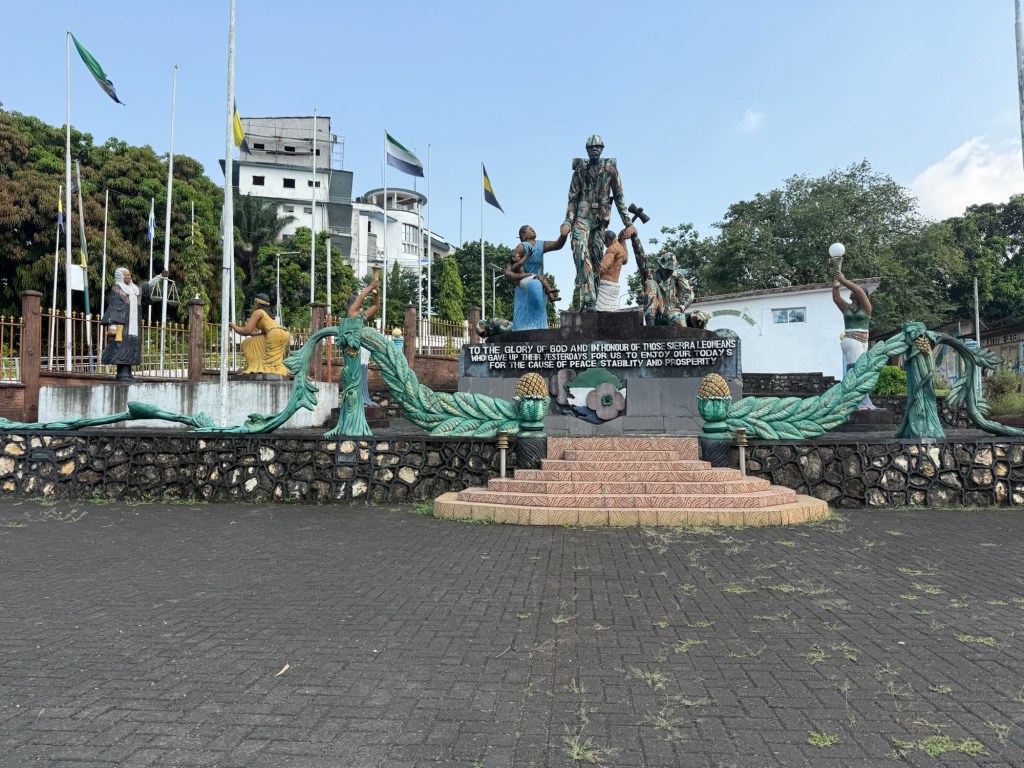
Since then, the country has tried to move forward with reconciliation and efforts to eradicate poverty, illiteracy and child brides, but the process is slow. Between 2014-16, the country’s health system was ravaged by Ebola; in 2017, a mudslide caused extensive damage and death in Freetown. Even the Peace and Cultural Monument Park was locked, although the curator opened it for our group:
Our guide was orphaned during the civil war and kidnapped by a militia until he was ransomed by a Swedish aid organization and placed in foster care. He somehow managed to get an education and is gainfully employed as a tour guide. He was wonderfully optimistic about his country, extolling its religious tolerance, its beautiful countryside and the progress made in rehabilitating the child soldiers. I hope he is right, but my admittedly brief time in the country led me to be happy to leave it.
Next: Another difficult country: Liberia


Hi. I am finding your west African stories very interesting. I am been to East Africa. Your stories are reinforcing my bias not to visit Africa again. I really appreciate the background info. Leigh
LikeLike